










Control Resonant gameplay trailer breakdown (State of Play February 2026)
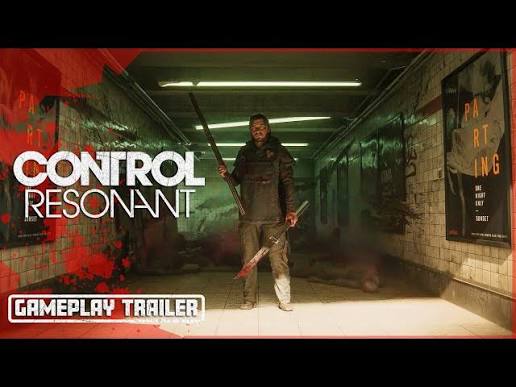
Remedy Entertainment debuted the first Control Resonant gameplay trailer during Sony’s February 2026 State of Play. Featuring new protagonist Dylan Faden, the footage showcases a warped Manhattan facing “paranatural annihilation.” In the West Incursion Zone, Dylan hunts a powerful Resonant enemy amidst shifting gravity and contorting skyscrapers. The trailer highlights new enemies, Dylan’s paranormal powers, and a shapeshifting weapon. Notably, the gameplay shifts toward melee combat and RPG elements compared to the original’s shooter-oriented action.
Where to watch the Control Resonant gameplay reveal trailer
The 3-minute “Control Resonant – Official Gameplay Trailer” is available on the official PlayStation and Remedy Entertainment YouTube channels. It is also embedded in a PlayStation.Blog post featuring developer commentary. Search “Control Resonant Official Gameplay Trailer 2026” to find the footage on these platforms or via gaming news sites.
Control Resonant release date: is it confirmed for 2026?
Remedy has confirmed a 2026 launch window for Control Resonant. While no specific day or month is set, the date has been reaffirmed through press releases and the 2025 Game Awards. Fans can currently wishlist the title on Steam, Epic Games Store, and the PlayStation Store.
Control 2 release date: is Control Resonant the official sequel name?
“Control Resonant” is the official title for the sequel formerly known as “Control 2” or codename “Heron.” Announced at The Game Awards 2025, it is a direct successor set in the same universe. It follows the first game’s events with a new lead character and major gameplay changes, targeting a 2026 release.
Control Resonant platforms: PS5, Xbox Series X|S, PC, and Mac
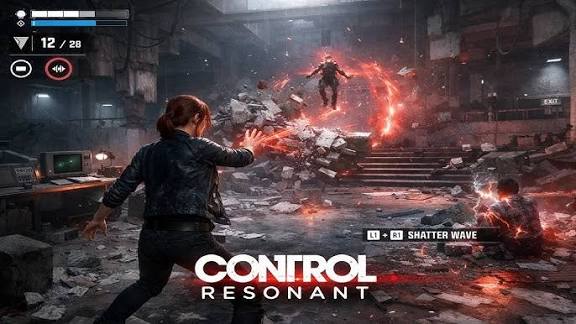
The game will launch exclusively on current-gen hardware: PlayStation 5, Xbox Series X|S, PC (Steam and Epic Games Store), and Mac (Steam and Mac App Store). It will not be available on PS4 or Xbox One. The Mac version leverages Apple Silicon, while the PC version has no timed exclusivity.
Control Resonant PS5 Pro gameplay footage: what the trailer was captured on
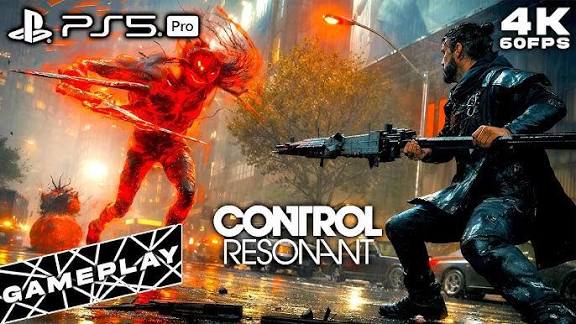
The reveal trailer was captured on a PlayStation 5 Pro to demonstrate high-end performance, including advanced lighting, detailed destruction, and high frame rates. While optimized for the Pro, the game will also be tuned for the base PS5 and Xbox Series X|S, likely utilizing the Northlight Engine’s ray-tracing capabilities.
Is Control Resonant open world? Zone-based exploration explained
Control Resonant is not a seamless open world but is built around large, expansive “zones.” These sizable sections of Manhattan allow for semi-free exploration, side activities, and secrets, connected via story gating or transitions. This design maintains narrative pacing while offering larger, more varied “sandbox” levels than the original game’s Oldest House.
West Incursion Zone in Control Resonant: the area shown in the gameplay trailer
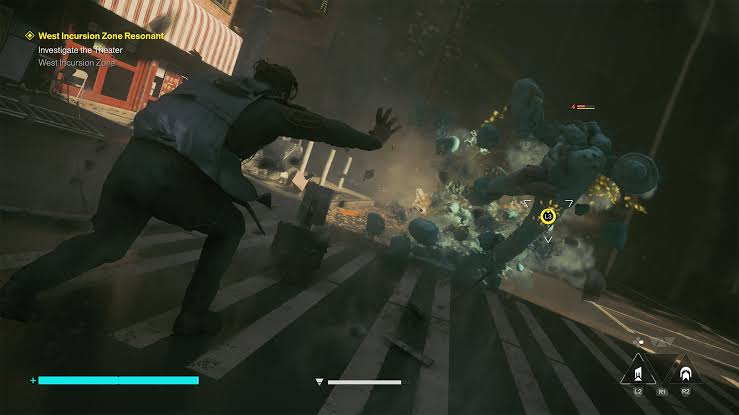
The West Incursion Zone is an early-game area where reality is actively breaking apart. The trailer shows Dylan navigating distorted architecture and scrambled gravity, such as wall-running on tilted buildings. This zone serves as a playground for new traversal mechanics and environmental puzzles within a surreal urban setting.
Control Resonant story and setting: warped Manhattan and a reality-bending cosmic threat
Set after a containment failure at the Oldest House, the story takes place in a Manhattan ravaged by a mysterious cosmic entity. Dylan Faden, released from FBC captivity, must combat this threat to save humanity and his own survival. The plot involves Dylan working with his former captors to navigate the “kaleidoscopic nightmare” of the city. The narrative functions as a reality-bending thriller, exploring Dylan’s trauma and the mystery of his sister, Jesse Faden, while expanding on the lore of the Federal Bureau of Control.
Dylan Faden in Control Resonant?
Dylan Faden is the protagonist of Control Resonant and the younger brother of Jesse Faden from the 2019 game. Both siblings gained supernatural powers during the “Ordinary” Altered World Event. While Jesse became the FBC Director, Dylan was captured and held by the Bureau for years due to his unstable powers and brainwashing by the Hiss. After being kept in a coma by Jesse for his own safety, Dylan is released by his former captors during a new supernatural crisis to help fight a cosmic war. He is a complex, volatile character fighting for his humanity and seeking his sister while grappling with immense power and his past as a test subject.
Where is Jesse Faden in Control Resonant?
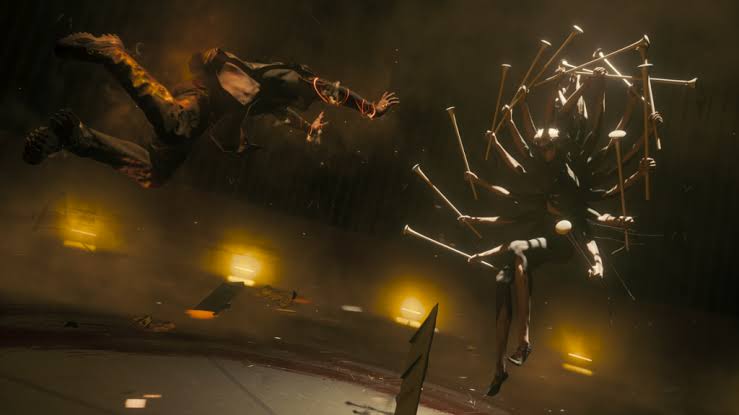
Jesse Faden has mysteriously disappeared, and the Federal Bureau of Control has lost contact with her. Her absence coincides with the collapse of the Oldest House’s lockdown and the spread of the Hiss into Manhattan. Finding Jesse is a major narrative thread and a personal mission for Dylan. While she is not a playable character, her presence looms large, and players may find clues about her fate through dialogue and collectibles. A trailer scene shows her using an Aberrant weapon on Dylan, which may be their last interaction before she vanished.
Zoe De Vera in Control Resonant: FBC Field Agent and Dylan’s handler explained
Zoe De Vera is a new FBC Field Agent who acts as Dylan’s handler and moral compass. She guides him through Manhattan over the radio, providing mission updates, context, and emotional grounding. Unlike previous Bureau staff, Zoe genuinely cares for Dylan and challenges him to maintain his humanity. In gameplay, she functions as a communicator who provides exposition and hints about side activities or dangerous areas. Her background within the FBC and her specific interest in Dylan’s survival are key elements of the story.
Control Resonant new abilities explained: Reach, Shift, and Gravity Anomalies
Dylan utilizes a new set of supernatural abilities tailored for Manhattan’s distorted environments:
- Reach: Allows Dylan to span impossible distances or angles, helping him navigate surfaces that are otherwise unreachable due to twisted geometry.
- Gravity Anomalies: Environmental zones where gravity is warped, allowing Dylan to walk on walls or ceilings as floors and ceilings swap roles.
- Shift: Allows Dylan to redirect his momentum and reorient his personal gravity in mid-air. This lets him adapt on the fly to land on surfaces with different orientations.
These powers make traversal as much of a challenge as combat, requiring players to solve puzzles and navigate 3D space creatively while managing energy or cooldowns.
Shift ability in Control Resonant: how traversal changes in distorted environments
The Shift ability is a core mechanic that allows Dylan to treat walls or ceilings as floors within Gravity Anomalies. By activating Shift, Dylan can leap toward a tilted building or upside-down road and realign his gravity to land and walk on it. This creates an Escher-like gameplay experience where the player must “re-learn” what ground is. Shift is essential for exploration, reaching hidden collectibles, and engaging enemies who may be positioned on different gravitational planes. It works in tandem with the level design to turn the environment itself into a 3D puzzle.

Gravity Anomalies in Control Resonant: wall-walking, momentum shifts, and puzzle design
Gravity Anomalies are environmental zones where gravity and orientation do not align with the normal “down,” creating unique traversal and puzzle opportunities. In these areas, Dylan can walk on walls or ceilings by shifting his personal gravity, often navigating spaces with multiple gravitational orientations. This design requires non-linear thinking, as players must identify visual cues to find paths across surfaces that defy physics.
- Traversal and Puzzles: Players must use the “Shift” ability and momentum to transition between gravitational planes, turning obstacles into traversable surfaces.
- Combat: Enemies also utilize these anomalies, attacking from walls or flying between platforms, resulting in dynamic 3D encounters.
- Progression: The anomalies escalate from mild distortions to complex zero-gravity mazes, showcasing the technical capabilities of Remedy’s Northlight engine.
The Aberrant weapon in Control Resonant: shapeshifting melee weapon explained
The Aberrant is Dylan’s primary weapon, replacing the original game’s firearm-based Service Weapon. It is a shapeshifting, likely sentient Object of Power—potentially attached to Dylan by Jesse Faden—that morphs into various melee forms. This weapon signals a shift from shooter mechanics to a melee-focused Action-RPG style, encouraging aggressive, close-quarters combat. Players can transform the Aberrant on the fly to mix up attacks, and the weapon is central to the progression system, with new forms and upgrades unlocking over time.
Control Resonant Aberrant weapon forms: hammer, dual blades, scythe, and fists
The Aberrant offers versatile combat options through its ability to morph into distinct forms, each with unique playstyles and upgradable movesets:
- Hammer: A large, two-handed weapon delivering heavy, bone-crunching blows. It excels at high damage and staggering tough enemies but has a slower attack speed.
- Dual Blades: Splits the weapon into twin blades for swift, precise slashing. This form focuses on speed, mobility, and high sustained damage through rapid combos.
- Scythe: A mid-range weapon designed for sweeping attacks, likely offering better reach and crowd control capabilities.
- Fists: Manifests as gauntlet-like enhancements for close-range brawling and pummeling, potentially allowing for grappling or rapid strikes.
Players can switch between these forms instantly to chain combos, and Remedy has hinted at additional, unrevealed forms.
Control Resonant combat system explained: melee combos, “combat flow,” and aggressive play
The combat in Control Resonant emphasizes melee action, fluid combos, and aggressive improvisation. Unlike the cover-based shooting of the first game, this sequel rewards staying mobile and engaging enemies directly using a “combat flow” system that lets players tailor their loadouts and attack rhythms.
- Melee-Centric: Players chain attacks using the Aberrant’s forms and Dylan’s abilities, unlocking more complex combos as they progress.
- Aggression and Mobility: Dylan’s short-range toolkit and agile enemies force an offensive playstyle, utilizing moves like “Shift” to dodge and reposition constantly.
- Environment and RPG Elements: Combat includes telekinetic environmental attacks and RPG mechanics like cooldown management and exploiting enemy weaknesses.
- Fluid Transitions: The system allows for seamless chaining of movement, melee strikes, and abilities, enabling creative and continuous assaults without pausing.ol Resonant stand out as a more combat-heavy, kinetic game compared to the more measured, atmospheric combat of Control (2019).

Control Resonant progression system: upgrades, loadouts, and build customization
Control Resonant introduces a deep action-RPG progression system, allowing players to customize Dylan’s abilities and the Aberrant weapon to suit their playstyle. Progression is tied to both narrative and exploration, with new weapon forms and supernatural powers unlocked primarily by defeating Resonant bosses in a Metroidvania-style approach.
- Upgrades and Specialization: Players can evolve their abilities through skill trees or upgrade nodes. This includes increasing damage for specific forms, shortening cooldowns, or adding elemental effects.
- Loadouts: A loadout system allows players to equip a specific subset of abilities and weapon forms before combat. This encourages creating specialized “builds,” such as a heavy melee “tank” or a high-mobility aerial fighter.
- Combat Flow: The system is designed to let players build their “perfect combat flow.” By managing resources collected from exploration and enemies, players can specialize in their favorite moves rather than unlocking everything at once.
- Replayability: The inability to max out every upgrade in a single run encourages replayability and experimentation with different builds, which can be swapped at control points.
Resonants boss enemies in Control Resonant: what they are and how you unlock new powers
“Resonants” are powerful boss enemies central to the game’s story and progression. Lore describes them as the corrupted remnants of powerful individuals twisted by the cosmic force threatening reality. Each Resonant serves as a major boss fight within the various zones of Manhattan, possessing unique mechanics that challenge the player’s mastery of combat and traversal.
- Unlocking Powers: Defeating a Resonant is the primary method for Dylan to expand his arsenal. Each victory rewards the player with a new combat ability or Aberrant weapon form, similar to absorbing the power of a defeated foe.
- Strategy and Difficulty: These encounters are designed to be challenging, often utilizing the game’s systems against the player, such as distorting gravity or using area-of-effect attacks.
- Narrative Role: Beyond gameplay rewards, these bosses represent pieces of the narrative puzzle, potentially offering lore regarding the FBC or the nature of the cosmic threat.

Control Resonant enemies and paranatural threats: Hiss, Mold, and new monsters
The collapse of the FBC’s containment has turned Manhattan into a warzone filled with diverse paranatural threats. Dylan must adapt his combat tactics to face returning foes and new monstrosities generated by the reality-bending crisis.
- The Hiss: The resonance-based entity from the first game has escaped the Oldest House, infecting humans and environments across the city. Players will face evolved variants of Hiss-corrupted soldiers and civilians.
- The Mold: An invasive interdimensional fungus has spread to Manhattan’s underground and damp areas. This threat creates zombie-like hosts and environmental hazards, such as toxic spores that players must navigate.
- Other Paranatural Threats:
- Altered Items: Everyday objects that have become dangerous and volatile.
- New Monsters: Entirely new creatures created by the cosmic entity, potentially including astral constructs or beast-like figures.
- Phenomena: Environmental anomalies and reality tears that pose direct risks to the player.
Control Resonant gameplay changes vs Control (2019): shooter to action RPG
Control Resonant shifts the series from a third-person shooter with supernatural powers to a melee-focused action-RPG. This evolution marks a move away from the Service Weapon toward the Aberrant melee weapon, supported by deeper progression systems and build customization.
- Combat and Pacing: The game moves away from cover-based shooting toward fast-paced, up-close brawling. Success depends on dodging, melee combos, and special moves rather than tactical shooting.
- Traversal and Level Design: Unlike the tight corridors of the Oldest House, Resonant features large, open zones with verticality and gravity shifts. Navigating the environment via wall-walking and shifting perspectives is now a core gameplay mechanic.
- Scale and Structure: Described as Remedy’s biggest project, the game features an open-ended structure with more NPC interactions and optional side missions, moving it closer to a traditional action-RPG.
- Tone: The perspective shifts from playing as a Director in a position of power to an on-the-ground character focused on survival and adaptation.

Control Resonant connections to the Remedy Connected Universe (Control, FBC, Alan Wake)
The game is firmly set within the Remedy Connected Universe (RCU), linking it directly to the events and organizations of Control and Alan Wake.
- Federal Bureau of Control (FBC): As a direct sequel, the game continues the Bureau’s storyline, dealing with the aftermath of the Hiss invasion and the public visibility of the Manhattan crisis.
- Alan Wake Connections: Following the events of Alan Wake 2 (set in 2023), the FBC is aware of the Dark Place. Documents and dialogue are expected to reference these events or characters.
- Shared Lore: Fans can expect references to Altered World Events (AWEs), such as the Ordinary incident, and potential nods to other Remedy properties like Night Springs.
- Standalone Accessibility: While rich in lore for returning fans, the game is designed to be accessible to new players without requiring prior knowledge of the RCU.
Control Resonant wishlist guide: Steam, Epic Games Store, and PlayStation Store
Players can stay updated on the 2026 launch by wishlisting the game on various platforms.
- Platforms:
- Steam (PC): Confirmed for a day-one launch, moving away from the previous game’s initial Epic exclusivity.
- Epic Games Store (PC): Available for “following” or wishlisting with parity to the Steam version.
- PlayStation Store (PS5): A product page is live for users to add to their console wishlist for notifications on pre-orders and release.
- Xbox Store (Xbox Series X|S): Available for following or wishlisting on Microsoft’s digital storefront.
- Mac App Store: Available for Mac users, primarily through Steam but also via the official Apple ecosystem.
- Benefits: Wishlisting provides notifications for the final release date, news updates, and helps developers gauge community interest.
- Newsletters: Fans can also sign up for the official Control newsletter for updates and potential in-game cosmetic rewards, such as Dylan’s headset and goggles.

Frequently Asked Questions (FAQs)
- Q: Is Control Resonant a direct sequel to Control (2019)?
A: Yes. It is the official sequel, continuing the story seven years after the original. While it focuses on a new protagonist, Dylan Faden, it is effectively “Control 2.” - Q: Do I need to play Control (or Alan Wake) before playing Control Resonant?
A: No. It is designed as a standalone experience. Newcomers can jump in without prior knowledge, though returning fans will notice more lore connections and references. - Q: Who is the main playable character in Control Resonant?
A: Players control Dylan Faden, Jesse’s brother. Released from FBC custody, he uses his unique powers to fight a paranormal crisis in Manhattan and find his missing sister. - Q: Will Jesse Faden (the hero of the first game) appear in Control Resonant?
A: Jesse has mysteriously vanished, and finding her is a central plot point. While she is not a playable character, her whereabouts and fate are a major focus of Dylan’s quest. - Q: What new powers does Dylan have in Control Resonant?
A: Dylan’s toolkit emphasizes traversal and melee. Key abilities include Reach for navigating impossible spaces, manipulating Gravity Anomalies to walk on walls, and Shift for redirecting mid-air momentum. - Q: What is the Aberrant weapon, and how is it different from the Service Weapon?
A: The Aberrant is a shapeshifting melee weapon, unlike Jesse’s transforming gun. It can morph into forms like a Hammer, dual Blades, a Scythe, and Fists, allowing for visceral melee combos. - Q: Is Control Resonant an open-world game?
A: No. It uses large, open-ended sandbox zones in Manhattan. Players explore these sizable areas for side missions and secrets, but progression between zones is tied to the story. - Q: When will Control Resonant be released, and on what platforms?
A: It is scheduled for a 2026 release on PlayStation 5, Xbox Series X|S, PC (Steam/Epic), and Mac. It will not be available on last-gen consoles like PS4 or Xbox One. - Q: Will Control Resonant release on Steam or be Epic Games Store exclusive on PC?
A: It will launch on Steam and the Epic Games Store simultaneously. There is no timed exclusivity period for this sequel. - Q: How does Control Resonant connect to Alan Wake or the larger Remedy universe?
A: It is part of the Remedy Connected Universe (RCU). It continues the FBC storyline and may feature nods to Alan Wake 2, though it remains accessible to those who haven’t played other Remedy titles.
Conclusion
Control Resonant represents a bold evolution for Remedy Entertainment, shifting the franchise toward a melee-centric action-RPG. The game features a warped Manhattan setting where reality is collapsing, tasking Dylan Faden with hunting powerful “Resonant” bosses to reclaim the city and find his sister, Jesse.
- Gameplay Evolution: The introduction of the Aberrant weapon and gravity-defying abilities like Reach and Shift move the series away from traditional shooting toward dynamic, combo-driven brawling.
- Progression and Depth: Defeating Resonants grants tangible gameplay upgrades, allowing players to customize Dylan’s “combat flow” through deep loadout and skill systems.
- World and Story: The zone-based Manhattan design offers extensive exploration without sacrificing a tight narrative. New characters like Zoe De Vera support Dylan’s journey through a reality-ending threat.
- Connectivity: As part of the Remedy Connected Universe, the game weaves together threads from Control and Alan Wake while remaining a self-contained entry for new players.
Scheduled for 2026, Control Resonant promises a high-stakes, supernatural experience that expands the scale and complexity of its predecessor, positioning it as a major upcoming title for PS5, Xbox, PC, and Mac.
Sources and Citations
- PlayStation.Blog — “New gameplay details on Control Resonant’s supernatural action” (Feb 12, 2026) (Sergey Mohov) (PlayStation.Blog)
- TechRadar — “The latest Control Resonant gameplay trailer showcases new zones, abilities, and progression…” (Feb 13, 2026) (Demi Williams) (TechRadar)
- TechRadar — “Remedy confirms that Control Resonant is the sequel… and it’s coming in 2026” (Dec 12, 2025) (Demi Williams) (TechRadar)
- Game Informer — “Remedy Reveals Control Resonant, A Melee Action-RPG Sequel To Control Starring Jesse’s Brother” (Dec 11, 2025) (Wesley LeBlanc) (Game Informer)
- DSOGaming — “Here is the first gameplay trailer for Control Resonant” (Feb 13, 2026) (John Papadopoulos) (DSOGaming)
- Bloody Disgusting — “Remedy Unveils New Gameplay Trailer for ‘Control Resonant’ [Watch]” (Feb 12, 2026) (Mike Wilson) (Bloody Disgusting!)
- Steam Community Forums — “Don’t you dare make it Epic exclusive!” (Dev comment on platform availability / no Epic exclusivity) (Dec 11, 2025) (Steam Community)
- Control Wiki (Fandom) — “CONTROL Resonant” page (control.fandom.com)
- SteamDB — CONTROL Resonant (SteamDB app page — includes the Steam store description snippet) (steamdb.info)
Recommended
- PixelHair vs. Manual Hair Grooming in Blender: Which is Better?
- Simplifying Camera Control in Blender with The View Keeper Plugin
- How do I export a camera from Blender to another software?
- How The View Keeper Speeds Up Animation Rendering in Blender
- Wonder Dynamics: VFX with AI-Powered Wonder Studio
- The Ultimate Guide to the Most Popular Black Hairstyle Options
- The Importance of Virtual Avatars, Influencers, and Mascots for Brands: Lessons from Duolingo
- How do I set up a tracking shot with a camera in Blender?
- Cyberpunk Orion: Everything We Know About CD Projekt Red’s Next Cyberpunk Adventure
- Blender 3D vs Cinema 4D: The Ultimate 2025 Comparison Guide for 3D Artists