








In This Article (9 sections)
Final Fantasy 7 Rebirth Uses Queer Representation to Make Its World Feel More Real
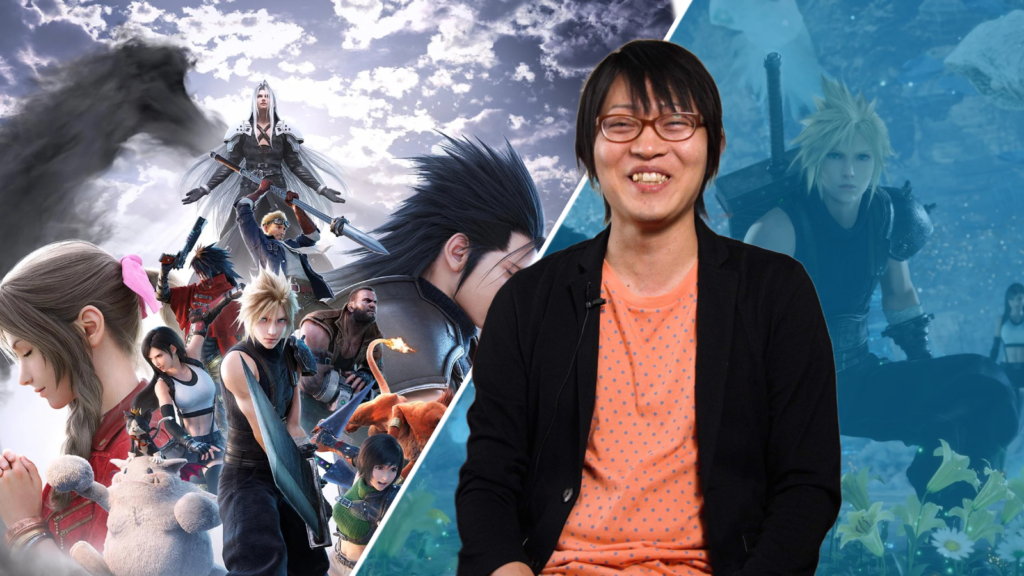
Final Fantasy 7 Rebirth’s queer representation “enhances the world’s realism,” according to director Naoki Hamaguchi, and that statement captures why the game’s LGBTQ presence has become part of a larger conversation about modern world building in Japanese role playing games. Hamaguchi explained that Square Enix was not trying to add same sex couples simply as a separate feature, but to portray people living in the world with sincerity and care. In that sense, the representation is tied directly to how the game imagines its towns, communities, and everyday social life.
In Final Fantasy 7 Rebirth, queer representation appears most clearly through background characters, overheard conversations, and evolving NPC stories. These moments are not presented as isolated lessons or dramatic interruptions. Instead, they exist inside towns, streets, resorts, and public spaces where players can notice people talking about attraction, partners, heartbreak, and romantic possibility. That subtlety matters because the game is built around travel, with Cloud, Aerith, Tifa, Barret, Red XIII, Yuffie, and the rest of the party moving through regions filled with local cultures, small conflicts, family tensions, community rituals, and everyday conversations.
Naoki Hamaguchi’s main point is that a believable world should include different kinds of people and relationships. In his interview comments, he said the presence of diverse, authentic relationships enhances the realism of the world, especially in a game where players encounter many towns, cultures, and personal stories during the journey. Final Fantasy 7 Rebirth is not only a remake of a famous 1997 RPG. It is also a modern AAA interpretation of that world, expanding the original’s compressed environments, short lines of dialogue, and limited character models into voiced NPCs, cinematic towns, large regions, and layered side content.
Realism in this context does not mean removing fantasy. Final Fantasy 7 Rebirth still includes giant swords, mako reactors, chocobos, summons, and cosmic threats. Instead, realism means emotional and social credibility. A fantasy world feels more convincing when its people behave like actual communities, with varied backgrounds, desires, relationships, identities, and private lives. In that structure, queer relationships become part of the same social fabric as any other relationship. They are not treated as unusual exceptions. They help make the world feel inhabited.
How Final Fantasy 7 Rebirth Builds LGBTQ Representation into Everyday World Design
Final Fantasy 7 Rebirth uses LGBTQ representation as part of world building rather than as a single plot device. Players who listen closely can hear NPCs discuss same sex attraction and queer romance in ways that feel casual and grounded. GamesRadar highlighted examples including a man being congratulated for finding a new male partner and a woman asking another woman whether she would consider dating her. These details strengthen the world because they suggest that every town contains stories beyond the main party’s mission.
Cloud’s group is chasing Sephiroth, dealing with Shinra, and confronting questions about memory, identity, and the Planet. Around them, ordinary people are still falling in love, arguing, flirting, reconnecting, and trying to build lives. That contrast is central to Final Fantasy 7 Rebirth’s storytelling. The larger plot is about planetary survival, but the smaller stories show what survival is for. Queer NPC relationships contribute to that purpose by making the world feel socially complete.
One of the most discussed examples involves two women whose relationship appears to evolve during the game. Hamaguchi was asked about this pair, including an early moment in Kalm, and he responded by emphasizing that Square Enix wanted a diverse group of people to inhabit the world authentically. The significance of these NPC stories is that they reward attention. A player rushing through the main quest may miss them. A player who slows down, listens, and revisits locations can notice emotional shifts, creating the feeling that NPCs have continuity rather than existing only as static background decoration.
Final Fantasy 7 Rebirth handles queer characters naturally by allowing their relationships to exist without overexplaining them. The game does not pause to announce that it is making a representational statement. It lets queer characters speak, flirt, react, and exist in the same public spaces as everyone else. This approach avoids making LGBTQ identity feel like a novelty, and it also avoids reducing queer characters to trauma or conflict.
Instead, the game often frames queer romance through humor, affection, awkwardness, curiosity, and everyday conversation. Hamaguchi’s comments support that reading, since he said the goal was not to include a same sex couple merely for the sake of inclusion, but to portray the stories of people living in the world with sincerity and care.
Why Hamaguchi Connects Diversity, Realism, and Hidden Queer Romance Details
Naoki Hamaguchi’s interview comments are important because they clarify developer intent. He explained that Rebirth’s team was happy players noticed subtle interactions and relationship shifts. He also said players pay attention not only to whether representation is present, but to details such as emotional distance and conversational tone. That statement shows that Square Enix understands representation as more than visibility. Visibility matters, but nuance matters too.
A background relationship can feel shallow if it is included only as a checklist item. It becomes more meaningful when characters have tone, timing, personality, and emotional movement. Hamaguchi’s broader creative philosophy also fits this approach. In a Sony interview, he said Final Fantasy 7 Rebirth used “bonds” as one of its central themes, with the team designing narrative and gameplay around character relationships. Queer NPC interactions fit naturally into that theme because they expand the idea of bonds beyond the main cast.
Final Fantasy 7 Rebirth creates realism through authentic relationships by filling its world with emotional variety. The game’s realism does not come only from visual fidelity, open zones, or detailed cities. It comes from the feeling that people have lives outside the player’s direct control. In older RPGs, an NPC might exist only to give a clue or repeat one line. In Rebirth, NPCs often help establish mood, culture, and social texture, making each location feel less like a stage and more like a community.
Queer romance references in Final Fantasy 7 Rebirth are often hidden in plain sight. They appear through optional dialogue, overheard conversations, and NPC interactions that players may miss if they focus only on major quests. GamesRadar noted that players can find multiple references to queer romance and relationships by watching and listening to NPCs throughout the world. Hidden does not mean unimportant. In a game as dense as Rebirth, optional details shape the player’s memory of the world. A small conversation can make a town feel warmer, stranger, sadder, or more believable, and queer romance references add to that emotional density.

Square Enix’s Queer Representation Builds on Remake Through Ambient NPC Storytelling
Final Fantasy 7 Rebirth NPC conversations about LGBTQ relationships show how much modern RPG storytelling depends on ambient writing. These conversations are not always attached to quests. They often exist to give the world personality. This approach has a strong effect because it trusts players. The game does not need to underline every relationship. It allows players to infer meaning from tone, context, and repeated encounters. Hamaguchi specifically noted that players noticed detailed nuances such as conversational tone and emotional distance.
That trust makes the representation feel more mature. It respects queer players who can recognize themselves in small details, and it respects all players by treating LGBTQ relationships as ordinary parts of life. Square Enix approached queer representation in Final Fantasy 7 Rebirth as part of a broader commitment to authentic world building. Hamaguchi said these relationships did not feel like a distinct depiction to the team, but like a result of building Final Fantasy 7’s world authentically. When representation is treated as separate from world building, it can feel inserted. When it is treated as part of world building, it becomes part of how the world functions.
Square Enix’s modern approach also reflects the realities of global game development. Hamaguchi told Sony that games today are created with a global audience in mind from the start, unlike the original Final Fantasy 7 era, and that ethical reviews across regions are part of modern production. This helps explain why the remake project updates not only graphics and combat, but also social context. Final Fantasy 7 Rebirth is not simply recreating old scenes with modern visuals. It is expanding the world through the kinds of social details that contemporary players notice.
Final Fantasy 7 Rebirth also builds on changes that were already visible in Final Fantasy 7 Remake. The 2020 remake revisited the original game’s Honeybee Inn and Wall Market material, including Cloud’s makeover sequence, with a more celebratory and affirming tone. Them reported that Remake updated the original’s LGBTQ themes in a more positive way and cited co-director Motomu Toriyama’s statement that LGBTQ inclusion and diversity were important issues for modern content creators. The difference is that Remake’s LGBTQ themes were concentrated around memorable set pieces, while Rebirth spreads representation across the wider world. Remake made a high profile correction to a famous sequence. Rebirth makes queerness part of everyday life.
Fan Reactions and the Broader Evolution of LGBTQ Representation in Final Fantasy
Fan reactions to Final Fantasy 7 Rebirth queer representation have focused heavily on subtlety. Many players were pleased to discover same sex couples and queer romantic references while exploring. Hamaguchi said the development team was incredibly happy that players paid attention to subtle interactions and relationship shifts. That reaction reveals something important about modern audiences. Players are not only looking for representation in main characters. They also notice background details, optional dialogue, and the emotional logic of side stories.
Representation in major franchises often produces debate. Some fans celebrate the inclusion, while others question its role. However, Hamaguchi’s comments make Square Enix’s position clear: diverse relationships are not a distraction from realism. They are part of it. Final Fantasy 7 Rebirth’s inclusivity works because it connects to character storytelling. The game is filled with relationships, including Cloud’s complicated bonds with Tifa and Aerith, Barret’s role as a father, Red XIII’s connection to Cosmo Canyon, Yuffie’s national loyalty, Cait Sith’s divided identity, and the group’s shared struggle against Sephiroth and Shinra.
In that context, LGBTQ representation is not disconnected from the game’s themes. It reinforces them. Rebirth is about how people relate to one another under pressure. It is about friendship, grief, loyalty, betrayal, romance, memory, and belonging. Queer NPCs add to that network of human connection. They remind players that the world is not built only around the heroes. It is built around countless smaller relationships that make the planet worth saving.
The evolution of LGBTQ representation in the Final Fantasy series has been uneven but notable. The original Final Fantasy 7 included material that many later critics viewed as complicated because it mixed gender performance, comedy, and stereotypes. Them described the 1997 game as having a complicated queer legacy, while also noting that the 2020 remake updated those themes more positively. Later entries and modern rereleases have faced a different cultural standard.
Players now expect large RPG worlds to reflect social diversity with more care. GLAAD has also discussed how video game remakes create opportunities to tell better LGBTQ stories, noting that modern remakes can revise older material for contemporary audiences. Final Fantasy 7 Rebirth fits this broader evolution by expanding the world with modern sensitivity while preserving the identity of the original.

Frequently Asked Questions (FAQs)
- What did Naoki Hamaguchi say about Final Fantasy 7 Rebirth queer representation?
Naoki Hamaguchi said that diverse, authentic relationships enhance the realism of Final Fantasy 7 Rebirth’s world. He explained that the team wanted to portray people living in the world with sincerity and care rather than adding a same sex couple only for the sake of inclusion. His comments frame queer representation as part of believable world design, not as a separate feature disconnected from the rest of the game. - Is there LGBTQ representation in Final Fantasy 7 Rebirth?
Yes. Final Fantasy 7 Rebirth includes LGBTQ representation through NPC dialogue, same sex couples, queer romance references, and background character interactions that players can discover while exploring. These moments are often found through overheard conversations and optional world details rather than through major story scenes, which makes them feel integrated into everyday life across the game’s locations. - Are queer characters central to the main story of Final Fantasy 7 Rebirth?
The clearest queer representation discussed by fans and developers appears mainly through NPCs and optional world dialogue rather than through the central party’s main plot. However, these details still contribute meaningfully to the game’s world building. They help show that the Planet is filled with people who have their own relationships, emotions, and lives outside Cloud’s journey. - Why is Final Fantasy 7 Rebirth’s queer representation considered realistic?
It is considered realistic because the game presents LGBTQ relationships as ordinary parts of society. The world feels more believable when its towns and communities include diverse relationships, just as real communities do. Hamaguchi’s point was that authenticity comes from showing different kinds of people living naturally within the world, not from treating queer relationships as unusual exceptions. - How does Final Fantasy 7 Rebirth compare to Final Fantasy 7 Remake in LGBTQ themes?
Final Fantasy 7 Remake updated famous scenes such as Wall Market and Honeybee Inn with a more affirming tone, while Final Fantasy 7 Rebirth spreads LGBTQ representation through broader NPC storytelling and everyday world details. Remake concentrated much of its LGBTQ related update around memorable set pieces, while Rebirth makes queer romance part of the wider social environment. - Did Square Enix intentionally include same sex couples in Final Fantasy 7 Rebirth?
Yes, but Hamaguchi framed the intention as authentic world building rather than token inclusion. He said the team wanted to portray the people inhabiting the world with sincerity and care. That means same sex couples and queer references were included as part of showing a diverse, believable society, not as isolated additions separated from the game’s broader storytelling. - Why did fans notice the NPC relationships in Final Fantasy 7 Rebirth?
Fans noticed them because Rebirth rewards careful listening and exploration. NPC conversations often contain emotional details, relationship changes, and subtle romantic references that deepen the world. Hamaguchi said the development team was happy that players paid attention to nuances such as tone and emotional distance, which shows that these small interactions were designed to matter. - Does Final Fantasy 7 Rebirth make LGBTQ relationships feel forced?
Hamaguchi’s explanation suggests the opposite. The development team viewed these relationships as a natural result of building an authentic world, not as separate or forced depictions. Because the representation appears through casual dialogue, public spaces, and NPC continuity, it fits into the game’s broader focus on relationships, bonds, and everyday life. - What does this mean for Final Fantasy 7 Revelation?
It may mean Final Fantasy 7 Revelation will continue using diverse relationships and subtle NPC writing to make its world feel alive. Nothing guarantees specific LGBTQ storylines, but Hamaguchi’s comments suggest this approach is part of the remake trilogy’s world building philosophy. Square Enix’s official Final Fantasy 7 portal identifies Remake Intergrade as Part 1, Rebirth as Part 2, and Revelation as Part 3, so the next game may continue expanding the world through social detail and authentic relationships. - Why is this conversation important for Japanese RPGs?
It is important because Final Fantasy is one of the most influential RPG franchises in the world. When a major Square Enix director says queer representation improves realism, it signals that inclusive storytelling can be treated as a normal part of high profile Japanese game development. The conversation also shows how modern RPG audiences pay attention to background characters, optional dialogue, and the social credibility of fictional worlds.

Conclusion
Final Fantasy 7 Rebirth’s queer representation “enhances the world’s realism” lead says, and Naoki Hamaguchi’s comments explain why the game’s LGBTQ details have resonated with so many players. Rebirth does not treat queer relationships as a detached message or a one scene novelty. It folds them into the everyday life of its towns, NPC conversations, and relationship driven world building.
That approach fits the larger purpose of the Final Fantasy 7 remake trilogy. These games are not only updating graphics, combat, and scale. They are reimagining how a beloved world can feel alive to modern audiences. The original Final Fantasy 7 suggested a vast planet through limited technology. Final Fantasy 7 Rebirth fills that planet with voices, social nuance, and emotional texture.
Queer NPCs, same sex couples, and LGBTQ romance references matter because they make the world feel more complete. They show that people in Rebirth are not only waiting for Cloud to pass by. They are living, loving, changing, and building relationships of their own. That is why Hamaguchi’s statement is more than a defense of representation. It is a statement about good world design.
Sources and Citations
- GamesRadar+, June 22, 2026, Final Fantasy 7 Rebirth’s Queer Representation Enhances the World’s Realism: Covers Hamaguchi’s comments on authentic relationships, LGBTQ representation and player reactions.
https://www.gamesradar.com/games/final-fantasy/final-fantasy-7-rebirths-queer-representation-enhances-the-worlds-realism-lead-says-and-the-rpgs-devs-were-incredibly-happy-people-picked-up-on-it/ - Them, July 7, 2021, The Final Fantasy 7 Remake Director Just Spoke Out For LGBTQ+ Inclusion: Explains Motomu Toriyama’s approach to diversity and LGBTQ representation.
https://www.them.us/story/final-fantasy-7-remake-director-speaks-out-for-lgbtq-inclusion - Inverse, Final Fantasy 7 Remake Director Reveals How He Fought for Cloud’s Cool Dance Moves: Discusses modernized storytelling, LGBTQ inclusion and the redesign of Wall Market.
https://www.inverse.com/gaming/ff7-remake-interview-wall-market-yoshinori-kitase-motomu-toriyama - Square Enix, Official Final Fantasy VII Revelation Website: Confirms the trilogy’s structure, final installment and supported platforms.
https://www.jp.square-enix.com/ffvii_revelation/ - Final Fantasy Portal, June 9, 2026, Final Fantasy VII Revelation Announced: Confirms Revelation as the third and final installment of the remake trilogy.
https://na.finalfantasy.com/en/news/1002824/ - Final Fantasy Portal, September 3, 2026, Final Fantasy VII Revelation Releases April 8, 2027: Confirms the release date, supported platforms and upcoming story expansions.
https://na.finalfantasy.com/en/news/1002840/ - PlayStation Blog, September 3, 2026, Final Fantasy VII Revelation Launches on PS5 April 8, 2027: Details the trilogy’s conclusion, open-world exploration and new gameplay features.
https://blog.playstation.com/2026/09/03/final-fantasy-vii-revelation-launches-on-ps5-april-8-2027
Recommendations
- The Angry Birds Movie 3 Official Trailer Breakdown, Cast, Release Date, Story Details, and Everything You Need to Know
- Real-Time Hair for AAA Games: Full Tutorial and Workflow Using ZBrush, Maya, Blender, and Marmoset
- Call of Duty Modern Warfare 4 at Xbox Gamescom 2026 Stream
- Oscars Winners 2026: The Full List of Winners From the 98th Academy Awards
- Castlevania: Belmont’s Curse Release Date & Details
- Dragon Ball Xenoverse 3: Why My Character’s Messy Room Matters to the Lore
- PAYDAY: Aces High Release Date, Gameplay, Platforms, and Everything We Know About the New VR Co-Op Heist Game
- a16z Layoffs: Majority of 34-Person Recruiting Team Cut
- The Blood of Dawnwalker Puts a Dark Twist on a Typical RPG Prologue: Everything We Know About Its Grim Opening and Story Setup
- Jensen Huang’s Exit Blows a Hole in a $500 Billion Nvidia-Backed AI Financing Push With Wall Street Banks



































































































