










In This Article (9 sections)
MECCHA CHAMELEON Hits 7 Million Sales and Teases a Japan-Themed Map
MECCHA CHAMELEON has become one of Steam’s most remarkable indie success stories of 2026 after reaching 7 million copies sold in less than two weeks. Developed and published by lemorion_1224, the game launched on Steam on June 9, 2026, and quickly built momentum around a simple hide-and-seek concept that is easy to understand, watch, and share.
The developer celebrated the 7 million sales milestone through a Steam community announcement, thanking players and confirming that a new official Japan-themed map would be added “today or tomorrow.” The update tease turned the sales announcement into more than a milestone celebration, giving the rapidly growing player base another reason to keep playing.
The scale of the achievement stands out because MECCHA CHAMELEON is not part of an established franchise or backed by a major publisher. It is a self-published indie release, with lemorion_1224 listed on Steam as both its developer and publisher. Reaching 7 million sales so quickly demonstrates how rapidly an independently released game can spread when its central idea connects with players.
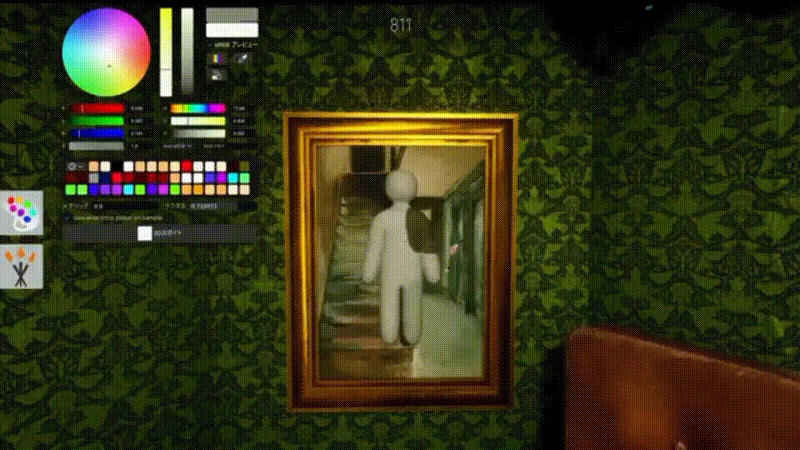
That central idea is straightforward. Players control white chameleon-like characters and paint their bodies to blend into the surrounding stage while seekers attempt to find them before time runs out. The game does not depend on complicated lore or an elaborate presentation to communicate what makes it entertaining. Its main appeal can be understood almost immediately: disguise yourself as part of the environment and hope the opposing players fail to notice you.
That simplicity also makes MECCHA CHAMELEON well suited to viral sharing. Successful disguises, obvious mistakes, close calls, and unexpected discoveries can be understood quickly by viewers, making matches easy to turn into clips and social content. The combination of an instantly recognizable social gameplay hook and the ability to create memorable moments has helped transform the game from a small self-published release into a multi-million-selling Steam hit in under two weeks.
The upcoming Japan-themed map now represents the next step in that rapid growth. By tying new content directly to the 7 million sales celebration, lemorion_1224 is giving players another environment in which to use the game’s painting and hiding mechanics while continuing the momentum created by its unexpectedly large launch.

How MECCHA CHAMELEON Sold 7 Million Copies and Expanded with the Osaka Map
MECCHA CHAMELEON reached 7 million sales in less than two weeks because its design is built around quick understanding, social discovery, and highly shareable multiplayer moments. Steam describes it as a “new-sensation hide-and-seek game” where players paint their bodies to match the environment, with hiding location, pose, and artistic skill determining how successfully they can disappear into the stage. That concept gives the game an immediate hook that players can understand without needing to learn complicated systems.
The low barrier to entry is a major part of its appeal. Players are divided into seekers and hiders, and the objective follows familiar hide-and-seek rules. Seekers must find everyone before the timer expires, while hiders try to survive by blending into the surroundings. Because the basic goal is so easy to understand, new players can join without a lengthy introduction and quickly begin experimenting with camouflage techniques.
Its multiplayer structure also supports repeat play and social growth. The Steam page lists public matches and streamer-friendly viewer participation, with 2 to 10 players recommended depending on the host’s network conditions. That makes MECCHA CHAMELEON easy to play with friends, simple to demonstrate on streams, and well suited to groups discovering the game together. Each match can produce different disguises and reactions, giving players a reason to keep returning even though the underlying rules remain straightforward.
The same qualities that make the game easy to play also make it highly shareable. MECCHA CHAMELEON turns player creativity into one of its main attractions because hiding is not limited to pressing a button or selecting a preset prop. Players paint themselves to resemble parts of the stage, which means both brilliant and terrible disguises become entertaining. One round can feature a camouflage attempt that fools every seeker, while another can produce a ridiculous paint job that fails immediately. Both outcomes work well for social media, livestreams, and short-form clips because the joke or achievement is visually obvious.
Fresh environments are especially important to that formula, which is why the new Japan-themed map arrived at an important point in the game’s growth. The developer first teased the map in the June 21, 2026 announcement celebrating 7 million sales, saying that a new official Japan-themed map would arrive “today or tomorrow.” Update 1.7.0 later added the official map Osaka, along with a report feature and a fix for the Discord link shown on the title screen.
Osaka expands the official map pool without changing the core mechanics that helped MECCHA CHAMELEON go viral. In a camouflage-focused game, a map is more than a visual backdrop. Every wall, sign, object, floor texture, prop, and architectural shape can become part of a hiding strategy. A new environment therefore creates additional painting opportunities, visual tricks, and unexpected disguises while forcing both seekers and hiders to learn a different set of possibilities.
The Japan-inspired setting also fits the game’s playful, hand-drawn party-game style by giving its art direction more visual variety. While the update confirms the Osaka name, it does not provide a complete breakdown of every object, route, or hiding location within the map. What is clear is that the new stage arrived shortly after the 7 million sales celebration and gave the rapidly growing player base another environment in which to experiment with the creative camouflage mechanics that helped turn MECCHA CHAMELEON into one of Steam’s biggest viral hits.

MECCHA CHAMELEON Player Count, Gameplay Features, Developer Story, and 7 Million Sales Growth
MECCHA CHAMELEON’s rapid sales growth was matched by a huge increase in active players, showing that the game’s success was not based only on purchases. Automaton reported that its concurrent player count reached a new all-time high of more than 340,500 players, while Steam community data during a later update window showed more than 162,000 players in-game at that moment. Those numbers are important because strong sales do not always translate into sustained activity, but MECCHA CHAMELEON’s large concurrent player base indicates that many buyers were actively playing the game rather than simply adding it to their libraries.
Much of that momentum comes from the game’s paint-based camouflage system. Hiders begin with white bodies and use paint to disguise themselves as parts of the surrounding environment, making hiding an active creative process rather than a passive mechanic. Players must consider where they stand, how they pose, and how accurately their coloring matches nearby surfaces. Seekers, meanwhile, must locate every hider before the time limit expires. The basic hide-and-seek structure is easy to understand, but the combination of positioning, posing, and player-created camouflage allows each round to develop differently.
Streamer support has also played a significant role in the game’s growth. The Steam page welcomes gameplay videos and streaming and allows streamers to host viewer participation matches. That structure gives audiences a direct way to become part of the game instead of only watching. Every stream can therefore function as a demonstration of the core idea, exposing more people to the painting and hiding mechanics while generating the unpredictable moments that make MECCHA CHAMELEON easy to share.
The success is particularly notable because MECCHA CHAMELEON is both developed and published by lemorion1224. Rather than relying on a major publisher or an established franchise, the game grew around a distinctive multiplayer concept that players could quickly understand. Automaton described it as a self-published indie hit and reported that Japanese developers were already reacting to its performance when sales reached 2 million units by June 15, 2026.
Its sales timeline shows how quickly that momentum accelerated:
- June 9, 2026: MECCHA CHAMELEON launched on Steam.
- June 15, 2026: Sales had reached 2 million copies.
- June 21, 2026: The developer announced 7 million copies sold.
- Concurrent player peak: More than 340,500 players were reported online at the same time.
Going from launch to 7 million copies sold in just 12 days transformed MECCHA CHAMELEON from a new indie release into a global Steam phenomenon. The combination of a clear concept, approachable multiplayer rules, creative camouflage, streamer-friendly participation, and highly shareable gameplay allowed the project to gain attention at a scale normally associated with much larger releases. Its rise demonstrates how a smaller self-published game can compete for global visibility when its central idea is strong enough to spread naturally through players, streams, and social media.

MECCHA CHAMELEON Steam Success, Viral Growth, Community Reactions, and Future Updates
MECCHA CHAMELEON’s sales performance stands out among 2026 Steam releases because the game reached 7 million copies sold in just 12 days despite being a new indie property rather than an established franchise. Comparisons with larger 2026 releases help show how unusual that pace was, but they need context. MECCHA CHAMELEON differs from premium blockbuster games in price, genre, production scale, and distribution model, so its sales cannot be compared directly with full-price narrative or action games. Even with those differences, reaching 7 million copies so quickly remains a remarkable achievement for a new multiplayer party game.
A major reason for that growth is how easily the game communicates its concept. MECCHA CHAMELEON can be understood from a short clip or even a single screenshot because the central idea is immediately visible: players paint themselves to blend into the environment while seekers try to find them. That simplicity helped the game become highly shareable and allowed potential players to understand what makes it entertaining without needing a long explanation of its mechanics.
Streamer support further strengthened that viral potential. The Steam page explicitly welcomes gameplay videos and livestreams and asks creators to include the game’s name in their titles. This removed uncertainty for content creators and made it easier for them to immediately turn matches into videos, livestreams, and viewer-participation sessions. Each broadcast effectively became another demonstration of the game’s unusual camouflage system.
The gameplay naturally creates moments suited to social media. A player who blends perfectly into a wall or prop can produce a satisfying reveal when the seeker finally notices them, while an obviously poor disguise can create instant comedy. Both successful and failed hiding attempts work well as short-form clips because viewers can understand the situation immediately. That combination of suspense, surprise, and humor helped turn MECCHA CHAMELEON into the kind of multiplayer game people wanted to watch as well as play.
The rapid growth also placed new pressure on the developer to support a much larger community. Update 1.7.0 did more than introduce the new Osaka map teased around the 7 million sales milestone. It also added a report feature and fixed the Discord link displayed on the title screen. The report system is particularly important for an online game experiencing explosive growth, since a much larger audience can create new moderation and community-management challenges.
Confirmed additions from that update included:
- The official Osaka map
- A new report feature
- A fix for the Discord link on the title screen
Those changes show that lemorion_1224 was addressing both new content and practical community needs rather than focusing only on additional maps. Beyond the confirmed update notes, a rapidly growing multiplayer game like MECCHA CHAMELEON would logically benefit from continued work on areas such as maps, usability, moderation, matchmaking quality, and long-term replay value. However, those should be treated as likely needs rather than confirmed future features unless the developer announces them directly.
Community reaction to the 7 million sales announcement reflected both excitement and the pressures created by the game’s sudden popularity. The Steam community post attracted thousands of reactions and a large number of comments, while the game’s overall Steam user rating was listed as Very Positive across thousands of reviews in multiple languages. That response shows that the core concept connected strongly with players.
At the same time, reviews also raised concerns involving server joining, moderation, user interface design, and quality-of-life features. That mix of enthusiasm and criticism is common when an online game grows much faster than expected. Players may love the central gameplay idea while rapid expansion exposes technical limitations and community-management issues that were less visible with a smaller audience.
MECCHA CHAMELEON’s rise therefore reflects more than a large sales number. Its success came from combining a simple visual concept, streamer-friendly policies, highly shareable player-created moments, and an accessible multiplayer format that could spread rapidly through Steam and social media. The challenge after reaching 7 million sales is maintaining that momentum by supporting the community, improving the online experience, and continuing to give players reasons to return as the game moves beyond its initial viral launch period.

What Comes Next for MECCHA CHAMELEON After 7 Million Sales and the Osaka Map
The Japan-themed Osaka map could help increase MECCHA CHAMELEON’s player numbers by giving existing players a reason to return while attracting new players during the game’s viral growth period. New maps are particularly valuable in a hide-and-seek game because they refresh the strategy without requiring major changes to the core rules. A different environment changes where players can hide, which colors and surfaces work best for camouflage, how players paint themselves, and what seekers need to memorize when searching for opponents.
That makes Osaka more than a cosmetic addition. Because the environment itself is part of MECCHA CHAMELEON’s gameplay, every new map creates fresh hiding routes, camouflage opportunities, and mistakes for players to discover. Returning players can experiment with new strategies, while streamers gain another setting for creating clips and viewer-participation matches. Adding maps while the game is still attracting attention could therefore help maintain momentum beyond the initial launch period.
However, one new map alone is unlikely to determine the game’s long-term player count. After reaching 7 million sales, MECCHA CHAMELEON has moved from a discovery phase into a retention phase. Millions of players have already encountered the concept, so the next challenge is convincing those players to continue returning once the excitement surrounding the viral launch begins to slow.
The Osaka map, report feature, and recent bug fixes are early signs of that transition. They show the developer responding not only with new content but also with tools and improvements needed by a rapidly expanding online community. As the audience grows, stable online play, moderation, technical reliability, and enough gameplay variety become increasingly important alongside new environments.
Map expansion remains one of the clearest opportunities for keeping MECCHA CHAMELEON fresh. Additional official maps can introduce new camouflage possibilities, give groups more variety, and provide streamers with new situations to showcase. At the same time, the game’s biggest challenge is managing the scale created by its sudden success. A multiplayer title that reaches millions of players this quickly must handle community behavior, technical stability, content demand, and rising player expectations at the same time.
MECCHA CHAMELEON’s next stage will therefore depend on whether lemorion_1224 can turn viral curiosity into a durable player community. Osaka gives the game an early retention boost, but continued updates, reliable multiplayer, moderation tools, and enough variety to keep matches unpredictable will be important if the game is going to maintain strong player numbers after the initial viral wave fades.
Frequently Asked Questions (FAQs)
- What is MECCHA CHAMELEON?
MECCHA CHAMELEON is a multiplayer hide-and-seek game available on Steam. Hiders control white characters and paint their bodies to blend into the surrounding environment, while seekers search the map and try to find every hidden player before the time limit expires. - Who developed MECCHA CHAMELEON?
MECCHA CHAMELEON was both developed and published by lemorion_1224. Its rapid success is especially notable because it is a self-published project rather than a release backed by a major publisher or established franchise. - When did MECCHA CHAMELEON launch?
MECCHA CHAMELEON launched on Steam on June 9, 2026. It gained attention extremely quickly after release, reaching millions of sales within its first two weeks on the platform. - How many copies has MECCHA CHAMELEON sold?
The developer announced that MECCHA CHAMELEON had reached 7 million copies sold by June 21, 2026. Since the game launched on June 9, that means it achieved the milestone only 12 days after its Steam release. - What is the Japan-themed map in MECCHA CHAMELEON?
The Japan-themed map appears as the official map Osaka, which was added through update 1.7.0. The new environment expands the available map pool and gives players additional surfaces, objects, and locations to use when creating camouflage and hiding strategies. - Why did MECCHA CHAMELEON become popular?
Its popularity is closely connected to the simplicity and shareability of its paint-based camouflage mechanic. Players can create clever disguises, ridiculous hiding attempts, surprising discoveries, and funny failures, all of which are easy to understand when shown in screenshots, livestreams, or short social media clips. - Is MECCHA CHAMELEON good for streamers?
Yes. The Steam page explicitly welcomes gameplay videos and livestreaming, and the game supports viewer participation through public matches. Its unpredictable hide-and-seek gameplay also naturally creates humorous and suspenseful moments that can work well in streamed content. - What are the main gameplay rules?
Players are divided into seeker and hider teams. Hiders use paint, positioning, and their surroundings to disguise themselves as part of the map, while seekers must locate all hidden players before the timer runs out. The rules are simple, but the different disguises and hiding locations can make every match play out differently. - What updates arrived around the 7 million sales milestone?
Update 1.7.0 added the new Osaka map along with a report feature and a fix for the Discord link displayed on the title screen. These additions combined new playable content with moderation and usability improvements during a period of rapid player growth. - Can MECCHA CHAMELEON keep growing after 7 million sales?
Yes, but maintaining that growth will depend on more than its initial viral popularity. Continued maps, stable online play, effective moderation, community support, and ongoing interest from streamers can all help keep players returning after the first major wave of attention begins to slow.

Conclusion
MECCHA CHAMELEON’s 7 million sales milestone is one of the clearest examples of how fast an indie game can explode when its concept is instantly understandable and naturally shareable. The game’s paint-based hide-and-seek design gives players a reason to laugh, experiment, fail, improve, and return with friends.
The Japan-themed Osaka map arrived at the right moment. It gave players fresh content just as the game crossed a massive sales landmark, and it showed that lemorion_1224 is already responding to the demands of a rapidly expanding audience.
MECCHA CHAMELEON is no longer just a surprise Steam hit. It is now a major 2026 multiplayer success story. Its next challenge is turning viral momentum into long-term staying power.
Sources and Citations
- Official Steam Store Page for MECCHA CHAMELEON
- Developer, publisher, release date, gameplay description, features, reviews, tags, and streaming guidance.
- Source: MECCHA CHAMELEON Steam Store Page
- Citation: (Steam Store)
- Official Steam Community Page for MECCHA CHAMELEON
- 7 million sales announcement, Japan-themed map tease, Update 1.7.0, Osaka map, report feature, and community updates.
- Source: MECCHA CHAMELEON Steam Community Announcements
- Citation: (Steam Community)
- AUTOMATON WEST Report: MECCHA CHAMELEON reaches 7 million sales and over 340,500 concurrent players
- Covers the 7 million copies milestone, Japan-themed map announcement, and peak concurrent player count.
- Source: AUTOMATON WEST – Meccha Chameleon to get Japan-themed map as sales top 7 million
- Citation: (AUTOMATON)
- AUTOMATON WEST Report: MECCHA CHAMELEON reaches 2 million units as a self-published indie game
- Covers the 2 million sales milestone reached five days after launch and the game’s self-published indie status.
- Source: AUTOMATON WEST – Japanese developers marvel as self-published indie hit Meccha Chameleon sells 2 million copies in just five days
- Citation: (AUTOMATON)
- GosuGamers-style report: MECCHA CHAMELEON reaches 7 million copies sold in 12 days and comparisons with major 2026 releases
- Source found covering the same report details: InGame News – Meccha Chameleon Hits 7 Million Sales in Just 12 Days
- Citation: (In Game News)
- GamesRadar coverage of the 7 million sales milestone and Japan-themed map tease: (gamesradar.com)
- GameDeveloper report on MECCHA CHAMELEON selling 7 million copies in its first two weeks: GameDeveloper – Meccha Chameleon sells 7M copies in first two weeks (gamedeveloper.com)
Recommendations
- How to Monetize Mobile Games: Proven Strategies for 2026
- Fallout Season 3: Todd Howard Teases New Things Never Seen Before in the Games as Fallout Expands Beyond New Vegas
- Dear Passengers Has Been Added to Wish Lists over 1.5 Million Times Already
- Castlevania: Belmont’s Curse First Preview: Combat, Exploration, Story, and First Impressions
- Dirty Hands Official Trailer: Everything We Know About the 2026 Crime Thriller
- Reallusion Releases Headshot 3.1: New Features, Texture Editing, and AI Improvements
- Capcom Spotlight March 2026: Everything Announced (Pragmata, Monster Hunter Stories 3, Mega Man, Street Fighter 6)
- Ultimate Drummer Turns Into a Surprisingly Cool Action-RPG Soulslike: Release Date, Trailer, and Gameplay Breakdown
- Director Kane Parsons’ Backrooms Film Concept Art Was Made in Blender: How A24 Built the Liminal Maze for the Upcoming Movie
- Steam Machine (2026): Release Date, Price, Specs, and SteamOS Explained



































































































