








In This Article (6 sections)
Final Fantasy Resonance Famitsu Review Scores, Campaign Length and Completion Time
Final Fantasy Resonance received four 9/10 scores in Famitsu’s early review, giving Square Enix’s HD 2D roleplaying game a combined rating of 36/40. Reports published around October 15, 2026, also highlighted an estimated 20 to 30 hour main campaign, with approximately 70 hours suggested for extensive completion. The widely circulated description of an approximately 25 hour campaign represents the midpoint of that reported range rather than a precise completion time.
These figures make Resonance particularly interesting for players seeking a traditional Final Fantasy adventure with a manageable central story and substantial optional activities. However, its appeal extends beyond length and review scores. The game adapts the opening story arc of Final Fantasy Brave Exvius into a rebuilt console and PC RPG, combining familiar characters with strategic turn based battles and a cinematic interpretation of pixel art. Square Enix describes the project as an extensively reconstructed experience rather than a direct mobile port.
Famitsu’s scoring format involves four reviewers, each awarding a rating out of ten. Final Fantasy Resonance received 9/9/9/9, producing its combined score of 36/40. Describing the result as four 9/10 scores accurately represents the individual ratings, while 36/40 identifies the combined assessment. This distinction matters because a panel result conveys something different from a single critic’s verdict.
Four matching scores suggest agreement about the game’s overall quality within that particular reviewing group, although they do not establish a universal critical consensus or represent an average across unrelated publications. Nintendo Everything’s coverage emphasizes the game’s traditional Japanese roleplaying identity, highlighting recognizable Final Fantasy elements such as crystals, jobs, summons, and airships within a modern HD 2D adventure.
These details provide more useful context than the numerical rating alone because they indicate that the positive reception concerns the game’s approach to delivering a familiar style of roleplaying experience. A strong score is encouraging, but individual preferences remain important. Players who enjoy turn based decisions and party customization may respond differently from those seeking real time action or unrestricted exploration.
The reported campaign length is another major point of interest. Coverage of Famitsu’s review places the main story at approximately 20 to 30 hours, making 25 hours a convenient estimate rather than a guaranteed completion time. Instant Gaming’s October 15 report uses the approximate 25 hour description while acknowledging the broader range.
However, earlier preview coverage presented a somewhat different expectation. VGC’s September hands on feature described Final Fantasy Resonance as a 30 to 40 hour adventure, meaning the available reports contain different estimates. The shorter range appears in coverage of the finished game’s Famitsu review, while the longer figure appeared in earlier preview reporting. Without a shared and documented testing method, it is not possible to establish precisely why the estimates differ.
Reading speed, difficulty, exploration, and time spent developing character builds could influence an individual playthrough, although these are general possibilities rather than confirmed explanations for the discrepancy. For players planning around the October 15 reports, the most relevant main campaign estimate remains 20 to 30 hours, with additional time potentially needed depending on individual playing habits.
The distinction between completing the main story and pursuing every available objective is substantial. Push Square, citing Genki’s reporting of Famitsu’s review, identifies approximately 70 hours as the estimated time for extensive completion. This should remain understood as a reported estimate rather than a measured average from a large sample of players. Main story completion concerns reaching the narrative conclusion, while completionist play involves pursuing additional challenges, optional objectives, collectibles, and progression opportunities beyond the central adventure. A player can complete Rain’s journey and consider the experience satisfying without approaching the larger estimate. Likewise, someone particularly interested in party customization, difficult encounters, and optional challenges may spend considerably longer exploring the available systems.
The difference between the main campaign and extensive completion also demonstrates why campaign length alone is an incomplete measure of value. A focused central story can appeal to players with limited time, while a broader collection of optional objectives provides reasons for others to continue developing their party after reaching the narrative conclusion. The meaningful question is whether those additional activities remain rewarding rather than simply extending the total number of hours.
The term full completion also requires careful interpretation because it can describe different objectives depending on the source. Some players associate it with clearing major optional challenges, while others expect every achievement, collectible, or progression objective to be completed. Consequently, the reported 70 hour estimate should not automatically be treated as a guaranteed platinum trophy or achievement completion time.
Final Fantasy Resonance therefore offers two potentially different experiences within the same adventure. Players primarily interested in the narrative can focus on the central campaign, while those drawn to character builds and challenging encounters can pursue a considerably longer playthrough. Neither approach is inherently more complete in terms of personal satisfaction, and the existence of optional content should not make the main story feel insufficient. The reported completion figures are useful for establishing expectations, but the quality of progression, encounter variety, and optional rewards will determine whether players consider the additional time worthwhile.
The early Famitsu verdict is especially significant because it places Final Fantasy Resonance among traditional roleplaying experiences that rely on established series conventions while introducing modern systems and presentation. Its use of crystals, summons, character customization, and strategic battles connects it with familiar Final Fantasy traditions, while the rebuilt structure and visual approach distinguish it from the mobile game that provided its narrative foundation. Nevertheless, a positive review does not establish that every element will appeal equally to all players. The reported campaign length, combat design, and broader completion estimate should be considered together when evaluating the kind of experience Resonance offers.
Taken together, the four matching Famitsu scores, manageable main story estimate, and substantial optional content suggest an adventure designed to balance narrative progression with opportunities for experimentation. The combined 36/40 rating provides encouraging evidence of the game’s early reception, while the differences between preview and review estimates demonstrate why completion times should remain approximate. For players interested in a traditional Final Fantasy experience, these details establish a clearer picture of the game’s structure without reducing its potential appeal to a numerical rating or a single campaign length.
Final Fantasy Resonance Story, Brave Exvius Connection, Combat, Visions and HD 2D Graphics
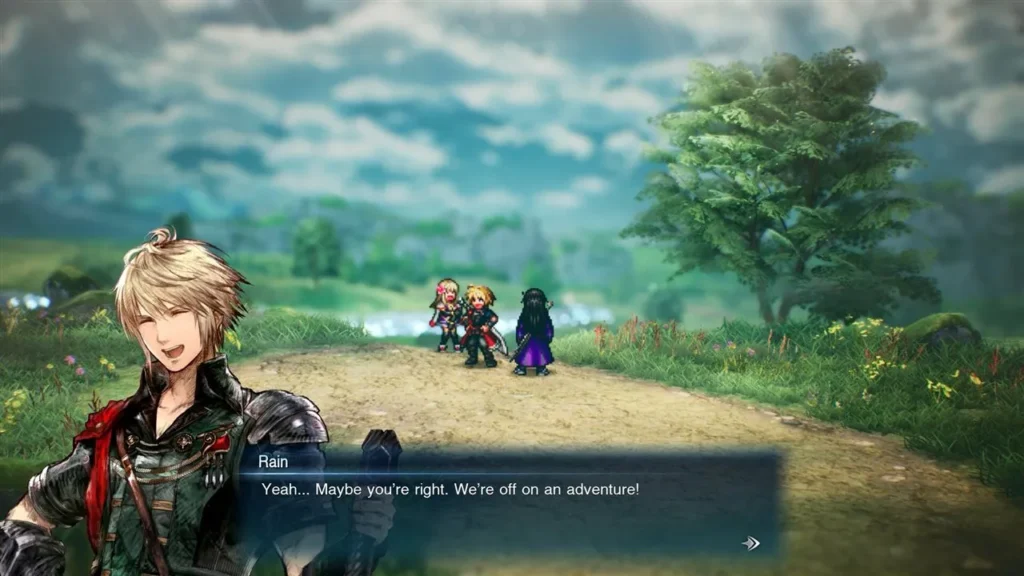
Final Fantasy Resonance begins with Rain and Lasswell, knights of Grandshelt, investigating trouble at the Earth Shrine. Their mission leads to a confrontation with an overwhelmingly powerful armored enemy and the destruction of the Earth Crystal. The threat subsequently reaches Grandshelt itself, establishing the urgency behind their journey to protect the remaining crystals. Rain serves as the central protagonist, while Lasswell is both his childhood companion and a fellow knight.
Their shared history gives the opening party an established personal relationship rather than requiring every connection to develop from an initial meeting. Fina introduces a different kind of mystery because she has lost her memories apart from her name, while her unusual abilities raise questions about her identity and origins. Together, the three characters provide a familiar foundation for a Final Fantasy narrative in which personal relationships develop alongside a conflict whose consequences extend across the world.
The premise deliberately draws on recognizable fantasy elements, including threatened crystals, mysterious enemies, and a journey involving characters whose identities and relationships influence the wider story. These ingredients establish the atmosphere quickly, particularly for players familiar with earlier Final Fantasy games. However, their presence alone does not determine the quality of the writing. The effectiveness of the narrative depends on how the characters respond to events, how revelations are introduced, and whether the journey gives emotional significance to its larger threats. For newcomers, the opening conflict provides an understandable entry point because protecting endangered crystals does not require prior familiarity with the wider Brave Exvius storyline.
Square Enix confirms that Final Fantasy Resonance is based on the first story arc of Final Fantasy Brave Exvius, with the material refined and extensively reconstructed for a conventional console and PC RPG. This makes adaptation a more accurate description than simply calling the game a port. The relationship explains why Rain, Lasswell, and Fina lead the adventure, as Resonance draws on an established setting and cast while presenting the material through a different gameplay structure.
VGC’s hands on coverage also states that the original mobile game’s gacha mechanics have been removed, an important distinction for players concerned that Resonance might reproduce a mobile character acquisition model within a paid roleplaying game. The new release is instead positioned as a traditional RPG experience with progression designed around its reconstructed format.
Previous experience with Brave Exvius is not required to understand Resonance. During Nova Crystallis’s preview, Square Enix indicated that newcomers could approach the game without having completed the original mobile adventure. Returning players may recognize familiar characters, locations, and story elements, but the adaptation is intended to provide an accessible introduction to its central cast and conflict. Its scope should also remain clear.
Rebuilding the first story arc does not mean that every storyline, collaboration, event, or character from the mobile game has been reproduced. The broader significance of the project lies in transforming previously serialized material into a more self contained adventure, allowing its story and progression to function within the structure of a conventional console and PC release.
Combat is one of the most important features distinguishing Final Fantasy Resonance from its source material. The game uses strategic turn based battles built around identifying enemy weaknesses, staggering opponents, and creating additional opportunities for the party to act. The official Steam description identifies these mechanics as central to the battle system, alongside powerful Resonance attacks. This creates a distinction between dealing immediate damage and controlling an encounter. An attack that interrupts an opponent or contributes to staggering may provide greater tactical value than an ability with a higher damage total, particularly when the party needs time to recover, prepare another action, or prevent a dangerous enemy move.
Nova Crystallis’s hands on coverage describes a visible action order and battles in which timing, support abilities, and coordinated attacks influence the outcome. Its preview also explains that staggering an entire enemy group opens a bonus phase for the party, creating an opportunity to use a Resonance ability. These mechanics place importance on preparation and timing rather than simply selecting the strongest available attack during every turn. Players can examine enemy vulnerabilities, determine which party member should create an opening, and decide when to commit their most powerful abilities. The relationship between immediate actions and later opportunities introduces tactical choices that may change depending on the encounter and the current condition of the party.
For example, if an opponent is preparing a dangerous move, interrupting that action may be more valuable than dealing the highest possible immediate damage. If the party is already secure, conserving resources for a later encounter could be preferable. These examples illustrate the kinds of decisions supported by the announced mechanics rather than providing prescribed solutions to particular battles. The lasting quality of the system will depend on whether encounters consistently reward different approaches and whether its mechanics remain meaningful throughout the campaign. Turn based combat is most engaging when players have reasons to reconsider their decisions rather than relying on the same strategy in every situation.
Character customization expands these possibilities through the Vision system, which connects progression with Final Fantasy’s broader history. Equipped Visions provide abilities and other benefits, allowing the main cast to draw on powers associated with additional characters. PlayStation Blog’s October 20 explanation describes Visions gaining mastery points through victories, with further abilities and bonuses becoming available as they develop. Its example involving Noctis demonstrates how a Vision can influence both the actions available during battle and a character’s longer term progression. The system resembles traditional job customization because equipped Visions change what party members can do rather than merely increasing their existing statistics.
Players can approach Vision customization through specialization or broader party coverage. Specialization involves strengthening a character’s established role, while coverage introduces abilities that help compensate for weaknesses elsewhere in the party. Neither approach is automatically superior because the usefulness of a particular arrangement depends on the encounter, available abilities, and the rest of the group. A customization system becomes more interesting when multiple combinations remain effective, allowing players to address challenges through different strategies rather than discovering a single arrangement that makes every alternative unnecessary. Visions also give progression a purpose beyond increasing character levels, since developing another option can introduce new tactical decisions and encourage experimentation with party composition.
The inclusion of classic Final Fantasy characters strengthens this system’s connection to the wider franchise. Square Enix specifically identifies Cloud, Tidus, and the Warrior of Light among the familiar figures appearing in Resonance, while PlayStation Blog’s October 20 feature discusses additional examples such as Terra, Lightning, and Sephiroth. Legacy Visions preserve recognizable attacks, animations, and musical associations from their original games, giving longtime fans opportunities to encounter familiar elements within a different adventure. Their appearances should nevertheless be distinguished from the central narrative cast. Cloud appearing as a Vision does not mean that Resonance becomes a continuation of Final Fantasy VII or that the main storyline revolves around him.
For longtime players, recognizable characters and signature moves provide an additional connection to earlier adventures. Familiar animations, abilities, and musical references may carry memories of those games, while newcomers can approach the same Visions primarily as useful combat options. The most effective use of this approach is to make nostalgia contribute to gameplay rather than function solely as decoration. A recognizable character becomes more meaningful when their abilities encourage a different tactical approach or provide an additional option for party development. Consequently, players do not need to understand every reference to benefit from the Vision system, although familiarity with the wider series can add another layer of appreciation.
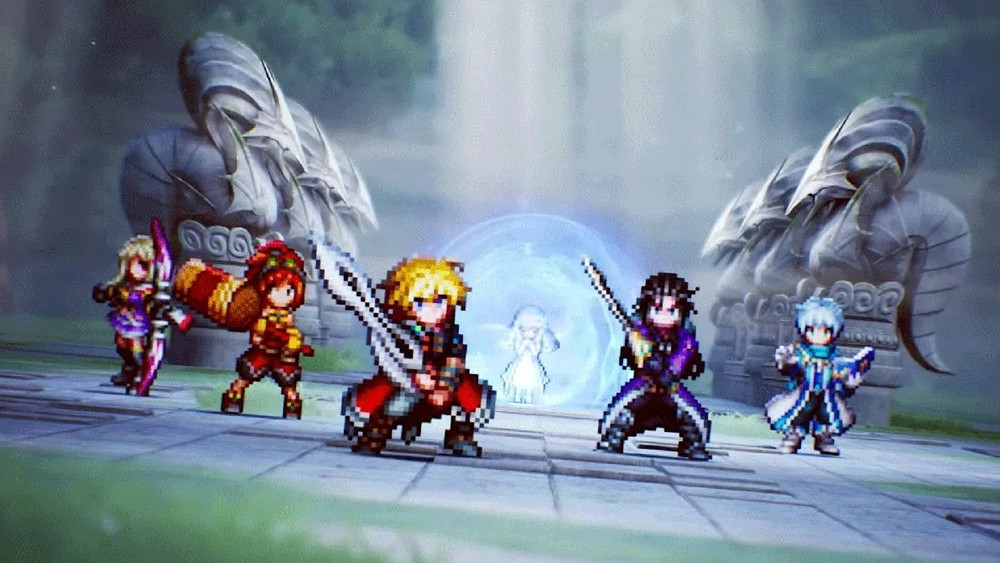
Final Fantasy Resonance also marks the first Final Fantasy game in Square Enix’s HD 2D lineup. Its presentation combines cinematic pixel art, dynamic camera angles, and pixelized 3D models, creating a visual style that connects the appearance of classic roleplaying games with modern production techniques. The concept explores how the franchise’s traditional pixel based presentation might have developed with contemporary rendering, animation, and cinematic staging. Rather than relying exclusively on flat environments, the game uses depth, lighting, composition, and movement to give its pixel art a more elaborate presentation while retaining the visual identity associated with earlier RPGs.
This approach requires several elements to work together. Pixel art establishes the overall visual language, but lighting, environmental depth, character animation, and effects determine how successfully that style translates into motion. A dramatic spell animation may look impressive, but it must still communicate important combat information, including its target, outcome, and relationship to the action order. Presentation and readability therefore remain closely connected, particularly in a game emphasizing tactical decisions and enemy weaknesses. Nintendo Everything’s review coverage places Resonance within the HD 2D tradition associated with Octopath Traveler, although that comparison concerns the broad aesthetic approach rather than suggesting identical combat mechanics or storytelling structures.
The game’s visual identity is also complemented by its musical presentation. Square Enix’s soundtrack listing describes a collection spanning four discs and containing 120 tracks, including 33 tracks in addition to music from Brave Exvius. This confirms a substantial musical component and establishes continuity with the source material, although the number of tracks alone does not determine the soundtrack’s quality. Music contributes through its placement within the adventure, whether establishing the atmosphere of a settlement, supporting the momentum of a battle, or connecting emotionally important scenes through recurring melodies. Returning compositions can provide recognition for Brave Exvius players while giving newcomers a musical identity through which to experience the reconstructed setting.
Voice acting adds another dimension to the characters and their interactions. The official Steam listing identifies English and Japanese audio support, with additional languages available through interface and subtitle options. Players should distinguish between spoken audio languages and text language support when choosing their preferred presentation. Voice performances can communicate hesitation, confidence, humor, and tension in ways that complement written dialogue, particularly when familiar characters are being reintroduced through a different format. However, confirming the availability of voice acting is separate from evaluating the quality or consistency of the performances throughout the complete adventure.
Taken together, the reconstructed Brave Exvius storyline, turn based combat, Vision customization, legacy characters, and HD 2D presentation establish Final Fantasy Resonance as a traditional roleplaying experience with several modern additions. Its identity depends on more than nostalgia because the combat systems and character progression provide opportunities for tactical experimentation, while the rebuilt narrative offers an entry point for players unfamiliar with the original mobile release. The strongest potential lies in how these elements work together, allowing recognizable Final Fantasy themes and characters to support an adventure that also establishes its own progression and gameplay structure.
Final Fantasy Resonance Exploration, Optional Content, Demo, Release Date and Overall Verdict
Exploration in Final Fantasy Resonance follows a recognizable classic RPG framework, with VGC’s preview describing travel across a world map, visible towns and paths, chocobo movement, and random encounters. These elements support the impression of an adventure structured around traveling between destinations rather than selecting battles from a mobile interface. A world map can contribute more than geographical scale because it establishes relationships between settlements, dangerous areas, and the party’s next objective. Returning to familiar regions may also feel different as characters gain new abilities or develop a clearer understanding of the story. This structure creates a familiar rhythm of travel, combat, preparation, and discovery that may appeal to players seeking a traditional Final Fantasy experience.
Random encounters are likely to be one of the more preference sensitive aspects of that structure. Some players appreciate the uncertainty and resource management they introduce, while others prefer to see enemies before entering combat. Neither preference establishes whether the mechanic is universally beneficial or detrimental, but it can influence how enjoyable extended exploration feels. Dungeon quality also depends on more than visual presentation. Route design, encounter variety, meaningful discoveries, and appropriate recovery opportunities all contribute to whether exploration remains engaging throughout the campaign. The published previews establish the game’s general structure, although they do not provide sufficient evidence to claim that every town or dungeon is equally memorable.
Optional content expands the adventure beyond the reported 20 to 30 hour main campaign. Square Enix’s official product description identifies several additional attractions, including Gilgamesh, the Colosseum, the Chamber of Arms, and a confrontation with Ultima Weapon. These provide concrete examples of activities outside the central narrative and help explain why the reported extensive completion estimate reaches approximately 70 hours. However, the existence of these encounters does not establish how much time each activity requires or whether every player will pursue them. Optional challenges can serve a different purpose from mandatory story battles, giving players additional opportunities to refine party composition, test equipment choices, and develop their understanding of the combat system.
The main campaign must accommodate players primarily interested in progressing through the story, while optional encounters can provide challenges for those who want to explore the mechanics more thoroughly. Their value depends partly on the rewards and satisfaction they provide. A difficult battle becomes more compelling when overcoming it offers a meaningful progression benefit, an interesting character moment, or the satisfaction of mastering a challenging encounter. Optionality also supports pacing by allowing players to choose when to pursue additional objectives instead of requiring every activity to interrupt the central storyline. The reported 70 hour completion estimate is therefore best understood as evidence of a potentially substantial wider adventure rather than an obligation for every player.
The distinction between narrative completion and optional progression is particularly relevant to players considering the game’s overall value. Someone who completes Rain’s central journey without clearing every challenge has still experienced the main story, while a player interested in difficult encounters and character optimization may continue exploring long afterward. The larger completion estimate suggests that Resonance provides room for both approaches, although the actual time required will vary. It should not automatically be interpreted as the amount of time needed to earn every achievement or trophy, particularly without confirmed information about the specific requirements involved.
Players interested in experiencing the game before purchasing the complete release can use the Final Fantasy Resonance demo, which covers the opening through the end of Chapter 1. Square Enix confirms that saved progress from the demo can transfer into the full game, allowing time spent following the introduction and learning the battle system to contribute toward the eventual playthrough. This is particularly useful for a narrative driven RPG because players can begin the story without necessarily repeating the opening chapters after obtaining the complete game. However, the official store description also identifies level restrictions within the demo, meaning it should be understood as a substantial introduction with defined limits rather than unrestricted access to the entire adventure.
The save transfer feature is an important convenience, but it should not automatically be interpreted as confirmation of universal compatibility between every platform or storefront. The general announcement establishes that progress can carry from the demo into the full game, while specific compatibility arrangements depend on the supported implementation. Players should therefore distinguish the confirmed transfer feature from assumptions about moving saved progress between unrelated systems. The demo also provides an opportunity to evaluate the announced mechanics through actual play rather than relying exclusively on promotional descriptions or numerical review scores.
Several aspects of the experience can be assessed directly through the demo:
- Combat pacing: Whether the turn based battle system provides a comfortable balance between strategic decisions and encounter duration.
- Story introduction: Whether Rain, Lasswell, Fina, and the opening conflict establish sufficient interest in continuing the adventure.
- Visual presentation: How effectively the HD 2D graphics, animations, lighting, and cinematic effects work during gameplay.
- Interface clarity: Whether important combat information, menus, and progression systems remain easy to understand.
- Party customization: Whether the available character development options encourage experimentation with different abilities.
- Exploration: Whether traveling through the available environments and participating in encounters feels engaging.
- Overall appeal: Whether the combination of storytelling, presentation, and combat creates a desire to continue into the complete release.
These considerations provide a practical basis for understanding individual preferences. A positive critical score can establish interest, but experiencing the opening chapters can reveal whether the battle pace, dialogue, visual effects, and progression systems suit a particular player. The ability to carry progress into the full game also reduces the need to repeat content already completed during the demo, making the introduction more closely connected to the main adventure.
Final Fantasy Resonance is scheduled to launch on October 22, 2026, for PlayStation 5, Xbox Series X|S, Nintendo Switch, Nintendo Switch 2, and PC through Steam and the Microsoft Store on Windows. Square Enix confirmed these platforms and the release date in its announcement. The distinction between the review reporting and the launch date is important because October 15 is associated with coverage of the Famitsu scores and campaign length, while October 22 is the announced release date. As of the October 20 reporting referenced in this article, the complete game had not yet launched.
Square Enix also lists a suggested US retail price of $49.99 for the Standard Edition and $59.99 for the Digital Deluxe Edition. These figures should remain identified as US pricing because regional prices may differ. The availability of multiple platforms gives players several options for experiencing the adventure, but it does not establish identical technical performance across all supported hardware. Resolution, frame rate, loading behavior, and graphical settings require platform specific evidence, while the presence of both Nintendo Switch and Nintendo Switch 2 versions should not be interpreted as automatic confirmation of a particular upgrade arrangement.
For buyers, practical considerations include preferred hardware, portability, save continuity, and the performance of the demo on the intended platform. A player who values portable access may consider the Nintendo versions, while someone primarily interested in particular graphical or performance characteristics may evaluate the available console and PC options differently. However, the announced platform list alone does not establish which version provides the best technical experience. That comparison requires evidence specific to each release rather than assumptions based on hardware differences.
The published evidence makes Final Fantasy Resonance a strong candidate for players who enjoy traditional party based roleplaying games. Famitsu’s four matching 9/10 scores are encouraging, while the reported campaign length suggests a central adventure that can be completed without requiring every optional objective. Its most persuasive features are the combination of recognizable Final Fantasy themes, modernized pixel art, strategic combat, and the customization opportunities provided by Visions. Rather than depending exclusively on familiar imagery, the game offers systems that encourage players to consider party composition, enemy weaknesses, and character progression throughout the journey.
However, whether Resonance is worth playing ultimately depends on individual preferences. Players who enjoy managing abilities, experimenting with party arrangements, and following a directed fantasy narrative are more closely aligned with its announced design than those seeking an action focused experience. The reported main campaign length can also be viewed differently depending on personal priorities. A more focused narrative may appeal to players who value momentum, while extensive optional activities provide opportunities for those who enjoy challenge and experimentation. The existence of a demo alongside the positive Famitsu reception gives prospective players additional information for evaluating that balance.
The strongest indication of Resonance’s potential lies in how its individual elements support one another. Its familiar characters and Final Fantasy references may attract attention, but engaging combat decisions, rewarding progression, effective storytelling, and well structured exploration are what must sustain the adventure. The Vision system connects nostalgia with customization, while the HD 2D presentation offers a modern interpretation of the series’ classic visual identity. Optional encounters provide opportunities to explore the mechanics beyond the main narrative, and the reconstructed Brave Exvius storyline gives both returning players and newcomers a recognizable foundation for the adventure.
Final Fantasy Resonance therefore appears positioned to appeal especially to fans of classic Final Fantasy games and traditional Japanese roleplaying experiences. Its early 36/40 Famitsu score, estimated 20 to 30 hour campaign, and broader completion estimate of approximately 70 hours establish encouraging expectations for the release. Nevertheless, those figures should remain distinct from a comprehensive assessment of the complete experience. The game’s lasting appeal will depend on how successfully its combat, characters, exploration, optional content, and presentation work together across the full adventure.


Frequently Asked Questions (FAQs)
- What score did Final Fantasy Resonance receive from Famitsu?
Final Fantasy Resonance received four individual scores of 9/10 from Famitsu’s reviewers, giving it a combined rating of 36/40. Famitsu uses a panel of four reviewers, each awarding a score out of ten, so the frequently reported 9/9/9/9 result represents four matching assessments rather than a single review score. The strong rating reflects positive early reception, particularly regarding the game’s traditional Final Fantasy elements and modern HD 2D presentation. However, it does not represent a universal consensus across every gaming publication. - Is Final Fantasy Resonance exactly 25 hours long?
No. Coverage of Famitsu’s review estimates that the main story takes approximately 20 to 30 hours to complete. The commonly reported 25 hour campaign represents the midpoint of that range rather than a fixed completion time. Individual playthroughs may differ depending on exploration, battle difficulty, reading speed, and time spent experimenting with character progression. Players focusing primarily on the narrative may finish sooner than those who explore more extensively or spend additional time developing their party. - How long does full completion take?
Reports based on Famitsu’s review suggest that extensive completion of Final Fantasy Resonance may take approximately 70 hours. This is considerably longer than the estimated 20 to 30 hour main campaign because the game includes optional challenges, additional encounters, and progression activities beyond the central story. However, the figure is an estimate rather than a guaranteed completion time. It should also not automatically be treated as the time required to unlock every achievement or obtain a platinum trophy, since those objectives may involve different requirements. - Why do some reports mention a 30–40 hour story?
Earlier preview coverage, including VGC’s September hands on feature, described Final Fantasy Resonance as a 30 to 40 hour adventure. Later reports discussing Famitsu’s review provided a shorter estimate of 20 to 30 hours for the main campaign. The available sources do not establish a common testing method that fully explains the difference. Variations in exploration, gameplay pace, and character development could affect completion time, but those possibilities have not been confirmed as the reason for the discrepancy. Both estimates should therefore be understood within their original reporting contexts. - Do players need to finish Brave Exvius first?
No. Square Enix indicated that players do not need previous experience with Final Fantasy Brave Exvius to understand Final Fantasy Resonance. The new game adapts the first story arc of Brave Exvius into a reconstructed console and PC RPG, providing an accessible introduction to Rain, Lasswell, Fina, and their adventure. Returning Brave Exvius players may recognize familiar characters and story elements, but newcomers can follow the main conflict without completing the original mobile game. Resonance is designed to function as its own roleplaying experience rather than requiring knowledge of the entire mobile storyline. - Does Final Fantasy Resonance include gacha mechanics?
According to VGC’s hands on coverage, the gacha mechanics associated with Final Fantasy Brave Exvius have been removed from Final Fantasy Resonance. The game is presented as a conventional paid console and PC RPG rather than a direct recreation of the mobile game’s character acquisition model. Its progression instead emphasizes strategic battles, party customization, and the Vision system. This distinction is important because Resonance adapts the story and characters of Brave Exvius while substantially rebuilding the experience for a different format. - What are Visions in Final Fantasy Resonance?
Visions are equippable character manifestations that provide additional combat abilities and progression benefits. They allow the main characters to draw on powers associated with familiar Final Fantasy figures, including characters from earlier games in the series. Visions can gain mastery points through battles, unlocking further bonuses and abilities as they develop. The system supports party customization by allowing players to strengthen existing character roles or introduce new options that address weaknesses within the group. Their purpose extends beyond nostalgia because equipped Visions can influence combat strategy and character development. - Does demo progress transfer to the full game?
Yes. Square Enix confirms that saved progress from the Final Fantasy Resonance demo can carry into the complete game. The demo covers the opening through the end of Chapter 1, allowing players to experience the beginning of the story, explore its combat mechanics, and become familiar with the characters before purchasing the full release. However, the demo includes level restrictions and does not provide unrestricted access to the entire adventure. The confirmed save transfer feature also should not be interpreted as automatic support for transferring progress between every platform or storefront. - Does Final Fantasy Resonance have English voice acting?
Yes. Final Fantasy Resonance supports both English and Japanese voice acting, according to its official Steam listing. The game also offers additional language options for interface text and subtitles, although these should be distinguished from languages with full spoken audio support. Players can therefore select between the confirmed audio languages according to their preferences. Voice acting complements the written dialogue and helps communicate the personalities, emotions, and relationships of the main characters throughout the adventure. - When does Final Fantasy Resonance release?
Final Fantasy Resonance is scheduled for release on October 22, 2026, according to Square Enix’s official announcement. The game is planned for PlayStation 5, Xbox Series X|S, Nintendo Switch, Nintendo Switch 2, and PC through Steam and the Microsoft Store on Windows. Square Enix lists a suggested US price of $49.99 for the Standard Edition and $59.99 for the Digital Deluxe Edition, although regional prices may vary. The October 15 date associated with Famitsu review coverage should not be confused with the official October 22 launch date.
Conclusion
Final Fantasy Resonance received four 9/10 ratings from Famitsu, producing a combined score of 36/40. Its main campaign is estimated at 20 to 30 hours, with approximately 25 hours representing the midpoint, while extensive completion may take around 70 hours. Earlier previews suggested a longer campaign, so these figures remain estimates rather than fixed completion times.
Beyond its review scores and campaign length, Resonance adapts Brave Exvius into a rebuilt RPG featuring familiar characters, strategic combat, and the Vision system. For classic JRPG fans, it offers a focused adventure with substantial optional challenges and opportunities for party customization. The available demo also allows players to evaluate its gameplay, presentation, and pacing before purchasing the full game.
Sources and Citations
- Square Enix North America Press Hub, June 9, 2026, Official Announcement : Confirms the adaptation of Brave Exvius’s first story arc, the October 22, 2026 release and supported platforms. It also records announced US prices of $49.99 for Standard, $59.99 for Digital Deluxe and $209.99 for the Collector’s Edition. Square Enix North America Press Hub
Final Fantasy Resonance, First HD-2D Final Fantasy Game, Revealed Alongside New Trailers for Kingdom Hearts IV and More - Square Enix Store, Official Product and Edition Information : Details the Standard and Collector’s Editions, the Digital Deluxe upgrade and promotional item packs. The Collector’s Edition description identifies acrylic blocks, a pixel art book, a soundtrack containing 120 tracks across four CDs, and a Final Fantasy Trading Card Game promotional card. SQUARE ENIX Store
Final Fantasy Resonance on the Square Enix Store - Steam, Official Final Fantasy Resonance PC Listing : Identifies Square Enix and LANCARSE as the developers and lists supported languages, gameplay features and PC requirements. The page also provides the demo, explains save transfer, and outlines the available game editions, Digital Deluxe content and early purchase bonuses. store.steampowered.com
Final Fantasy Resonance on Steam - Square Enix Final Fantasy Portal, September 9, 2026, Free Demo Announcement : Confirms that the demo covers the opening through the first chapter, with approximately three to five hours of gameplay and save transfer. It also lists supported demo platforms and explains the opportunity to challenge Sephiroth for a special reward. SQUARE ENIX
Free Demo for Final Fantasy Resonance Now Available - PlayStation Blog, September 3, 2026, Demo Announcement and Combat Overview : Announces the PS5 demo and Sephiroth’s reveal alongside a detailed combat overview. Covers the action timeline, staggering enemies, learning and combining Vision abilities, Resonance attacks and Espers, while confirming that progress from the demo carries into the full game. PlayStation.Blog
Final Fantasy Resonance PS5 demo available today, Sephiroth revealed - PlayStation Blog, October 20, 2026, Visions and Character Customization : Explains how Visions grant abilities, passive bonuses and mastery rewards, and how they can change a character’s combat role. The feature demonstrates customization through familiar series characters and explains the separate role of Espers as summons that temporarily participate in battles. PlayStation.Blog
How Final Fantasy Resonance uses Visions to change how we see the series - Nintendo Life, October 15, 2026, Report on Famitsu’s First Review : Reports Famitsu’s four scores of 9/10, totaling 36/40, and explains how its reviewers’ ratings are combined. It also relays estimated main story and completion times through Genki_JPN, while noting that demo progress can transfer to the full game. Nintendo Life
The First Review for Final Fantasy Resonance Is In - Nintendo Everything, October 14, 2026, Famitsu Score and Review Comments : Reports Famitsu’s 36/40 assessment and estimates of 20 to 30 hours for the main adventure, with up to 70 hours including additional content. It also reproduces reviewers’ observations about visuals, Visions customization, combat balance, character writing and side quests. nintendoeverything.com
Final Fantasy Resonance gets first review - Push Square, October 15, 2026, Famitsu Review and Campaign Length Report : Sammy Barker reports Famitsu’s four 9/10 scores and the campaign length estimates relayed by Genki. The article adds context from his earlier preview session and states that Push Square’s own full review would follow. Push Square
First Final Fantasy Resonance PS5 Review Released, Rough Campaign Length Revealed - Pure Xbox, October 15, 2026, Famitsu Rating and Playtime Coverage : Reports Famitsu’s 36/40 rating and explains the four individual 9/10 scores behind that total. It also relays Genki’s summary of the review’s estimated 20 to 30 hour main story and approximately 70 hour completion time. Pure Xbox
The First Review Has Dropped for Final Fantasy Resonance, Hints at Campaign Length - Nova Crystallis, September 3, 2026, Hands-On Preview : James Stine’s preview examines the rebuilt Brave Exvius adaptation, its HD-2D presentation and turn based battles. It discusses party roles, equipment, Visions, mastered abilities, Resonance attacks, stagger mechanics and Esper summons, offering practical impressions of how the combat systems interact. Nova Crystallis
Final Fantasy Resonance Preview - Nova Crystallis, June 9, 2026, Reveal and Story Details : Reports the game’s announcement and October 22 release, explaining its reconstruction of Brave Exvius’s first season. The article introduces Rain, Lasswell, Fina and their mission to protect the crystals, alongside character information and explanations of the principal battle systems. Nova Crystallis
Final Fantasy Resonance announced for October 22, 2026 release - Nintendo Everything, August 12, 2026, Extended Gameplay Report : Highlights a 16 minute IGN gameplay presentation featuring the boss battle against Shiva. The accompanying overview explains the HD-2D visual approach, strategic turn based combat, elemental weaknesses, stagger, Resonance attacks and Visions, while identifying optional activities and challenges. nintendoeverything.com
Final Fantasy Resonance reveals extended gameplay - Square Enix Asia News Portal, June 10, 2026, Regional Launch Announcement : Covers the game’s platforms, editions and Brave Exvius origins. Its regional schedule lists October 22 as the general release date and October 23 for Steam, with a note that release timing and availability can vary by territory. ASIA NEWS PORTAL
Final Fantasy Resonance Launching on October 22, 2026: Preorders Available Now - Square Enix Final Fantasy Portal, June 11, 2026, Official Reveal : Introduces the series’ first HD-2D game, its strategic combat and appearances by familiar characters including Cloud, Tidus and the Warrior of Light. It confirms the reconstruction of Brave Exvius’s opening story arc and supplies announced platforms, edition prices and release details. SQUARE ENIX
Final Fantasy Resonance, First HD-2D Final Fantasy Game, Revealed Alongside Other New Title Trailers
Recommendations
- Master Healer Kale with Useless Party Explained: Gameplay, Skills, Incremental Healing Mechanics, and Strategy Guide
- Lies of P: Complete Edition is Back with a New Trailer, Switch 2 Release Date, and 60 FPS Gameplay
- Release Date for Long-Awaited Sci-Fi Horror Directive 8020: What to Expect, Trailer Reactions, and Everything We Know
- The Witcher 3 Songs of the Past: Geralt and Dandelion’s Final Friendship Story
- JOIN US on PS5: Wolf Haus Games’ 4-Player Open-World Doomsday Cult Survival Sim
- This New Co-Op Dark Fantasy RPG Is Like Elden Ring Meets Arc Raiders Overview
- MY HERO ACADEMIA: All’s Justice on Switch 2: September 4, 2026 Release, Gameplay and Editions
- Castlevania: Belmont’s Curse Release Date & Details
- Valor Mortis Recoups Launch Costs, One More Level Reports
- DON’T NOD Enters French Court Protection: Sauvegarde Explained



































































































