










The Witcher 3 Songs of the Past Expansion Explained
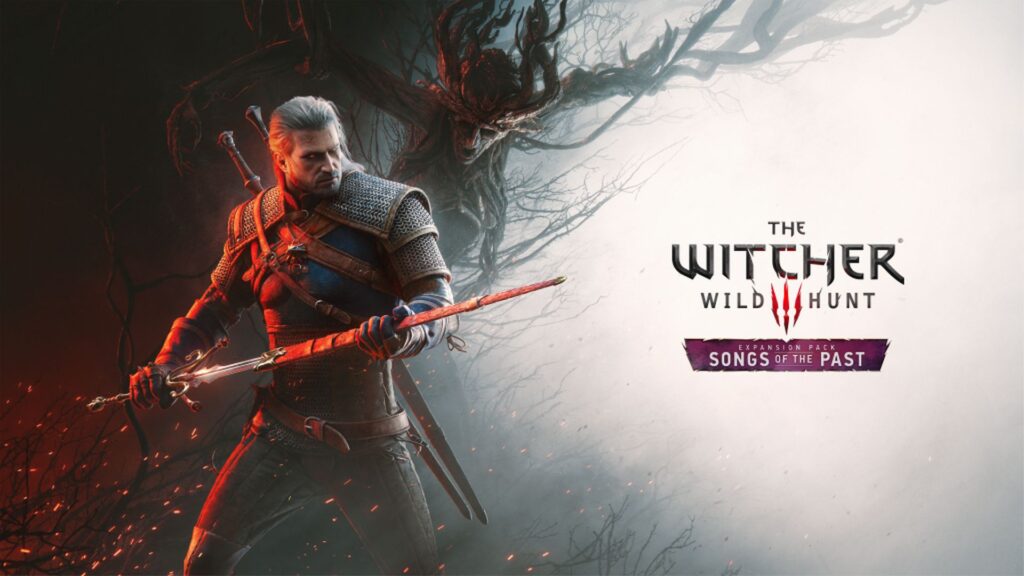
The Witcher 3: Wild Hunt: Songs of the Past is an official new expansion that brings Geralt of Rivia back for another substantial adventure more than a decade after The Witcher 3 originally launched. CD Projekt Red has confirmed that the paid expansion will release in 2027 and take Geralt to Letten, a previously unseen rural region defined by abundant harvests, celebrations, traditional folklore and an underlying supernatural threat. Geralt will encounter new enemies while confronting a long dormant evil, making the expansion more than a small piece of nostalgic bonus content.
Songs of the Past is the third expansion for The Witcher 3: Wild Hunt, following Hearts of Stone and Blood and Wine. CD Projekt Red is deliberately describing it as an expansion rather than a smaller DLC package, reflecting the company’s distinction between free content additions and larger releases built around new stories, characters and many hours of gameplay. The project is being co developed with Fool’s Theory, a studio whose leadership includes developers who worked on The Witcher 3 and which is also responsible for The Witcher remake. That involvement brings developers familiar with the series’ quest design, atmosphere and morally ambiguous storytelling back to Geralt’s world.
What makes Songs of the Past particularly significant is its emotional focus. Rather than using Geralt’s return mainly to prepare for Ciri’s future in The Witcher 4, the expansion centres on Geralt’s friendship with Dandelion. Developers have described it as a missing chapter that gives the bard the attention they believed his story deserved while helping to complete The Witcher 3. Gamescom 2026 previews revealed that Dandelion goes missing in his homeland, drawing Geralt into Letten’s aristocratic family history, rural traditions and supernatural dangers.
Songs of the Past also forms part of a wider revival of The Witcher 3. The Witcher 3: Wild Hunt Remastered launches on September 29, 2026, Songs of the Past follows in 2027, and The Witcher 4 is currently planned for 2028. Together, these releases extend Geralt’s story while preparing the series for its next major chapter.
In This Article (8 sections)
The Witcher 3 Songs of the Past Letten Setting and Dandelion’s Family History
The Witcher 3: Songs of the Past takes place principally in Letten, a completely new region in northern Redania. During Gamescom preview coverage, vision director Karolina Kuzia described it as a lush valley hidden among mountains. Although Letten has sometimes been described as being in northeast Redania, CD Projekt Red and Fool’s Theory had not established “northeast” as its precise official geographical location as of September 2026. Available developer descriptions instead identify it more broadly as northern Redania.
The setting immediately distinguishes Songs of the Past from the war ravaged landscapes that dominated much of the original The Witcher 3. Letten has largely escaped the devastation suffered by other parts of the Continent, allowing its inhabitants to live comparatively peaceful lives surrounded by nature. The region is presented as a green mountain valley filled with dense forests, rural settlements, waterways and prosperous agricultural communities, creating a strong contrast with Velen’s mud, battlefields and displaced populations.
CD Projekt Red describes Letten as an idyllic land associated with folklore, bountiful harvests and festivals, but its pastoral appearance conceals a darker history. Game director Jakub Rokosz has emphasised that beneath the region’s prosperity lies a dangerous underbelly appropriate for a Witcher story, while the official synopsis warns of an ancient threat hidden beneath the surface. That contrast appears deliberate, with Songs of the Past beginning amid apparent tranquillity before gradually revealing the folklore, personal grievances and old evil hidden within the region.
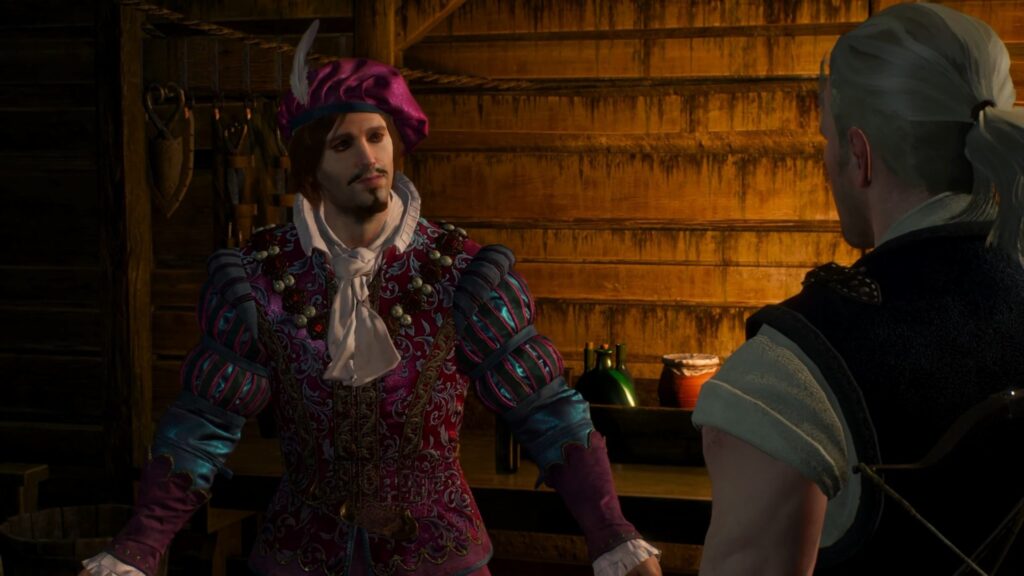
Letten is also deeply connected to Dandelion’s aristocratic background. His full name is Julian Alfred Pankratz, Viscount de Lettenhove, and the expansion turns his homeland and family history into places and relationships Geralt can experience directly instead of leaving them primarily as background lore. Gamescom demonstrations included Lettenhove, the family seat, as well as members of the de Lettenhove family and disputes surrounding Dandelion. Another narrative thread involves an old family legend concerning his ancestor, Count Humbert de Lettenhove.
The expansion therefore explores a part of Dandelion that players have heard about but rarely experienced directly. Behind the flamboyant bard is a nobleman with a family estate, relatives, education and personal history. Rokosz has explained that the developers wanted to show what exists beneath Dandelion’s comic public persona, presenting him as more intelligent and layered than his jokes, romances and reckless decisions can sometimes suggest. Letten provides the setting for that exploration, combining Dandelion’s family history with the beauty, folklore and concealed horror that define the expansion.
The Witcher 3 Songs of the Past Story, Dandelion’s Disappearance and Geralt’s Friendship
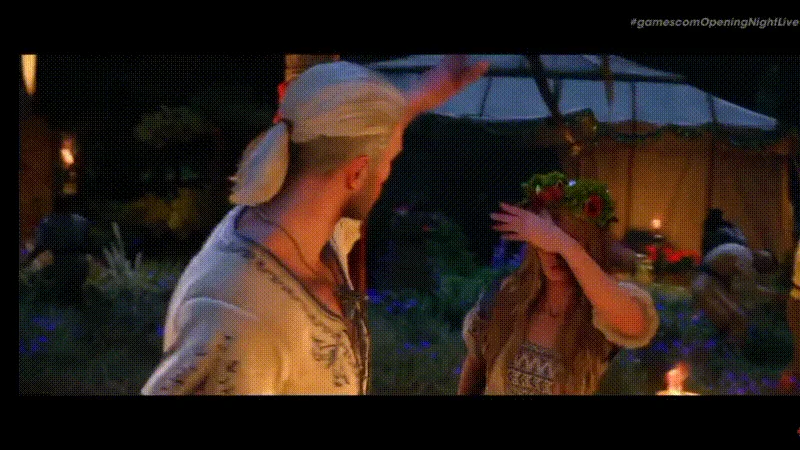
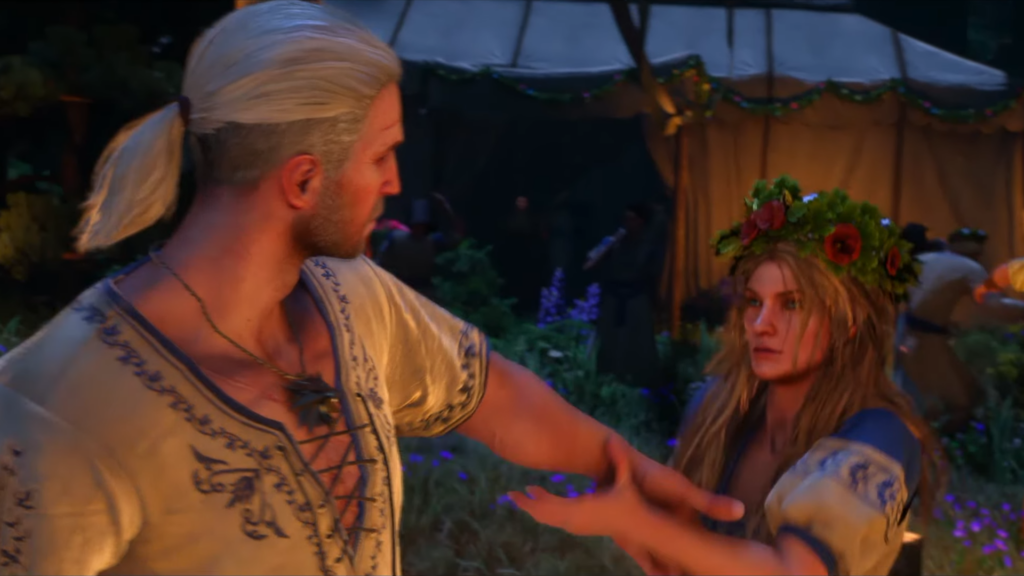
Dandelion’s disappearance provides the personal hook for Songs of the Past. Gamescom demonstrations showed Geralt in Letten following local Belleteyn festivities. After the celebrations, Dandelion cannot be found, forcing Geralt to investigate what has happened to his closest friend. What initially appears to be a missing person mystery soon draws Geralt into the history of the de Lettenhove family, including the legend surrounding Count Humbert de Lettenhove and disagreements among Dandelion’s relatives over his disappearance.
CD Projekt Red’s broader synopsis establishes that Letten also contains a long dormant evil and new enemies. This suggests that Dandelion’s personal problems and the supernatural history of the region eventually intersect, although the developer has avoided revealing the complete narrative before release. The resulting structure is distinctly Witcher in nature: what begins as a favour for a friend gradually becomes an investigation involving family, folklore, monsters and secrets from the past.
Geralt’s reason for travelling to Letten is personal rather than political. Developers wanted a convincing reason to pull him back onto the Path, and Dandelion provided it. Gamescom material describes Dandelion as needing his best friend because of personal matters connected to Letten, which eventually develops into the bard’s disappearance and Geralt’s investigation. Instead of inventing a massive threat simply to bring Geralt back, the expansion builds its premise around a relationship established across decades of Witcher storytelling.
Geralt and Dandelion’s friendship consequently appears positioned as the emotional centre of Songs of the Past. The characters have sharply different personalities. Geralt is restrained, practical and accustomed to danger, while Dandelion is theatrical, talkative and frequently capable of finding trouble without supernatural assistance. Despite those differences, their friendship has endured, and Geralt repeatedly demonstrates extraordinary loyalty whenever Dandelion is genuinely endangered.
Doug Cockle, Geralt’s English voice actor, has described Dandelion as something close to Geralt’s soulmate in a completely platonic sense, emphasising the depth of their friendship rather than suggesting a romantic relationship. Cockle has also argued that when Dandelion is truly in trouble, Geralt is willing to abandon other priorities to help him. Songs of the Past turns that established character dynamic into the foundation of an entire expansion.
The story also reverses their usual relationship. Dandelion has traditionally served as the bard who records, embellishes and retells Geralt’s adventures, but this time he becomes the person whose own past Geralt must investigate. Developers have said the expansion was created partly because they felt Dandelion never received the full spotlight he deserved in the original game. By taking Geralt into his homeland, introducing his relatives and examining his family history and private vulnerabilities, Songs of the Past gives Dandelion a much larger narrative role and makes his relationship with Geralt central to the story.
The Witcher 3 Songs of the Past Letten Region, Quests, and Remastered Technology
Letten is being built as a full new setting rather than a minor extension of an existing Witcher 3 map. Official descriptions emphasise rural traditions, folklore, harvests, festivals, and a hidden supernatural darkness, while Gamescom previews depict valleys surrounded by mountains, dense greenery, woods, and the Lettenhove family estate. The environment also played an unusually direct role in the technical development of the expansion.
Developers have explained that early versions of Letten’s dense vegetation created traversal problems, particularly when riding a horse. The technological and optimisation work carried out for The Witcher 3 Remastered helped make that vision practical, meaning Letten is not simply a collection of existing Witcher 3 assets rearranged into another countryside. Its density, vegetation, and geography pushed the team towards technical changes. The final scope is still being kept partly secret, as CD Projekt Red has not yet published a complete Letten map or definitive settlement list, so detailed online maps claiming to show the full 2027 expansion should be treated cautiously.
The Gamescom demonstration provides the clearest picture of the expansion’s opening quests. Geralt awakens after Belleteyn celebrations and discovers that Dandelion is missing. His investigation brings him to Lettenhove, where family disagreements complicate the question of what happened. The preview also demonstrated classic Witcher quest mechanics, with Geralt using Witcher senses, investigating clues, and encountering situations that allow different responses rather than forcing every conflict into combat. One early disagreement concerning Dandelion’s lute could be handled through negotiation or violence.
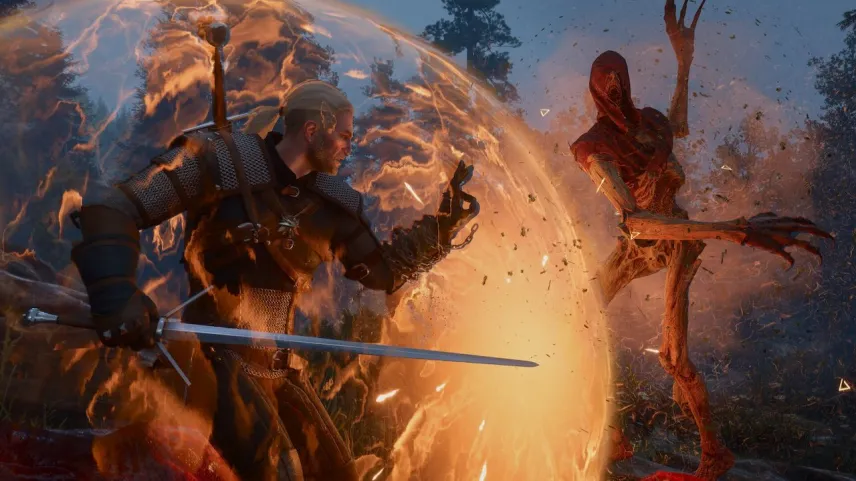
The mystery later moves towards an old de Lettenhove family legend and dangerous forest territory. Geralt also gains a silver chain weapon, echoing imagery and combat ideas associated with earlier Witcher material. The chain can be used for crowd control and more targeted attacks. CD Projekt Red’s official synopsis promises previously unseen enemies and a long dormant evil, indicating that the family mystery develops into a supernatural investigation of broader significance.
The connection between The Witcher 3 Remastered and Songs of the Past is more fundamental than marketing timing. Jakub Rokosz explained that early prototyping exposed problems with the new region’s dense vegetation. Forests and bushes could interfere with horseback traversal, creating an environment that looked appropriate but did not function correctly under the old technological constraints. Remaster related optimisation and handling improvements helped overcome those problems.
CD Projekt Red says the remaster itself upgrades visuals, performance, combat, movement, traversal, Witcher Sign effects, mount handling, monster behaviour, the skill tree, transmogrification, photo mode, and finishers. It launches September 29, 2026, on PC, PlayStation 5, and Xbox Series X|S, with a native Nintendo Switch 2 version also planned. Songs of the Past therefore benefits from a modernised technological base rather than simply attaching a 2027 expansion to an unchanged 2015 game.
Why The Witcher 3 Songs of the Past Is a Major and Unexpected Return for Geralt
Doug Cockle’s return gives Songs of the Past direct vocal continuity with the Geralt players know from CD Projekt Red’s games. Speaking at Gamescom 2026, Cockle said returning to Geralt felt “like slipping into a warm bath”, describing the character as deeply familiar after roughly two decades of performance work. That familiarity matters because Songs of the Past is framed as a late chapter rather than a reboot. Geralt does not need to be reintroduced, allowing the story to rely on his accumulated history, instincts, weariness, humour, and loyalty to Dandelion.
Cockle has also spoken specifically about the Geralt and Dandelion relationship, describing their connection as a form of platonic soulmate bond and pointing out that Geralt repeatedly prioritises rescuing Dandelion when his friend is in danger. John Schwab is likewise returning as Dandelion in the English language version, reinforcing the sense that Songs of the Past is designed as a continuation of an established relationship rather than a detached side story.
Paweł Sasko’s public contribution to the Songs of the Past discussion has principally concerned CD Projekt Red’s distinction between DLC and an expansion, rather than an announcement that Sasko is personally directing the project. After CD Projekt Red confirmed Songs of the Past, company community manager Marcin Łukaszewski stressed that the studio considers it an expansion, meaning a major release containing substantial gameplay, story, and characters.
Sasko amplified the same distinction by referencing CD Projekt Red’s previous messaging around Cyberpunk 2077: Phantom Liberty and the studio’s preference for reserving “DLC” for smaller additions. This context is important because headlines can otherwise create the inaccurate impression that Sasko is leading the Witcher expansion. Songs of the Past is being developed jointly by CD Projekt Red and Fool’s Theory, with Fool’s Theory CEO Jakub Rokosz serving as game director in the developer interviews cited here. Sasko’s contribution is therefore principally about scale: players should understand Songs of the Past as a major expansion rather than a small quest pack.
The expansion was unexpected for several reasons. The Witcher 3 launched in 2015, Blood and Wine arrived in 2016, and the industry had largely treated Geralt’s Witcher 3 expansion era as finished. A third major expansion arriving in 2027 therefore represents an extraordinary gap. Even the announcement unfolded unexpectedly. In May 2026, information about Songs of the Past appeared through CD Projekt Red’s own RED Launcher before the planned formal reveal.
CD Projekt Red then acknowledged the expansion and confirmed that it was coming in 2027, explaining that its intended announcement schedule had effectively been overtaken by its own launcher. The project was also surprising because the wider franchise is already transitioning towards Ciri and The Witcher 4. CD Projekt Red’s September 2026 corporate update places The Witcher 3 Remastered in 2026, Songs of the Past in 2027, and The Witcher 4 in a planned 2028 window. Instead of bypassing Geralt’s old game on the road to The Witcher 4, CD Projekt Red is deliberately returning to it one more time.
Frequently Asked Questions[FAQs]
- Is The Witcher 3 Songs of the Past real and officially confirmed?
Yes. CD Projekt Red has officially announced The Witcher 3: Wild Hunt – Songs of the Past and has already presented footage showing the expansion in action. It is not a rumour or an unconfirmed leak. The company describes Songs of the Past as a new paid expansion for The Witcher 3, with development being handled alongside Fool’s Theory. - When will The Witcher 3 Songs of the Past be released?
The official release window is 2027. CD Projekt Red has confirmed the year but has not announced a specific month or release date as of September 11, 2026. This means players should currently treat any more precise release dates circulating elsewhere as speculation unless the studio provides further details. - Is Songs of the Past DLC or a full expansion?
CD Projekt Red specifically describes Songs of the Past as an expansion rather than a smaller DLC release. The studio generally uses the expansion label for substantial additions featuring major new stories, characters, locations and many hours of gameplay. This distinguishes Songs of the Past from the smaller free content updates traditionally released for The Witcher 3. - Where does Songs of the Past take place?
Songs of the Past takes place in Letten, a previously unseen region located in northern Redania. Developers describe Letten as a lush valley surrounded by mountains, with rural communities that have remained relatively peaceful compared with other parts of the Continent. Its festivals, local traditions and folklore create a pastoral atmosphere, but the expansion also explores a darker supernatural history hidden beneath that peaceful appearance. - Is Letten in northeast Redania?
The available official developer description specifically places Letten in northern Redania. There has not yet been an official confirmation that the region should more precisely be described as northeast Redania. Unless CD Projekt Red later provides a detailed map or clearer geographical description, northern Redania is therefore the most accurate confirmed location. - Why does Geralt return in Songs of the Past?
Geralt returns because the expansion revolves around a personal situation involving his longtime friend Dandelion. Gamescom preview footage shows Dandelion disappearing while in Letten, prompting Geralt to investigate what happened to him. The search gradually draws Geralt into matters involving Dandelion’s family, his homeland and the darker supernatural forces connected to the region. - Will Songs of the Past reveal more about Dandelion?
Yes. Expanding Dandelion’s character is one of the central creative goals of Songs of the Past. Developers have said they wanted to give him more attention than he received in the original game, particularly by exploring the life behind his famous bard persona. The expansion examines his noble origins as Julian Alfred Pankratz, Viscount de Lettenhove, while also introducing his family, homeland and personal history. - Is Songs of the Past a direct prequel to The Witcher 4?
Developers have indicated that the main purpose of Songs of the Past is to complete and expand the story of The Witcher 3, rather than simply functioning as a bridge into The Witcher 4. Some connections between the projects could still exist, especially because not every story detail has been revealed. However, there is currently no confirmation that the expansion is designed as a direct setup for The Witcher 4. - Do players need The Witcher 3 Remastered for Songs of the Past?
The expansion is being developed around the technologically updated foundation of The Witcher 3, and developers have explained that improvements created for the remaster helped make Letten possible as envisioned. These changes were particularly useful for handling the region’s dense environments and traversal. CD Projekt Red is releasing The Witcher 3 Remastered on September 29, 2026, before Songs of the Past arrives in 2027. - Is Songs of the Past the final Geralt expansion?
Current developer focused reporting describes Songs of the Past as the third and final expansion for The Witcher 3. CD Projekt Red has positioned it as another major Geralt adventure before the broader franchise moves forward with The Witcher 4. This does not confirm that Geralt will never appear again in another Witcher project, only that Songs of the Past is intended to serve as the final expansion chapter for The Witcher 3.
Conclusion
The Witcher 3: Wild Hunt – Songs of the Past is remarkable not simply because CD Projekt Red is returning to an eleven-year-old RPG, but because of what the studio has chosen to do with that return. Rather than using Geralt solely as a vehicle for teasing The Witcher 4, CD Projekt Red and Fool’s Theory are revisiting one of the least fully explored relationships in The Witcher 3: Geralt’s enduring friendship with Dandelion.
The expansion sends Geralt into Letten, Dandelion’s homeland in northern Redania, where an apparently peaceful culture of harvests, festivities and rural tradition conceals old secrets and supernatural danger. Dandelion’s disappearance pulls Geralt into the de Lettenhove family’s history and creates an opportunity to reveal the person behind the bard’s theatrical public image.
That character-driven approach explains why developers describe Songs of the Past as a missing chapter. Dandelion has always been central to the Witcher universe as Geralt’s friend, chronicler and frequently exasperating companion, yet The Witcher 3 never devoted an entire expansion to understanding where he came from. Songs of the Past is designed to address that absence.
The project is also technically intertwined with The Witcher 3 Remastered. Letten’s dense landscape exposed problems that developers say could not have been solved in the form they wanted without remaster-related optimisation and gameplay improvements. The remaster launches September 29, 2026; Songs of the Past follows as a paid expansion in 2027; and CD Projekt Red currently plans The Witcher 4 for 2028.
For Geralt and Dandelion, Songs of the Past therefore carries the weight of a farewell without needing to be tragic. It is a final opportunity within The Witcher 3 to let Geralt follow the Path for someone whose friendship has repeatedly mattered more than his complaints suggest. If the expansion achieves the developers’ stated goal, Songs of the Past will not merely add another region to The Witcher 3. It will close one of the game’s longest-open character chapters.
Sources and citations
1. CD PROJEKT RED — August 25, 2026 official announcement
This is the primary source for Letten, the 2027 release, paid-expansion status, platforms, Fool’s Theory co-development, and The Witcher 3 Remastered details. (CD PROJEKT RED Press Center)
CD PROJEKT RED — The Witcher 3: Wild Hunt Remastered Announced, Songs of the Past Gets First Look
2. CD PROJEKT RED — September 2, 2026 corporate update
This confirms the current Witcher roadmap: The Witcher 3 Remastered in 2026, Songs of the Past in 2027, and The Witcher 4 targeted for 2028. (CD PROJEKT RED)
CD PROJEKT RED — H1 2026 Earnings / Roadmap
3. PC Gamer — Gamescom 2026 hands-off preview
This is the source for the detailed Dandelion storyline, Letten, Dandelion’s family background and the new silver chain weapon/gameplay. (PC Gamer)
PC Gamer — We saw The Witcher 3: Songs of the Past in action
PC Gamer also published a follow-up specifically detailing the silver chain weapon and how it works, which is useful if your article discusses the mechanic in more depth. (PC Gamer)
PC Gamer — CD Projekt wanted to put a chain weapon in The Witcher 3 years ago
4. TechRadar — Fool’s Theory interview / Dandelion story
This covers the developers’ explanation of why Songs of the Past was created, Dandelion’s expanded role, and the idea that the expansion completes a missing chapter of The Witcher 3 rather than simply setting up The Witcher 4. (TechRadar)
TechRadar — Songs of the Past will “complete” The Witcher 3 story with Dandelion at its center
Recommended
- Echoes of Aincrad: 7 Best Beginner Tips to Survive Your First Adventure
- Kingdom Come’s Current-Gen Version Included With Game Pass: What the Shadowdrop Upgrade Adds on PS5 and Xbox Series X|S
- DC Celebrates the 40th Anniversary of the Dark Knight Returns with New Comics and Merch: Facsimile Editions, Variant Covers, Compact Comics & DC Shop Artist Collection
- After Killing Off Microtransactions, RuneScape Raises Subscription Prices: What the New Membership Changes Mean
- James Gunn Confirms Clayface DCU Timeline — When It Takes Place and If Batman Will Appear
- Storm HydroFX 1.5 Is Up to 2.5x Faster for GPU Fluid Simulations
- Backrooms Dominates the Box Office While the Mandalorian and Grogu Continues to Struggle
- Christopher Nolan’s “AI Slop” Comments Explained: Why He Says Gen Z Is Rejecting AI
- FlippedNormals Is Closing Its Online Marketplace on 31 March 2026: What It Means for 3D Artists and Sellers



































































































