









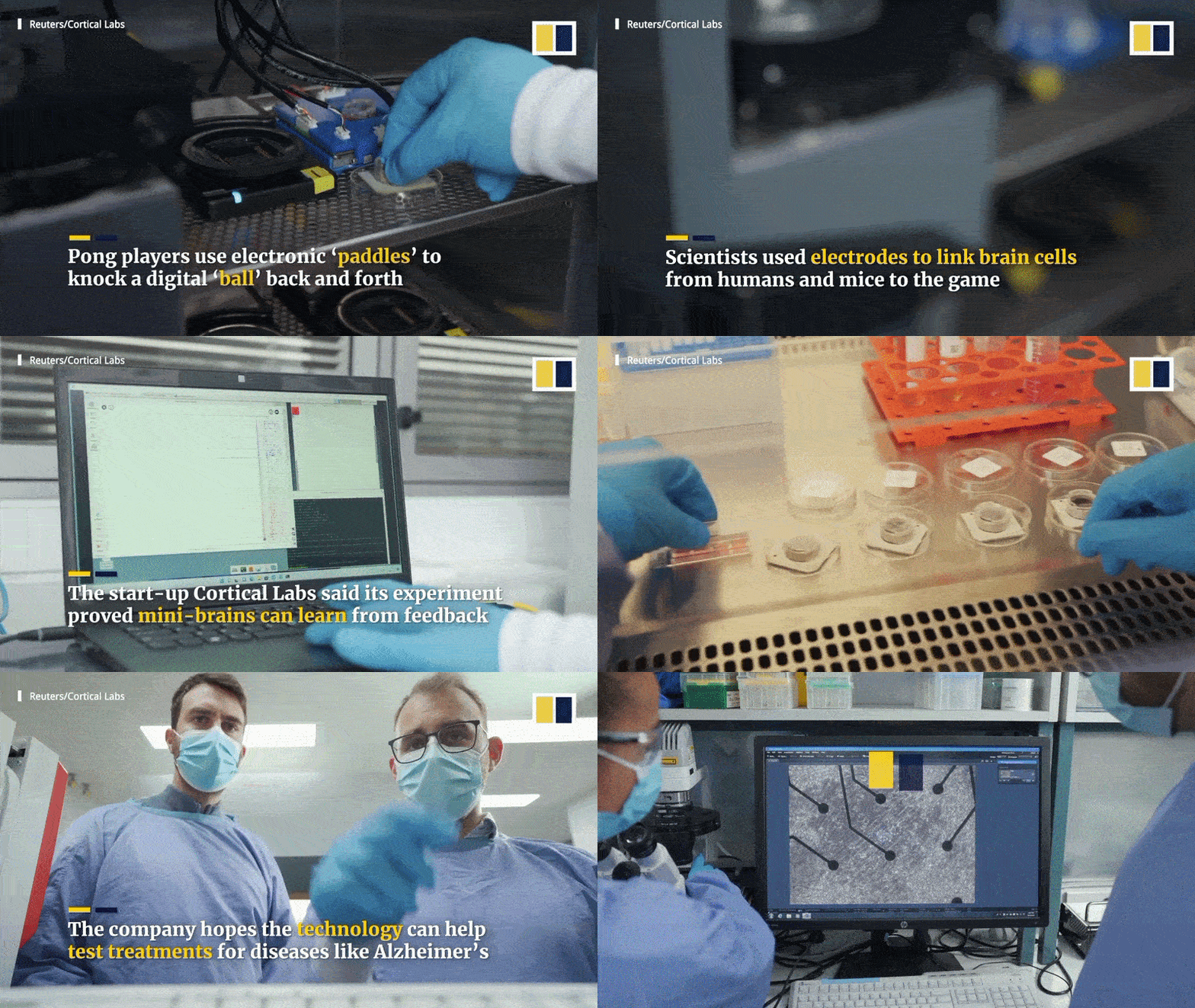
What does it mean for lab-grown brain cells to “play a video game”?
When lab-grown brain organoids “play a video game,” it means these living neural clusters are connected to a computer simulation, acting as biological processors. In a breakthrough experiment, organoids learned to balance a virtual pole by receiving game data as electrical signals and firing their own signals to control game elements. While the cells lack consciousness or traditional senses, they demonstrate goal-directed behavior by interacting with a virtual environment in real-time through a brain-computer interface.
What are brain organoids made from and how are they grown?
Brain organoids, or “mini-brains,” are 3D clusters of living tissue grown from pluripotent stem cells, such as human or mouse cells. Under specific conditions, these cells self-organize into structures a few millimeters wide that contain millions of neurons and glial cells. Although they lack blood vessels and mature brain architecture, they form functional neural networks. Researchers grow these organoids on microelectrode arrays, allowing them to stimulate the tissue and record electrical activity, effectively plugging the biological circuits into digital systems.
Cart-pole balancing test: why AI researchers use it
The cart-pole balancing test, or inverted pendulum problem, is a classic AI benchmark that requires moving a virtual cart to keep a hinged pole upright. It is used because it demands continuous, fine-grained adjustments and real-time feedback to manage an unstable system. By using this well-understood yardstick, researchers can rigorously compare the performance and learning capabilities of biological organoids against established AI metrics and random chance.
UC Santa Cruz brain organoids cart-pole experiment explained
Researchers at UC Santa Cruz, led by Ash Robbins, Mircea Teodorescu, and David Haussler, connected a cortical organoid to a cart-pole simulation in a closed-loop system. The organoid received electrical pulses representing the pole’s tilt and produced neural firing patterns that the computer interpreted as movements to balance the cart. This experiment was the first to use strict benchmarks and success thresholds to statistically prove that lab-grown brain tissue can engage in genuine, goal-directed learning over multiple game episodes.
How brain organoids were trained using electrical reward and punishment signals
The organoids were trained using reinforcement learning principles. If performance improved, no signal was sent (a “reward”); if it stagnated or declined, the system delivered high-frequency electrical bursts (a “punishment” or corrective nudge). An AI algorithm acted as a coach, selecting which neurons to stimulate to perturb the network toward better results. This feedback occurred after each game episode, coaching the organoid to rewire its connections to achieve better balance and avoid the electrical “zaps.”
Brain organoids success rate jump from 4.5% to 46% — what changed?
Initially, the organoids balanced the pole with a success rate of only ~4.5%, which is consistent with random chance. After introducing adaptive, performance-based feedback, the success rate jumped to 46%. This tenfold increase indicates that the organoids were not merely lucky but were internalizing strategies or short-term memory. By moving from unguided activity to a guided feedback loop that “punished” failure, the researchers unlocked the organoid’s latent ability to adapt its neural patterns toward a specific goal.
How lab-grown neurons learn without eyes, ears, or sensory input
Despite lacking biological senses and dopamine-driven rewards, neurons possess intrinsic plasticity that allows them to learn through raw bioelectric interaction. Researchers replaced traditional senses with electrical tilt data and replaced muscles with electrode-read outputs. By following basic rules of neural plasticity, the organoid reconfigured its circuitry to reduce “punishment” signals. This demonstrates that a stream of data and a feedback rule are sufficient for even minimal neural circuits to solve real-world control problems without a body or consciousness.

Brain organoids vs AI reinforcement learning: key differences
While both solve similar problems like the cart-pole task, several distinctions exist between biological learning and AI:
- Learning Mechanism: AI agents adjust mathematical weights via algorithms like backpropagation. Organoids lack internal code, instead learning through biological plasticity—naturally strengthening or weakening synapses in response to external stimuli.
- Speed and Efficiency: AI runs thousands of simulations per second and stores parameters permanently. Organoids operate in real-time, require rest due to biological fatigue, and suffer from rapid memory decay, often returning to baseline performance after an hour of inactivity.
- Performance and Reliability: AI systems achieve nearly 100% success and are perfectly reproducible. Organoids are biological individuals with natural variability, reaching roughly 46% success in the cart-pole task.
- Architecture and Scale: AI uses billion-parameter layered architectures. Organoids consist of hundreds of thousands to millions of self-organized neurons with complex analog signaling.
- Energy Efficiency: The human brain operates on approximately 20 watts. While silicon simulations of neural networks require megawatts, biological networks are extremely efficient at the cellular level, offering a long-term theoretical advantage for “wetware” computing.
Bioelectrical interfaces: how computers connect to living brain tissue
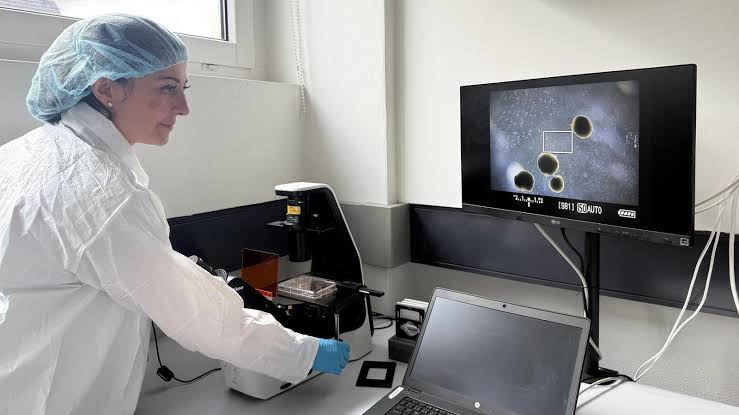
Bioelectrical interfaces translate between digital and biological languages using hardware like multi-electrode arrays (MEAs).
- Hardware: Tiny conductive pins or pads on a microchip are placed in contact with the organoid.
- Two-Way Communication: The interface records neural impulses (listening) and stimulates neurons (writing).
- Closed-Loop Feedback: Simulation data, such as the tilt of a virtual pole, is converted into electrical pulses delivered to the organoid. The resulting neural firing patterns are recorded and mapped back to game actions, such as moving a cart.
- Technologies: Researchers use high-density arrays, 3D grids, or light-based optogenetics to treat living neurons as computing elements.
Could living brain cells power future computers or hybrid AI systems?
The potential for “biocomputers” is driven by several factors:
- Efficiency: Biological neurons handle complex tasks like pattern recognition and learning with a fraction of the power required by supercomputers.
- Hybrid Systems: Future AI might use neural organoids as co-processors for specific tasks like creative problem-solving or navigating uncertainty.
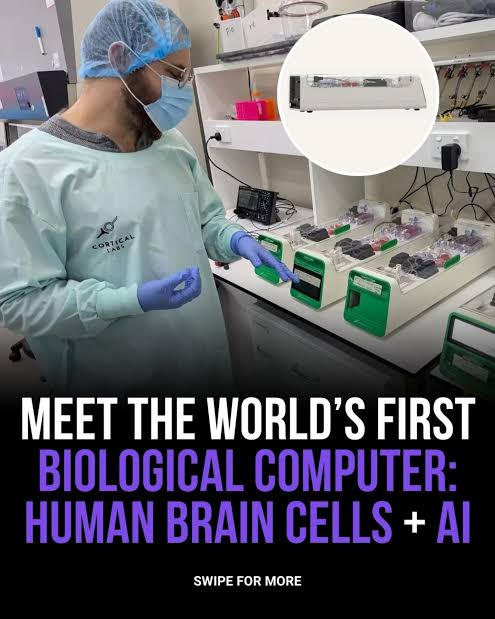
- Organoid Intelligence (OI): Startups like Final Spark and Cortical Labs are already offering remote cloud access to biological computing platforms.
- Unique Capabilities: Living networks excel at processing noisy data and reconfiguring themselves continuously.
- Challenges: Large-scale implementation requires overcoming hurdles in scaling, longevity, and ethical considerations.
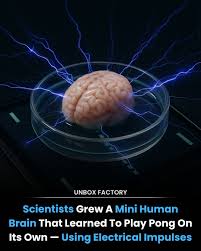
“Biological computing” and “organoid intelligence” definitions people are searching
- Biological Computing (Biocomputing): A broad field involving computing processes performed by biological systems (neurons, DNA, or molecules) rather than silicon. It aims to leverage biology’s parallel processing and energy efficiency.
- Organoid Intelligence (OI): A multidisciplinary field specifically focused on using 3D brain organoids and brain-machine interfaces to create biological computing systems. It involves bioengineering, machine learning, and ethics to develop “intelligence-in-a-dish.”
Ethics of lab-grown brain cells in computing and gaming experiments
The use of brain cells for computing raises significant ethical questions:
- Consciousness: Current organoids are considered too small and simple to possess awareness or the capacity for suffering. However, as complexity increases, “consciousness thresholds” may be needed to determine when an organoid deserves moral standing.
- Consent: Using human stem cells involves issues regarding donor rights and long-term use, drawing parallels to historical cases like Henrietta Lacks.
- Societal Concerns: The “yuck factor” and fears of dehumanization prompt calls for transparency. Researchers emphasize medical goals over creating sentient machines.
- Oversight: Proposals include “neural retirement” for complex organoids, size limits, and “embedded ethics” where ethicists work alongside scientists.
Doom vs Pong vs cart-pole: the most famous “brain cells playing games” milestones
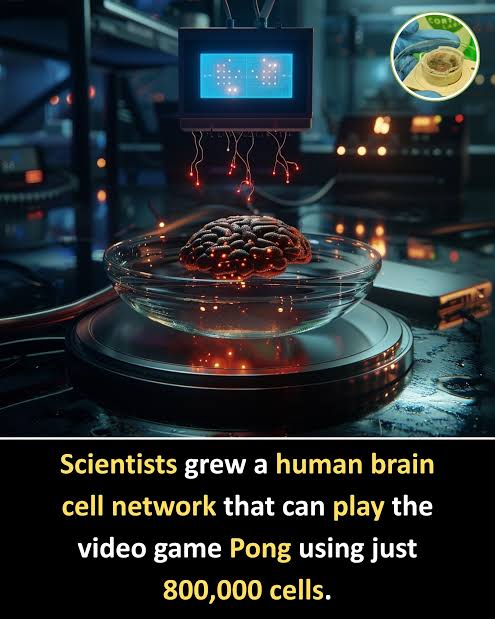
- Pong (2022): The “DishBrain” experiment used 800,000 neurons to hit a virtual ball. It was the first demonstration of goal-directed behavior in vitro, with the system learning within five minutes.
- Doom (2023/2026): Cortical Labs trained 200,000 neurons on a CL-1 chip to navigate a 3D environment and shoot targets. While the gameplay was clumsy, it proved biological systems could handle spatial navigation and multi-input decision-making.
- Cart-pole (2026): The UC Santa Cruz study provided rigorous scientific proof of learning. Using the BrainDance software, researchers quantitatively showed organoids improving from 4.5% to 46% success, establishing a reproducible benchmark for the field.
What this breakthrough could mean for neuroscience research and brain disease modeling
The ability of brain organoids to perform tasks offers profound possibilities for medical research beyond the novelty of gaming. This breakthrough provides a new research paradigm for several key areas:
- Understanding Learning at the Cellular Level: Scientists can now study the fundamental mechanisms of learning and memory in a simplified, observable system. Unlike complex animal brains, organoids allow researchers to see how synapses reorganize and which genes activate purely in response to electrical feedback, providing insights into learning impairments.
- Neurological Disease Modeling: Researchers can grow organoids from the stem cells of patients with conditions like Alzheimer’s, Parkinson’s, or autism. By testing the learning capabilities of these “patient-specific” mini-brains, scientists can observe how certain diseases impair neural plasticity and memory in a controlled environment.
- Drug Testing and Personalized Medicine: Organoids serve as a “biomimetic sandbox” for testing new medications or gene therapies. Researchers can observe in real-time how substances like alcohol or cognitive enhancers affect neural network behavior, potentially identifying side effects or benefits more accurately than traditional cell cultures.
- Reducing Animal Testing: Organoids offer a more human-relevant, ethical alternative to animal models. Using these “alive but not conscious” tissues for early-stage drug screening could reduce the number of animals subjected to cognitive experiments.
- Advancing Brain-Machine Interfaces and AI: Studying biological learning may inspire new AI algorithms that are more adaptive or energy-efficient. Furthermore, it lays the groundwork for sophisticated brain-machine interfaces that could eventually help repair damaged neural circuits in humans.
- Insights into Development and Disorder: Pushing organoids to perform tasks reveals what components are necessary for cognition. For instance, adding specific brain regions to an organoid may be required to achieve long-term memory, helping scientists map the contributions of different brain parts to overall intelligence.
Biggest limitations right now: performance, scaling, and reliability
Despite the excitement, biological computing is in its infancy and faces significant hurdles:
- Performance Gaps: Organoids are currently low-competency. While they show improvement, a 46% success rate in a simple game like cart-pole is far behind the near-100% success of a standard AI.
- Stability and Memory: Organoids suffer from transient learning. In current studies, they “forgot” their training after just 45 minutes of inactivity, failing to consolidate short-term electrical changes into long-term synaptic memory.
- Scaling Up Size and Complexity: Organoids lack blood vessels, meaning they cannot grow beyond a few millimeters without the inner cells dying from lack of oxygen. They also lack the diverse cell types and modulatory systems (like dopamine) found in real brains.
- Reproducibility and Reliability: Biology is “messy.” No two organoids are identical, leading to high variability in performance. Furthermore, they are fragile and sensitive to temperature, mechanical disturbances, and cell death.
- Interface Bandwidth: Current electrode arrays provide a very limited window into neural activity. Reading and writing data with high resolution across millions of neurons remains a major technical challenge.
- Longevity: Maintaining a living “biocomputer” requires constant care. Neurons also change with age, raising questions about how long such a system can remain functional and whether the “biological hardware” would need regular replacement.
- Ethical and Design Constraints: Slower experimental cycles (weeks to grow vs. hours to train an AI) and self-imposed ethical limits on complexity mean that progress in this field moves at a different pace than software development.
Frequently Asked Question (FAQs)
- Are lab-grown brain cells really “playing” the game on their own?
Yes, in the sense that their neural activity directly influences the game’s outcomes through a brain-computer interface. While they do not “know” they are playing, the biological network acts as the controller and adapts its behavior based on feedback. - How do the neurons know what’s happening in the game without senses like eyes or ears?
Information is fed to them electrically. Game data, such as a pole’s tilt, is translated into voltage pulses that the neurons “feel” through electrodes. This acts as a surrogate sense, allowing the computer to speak the language of the neurons. - How were the brain cells trained to play the game?
They were trained using reinforcement feedback. If the organoid failed to improve, it received a mild electrical stimulus (punishment). If it improved, it received no stimulus (reward). Over time, the neurons reconfigured themselves to avoid the punishment, a biological process called neural plasticity. - What is the cart-pole test and why use it instead of a more exciting video game?
The cart-pole test is a standard benchmark in AI and engineering for testing stability and control. It was chosen because it provides clear, quantifiable data, allowing scientists to prove that learning—rather than random chance—was occurring. - How well did the lab-grown mini-brain perform? Did it beat normal AI?
It did not beat AI. The organoid improved from a 4-5% success rate to 46%, whereas a well-tuned AI can achieve nearly 100%. The significance is the biological capacity to learn from scratch, not its current competitive level. - Do these brain organoids have any consciousness or feelings?
No. Current scientific consensus is that they are too small and simple to possess awareness or the capacity for suffering. They lack the complex architecture and sensory systems required for subjective experience. - What exactly are these brain organoids made of? Are they human brain cells?
They are 3D clusters of living neurons and glial cells grown from stem cells. Depending on the study, they can be made from mouse cells or human-induced pluripotent stem cells, but they remain much simpler than a full brain. - Could an organoid like this eventually learn more complex games or tasks?
Potentially. As scaling and interfaces improve, they might tackle more complex navigation or decision-making. However, teaching them games like Super Mario would require much more advanced “input/output” systems and likely larger, more mature organoids. - What are the practical applications of teaching brain cells to play games?
The games are a proof-of-concept for studying learning and brain disorders, testing drugs in a biologically relevant way, and developing more efficient, brain-like computing hardware and interfaces. - Are there ethical concerns with using living brain cells this way?
Yes. While today’s organoids are not sentient, the community is debating “consciousness thresholds” for the future. Other concerns include donor consent for the use of human cells and the philosophical implications of “instrumentalizing” life for computation.
Conclusion
Lab-grown brain cells playing video games represents a significant milestone in bridging biology and technology. The UC Santa Cruz cart-pole experiment proves that even a simplified bundle of neurons possesses the intrinsic power to adapt and learn when connected to a feedback loop. While we are currently seeing only the “vacuum tube” era of biological computing, the potential for neuroscience, disease treatment, and energy-efficient AI is vast.
The field of “organoid intelligence” is just beginning to explore the synergy between silicon and cells. While major hurdles in reliability, scaling, and ethics remain, these mini-brains have demonstrated that the fundamentals of learning can be captured in a dish. This research not only promises new therapies for brain diseases but also challenges our understanding of intelligence itself, moving us toward a future where the line between inanimate machines and living systems continues to blur.
Sources and Citation
- Cerf, Emily (Feb 19, 2026). Brain organoids can be trained to solve a goal-directed task — UC Santa Cruz News.
- Starr, Michelle (Feb 20, 2026). Scientists Grew Mini Brains, Then Trained Them to Solve an Engineering Problem — ScienceAlert.
- Marnell, Blair (Mar 2, 2026). Scientists Make Breakthrough That Allows Lab-Grown Brain Cells To Play A Sort Of Video Game — GameSpot.
- Jackson, Aaron (2026). Scientists Taught Brain Organoids to Play Doom — Medium.
- Hawking, Tom (Feb 27, 2026). A Dish of Neurons Playing DOOM Is the Wildest Thing I’ve Seen in Ages — Gizmodo.
- UCL News (Oct 13, 2022). Human brain cells in a dish learn to play Pong — University College London.
- Johns Hopkins Bloomberg School of Public Health (Sep 15, 2025). Johns Hopkins Team Finds Lab-Grown Brain Organoids Show Building Blocks for Learning and Memory — Johns Hopkins Bloomberg School of Public Health.
- Smirnova, Lena, et al. (Feb 28, 2023). Organoid intelligence (OI): the new frontier in biocomputing and intelligence-in-a-dish — Frontiers in Science.
- Kagan, Brett J., et al. (2022). In vitro neurons learn and exhibit sentience when embodied in a simulated game-world — Neuron (Vol. 110).
- PubMed record: PMID: 36228614
- Community / popular summaries of the Cortical Labs DOOM demo (2026):
- Popular Science: Computer run on human brain cells learned to play ‘Doom’
- IFLScience: “They Are Learning”: Cortical Labs Makes 200,000 Living Human Brain Cells Play DOOM
- Reddit (r/Futurology): Neurons on a Dish play DOOM
- Reddit (r/gaming): Living human brain cells in a dish can play DOOM
- If you want, I can also format these into a clean APA/MLA bibliography (still clickable) for pasting into a doc.
Recommended
- Metahuman and NVIDIA Omniverse Audio2Face : Create Real-Time Facial Animation for Unreal Engine 5
- The Best Nioh 3 Skills for Samurai and Ninja: Must-Have Unlocks, Combos, and Builds (2026 Guide)
- How do I create a camera shake effect in Blender?
- Hades 2: Release Date, Platforms, Gameplay, Characters, and Everything You Need to Know
- How to Create a Metahuman of Yourself: Turn Your Likeness Into a Digital Character in Unreal Engine 5
- How do I create a POV shot with the Blender camera?
- Is Blender CPU or GPU Intensive? A Complete Guide to Performance in Blender
- How to Create Realistic Hair Clumping in Blender: A Step-by-Step Guide
- How do I create a dolly zoom effect in Blender?
- BAFTA Film Awards 2026 Predictions: Marty Supreme, Timothée Chalamet, Leonardo DiCaprio, Sinners, Frankenstein and Hamnet