










In This Article (9 sections)
How to Start the Alien Ruins Questline and Find the Alien Observatory in Subnautica 2
The Alien Ruins questline in Subnautica 2 begins when the player first encounters partially submerged precursor architecture embedded deep within biome transition zones. These structures are usually guarded by environmental hazards, including irradiated flora, bio-electric barriers, and corrupted fauna behavior patterns. Progression is not linear, as the game expects players to discover the questline through exploration rather than through a direct mission assignment.
To begin the questline properly, players must locate an entry trigger zone, often marked by faint energy pulses and distorted sonar readings. Once the area is scanned, the PDA logs an “Unknown Alien Signal Fragment,” which becomes the foundational trigger for the Alien Ruins quest chain. Early progression involves locating broken alien monolith fragments, scanning environmental glyph markers, unlocking partial translation logs, and gathering energy samples for structural activation. This stage also introduces key tools such as the Bioscanner Upgrade and Feedback Resonator, both of which become essential for deeper ruin interaction.
The Alien Observatory is typically found in a deep transitional biome between mid-ocean thermal vents and crystalline cave systems. The structure is partially buried, often requiring vertical navigation through cave shafts or submerged cliffside openings. Players should search areas where geothermal activity intersects with ancient structural remains, as the Observatory often acts as a central hub connecting multiple alien systems, including the turbine control network and sealed door mechanisms.
Key identifying features of the Alien Observatory include:
- Surrounding clusters of bioluminescent vegetation
- Circular, dome-shaped alien architecture
- Floating holographic glyph projections
- A low-frequency hum detectable via sonar
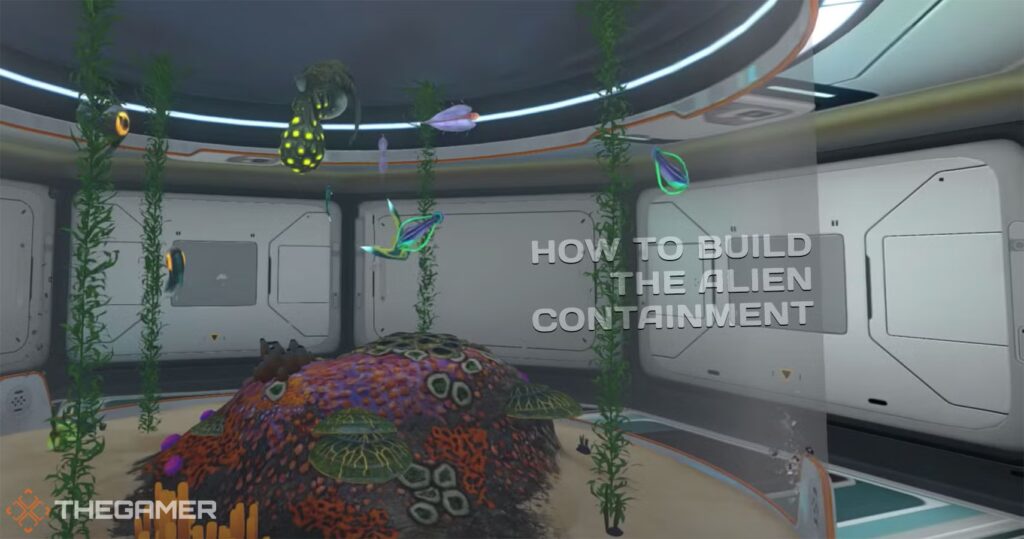
Alien Turbine, Axum Vision, and Bloom Cankers in Subnautica 2
The Alien Turbine is positioned beneath the Observatory complex, usually inside a flooded sub-level chamber connected to energy distribution tunnels. It serves as the primary power regulator for the Alien Door system, meaning players must locate and repair it before they can access the deeper sections of the Alien Observatory. The easiest way to find the turbine is to start at the Observatory core and follow the glowing conduits that run downward through the structure. These energy lines often lead toward maintenance shafts, submerged tunnels, or broken access routes that may not be immediately obvious during normal exploration.
To locate the Alien Turbine, players should:
- Follow the downward energy conduits from the Observatory core.
- Look for rotating light patterns on cave ceilings.
- Track vibration spikes using upgraded sonar mapping.
- Navigate through collapsed access shafts that require debris clearance.
The rotating light patterns on nearby cave ceilings act as environmental clues, showing that the turbine’s energy field is still partially active below the main ruin. Upgraded sonar mapping can also help identify the chamber by detecting vibration spikes and abnormal structural echoes. These signals usually become stronger as players approach the turbine room. Some access shafts may be blocked by debris, so players should be prepared to clear obstacles before reaching the flooded sub-level. The turbine chamber is heavily guarded by environmental puzzles rather than hostile creatures, emphasizing logic-based progression over combat. Players should expect conduit repairs, resonance alignment, Bloom Canker removal, and power routing challenges before the turbine can be fully restored.
Axum Vision is a critical alien cognitive interface upgrade that allows players to interpret encrypted precursor visual data. Without it, many glyph-based puzzles remain unreadable, making it difficult to solve Observatory mechanisms, turbine alignment sequences, and Alien Door activation locks. Unlocking Axum Vision requires players to scan three complete alien glyph sets, activate dormant memory shards in the Observatory core, and complete a resonance alignment puzzle using energy fragments.
The first step is scanning three complete alien glyph sets found throughout the ruins. These glyphs usually appear near control consoles, archive walls, sealed doors, or inactive machinery. Once enough glyph data has been collected, players can return to the Observatory core and activate dormant memory shards, which begin reconstructing the alien interface system. The resonance alignment puzzle is the final step. Players must use recovered energy fragments to stabilize the interface and match the correct frequency pattern. This sequence connects the player’s scanner systems with the alien visual network, allowing encrypted environmental information to become readable. Once activated, Axum Vision overlays the environment with interpretive holograms, revealing hidden switches, invisible pathways, and turbine synchronization cues. It also improves interaction with the Alien Door locking mechanism by translating glyph sequences and showing which panels, conduits, or energy nodes must be activated next.
Bloom Cankers are invasive organic growths that block access to key alien systems. They function as biological locks that must be cleared before mechanical or energy-based activation can occur, especially around the Alien Turbine and Observatory power network. These growths are usually found in places where alien machinery has been exposed to biological contamination or environmental damage. Turbine intake tunnels are one of the most important areas to check, since blocked vents can prevent the turbine from spinning up properly. Control conduit junctions are also common obstruction points, as Bloom Cankers can interfere with energy routing between the Observatory core and the Alien Door.
Common Bloom Canker locations include:
- Turbine intake tunnels
- Observatory outer hull cracks
- Control conduit junctions
- Lower ruin access corridors
To destroy Bloom Cankers, players should:
- Use thermal pulse bursts from upgraded tools.
- Apply Feedback Resonator frequency disruption.
- Target root nodes rather than surface growth.
- Avoid prolonged contact due to corrosive spores.
The key is to attack the root nodes instead of wasting resources on surface growth. Root nodes are usually thicker, darker, and more deeply embedded into the surrounding structure. Thermal pulse bursts can weaken the biological material, while the Feedback Resonator disrupts the frequency pattern that allows the cankers to cling to alien systems. Players should avoid staying too close for too long, as corrosive spores can damage equipment or reduce visibility. Eliminating Bloom Cankers is mandatory for restoring full energy flow to the Alien Turbine system, and clearing all major obstruction zones is often required before the Alien Door can enter its final activation phase.
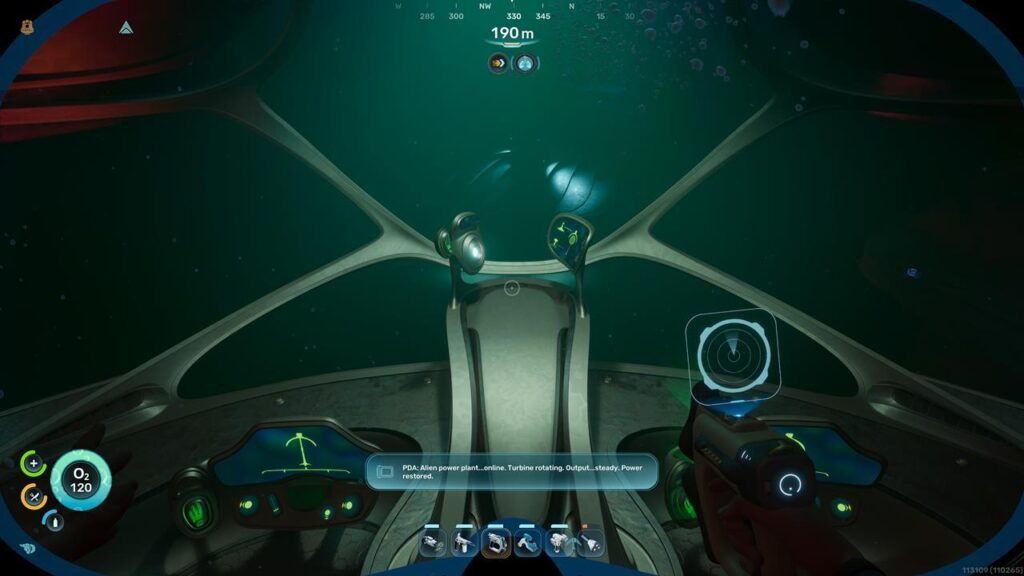
Bioscanner Upgrade, Feedback Resonator, and Alien Turbine Repair in Subnautica 2
The Bioscanner Upgrade enhances environmental scanning capabilities and is specifically tuned for alien architecture. In the Alien Area, it becomes one of the most important tools for understanding how the ruins function, because many mechanisms are hidden behind walls, buried inside energy conduits, or disguised as inactive structural details. Instead of only collecting biological data, the upgraded scanner helps players interpret the connections between alien systems, power routes, and environmental hazards.
The Bioscanner Upgrade can be used to:
- Identify hidden power nodes inside walls.
- Reveal dormant alien circuitry.
- Map turbine rotation synchronization paths.
- Detect corrupted energy leaks affecting door systems.
When scanning alien walls or machinery, players should look for abnormal energy signatures, faint glyph patterns, and pulsing conduit lines. These usually indicate that a nearby system is still connected to the Observatory network, even if it appears inactive at first. Hidden power nodes are especially important because they often control doors, panels, or energy locks tied to larger puzzle sequences. The Bioscanner Upgrade is also useful for tracking turbine synchronization paths. By scanning around the turbine chamber, players can identify which conduits are active, which ones are damaged, and which sections require repair before the system can stabilize. This makes it easier to solve puzzles logically instead of relying on random interaction with alien consoles.
When used in the Alien Ruins, the Bioscanner becomes a navigation and puzzle-solving essential rather than a simple research tool. It helps players understand where to go next, which systems are malfunctioning, and how biological corruption may be interfering with alien technology. In deeper ruin sections, it can also reveal hidden routes or weak structural points that are easy to miss during normal exploration.
The Feedback Resonator is a harmonic manipulation device used to interact with alien technology that responds to frequency-based logic rather than physical input. Many alien structures do not operate through switches, levers, or standard repair tools; instead, they react to resonance, pulse timing, and energy alignment. This makes the Feedback Resonator essential for puzzles involving turbines, control panels, corrupted locks, and dormant machinery.
The Feedback Resonator’s core functions include:
- Emitting calibrated resonance pulses.
- Disrupting biological lock systems like Bloom Cankers.
- Synchronizing turbine rotation phases.
- Activating dormant control panels.
The device works by sending controlled frequency pulses into alien systems. When tuned correctly, these pulses can stabilize unstable energy flow, restart dormant circuits, or break interference caused by organic growths. Bloom Cankers are a major example, as they can block vents, conduits, or door systems until disrupted with the correct resonance pattern. Puzzle applications often require players to match frequency patterns found in Axum Vision overlays. These overlays may display glyphs, pulse intervals, or color-coded resonance bands that indicate the correct tuning. Players should use Axum Vision first to identify the required pattern, then adjust the Feedback Resonator before activating the target system.
Incorrect tuning may temporarily lock systems or trigger defensive energy fields. If this happens, players should wait for the system to reset, rescan the area with the Bioscanner, and check the Axum Vision overlay again before retrying. In more advanced puzzles, the Feedback Resonator may need to be used in rhythm with rotating turbine components or dual-panel activation sequences.
Repairing the Alien Turbine in Subnautica 2 involves restoring mechanical and energy flow integrity across multiple broken subsystems. The turbine is one of the central power mechanisms inside the Alien Observatory, and many doors, panels, archive rooms, and holographic systems remain inactive until it is repaired. Because of this, turbine repair is usually a major progression step rather than an optional side task.
To repair the Alien Turbine, players need to:
- Clear Bloom Cankers blocking the turbine intake vents.
- Use the Bioscanner Upgrade to locate damaged conduits.
- Replace missing energy nodes with recovered fragments.
- Stabilize rotation cores using Feedback Resonator pulses.
- Reconnect auxiliary power lines from the Observatory core.
The first step is clearing Bloom Cankers from the intake vents, since these biological obstructions prevent the turbine from drawing and circulating energy properly. Once the vents are clear, players should scan the surrounding walls, floor panels, and conduit routes with the Bioscanner Upgrade to identify damaged or inactive connections. These scans help reveal which parts of the turbine network are broken and which components need replacement.
After locating damaged conduits, players must replace missing energy nodes using recovered fragments found throughout the ruin or nearby alien storage areas. These nodes act as power relays, allowing the turbine to distribute energy across the Observatory. Once the nodes are restored, the rotation cores must be stabilized with Feedback Resonator pulses to prevent the turbine from spinning out of phase.
The final step is reconnecting auxiliary power lines from the Observatory core. This links the repaired turbine back into the larger alien facility network and allows power to flow into doors, panels, and archive systems. Once repaired, the turbine begins gradual spin-up sequences, indicating restored energy distribution to surrounding systems. Players should watch for lighting changes, active conduits, and newly unlocked pathways, as these usually signal that the next section of the Alien Observatory is ready to explore.

Turbine Control Room Puzzle, Control Panel Activation, and Alien Door Requirements in Subnautica 2
The Turbine Control Room puzzle in Subnautica 2 centers on aligning energy flow indicators with rotational synchronization rings. Unlike simpler switch-based ruin puzzles, this sequence requires players to understand how frequency bands, alien glyphs, and energy routing interact before the turbine system can fully stabilize. The puzzle uses three rotating control rings, each tied to a different part of the turbine’s power cycle. These rings must match energy frequency patterns, while glyph-based indicators correspond to Axum Vision translations. Timing is also critical, as misalignment or slow activation can reset the progress cycle.
The three rings each represent a different frequency layer. The outer ring controls the lowest frequency band, the middle ring adjusts mid-spectrum resonance, and the inner ring handles high-frequency stabilization. Players must use Axum Vision to interpret the glyphs around the console, then rotate each ring until the displayed symbols match the correct energy pattern.
The correct solution involves:
- Matching the outer ring to the lowest frequency band.
- Aligning the middle ring to mid-spectrum resonance.
- Setting the inner ring to high-frequency stabilization mode.
Once the rings are aligned, the system unlocks secondary access pathways to the Alien Door mechanism. The turbine will begin producing a steady pulse, and nearby conduits should light up in sequence, confirming that power is being routed correctly. If the rings are misaligned or activated too slowly, the turbine cycle resets, forcing players to repeat the synchronization process from the beginning.
The Alien Ruins also feature dual-layer control systems that require the simultaneous activation of upper and lower panels. These panels are connected to separate parts of the facility, meaning both must be engaged properly before the ruin’s main door systems can respond. The upper panel controls structural energy routing, while the lower panel manages the physical door sealing mechanisms. Both must be activated within a synchronized time window.
The upper panel is responsible for directing energy through the ruin’s internal conduits, while the lower panel controls the mechanical locks keeping the Alien Door sealed. Activating only one panel is not enough, because the system requires both energy flow and physical lock release to occur at nearly the same time. Using Axum Vision reveals hidden activation glyphs that indicate timing sequences. These glyphs show the correct order and rhythm for interacting with each panel, helping players avoid random trial and error.
The Feedback Resonator is often required to stabilize both panels during activation, especially if the energy pulse begins fluctuating during the sequence. Failure to synchronize the panels results in a system reset and turbine shutdown. If this happens, players should return to the turbine console, confirm that all frequency rings are still aligned, and repeat the panel sequence more carefully. The safest approach is to activate the upper panel first, move quickly to the lower panel, then use the Feedback Resonator when the resonance indicator begins to spike.
The Alien Door in the Alien Observatory is one of the most complex energy-locked systems in Subnautica 2, requiring sustained turbine output and correct frequency alignment. It cannot be opened immediately after discovery, as several conditions across the Alien Observatory must be completed first. The fully repaired Alien Turbine acts as the primary power source for the door, while the Alien Observatory core distributes that energy through the surrounding ruin network. The Axum Vision glyph sequence functions like a security code, confirming that the player has decoded the alien system correctly. Bloom Canker obstruction zones must also be cleared because corruption or organic interference can block energy conduits and prevent stable activation.
Alien Door requirements include:
- A fully repaired Alien Turbine.
- Stable energy distribution from the Observatory core.
- Correct Axum Vision glyph sequence input.
- Cleared Bloom Canker obstruction zones.
Activation conditions include:
- A minimum energy threshold maintained for 60 seconds.
- No active corruption nodes in the surrounding systems.
- Uninterrupted control panel synchronization.
Once these conditions are met, the Alien Door transitions into an unlocking phase with layered holographic decryption. During this phase, players should avoid interrupting the energy flow or leaving the activation area too early. The door will cycle through several light patterns before the final lock disengages, revealing the deeper archive section of the ruin and opening the next stage of exploration.

Activating the Alien Door, Turbine Effects, and Observatory Lore in Subnautica 2
Activating the Alien Door in the Subnautica 2 Alien Observatory requires completing the full ruin sequence, including turbine repair, glyph decoding, and energy stabilization. The Alien Door is not designed to open through a simple button press; it functions as the final lock in a larger alien facility puzzle. Players must restore power, interpret the ruin’s visual language, and stabilize the energy network before gaining access.
Final activation steps include:
- Ensure the Alien Turbine is fully operational.
- Input the decoded Axum Vision sequence into the control console.
- Stabilize resonance using the Feedback Resonator.
- Initiate dual-panel synchronization.
- Maintain energy flow until the door lock disengages.
The first requirement is making sure the Alien Turbine is fully operational, as the door depends on the restored power network. Once the turbine is active, players must return to the main control console and enter the decoded Axum Vision sequence. This sequence acts as an authentication pattern, confirming that the ruin’s systems have been properly reawakened. After the code is entered, the Feedback Resonator is used to stabilize the energy frequency flowing through the door mechanism. If resonance levels are unstable, the door may reject the activation sequence or reset the process.
The dual-panel synchronization step requires both control interfaces to align with the same energy pulse, creating a short timing challenge before the final lock disengages. The door will emit cascading light patterns before physically retracting into the surrounding structure, granting access to deeper alien archives. This moment signals that the Alien Observatory has moved from a dormant state into a fully active state, opening the way to more advanced lore, hidden rooms, and high-value exploration rewards.
Once the Alien Turbine is activated, the entire ruin system transitions into an active state. The facility changes noticeably, with previously dark corridors gaining power, inactive consoles coming online, and environmental sounds shifting to reflect the restored alien machinery.
Effects of activating the Alien Turbine include:
- Restoration of dormant alien power networks.
- Activation of previously inaccessible corridors.
- Emergence of holographic lore projections.
- Increased environmental energy density.
The restoration of dormant power networks is the most important change because it connects multiple systems across the Alien Observatory. Doors, consoles, scanning stations, and energy bridges may become usable only after the turbine is running. This makes the turbine a central progression device rather than a simple environmental object. Previously inaccessible corridors also begin to open, allowing players to move deeper into the ruin. These new paths often lead to archive chambers, research stations, hidden terminals, and resource caches.
The holographic lore projections provide additional context about the alien structure, showing fragments of past activity, scientific experiments, or planetary monitoring operations. New gameplay areas become accessible, often containing advanced crafting blueprints, lore fragments, and higher-tier upgrade materials. These rewards make turbine activation a major milestone in the Alien Observatory sequence, giving players both narrative progression and practical upgrades for deeper exploration.
The Alien Observatory interior serves as both a scientific monitoring station and a historical archive of precursor activity. Its design suggests that the structure was built not only to observe the surrounding ecosystem, but also to collect, store, and interpret long-term planetary data.
Key interior features include:
- A central holographic mapping core.
- Multi-layered energy conduits.
- Memory archive chambers.
- Biometric scanning stations.
The central holographic mapping core appears to be the main information hub of the Alien Observatory. It likely displays planetary data, biome activity, alien facility connections, and environmental changes detected over time. This makes it one of the most important rooms for understanding the purpose of the ruin. Multi-layered energy conduits run throughout the facility, linking the turbine to door systems, archive chambers, and scanning devices. These conduits reinforce the idea that the Alien Observatory was part of a much larger alien infrastructure network.
Memory archive chambers provide deeper story context, potentially revealing records of precursor research, failed experiments, or observations about the planet’s biological development. Lore suggests the Alien Observatory was used to monitor planetary bio-evolution patterns and test environmental stabilization technologies. The turbine system functioned as a planetary-scale energy regulator, helping control or measure ecological conditions across the surrounding region. This positions the Alien Observatory as more than a hidden ruin; it acts as a major clue to the alien civilization’s long-term involvement with the planet.
Frequently Asked Questions (FAQs)
- What is the Alien Door in Subnautica 2?
It is a high-security precursor structure that acts as one of the main progression locks inside the Alien Observatory. To unlock it, players need to restore turbine power, decode the correct glyph sequence with Axum Vision, and stabilize the connected energy systems before the door will open. - Where is the Alien Turbine located?
It is located beneath the Alien Observatory in a submerged control chamber connected to the facility’s lower energy tunnels. Players usually need to follow the glowing conduits downward from the Observatory core and navigate through flooded access shafts or blocked maintenance routes to reach it. - Do I need Axum Vision to progress?
Yes, Axum Vision is required because many alien systems use glyph-based instructions that cannot be understood normally. It allows players to read hidden symbols, identify the correct puzzle sequences, and interact with mechanisms tied to the turbine, control panels, and Alien Door. - What are Bloom Cankers used for?
Bloom Cankers function as biological locks that block key alien systems. They usually grow around vents, conduits, access corridors, and control junctions, preventing energy from flowing properly until they are destroyed. - Can I activate the turbine without clearing Bloom Cankers?
No, Bloom Cankers must be cleared first because they block the turbine’s intake vents and interfere with energy routing. If they remain in place, the turbine cannot stabilize or send power through the Observatory network. - What does the Bioscanner Upgrade do?
The Bioscanner Upgrade reveals hidden alien systems, weak points, damaged conduits, and inactive power nodes. It is especially useful in the Alien Observatory because many important mechanisms are hidden behind walls, inside structures, or disguised as inactive parts of the ruin. - Why does the turbine stop working?
The turbine usually stops because of corrupted nodes, blocked conduits, or misaligned resonance patterns. If the system shuts down, players should rescan the area, check for remaining Bloom Cankers, and confirm that the turbine control rings or resonance settings are properly aligned. - What is the Feedback Resonator used for?
The Feedback Resonator is used to manipulate alien systems that respond to frequency and resonance instead of normal physical controls. It helps stabilize turbine components, disrupt Bloom Cankers, activate dormant panels, and solve puzzles that require precise energy alignment. - What happens after opening the Alien Door?
Opening the Alien Door unlocks deeper exploration zones within the Observatory. These areas can include lore archives, hidden rooms, advanced terminals, resource caches, and new story details connected to the precursor facility. - Is the Observatory important for the main story?
Yes, the Observatory is important because it connects several major alien systems, including the turbine, glyph network, archive chambers, and Alien Door. It also provides important lore about precursor research, planetary monitoring, and the larger purpose of the alien ruins.
Conclusion
The Alien Door and Alien Turbine systems in Subnautica 2 form a multi-layered puzzle structure combining exploration, environmental interaction, and frequency-based logic mechanics. Progression through the Alien Observatory requires coordinated use of Axum Vision, Bioscanner Upgrade, and Feedback Resonator tools. Mastery of Bloom Canker removal, turbine repair, and dual-panel synchronization ultimately leads to unlocking deeper alien narrative content and advanced gameplay regions.
Sources and Citations
- Subnautica Community Wiki (Alien Ruins Systems Reference)
https://subnautica.fandom.com/wiki/Category:Alien_Structures - Subnautica Lore Archives (Precursor Structures Documentation)
https://dev.subnautica.wiki/wiki/Architects - In-game PDA Logs and Environmental Scan Data (Databank entries)
https://subnautica.fandom.com/wiki/Databank_(Subnautica) - Developer Commentary on Alien Architecture Systems (Precursor update / design notes context)
https://www.pcgamesn.com/subnautica/subnautica-precursor-update
Recommended
- How to Get a Free Fortnite Skin and Car in the Rocket League Crossover Event (Rivals & Rockets Guide)
- Build a Rocket Boy Has Reportedly Experienced Another Round of Layoffs: MindsEye Fallout and What Happens Next
- Material Authoring Software InstaMAT Gets Native Linux Edition: Feature Parity, Limitations, Downloads, and Studio Pipeline Impact
- Masters of the Universe: CinemaCon Footage Breakdown, He-Man Transformation, Beast Man Fight & First Reactions Explained
- Roblox Releases Agentic AI Tools for Creators: Build a Game With a Single Prompt Explained
- How to Create Realistic Hair Clumping in Blender: A Step-by-Step Guide
- Witch Hat Atelier Premiere Review: Episode 1–2 Impressions, Animation Quality, and Crunchyroll Release Details
- Resurrection of the Insomnia Gaming Festival cancelled: Insomnia 74 (i74) called off, refunds, and what happens next
- A Six-Game Collection of Retro Rugrats Titles is Coming Next Month: Release Date, Platforms, and Full Game List
- Three Namco-Published NES Games Join Switch Online, Including Game Freak’s First Game (Mendel Palace/Quinty)



































































































