









In This Article (7 sections)
HELENA: Cloud District Release Date, Free Steam Download, Story, and Exploration Gameplay
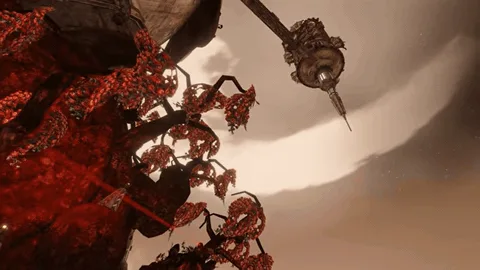
HELENA: Cloud District is available free on Steam, offering a first person adventure built around photography, unusual plant life, and exploration within an enormous deteriorating structure. The game launched on October 29, 2026, making it a recent arrival for players interested in atmospheric PC adventures that reward curiosity and observation. Its appeal comes from the relationship between looking and understanding. A distant shape can become a reason to explore, a photograph can preserve a discovery, and returning with that image can help reveal the meaning of the surrounding world. For players interested in environmental storytelling, this creates a different motivation from collecting equipment or completing combat encounters.
The current Steam storefront confirms the October 29 release date, replacing older search results that describe an upcoming October launch. Some tracking services display October 31 in a separate release field. SteamDB records both an October 29 store release and an October 31 Steam release timestamp, explaining why searches may produce conflicting dates. For a straightforward account of availability, October 29 is the clearest reference because it matches the public storefront and the developer’s launch announcement. As of November 3, 2026, players can download the released game rather than wait for an upcoming launch.
HELENA: Cloud District is completely free to play. The developer’s October 29 launch announcement, reproduced by LiveQuote, explicitly described the entire game as available free through Steam. This establishes that the release is a free game rather than simply a promotional demonstration of a paid title. Players can therefore experience its movement, photography mechanics, and atmosphere without an upfront purchase. However, free availability does not establish the game’s length, technical performance, or future development plans.
Developed by a small independent team, HELENA: Cloud District places players in the role of the district’s “drone eye,” collecting photographs and transmitting them to a mysterious machine. Steam Hype’s launch coverage identifies the playable character as a small rolling robot that serves as the eyes of the central computer, Helena. The game emphasizes exploration and navigation puzzles rather than combat, making observation and environmental interaction central to the experience.
The camera has a purpose within the game’s world rather than functioning only as a tool for capturing attractive images. Players contribute to the investigation by noticing unusual details, reaching unfamiliar locations, recording discoveries, and returning that information to the central machine. This creates an experience in which learning about the environment is itself a form of progression. However, the photography premise does not automatically imply a professional camera simulator, extensive editing tools, or every feature commonly associated with traditional photo modes.
Movement is equally important. Launch coverage from 80 Level describes sliding, hovering, and gliding through environments containing narrow bridges, winding passages, and difficult routes. It also reports that the game does not include a conventional jump button. Players accustomed to traditional platforming may therefore need to approach navigation differently, examining the surrounding architecture and available movement options rather than immediately attempting to jump toward a destination.
A useful starting point is to practise movement in a relatively uncomplicated area before attempting more demanding routes. Learning how quickly the robot changes direction, approaches an edge, or responds to a movement action can make later exploration more manageable. When an attempted route fails, adjusting one part of the approach at a time is generally more useful than repeating the same unsuccessful movement. Changing the angle, starting position, or timing can help identify what makes a crossing possible.
The game’s enormous decaying structure provides both its setting and its navigational challenge. Indie Peak’s preview emphasizes extreme heights and nonlinear routes, presenting exploration as a process of discovering workable paths through unfamiliar architecture. Two locations may appear close together while requiring a longer journey between different elevations, while a route that initially seems to lead away from a destination may eventually provide the best approach.
Players can make navigation easier by learning a few recognizable landmarks instead of trying to memorize the entire district immediately. At unfamiliar junctions, briefly examining the route behind the character can also help with the return journey, particularly when several passages resemble one another. Learning one reliable route and identifying an unexplored branch represents meaningful progress, gradually building a clearer understanding of the wider environment.
The setting also supports the game’s environmental storytelling. Rather than presenting every detail through direct explanation, HELENA: Cloud District encourages players to investigate unfamiliar architecture, unusual objects, and the relationships between different locations. A seemingly insignificant feature may become more meaningful after discovering another part of the district, making observation an important part of understanding its world.
The narrative centers on recovering information about a forgotten history. Photography connects discoveries to that investigation, allowing images to preserve details encountered during exploration and contribute to the player’s understanding of the district. One interpretation is that the act of photographing becomes a form of reconstruction, with each recorded discovery providing another piece of information about a world whose past is no longer immediately available.
Players approaching the story can benefit from reading newly presented information before continuing and considering how discoveries relate to places they have already explored. Recognizing a recurring shape, architectural feature, or relationship does not necessarily mean its significance is immediately clear. Allowing these uncertainties to develop can make the investigation more engaging than forcing every discovery into an early explanation.
The available official overview does not establish a complete account of the district’s collapse, the identity of every character, or specific ending requirements. Those details remain part of the experience to discover rather than information that can be confidently reconstructed from the promotional description alone.
HELENA: Cloud District also features an unsettling visual atmosphere. 80 Level’s November 2 coverage describes an abandoned, surreal environment with an eerie presentation, while Steam includes a developer warning concerning light horror elements, blood, and unsettling imagery and narrative. The combination suggests an adventure that encourages patient exploration while introducing discomfort through its setting and visual storytelling.
The atmosphere benefits from the contrast between enormous architectural forms and small details. Looking only for the next photographic subject can narrow the player’s attention, while occasionally observing the wider environment may reveal relationships between structures and the routes connecting them. Sound and pacing also contribute to the experience, particularly during quieter moments when the environment becomes the primary focus.
Although HELENA: Cloud District contains unsettling material, its documented gameplay emphasizes exploration, photography, and navigation rather than conventional combat. Its central attraction is the opportunity to investigate an unfamiliar place, gradually understand its layout, and discover how the environment contributes to its forgotten story.

HELENA: Cloud District Photography Mechanics, Strange Plants, Photo Collection, and Beginner Tips
Photography connects exploration to the larger investigation in HELENA: Cloud District. Players capture discoveries and return the images to the central computer, where they contribute to uncovering the history of the district. In HELENA: Cloud District, the camera therefore serves a progression function, making the act of observing and documenting the environment an important part of gameplay.
Coverage published before release and summarized by Indie Peak described a camera with three photo slots and a segmented opening mechanism resembling an insect. Because this information predates launch, the reported capacity should be checked against the released game’s interface rather than treated as confirmation of every current image management rule in HELENA: Cloud District.
For beginners, the most useful approach to HELENA: Cloud District photography is to take deliberate photographs. Before capturing an image, identify the subject being documented and consider whether the current position provides a clear view. Nearby structures or environmental details may obscure the intended subject, making a change in position more useful than repeatedly photographing from the same angle.
This is practical composition advice rather than confirmation that HELENA: Cloud District rewards artistic framing. A visually attractive photograph and an image accepted for progression may not be the same thing. Players should use the game’s feedback to determine which subjects and views contribute to the collection. Ordinary Steam screenshots should also not be confused with the game’s photography system, since external screenshots are useful for personal reference but do not automatically advance gameplay objectives in HELENA: Cloud District.
Unusual plants are among the central photographic subjects in HELENA: Cloud District. Their presence throughout the enormous structure encourages players to examine spaces carefully rather than simply move between obvious destinations. The most useful search approach is to separate movement from inspection. After reaching a stable location, stop and examine the surroundings at different distances, looking for unfamiliar outlines, unusual placement, and contrasting shapes.
A distant silhouette may indicate somewhere worth investigating later in HELENA: Cloud District, while a small nearby detail might be easy to overlook when moving quickly. Players should not rely entirely on color because a subject may stand out through its shape, position, or contrast with nearby structures. Changing the viewing angle can also reveal something that blends into the environment from another perspective.
The available sources do not establish a complete species list or verified route to every unusual plant in HELENA: Cloud District. Searching carefully and responding to what the game actually shows is therefore more reliable than following unsupported locations or invented collectible coordinates.
Returning photographs to the computer is another important part of the HELENA: Cloud District gameplay loop. The developer describes collecting images and transmitting them to a machine, while launch coverage identifies the central computer as Helena. However, the available public descriptions do not establish an exact upload button or a complete interaction sequence, so players should follow the instructions presented within the released game.
For an initial photography trip in HELENA: Cloud District, keeping the journey manageable can help establish how the system works. Find an interesting subject, capture its image, and return to the computer before exploring too far. This provides an opportunity to understand the recording process while the route remains familiar. At the computer, examine the feedback and any associated information to determine whether the photograph has been successfully recorded.
If an image does not appear to register in HELENA: Cloud District, checking the visible instructions and the selected photograph is more useful than immediately assuming a technical problem. An incomplete interaction, missed prompt, or unintended subject may require a different response from an actual software issue.
Completing the photographic collection is part of HELENA: Cloud District’s stated objective and contributes to understanding its forgotten story. However, the published descriptions do not provide a verified total number of required photographs or a complete collection checklist. Players seeking thorough completion should therefore distinguish between locations they have visited and areas they have carefully inspected.
Passing through a room once in HELENA: Cloud District does not necessarily mean every interesting subject has been observed. Returning from a different direction or examining a previously overlooked section may reveal details that were difficult to recognize during the first visit. Keeping brief notes about unresolved routes, unusual shapes, and uncertain photographs can make these return trips more purposeful.
A useful HELENA: Cloud District exploration routine includes the following:
- Learn the movement controls first: Practise sliding, hovering, gliding, and changing direction before attempting difficult passages.
- Use recognizable landmarks: Identify distinctive structures and routes that can help with navigation and returning to the central computer in HELENA: Cloud District.
- Inspect unfamiliar areas carefully: Stop moving occasionally and examine nearby objects, distant shapes, and possible photographic subjects.
- Approach difficult routes differently: Change the starting position, angle, or timing instead of repeating an unsuccessful movement.
- Photograph deliberately: Identify the intended subject and check whether HELENA: Cloud District recognizes the image.
- Track unresolved discoveries: Make brief notes about unusual plants, inaccessible locations, and areas that deserve another visit.
- Read newly revealed information: Consider how each discovery connects to previously explored locations and the district’s history in HELENA: Cloud District.
- Check the current photo capacity: Follow the released game’s interface instead of assuming that every detail from earlier previews remains unchanged.
These approaches provide direction without imposing an artificial checklist on HELENA: Cloud District, a game centered on discovery. Players can choose a simple objective for each outing, such as investigating one unfamiliar route, documenting a promising subject, or revisiting a location from another angle.
It is also useful to distinguish between photographs taken for progression in HELENA: Cloud District and images captured simply because a particular view is interesting. An image might document an unusual plant, preserve a memorable location, or help the player remember a route. Understanding the purpose of each photograph makes the collection process more deliberate.
When attempting complete exploration in HELENA: Cloud District, the most reliable method is to use the game’s collection interface and feedback to identify what remains. There is no reason to assume that every visible plant represents a unique collectible or that an unsupported completion percentage reflects the actual requirements.
Taking breaks can also improve exploration in HELENA: Cloud District when repeated movement attempts stop producing useful information. Returning with fresh attention may make previously overlooked landmarks or routes easier to recognize. The objective is to develop confidence in movement and observation so that unfamiliar environments become opportunities for discovery rather than sources of unnecessary frustration.

HELENA: Cloud District Steam Download, PC System Requirements, Performance, and Early Reviews
HELENA: Cloud District is available as a free download through Steam. Players can locate it by searching for the game’s title in the Steam client. Some storefront displays write the title as HELENA : Cloud District, with a space before the colon. Its Steam app ID is 5190580, which can help distinguish the correct listing from similarly named software.
To install the game, open its Steam product page, select the available play or installation option, and follow the download instructions. Players beginning from a web browser may be prompted to continue through the Steam client. Before installation, check the displayed storage requirement and select an appropriate installation location.
Once the download finishes, the game can be launched from the Steam library. Paying attention to the opening instructions is particularly useful because movement, photography, and interaction are central to the experience. Understanding these systems before attempting complicated routes can prevent avoidable confusion.
If installation fails, checking the download status and available storage is a reasonable starting point. If the game installs but does not launch, recording the exact error message and system specifications can make troubleshooting more effective. Steam availability should also not be interpreted as confirmation of native macOS or Linux support, or verified compatibility with every handheld gaming device.
The published minimum PC system requirements are:
- Operating System: Windows 10 version 1903 or newer, 64 bit.
- Processor: Intel Core i5 4460 or AMD Ryzen 3 1200.
- Memory: 4 GB RAM.
- Graphics: NVIDIA GeForce GTX 960 or AMD Radeon R7 370.
- Storage: Steam lists 5 MB of available space.
- Additional Requirement: A 64 bit processor and operating system.
The listed storage requirement deserves attention because 5 MB is unusually small for a three dimensional adventure. Players should check the actual download and installation size displayed by Steam rather than assuming the published figure accurately represents the required storage. The recommended specifications also provide no detailed hardware targets beyond the requirement for a 64 bit processor and operating system.
These requirements do not establish a guaranteed resolution, graphics quality setting, or frame rate. Meeting the minimum specifications does not necessarily mean that every scene will perform identically, especially across systems with different hardware configurations.
Consistent performance is particularly relevant to HELENA: Cloud District because movement and navigation require control and awareness of the environment. Irregular performance can make approaching narrow passages or adjusting movement more difficult, even when less demanding scenes appear smooth.
If the game provides adjustable graphics settings, changing one option at a time can help identify whether performance improves. Recording where a problem occurs and whether it can be repeated is also more useful for troubleshooting than simply describing the game as occasionally slow.
Early reception has been encouraging. When checked on November 3, 2026, Steam displayed a Very Positive rating from 77 user reviews, with 100% marked positive. This reflects an early snapshot of player opinion rather than a permanent score, and the relatively small sample should be considered when interpreting the reception.
Independent launch coverage also highlighted positive aspects of the experience. Steam Hype praised the environmental design and emphasized the navigation puzzles, while 80 Level reported favorable player comments concerning the atmosphere and movement. These observations support describing the initial reception as positive without implying that every player will respond in the same way.
Early reviews are particularly useful when they discuss specific gameplay elements rather than simply recommending the game. Players interested in exploration can look for comments about environmental design and atmosphere, while those concerned about unfamiliar movement systems may find detailed descriptions of navigation more helpful.
The review sample cannot establish performance across every hardware configuration, the experience of every player, or how opinions may change as the audience grows. Different tracking services may also calculate or present recommendation percentages differently, meaning that their figures should not automatically be treated as identical measurements.
For players considering HELENA: Cloud District, the free release provides an opportunity to evaluate these qualities directly. The opening experience can reveal whether the movement feels comfortable, whether the photography system is satisfying, and whether the deteriorating structure creates enough curiosity to encourage further exploration.
The game’s strongest attraction lies in connecting observation, movement, and environmental storytelling. Its enormous structure becomes more meaningful as players learn how to navigate it, discover unusual plants, document their findings, and return information to Helena. Rather than relying on combat or constant objectives, the adventure encourages players to find satisfaction in gradually understanding an unfamiliar world.
With free access on Steam and encouraging early reception, HELENA: Cloud District offers an accessible option for players interested in atmospheric exploration, photography, and navigation challenges. Its appeal ultimately depends on how much enjoyment players find in observing their surroundings, experimenting with movement, and uncovering the forgotten history of the district.

Frequently Asked Questions (FAQs)
- When was HELENA: Cloud District released?
HELENA: Cloud District launched on Steam on October 29, 2026. Although some tracking information displays October 31 in a separate release field, the public Steam storefront and the developer’s launch announcement support October 29 as the release date. As of November 3, 2026, the game is available to download and play. - Is the full game free?
Yes. HELENA: Cloud District is available completely free through Steam. The developer’s October 29 announcement described the entire game as a free release rather than a limited demonstration of a paid product. Players can download it without an upfront purchase and experience its exploration, photography mechanics, and atmospheric environments. - What do you control in the game?
Players control a small rolling robot described as the district’s droneeye. The robot acts as the eyes of the central computer, Helena, exploring the deteriorating structure and capturing photographs of discoveries. Its role centers on observation, navigation, and gathering information that contributes to understanding the district’s forgotten history. - Does HELENA: Cloud District have combat?
No. Steam Hype’s launch coverage describes HELENA: Cloud District as an adventure without combat. Instead of fighting enemies, players concentrate on exploring the environment, navigating difficult routes, photographing unusual plants, and investigating the surrounding structure. The game can still create tension through its eerie atmosphere and unsettling imagery. - Is there a jump button?
According to 80 Level’s launch coverage, HELENA: Cloud District does not include a conventional jump button. Movement instead emphasizes actions such as sliding, hovering, and gliding. Players should examine their surroundings and experiment with the available controls when approaching difficult passages rather than relying on traditional platforming methods. - How many photographs can you carry?
Coverage published before release described a camera with three photo slots. However, that information comes from an earlier preview and does not establish every detail of the final image management system. Players should check the released game’s interface to confirm its current capacity and determine how photographs are stored, selected, and transmitted. - Where do photographs go?
Photographs are collected for transmission to the central computer, Helena, as part of the investigation. After capturing discoveries, players return their images to the machine and follow the displayed interaction instructions. Checking the game’s feedback helps establish whether a photograph has been recorded successfully and whether it contributes to the collection or story progression. - How long does it take to finish?
The available sources do not establish a reliable completion time for HELENA: Cloud District. The length of an individual playthrough may depend on how quickly someone learns the movement system, navigates unfamiliar areas, photographs required subjects, and investigates optional locations. Players pursuing a thorough photographic collection may spend more time exploring than those concentrating on basic progression. - Is there a verified guide to every plant location?
The reviewed sources do not provide a complete, verified list of every unusual plant location. Players can improve their search by carefully inspecting unfamiliar areas, examining distant shapes, revisiting overlooked routes, and keeping notes about unresolved discoveries. The game’s own collection interface and feedback are more reliable than unsupported collectible totals or invented locations. - Can the in game photographs be exported?
The available official descriptions do not confirm a dedicated feature for exporting photographs as ordinary image files outside the game. Images captured through the photography system are primarily described as part of the collection and investigation mechanics. Players should distinguish those photographs from standard Steam screenshots, which can be captured separately for personal reference.

Conclusion
HELENA: Cloud District offers a focused reason to explore: notice something unfamiliar, find a way to investigate it, and consider what the discovery contributes to understanding the environment. Its appeal rests on the relationship between movement, observation, and interpretation. The most useful approach is to learn the movement controls, establish reliable routes, understand the photography system, and allow the environment to reveal its story naturally.
For players interested in unusual architecture and adventures centered on observation, the free release provides an accessible opportunity to explore at their own pace. The strongest first experience comes from learning how to move and investigate without rushing to resolve every mystery.
Sources and Citations
- Official Steam listing and game information
- Steam, HELENA: Cloud District: The primary source for the October 29, 2026 release date, free-to-play availability, Windows PC system requirements, single-player classification, and mature-content warning. It describes the photography-based exploration premise and returning photographs to a central computer. The listing also displayed 11 positive user reviews (100% positive) when checked on November 4, 2026.
- Citation: Steam, HELENA: Cloud District – Official Store Page.
- Developer announcements and Bluesky posts
- HELENA: Cloud District, Official Bluesky Profile: The developer’s account describes the project as a photography and exploration game. Its profile explains that players act as the Cloud District’s drone-eye, collecting images and transmitting them to a strange machine. It is the primary social source for the developer’s launch announcements and gameplay updates.
- Citation: Helena: Cloud District, Official Bluesky Profile.
- LiveQuote, Developer’s October 24 Release Announcement: Archives the developer’s October 24, 2026 Bluesky announcement confirming that HELENA: Cloud District would officially release on Steam on October 29. Useful as a searchable record of the announcement, although the developer’s original Bluesky account remains the primary source.
- Citation: Helena: Cloud District, October 24, 2026, Archived release announcement on LiveQuote.
- LiveQuote, Developer’s October 29 Launch Announcement: Records the developer’s launch-day post confirming that the full game was available to download for free on Steam. This supports the actual launch rather than merely the previously announced release date.
- Citation: Helena: Cloud District, October 29, 2026, Archived launch announcement on LiveQuote.
- Steam Hype coverage
- Steam Hype, Weekly Issue #16: Describes the playable character as a small rolling orb-bot awakened to act as the central computer Helena’s eyes. It explains the player’s role in exploring the megastructure, photographing unusual plants and navigating the environment. It also explicitly describes the absence of combat and highlights the navigation puzzles.
- Citation: Steam Hype, October 2026, “Steam Hype Weekly – Issue #16”.
- 80 Level, November 2, 2026
- 80 Level, Explore a Decaying Megastructure and Photograph Strange Plants in This Free Surreal Game: Emma Collins’ November 2, 2026 coverage examines the game’s sliding, hovering and gliding movement, its lack of a jump button, narrow bridges, winding passageways and climbing sections. It also discusses the quiet but eerie atmosphere, developer gameplay clips, and early player reactions praising the movement and overall presentation.
- Citation: Emma Collins, 80 Level, November 2, 2026, “Explore a Decaying Megastructure & Photograph Strange Plants in This Free Surreal Game”.
- Indie Peak, photography and gameplay details
- Indie Peak, HELENA: Cloud District Is a Megastructure Photography Game, and It Arrives 29 October: Explains the camera-based progression system and reports that the camera holds only three photographs at a time. It covers the insect-like camera design, the need to return photographs to the central computer, non-linear routes, and sliding, hovering and gliding mechanics. It is particularly useful for explaining how the limited photograph capacity influences exploration.
- Citation: Indie Peak, “HELENA: Cloud District Is a Megastructure Photography Game, and It Arrives 29 October”.
Recommendations
- WOLFHOUND: WWII Sci-Fi Metroidvania — Release Date, Gameplay, Story, and Everything We Know
- Assassin’s Creed Black Flag Resynced Ship Upgrades: Every Jackdaw Upgrade and Ultimate Plan
- Best Passing Settings To Use In College Football 27: Improve Accuracy, Timing, And Deep Throws
- Summer Game Fest Indies You Might Have Missed Amid All the Hype
- How do I toggle between camera views in Blender?
- Star Wars: Galactic Racer Devs Say Sebulba Did Nothing Wrong
- Valve Under Fire After ‘Plantation Simulator’ Slavery Game Appears on Steam Despite NSFW Crackdown
- Nintendo’s Stock Price Plummets After June 2026 Nintendo Direct Sparks Investor Panic Over Weak Switch 2 Lineup
- Pokémon Go Genetic Mastery Quest Guide: Should You Choose Mega Mewtwo X or Y?
- CGMatter Blender Boiling Water Tutorial: Fluid Simulation vs Geometry Nodes



































































































