












In This Article (7 sections)
AI Economic Growth Outlook: FT Survey of 94 Economists, Productivity Gains and G20 Opportunities
Artificial intelligence could reshape global ecEconomic growth by accelerating production, reducing service costs, and helping businesses make more effective use of workers’ time. However, the scale of these benefits will depend on whether organizations can turn increasingly capable AI systems into reliable improvements across everyday operations. The central economic question extends beyond which countries develop advanced AI models. It also concerns whether businesses can adopt the technology effectively, whether employees possess the necessary skills, and whether productivity improvements translate into higher incomes, stronger services, and broader economic opportunities.
The Financial Times (FT) survey published on October 18, 2026, provides an important perspective on these possibilities. The FT poll included 94 economists, with 54% expecting significant AI driven economic and productivity gains in many or nearly all G20 economies over the next decade. Most FT survey respondents also did not anticipate a large or lasting increase in unemployment. These findings suggest a broadly optimistic outlook among participating economists, although they represent expectations about future developments rather than evidence that the predicted gains have already occurred.
The FT survey highlights an important distinction between the availability of AI technology and its successful implementation. Businesses may purchase access to powerful models without achieving meaningful improvements if they continue struggling with inaccurate records, incompatible systems, inefficient processes, or inadequate employee training. Economic benefits become measurable when organizations integrate AI into actual workflows and improve the quality, efficiency, or cost of their products and services.
National productivity improvements also do not guarantee that every worker or household benefits equally. An economy could produce more output while particular occupations experience weaker demand, slower wage growth, or reduced employment opportunities. Assessing AI’s economic impact therefore requires examining aggregate growth alongside wages, employment conditions, business competition, and income distribution.
The FT described its respondents as economists working across Asia, the United States, and Europe. However, the accessible FT reporting does not establish a probability sampling method, a response rate, or the complete questionnaire. These limitations mean the FT findings should not be presented as a statistically representative measurement of every economist’s opinion worldwide.
Without comprehensive methodological information, attaching a conventional margin of sampling error to the FT survey would also be inappropriate. The wording of the questions matters because expecting significant gains across many economies differs from predicting that every country will achieve a specific increase in growth. Similarly, agreement about the general direction of AI’s economic impact does not establish agreement about its magnitude.
Expert surveys such as the FT poll remain useful because they reveal informed expectations and competing interpretations of economic developments. Their value becomes stronger when those expectations can be compared with actual business investment, technology adoption, measured productivity, and changes in employment.
The economic argument for AI driven growth begins with the possibility of producing more valuable output using existing resources. Software that reduces the time required to search documents, prepare routine correspondence, analyze information, or identify production problems can free employees to concentrate on other responsibilities. AI may also improve quality by helping workers identify overlooked issues, detect errors, and make better decisions without necessarily reducing the time spent on a task.
An International Monetary Fund speech in February 2026 outlined a potential global productivity boost of up to 0.8 percentage points annually. However, this was a conditional estimate rather than a guaranteed addition to economic growth. Its significance depends on whether businesses can deploy AI effectively and whether the resulting improvements extend across enough economic activities to influence national output.
Consider a manufacturer using AI to identify equipment likely to fail. The economic value would come from avoiding production interruptions, reducing wasted materials, improving delivery reliability, and lowering maintenance costs. Producing accurate predictions would provide limited benefits if the manufacturer lacked technicians, replacement parts, or the organizational capacity to respond.
This example demonstrates why AI adoption must be accompanied by investment in business processes, employee capabilities, and supporting infrastructure. Technically impressive systems can produce disappointing economic results when their outputs are not connected to practical decisions.
AI productivity opportunities also differ considerably across the G20 because member economies have different industrial structures, workforce characteristics, technological capabilities, and infrastructure. Countries with extensive professional services may experience different adoption patterns from those whose employment is concentrated in agriculture, manufacturing, or physically demanding activities.
The IMF’s April 2024 World Economic Outlook estimated that approximately 60% of jobs in advanced economies were exposed to AI, compared with 40% in emerging markets and 26% in low income countries. Importantly, exposure refers to the potential for AI to affect workplace tasks through assistance or substitution. These figures are not predictions that the corresponding percentages of workers will lose their jobs.
Higher exposure can indicate greater opportunities for productivity improvements because more existing tasks can potentially benefit from automation or assistance. However, it can also create additional pressure for organizations to reorganize work, update employee skills, and reconsider hiring arrangements.
The G20 itself consists of 19 countries, the European Union, and the African Union. It should therefore not be described as a uniform collection of twenty national economies. Differences between members, and between businesses within individual members, are central to understanding how the benefits of AI might develop.
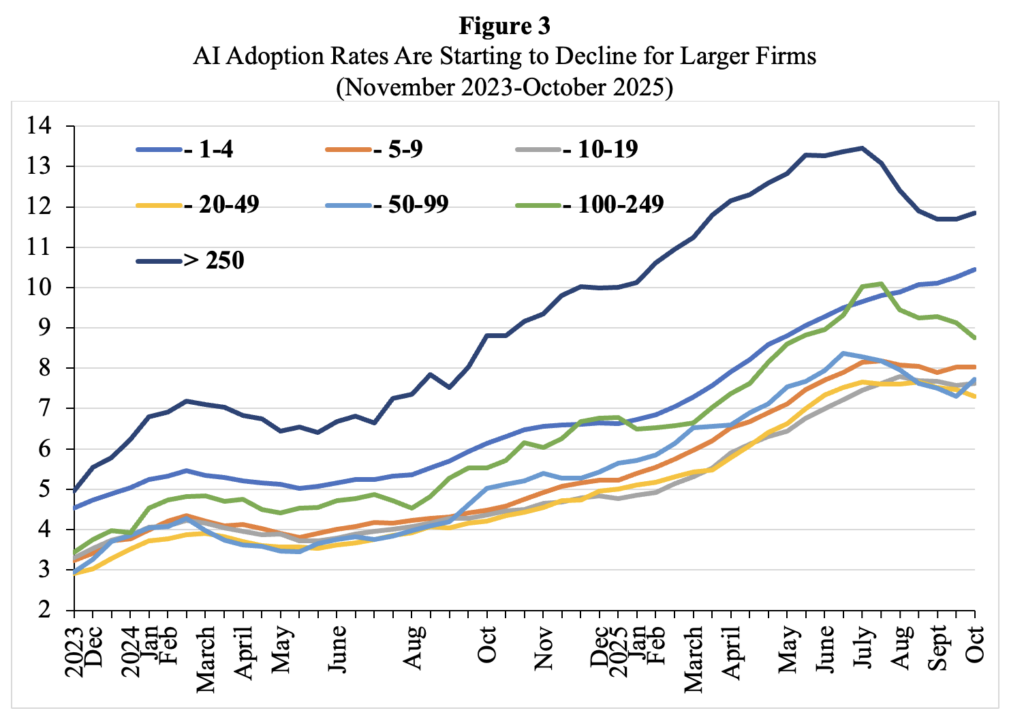
Even within technologically advanced economies, adoption can remain uneven. Large companies may have the financial resources, technical staff, and organized information necessary to integrate AI into multiple operations, while smaller suppliers struggle to digitize records or afford suitable services.
For productivity gains to spread throughout an economy, adoption must extend beyond a narrow group of leading organizations. Improvements concentrated within a few major firms may increase national output without producing equally strong benefits across the wider business community.
The economies best positioned to benefit are likely to combine useful AI applications with the capacity to deploy them widely. Developing advanced models can provide an advantage, but ownership of the underlying technology is only one possible source of economic value.
The IMF’s AI Preparedness Index provides a broader framework by evaluating readiness through several connected areas:
- Digital infrastructure: The availability of reliable connectivity, computing resources, and supporting technological systems.
- Human capital and labour market policies: Workforce skills, education, adaptability, and institutions supporting employment transitions.
- Innovation and economic integration: The capacity of businesses to adopt new technologies and participate in changing markets.
- Regulation: The quality of institutions and policies governing technological deployment.
- Business adoption: The ability of organizations to convert available AI capabilities into practical improvements.
- Economic distribution: Whether resulting productivity gains reach workers, consumers, and businesses across different income groups.
A country that imports AI services could still improve its logistics, manufacturing, administration, or professional services without developing its own frontier models. The important requirements would include access to suitable tools, reliable business information, effective implementation, and workers capable of checking results.
Different measurements can also produce different conclusions about which economies benefit most. A large economy might experience the greatest absolute increase in monetary output, while a smaller economy records a larger percentage improvement. Neither measurement automatically establishes how much ordinary households gain.
Consumer benefits depend partly on how businesses respond to productivity improvements. If competition encourages firms to reduce prices or improve services, the gains can spread broadly. If savings primarily increase profits among a small number of dominant companies, overall economic output may grow without a comparable improvement in typical living standards.
Early adoption could provide additional advantages because businesses gain experience identifying suitable applications, preparing information, evaluating systems, and managing automated workflows. Organizations that successfully complete initial projects may find subsequent implementation easier because they have already developed procedures for supervising AI tools and measuring their performance.
However, early adoption should not be confused with rapid spending. Purchasing numerous subscriptions or introducing AI across departments without changing underlying processes can increase expenses while generating limited value. The advantage comes from learning how to apply the technology effectively rather than simply acquiring access before competitors.
OECD research on enterprise AI adoption emphasizes the importance of workforce skills, useful data, and institutions that support technological diffusion. These findings suggest that the conditions surrounding adoption can matter as much as the capabilities of the software itself.
For example, an accounting firm might begin by using AI to classify routine documents while qualified staff verify the results. By measuring processing time, correction rates, and client outcomes, the organization could determine whether the tool produces dependable improvements before expanding its use.
This approach allows businesses to learn from practical experience while limiting the consequences of unsuccessful implementation. It also creates opportunities to identify where additional training, better information, or changes to existing procedures are necessary.
Ultimately, the FT survey suggests that many participating economists see substantial potential for AI to support growth across the G20. However, realizing the potential identified by the FT will depend on business investment, infrastructure, workforce capabilities, competition, and the ability to distribute benefits beyond the organizations that adopt the technology first.

AI Economic Inequality, African Economies, Business Process Outsourcing and Jobs at Risk
Artificial intelligence could increase economic output across multiple countries while simultaneously widening existing differences in income, competitiveness, and technological capability. If wealthier economies adopt AI more effectively and capture larger productivity improvements, poorer countries may continue growing while falling further behind in relative terms, according to concerns reflected in FT discussions about the economic impact of AI.
An IMF working paper published in April 2025 examined this possibility by modelling differences in AI preparedness, occupational exposure, and access to technology. Its results suggested that productivity and growth benefits could disproportionately favor advanced economies, with estimated growth effects potentially exceeding those in low income countries by more than twofold. These findings represent modelled scenarios rather than observed economic outcomes, providing important context for the FT survey’s expectations about AI driven growth.
One mechanism involves cumulative investment. Businesses that achieve greater profitability through AI adoption may reinvest their earnings in better systems, computing infrastructure, and specialized employees. Governments benefiting from stronger economic activity may also collect additional revenue that can support education, infrastructure, and public services. Over time, these advantages could reinforce the technological and financial position of countries already equipped to adopt AI, potentially widening the differences highlighted by FT economic analysis.
Ownership of AI technology introduces another consideration. When businesses purchase services from overseas providers, part of their spending becomes income for companies operating elsewhere. Domestic firms can still gain through improved productivity, but the location of profits, intellectual property, and technical capabilities influences how the overall economic benefits are distributed. This is another factor relevant to the FT survey’s wider assessment of AI’s economic prospects.
Policy therefore needs to address both access and value creation. Affordable AI services can help businesses become more productive, while opportunities to develop local applications, provide technical services, and build specialized expertise can allow countries to retain a greater share of the resulting economic activity.
African economies face particular challenges because the conditions required for widespread AI adoption differ considerably across the continent. Electricity reliability, internet connectivity, financing costs, workforce skills, and institutional capacity vary between countries and within individual markets. A single prediction covering all African economies would therefore overlook important differences, including those relevant to the FT survey’s G20 outlook.
The World Bank’s Africa Economic Update identifies AI as a potential development opportunity while emphasizing the foundational requirements for successful adoption. These include dependable electricity, connectivity, relevant skills, computing infrastructure, suitable data, and effective institutions.
The risks extend beyond workers being directly replaced by software. Businesses may struggle to remain competitive if international rivals can access affordable, reliable AI services while local firms face interruptions, high operating costs, or limited technical support. Public institutions could also miss opportunities to improve administrative efficiency and service delivery, limiting the economic gains anticipated in the FT survey.
For example, a small Nigerian business might find an AI subscription affordable when considering only its advertised price. However, unreliable electricity, mobile data costs, staff training, and the time required to supervise outputs could substantially increase the true cost of regular use. These practical barriers help explain why FT survey expectations about productivity gains may not translate equally across different economies.
The relevant question is not simply whether the technology is available, but whether it can be used consistently and economically under local conditions.
AI could also provide opportunities to address regional needs through translation, record management, information retrieval, and support for public or commercial services. However, these applications would need to perform reliably with local languages, terminology, documents, and working conditions.
The World Bank’s Digital Progress and Trends Report 2025 identifies four important foundations for AI readiness: connectivity, compute, context, and competency. Connectivity concerns access to digital networks, while compute refers to the processing resources needed to operate AI systems. Context includes locally relevant information and applications, and competency concerns the skills required to deploy and use the technology.
These foundations are interconnected. A business may have reliable internet access but lack organized digital records, while another may possess useful information but face computing or service costs that make adoption uneconomical. Such differences could influence how individual countries experience the AI productivity gains discussed in the FT survey.
Countries also need to distinguish between using existing AI services, adapting systems to local needs, and developing advanced models independently. These activities involve different infrastructure requirements and investment priorities.
For many organizations, the immediate opportunity may lie in improving existing records, ensuring dependable access to available tools, and training workers to evaluate their outputs. Large computing investments become more useful when connected to clear applications, realistic operating costs, and sufficient demand.
Routine service economies face another set of challenges because some export industries depend on supplying standardized information processing tasks at relatively low labour costs. AI could change that competitive relationship by allowing clients to automate portions of the work internally or purchase similar services through software. These developments are important considerations when assessing the FT survey’s broader predictions about employment and productivity.
Even incomplete automation could reduce demand for certain outsourced activities if customers require fewer hours of human processing. However, routine tasks do not necessarily represent entire occupations. Many jobs combine predictable activities with unusual cases, customer communication, judgment, and responsibility for errors.
Research by the International Labour Organization and Poland’s NASK, published in 2025, found that approximately one in four jobs worldwide had potential exposure to generative AI. Its central conclusion was that job transformation was generally more likely than complete replacement. This distinction adds important context to the employment outlook considered by FT survey respondents.
This distinction matters because AI can change the composition of employment without eliminating every affected occupation. A worker may spend less time completing repetitive tasks and more time reviewing exceptions, interacting with customers, or handling complex decisions.
For economies dependent on service exports, the most important questions concern which activities are easiest to automate, which services clients will continue purchasing, and whether providers can adapt their business models. These questions also help explain why the FT survey’s relatively optimistic employment expectations should not be interpreted as a guarantee that every industry will remain unaffected.
A company specializing in basic document entry may face different competitive pressures from one handling complicated insurance claims or specialized customer disputes. Both process information, but the latter may require greater contextual judgment, accountability, and experience.
Business process outsourcing includes customer support, administrative services, and specialized processing, making its exposure to AI uneven. An IMF working paper examining the Philippine labour market identified business process outsourcing as the sector with the highest proportion of jobs at risk of displacement within its analysis. However, this represents an assessment of potential exposure rather than a confirmed forecast of employment losses.
One major commercial challenge concerns how outsourcing providers earn revenue. Businesses charging clients according to staff numbers or working hours may face pressure if AI enables the same services to be delivered with fewer employees. Productivity improvements could benefit customers while reducing the provider’s billable activity under existing contracts. This possibility illustrates how the productivity gains anticipated in the FT survey could produce different outcomes for employers and workers.
Providers might respond by offering more specialized services, changing pricing arrangements, or charging according to completed outcomes rather than hours worked. Such changes require investment, negotiation, and new capabilities rather than occurring automatically.
There is also a possible expansion effect. If AI reduces service costs, customers may purchase support they previously considered unaffordable. Whether employment increases or decreases would then depend partly on whether expanded demand outweighs the reduction in labour required for each transaction.
Call centres provide a clear example of this uncertainty. AI can assist with retrieving customer information, summarizing conversations, preparing responses, and answering predictable enquiries. These capabilities can improve productivity while also changing staffing requirements, making the FT survey’s employment outlook particularly relevant to service industries.
Research published through the National Bureau of Economic Research examined generative AI assistance involving 5,179 customer support agents. The study reported an average productivity increase of 14%, with gains reaching 34% among novice and lower skilled workers. However, these findings describe a particular deployment and should not be treated as an industry wide performance guarantee or a direct prediction of the employment effects discussed in the FT survey.
The difference between assistance and automation is important. A system suggesting useful information to a human employee operates differently from one independently communicating with customers and resolving their requests.
A call centre might use AI to handle routine status enquiries while directing difficult complaints to experienced employees. This could improve efficiency, but it might also leave the remaining workforce dealing with more complex and emotionally demanding cases.
Shorter conversations alone do not establish better service. Businesses should also examine whether customers receive accurate information, whether problems are resolved, and whether repeat contacts become more or less common.
Junior professional positions face related challenges because entry level work frequently includes drafting documents, organizing evidence, summarizing information, and conducting preliminary research. These tasks may be suitable for AI assistance, but they also provide opportunities for inexperienced workers to develop professional judgment. This creates another employment consideration beyond the broad growth forecasts reported by FT.
For example, a legal practice could use AI to prepare initial document summaries while junior employees verify the output against original materials. This arrangement might improve efficiency while maintaining practical learning opportunities. If the organization instead removes those junior responsibilities entirely, employees could lose important pathways for developing expertise.
The ILO’s occupational exposure research also identifies increasing exposure among some highly digitized professional and technical occupations. This demonstrates why educational qualifications alone do not determine whether a role is affected. The actual tasks performed are more informative than occupational titles.
Changes in entry level recruitment could affect graduates and new workers even without widespread redundancies among established employees. If firms reduce hiring because AI performs introductory tasks, the consequences may appear first through fewer opportunities to enter a profession. This is an important qualification to the FT survey’s finding that most participating economists did not anticipate a large or lasting increase in unemployment.
Organizations therefore face a choice in how they deploy the technology. They can use AI in ways that reduce learning opportunities, or they can allow junior employees to work on more demanding assignments under supervision while developing the expertise required for advancement.
A sustainable transition needs to preserve credible career pathways alongside improvements in productivity.
The main labour market concerns can be summarized through several connected risks:
- Uneven economic adoption: Wealthier countries and larger firms may gain advantages faster than organizations with limited resources, potentially widening the differences in AI readiness considered in the FT survey.
- Infrastructure constraints: Unreliable electricity, connectivity, computing access, and inadequate digital records can restrict productivity gains.
- Routine task automation: Standardized information processing and administrative activities may require fewer human working hours.
- Outsourcing pressure: Service providers may face changes in customer demand and traditional billing arrangements.
- Call centre restructuring: AI assistance and automation could alter staffing needs and the complexity of remaining work.
- Entry level employment challenges: Automation of introductory professional tasks could reduce opportunities for graduates to gain experience.
- Unequal income distribution: Productivity gains may flow disproportionately toward technology owners, capital intensive firms, or highly skilled workers.
- Workforce adaptation: Employees may need training to supervise AI systems, evaluate outputs, and perform more specialized responsibilities.
None of these risks establishes that widespread unemployment is inevitable. Employment outcomes depend on how businesses use AI, whether lower costs increase demand, how workers transition into new responsibilities, and whether policies support adaptation.
The FT survey’s relatively optimistic expectations about long term unemployment should therefore be considered alongside research identifying specific sectors and workers facing disruption.
An economy may avoid a large aggregate employment decline while particular occupations experience substantial changes in hiring, wages, or required skills. Understanding these differences is essential to evaluating whether AI driven growth produces broadly shared benefits.
AI Adoption Barriers, Workforce Skills, Economic Forecasts and How to Measure Long Term Productivity Growth
The long term economic impact of artificial intelligence will depend on more than the capabilities of future models. Businesses must be able to deploy the technology effEffectively, employees need appropriate skills, and institutions must support the infrastructure and organizational changes required for productive use, as emphasized by the FT survey’s focus on the conditions needed to achieve AI driven economic growth.
Workforce readiness is particularly important because using AI effectively does not always require developing software. Employees across different industries need to understand where the technology can help, how to evaluate its output, and when decisions require human review. These capabilities are also important to realizing the productivity improvements anticipated by FT survey respondents.
Managers face additional responsibilities involving project selection, financial evaluation, employee training, and quality control. They must determine whether AI produces meaningful improvements rather than simply generating outputs more quickly, a distinction central to interpreting the FT survey’s economic outlook.
OECD research on skills in the AI age identifies workforce shortages and capability gaps as barriers to adoption. It also observes that uptake differs between firms, with smaller organizations often facing greater difficulties involving resources, infrastructure, and technical expertise. These findings help explain why the AI growth prospects highlighted by the FT may vary considerably between businesses.
Training programs should therefore reflect actual workplace responsibilities instead of focusing exclusively on general AI familiarity.
For example, a procurement team might learn to compare AI generated supplier evaluations against original documents, identify unsupported recommendations, and assess whether the final purchasing decision meets organizational requirements. This would involve different skills from training software engineers to develop an AI application.
Employees also need opportunities to maintain professional expertise. If workers routinely accept AI generated information without understanding the underlying subject, their ability to identify errors may weaken over time. This could undermine the productivity gains expected in the FT survey.
Effective training should combine practical use with evaluation, feedback, and continued professional development. Completing an introductory course can establish familiarity, but dependable use requires experience with the actual tasks, risks, and performance standards of the workplace.
Early adoption can support this learning process when organizations introduce AI through manageable projects rather than attempting immediate transformation across every department. This gradual approach can help businesses achieve the practical improvements associated with the FT survey’s positive growth expectations.
A business might begin with a repetitive administrative task, establish a baseline for performance, and evaluate whether AI reduces processing time without increasing errors. Successful results could justify expansion, while disappointing outcomes could reveal where better data, additional training, or revised workflows are necessary.
The most useful productivity measurements concern the final economic value created rather than the amount of content generated or the number of tasks an AI system attempts. This distinction is essential when evaluating whether the FT survey’s projected productivity gains are being realized.
Relevant measures include:
- Useful output: Whether employees or businesses deliver more valuable products and services with available resources.
- Service quality: Whether the accuracy, reliability, and usefulness of completed work improve.
- Error rates: Whether AI reduces mistakes or introduces additional correction requirements.
- Operating costs: Whether savings remain meaningful after accounting for software, infrastructure, training, and supervision.
- Task completion time: Whether work finishes more efficiently when the entire process is considered.
- Customer outcomes: Whether users receive faster, more dependable, or higher quality services.
- Employee productivity: Whether workers can accomplish more without creating unsustainable workloads.
- Workforce development: Whether employees continue gaining the skills needed for more advanced responsibilities.
- Long term sustainability: Whether improvements persist after initial implementation and remain economically worthwhile.
Measuring these outcomes helps distinguish genuine productivity improvements from demonstrations that appear impressive but provide limited practical value. It also offers a practical way to assess the economic expectations discussed in the FT survey.
For example, an AI tool might prepare a report in minutes instead of hours, but the business would need to account for the time employees spend checking its claims, correcting errors, and integrating the result into other work. If review requirements offset the initial savings, the overall improvement may be smaller than the headline suggests.
Conversely, a tool that does not substantially reduce working time might still create value by improving accuracy, reducing operational risks, or helping employees identify problems they would otherwise overlook.
The economic effects should therefore be evaluated through quality adjusted productivity rather than speed alone, providing a more meaningful measure of the growth prospects examined by the FT.
Long term forecasts remain uncertain because they depend on assumptions about technological progress, adoption costs, reliability, workforce adaptation, and business behaviour. A model becoming more capable does not reveal how quickly firms will reorganize their processes or whether the resulting improvements will be economically significant.
Economists also disagree about the likely magnitude of AI’s contribution to growth, despite the broadly positive expectations reflected in the FT survey.
Daron Acemoglu’s 2024 working paper, The Simple Macroeconomics of AI, estimated an increase in total factor productivity of no more than 0.66% over ten years under its initial assumptions. The paper argued that difficulties extending productivity improvements from simpler tasks to more complex activities could result in smaller overall gains. This provides an important contrast to the more optimistic expectations reported by the FT.
That estimate differs from more optimistic projections, including the IMF’s conditional suggestion that AI could contribute up to 0.8 percentage points to annual global productivity growth. The difference helps illustrate the range of economic expectations relevant to the FT survey.
However, these figures should not be compared as though they measure the same thing. A cumulative increase in productivity over a decade differs from an annual addition to the growth rate. Similarly, a higher GDP level is not equivalent to a permanent increase in yearly growth.
Understanding the units, time horizons, and assumptions behind forecasts is necessary before deciding whether economists genuinely disagree about the same outcome or whether their estimates, including those considered by the FT, address different economic measures.
Economic investment creates another source of uncertainty. Spending on computing infrastructure, data centres, software, and related services can support current economic activity before the long term commercial returns are established.
Whether those investments generate lasting productivity improvements depends on how effectively the resulting capacity is used. Large infrastructure spending does not guarantee that businesses will develop profitable applications or that workers will become more productive, despite the investment expectations associated with the FT’s AI growth outlook.
For national economies, evaluating AI readiness therefore requires balancing ambition with practical constraints. Investment should be connected to clear economic opportunities, workforce capabilities, and the systems necessary to translate technological improvements into useful production.
Developing frontier AI models may be valuable for countries with sufficient resources and strategic objectives, but it is not the only route to growth. Many economies could benefit substantially from applying existing technology to logistics, manufacturing, professional services, administration, and public service delivery. This distinction is important to the FT survey’s assessment of opportunities across the G20.
The most effective strategy will depend on local industrial structures, technological capabilities, and the costs of adopting or adapting available systems.
For lower income countries, improving electricity reliability, connectivity, digital skills, and access to relevant data may deliver broader benefits than concentrating resources exclusively on advanced model development. These foundations can support AI adoption while also improving the overall business environment, potentially helping countries participate more fully in the growth prospects identified by the FT.
The same principle applies to smaller companies within advanced economies. Access to powerful AI services is less valuable when organizations lack accurate information, appropriate procedures, or employees capable of using the tools responsibly.
Policy must also consider the distribution of productivity gains. If workers lose opportunities while technology owners capture most of the additional income, aggregate economic growth may coexist with widening inequality. This is a key consideration when assessing the wider implications of the FT survey’s optimistic economic outlook.
Competition, education, labour market policies, and opportunities for domestic businesses to develop AI related services can influence whether the benefits spread more widely.
The potential effects on employment also require continued observation rather than reliance on broad forecasts. AI may reduce labour requirements for certain tasks while creating demand for new services or expanding the amount of work businesses can afford to undertake. These possibilities help contextualize the FT survey’s expectations about unemployment.
The outcome will depend partly on how customers respond to lower prices, whether companies reinvest productivity gains, and how quickly employees can transition into changing roles.
For business process outsourcing, this could mean a shift away from routine processing toward more specialized services. For professional occupations, it could mean reorganizing introductory tasks while preserving opportunities for employees to develop judgment and expertise. For manufacturing and logistics, AI might support better planning and reliability without replacing the physical work required to deliver products. These different possibilities demonstrate why the FT’s broad employment outlook needs to be considered alongside industry specific developments.
These possibilities demonstrate why occupational exposure should not automatically be interpreted as employment loss.
The FT survey’s finding that most participating economists did not expect a large or lasting unemployment increase offers one perspective on the likely balance between disruption and adjustment. However, that FT survey expectation does not establish that every worker or sector will experience a smooth transition.
Some industries may reorganize rapidly, while others adopt AI slowly because of technical constraints, regulatory requirements, or limited commercial benefits. Differences in adoption could also influence wages, investment, and competitive conditions across countries, affecting the outcomes anticipated by the FT.
The most credible assessment of AI’s long term economic impact will come from observing whether businesses achieve sustained improvements in useful output, service quality, and operating efficiency.
Those results should be examined alongside employment transitions, wage developments, consumer benefits, and differences between countries and firms to evaluate the FT survey’s projections against actual economic developments.
The Financial Times (FT) survey suggests that many economists expect AI to contribute meaningfully to productivity and growth across the G20 during the next decade. Supporting research explains why the FT outlook is plausible while identifying the conditions that could prevent gains from being distributed evenly.
Artificial intelligence has the potential to reduce production costs, improve decision making, and expand the range of economically viable activities. However, successful deployment requires investment in infrastructure, workforce development, organizational change, and reliable evaluation.
The central challenge is therefore not simply making AI available. It is ensuring that businesses, workers, and countries can use the technology effectively enough to produce lasting economic value, fulfilling the conditions behind the FT survey’s growth expectations.
Whether AI ultimately narrows or widens existing economic differences will depend on who can adopt it, who owns the resulting capabilities, and how productivity gains are shared. A genuine acceleration in global growth would be most meaningful if it also supported higher living standards, sustainable employment opportunities, and broader participation in the benefits of technological progress, outcomes that will ultimately determine how the FT’s economic outlook compares with reality.

Frequently Asked Questions (FAQs)
- What does the FT survey mean for the global AI outlook?
The Financial Times survey indicates that many participating economists expect AI to make a meaningful contribution to economic growth over the next decade. Among 94 respondents, 54% anticipated significant productivity gains across many or nearly all G20 economies. However, these findings represent expert expectations rather than confirmed economic outcomes. The actual benefits will depend on business adoption, infrastructure, workforce skills, and whether productivity improvements spread across different industries and countries. - Does using AI automatically increase productivity?
No. Simply introducing AI into a workplace does not guarantee higher productivity. Businesses must determine whether the technology improves useful output, reduces costs, increases accuracy, or improves service quality after accounting for training, supervision, and correction requirements. An AI tool might generate information quickly but provide little economic benefit if employees spend substantial time fixing mistakes or if the final result does not meet customer needs. - Must a country develop its own frontier AI models?
No. Developing advanced AI models is one possible route to economic value, but countries can also benefit by adopting existing systems effectively. Businesses may use commercially available AI services to improve logistics, administration, manufacturing, or professional work without building the underlying models. The most suitable strategy depends on national resources, infrastructure, workforce capabilities, and whether developing or adapting technology provides greater economic value. - Why can AI increase inequality even when economies grow?
AI can raise overall productivity while distributing the resulting benefits unevenly. Wealthier countries and larger businesses may have better infrastructure, more skilled employees, and greater financial resources to adopt advanced systems. Workers whose tasks become more valuable could experience stronger wages, while others may face reduced demand for their skills. Consequently, national income can increase even when the gains are concentrated among particular firms, investors, or occupations. - Are African economies certain to fall behind?
No. African economies face important challenges involving electricity reliability, connectivity, financing, and digital skills, but these conditions differ substantially between countries. Investment in infrastructure, education, and locally relevant applications could allow businesses and public institutions to benefit from AI. The outcome will depend on how effectively individual economies address their constraints and develop opportunities rather than on a predetermined continental result. - Will business process outsourcing disappear?
There is no reliable basis for concluding that business process outsourcing will disappear. AI may automate some routine activities and reduce demand for particular services, but other tasks involving complex judgment, customer relationships, and accountability may remain valuable. Outsourcing providers could also adapt by offering more specialized services or changing their pricing arrangements. Employment outcomes will depend on customer demand, business adaptation, and the balance between automation and expanding service opportunities. - Can AI help call centre employees?
Yes. AI can assist call centre employees by retrieving information, summarizing conversations, suggesting responses, and helping resolve routine enquiries. Research involving customer support agents has demonstrated productivity improvements in particular deployments, especially among less experienced workers. However, higher efficiency can also change staffing requirements, and the benefits depend on whether the technology improves resolution quality and customer satisfaction rather than simply reducing conversation times. - Why are junior professional roles important?
Junior professional positions provide opportunities for new workers to develop practical judgment, industry knowledge, and the skills required for more advanced responsibilities. Many introductory tasks, including research, document preparation, and information organization, are suitable for AI assistance, but they also contribute to professional training. If employers automate these activities without creating alternative learning opportunities, they may weaken the development pathways needed to produce experienced workers in the future. - What should businesses measure during an AI rollout?
Businesses should evaluate whether AI improves final service quality, reduces errors, lowers operating costs, and allows employees to complete useful work more efficiently. They should also account for software expenses, training, supervision, and the time required to correct generated output. Customer satisfaction and employee workload are important because apparent productivity gains can disappear if mistakes increase or responsibilities are transferred to other workers. Reliable evaluation should continue beyond the initial demonstration. - How should readers interpret competing AI forecasts?
Readers should compare the assumptions, time horizons, and economic measurements used in each forecast. A prediction about cumulative productivity growth over ten years is different from an estimate of additional annual growth. Economists may also assume different rates of adoption, levels of technical progress, and costs of implementation. Understanding those differences helps explain why forecasts vary and prevents optimistic scenarios from being mistaken for guaranteed economic outcomes.

Conclusion
The Financial Times survey highlights growing optimism about AI’s potential to improve global productivity and economic growth. However, realizing these benefits will depend on how effectively businesses and public institutions adopt the technology, supported by reliable infrastructure, workforce skills, and practical implementation. While AI could reduce costs, improve services, and create new economic opportunities, it may also disrupt employment and widen inequality between countries, businesses, and workers with different levels of technological access.
The most meaningful measure of AI’s economic impact will be whether productivity gains translate into sustained improvements in incomes, services, and living standards. Achieving this requires investment in infrastructure, workforce development, business competition, and policies that support a fairer distribution of benefits. Optimistic economic forecasts demonstrate AI’s potential, but widespread prosperity will depend on how successfully countries and organizations turn those possibilities into measurable results.
Sources and Citations
- Financial Times, October 18, 2026 – “Global Economy Set for AI-Driven Surge, FT Survey Suggests”: Reports the expectations of 94 economists on AI-driven productivity gains, economic growth, and employment across G20 economies.
- Citation: Financial Times
- International Monetary Fund, February 2026 and June 2024 – “Leveraging Artificial Intelligence and Enhancing Countries’ Preparedness” and “Mapping the World’s Readiness for Artificial Intelligence Shows Prospects Diverge”: Examines AI’s potential productivity benefits and differences in national readiness to adopt and benefit from the technology.
- Citation: IMF – Artificial Intelligence
- International Monetary Fund, April 2024 and April 2025 – World Economic Outlook, Chapter 3, and “The Global Impact of AI: Mind the Gap”: Explores occupational exposure to AI, productivity opportunities, and the risk that AI adoption could widen economic inequality.
- Citation: IMF – World Economic Outlook
- World Bank, 2025 – Africa Economic Update and Digital Progress and Trends Report 2025: Examines AI adoption opportunities across Africa, alongside infrastructure limitations involving connectivity, computing resources, and digital skills.
- International Labour Organization and NASK, May 2025 – “Generative AI and Jobs: A Refined Global Index of Occupational Exposure”: Evaluates how generative AI could transform occupations and affect employment across different economies.
- Citation: ILO – Generative AI and Jobs
- OECD, 2025 and 2026 – “The Adoption of Artificial Intelligence in Firms” and “Skills in the AI Age”: Discusses barriers to business AI adoption, workforce development, and the skills needed for effective AI implementation.
- Citation: OECD – Artificial Intelligence | OECD – Skills
- National Bureau of Economic Research – “Generative AI at Work,” by Erik Brynjolfsson, Danielle Li, and Lindsey R. Raymond, and “The Simple Macroeconomics of AI,” by Daron Acemoglu: Provides research on workplace productivity gains and competing estimates of AI’s broader economic impact.
- International Monetary Fund, 2025 – “Artificial Intelligence and the Philippine Labor Market: Mapping Occupational Exposure and Complementarity”: Examines occupational AI exposure and potential employment disruption in the Philippines, particularly in the business process outsourcing sector.
- Citation: IMF – Publications
- G20 South Africa – “About G20”: Provides official information about G20 membership and the group’s framework for international economic cooperation.
- Citation: G20 South Africa – About G20
Recommendations
- The Mandalorian and Grogu Super Bowl Trailer Reaction, Breakdown and Review (2026 Big Game Spot Explained)
- Out Fishing – Official Gameplay Trailer Explained: Story Details, Horror Mechanics, Release Info, and Everything We Know
- Palmer Luckey’s N64 Clone Release Date: Everything We Know About the New Retro Console
- Gothic 1 Remake The Cult’s Recipe Quest Walkthrough: Cor Kalom Chest and Swamp Camp Guide
- Psycho Dead: Official Release Window Trailer and Everything We Know: Gameplay, Story, Release Date & Psychic Horror Details
- Microsoft Gaming CEO Reportedly Exploring a Netflix + Xbox Game Pass Bundle After Killing the “Everything Is An Xbox” Campaign — Cheaper Subscription Tiers Next?
- Gothic 1 Remake Early Armor Guide: Best Free and Cheap Armor Locations
- Blender “Generate Hair Curves” Geometry Nodes Preset: A Comprehensive Guide for Hair Grooming
- Why Blender Gets Ignored by Studios: Key Reasons and Industry Insights



































































































