






In This Article (11 sections)
Gamescom Dev 2026, Frederik Hammes’s Vision, and the Expanded Conference Format
At Gamescom Dev 2026, newly appointed Managing Director Frederik Hammes identified smaller studios as the largest opportunity in the current games market. Drawing on more than 20 years of industry experience, including his previous role as Managing Director of MMO publisher Travian, Hammes argued that lean teams can often “ship more with less.” Indie and smaller AA studios can develop original games on modest budgets, respond quickly to new ideas, and take creative risks that become much harder inside large corporate production structures. However, he also stressed that these teams need stronger guidance in design, programming, leadership, publishing, and business development if their creativity is to become sustainable commercial success.
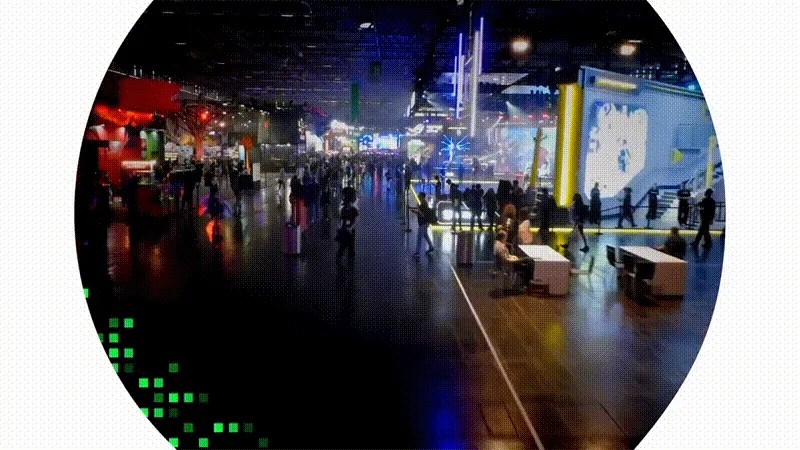
Hammes’s appointment coincides with a redesigned conference structure intended to make Gamescom Dev a more complete business and learning destination. Held from August 23 to August 25, 2026, in Cologne, the conference is officially connected to the main Gamescom business-to-business exhibition running from August 26 to August 28. Together, the two events form a continuous Monday-to-Friday “gamescom business week,” with one ticket providing access to the developer conference and the Gamescom trade fair.
The expanded schedule begins with a Speakers and VIP networking day on Sunday, followed by two main conference days of presentations, workshops, meetings, and panels. The developer-focused programme then connects directly with the indie showcases and wider business exhibition at Gamescom. This closer relationship allows developers to move from technical and creative education into pitching, networking, publishing discussions, and commercial meetings without treating them as separate events.
Gamescom Dev 2026 is expected to include approximately:
- 390 international speakers
- 220 sessions
- 17 stages or simultaneous tracks
- Talks, panels, workshops, and private discussions
- Sessions covering design, engineering, narrative, art, publishing, marketing, funding, and emerging technology
- Closed-door leadership summits for studio executives
The programme aims to offer depth rather than simply filling stages with promotional appearances. Developers can select sessions directly relevant to their current production problems, while studio leaders can discuss layoffs, financing, market changes, and management challenges in more confidential settings. This combination reflects Hammes’s goal of establishing a one-stop professional event where creative teams can learn from experienced developers and then meet the partners needed to bring their projects to market.
Technology remains an important part of the agenda, but Hammes has not treated emerging tools as a replacement for traditional studio skills. A developer survey associated with the event found that 47 percent of respondents viewed artificial intelligence as the most significant upcoming change, while only 11 percent considered AI expertise as important as leadership. The result suggests that developers expect AI to affect production while still valuing communication, direction, decision-making, and team management as essential foundations for successful studios.

Why Smaller Studios Are Attracting Investment and Competing with AAA Publishers
Smaller studios have become increasingly important because their commercial influence is growing while the cost and risk of AAA production continue to rise. Konvoy reported that independent games accounted for approximately 31 percent of Steam revenue in 2023, compared with 25 percent in 2018. This increase suggests that players are not treating indie releases as minor alternatives between large launches. Smaller projects now occupy a substantial part of the PC market and can become major commercial successes when they reach the right audience.
The contrast in production costs is significant. Modern AAA games can cost more than $200 million to develop, with reported budgets for projects such as Cyberpunk 2077 and Horizon Forbidden West reaching approximately $174 million to $212 million. Broader estimates suggest that average large-game budgets have increased from around $20 million in 2010 to approximately $150 million to $300 million by 2024. Marketing, long development schedules, large teams, outsourcing, technology, and post-launch support can push the complete investment even higher.
Independent projects generally operate at a fraction of that scale. Estimates in the supplied material place many credible indie productions between approximately $50,000 and $750,000, while even larger AA games may use budgets in the low tens of millions. A smaller project can therefore become profitable with far fewer sales than a $200 million blockbuster. A game developed for around $2 million may recover its costs with tens of thousands of buyers, depending on pricing and revenue arrangements, while the largest productions may need millions of sales before becoming profitable.
This cost difference changes how publishers and investors assess risk. Rather than placing hundreds of millions of dollars into one release, a backer can support several smaller projects built around different audiences, genres, or creative concepts. The failure of one project is less likely to threaten the entire investment portfolio, while one unexpected hit can deliver a disproportionately strong return.
The shift has become more visible as game investment has contracted. The supplied market analysis describes quarterly funding in late 2024 as falling by almost 47 percent, with available capital reduced to approximately one-fifth of its 2021 level. Mid-stage financing has become particularly difficult, leaving many developers dependent on seed investment, publishing agreements, personal savings, grants, or crowdfunding. In this environment, large productions with long timelines appear increasingly risky, while leaner studios offer investors a more affordable path into the market.
Structural Advantages Beyond Lower Costs
Smaller teams also possess structural advantages beyond cost. Their flatter hierarchies allow designers, artists, engineers, and writers to communicate directly, make decisions quickly, and adjust ideas without moving through several layers of corporate approval. They can test prototypes, release demos, use Early Access, study player feedback, and change direction in days or weeks rather than months.
Modern engines and digital distribution help those teams compete without reproducing the complete infrastructure of a major publisher. Unity, Unreal Engine, Godot, Steam, and console storefronts provide development and distribution systems that would previously have required expensive internal technology or retail partnerships. Smaller studios can concentrate on a distinctive central idea while using external services for quality assurance, localization, marketing, porting, and other specialist work.
This agility is increasingly valuable when many large releases rely on sequels, remasters, updates, and familiar intellectual properties. Fresh independent games can attract attention by exploring neglected genres, unusual artistic styles, experimental mechanics, or stories that would struggle to receive approval within a blockbuster budget. Smaller studios do not need to defeat AAA publishers through production scale. They can compete by serving audiences that large companies overlook and delivering focused experiences with a clearer identity.
Gamescom Dev Business, Funding, Publishing, and Networking Opportunities for Indies
Gamescom Dev is designed to help smaller teams convert creative agility into viable businesses. The event explicitly welcomes indie and AA developers through showcases, scholarships, pitching sessions, workshops, and networking programmes. Its Indie Expo gives selected studios an opportunity to present their projects to international publishers, investors, press, service providers, and other developers.
Organisers have said they want newcomers and underrepresented teams to receive meaningful access rather than being overshadowed by established companies. Eight indie studios are expected to be selected for a showcase in Gamescom’s business-to-business hall for a relatively modest participation fee. A scholarship programme supported by the IGDA Foundation and Supercell also provides conference passes and professional networking to eligible developers who might otherwise be unable to afford attendance.
The conference offers several routes through which a project can move from visibility to a possible commercial partnership:
- The Indie Expo and Indie Arena Booth provide public and business-facing exhibition space.
- “Pitch It!” gives developers short, scheduled meetings with publishers and investors.
- Networking lounges allow promising conversations to continue after formal pitch sessions.
- Business and Finance sessions cover grants, publishing agreements, investment, and alternative funding.
- Indie game awards provide recognition and media visibility.
- Gamescom’s business exhibition connects teams with distributors, platform holders, localization companies, quality-assurance providers, and other services.
- Parties, game jams, award ceremonies, and informal gatherings support less structured relationship building.
Publishers such as Raw Fury, Thunderful, and Good Shepherd have attended these kinds of events to identify new projects. For a small team, one productive meeting can lead to development funding, distribution support, localization, platform access, quality assurance, marketing, or press attention. Even when a publishing agreement is not immediate, feedback from experienced partners can help a developer improve its pitch, budget, production schedule, or market positioning.
Funding, Expertise, and Industry Influence
These opportunities are important because funding remains one of the hardest problems for independent developers. Many teams begin with personal savings, unpaid work, small publisher advances, or crowdfunding. Crowdfunding can expand a project, but the money raised may cover only part of development while leaving marketing, testing, localization, post-production, and launch support unresolved. The supplied example of Legend of the White Dragon, which raised slightly more than half a million dollars through Kickstarter, illustrates how a successful campaign can increase production scope without automatically solving every financial requirement.
Gamescom Dev’s Business and Finance track addresses these pressures by bringing developers together with people experienced in grants, investment, publishing, budgeting, and alternative finance. Smaller teams need more than encouragement to remain independent. They require realistic production plans, defensible budgets, clear audience definitions, commercial knowledge, and an understanding of what different funding partners expect.
Networking also supports developers who need expertise rather than direct investment. A studio may have strong design and engineering but lack experience in marketing, console certification, accessibility, localization, community management, or business negotiation. Meeting specialised partners allows the team to remain lean while gaining professional support in areas it cannot reasonably handle alone.
The event’s leadership summits can influence these opportunities indirectly. When publishers, investors, service providers, and studio executives discuss layoffs, restructuring, changing player behaviour, and new funding models, those conversations can alter how they evaluate independent projects. Gamescom Dev therefore operates not only as a place where one team pitches one game, but also as a forum where the industry reconsiders the structures used to discover, support, and release smaller productions.

The Future of Indie and AA Development and What Gamescom Dev Reveals About the Industry
Independent and AA development are likely to remain central to the games industry because they offer a balance of manageable cost, creative freedom, and market flexibility. Powerful engines, online storefronts, accessible development tools, and global communities allow a small team to produce and distribute work that previously would have required a much larger organisation. The rise in indie revenue indicates that audiences are increasingly willing to support these games alongside the largest franchises.
AA development may also experience renewed importance. These projects occupy the space between solo indie games and blockbuster productions, often using budgets in the low tens of millions to deliver polished experiences without the commercial pressure attached to a $200 million investment. Smaller publishers, cooperative development arrangements, external specialists, and shared technology can help teams produce ambitious games without adopting the full AAA model.
The future will still create new challenges. Artificial intelligence may affect coding, art workflows, testing, localisation, and content production, while cloud technology and changing distribution models may alter how games are built and delivered. Live-service expectations, narrative-focused releases, and evolving player communities also require studios to remain adaptable. Gamescom Dev’s survey findings suggest that developers recognise AI’s potential but do not view technical familiarity as a substitute for leadership, communication, and coherent creative direction.
Smaller studios are naturally positioned to test new workflows because they can adopt or reject tools without coordinating across thousands of employees. Their speed can become an advantage when technology or audience behaviour changes quickly. At the same time, limited resources mean that one poor investment, failed launch, or inappropriate technology choice can be more damaging, making disciplined production and business planning essential.
Industry analysis describing large publishers as being “squeezed in the middle” also suggests that bigger organisations may need to imitate some of the strengths associated with independent development. Shorter decision chains, clearer project identities, smaller teams, faster prototypes, and closer communication with players can reduce waste even inside established companies.
Gamescom Dev Reveals Realistic Industry Transformation
Gamescom Dev’s focus on smaller studios reflects this broader transformation. The conference still addresses technology, AAA production, leadership, and major commercial trends, but it recognises that the future cannot depend only on a few extremely expensive releases. Its indie showcases, scholarships, business tracks, awards, and pitching programmes acknowledge that creative and commercial growth can come from teams working at many different scales.
The event also reflects the industry’s recent turbulence. Discussions about layoffs, shrinking investment, restructuring, skill gaps, and financing sit beside celebrations of independent success. This combination presents a more realistic picture than simply describing small studios as naturally innovative. They have significant creative and commercial potential, but they require access to capital, experienced guidance, professional networks, and sustainable working practices.
Gamescom Dev ultimately signals a more varied games ecosystem in which large companies may release fewer blockbusters while smaller teams fill genre gaps, explore new storytelling approaches, and experiment with mechanics or visual styles. Rather than existing at the edge of the industry, lean studios are becoming an increasingly important source of its revenue, ideas, and future growth.

Frequently Asked Questions (FAQs)
- What is Gamescom Dev and how is it related to Gamescom?
Gamescom Dev is Europe’s leading game developer conference, serving as the official developer event of Gamescom. In 2026, it runs Aug 23 to 25 in Cologne just before Gamescom, with a unified ticket and schedule spanning Monday through Friday. - Who is Frederik Hammes and what did he say about small studios?
Frederik Hammes is Gamescom Dev’s Managing Director (appointed 2026), formerly MD at publisher Travian. He has stated that “smaller studios represent the biggest opportunity in the games market right now”, emphasizing that lean teams are efficient but need business support. - Why are smaller game studios considered a major opportunity now?
Smaller studios have lower costs and high creativity. Recent data show indie games took ~31% of Steam revenue in 2023. Meanwhile, AAA game costs have soared (often $200M+) and investment in games is down substantially, making small-team projects more attractive financially. - How many sessions and speakers are planned for Gamescom Dev 2026?
The conference program includes about 220 sessions by 390 speakers. These sessions span roughly 17 tracks, covering topics from game design to business strategy. - What kind of sessions and tracks does Gamescom Dev feature?
Gamescom Dev’s agenda covers core developer topics (art, design, programming, audio, etc.) as well as business and leadership tracks. It also includes masterclasses, workshops, and panel discussions. For example, there are exclusive talks on indie publishing, marketing, and technical innovation. - How does Gamescom Dev support indie developers?
There is a dedicated Indie Expo where 8 select indie studios get to showcase their games at Gamescom’s B2B area for a low fee. Events like the “Pitch It!” mixer allow indie teams to have speed meetings with international publishers. Additionally, a scholarship program offers free passes and networking for talented devs who couldn’t otherwise afford to attend. - What is the relationship between indie and AAA development costs?
Indie game budgets are typically tiny compared to AAA. Industry reports indicate many indie games cost under $750K to make, whereas modern AAA titles can exceed $200M. Even mid-tier “AA” games are often just a few tens of millions. This cost gap means smaller teams can break even with far fewer sales than a AAA. - Why has game industry funding shifted towards smaller teams?
A recent funding slump (Q4 2024 saw almost a 50% drop in new investment) has made backers more cautious. Combined with audience fatigue over big-sequel releases, investors are focusing on lower-risk projects. Smaller teams need less capital and can often turn profits sooner, so publishers and funds are giving them more attention. - What networking opportunities does Gamescom Dev provide?
Beyond talks, there is a large B2B expo where studios, tech providers and publishers exhibit (meeting hundreds of attendees). There are also curated networking events like the “Pitch It!” mixer. Plus, executive “Leadership Summits” offer confidential roundtables for industry leaders. Informal activities (game jams, parties, lunches) encourage conversation among attendees too. - How does Gamescom Dev reflect the future of the games industry?
Gamescom Dev’s focus on small teams, indie networking, and business education highlights a broader industry shift toward creativity and diversity. It acknowledges that agile studios and innovative indies will drive growth more than chasing ever-larger AAA budgets. In sum, the conference reinforces that future success lies in supporting developers of all sizes and backgrounds.

ConclusionCorrect: Conclusion
Gamescom Dev 2026 spotlights the changing dynamics of the games industry. By putting indie and smaller AA studios at center stage, the conference underlines that innovation is no longer confined to big-budget blockbusters. As Frederik Hammes and others note, lean teams can be extremely productive and represent “the biggest opportunity”. With budgets for AAA games exploding and overall investment declining, a strategy favoring agile developers makes sense. Gamescom Dev’s rich program (hundreds of sessions, specialized tracks, and dedicated indie showcases) equips small teams with the know-how and connections they need. In essence, the event reveals an industry pivot: success will come from creative, adaptive studios building games for passionate audiences, rather than only pursuing the next blockbuster franchise.
Sources and Citations
- GamesIndustry.biz’s August 25, 2026 interview with Gamescom Dev Managing Director Frederik Hammes is the central source for the article’s thesis. Hammes said smaller studios represent the biggest opportunity in the current games market and argued that lean teams can accomplish more with fewer people, while stressing that even very small teams still need someone responsible for the business side. He described Gamescom Dev as a place where developers can gain production, programming, design, creative and business knowledge. The original GamesIndustry.biz page blocked automated access, but its interview and quotations are preserved in secondary indexing of the report. GameDev.net
Citation: GamesIndustry.biz: Gamescom Dev Head Says Smaller Studios Represent the Biggest Opportunity in the Games Market - Gamescom Dev’s official April 17, 2026 leadership announcement confirms Frederik Hammes’s appointment as managing director of game events GmbH beginning in May 2026. It states that Hammes brought more than 20 years of games-industry experience, including a long tenure as managing director of Travian Games. This directly supports the article’s introduction of Hammes and his background. gamescom dev
Citation: Gamescom Dev: Stephan Reichart Transfers Leadership of game events GmbH to Frederik Hammes - Gamescom Dev’s official conference information confirms the 2026 event ran August 23 to 25 in Cologne, with the main conference on August 24 and 25 and Gamescom’s B2B activity following from August 26 to 28. The event included talks, workshops, panels, an expo, indie showcases, matchmaking and networking activities. This supports the article’s description of the conference as part of a wider professional Gamescom week. gamescom dev
Citation: Gamescom Dev: Official 2026 Conference Overview - Gamescom Dev’s ticket documentation confirms that conference tickets were incorporated into the Gamescom Business 5 Days Tickets, rather than the conference and trade event being treated as completely separate purchases. This supports the article’s discussion of a continuous professional week connecting Gamescom Dev with the Gamescom business area. gamescom dev
Citation: Gamescom Dev: What Do I Need to Access Gamescom Dev Conference? - Gamescom Dev’s published 2026 program figures listed approximately 390 speakers and more than 220 sessions before the conference. Reporting around Hammes’s interview also described 17 stages. The final post-event figures were slightly larger at 397 speakers, 228 sessions and 18 stages, so the article’s 390/220/17 figures should be treated as pre-event program estimates, not final attendance statistics. gamescom dev
Citation: Gamescom Dev: Sessions and Tracks - Gamescom Dev’s 2026 Speaker Survey is the primary source for the article’s AI, team-size and leadership discussion. Among 100 speakers surveyed, 47% selected AI-assisted development as the development likely to have the biggest impact over the next three years, while 37% selected smaller development teams as the biggest opportunity. Independent reporting of the same survey records leadership as the most sought-after future skill at 27%, compared with 11% for AI literacy. GamesBeat
Citation: Gamescom Dev: Speaker Survey Puts AI, Smaller Teams and Leadership at the Center of Industry Change - Gamescom Dev’s official Indie Expo and Pitch It! documentation directly supports the article’s claim that the conference helps smaller developers reach publishers, investors and other decision-makers. Pitch It! used structured four-minute meetings, giving developers three minutes to pitch before rotating, followed by open networking where promising conversations could continue. gamescom dev
Citation: Gamescom Dev: Indies, Indie Expo and Pitch It! Mixer - The article’s reference to eight indie studios is supported, but it refers specifically to a separate Gamescom B2B-area offer. Gamescom Dev offered eight studios exhibition space in Hall 4.1 for €1,499 each from August 26 to 28. This should not be confused with the separate Indie Expo competition, for which contemporary IGDA material said 24 teams could receive sponsored booths at €299. gamescom dev
Citation: Gamescom Dev: Special B2B Offer for Indie Studios - Gamescom Dev’s official Scholarship Program confirms support for developers facing financial, structural or personal barriers, particularly people from marginalized and underrepresented communities. Scholars received complimentary Gamescom Dev and Gamescom B2B tickets, professional preparation, curated networking and direct support. The 2026 program was supported by the IGDA Foundation and Supercell, as stated in the article. gamescom dev
Citation: Gamescom Dev: Scholarship Program - Gamescom Dev’s Leadership Summit documentation supports the article’s discussion of confidential executive conversations about difficult industry issues. The Cologne summit was restricted to senior leaders, invitation and VIP-pass holders, with no press, no recordings and nothing quoted outside the room. Gamescom Dev describes its broader leadership program as an NDA-protected environment for candid discussion of challenges including restructuring, uncertainty, leadership and studio resilience. gamescom dev
Citation: Gamescom Dev: Leadership Summit Program and Format - Konvoy’s analysis of Steam revenue directly supports the article’s claim about growing indie commercial influence. Konvoy, citing VG Insights data, reported that indie games represented approximately 31% of Steam full-game revenue in 2023, up from 25% in 2018. The figures exclude in-app purchases and are before Steam’s platform cut, which is useful context when presenting the percentage. Konvoy Ventures
Citation: Konvoy: The Era of the Indie Game - Auroch Digital’s development-cost breakdown is the matching source for the article’s estimate that many indie games can cost roughly $50,000 to $750,000. Auroch describes about $50,000 as an approximate one-year solo-development cost and says indie publishers commonly expect development budgets around $250,000 to $500,000, with larger small-team productions reaching the upper end of the range. This is an experienced developer’s estimate rather than a universal industry benchmark. Auroch Digital
Citation: Auroch Digital: How Much Does It Cost to Make a Game? - Boston Consulting Group’s 2024 games-industry analysis supports the broader argument that AAA development costs are rising faster than revenues and that modern blockbuster budgets can reach hundreds of millions of dollars. BCG specifically cites the $300-million-plus budget of Marvel’s Spider-Man 2 while reporting continued budget growth across PC and console AAA development. BCG Global
Citation: Boston Consulting Group: Leveling Up for the New Reality of Game Development - Sony documents disclosed during the FTC-Microsoft proceedings provide a particularly strong concrete AAA-budget example. They showed that Horizon Forbidden West cost approximately $212 million to develop over five years, while The Last of Us Part II cost about $220 million. These figures excluded substantial global marketing costs. TheWrap
Citation: Axios: PlayStation Game Budgets Revealed in Court Documents - Konvoy’s Q4 2024 Gaming Industry Report directly supports the article’s statement about the late-2024 funding contraction. Gaming VC funding fell to $286 million in Q4 2024, down 47% quarter over quarter, the lowest quarterly level in more than five years. Annual gaming VC funding stood at about $1.97 billion in 2024 compared with roughly $10.03 billion in 2021, illustrating how dramatically available venture funding had contracted from the market peak. Konvoy Ventures
Citation: Konvoy: Gaming Industry Report Q4 2024 - Digital Development Management’s 2024 investment data provides a second way to contextualize the investment decline. DDM reported $7.7 billion across 812 game investments during 2024, which was 81% below 2021’s $41.4 billion investment value, even though deal volume had begun recovering. This supports the article’s broader point that capital remained substantially below the 2021 peak. Digital Development Management
Citation: DDM: Value of Video Game Investments 2024 - One source in the article should be corrected: Legend of the White Dragon did raise slightly over $508,000 through its successful second crowdfunding campaign, but it is a film project, not an indie video game. It therefore does not provide appropriate evidence for a paragraph about game-development crowdfunding and production budgets. Kicktraq The article currently uses it as a game-funding example. Pasted markdown
Citation: Kicktraq: The White Dragon Crowdfunding Campaign
Recommendations
- Echoes of Aincrad Crafting Guide: Recipes, Materials and Unlock Requirements
- Did Christopher Nolan’s Depiction of the Gods Pay Off in The Odyssey?
- Castlevania: Belmont’s Curse Runs at Only 30 FPS on Nintendo Switch
- EA Sports College Football 27 Preview: Defense Wins Championships
- Jurassic World Evolution 2 Complete Edition Comes to Nintendo Switch 2 on July 30, 2026
- Unity-Based Tool for JRPG Game Development: RetroGig’s Retro JRPG Template for SNES/PSX-Style RPG Systems
- Keanu Reeves & China Miéville BRZRKR: Light Draws Breath — Release Date, Story, Creative Team & Variant Covers
- CD Projekt Raises Profit Goals with Witcher 4, 5, and 6 Coming: 5 Billion PLN Target Explained
- Creepshow Official Announcement Trailer Reveals a New Anthology Horror Game Experience
- GTA 6 Leans Into Vice City’s Influencer Hustle Where Looks Matter



































































































