






In This Article (7 sections)
GDC November 2026 Survey Reveals Rising AI Usage, Developer Concerns, and Changing Game Production Trends
The November 2026 GDC State of the Game Industry survey reveals that generative AI usage is increasing among game industry professionals, even as concerns about its impact remain widespread. Published by the GDC Festival of Gaming on November 12, 2026, the report examines how developers are responding to artificial intelligence, emerging gaming hardware, changing production technologies, employment uncertainty, and financial pressures. Based on anonymous responses from more than 2,600 industry professionals, the findings provide a detailed picture of the challenges facing video game development as the industry approaches 2027.
The report represents the fifteenth edition of GDC’s annual industry research initiative. Unlike studies focused primarily on consumer spending or game sales, it examines the experiences and expectations of professionals working in development, programming, art, design, publishing, management, and related occupations. GDC also changed its publication schedule, moving the report toward November rather than the beginning of the year. Consequently, comparisons with the previous survey generally refer to the edition published in January 2026. These findings should be interpreted as measurements of the participating respondents rather than a complete census of the global gaming workforce, particularly because changes in sample composition can influence comparisons between years.
One of the most significant findings is that 40% of respondents now use generative AI tools at work, compared with 36% in the preceding survey. Among those using the technology, 57% reported daily usage, indicating that AI has become a regular resource for many professionals rather than an occasional experiment. However, the overall adoption figure does not mean that 40% of commercial games contain AI generated content. It measures whether individuals use generative AI during any part of their professional responsibilities, which can include research, programming, documentation, marketing, or other internal activities.
Adoption also differs considerably between studio categories. Approximately 70% of respondents working at mobile only studios reported using generative AI, compared with 58% among those involved in free to play games. These businesses often manage frequent updates, analytics, promotional material, and ongoing player communication, creating opportunities for automation and content assistance. Organizational expectations also affect adoption. Around 27% of AAA workers reported feeling encouraged or pressured to use generative AI, compared with 9% of independent studio workers. These differences suggest that company policies and production requirements influence how frequently professionals encounter the technology.
The survey provides a clearer picture of how AI is being used within development workflows:
| Generative AI Application | Share of AI Users |
|---|---|
| Research and brainstorming | 73% |
| Data analysis and summarization | 62% |
| Code generation and debugging | 56% |
| Concept art and visual ideation | 22% |
| Features directly experienced by players | 7% |
Research and brainstorming represent the most common applications, allowing professionals to explore game concepts, summarize technical information, compare production approaches, and organize ideas. Data analysis and summarization can help teams manage extensive documentation or development information, while programming assistants support routine functions, debugging, and explanations of unfamiliar code. Prototyping is another area where AI can help developers experiment with gameplay systems, interfaces, narrative structures, and technical concepts before committing substantial resources. However, generated material still requires professional review because AI systems can introduce errors, inefficient code, security vulnerabilities, and incorrect assumptions.
The relatively limited use of AI for player facing features is especially important. Only 7% of AI adopters reported using generative AI in features experienced directly by players, while 22% used it for concept art or visual ideation. This distinction suggests that developers are more comfortable using AI to support internal production than relying on generated material in finished games. Creative ownership, artistic originality, commercial quality, copyright obligations, and audience expectations become more significant when automated output forms part of a released product.
Despite increasing adoption, 55% of respondents believe generative AI is negatively affecting the video game industry. Another 35% described its impact as mixed, while only 8% considered it positive. The negative figure increased slightly from 54% in the preceding survey, suggesting that overall sentiment has remained broadly unfavorable even as professional use expands. This demonstrates that adoption and approval are not equivalent. Developers may use AI because it helps with particular tasks, because company policies encourage its use, or because it has become part of existing workflows, while still questioning its broader consequences.
Several concerns contribute to this negative sentiment. Employment insecurity is particularly important following years of layoffs across the gaming industry. Some professionals worry that automation could reduce staffing requirements or weaken opportunities for junior employees to develop their skills. Artists, writers, and designers also question the use of copyrighted material in AI training and the ownership of generated commercial content. Environmental concerns arise from the computing infrastructure and electricity required to operate large AI systems. Others fear that excessive dependence on automation could weaken creative judgment and fundamental technical abilities. Negative sentiment was especially pronounced among quality assurance and community support respondents, with 76% expressing unfavorable views.
The broader lesson is that greater AI adoption does not establish that studios are becoming more productive or profitable. The survey measures usage and professional attitudes rather than independently verifying financial improvements. Companies considering additional automation must therefore evaluate whether specific applications produce measurable benefits without compromising quality, employment conditions, intellectual property protections, or player trust. The distinction between using AI as a supporting resource and replacing human creative contributions is likely to remain central to industry discussions.
The survey also reveals a changing technology landscape beyond generative AI. Unreal Engine remains the most widely reported game engine, although its share declined from 42% to 35%. Unity decreased from 30% to 28%, while proprietary engines increased from 19% to 23%. Among independent studio respondents, Godot usage grew from 7% to 11%, suggesting increasing interest in alternative development technologies. Unreal Engine continues to offer advanced rendering and production tools, while Unity remains important for mobile games and smaller projects. Godot provides an open source alternative, and proprietary engines offer specialized control for studios with the resources to maintain their own technology.
These changes do not establish that developers are abandoning major commercial engines. Different projects require different technical approaches, and shifts in the survey’s respondent composition may affect reported usage. A large cinematic production, mobile puzzle game, multiplayer shooter, and independent adventure may benefit from different engines. Nevertheless, the results indicate that studios are evaluating a broader range of technologies while considering development costs, flexibility, long term maintenance, and production requirements.

PS6, Xbox Project Helix, PC, Nintendo Switch 2, and Steam Machine Development in 2026
The November 2026 GDC survey shows that development for Sony’s next PlayStation and Microsoft’s Xbox Project Helix remains limited, with only 10% and 8% of respondents respectively targeting the upcoming platforms. These figures attracted considerable attention because they suggest that most participating studios are still concentrating on established gaming hardware. However, the results should not be interpreted as predictions of poor commercial performance or weak software libraries. Preparing games for a new console generation depends on access to development tools, technical specifications, publishing arrangements, and reliable information about the platform’s future availability.
Sony’s next console is commonly referred to as PlayStation 6 or PS6, although the survey identifies it primarily as the next PlayStation rather than confirming an official product name. The 10% figure represents respondents planning upcoming projects for the hardware, not the total number of developers interested in it. Approximately 27% expressed interest in developing for the next PlayStation, demonstrating that curiosity is considerably higher than current production commitments. Meanwhile, 45% of respondents reported targeting PlayStation 5 or PlayStation 5 Pro, reflecting the continued importance of Sony’s existing ecosystem.
Microsoft’s Project Helix accounts for 8% of reported upcoming development projects, placing it two percentage points behind the next PlayStation. However, 37% of respondents are developing games for Xbox Series X or Series S. Microsoft’s broader relationship with Windows PC gaming and subscription services also complicates direct comparisons. A studio may support Microsoft’s gaming ecosystem through PC distribution or related services without reporting a native Project Helix release. Consequently, the survey measures current development plans rather than the full extent of industry interest in future Xbox hardware.
The cost of preparing games for unfamiliar platforms helps explain why development remains concentrated on existing systems. Studios must consider hardware performance, available memory, graphics capabilities, operating systems, technical certification, and optimization requirements. These activities require engineering resources that may be difficult to allocate while production budgets are under pressure. Major publishers can sometimes prepare for new platforms earlier because they have larger technical teams and established hardware partnerships. Smaller studios may prefer to wait until commercial conditions become clearer. Cross generation releases could eventually provide another option, although the survey does not establish how many upcoming projects will support both current and future consoles.
The main reported development platform figures are:
| Gaming Platform | Respondents Targeting Upcoming Projects |
|---|---|
| PC | 81% |
| PlayStation 5 and PlayStation 5 Pro | 45% |
| Xbox Series X and Series S | 37% |
| Steam Deck | 32% |
| Nintendo Switch 2 | 29% |
| Valve Steam Machine | 21% |
| Next PlayStation, commonly called PS6 | 10% |
| Xbox Project Helix | 8% |
PC gaming remains the dominant development platform, with 81% of respondents targeting it for upcoming projects. Its position reflects the flexibility of PC hardware, widespread availability of development tools, and access to several distribution platforms, including Steam and the Epic Games Store. Independent studios can begin development using widely available computers and established engines without immediately requiring proprietary console hardware. PC also supports premium releases, free to play games, subscriptions, downloadable content, community driven projects, and early access development.
Early access is particularly relevant to independent studios because it allows developers to release preliminary versions of games, collect player feedback, and continue production through updates. The wide range of PC hardware also creates opportunities to serve different audiences, from players using modest laptops to enthusiasts with powerful gaming desktops. However, that flexibility introduces challenges involving graphics settings, compatibility, memory requirements, and performance optimization. The survey’s 81% figure also does not imply that all these projects will remain PC exclusives, as many studios develop games for multiple platforms.
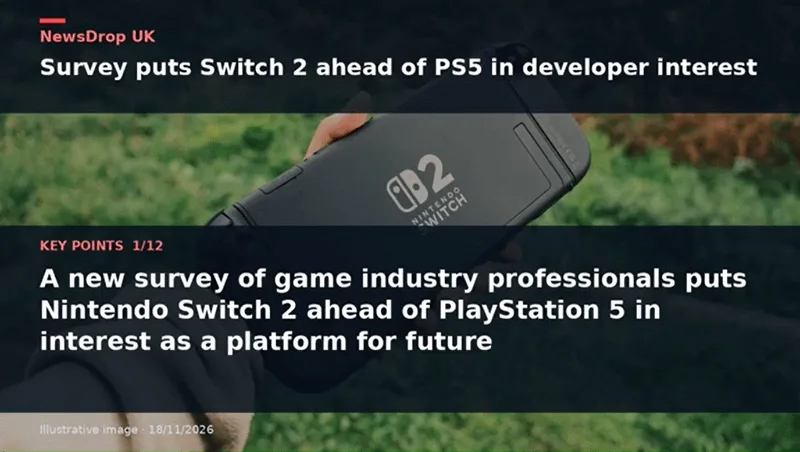
Nintendo Switch 2 is attracting substantial developer interest, with approximately 29% of respondents targeting the console for upcoming projects. A separate interest measure reached around 46%, while GDC’s broader reporting indicated an increase of nearly ten percentage points compared with the preceding survey. This distinction matters because interest does not necessarily translate into active production. Developers must still evaluate hardware specifications, technical support, certification requirements, commercial opportunities, and the cost of adapting their games.
Nintendo’s hybrid console design provides a distinctive opportunity by combining portable play with television based gaming. Studios developing PC titles may consider Switch 2 as part of a broader multiplatform strategy, particularly when their games suit portable experiences. However, performance differences and hardware requirements mean that adapting an existing game is not always straightforward. The survey demonstrates growing interest in Nintendo’s ecosystem but does not establish how many interested developers will eventually publish games on the platform.
Valve’s upcoming Steam Machine is another notable platform, with 21% of respondents targeting the hardware. This exceeds the reported shares for either the next PlayStation or Project Helix, although the comparison requires context. Steam Machine belongs to the broader PC gaming ecosystem, meaning some studios may support it through existing PC development pipelines rather than creating entirely separate versions of their games. Valve’s experience with SteamOS and Steam Deck provides a foundation for PC oriented gaming devices, and the survey also found that 32% of respondents were targeting Steam Deck.
Developers still need to consider operating system compatibility, controller support, graphical settings, memory requirements, and performance optimization when supporting Valve’s hardware. A game running on Windows PC does not automatically guarantee an equally polished experience on every SteamOS device. The Steam Machine’s reported development share also does not establish future hardware sales or exclusive software support. Many projects targeting the device may also be available on standard PCs and Steam Deck.
The survey provides a less encouraging picture for virtual reality, augmented reality, and mixed reality development. Only 3% of respondents reported working on these types of games, compared with 8% in the preceding survey. Interest also declined from approximately 12% to 8%. Specialized headsets create additional purchasing barriers, while immersive games require careful design around motion sickness, interaction methods, accessibility, and performance. Limited audiences and uncertain commercial returns may discourage studios already facing financial pressure.
However, the decline does not establish that immersive gaming is disappearing. Specialized simulations, fitness applications, and niche entertainment experiences may continue supporting VR and related technologies. The results instead indicate reduced participation and interest within the surveyed population. Stronger consumer demand, more accessible hardware, and dependable development support could influence future investment.
Overall, the hardware findings suggest that the transition toward the next console generation remains in its early stages. PC continues to dominate current development plans, Nintendo Switch 2 is attracting significant interest, and Valve’s PC oriented devices are receiving attention. Meanwhile, PlayStation 5 and Xbox Series hardware remain important targets despite their planned successors. Future platform announcements, development resources, confirmed launch titles, and commercial arrangements will provide a clearer picture of how these priorities change.

Gaming Industry Layoffs, Unions, Co Development, and What the GDC Survey Means for 2027
Employment uncertainty remains one of the most serious issues identified in the November 2026 GDC survey. Approximately 34% of respondents reported experiencing at least one layoff during the previous 24 months, rising to 39% among participants living in the United States. The preceding survey recorded corresponding figures of 28% overall and 33% among US respondents. However, GDC cautioned that its latest sample appeared to contain a disproportionately high number of people affected by layoffs. The findings therefore should not be interpreted as proof that exactly one third of all gaming industry workers worldwide lost their jobs.
The consequences for affected professionals remain substantial. Approximately 54% of respondents who experienced layoffs were still unemployed, increasing to 59% among US participants. Another 27% of laid off workers reported submitting at least 100 job applications. These figures illustrate the difficulty many developers face when attempting to reenter the industry, particularly when studios are reducing recruitment or restructuring teams. Employment pressure is also affecting major companies, with 68% of AAA studio workers reporting that their employers had experienced layoffs during the preceding year.
Repeated staff reductions can create problems extending beyond the individuals directly affected. Studios may lose experienced developers, specialized technical knowledge, and continuity across long production cycles. Remaining workers can face additional responsibilities, increased workloads, and uncertainty about future projects. The survey found that 65% of respondents believed their jobs had negatively affected their mental health during the previous 12 months. Nevertheless, 86% said working in games provided greater fulfillment than they expected to find in another industry. This contrast highlights the tension between professional commitment and difficult employment conditions.
The survey also indicates substantial support for labor organization. Among US respondents, approximately 80% supported unionization of game industry workers, while reported union membership increased from 12% to 15%. However, interest in joining a union declined from 62% to 55%, showing that favorable attitudes toward collective bargaining do not necessarily translate into immediate participation. Workers may consider employment conditions, available representation, workplace relationships, and personal circumstances before deciding whether to join.
Union supporters view collective bargaining as a potential mechanism for negotiating compensation, employment protections, working conditions, and workplace policies. These issues have become especially relevant during periods of extensive layoffs and restructuring. However, the results of union organization depend on local labor laws, bargaining arrangements, employer responses, and the circumstances of individual workplaces. The survey demonstrates growing membership within its respondent sample but does not establish identical labor conditions across every region or studio.
Collaborative development is also becoming an important feature of game production. Approximately 45% of studio workers reported that their companies hired external co development services for their most recent projects. Another 16% of respondents working outside the dedicated co development sector said their studios had provided such services during the previous year. These arrangements allow external teams to contribute specialized work involving programming, animation, visual art, technical optimization, interface design, and other production requirements.
For large publishers, external partnerships can provide additional expertise without maintaining every production capability internally. Smaller studios may use co development contracts to generate revenue between original projects, potentially helping them maintain operations during periods of financial uncertainty. The survey also found that half of relevant respondents identified self funding as their primary financing source, illustrating the importance of alternative income arrangements. However, external development partnerships can also create uncertainty because contracts depend on client budgets, project schedules, and changing production requirements.
Successful co development requires clear responsibilities, realistic schedules, reliable communication, and appropriate compensation. Studios must also coordinate technical standards, production tools, and quality expectations across different teams. External partnerships can help distribute workloads and provide access to specialized expertise, but they do not automatically resolve broader employment instability. The growing importance of both unions and co development reflects an industry considering different approaches to managing production resources and protecting professional livelihoods.
The November 2026 GDC survey identifies several developments likely to influence gaming industry decisions during 2027:
- Generative AI adoption: Usage has increased to 40%, but negative sentiment remains widespread at 55%, creating pressure for studios to demonstrate practical benefits and responsible implementation.
- Upcoming consoles: Only 10% of respondents are targeting the next PlayStation and 8% are targeting Project Helix, indicating that development commitments remain limited at this stage.
- PC gaming: With 81% of respondents developing upcoming projects for PC, the platform remains central to production and distribution strategies.
- Nintendo and Valve hardware: Switch 2, Steam Deck, and Steam Machine are attracting development interest, supported by portable gaming and broader PC compatibility.
- Game engines: Unreal Engine and Unity remain important, while proprietary engines and Godot demonstrate increasing diversity in development technology.
- Employment conditions: Layoffs, unemployment, workplace stress, and production restructuring remain serious challenges.
- Studio organization: Union membership and external development partnerships are becoming increasingly relevant to employment and production strategies.
The findings suggest that technological development and financial sustainability will remain closely connected. Studios adopting AI must determine whether it genuinely improves workflows without weakening creative quality or employment opportunities. Publishers preparing for future consoles must balance potential market opportunities against development costs and uncertain hardware schedules. Independent teams may continue prioritizing PC because of its accessible tools and flexible distribution options, while larger organizations evaluate how to support multiple platforms without creating unsustainable production demands.
The growth of alternative engines and collaborative production arrangements also suggests that studios are reconsidering how games are made. Proprietary technology can offer greater control but requires substantial engineering investment, while open source tools may appeal to teams seeking flexibility and independence. External development partnerships can improve access to specialized skills, although they require careful project management. The appropriate approach depends on the studio’s size, available resources, technical requirements, and commercial objectives.
For players, these industry changes could eventually influence game availability, pricing, development schedules, and the diversity of released titles. However, the survey does not provide definitive forecasts about future console sales, employment recovery, or the commercial success of emerging technologies. Its value lies in documenting the priorities and experiences of participating professionals during a period of substantial change.
The central message of the November 2026 GDC survey is that the gaming industry’s future depends on more than new technology. Generative AI, upcoming consoles, PC hardware, and game engines will continue influencing production, but employment stability, financial planning, creative expertise, and sustainable business models remain equally important. As studios prepare for 2027, their ability to balance technological experimentation with responsible production decisions may determine how effectively the industry responds to its current challenges.

Frequently Asked Questions (FAQs)
- What is the November 2026 GDC State of the Game Industry survey?
The November 2026 GDC State of the Game Industry survey is the fifteenth edition of an annual research report published by the GDC Festival of Gaming. Released on November 12, 2026, it collected anonymous responses from more than 2,600 game industry professionals. The report examines AI adoption, development platforms, game engines, financing, employment conditions, and professional attitudes. Its findings represent the participating respondents rather than every worker in the global gaming industry. - What percentage of game developers use generative AI in 2026?
According to the November 2026 GDC report, 40% of surveyed game industry professionals use generative AI at work, compared with 36% in the preceding survey. Among AI users, 57% reported daily usage. Common applications include research, brainstorming, data analysis, coding assistance, and prototyping. The percentage includes respondents from different professional roles and does not mean that 40% of released games contain AI generated content. - Why do 55% of game industry professionals oppose generative AI?
Approximately 55% of respondents believe generative AI is negatively affecting the gaming industry. Their concerns include potential job displacement, copyright and ownership disputes, environmental costs, declining opportunities for professional skill development, and the replacement of human creative contributions. However, some professionals still use AI for limited internal tasks while expressing concerns about its broader effects. The figure measures negative perceptions of industry impact rather than opposition to every possible application. - How many developers are currently making games for PlayStation 6?
The survey found that 10% of respondents are targeting Sony’s next PlayStation with upcoming projects, compared with 45% developing for PlayStation 5 or PlayStation 5 Pro. Another 27% expressed interest in the future platform. These figures indicate that development commitments remain limited, which is understandable while hardware details and access arrangements continue developing. The survey does not confirm Sony’s official PS6 release date or predict its eventual software library. - What is Xbox Project Helix, and how many developers support it?
Project Helix is the name associated with Microsoft’s next generation Xbox hardware initiative. Approximately 8% of surveyed respondents reported targeting the platform for upcoming projects, while 37% were developing for Xbox Series X or Series S. The lower figure reflects current production plans rather than the complete level of interest in Microsoft’s gaming ecosystem. Development participation may change as technical information, hardware access, and commercial arrangements become clearer. - Why is PC gaming still the most popular development platform?
PC leads the survey because 81% of respondents reported targeting it for upcoming projects. Developers benefit from widely available hardware, established engines, several digital storefronts, and flexible publishing models. PC also supports independent development, early access releases, and different types of gaming devices. However, the high percentage does not mean that all these games will be PC exclusives, since many studios are developing multiplatform titles. - Is Nintendo Switch 2 becoming more popular with game developers?
Yes. Approximately 29% of respondents reported developing upcoming projects for Nintendo Switch 2, while around 46% expressed interest in creating games for the console. GDC also reported that developer interest had increased by nearly ten percentage points compared with the preceding survey. Nintendo’s hybrid hardware provides opportunities for portable and television based gaming, although developers must still evaluate performance requirements, compatibility, and commercial conditions before committing to production. - Is Valve’s new Steam Machine receiving more developer support than PS6 and Project Helix?
Within the November 2026 GDC survey, 21% of respondents were targeting Steam Machine, compared with 10% for Sony’s next PlayStation and 8% for Project Helix. However, Steam Machine belongs to the broader PC ecosystem, meaning developers may be able to support it through existing PC production workflows. These figures measure intended platform support rather than exclusive games, hardware sales, or guaranteed future commercial performance. - Which game engine is most popular in the November 2026 GDC survey?
Unreal Engine remains the most widely reported engine, with 35% of respondents identifying it as their development technology. Unity follows at 28%, while proprietary engines account for 23%. Among independent studio respondents, Godot usage reached 11%, increasing from 7% in the preceding survey. These findings show that development technology choices are becoming more varied, although different engines remain suitable for different project requirements. - What does the GDC survey predict about the gaming industry in 2027?
The report suggests that generative AI, PC development, Nintendo Switch 2, alternative game engines, and collaborative production models will remain important subjects for studios in 2027. It also shows that next generation console development is still limited and that employment uncertainty remains widespread. However, the survey primarily documents current professional experiences and plans. It does not guarantee future console sales, specific game releases, employment recovery, or the commercial success of emerging technologies.

Conclusion
The November 2026 GDC State of the Game Industry survey reveals an industry navigating major technological, commercial, and employment challenges. Generative AI usage has increased to 40% of respondents, yet 55% believe the technology is negatively affecting gaming. Meanwhile, development for the next PlayStation and Xbox Project Helix remains limited at 10% and 8%, respectively. PC continues to dominate with 81% support, while Nintendo Switch 2 and Valve’s Steam Machine are attracting developer interest. These findings highlight the differences between technology adoption, professional attitudes, and actual development commitments.
Beyond AI and gaming hardware, workforce stability and sustainable production remain critical concerns. Layoffs, unemployment, workplace stress, and financial uncertainty continue to affect developers, while growing union participation and external development partnerships reflect changing industry priorities. As studios prepare for 2027, their progress will depend on balancing technological innovation with responsible financial decisions, creative expertise, and improved working conditions.
Sources and Citations
- GDC Festival of Gaming, State of the Game Industry: Official industry research covering game development trends, generative AI adoption, developer sentiment, employment conditions, layoffs, game engines, platform preferences, and workforce demographics.
https://gdconf.com/state-game-industry/ - Epic Games, Unreal Engine Licensing Information: Official documentation providing background on game engine licensing, royalty arrangements, development costs, and commercial considerations affecting developers’ technology choices.
https://www.unrealengine.com/en-US/license - Unity, Runtime Fee Cancellation Announcement: Official information concerning Unity’s decision to cancel its Runtime Fee, providing historical context for game engine adoption, developer confidence, licensing policies, and production costs.
https://unity.com/blog/unity-is-canceling-the-runtime-fee - Nintendo, Nintendo Switch 2 Official Product Information: Primary platform information covering Nintendo Switch 2 hardware, software compatibility, technical capabilities, and gaming features relevant to developers’ platform selection.
https://www.nintendo.com/us/gaming-systems/switch-2/
Recommendations
- Xbox CEO Reportedly Wants Faster Halo and Fallout Releases as Spin-Off Talk Continues
- Blackwood Gameplay Deep Dive Explains Its Guns, Combat System, and Cinematic Action
- Assassin’s Creed Black Flag Resynced: Biggest Gameplay Changes
- Forza Horizon 6 Review: Open-World Racing Evolution, Graphics, Gameplay, and Full Performance Breakdown
- How to Make Blender Hair Work with Unreal Engine’s Groom System
- DeepSeek Nears $14.9B Funding Round at $75B Valuation
- Project Hail Mary Has Out of This World Start at the Box Office With $140 Million Opening Weekend
- Microsoft Disrupts Storm-2990 Phishing Kits Behind 1B Messages
- Eclipse Background Render Manager for Houdini & Blender: Setup Guide + The View Keeper Camera Workflow
- Fable Deep Dive Video Reveals Massive Life Sim System: NPC Relationships, Housing, Jobs, and Reputation Mechanics Explained



































































































