










In This Article (8 sections)
GenAI.mil Rollout, Access and the Pentagon’s Expanding AI Toolset
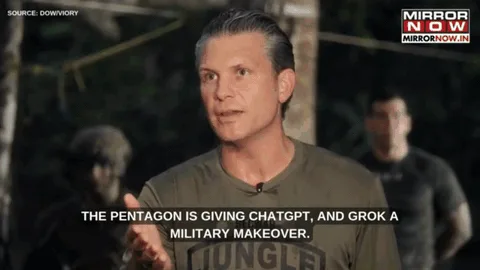
The Pentagon expanded GenAI.mil on August 31, 2026, adding OpenAI’s ChatGPT Mil and Grok for Government alongside Google Gemini. The rollout gives the department’s workforce additional government-authorized generative AI tools for document preparation, research, administrative analysis and other unclassified work. The Pentagon confirmed the two additions in its September 1 announcement. More than 3 million personnel represent the intended workforce, not a verified count of active users. At the expansion’s launch, the department reported that GenAI.mil had onboarded more than 1.7 million unique users, but that figure does not establish daily usage, sustained adoption or measured productivity improvements.
GenAI.mil is the Pentagon’s enterprise platform for providing authorized personnel with access to commercial generative AI capabilities. It launched in December 2025 with Gemini for Government as its first offering rather than as a new foundation model developed entirely by the military. GenAI.mil is the government access environment, while Gemini, ChatGPT Mil and Grok for Government are the AI offerings available through it. Adding providers expands the choices available to personnel, but it does not necessarily mean the providers share model weights, conversation histories, uploaded documents or identical technical infrastructure. The platform can be understood as an approved workplace software portal containing several applications, with each application retaining its own features, operating limits and administrative arrangements.
The practical goal is to bring authorized AI assistance closer to ordinary work rather than treating generative AI solely as a specialized research capability. The rollout occurred in several stages, and announcement dates should not be confused with dates of general availability. GenAI.mil launched on December 9, 2025, with Google’s Gemini for Government, with Google identifying the Chief Digital and Artificial Intelligence Office, or CDAO, as the customer selecting its technology. On December 22, the Pentagon announced an agreement to bring xAI capabilities to GenAI.mil, with deployment initially anticipated in early 2026. That agreement was not evidence that the eventual government service was already broadly available.
OpenAI announced on February 9, 2026, that it would deploy a custom ChatGPT offering on GenAI.mil. The announcement used future-tense language, making February the partnership announcement rather than the confirmed launch date. ChatGPT Mil and Grok for Government were confirmed as launching on August 31, with the Pentagon’s September 1 roundup describing both services as having launched the previous day. A signed agreement, integration announcement, security authorization and live service are separate milestones, and combining them can exaggerate how long a product has been available or how much operational experience users have accumulated.
GenAI.mil is not a public chatbot service. Published Pentagon access guidance states that users require a Common Access Card, generally called a CAC, and access through the department’s nonclassified network. The original workforce announcement included military personnel, civilian employees and contractors, but the 3 million-person figure does not mean anyone with a connection to the military automatically qualifies. Veterans, outside researchers, commercial suppliers and members of the public should not interpret it as an invitation to create unrestricted accounts. Access depends on organizational eligibility, credentials, network availability and applicable service-level rules. Contractor access also does not authorize moving government information into separate commercial systems or personal AI accounts.
The reported 1.7 million unique-user total is an onboarding measure. It does not reveal how many people used each model, how often they returned or whether their completed work improved. Repeat usage, task completion, correction rates, training participation and users’ ability to recognize when AI should not be used would provide more meaningful measures of adoption and effectiveness.
ChatGPT Mil is the government-specific ChatGPT offering deployed on GenAI.mil. Its announced core experience includes chat, file handling, projects and custom GPTs, with additional features introduced over time. It is intended for document-heavy unclassified work involving areas such as planning, policy, logistics and administration. Its distinction from regular ChatGPT is not merely the military branding. OpenAI describes the deployment as operating in authorized government cloud infrastructure with platform and model safeguards. ChatGPT Mil is therefore a product and deployment designation, not proof of a publicly identified, uniquely trained military foundation model. The name alone does not establish a particular model version, context limit, benchmark score or intelligence specialization.
It would also be inaccurate to assume that every consumer ChatGPT feature is automatically available in the military service. The launch announcement described a core feature set with additional functionality being introduced in phases. For workplace evaluation, relevant questions include which documents can be uploaded, which tools are enabled, how projects are managed, what information the environment is authorized to process and how outputs are reviewed.
Grok entered the initiative through the Pentagon’s relationship with xAI. The August launch announcement identifies the deployed offering as Starshield AI’s Grok for Government, distinguishing it from ordinary public access to the Grok family. Announced features include deep-thinking inference, Auto, Fast and Expert reasoning modes, customizable workspaces, persistent projects and reusable playbooks. The Pentagon associated the service with activities including acquisition market research and logistics-related analysis.
Those feature names are not independent evidence of accuracy. An Expert setting does not replace an accountable subject-matter expert, and a faster answer is not necessarily better. An acquisition team could, for example, create a reusable playbook for organizing approved supplier information into a consistent research format, while a logistics office could use a project workspace to keep related analysis together. Such examples illustrate the potential value of reusable workflows, but they do not establish that Grok automatically accesses live procurement or inventory systems. Reusable processes also require maintenance because a playbook can preserve outdated assumptions just as easily as useful procedures. Ownership, review dates and correction procedures would therefore remain important.
Google Gemini for Government was GenAI.mil’s first deployed AI offering. Google’s initial announcement emphasized enterprise AI and search capabilities for unclassified work, including policy summaries, compliance checklists and extracting important terms from statements of work. Gemini’s role later expanded beyond a basic conversational interface. On March 10, 2026, Google introduced Agent Designer within Gemini for Government on GenAI.mil, describing it as a no-code or low-code way to create assistants through natural-language instructions for repetitive, multistep administrative tasks such as meeting preparation, action-item drafting and project planning.
An administrative agent should not be confused with an autonomous military weapons system. In this context, the examples concern workplace assistance and document-oriented processes. The term agent describes a way of organizing software activity, while its actual authority depends on the tools, permissions and controls made available. An assistant could turn an approved project description into a draft schedule, for example, but the resulting plan would still require review for realistic dependencies, personnel availability and missing approvals. Google has also reported personnel using Gemini for acquisition-framework drafts, document summaries and leadership briefings, although these are provider-reported applications rather than independently verified department-wide productivity measurements.
Public information supports comparison of these products by their announced emphasis rather than by a proven ranking. ChatGPT Mil emphasizes document-centered work and familiar ChatGPT capabilities. Grok for Government highlights reasoning options and reusable workspaces. Gemini combines its established position on the platform with enterprise information assistance and administrative-agent capabilities. Their functions overlap substantially, so the announcements do not establish that one system is universally superior for military research, contracting or logistics.
A more useful comparison would test approved tools on representative tasks such as summarizing the same policy document, identifying changes between two versions of guidance or producing an initial outline from identical authorized material. Reviewers could then compare factual accuracy, completeness, source traceability, consistency and the amount of correction required. Convenience should also be separated from reliability because a polished answer can omit a critical qualification, while a longer response can introduce unsupported claims. Using several models may expose disagreements, but agreement between them is not proof because multiple systems can reproduce the same mistaken assumption. The decisive check remains authoritative evidence.

GenAI.mil Security, Data Protection and Authorized Military Uses
Two terms are central to understanding GenAI.mil’s security framework: Impact Level 5, or IL5, and Controlled Unclassified Information, or CUI. CUI is information that requires safeguarding or dissemination controls under applicable law, regulation or government-wide policy while remaining outside classified-information systems. Unclassified therefore does not mean public or unrestricted.
IL5 concerns the security requirements for the computing environment. Under the Defense Information Systems Agency framework, IL5 covers CUI requiring greater protection than IL4 as well as relevant national security systems. It is a cloud-security category, not a measure of AI intelligence, reliability or accuracy. IL5 accreditation does not certify that an AI-generated answer is correct, and authorization to process CUI should not be interpreted as permission to upload every category of sensitive information. Marine Corps GenAI.mil guidance issued on January 21, 2026, identified restrictions involving personally identifiable information, protected health information and classified material. Users therefore have to follow the current rules applicable to their service and deployment rather than infer permissions from the platform’s general description.
Security requirements also continue after the AI produces an output. A document does not lose its handling requirements because an AI system summarized it. The relevant question is what information the resulting material contains and which controls still apply.
OpenAI states that data processed through its GenAI.mil deployment remains isolated within the government environment and is not used to train or improve OpenAI’s public or commercial models. That commitment should not be expanded into claims that no data is retained, no administrative logs exist or no authorized government personnel can review records. Model training, retention, auditing and access controls are separate issues.
The comparison with regular ChatGPT also requires qualification. OpenAI says content from individual services may be used for model improvement depending on settings and applicable choices, while business products and its API do not use customer inputs and outputs for training by default. It would therefore be inaccurate to claim that every ordinary ChatGPT conversation trains models. Google has separately stated that Pentagon data used through its GenAI.mil offering is not used to train its public models.
A complete privacy assessment would need to examine the training restriction, permitted data categories, retention arrangements, project-sharing permissions and procedures for handling accidental disclosures independently. A commitment in one area does not automatically settle the others.
The publicly described uses of GenAI.mil are mainly information-intensive support tasks. OpenAI identifies policy analysis, procurement-document preparation, internal reporting, compliance checklists, research and administrative workflows among the intended applications. In research, an analyst could begin with an approved set of documents and a narrowly defined question, request a comparison of assumptions and conclusions, identify unresolved questions and then verify whether each conclusion is supported by the underlying material. The goal is to make verification easier by preserving dates, distinguishing evidence from inference and exposing uncertainty rather than treating a fluent answer as a finished research finding.
In procurement, an authorized assistant could prepare an initial set of market-research questions or compare a proposed statement of work with an approved template. Drafting support should not be confused with automatically selecting a supplier or making an acquisition decision. In logistics, an assistant could convert approved reports into a consistent narrative, identify missing information or draft follow-up questions. It might highlight that two reports use different reporting periods, but the discrepancy would still need to be investigated using the underlying records.
These examples also illustrate how benefits should be measured. The relevant question is not only how quickly a first draft is generated. Preparation time, verification time, revisions, errors discovered later and whether the final output meets organizational requirements are more meaningful. No publicly cited launch announcement establishes a universal percentage improvement in research quality, procurement speed or logistics performance.
The IL5 services described in the August 31 launch announcements are intended for controlled unclassified work rather than providing blanket authorization to process classified information. ChatGPT Mil’s launch announcement specifically describes its document-heavy work as unclassified. Separate Pentagon AI announcements concern classified environments, including OpenAI’s February 28 statement describing a different agreement for advanced AI systems on classified infrastructure. That program should not be merged with OpenAI’s February 9 GenAI.mil announcement or the August workforce rollout.
A provider can participate in both unclassified and classified government programs without making the environments interchangeable. Authorization belongs to a specific system, configuration and use case rather than the provider’s brand. A public announcement that a company works with classified networks does not authorize a user to put classified material into that company’s IL5 service, and a general description such as mission support does not override the approved information boundary.
The appropriate approach is to identify the actual deployment, verify its current authorization and follow the rules that apply to it. A familiar product name is not an adequate basis for deciding where sensitive information belongs. The same distinction applies to capabilities. Authorization to assist with an unclassified planning document should not be interpreted as authorization for autonomous operational execution.

Anthropic Claude’s Absence and the Pentagon Contract Dispute
Anthropic’s Claude was absent from the announced GenAI.mil expansion, but the situation is more complicated than a straightforward ban. The August launch releases did not provide a detailed model-by-model explanation for Claude’s absence. The documented background instead involves a dispute over contractual restrictions on military AI use and subsequent government actions. Claude’s absence should not be interpreted as evidence of a published comparative test finding it technically inferior.
Anthropic was already involved in national security work before the GenAI.mil expansion. The company announced Claude Gov models for U.S. national security customers in June 2025, so its absence from this particular workforce rollout does not mean the military had never used Anthropic technology. The dispute later escalated into a supply-chain-risk designation and attempts to restrict government use of Anthropic products, with reporting in March 2026 connecting those measures to disagreements over permissible military applications.
A major legal development occurred shortly before the August 31 rollout. In an August 27, 2026, order, U.S. District Judge Rita F. Lin found that challenged government actions involved unlawful retaliation, due-process violations and unlawful administrative action. The ruling also made clear that the relief did not prevent the government from lawfully ending contractual relationships with Anthropic. Separate reporting after the ruling noted that a narrower case involving another supply-chain-risk rule remained pending before a federal appeals court in Washington.
The distinction is important. A court ruling against punitive government action does not automatically create a new procurement agreement or add Claude to GenAI.mil. At the same time, Claude’s continued absence from the announced platform lineup does not prove that every government restriction survived judicial review.
Anthropic’s publicly stated objections centered on mass domestic surveillance and fully autonomous weapons. In its February 26 statement, the company said it supported national security work as well as lawful foreign intelligence and counterintelligence activities, meaning its position was not a blanket refusal to work with the military. On domestic surveillance, Anthropic argued that AI could enable extensive analysis of people’s activities in ways existing legal protections had not adequately anticipated. On fully autonomous weapons, it argued that current technology was not sufficiently reliable for systems operating without appropriate human involvement. These were Anthropic’s stated judgments about safety and acceptable use, not judicial findings concerning every possible application.
The Pentagon’s counterposition emphasized access to AI for lawful purposes and objected to allowing a private supplier to constrain military decision-making. The deeper disagreement therefore concerned how restrictions should be defined, how they should be enforced and who should determine whether a proposed use crosses an acceptable boundary.
It would also be misleading to frame the dispute as Anthropic retaining safeguards while every competitor removed them. OpenAI’s separate classified-deployment statement identifies restrictions involving mass domestic surveillance, directing autonomous weapons and high-stakes automated decisions, with contractual and technical protections described as part of its approach. Similar publicly stated principles can coexist with materially different contract language and deployment arrangements.
The GenAI.mil product lineup by itself does not resolve those broader questions. Availability of a workplace assistant does not establish that it can control weapons, nor does it prove that every possible military application involving the provider has been approved.
AI Accuracy, Human Oversight and GenAI.mil’s Role in the Pentagon’s Broader Strategy
A secure AI service can still produce incorrect information. NIST’s Generative AI Profile describes confabulation, commonly called hallucination, as the generation of confidently presented but erroneous content. In a government workflow, failures could include an invented document reference, an incorrect date, a mistaken interpretation of guidance or a summary that omits an important exception. Such examples demonstrate why readability, confidence and fluent presentation should not be treated as measures of accuracy.
NIST recommends reviewing and verifying sources and citations during evaluation and maintaining monitoring after deployment. It also warns against drawing broad conclusions from narrow or anecdotal assessments of model performance. Human oversight therefore requires more than assigning someone to approve an AI-generated answer. The reviewer needs access to the underlying evidence, enough subject knowledge to identify mistakes and sufficient time to investigate uncertain claims.
A useful workflow would separate drafting from approval. AI-generated material would remain a draft until an accountable person checks the relevant facts, calculations, source passages and handling requirements. Higher-consequence tasks would require more rigorous validation than routine formatting. The Pentagon’s original public introduction of GenAI.mil also reminded users to double-check outputs for accuracy. Authorization to use a tool does not establish that a particular answer is correct, so evidence must remain visible and responsibility for final work must remain identifiable.
GenAI.mil is also part of a broader Pentagon effort to accelerate AI adoption across defense activities. The department’s AI Acceleration Strategy covers warfighting, intelligence and enterprise operations, with seven designated projects intended to speed implementation. Its public summary also identifies computing infrastructure and technical talent as important enabling factors. The workforce platform fits most directly within the enterprise component by making advanced AI assistance available for everyday organizational work, a role that should remain distinct from separate initiatives involving battlefield systems or intelligence capabilities.
The Grok launch announcement also connected the broader provider lineup with reducing dependence on a single vendor. Multiple suppliers can provide more choice and make capability comparisons easier, but vendor diversity does not automatically guarantee portability. An organization can still become dependent on provider-specific project formats, custom assistants, integrations or operating practices.
A durable implementation would therefore need to consider information export, reusable evaluation criteria, documented workflows and the ability to change tools without losing important institutional knowledge. It should also distinguish successful experimentation from processes mature enough for routine deployment. Training is another part of that effort, with the Pentagon’s September announcement stating that live and on-demand instruction for the platforms was available to employees at no cost.
Ultimately, stronger evidence of strategic value would come from better completed work, including fewer avoidable errors, shorter verified workflows and more time for tasks requiring professional judgment. Adoption totals are useful indicators of reach, but they are not the final measure of effectiveness.

Frequently Asked Questions (FAQs)
- What is GenAI.mil?
GenAI.mil is the Pentagon’s enterprise platform for giving authorized personnel access to approved generative AI services in a government environment. It launched with Gemini for Government in December 2025 and later expanded to include ChatGPT Mil and Grok for Government. The important distinction is that GenAI.mil is the access platform rather than a single AI model built by the military. The individual AI products operate through the platform while retaining their own features and deployment arrangements. - When did ChatGPT Mil and Grok become available on GenAI.mil?
Both ChatGPT Mil and Grok for Government officially launched on GenAI.mil on August 31, 2026. Earlier announcements concerned agreements or plans to integrate the services and should not be treated as their publicized launch dates. For example, OpenAI announced its GenAI.mil partnership on February 9, 2026, but that announcement described a future deployment rather than confirming that ChatGPT Mil was already available. - Does the platform have 3 million active users?
That is not what the published figures establish. The Pentagon described GenAI.mil as being available to a workforce of more than 3 million military personnel, civilian employees and eligible contractors. At the time of the August expansion, it reported more than 1.7 million unique users onboarded to the platform. However, an onboarding figure does not reveal how many people use the service every day, how frequently they return or how many actively use each individual AI tool. - Can members of the public use GenAI.mil?
No unrestricted public registration is described for GenAI.mil. The Pentagon’s published access requirements specify a Common Access Card, or CAC, and access through the department’s nonclassified network. The platform is intended for authorized military personnel, civilian employees and eligible contractors working within the approved government environment. Having some connection to the military, such as being a veteran or outside supplier, does not by itself establish eligibility. - Is ChatGPT Mil a uniquely identified military foundation model?
The public information does not establish that ChatGPT Mil is a completely separate military foundation model. It identifies ChatGPT Mil as a government-specific ChatGPT deployment offering capabilities such as chat, file handling, projects and custom GPTs within authorized government infrastructure. The product name therefore describes the government service and deployment rather than proving the existence of a distinct underlying model architecture. A specific model version, benchmark profile or uniquely trained military model has not been established by the cited announcement. - Does OpenAI train its public models on ChatGPT Mil conversations?
OpenAI states that data processed through its GenAI.mil deployment remains isolated within the government environment and is not used to train or improve its public or commercial models. That commitment specifically addresses model training and improvement. It should not be interpreted as answering separate questions about how long information may be retained, what administrative logging occurs or which authorized government personnel may have access to records within the system. - Does IL5 mean classified information is permitted?
No. Impact Level 5, or IL5, describes security requirements for the computing environment and does not provide blanket permission to process classified material. The GenAI.mil workforce deployments discussed here are intended for controlled unclassified work. Users still have to follow the information-handling requirements that apply to their specific service, system and type of information, including restrictions involving classified material and other protected data. - Why is Claude missing from the announced expansion?
The documented background involves Anthropic’s contracting dispute with the Pentagon over restrictions on certain military uses of AI and the government actions that followed. The GenAI.mil launch announcements did not say Claude was excluded because it performed worse than ChatGPT, Grok or Gemini in a comparative technical evaluation. The situation also became subject to litigation, including an August 2026 court ruling against some challenged government actions, so describing Claude’s absence simply as a permanent technical or security ban would leave out important context. - Did the August court ruling require the Pentagon to add Claude?
No. The August 27, 2026, ruling addressed the legality of challenged government actions involving Anthropic, including findings related to retaliation, due process and administrative action. It did not order the Pentagon to make Claude available through GenAI.mil or create a new contract with Anthropic. The ruling also indicated that the government remained able to lawfully terminate contractual relationships, meaning a successful legal challenge did not automatically restore or create a GenAI.mil deployment. - Which GenAI.mil tool is most accurate?
The cited announcements do not provide a controlled comparison showing that ChatGPT Mil, Grok for Government or Gemini is universally the most accurate. Their performance would need to be tested on representative tasks using the same authorized material and evaluated for factors such as factual accuracy, completeness, consistency and the amount of correction required. Comparing answers from several models can help identify disagreements, but agreement between them still does not prove that an answer is correct. Important outputs should therefore be checked against authoritative source material.

Conclusion
The GenAI.mil expansion is significant because it brings multiple major AI offerings into an authorized environment for a very large defense workforce. Its value, however, should be judged through the work those systems help people complete; not through product names, account totals or promotional claims alone.
The essential distinctions remain consistent throughout the rollout. A partnership announcement is not a launch. Workforce eligibility is not active usage. IL5 accreditation is not classified authorization or proof of factual accuracy. A restriction on commercial model training is not a complete explanation of every data-handling control.
Claude’s absence requires the same precision. The contracting dispute, the government’s attempted restrictions and the August court ruling are related developments, but they are not interchangeable conclusions.
The practical test for GenAI.mil is whether personnel can use its approved tools to produce better, verifiable work while preserving information boundaries and accountable human judgment. That is a more demanding, and more useful, standard than simply putting another chatbot on a government desktop.
Sources and Citations
- U.S. Department of War, December 9, 2025, Harness Artificial Intelligence Now with GenAI: Original memorandum announcing the launch of GenAI.mil, introducing Google Gemini as its first enterprise AI capability, describing Common Access Card authentication and confirming authorization for Controlled Unclassified Information at Impact Level 5.
https://s3.documentcloud.org/documents/26364055/harness-artificial-intelligence-now-with-genai-osd013961-25-fod-final.pdf - U.S. Department of War, August 31, 2026, Department of War Launches OpenAI’s ChatGPT Mil on GenAI.mil: Official announcement confirming the deployment of ChatGPT Mil, its IL5 accreditation, support for chat, files, projects and custom GPTs, and its intended use in planning, policy, logistics, administration and other unclassified government workflows.
https://www.war.gov/News/Releases/Release/Article/4586352/department-of-war-launches-openais-chatgpt-mil-on-genaimil/ - U.S. Department of War, August 31, 2026, Department of War Launches Starshield AI’s Grok for Government on GenAI.mil: Official release announcing Grok for Government’s deployment, including reasoning modes, customizable workspaces, persistent projects, reusable playbooks, supply-chain analysis applications and the platform’s reported adoption by more than 1.7 million unique users.
https://www.war.gov/News/Releases/Release/Article/4586482/department-of-war-launches-starshield-ais-grok-for-government-on-genaimil/ - U.S. Department of War, September 1, 2026, ChatGPT, Grok Added to War Department’s AI System Options: Official overview confirming that ChatGPT Mil and Grok for Government joined Google’s Gemini on GenAI.mil on August 31. Summarizes the capabilities of all three services, the original December 2025 launch and training availability for department personnel.
https://www.war.gov/News/News-Stories/Article/Article/4588244/chatgpt-grok-added-to-war-departments-ai-system-options/ - OpenAI, February 9, 2026, Bringing ChatGPT to GenAI.mil: Official provider announcement describing the planned custom ChatGPT deployment, authorized government cloud infrastructure, separation of government data from public model training, model-level safeguards and intended applications in document analysis, procurement, research and administrative work. These are provider descriptions rather than independent performance evaluations.
https://openai.com/index/bringing-chatgpt-to-genaimil/ - Google Cloud, March 10, 2026, Gemini for Government: Build Custom AI Agents for Unclassified Work on GenAI.mil: Official Google announcement explaining Gemini’s December 2025 deployment, Agent Designer capabilities, no-code automation, document drafting, project planning and reported adoption milestones. Provides Google’s account of the platform’s features and deployment experience.
https://cloud.google.com/blog/topics/public-sector/gemini-for-government-build-custom-ai-agents-for-unclassified-work-on-genaimil/ - xAI, December 22, 2025, Supporting the Department of War’s Mission with AI: Official provider announcement describing the selection of Grok-based AI systems for government use, the GenAI.mil partnership, planned IL5 access, enterprise AI capabilities and potential national security applications. Establishes the provider’s stated deployment intentions before the August 2026 launch.
https://x.ai/news/us-gov-dept-of-war - National Archives and Records Administration, About Controlled Unclassified Information: Authoritative explanation of CUI, including its legal definition, safeguarding requirements, dissemination controls and distinction from classified national security information. Provides the terminology necessary to understand the information-handling limits of GenAI.mil.
https://www.archives.gov/cui/about - U.S. Department of Defense Office of Inspector General, March 28, 2023, Report DODIG-2023-052: Official audit discussing Department of Defense cloud security requirements and distinguishing Impact Level 4 services for Controlled Unclassified Information from Impact Level 5 services supporting unclassified national security systems.
https://media.defense.gov/2023/Mar/28/2003187686/-1/-1/1/DODIG-2023-052.PDF - National Institute of Standards and Technology, January 2023, Artificial Intelligence Risk Management Framework: Official AI governance framework explaining how organizations can identify, assess, measure and manage risks associated with artificial intelligence systems. Provides a general basis for evaluating reliability, accountability, human oversight and operational risks in government AI deployments.
https://www.nist.gov/itl/ai-risk-management-framework - National Institute of Standards and Technology, July 26, 2024, Generative Artificial Intelligence Profile: Official companion publication addressing risks specific to generative AI, including inaccurate outputs, fabricated information, data privacy, information security, misuse and the need for appropriate testing, monitoring and human review.
https://www.nist.gov/publications/artificial-intelligence-risk-management-framework-generative-artificial-intelligence - U.S. District Court for the Northern District of California, August 27, 2026, Anthropic PBC v. U.S. Department of War: Primary judicial order addressing Anthropic’s challenge to government directives and supply-chain risk designations. Documents the district court’s rulings on First Amendment retaliation, due process and Administrative Procedure Act claims, while distinguishing the court’s findings from Anthropic’s allegations and the government’s arguments.
https://docs.justia.com/cases/federal/district-courts/california/candce/3%3A2026cv01996/465515/250 - Reuters, August 28, 2026, US Judge Rules Pentagon Blacklisting of Anthropic Unlawful: Contemporary independent reporting on the district court’s decision, the dispute over military AI usage restrictions, Anthropic’s legal arguments and the court’s findings concerning constitutional protections and administrative law.
https://www.reuters.com/world/us-judge-rules-pentagon-blacklisting-anthropic-unlawful-2026-08-28/ - Defense One, Patrick Tucker, August 31, 2026, The US Military Gets Its Own ChatGPT Today: Independent reporting on the ChatGPT Mil and Grok deployments, security testing, government cloud separation, operational use cases and the distinction between ordinary consumer AI services and the department’s approved environment.
https://www.defenseone.com/technology/2026/08/us-military-chatgpt/415719/ - DefenseScoop, Brandi Vincent, August 31, 2026, Grok and ChatGPT Join Gemini in Pentagon’s Enterprise GenAI Portal: Independent reporting examining the expansion of GenAI.mil, the addition of multiple AI providers, security accreditation, department-wide access and the intended operational advantages of a multi-model environment.
https://defensescoop.com/2026/08/31/grok-chatgpt-added-to-genai-mil/
Recommendations
- Razer announces the acquisition of the streaming platform StreamElements
- 5 Perfect ’90s Games Nobody Remembers But They Need a Comeback
- Mike Brown’s Clutch: from Forza Horizon 5 to Maverick Games
- VA-TDM unifies score, Fisher and moment-matching diffusion distillation via velocity adversarial training
- Palworld Sunreach Island Altar Location: How to Reach the Azure Covenant Tower
- Scopely Invests in Studio AuKnow, New Studio from Final Fantasy VII Rebirth and Umamusume Veterans
- PS5 and Xbox Sales Plunge in the United States as Console Prices Surge and Demand Weakens in 2026
- Moonlight Peaks Soul Blobs Guide: Locations, Colors and Rewards
- Neverness to Everness: All Griddy Storage Locker Key Locations Guide (Complete NTE Key Farming Route & Rewards Explained)
- GTA 6: All Potential Gameplay Activities Seen in Trailers and Screenshots



































































































