









Gameplay context and why the “11 minutes” matter
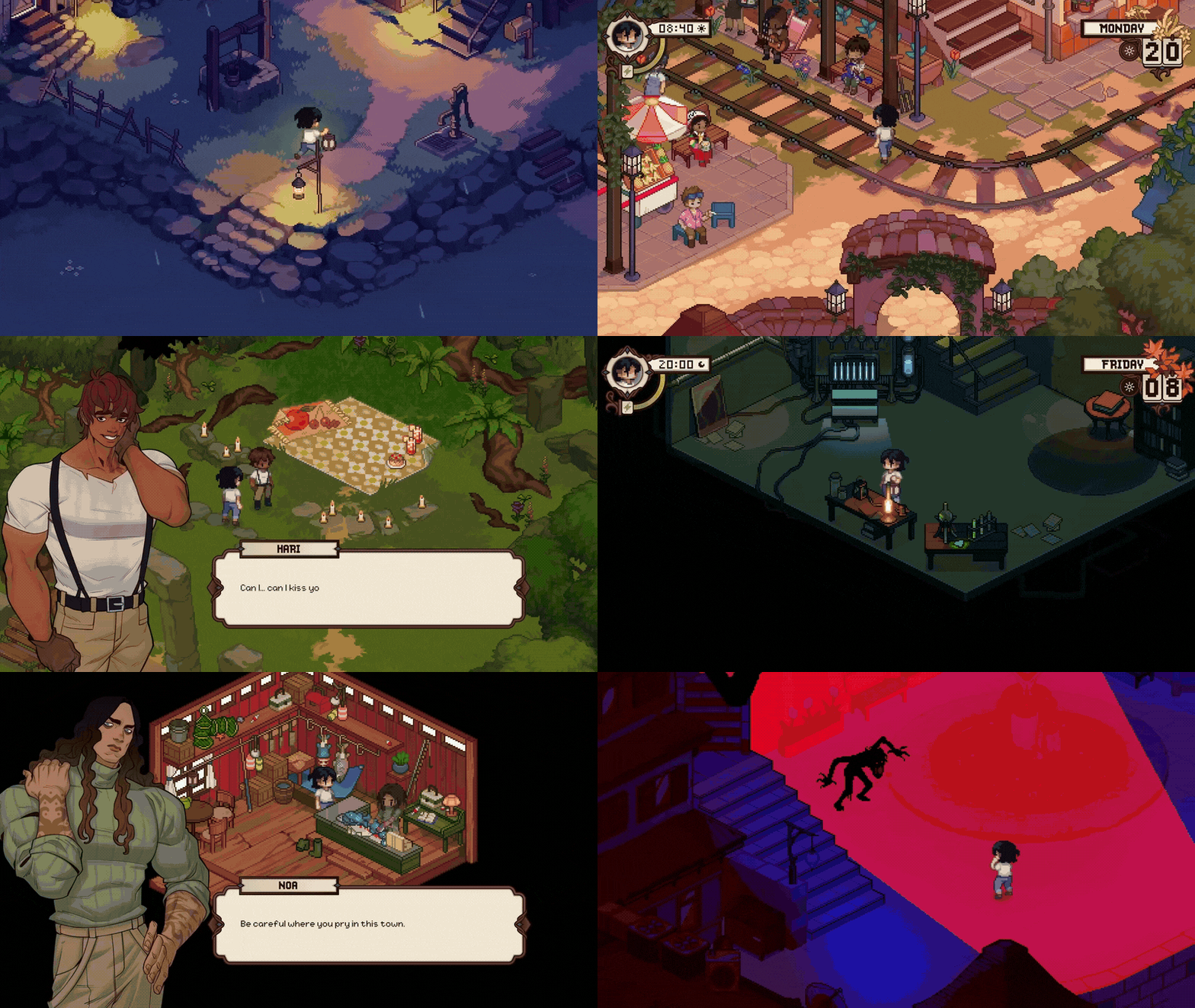
The recent “11 minutes of gameplay” spotlight is a key milestone for Grave Seasons because it doesn’t just confirm the game’s genre blend in marketing language; it shows how the “cozy farming sim” loop and the “supernatural murder mystery” loop are meant to collide in real play. Coverage around the footage ties it directly to a public-facing demo build being showcased at PAX East 2026, and multiple outlets note that the gameplay slice exists as an extended look released alongside the August 2026 release-date push.
The footage also arrives at a time when the core hook—farming, romance, and detective work in one package—has already been discussed in hands-on previews, so the 11-minute video functions as a “proof of loop” moment: you can see basic farming actions, NPC interaction framing, and then the abrupt escalation into a brutal, supernatural attack that reframes the entire town as potentially dangerous.
Because Grave Seasons is still pre-release (scheduled for August 2026), the footage should be read as representative rather than final: system balance, UI, pacing, and even which systems are emphasized can still change ahead of launch, and multiple official channels continue to signal “demo” availability plans rather than a fully locked feature list.

Grave Seasons 11 Minutes of Gameplay Breakdown
The “11 minutes of gameplay” segment is widely framed as a longer look at a demo slice: Nintendo Life points readers to an “exclusive look… featuring 11 minutes of gameplay,” and CGMagazine similarly highlights a “lengthy 11-minute gameplay demo” posted through official channels around the release-date reveal window.
Across hands-on reporting and the game’s own store description, the loop being demonstrated can be distilled into three interlocking pillars:
First, the familiar farm-sim core: on-arrival chores, tool-based field work (tilling, planting, watering), harvesting, and the economic step of converting farm output into progress. Hands-on previews describe the immediate readability of the farming verbs—especially for players with farming-sim literacy—while also emphasizing that the game is intentionally close to the comfort baseline before it becomes horrific.
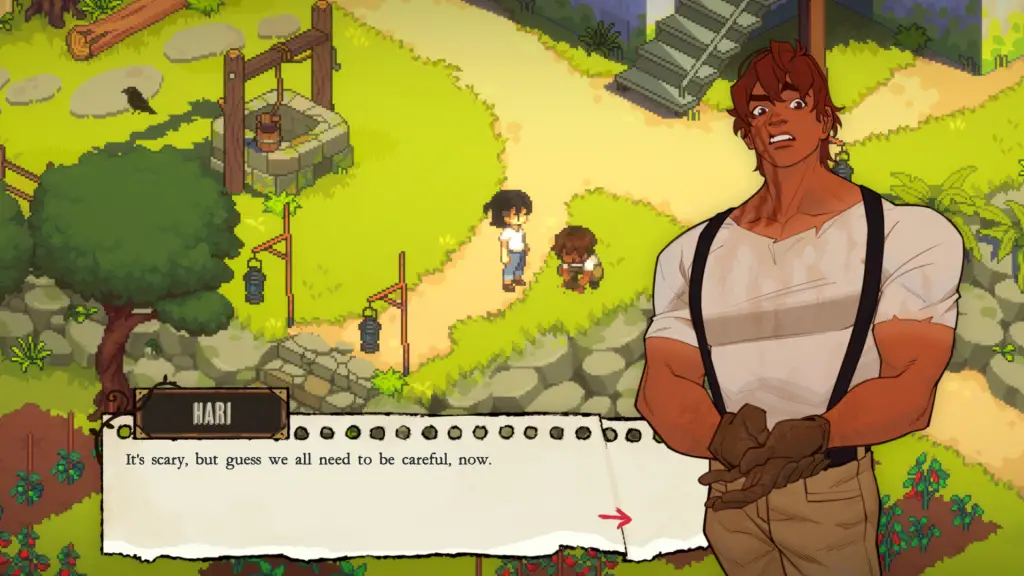
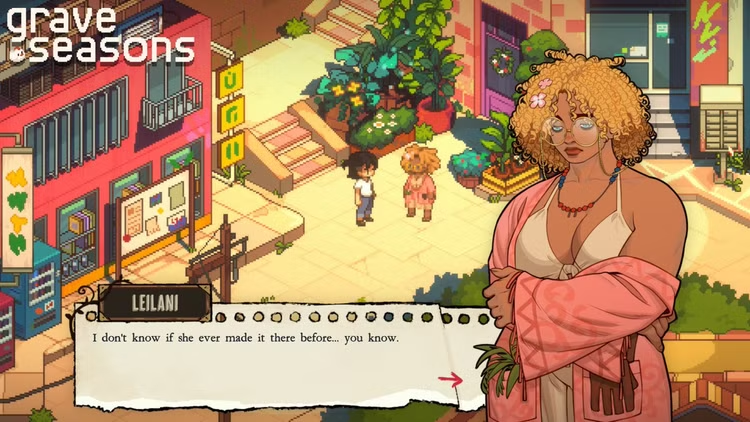
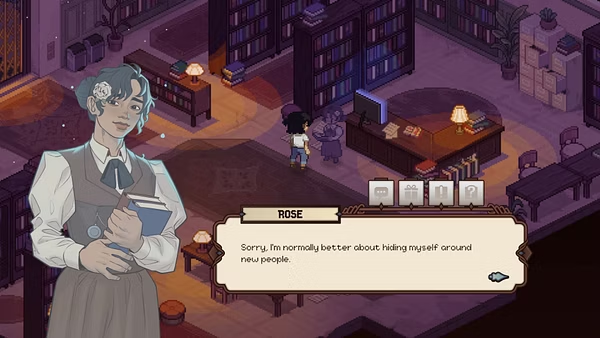
Second, the social layer: NPC introductions, dialogue-driven relationship building, and the romance framework. Multiple previews note that conversations are paired with higher-detail character art/portraits, underscoring that narrative presentation is meant to carry significant weight alongside the pixel-art overworld.
Third, the horror-investigation layer: murders begin occurring in the town; you search for clues; you may break into locked spaces; and you craft protective items to “ward off” whatever is hunting the town. The official Steam description explicitly connects “what you harvest” to your ability to “unravel the mysteries of Ashenridge,” tying progression materials to investigative capability rather than leaving farming as a purely separate activity.
A defining structural difference, highlighted by demo coverage, is that Grave Seasons is designed around replayable narrative runs rather than endless, year-after-year sandbox play: Popverse reports a one-year-long playthrough structure with murders recurring through the year, creating a “defined ending” approach that encourages multiple playthroughs with different killers and victim paths.
What Happens in Grave Seasons 11 Minutes of Gameplay
While the full video itself is not transcribed in official text on the Steam page, multiple independent hands-on previews describe a highly consistent sequence that aligns with what an 11-minute demo-focused showcase would emphasize: “cozy” onboarding followed by a shocking tonal break, then clue collection and the implied start of the investigation loop.
A representative gameplay flow described in preview reporting looks like this:
The player arrives as a newcomer in Ashenridge after a fraught backstory (“treacherous escape from jail”), and begins establishing a farm routine. The early minutes are deliberately familiar: you work a neglected plot, use standard tools, plant and water crops, and begin gathering basic materials—exactly the kind of low-stakes rhythm players expect from a farming/life sim.
Then the game introduces “wrongness” on purpose. Both PCGamesN and MMORPG.com describe discovering a severed hand during routine farm activity, a moment that functions as a narrative trigger: it tells you the farm and town have a dark history and that “cozy” is only the surface layer.
From there, NPC interaction and a small quest-style prompt leads the player toward nighttime exploration—often described as foraging or meeting someone after dark—and the tonal shift becomes explicit: a hulking, werewolf-like creature attacks and brutally kills an NPC in a scene that is meant to be jarring precisely because it’s wrapped in retro pixel art.
Finally, the player is pushed into the investigative action: you search the area for clues/evidence and collect what the scene leaves behind. PCGamesN frames this as “gathering all the evidence” available at the crime scene; MMORPG.com similarly describes picking up clues left behind after the murder moment, with the full game’s promise being that you can potentially save victims if you deduce the killer quickly enough.
The connective tissue between “what happens” and the broader game structure is that this sequence establishes the stakes (murders are real and graphic), the urgency (victims can die), and the player’s responsibility (investigate, craft countermeasures, and intervene). This framing is consistent with the Steam feature bullets about investigating murders, crafting items to protect the next victim, and building trust with townsfolk to shape the story’s outcome.
Grave Seasons Gameplay Features Explained
Grave Seasons positions itself as a narrative-led farming sim that uses classic life-sim systems (farming, fishing, mining, relationship meters) as inputs into a branching murder mystery rather than as parallel side content. The store description and multiple previews strongly emphasize that the player’s resource and relationship decisions influence investigative capability and story direction.
A concrete example of systemic integration appears in the official description: what you “harvest” is said to be “critical” to unraveling the mysteries of the town—this is an explicit design statement that farming outputs are not merely for money or aesthetics but also for narrative progress and defense.
Another integration point is the game’s stance on trespass and suspicion. Steam’s description jokes about “breaking and entering,” but hands-on writing takes that idea seriously as a mechanic: Cinelinx describes a crowbar included in the tool wheel and explicitly framed in the tutorial as “Crime,” implying that many investigative actions are designed to be socially risky rather than automatically “heroic.”
Similarly, multiple preview sources stress that relationship-building isn’t just for romance flavor; it’s part of the investigation. Steam states you must complete quests and build trust to identify the killer, and PCGamesN adds a key systemic detail: the killer’s role is randomized per playthrough, meaning the social layer is also the suspect layer, and the player must read people as both narrative characters and potential threats.
Finally, narrative pacing is underscored as a defining gameplay feature. Popverse reports a run structure limited to a single in-game year with an emphasis on branching plotlines and multiple playthroughs. If accurate at launch, this will make Grave Seasons structurally closer to a replayable narrative mystery than to an open-ended farming sandbox.
Grave Seasons Farming Sim and Horror Twist
The “cozy horror” pitch for Grave Seasons is not subtle: marketing and previews consistently frame it as a warm-looking farming/town sim overlaid with a serial-killer mystery and supernatural violence. Steam’s store page calls the game “a narrative led farming sim with a terrifying twist—someone in the town is a supernatural serial killer.”
What makes the twist land, based on hands-on reporting, is that the horror isn’t limited to ambient creepiness or occasional spooky set dressing. PCGamesN describes an abrupt escalation from planting strawberries to witnessing a “giant, demonic werewolf” maul a character, with gore elements communicated through environmental remains and footprints.
MMORPG.com echoes this with a detailed description of a nighttime forest scene where an NPC is dragged away and killed by a werewolf-esque creature, followed by the player collecting clues; the writer calls attention to how jarring it is to see brutal body horror delivered through “cutesy, retro” art.
Crucially, the horror twist also changes the emotional meaning of farming. In a typical farming sim, planting, harvesting, and selling are about long-term growth; here, official text frames harvests as inputs into solving murders and protecting potential victims, turning the farm into an investigative tool and survival infrastructure rather than a purely cozy lifestyle fantasy.
This framing is also consistent with Perfect Garbage’s own positioning of the game as a “supernatural murder-mystery farming simulator” where you build up the community and “maybe stop the murders.”
Narrative systems, investigation, and relationship design
Grave Seasons Story and Ashenridge Mystery
The story premise is anchored in a protagonist with an unstable, morally compromised starting point: you arrive in Ashenridge after “a treacherous escape from jail,” attempt to establish a new farming life, and murders begin to occur in the town. This backstory is clearly presented in the Steam overview and repeated across multiple press write-ups of the game’s synopsis.
Hands-on previews add additional texture about the farm’s history. PCGamesN describes moving into a “vacant” farm with a former owner who “went quietly missing,” and MMORPG.com similarly describes the player obtaining farm ownership through “dubious means” after a previous owner disappeared.
Perfect Garbage’s own studio page for the game frames Ashenridge as an “idyllic, isolated mountain town,” emphasizing isolation as a narrative device: the town is intimate enough that every villager matters, but isolated enough that you can’t easily “escape” the consequences of what’s happening.
The “Ashenridge mystery” therefore appears to be structured around layered uncertainty: the missing farm owner (or what happened before you arrived), the identity and motives of the killer, and the question of which relationships are safe. The official pitch that you must “embed yourself in the neighborhood” while murders occur implies that “belonging” is not just cozy roleplay; it is a strategic necessity for solving the case.
The strongest structural claim about story shape comes from Popverse: the demo impressions argue the game sharply limits story length to one year per playthrough, with murders occurring regularly. If this holds in the final release, Ashenridge’s mystery is designed to escalate on a schedule rather than remain an indefinite slow burn.
Grave Seasons Serial Killer Gameplay Details
The serial-killer concept has two defining characteristics in official and preview coverage: the killer is supernatural, and the killer is embedded among the town’s residents. The Steam description explicitly uses “supernatural serial killer,” and multiple previews describe a werewolf-like attacker as the visual shorthand for the “supernatural” side of the murders.
A major design differentiator—highlighted in hands-on coverage—is replay variability. PCGamesN states that “at the beginning of each playthrough, one [NPC] is selected at random to be the killer,” and further claims the killer treats certain NPCs as “allies” (spared) while others are “targets” to be slain, with additional villagers potentially caught in collateral damage.
Popverse’s PAX East demo article supports this broad replay framing, saying each playthrough may feature a different killer taking a different path with different victims, and that the game is built around branching plotlines that invite repeat runs.
One preview adds an additional nuance about timing variability: MMORPG.com claims “murderers… are randomly assigned with each new season,” suggesting seasonal structuring in how murders are scheduled or how killer behavior progresses. Because this phrasing could be interpreted in multiple ways (for example, “random per run” but executed across seasons, or more than one killer phase), it should be treated as preview-language rather than a finalized rules statement until the game’s systems are fully documented at launch.
The official feature bullets emphasize that your job is not only to find the killer but also to prevent future deaths: you must identify the next victim and craft items that can ward off the threat. This shifts the killer from a pure “mystery reveal” into an active, gameplay-driven antagonist whose actions produce solvable, preventable events.
Grave Seasons Investigation Mechanics Explained
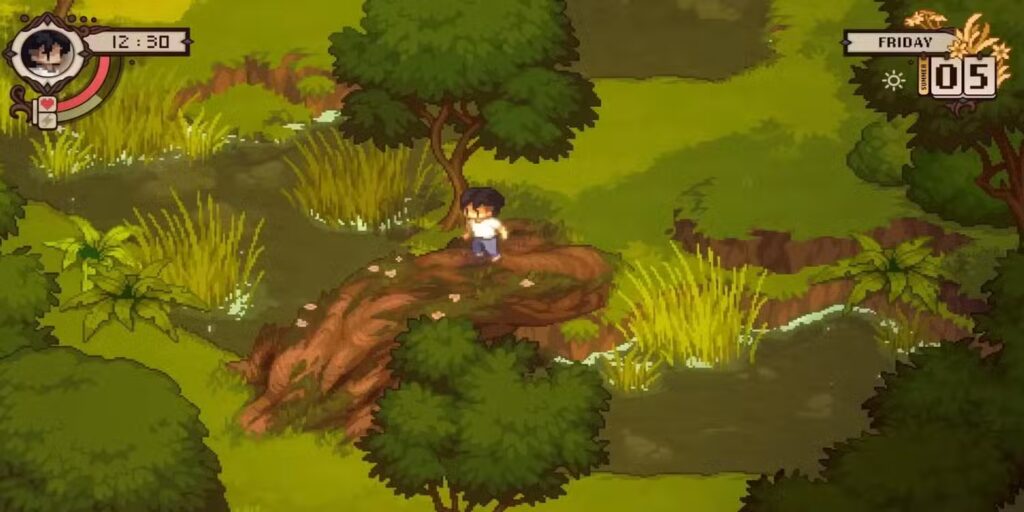
Investigation in Grave Seasons is positioned as a hands-on, space-driven activity rather than a purely menu-driven deduction minigame. Steam’s description instructs the player to “search for clues” and “investigate the unique townsfolk,” and directly calls out “breaking and entering” as part of the investigative toolset.
The “crowbar” becomes an emblem of this approach. Cinelinx, describing a demo day, lists a standard farming tool wheel (hoe, watering can, axe, pick) and then highlights the crowbar as a separate, explicitly “criminal” tool designed for locked spaces.
PCGamesN’s hands-on description demonstrates how investigation is introduced through environmental discovery and scene processing: after the nighttime murder, the player gathers evidence at the crime scene, then receives a broader explanation that the murder-mystery system permeates the social and daily loop.
MMORPG.com similarly frames investigation as “clue pickup” after witnessing a murder, with the implied larger system being that you can save future victims “depending on how quickly” you deduce the murderer.
Official descriptions also tie investigation to crafting and protection rather than making it purely about accusation. Steam’s feature bullets explicitly say you must craft items to protect the next victim and that your investigative skill is what lets you identify and save them. This suggests the investigation loop should be understood as: gather clues → narrow suspects/anticipate targets → craft countermeasures → intervene before the next murder.
Finally, investigation appears to include relationship and social consequences. BossRush’s PAX East reporting claims that breaking into homes and businesses can anger NPCs if you are caught, reinforcing that “investigation” is not consequence-free. Because this comes from a single outlet’s demo write-up, it’s best treated as a reported demo behavior rather than a guaranteed final rule until the shipped version confirms AI schedules and detection states.
Grave Seasons Romance Options and Character Trust System
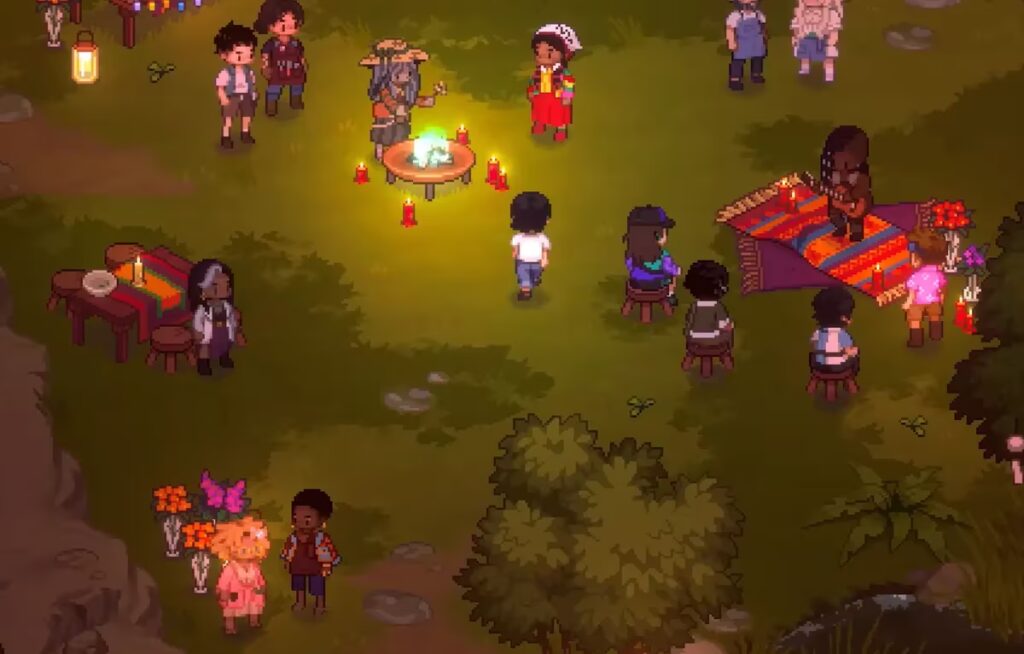
Romance is not a side garnish in the public messaging around Grave Seasons; it is presented as one of the game’s central pillars, and it is explicitly bound to the murder mystery. Steam promises that you can “befriend and romance” townsfolk and “even romance the killer,” while also stating that you must complete quests and build trust to uncover the truth.
This “trust system” framing is reinforced in press summaries: multiple outlets highlight a -like romance structure where relationships are both emotionally meaningful and mechanically useful, because learning people’s lives and routines is part of detective work.
Popverse adds the most developer-direct insight into how Perfect Garbage thinks about romance systems. In an interview with co-founder and narrative designer , the outlet reports that the studio “got our start in dating sims and visual novels,” citing their first title , and that they want to integrate dating-sim mechanics with “narrative weight” rather than parody.
This matters for evaluating the romance/trust system because it suggests a design goal beyond “heart meters”: romance is being treated as a branching narrative structure that changes outcomes and reveals information.
The killer-randomization angle makes trust mechanically tense. PCGamesN claims one NPC is randomized as the killer per playthrough, and that the killer spares allies and targets others—meaning relationship choices can place you closer to danger, not just closer to rewards.
Popverse’s demo framing goes further by arguing that the whole game becomes a replayable branching narrative where you might romance the killer “either intentionally or by chance,” and that this opens “more paths and stories.” If the shipped version preserves this, the trust system becomes a strategic risk: you are incentivized to connect with residents to gain information, but any connection might be with the murderer.
Side activities, progression loops, and survival pressure
Grave Seasons Crafting, Fishing, and Mining Activities
The “cozy” activity set—farming, fishing, mining, crafting—is repeatedly confirmed in official descriptions and preview coverage, but the distinctive aspect is how these activities are positioned as survival and investigation enablers.
On the official Steam page, players are told they can “grow crops, fish, [and] mine,” participate in the local economy by selling goods, and use their harvests to unravel the town’s mysteries.
Perfect Garbage’s own game page reiterates this activity mix: harvest crops, fish and mine, meet and romance townsfolk, build up community, and potentially stop the murders—explicitly putting fishing and mining in the same “core loop” sentence as romance and murder prevention.
Cinelinx provides the most granular crafting detail from hands-on time: the writer describes a wide range of farmed and foraged items that can be cooked or processed using machines for “milling, juicing and fermentation,” implying production chains rather than single-step “sell crop for gold” economy design.
The same preview notes ore mining and processing into ingots, and early crafting recipes for items such as thread (silver) and flasks, describing the “vibe” as crafting solutions to supernatural threats (the preview specifically compares this to preparing known weakness-based countermeasures, like vampire folklore).
Fishing and mining are also referenced in PAX East demo reporting. BossRush states developers confirmed “beloved tropes like fishing and mining,” and Popverse’s demo coverage includes foraging and exploration as early-cycle activities that mirror classic farming sims before the murder system escalates.
The most important craft-adjacent mechanic in official text is the “protect the next victim” feature: Steam tells players to discover and craft items to ward off the stalker, and that your investigative skill determines whether you can identify and save the next target. This is the clearest statement that crafting in Grave Seasons is not only about profit or decoration; it is a defensive system tied to murder prevention.
Grave Seasons Combat and Survival Features
As of the currently published official materials and hands-on previews, Grave Seasons communicates “survival” more clearly than it communicates traditional “combat.” The game’s store description does not emphasize weapon loadouts or enemy HP bars; instead, it emphasizes preparation, protection, and consequence management: identify the next victim, craft warding items, and use investigation to prevent bloodshed.
That said, two categories of “threat interaction” are clearly shown or described.
The first is direct confrontation with horror events. Multiple hands-on sources describe witnessing a sudden supernatural attack (werewolf-like creature), with the player moving through a grisly scene afterward to gather clues. The survival implication is obvious: being in the wrong place at the wrong time in Ashenridge can be lethal for NPCs, and potentially for the player depending on how the final systems are tuned.
The second is social survival: “crime” tools and trespass carry risk. Cinelinx describes a crowbar included in the tool wheel for breaking into locked spaces, and Steam’s text frames “breaking and entering” as part of investigation. This implies a stealth-or-timing survival layer where being caught can damage relationships and potentially reduce your ability to access information or complete quests.
Some demo-level reporting adds additional survival-structure claims. BossRush’s PAX East write-up asserts there is no strict “sleep requirement,” emphasizing energy management (eat and eventually sleep when you choose) and describes a “murder sequence” window during the day cycle, including clue logging and the presence of red herrings. Because these are detailed mechanical claims reported by a single outlet rather than documented in the Steam feature list, they are best treated as “reported demo behavior” that may evolve before launch.
If the shipped game preserves the “craft items to ward off” structure, then “combat” in Grave Seasons should be understood as indirect conflict: instead of fighting the monster head-on, the player’s offensive action is prevention—deduction + preparation + intervention. This is consistent with the official “protect the next victim” framing.
Release information, platform strategy, and studio background
Grave Seasons Release Date, Platforms, and Steam Details
The currently listed release date for Grave Seasons is August 14, 2026, with the Steam store page explicitly showing “Release Date: 14 Aug, 2026.”
A March 26, 2026 Steam community announcement from the developer confirms the same date and specifies platform targets: PC, Xbox Series X|S, PlayStation 5, and Nintendo Switch, with Day 1 availability on Xbox Game Pass.
Press coverage corroborates this release-date rollout being tied to showcase exposure: Gematsu reports the August 14, 2026 date and adds that it will be available via Game Pass, while CGMagazine similarly links the date reveal to the Xbox Partner Preview coverage cycle.
On the Xbox ecosystem side, Windows Central and GamingTrend both describe the game as arriving on Xbox Series X|S, Xbox on PC, and Xbox Cloud, and being an Xbox Play Anywhere title launching into Game Pass, tied to the Xbox Partner Preview recap.
The Steam listing provides additional platform-facing details relevant to SEO and player decision-making:
It is listed as single-player, with Steam feature flags including Steam Achievements and Family Sharing.
The Steam page also lists supported languages, including English, Japanese, Portuguese (Brazil), Simplified Chinese, and Spanish (Latin America), with interface/subtitles indicated for each (as currently displayed on the store listing).
System requirements are not fully specified yet (the store page shows “TBD” across major categories) but indicates a 64-bit processor and operating system requirement as part of the standard Steam requirements block.
Finally, the Steam page includes a “Mature Content Description” section, signaling that prospective players should expect horror violence elements (consistent with hands-on descriptions of gore scenes), even though the presentation uses “gorgeous pixel art.”
One additional timeline nuance is worth noting because it reflects a change in public messaging: earlier community posts framed the game as “Summer 2026,” while the March 26 announcement locked the date to August 14, 2026.
Grave Seasons by Perfect Garbage and Blumhouse Games
Grave Seasons is developed by Perfect Garbage and published by Blumhouse Games, as stated directly on the Steam listing and reiterated across release-date coverage.
Perfect Garbage’s own studio site describes the team as “a diverse, narrative driven studio crafting innovative games that meld the new, the old, and the downright scary,” and positions Grave Seasons as a “supernatural murder-mystery farming simulator” set in Ashenridge, featuring farming, romance, community building, and the possibility of stopping the murders.
Popverse provides direct developer commentary about the studio’s narrative roots through co-founder and narrative designer , who explains that the studio began in dating sims and visual novels and cites as their first title. This framing is relevant because it suggests that romance routes and branching narrative structure in Grave Seasons are intentional core competencies rather than late-added features.
On the publisher side, Blumhouse Games is a horror-focused game publisher launched as a division of , associated with founder . The Verge’s reporting on the division’s creation states the label is focused on “original, horror-themed games” across console, PC, and mobile, with an “indie-budget” approach under $10 million per project, and identifies as the president quoted in the launch announcement.
Additional context about the publisher’s strategy and slate positioning comes from The Guardian’s Summer Game Fest 2024 coverage, which explains Blumhouse Games’ intent to apply Blumhouse’s low-budget, high-idea horror philosophy to games and lists Grave Seasons among the early slate of experimental horror titles.
This developer/publisher pairing makes the game’s pitch more legible: Perfect Garbage brings narrative romance and visual-novel adjacency, while Blumhouse Games brings horror brand alignment and a stated interest in boundary-pushing indie horror concepts.
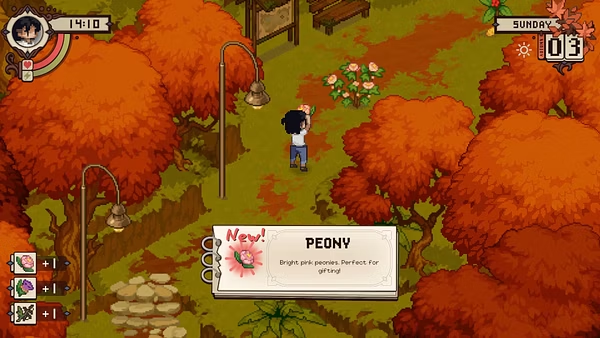
Grave Seasons Official Gameplay Trailer Highlights
The release-date marketing push emphasizes the game’s tonal split: idyllic town presentation contrasted with ominous narration and escalating threat. GamingTrend’s Xbox Partner Preview recap summarizes the trailer framing as including an “old cellmate” writing an ominous letter about the new town you have moved to, and notes the suggestion that something is wrong beneath the surface.
Steam’s official description hits the same beats in a more straightforward synopsis: after escaping jail you arrive in Ashenridge, attempt to establish a farming life, and murders begin to occur, putting your new peaceful life at risk.
Also central in official trailer-related messaging is the game’s “player choice matters” stance. Steam explicitly says “everything you do—or don’t do—will affect how the story plays out,” and Popverse’s demo reporting reinforces this by describing branching plotlines and multiple playthrough incentives.
The standout hook repeatedly highlighted by trailer coverage is permission to romance the killer. Both Steam and multiple write-ups make the point directly, and this is reinforced in third-party preview explanations of the killer randomization system (meaning the murderer could plausibly be someone you decide to pursue).
Finally, multiple outlets link the “11 minutes of gameplay” showcase to the same marketing moment—suggesting that the official highlight reel is meant to move audiences from “this is a cool idea” to “this is how it plays.”
Genre placement and competitive differentiation
Why Grave Seasons Stands Out Among Cozy Horror Games
The crowded nature of farming/life sims is explicitly acknowledged in multiple PAX East write-ups, which treat Grave Seasons as a response to “cozy game” saturation by adding high-stakes narrative pressure and replayable mystery structure.
Three differentiators stand out in the documented material.
First is the killer-as-system design. PCGamesN calls out random selection of the killer per playthrough, plus a behavioral model where the killer has allies and targets. Popverse similarly frames repeat runs around potentially different killers and victim paths. This is structurally unusual for farming sims because it turns social familiarity into suspect analysis: knowing everyone’s routines is not only for romance but also for deduction.
Second is the one-year narrative run structure reported by Popverse. If the shipped game preserves this format, it directly attacks a common friction point in mixed-genre games: endless sandbox time can dilute narrative urgency, while episodic “murder-of-the-week” pacing can preserve tension. Popverse’s claim that murders occur regularly through the year is an explicit statement of pacing intent.
Third is the studio’s romance/visual-novel literacy. Popverse’s interview with positions romance as a serious narrative mechanic rather than a parody add-on, rooted in Perfect Garbage’s prior dating-sim/visual-novel work. This is a meaningful differentiator because “cozy horror” can easily become a gimmick if the relationship layer is shallow; the studio is explicitly signaling it wants to avoid that trap.
In practical gameplay terms, Grave Seasons also appears to integrate crafting and production chains into mystery-solving, not just into income. Steam’s “protect the next victim” language plus Cinelinx’s description of crafting and processing (milling, juicing, fermentation) implies a survival-crafting dimension that is thematically aligned with horror folklore (“ward off” threats) rather than a generic crafting list.
The cumulative effect is a game that uses cozy affordances—routine, community, romance—to generate dread: the comfort systems make you care about villagers, then the murder system threatens them, and your ability to intervene depends on how well you’ve engaged with the cozy systems in the first place. This “loop dependency” is stated directly in the Steam feature framing that harvests and relationships are necessary to unravel mysteries and save victims.

Synthesis and practical takeaway for players
Everything Revealed in Grave Seasons 11 Minutes of Gameplay
The “11 minutes” showcase, as contextualized by official descriptions and hands-on previews, reveals a very specific design philosophy: Grave Seasons is not simply a farming sim with a horror “event” stapled on. It is designed so the player must live inside the cozy loop to earn the tools—materials, trust, access, and knowledge—needed to survive and solve the murder mystery.
From the farming side, the revealed or described gameplay demonstrates recognizable, low-friction actions: standard tool use, crop management, collecting and processing resources, and participating in a local economy (including systems like end-of-day selling in at least one demo build).
From the horror side, the content indicates that violence is not only implied; it can be explicit and visually jarring even in pixel art, with at least one widely described scenario involving a werewolf-like attacker and a mutilated victim, followed by clue gathering.
From the mystery side, the reveal emphasizes investigation as embodied activity (scene searching, clue collection, trespass tools) rather than as purely dialogue puzzles, and frames crafting as a defensive method to protect future victims.
From the romance side, the reveal is unusually bold: the killer can be romanced, and relationship building is tied to suspect work and branching narrative routes, supported by the studio’s stated interest in treating dating sim mechanics seriously.
From the long-term structure side, demo reporting argues the game is built for repeat playthroughs with different killers and branching outcomes, potentially within a defined one-year run format.
Finally, in practical purchasing terms, the reveal period also clarifies the launch plan: August 14, 2026 release; PC and major consoles; Game Pass Day 1; and ongoing demo plans mentioned in official community posts and Xbox Partner Preview recap coverage.
10 Frequently Asked Questions (FAQs)
- What exactly is Grave Seasons—farming sim, horror game, or murder mystery?
Grave Seasons is described on Steam as a “narrative led farming sim” with a “terrifying twist” involving a supernatural serial killer in town, combining farming activities with investigation and relationship systems. - Is the “11 minutes of gameplay” footage official, and where did it come from?
Nintendo Life points to an “exclusive look” featuring 11 minutes of gameplay, and CGMagazine references a lengthy 11-minute gameplay demo published through official channels around the release-date announcement cycle. - Is the killer randomized each playthrough?
PCGamesN reports that at the beginning of each playthrough, one NPC is selected at random to be the killer, and Popverse also frames the game around replayability with potentially different killers and victim paths across runs. - Can you romance the killer?
Yes—Steam explicitly says you can even romance the killer, and Popverse notes that choosing to romance the killer can open up additional story paths. - How does investigation work—menus, or exploring locations for clues?
Official Steam text emphasizes searching for clues and investigating townsfolk (including breaking and entering), while hands-on previews describe collecting evidence at murder scenes and using tools like a crowbar to access locked spaces. - Will there be a demo on Steam?
The developer’s Steam community announcement says a public demo was available at PAX East 2026 and that a Steam demo is planned “soon,” and GamingTrend’s recap also notes a public demo announcement with more details to come. - What platforms will Grave Seasons release on?
The developer’s Steam announcement confirms PC, Xbox Series X|S, PlayStation 5, and Nintendo Switch, and the Steam store listing shows PC via Steam. - Is Grave Seasons coming to Xbox Game Pass?
Yes—the Steam community announcement states it launches Day 1 on Xbox Game Pass, and Windows Central and GamingTrend also describe Game Pass availability and Xbox Play Anywhere support. - Does Grave Seasons have combat, or is it more about survival and prevention?
Official descriptions emphasize crafting warding items and preventing murders rather than describing weapon-focused combat, while hands-on previews focus on witnessing attacks, gathering clues, and survival-oriented preparation. - What is the release date?
Steam lists the release date as August 14, 2026, and the developer’s Steam community announcement confirms the same date.
Conclusion
Grave Seasons’ 11-minute gameplay spotlight—paired with hands-on preview reporting and detailed official feature descriptions—shows an unusually committed genre fusion: classic farming-sim routines are used to power a branching supernatural murder mystery where relationships double as suspect networks and crafting doubles as defense.
The most distinctive revealed pillars are the replayable killer framework (randomized murderer with social dynamics), the significant narrative emphasis (including reported one-year playthrough structure), and the studio’s explicit intention to treat dating-sim romance systems as serious narrative mechanics rather than parody.
With an announced release date of August 14, 2026 across PC and major consoles—and Day 1 Game Pass availability—the game is positioned as a major 2026 entry in the emerging “cozy horror” niche, built for players who want comfort loops with real stakes and mystery-driven urgency.
Sources and citation
Primary & Official Sources
- Steam Store Listing:Fear the Spotlight on Steam
- Developer’s Official Site:Cozy Game Pals
- Publisher’s Official Site:Blumhouse Games
Gameplay & Event Coverage (Summer Game Fest 2025/PAX East 2026 Context)
- Gematsu (Lineup Announcement):Blumhouse Games announces Fear the Spotlight, Sleep Awake, and more
- Nintendo Life (Gameplay Context):Fear the Spotlight Leads the Charge for Blumhouse Games
- Windows Central (Hands-on Preview):Fear the Spotlight is a nostalgic love letter to 90s horror
- CGMagazine (Summer Game Fest Preview):Fear the Spotlight (SGF) Preview
- GamingTrend (Preview):Fear the Spotlight Preview — A spooky good time
Industry Strategy & Context (Blumhouse Games Label)
- The Verge:Blumhouse is getting into indie horror games
- The Guardian:Blumhouse Games: the horror hitmakers’ plan to conquer consoles
Video References
- 11-Minute Gameplay Showcase:Fear the Spotlight – Official 11 Minutes of Gameplay
Recommended
- TANGLED Framework: Diffusion-Based 3D Hair Strand Generation with MultiHair and PixelHair Integration Read More »
- The Fastest Way to Groom Short Hair for Game Characters Read More »
- How do I make the camera look at an object automatically in Blender ?Read More »
- What is the View Keeper? Read More »
- Facial Rigging in Blender: Comprehensive Guide for Beginners to Pros Read More »
- Hades 2: Release Date, Platforms, Gameplay, Characters, and Everything You Need to Know Read More »
- Sparseal Launched New 3D Texturing App For iPad: Wafer Brings Stylized PBR Texture Painting to iPad Read More »
- Riot Games Downsizing the 2XKO Development Team: February 2026 Layoffs, Official Update, and What’s Next Read More »
- The Witcher 4: Everything We Know About CD Projekt Red’s Next Epic RPG Read More »
- Castlevania: Belmont’s Curse is a New Castlevania Game Coming in 2026 — Release Date, Trailer, Platforms, Story & Gameplay Read More »