









Although millions of players enjoy Hearthstone on PC and mobile, the popular digital card game remains conspicuously absent from PlayStation, Xbox, and Nintendo consoles. This has left fans wondering why a game that seems like a perfect fit for consoles is still unavailable on those platforms. In this comprehensive article, we’ll explore why Hearthstone still isn’t on consoles, what Blizzard has said on the matter, the real technical and business barriers involved, and what changes might finally bring Hearthstone to living room devices. We’ll also answer frequently asked questions and delve into the latest news fueling renewed console speculation.
Hearthstone’s developers have given several explanations over the years, from technical challenges with the game’s aging code, to the need for a controller-friendly interface, to concerns about keeping up with Hearthstone’s frequent patch schedule on consoles. Blizzard wants to ensure that any console version would feel “awesome” and fully optimized for the big-screen experience rather than a rushed, subpar port. They’re also weighing whether enough console players would actually play Hearthstone versus just using their phones or tablets.
In short, the studio isn’t opposed to a console port, in fact, they acknowledge it’s “possible”, but they insist on doing it right or not at all. Below, we break down all the reasons behind Hearthstone’s console holdup and what would need to happen for that to change.

In This Article (23 sections)
Why Hearthstone Still Isn’t on Consoles
Hearthstone has not released on consoles due to a mix of technical, design, and strategic challenges:
- Old code and technical hurdles: Parts of the codebase are up to 16 years old and were built for PC and mobile, not console architecture or input systems. Porting would require major refactoring and testing.
- User interface and controls: The UI was designed for mouse and touch. Adapting drag-and-drop mechanics and collection menus to controllers would require significant UI/UX redesign to feel natural.
- Fast patch cycle: Console certification processes could delay balance updates and expansions, disrupting Hearthstone’s rapid live-service update model.
- Battle.net integration and policies: Always-online requirements and cross-progression via Battle.net could face console platform restrictions.
- Market demand and priorities: Blizzard questions whether a console port would bring enough new players, since most potential console users already have access via mobile devices.
Is Hearthstone Coming to PS5, Xbox Series X|S, or Nintendo Switch?
Hearthstone is not officially announced for PS5, Xbox Series X|S, or Nintendo Switch. Blizzard has stated there is “nothing to announce now.” While developers acknowledge consoles could work, citing examples like Magic: The Gathering console titles, no release plans are in place.
Speculation increased during events like the Nintendo Switch launch and Microsoft’s acquisition of Activision Blizzard, but no console version has been confirmed. As of early 2026, Blizzard says the idea is under consideration but not actively being rolled out.
Blizzard Statement on a Hearthstone Console Port
Blizzard’s leadership has expressed cautious openness toward a console version:
- UI/UX investment required: Executive Producer Nathan Lyons-Smith stated that significant UI and UX work is needed to make controller play feel natural.
- Audience demand: Blizzard wants assurance that enough console players would use the game beyond existing mobile users.
- Quality-first approach: Game Director Tyler Bielman emphasized that any console version must be fully optimized for big-screen play.
- Microsoft ownership influence: With Microsoft now owning Blizzard, broader platform support aligns with a “games playable anywhere” philosophy, potentially increasing the likelihood of a future console release.

Why Blizzard Says a Hearthstone Console Version Isn’t Ready Yet
Blizzard cites several reasons the console version is “not ready”:
- Aging codebase: The 16-year-old foundation was not built for consoles, requiring substantial technical overhaul.
- High-quality standards: Blizzard refuses to release a basic port; it must feel designed for consoles.
- UI and controller adaptation: Major redesigns are needed for menus, navigation, and in-game interaction using controllers.
- Uncertain demand: Blizzard wants evidence of strong console-specific demand before committing development resources.
Hearthstone Console Release Date Rumors and What’s Confirmed
There is no official release date or confirmed development for a console version. Rumors tied to events like BlizzCon, Hearthstone’s anniversary, or Microsoft’s acquisition have not resulted in announcements. Blizzard consistently states there is “nothing to announce.”
Confirmed facts:
- Hearthstone is currently available only on PC (Windows/Mac) and mobile (iOS/Android).
- It is not listed on PlayStation, Xbox, or Nintendo digital stores.
- No console certification or release window has been announced.
Any claimed release dates are speculative. As of early 2026, no Hearthstone console version is officially confirmed.
Hearthstone Console Controls and Controller-Friendly UI Challenges
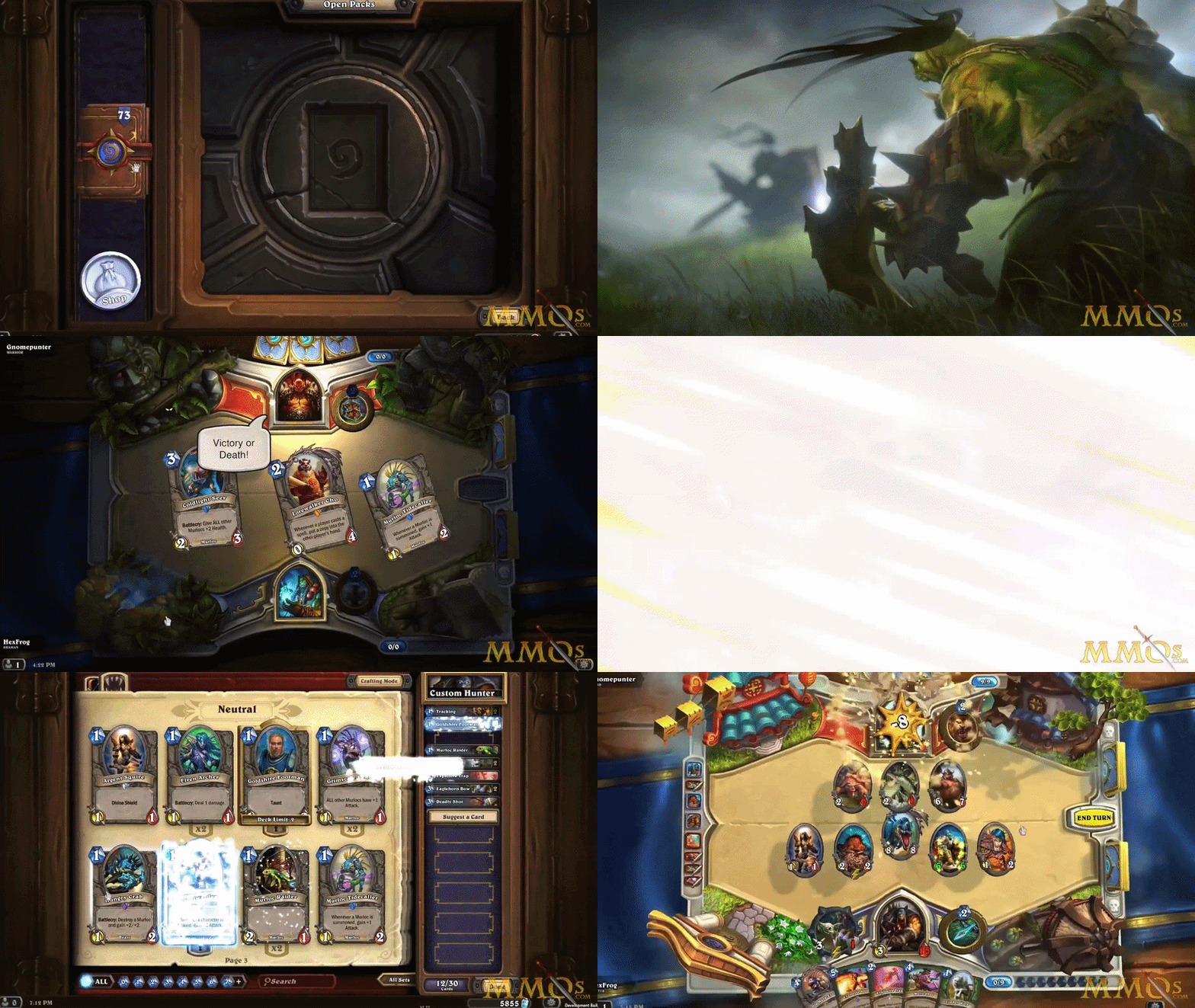
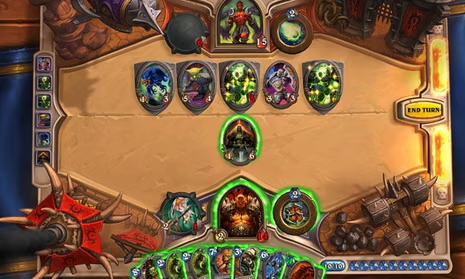
A major barrier to bringing Hearthstone to consoles is adapting its mouse- and touch-based interface for controller use. The current drag-and-drop and hover-driven design does not translate naturally to gamepads, requiring significant UI redesign.
Possible controller approaches include:
- Virtual Cursor:
A joystick-controlled mouse pointer that “clicks” on cards and buttons. This would require minimal UI changes but can feel slow and imprecise. - Radial Menus / Selection Boxes:
A system where cards and targets are highlighted and navigated using the D-pad or joystick. This would require snapping selection zones, clear highlight indicators, and redesigned layouts. - Hybrid Touch/Controller (Switch):
Touch controls in handheld mode and controller input when docked. While feasible for Switch, PlayStation and Xbox lack touch input, so full controller support would still be required.
Additional considerations include:
- Scaling text and visuals for TV viewing.
- Enlarged card previews instead of hover tooltips.
- Redesigning menus and navigation for couch play.
Blizzard has acknowledged that significant UI/UX investment is required to make controller play feel natural and polished, similar to successful examples like Magic: The Gathering – Duels of the Planeswalkers. Until a fully optimized controller interface is developed, Blizzard remains hesitant to launch on consoles.
How a Hearthstone Console Port Would Handle Deckbuilding and Collection Management
Deckbuilding and collection management present even greater UI challenges than gameplay controls. On PC and mobile, players rely on quick typing, dragging, and scrolling to manage large card collections. On consoles, these workflows must be reimagined.
Possible solutions include:
- Tabbed Navigation and Filters:
Using bumper buttons to switch sections and controller-based filter toggles instead of typed search. - Grid or Carousel Layouts:
Highlighting one card at a time with joystick navigation, with buttons to view details or add/remove cards. - Alternative Search Methods:
Replacing typing with preset filters, tag systems, or on-screen keyboard input, though typing remains cumbersome. - Controller-Based Deck Editing:
Button presses to add/remove cards and scrolling through deck lists with controller navigation.
Challenges include:
- Managing thousands of cards efficiently.
- Maintaining fast browsing without frustrating delays.
- Ensuring readability and usability on TV screens.
Other games like Gwent demonstrated that maintaining console interfaces alongside PC/mobile versions can strain development resources. Blizzard would need extensive UI redesign and testing to avoid a clunky experience, which is a major reason a console version has not yet been released.
Console Certification Requirements and How They Slow Live-Service Updates
Console platforms require certification for every update, meaning patches must be submitted for approval by Sony, Microsoft, or Nintendo before release. This process can take days or weeks and may delay urgent fixes.
For a live-service game like Hearthstone, this creates several challenges:
- Delayed balance patches:
Emergency nerfs or fixes could be held up in certification, leaving console players stuck with problematic metas. - Version mismatch issues:
If console updates lag behind PC/mobile, cross-play could be disrupted due to differing game versions. - Reduced flexibility:
Developers would need to finalize patches earlier, limiting last-minute balance adjustments. - Potential slower patch cadence:
Blizzard might need to bundle updates into fewer, larger patches to accommodate certification timelines.
Examples like Gwent show how supporting multiple platforms can strain update pipelines and slow feature parity. Hearthstone’s frequent expansions, balance patches, and live events make this especially complex.
In summary, console certification requirements conflict with Hearthstone’s agile update model. Supporting consoles would require significant operational adjustments to maintain synchronization across platforms without slowing down the game’s live-service cadence.
Why Hearthstone’s Frequent Patches Are Harder on Consoles than PC and Mobile
Hearthstone’s identity as a live-service game depends on frequent updates, but this becomes problematic on consoles due to certification delays.
Hearthstone patch frequency includes:
- Monthly balance updates, sometimes bi-weekly during unstable metas
- Major expansions every four months
- Mini-sets between expansions
- Weekly Tavern Brawls and limited-time events
- Frequent bug fixes and client patches
On PC, patches deploy instantly via Battle.net. On mobile, Apple and Google review updates, but delays are usually minimal. Consoles, however, require certification that can take 3–7 days or longer.
This creates several issues:
- Slower balance fixes: Broken metas could persist longer while waiting for certification.
- Delayed emergency hotfixes: Game-breaking bugs may not be fixed quickly if a client patch is required.
- Platform desync risks: Cross-play requires all platforms to run identical versions, meaning PC/mobile updates could be delayed to match console timelines.
- Reduced development agility: Blizzard would need to finalize patches earlier, limiting real-time adjustments.
- Potential shift to fewer, larger patches: Bundling changes could reduce flexibility and slow responsiveness.
Console certification conflicts with Hearthstone’s rapid, reactive update model. Supporting consoles would require a revised patch strategy to maintain synchronized updates without slowing improvements for all players.
Battle.net Account Login on Consoles and Platform Policy Hurdles
Hearthstone relies on Battle.net accounts for collections, purchases, and cross-platform play, creating integration challenges on consoles.
Key considerations include:
- Account linking:
Players would need to link console accounts (PSN/Xbox/Nintendo) to Battle.net. This is feasible and already done in games like Overwatch 2, but must comply with platform policies. - Always-online requirement:
Hearthstone requires constant internet access, which reduces portability benefits (especially on Switch). - Platform purchase policies:
All in-game purchases must go through console storefronts, giving platform holders a revenue cut. Blizzard must integrate each platform’s purchase APIs and comply with pricing rules. - Cross-platform purchases:
Purchases made on one platform would need to sync via Battle.net. While common in modern cross-play games, this requires careful compliance with platform revenue policies. - Storefront integration:
Hearthstone would need console-specific purchasing flows rather than linking to external web stores. - Social systems:
Battle.net friends lists would likely remain primary, with optional console friend integration.
While modern consoles are more accommodating of cross-progression and external accounts, Blizzard would still face additional engineering, compliance, and customer support complexity. These hurdles are manageable but add operational overhead.
Cross-Play and Cross-Progression on Consoles for Hearthstone
If Hearthstone launches on consoles, cross-progression and cross-play would almost certainly be included.
Cross-Progression:
- Unified Battle.net account across PC, mobile, and consoles
- Shared cards, decks, rankings, and purchases
- Account linking required for console players
This mirrors Blizzard’s approach in Overwatch 2 and Diablo 4.
Cross-Play:
- Shared matchmaking across PC, console, and mobile
- Unified ladder and leaderboards
- No gameplay disadvantage concerns (turn-based design)
- Likely optional cross-play toggle if required by platforms
Cross-play is essential to maintain healthy matchmaking queues and avoid fragmenting the player base. However, it requires synchronized patches across all platforms, reinforcing the certification challenges discussed earlier.
In summary, cross-progression is technically straightforward due to Battle.net’s existing infrastructure, and cross-play aligns with modern industry standards. The main complexity lies in maintaining version parity across platforms to ensure smooth matchmaking and consistent gameplay.

Why Matchmaking and Competitive Integrity Complicate Console Support
While cross-play is desirable for a console version of Hearthstone, it raises concerns around matchmaking fairness and competitive integrity.
Key considerations include:
- Input/Interface Speed:
Controller-based navigation (especially with a virtual cursor) could be slower than mouse input, potentially affecting rope timer execution during complex turns. Blizzard would need to optimize controller shortcuts to prevent action-speed disadvantages. - Performance and Load Times:
Consoles must run the client smoothly to avoid reconnect or sync disadvantages, though performance differences are unlikely to be significant. - Unified vs Separate Ladder:
Unlike games such as Overwatch, Hearthstone likely would not require separate ladders for console and PC, assuming input differences are negligible. A unified ladder preserves competitive integrity and queue health. - Third-Party Tools:
PC players can use allowed deck trackers, while console players cannot run overlays. This may create minor informational convenience disparities, though the information is technically trackable manually. - MMR Calibration:
A surge of new console players could temporarily distort matchmaking until ratings stabilize. Blizzard would need to ensure fair onboarding and rating seeding. - Esports Considerations:
Competitive tournaments would likely remain PC-based for consistency, meaning consoles would primarily target casual players.
Overall, matchmaking is manageable if controller responsiveness is optimized. Blizzard would aim for a unified ecosystem where console players do not feel disadvantaged by controls or platform limitations.
Hearthstone Monetization on Consoles and First-Party Store Rules
Hearthstone’s monetization system would function similarly to mobile but must comply with each console’s store policies.
Key elements include:
- Platform-Based Purchases:
All transactions must go through PlayStation, Xbox, or Nintendo storefronts, with the platform taking a revenue share. - Pricing Parity:
Prices must remain consistent across platforms, and discounts or promotions would require platform approval. - Cross-Platform Purchases:
Items and currency purchased on one platform would sync through Battle.net. Players could technically purchase on one platform and use content on another, which is now common in cross-progression games. - Loot Box Regulations:
Console platforms require disclosure of pack odds. Regional restrictions (e.g., Belgium) would apply similarly to PC/mobile. - Parental Controls and Ratings:
The game must comply with console store age ratings and purchase restrictions.
While manageable, console monetization introduces additional compliance overhead and revenue sharing. Blizzard would weigh this complexity against potential player growth.
Why Hearthstone on Steam Deck Isn’t the Same as a Native Console Version
Although Hearthstone is playable on Steam Deck, this does not equate to a true console version.
Key differences include:
- Steam Deck is a PC Environment:
Hearthstone runs as the PC version, using trackpads or touchscreen to emulate mouse input. - No Controller-Specific UI Redesign:
Steam Deck relies on existing PC controls rather than a redesigned controller interface. - No Console Certification Requirements:
Steam Deck avoids platform certification, account policy, and storefront constraints associated with PlayStation, Xbox, or Switch. - Flexible Input Methods:
Steam Deck allows touchscreen, mouse emulation, and keyboard options, unlike traditional consoles that rely solely on controllers. - No Native Console Optimization:
A true console version would require dedicated UI redesign, store integration, and compliance work that Steam Deck bypasses.
In summary, Steam Deck proves Hearthstone can run on handheld hardware, but it does not address the core challenges of delivering a fully optimized, certified console experience.
Technical Debt and “old Code” Concerns Behind a Hearthstone Console Port
Hearthstone’s development began in the early 2010s, and parts of its codebase reportedly date back around 16 years. This legacy foundation creates technical debt that complicates a console port.
Key challenges include:
- Engine and platform limitations:
The original engine may not natively support modern consoles. Upgrading engine versions or adapting platform abstractions could require major refactoring and testing. - Architectural assumptions:
Early design decisions assumed mouse input and PC layouts. Adapting to controller-based input could require widespread code changes if systems are not modular. - Performance considerations:
Older code may not be optimized for modern multi-core consoles or 4K output. Memory handling and threading could need improvements. - Layered feature complexity:
Years of added modes (Battlegrounds, Mercenaries, etc.) may introduce hidden instability during platform transitions. - Tooling and build pipelines:
Console support requires new devkits, packaging systems, and debugging tools tailored to platform SDKs.
Blizzard has acknowledged that aging code is a real blocker for delivering an optimized “living room” experience. Addressing technical debt likely requires engine upgrades, refactoring, and extensive testing before a console launch.

Why Blizzard Might Prioritize Mobile and PC over Consoles
Blizzard has historically prioritized PC and mobile for strategic and economic reasons:
- Massive mobile audience:
Mobile devices provide global reach, especially in regions where console gaming is less dominant. - Uncertain console demand:
Turn-based card games have historically had smaller console audiences compared to action-heavy genres. - Development bandwidth:
Resources have focused on expansions, new modes, and content updates rather than platform expansion. - Revenue considerations:
Console storefronts take a revenue share, reducing margins compared to Battle.net sales on PC. - Existing player engagement focus:
Investments like Battlegrounds delivered large engagement boosts without requiring new platforms. - Strategic simplicity:
Supporting PC and mobile allowed Blizzard to avoid certification delays and platform constraints.
Blizzard’s past stance suggested consoles would not significantly expand the audience beyond players already served by mobile devices.
Could Microsoft Ownership Make Hearthstone More Likely on Xbox
Microsoft’s acquisition of Activision Blizzard in 2023 significantly increases the likelihood of a console version, especially on Xbox.
Key factors include:
- “Play Anywhere” philosophy:
Microsoft promotes gaming across PC, console, and cloud ecosystems. Hearthstone aligns well with this strategy. - Internal resource support:
Microsoft could provide additional engineering support, funding, or prioritization for an Xbox version. - Game Pass and ecosystem incentives:
Hearthstone could integrate with Game Pass perks or Xbox ecosystem features like achievements. - Corporate alignment:
Blizzard leadership acknowledged that Microsoft is more invested in expanding platform reach. - Strategic value:
Adding Hearthstone strengthens Xbox’s portfolio and cross-platform presence.
While Xbox would likely be the first target, broader console releases (PlayStation, Switch) remain possible depending on Microsoft’s multi-platform strategy.

What Would Need to Happen for Hearthstone to Launch on Consoles
To successfully release Hearthstone on consoles, Blizzard would need to complete several major steps:
- Develop a controller-friendly UI:
Redesign navigation, targeting, menus, and scaling for TV screens and gamepads. - Refactor and modernize the codebase:
Address technical debt, update engines if needed, and optimize performance. - Integrate console online services:
Implement account linking, achievements/trophies, and compliance with platform APIs. - Revise patch and certification workflows:
Adjust development timelines to accommodate console certification processes. - Adapt monetization systems:
Integrate platform storefront APIs and ensure pricing, loot box disclosures, and compliance. - Implement cross-play and cross-progression:
Maintain unified matchmaking and synchronized version control across platforms. - Pass platform certification requirements:
Meet technical, compliance, parental control, and stability standards. - Conduct beta testing:
Test UI responsiveness, performance, and matchmaking at scale. - Prepare marketing and onboarding:
Optimize tutorials for controller use and promote the launch within console ecosystems. - Commit to long-term support:
Maintain console-specific updates, bug fixes, and compliance over time.
Launching on consoles is a large, multi-disciplinary effort affecting UI, engine architecture, networking, monetization, QA, and live-service operations. Blizzard’s stance indicates they would only proceed once these requirements can be met at a high standard.
In summary, while a console port is feasible, it requires significant technical, operational, and strategic investment. With Microsoft’s backing and a clear roadmap, Hearthstone on consoles is more plausible than before but only once these core challenges are fully addressed.
Latest Hearthstone News that Fuels Renewed Console Speculation
Recent developments in late 2025 and early 2026 have reignited speculation about Hearthstone coming to consoles.
Key factors include:
- Blizzard’s 2026 Interviews:
Executive Producer Nathan Lyons-Smith stated there is “nothing to announce now,” but openly discussed console possibilities, market demand growth, and the need to do it right. The tone was notably more optimistic than past “no plans” responses. - Microsoft Acquisition Completed:
Blizzard’s new ownership under Microsoft (finalized in 2023) was explicitly referenced. Developers acknowledged Microsoft’s goal of making games “playable anywhere,” increasing expectations of an Xbox version. - Steam Datamining and Expansion:
Evidence of a Steam release suggests Blizzard is expanding distribution. A Steam launch could pave the way for broader platform expansion, including consoles. - 10th Anniversary and “Year of Change”:
Hearthstone’s anniversary and major system updates have fueled speculation that platform expansion could be part of broader strategic changes. - Community and Media Coverage:
Gaming outlets and community discussions increasingly frame console support as “not yet” rather than “never,” amplifying speculation. - Industry Context:
Movement from other digital card games toward broader platform support would further pressure Blizzard to follow.
Overall, developer openness combined with Microsoft’s strategic direction has created stronger signals than ever before that a console release is being seriously considered.

Frequently Asked Questions (FAQs)
- Is there a confirmed release date for Hearthstone on consoles like PS5, Xbox Series X|S, or Nintendo Switch?
No. There is no official announcement or release date. Any dates circulating are rumors. - Will Hearthstone ever come to PS5 or Xbox Series X|S?
Blizzard has not ruled it out and has expressed openness. With Microsoft ownership, an Xbox version appears more plausible, but nothing is confirmed. - Is a Nintendo Switch version coming?
Not currently. Blizzard previously cited concerns about online requirements and overlap with mobile. Future possibilities remain open but unconfirmed. - Why hasn’t Hearthstone launched on consoles yet?
Reasons include:- Required controller-friendly UI redesign
- Aging codebase and technical debt
- Priority given to PC/mobile audiences
- Challenges with console patch certification
- Has Microsoft ownership made a console version more likely?
Yes. Microsoft’s focus on cross-platform gaming and Xbox ecosystem expansion increases the likelihood, particularly for Xbox. - Would cards and progress carry over to console?
Almost certainly yes. Battle.net account linking would enable full cross-progression. - Would cross-play be supported?
Most likely yes. A unified matchmaking pool across PC, mobile, and console is expected. - How would controller gameplay work?
Blizzard would implement optimized controller navigation, including cursor systems, highlight selection, and gamepad-friendly menus. - Can I play Hearthstone on Steam Deck or Steam?
Steam Deck play is possible via PC methods. Steam support appears likely soon, but it is not equivalent to a native console version. - Is Blizzard making a Hearthstone 2 for consoles?
No. There are no plans for a sequel. Any console release would be the existing Hearthstone adapted for new platforms.
Conclusion
Hearthstone’s absence on consoles has historically been due to UI challenges, technical debt, patch logistics, and strategic prioritization of PC and mobile. However, recent openness from Blizzard leadership and Microsoft’s acquisition have shifted the conversation from “if” to “when.”
Blizzard has consistently emphasized that a console version must be fully optimized and feel “awesome,” not rushed. With Microsoft’s support and evolving infrastructure, a console release, likely beginning with Xbox, appears more plausible than ever.
While no official announcement exists, growing industry momentum, developer transparency, and corporate strategy suggest that Hearthstone’s expansion to consoles may now be a matter of timing rather than possibility.
Sources and Citations
- VICE – “Blizzard Explains Why Hearthstone Isn’t Available on Consoles (Yet)” (Feb. 2026)
- PlayStation Universe – “Blizzard Is Still Not Ruling Out Console Versions Of Hearthstone” (Feb. 10, 2026)
- Gamereactor – “Blizzard provides an update on a Hearthstone console port: ‘We know it’s possible’” (Feb. 9, 2026)
- Nintendo Everything – “Hearthstone director reiterates no plans for Switch” (Apr. 10, 2018)
- GameSpot – “Blizzard not looking into Hearthstone for Xbox One and PS4” (Apr. 28, 2014)
- PlayGwent – “[UPDATE] Important announcement about the future of GWENT on consoles” (Dec. 4, 2019)
- TweakTown – “CDPR kills Gwent on consoles, will be discontinued in June 2020” (Dec. 4, 2019)
- Reddit r/SteamDeck – “Hearthstone is the Perfect Game for Steam Deck”
- Blizzard News – “Cross-progression is coming to Overwatch 2: Account merge FAQ” (Aug. 16, 2022)
Recommendations
- Best Blender Addons for Hobbyists: 15 Must-Have Tools for Faster Modeling, Animation, and Renders
- 007 First Light DualSense Controller Doesn’t Match the Iconic Gun Barrel Design (And Wasn’t Meant To)
- Invincible Season 4 Animation Error Sparks Fan Debate
- Tekken 8 Emergency Patch After Season 3 Backlash: Complaints, Negative Steam Reviews, and What Happens Next
- Battlefield 6 Takes Home Game of the Year at UKIE Video Game Awards 2026
- New Xbox CEO is Canceling Copilot on Consoles: Why Xbox Pulled the Plug and What Happens Next
- Star Wars: Maul Shadow Lord Season 1, Episodes 1-8 Review: Disney+’s Darkest Animated Star Wars Story Yet
- Saros “Carcosan Cartographer” Trophy Guide: How to Survive 33 Expeditions (Clair Obscur: Expedition 33 Easter Egg)
- Planet Zoo 2 Revealed: Release Date, Gameplay Features, Aquariums, Aviaries & Everything We Know About the October 2026 Launch
- Toy Story 5 Everything We Know: Release Date, Cast, Plot, Trailer Updates & Pixar Sequel Details



































































































