







In This Article (7 sections)
How to Fish Sells Over 1 Million Copies in Two Days: Launch, Reviews and Developer Background
How to Fish sold more than one million copies in two days on Steam, turning Dazed Games’ chaotic fishing adventure into a breakout indie success. Its combination of cooperative play, physics driven comedy, unusual combat and an inexpensive launch offer helped it attract an audience far beyond the developers’ original expectations. The million copy milestone was reported shortly after launch and was later clarified in an interview with the studio’s founders.
Dazed Games celebrated the initial success in an official Steam announcement posted on August 23, 2026. The announcement identified a milestone of one million players in two days and promised additional content and bug fixes. However, the publication date should not be confused with the start of the sales period, since the game launched on August 20. Sweden Game Arena later clarified the figure in a September 3 interview with the founders, explicitly reporting that How to Fish sold more than one million copies in two days. Co founder Melvin Olsson said the team had originally hoped to sell around 200,000 copies, meaning the reported launch milestone exceeded that initial target by more than five times.
The figures describe cumulative purchases rather than the number of people playing at the same time. Selling one million copies does not mean the game reached one million concurrent players, and neither figure reveals how many people completed the adventure. The milestone also should not be converted directly into developer profit, since multiplying the sales total by one regional price would ignore regional pricing, different purchase prices and other financial considerations. What the available information establishes is an unusually strong commercial opening rather than a complete accounting of the studio’s earnings.
SteamDB provides a separate measure of the launch surge: How to Fish reached an all-time peak of 373,971 simultaneous Steam players on August 26, 2026. That peak arrived after the reported two-day sales milestone, showing that the opening excitement translated into a substantial active audience. It does not reveal the proportion of buyers who stayed with the game, because purchases accumulated over several days while the concurrency record measures a single moment. Nevertheless, the two figures together provide stronger context than either a sales announcement or a busy server list alone.
How to Fish launched on Steam for Windows PC on August 20, 2026, with Dazed Games listed as both developer and publisher. The commercial release should be distinguished from earlier development videos and promotional material. Its launch included a 38% discount lasting one week, which is why some early articles described the game as costing less than five US dollars. That price was tied to the introductory promotion rather than representing a permanent reduction in the regular price.
Price also helps explain the accessibility of the launch, although it cannot establish why every customer bought the game. Steam lists a regular US price of $7.99, while GamesRadar’s August 24 launch coverage recorded the introductory price at $4.95. For a four-person group buying separate copies at those US prices, that represents $19.80 during the promotion rather than $31.96 at the regular price, before any applicable additional charges. The lower collective cost made trying the game a relatively small commitment, but the promotional figure remains historical rather than a current offer.
The combination creates a plausible route from curiosity to purchase: one player sees a funny encounter, understands the premise immediately and invites friends to join. That is an interpretation of the game’s pricing and social design, not a measured breakdown of its sales. It also explains why the quality of the group experience matters beyond the initial joke. A memorable clip may attract attention, but responsive controls, workable progression and reliable sessions determine whether the people who arrive can enjoy the same kind of experience themselves.
Dazed Games is a Swedish studio founded by Carl Vilhelm Johansson and Melvin Olsson after the pair met while studying in Gothenburg. The studio was established in 2024, and its earlier project was Out of Hand: Deluxe. Experience from that release helped shape the development and presentation of How to Fish, making the fishing game the studio’s next major commercial project rather than an isolated joke produced without previous development experience.
Landfall also provided a project investment, although that support should not be confused with ownership of Dazed Games or the game’s publishing arrangement. Dazed Games remains the publisher listed on Steam. While Johansson and Olsson handled much of the production themselves, the project was not exclusively the work of two people. The developers also credited outside specialists, including Patrik Carlsson for sound design and Martin Weidenborn for music, making small team success a more accurate description than claiming every part of the game was created solely by its two founders.
Sweden Game Arena’s March 2 development profile supplies more detail about the preparation behind that apparent overnight success. Work on How to Fish began in August 2025 after the paid version of Out of Hand: Deluxe struggled commercially. The founders began publishing weekly videos demonstrating new features rather than waiting until the new game was finished. By their October 2025 investment pitch, the project had attracted millions of social media views and a Discord community of approximately 1,300 members. This establishes a substantial period of audience building before the launch sales arrived.
The September 3 founder interview reported that the Discord community had grown beyond 40,000 members, with moderators helping manage activity and player feedback. The developers identified early marketing, affordability and humorous multiplayer as factors they believed contributed to the result. Those are the founders’ explanations, rather than proof that any single tactic guarantees a million-selling game. The practical lesson is more specific: Dazed Games changed how it presented its work after an earlier disappointment, demonstrated the game repeatedly and maintained a community that could carry its enthusiasm into release.
How to Fish has received a strongly positive response on Steam. The English language review panel checked for this article classified the game as Overwhelmingly Positive, with 95% of 23,080 English reviews recommending it. SteamDB tracked a broader total of 64,482 reviews, including 61,317 positive reviews, or approximately 95.1%. Its separate 93.48% SteamDB rating represents a different calculation from the raw percentage of positive reviews, so the two figures should not be treated as conflicting measurements.
Those review totals represent the earlier snapshot retained in this article. A further check on September 22, 2026 showed 24,460 English Steam reviews with a 95% positive recommendation rate. SteamDB then recorded 68,821 reviews overall, including 65,456 positive reviews, with its own rating at 93.53%. The larger totals show that the review sample continued growing while the broad reception remained similar. Language filters, collection times and rating methods still need to match before comparing the figures directly.
Individual player reviews frequently highlight cooperative play, unpredictable encounters and the humor created by combining physical interactions, weapons and rewards. Published hands on coverage described similar strengths, particularly the entertainment created by dangerous creatures, failed plans and improvised teamwork. These examples help explain the overall tone of the response, although selected reviews are not a representative survey of every person who owns the game. A high recommendation rate also does not mean the experience will suit everyone, especially players looking for a quiet or technically realistic fishing simulation rather than a chaotic cooperative adventure.

How to Fish Gameplay, Island Progression, Multiplayer and Solo Play
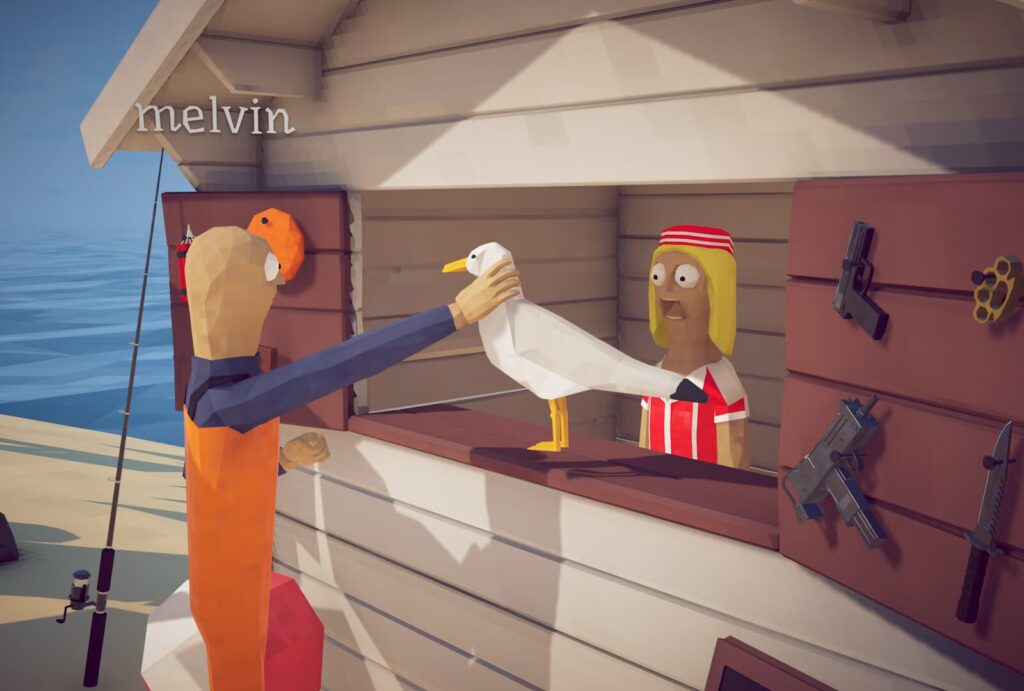
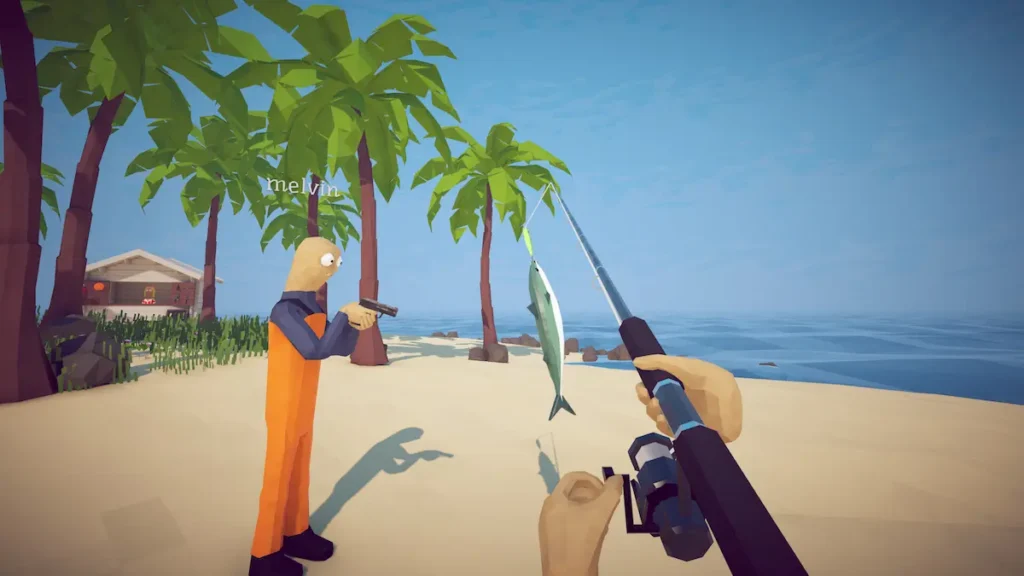
How to Fish is a first person fishing adventure that combines cooperative play, combat and deliberately unruly physics. Its opening setup is simple: a boating trip goes wrong, leaving the player stranded and needing to earn a way forward. Fishing quickly becomes the starting point for increasingly strange encounters rather than an exercise in realistic angling. Catching something does not necessarily end the interaction, since fish can continue flopping around after being pulled from the water, and dealing with them can involve fists, melee weapons or firearms. Food, money and equipment are connected, with creatures providing resources while earnings support further progression. The contrast between an ordinary fishing activity and unexpectedly aggressive catches is central to the game’s humor.
That approach separates How to Fish from a conventional fishing simulation built around authentic equipment, quiet observation or carefully modeled sporting rules. Its appeal comes from the possibility that a simple activity can turn into a shared disaster, especially in cooperative play. The cartoon presentation also does not mean the game is entirely free of mature elements. The developer’s Steam description identifies cartoon violence toward fish and gambling involving fish, while specifying that the gambling does not involve real money.
Beneath its slapstick presentation, How to Fish uses a progression structure that connects basic catches to larger objectives. Dazed Games’ official description identifies quests, equipment purchases and boss fights as the route to new islands, where the creatures become more dangerous and better gear becomes available. This gives fishing an immediate purpose beyond filling a collection. Money earned now can improve the group’s ability to survive the next encounter, while progress opens new opportunities to earn and experiment.
The opening Spider Crab encounter demonstrates that structure clearly. PC Gamer’s boss guide describes a tutorial involving the sailor, ordinary seafood and an empty beer can used as special bait. Players can earn money before triggering the encounter and buy a knife or brass knuckles instead of relying entirely on their starting fists. After defeating the crab, delivering its remains to the fisherman earns the boat keys needed to continue. The sequence turns an apparently disposable object into a quest tool and makes the first major battle part of the route off the starting island.
That guide also emphasizes preparation over simply trading damage. Restoring health and hunger, watching for the crab’s recovery period after an attack and using the terrain can make the encounter more manageable. These details help explain why the game is not just an uninterrupted collection of random mishaps. The physics creates surprises, but learning an enemy’s behavior and choosing when to approach still matter. A failed attempt can reveal a useful strategy rather than merely send the group back to repeat identical actions.
Later encounters introduce different demands. PC Gamer’s Pufferfish guide describes a quest on the third island that requires an endangered creature to obtain Carrot Bait. Examining a catch before selling it therefore matters because its quest value may exceed its immediate cash return. The Pufferfish encounter then emphasizes movement, avoiding poison and using obstacles while fighting. An upgraded SMG was the guide writer’s successful approach, not a mandatory weapon for every player, but the example shows how equipment investment and movement become more important as the adventure develops.
This creates a useful distinction between earning quickly and progressing efficiently. Selling everything immediately may increase the money available for shopping, but quest requirements can give an otherwise ordinary-looking catch a different purpose. A sensible approach is to understand the current objective before disposing of unfamiliar items, especially when preparing to leave an island. Likewise, a group that keeps failing a boss can reconsider supplies, equipment or tactics rather than assuming that another identical attempt will produce a different result.
Optional objectives give players reasons to revisit familiar systems. The 28 Steam achievements include Handyman, for defeating the final boss with bare hands, and Bean, for finishing within one hour. The latter is a challenge target, not an estimate of how long every first playthrough should take. The store description also highlights collecting rare fish variants and earning extra money through trick shots. These activities support different priorities: one group may focus on reaching the ending, another on completing its collection, and another on elaborate attempts at stylish catches. The appeal is not necessarily an endlessly expanding campaign, but the ability to find additional goals within a compact adventure and approach familiar situations differently.
Multiplayer was originally advertised around one to four players, but four is no longer the maximum lobby size. Patch 1.0.4, released on August 21, added support for up to eight player lobbies. In a standard online session, one player starts or loads a game and waits for it to finish loading before inviting others through the game interface or Steam. Four person groups remain fully supported, while the update simply provides room for larger gatherings.
Private, invitation only lobbies arrived with patch 1.0.5 on August 22, along with a session type setting that requires a restart after being changed. The game uses online cooperation rather than a confirmed local split screen mode, and standard sessions depend on the host remaining connected. The multiplayer guide reports that the session ends when the host leaves, making host availability an important practical consideration when organizing a group.
How to Fish can also be completed alone. Solo players still progress through fishing, exploration, equipment purchases and encounters, although one person must handle tasks that several players could otherwise divide. Patch 1.0.9, released on August 24, added Easy and Hard difficulty settings alongside the unchanged default option. Easy reduces creature health by 25% and creature damage by 50%, while Hard increases both values by 25%. Difficulty can be changed from the main menu or during play.
These options provide useful flexibility for players tackling encounters without teammates, but they should not be mistaken for evidence that every fight automatically scales according to the number of participants. Solo play also changes where much of the humor comes from. There are no teammates to mistime attacks or create distractions, but the unpredictable physical interactions remain, making preparation, supplies and an appropriate difficulty setting more important for players experimenting on their own.
PC Gamer’s September 6 hands-on account illustrates how cooperation can involve more than several people attacking the same target. During a Spider Crab encounter, one participant concentrated on reviving teammates while the others fought, creating an improvised support role through choices made during the encounter. The same account described fishing for income, buying weapons and recovering health between attempts. Its value is as a concrete example of how a session can unfold, not evidence that every group will find the same encounter equally difficult or entertaining.
For a new group, agreeing on expectations is therefore useful before starting: whether the priority is steady progress, experimentation or deliberately chaotic play. The available difficulty and private-session settings give friends some control over that balance. A larger lobby can accommodate more people, but it need not be the best choice for someone who prefers a quieter pace or clearer coordination. Smaller groups and solo sessions remain valid ways to experience the adventure rather than incomplete versions of an eight-player requirement.
How to Fish Updates, Save Improvements, Steam Deck Support and Console Plans
The game itself has also changed since release. How to Fish expanded beyond its originally advertised four player limit, while its launch discount has ended. Patches have introduced new difficulty settings, save improvements and additional ways to play, alongside further fixes and content promised by the developers. These changes are important when comparing early launch coverage with the version currently available, since several details that were accurate at release no longer fully describe the game as of September 15, 2026.
The launch version also changed quickly through post release updates. An August 22 patch added private, invitation only sessions and an option to change the session type through server settings, with a restart required after making that change. These additions arrived after the initial release, so features described in current patch notes should not automatically be attributed to every launch day build. Release coverage remains useful for reconstructing what the game was like at launch, but dated patch notes provide a stronger reference for its current functionality.
The early patch schedule focused heavily on preserving progress and reducing avoidable frustration. Dazed Games’ August 27 patch 1.0.10 introduced persistence for items left on the ground, saving up to 64 objects while prioritizing weapons, tools, quest items and creatures. That limit matters because it is not a promise to preserve an unlimited pile of discarded equipment. The same update allowed cooking effects to be removed from weapons and tools by dipping them in water, a fittingly physical solution to an unusual problem.
Patch 1.0.11 followed on September 1 with save corruption checks and backup files. It also added toggle options for aiming and sprinting, a hold-to-attack option and a setting for nametags. Dropped weapons received orange markers, while dead players were marked in turquoise. These changes address ordinary session management rather than adding another island: finding lost equipment, choosing comfortable controls and recovering from problems become especially valuable when several friends are trying to continue the same adventure.
The September 4 patch 1.0.12 announcement added Steam Cloud saves and explained how existing players should upload their progress: launch and exit the game on the PC containing the relevant save. It also adjusted piranha and tuna balance, limited item velocity and updated the voice-chat component. Other listed fixes addressed a frame-rate limit being overridden when joining a lobby and a lag spike when purchasing the first radio. The overall direction was to preserve the comedy of unpredictable interactions while reducing technical interruptions.
Portable and streamed play expanded alongside those fixes. The September 1 announcement confirmed Steam Deck verification and availability through GeForce NOW. These are distinct developments: Steam Deck verification concerns playing on Valve’s handheld, whereas GeForce NOW provides another way to access the PC game through cloud streaming. Neither announcement should be treated as the release of a separate PlayStation or Xbox edition. Players comparing early reports with the later version should therefore distinguish platform support improvements from new native console releases.
For conventional PC play, the official Steam minimum requirements list Windows 10 or newer, a 64-bit processor and operating system, and 8 GB of RAM. Listed processors include the Intel Core i5-5257U and AMD Ryzen 3 1200, with a GeForce GTX 1050 or AMD RX 460 as the graphics baseline, or equivalent hardware. Steam specifies 1 GB of available storage and a broadband connection. These are published minimums rather than a guarantee of any particular resolution, frame rate or performance in the busiest multiplayer encounters.
Console expansion is nevertheless part of the studio’s stated plans. Sweden Game Arena’s September 3 interview reported intentions to bring How to Fish to Xbox and PlayStation, but that interview did not provide launch dates or crossplay details. Its immediate significance is that the million-copy milestone was achieved on Steam before those proposed editions. The same interview said the founders already had an idea for another game, although it did not announce a title or firm release schedule.
Dazed Games also indicated in its September 4 announcement that attention would begin moving toward content updates. That establishes an intention to build on the launch rather than a complete roadmap of promised islands, bosses or modes. For now, the strongest evidence of follow-through is the sequence of delivered improvements: larger lobbies, more flexible difficulty, stronger save handling and additional ways to access the game. The next stage is turning the unexpectedly large opening audience into a durable foundation without losing the straightforward, unruly fishing adventure that attracted it.

Frequently Asked Questions[FAQs]
- Did How to Fish really sell over one million copies in two days? Yes. The milestone was reported shortly after launch and was explicitly confirmed in Sweden Game Arena’s September 3 interview with the founders. The figure refers to more than one million copies sold during the stated two day period, making it a sales milestone rather than a player activity measurement. It should not be confused with concurrent player numbers, which only show how many people are playing at the same moment.
- What kind of game is How to Fish? How to Fish is a physics driven fishing adventure that combines cooperative play, combat, progression, and deliberately humorous encounters. Players catch fish to earn money, buy better equipment, and improve their ability to deal with increasingly dangerous creatures. Weapons, trick shot mechanics, unusual interactions, and exaggerated situations make it much more action focused than a traditional fishing simulator.
- How much does How to Fish cost on Steam? The regular US Steam price is $7.99. During the launch period, the game was discounted to $4.95, but that promotion ended on August 27, 2026. The exact amount can still vary depending on region because Steam uses regional pricing and local taxes, and future discounts may also temporarily reduce the price again.
- Is How to Fish limited to four players? No. The original store description advertised support for one to four players, but patch 1.0.4 increased the official lobby limit to eight players on August 21. This means larger groups can now play together without relying on unofficial modifications. Smaller groups are still supported, so players can continue using the original four player setup or play with fewer people if they prefer.
- Can How to Fish be completed alone? Yes. How to Fish supports solo play, so players do not need to join a multiplayer group to progress through the game. Difficulty settings also help make single player sessions more manageable or more demanding. Easy reduces creature health and damage, while Hard increases both, allowing solo players to adjust the challenge based on their preferred level of difficulty.
- Does How to Fish work on Steam Deck? Yes. Dazed Games announced on September 1, 2026 that How to Fish had received Steam Deck Verified status. That means the game meets Valve’s compatibility standards for the handheld, providing stronger confirmation than simply assuming it should run because of modest system requirements. Players can therefore expect the Steam Deck version to meet Valve’s criteria for controls, display, performance, and general usability.
- Are PlayStation, Xbox and Nintendo versions confirmed? PlayStation and Xbox releases have been identified by the developers as planned, but the reviewed announcements do not confirm exact console models or release dates. Nintendo support is less certain because neither Nintendo Switch nor Switch 2 has been formally announced. Until the developers provide specific platform and timing details, only the planned PlayStation and Xbox versions should be treated as having direct developer backing.
- What is the highest How to Fish player count on Steam? SteamDB records an all time peak of 373,971 concurrent players on August 26, 2026. This figure represents the highest number of Steam users playing the game simultaneously at one point in time. It is not the same as total sales, total owners, or the cumulative number of people who have launched How to Fish since release.
- Does How to Fish support Steam Cloud saves? Yes. Patch 1.0.12 added Steam Cloud support on September 4, allowing compatible save data to synchronize between computers through Steam. Existing players were advised to launch and exit the game once on the computer containing their current save so those files could be uploaded correctly. After that initial synchronization, moving between compatible devices becomes much more convenient because progress can follow the player automatically.
- Will How to Fish receive more content? Yes. Dazed Games said in its milestone announcement that development would continue with additional content as well as further fixes. This confirms that post launch support is planned, but it does not mean every community suggestion is guaranteed to be added. Specific features, updates, or release dates should only be treated as confirmed once the developers announce them directly.
Conclusion
How to Fish selling over one million copies in two days is a confirmed launch achievement, not a confusion between sales and simultaneous players. It brought substantial attention to a small studio and demonstrated the commercial potential of a fishing game built around cooperative comedy, physical interactions and unexpectedly aggressive encounters.
The details beyond the headline are equally important. Eight-player support has superseded the original four-player maximum, the introductory discount has ended, and post-launch updates have improved saves, settings and access options. Console plans are real, but they should not be presented as dated releases.
For prospective players, the central question is less whether How to Fish is popular than whether its particular kind of disorder sounds enjoyable. Its success rests on turning a familiar activity into a setting for shared surprises. The next stage will depend on how effectively Dazed Games develops that foundation while maintaining the systems that made the opening experience appealing.
Sources and Citations
- Dazed Games — Official website. The studio’s site identifies How to Fish, its founders, and its planned console/Mac versions.
Dazed Games - Dazed Games — Official Steam listing for How to Fish. Provides the August 20, 2026 release date, $7.99 price, system requirements, 28 achievements, developer/publisher information, and current Steam review classification.
How to Fish on Steam - Dazed Games — Official Steam announcements / update history. The Steam listing links to the game’s update history, which documents the post-launch patches and changes.
How to Fish — Steam update history - Sweden Game Arena — “Dazed Games hits one million copies sold in just two days.” — September 3, 2026. This is the strongest source for the founders’ history, the failed Out of Hand commercial experience, Landfall’s project investment, the one-million-copy milestone, development process, community growth and planned Xbox/PlayStation versions.
Sweden Game Arena - Sweden Game Arena — “How to Fish” project/pitch material. Earlier project documentation identifies Dazed Games, Carl-Vilhelm Johansson and Melvin Olsson, the two-person team, Skövde location, PC/Mac target and the game’s original fishing/physics concept. Sweden Game Arena — How to Fish PDF
- SteamDB — How to Fish app information. Provides the dated Steam release record, app ID 4001890, developer/publisher, Unity engine, current review/concurrency information and pricing/history data.
SteamDB — How to Fish - SteamDB — How to Fish patch history. Useful for the dated post-launch changes; for example, Patch 1.0.5 documents private lobbies, axis inversion, FPS changes and bug fixes.
SteamDB — Patch 1.0.5 - Steam Community — How to Fish announcements. The game’s official Steam community hub contains the developer’s release announcements, milestone posts and subsequent patch announcements.
How to Fish — Steam Community - Steam Community — How to Fish reviews. Provides the player-review record referenced for community response.
How to Fish — Steam Reviews - Steam — How to Fish achievements. The official store listing confirms that the game has 28 Steam achievements.
How to Fish — Achievements
Recommendations
- HBO’s Final House of the Dragon Season 3 Trailer is Here: Everything You Need to Know About Release Date, Plot, and Major Battles
- Star Fox Returns in New Remake for Switch 2: Rumors, Gameplay Details, and Everything We Know
- Christofer Sundberg Confirmed for Nordic Game 2026: Liquid Swords CEO Joins the Speaker Lineup
- Love, Death and Robots New Season: Release Date, Episode List, Studios, and Everything We Know So Far
- Street Fighter 6 Ingrid Character Guide: Moves, Story, Abilities, and Full Gameplay Breakdown Explained
- How Do I Lock the Camera to the View in Blender?
- Instead of Waiting to Bleed Out, Downed Runners Can Now Help Teams Exfiltrate in Marathon – New Update Explained
- Moonlight Peaks Complete Crops Guide: Seeds, Seasons, Growth Times, and Best Crops
- Face2Face Links Directly to VTube Studio: Control Your VTuber Using Only Your Face



































































































