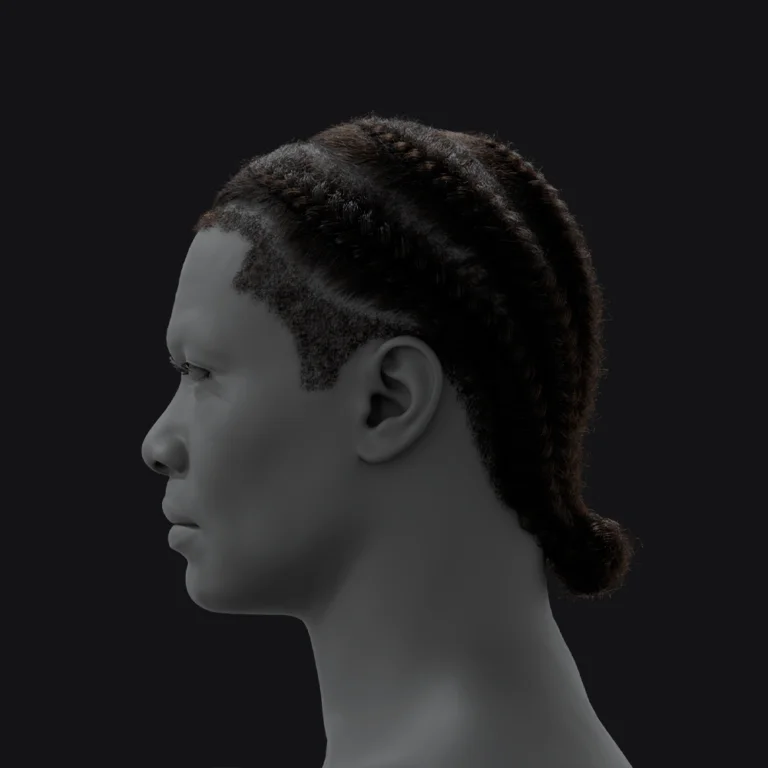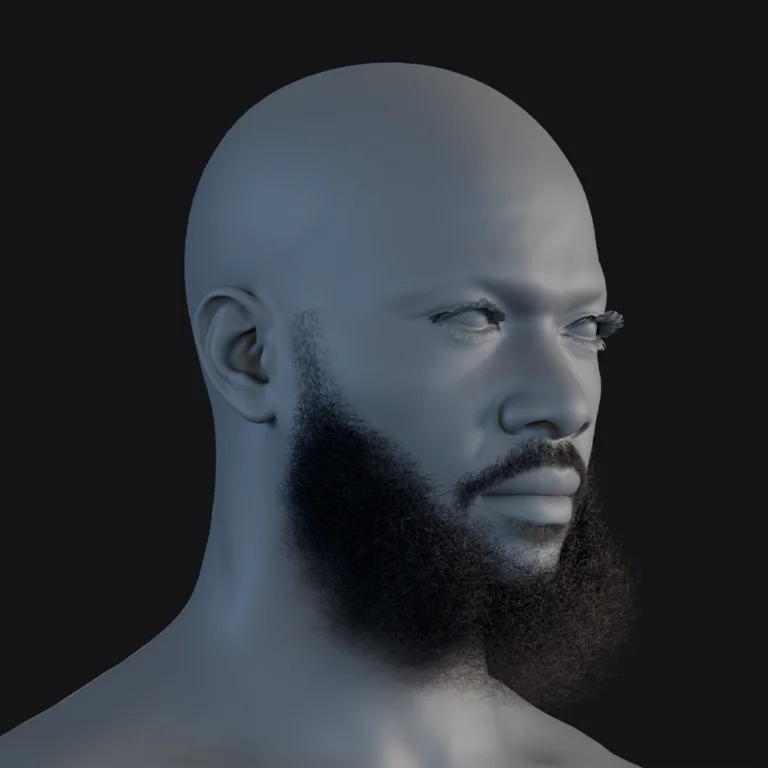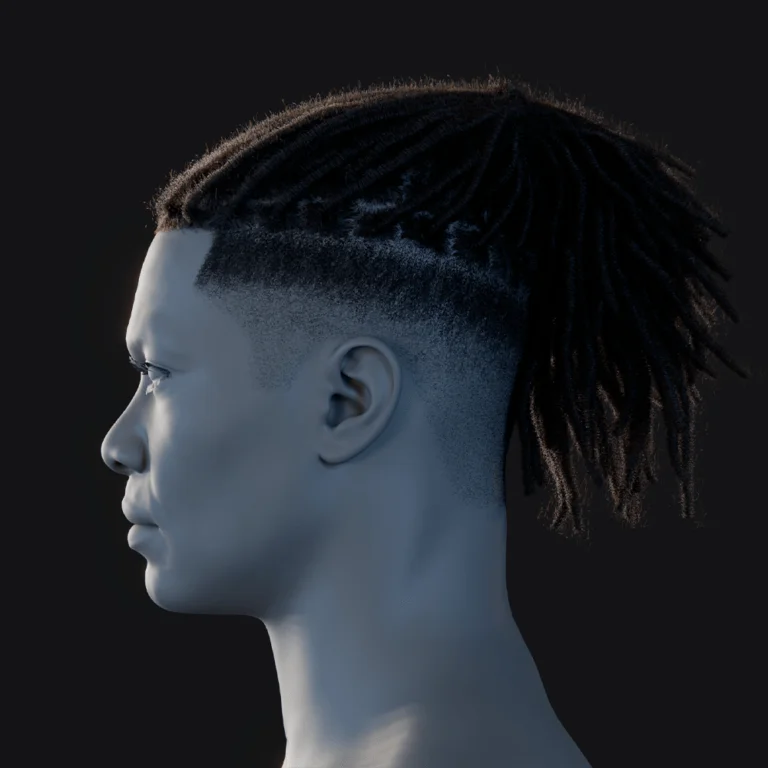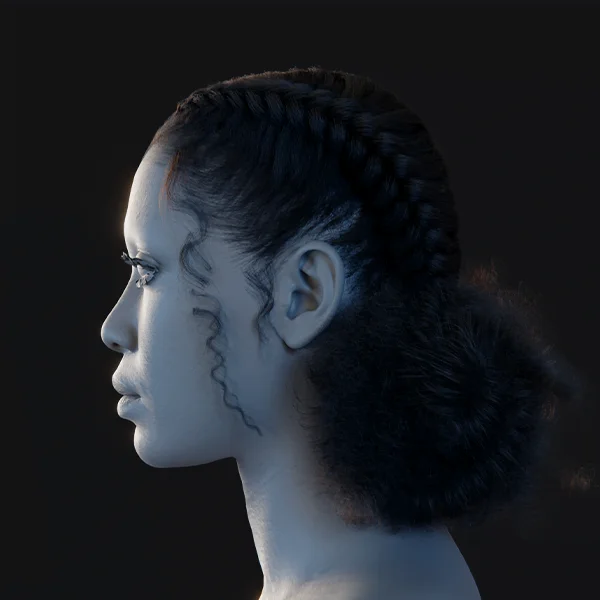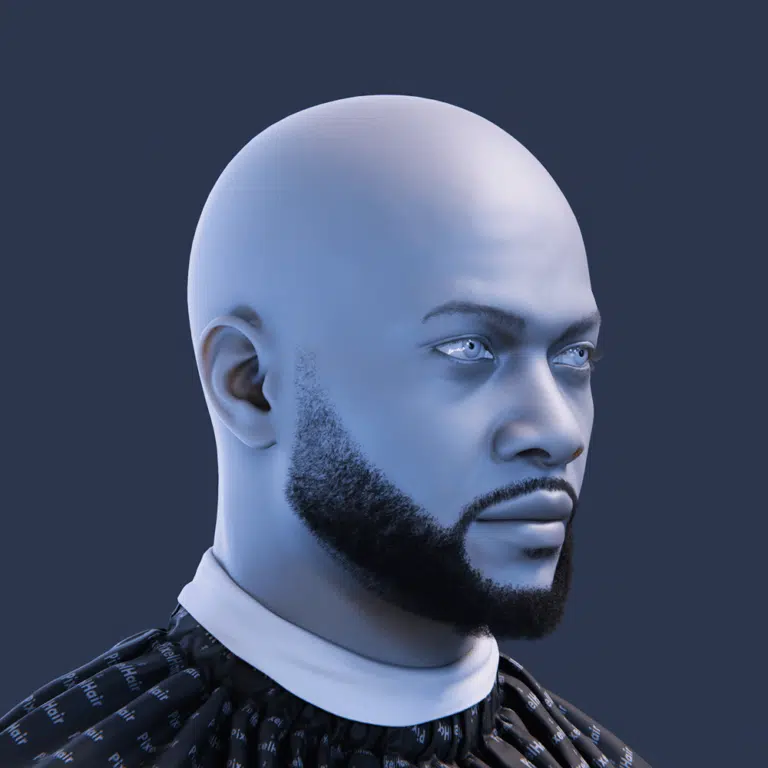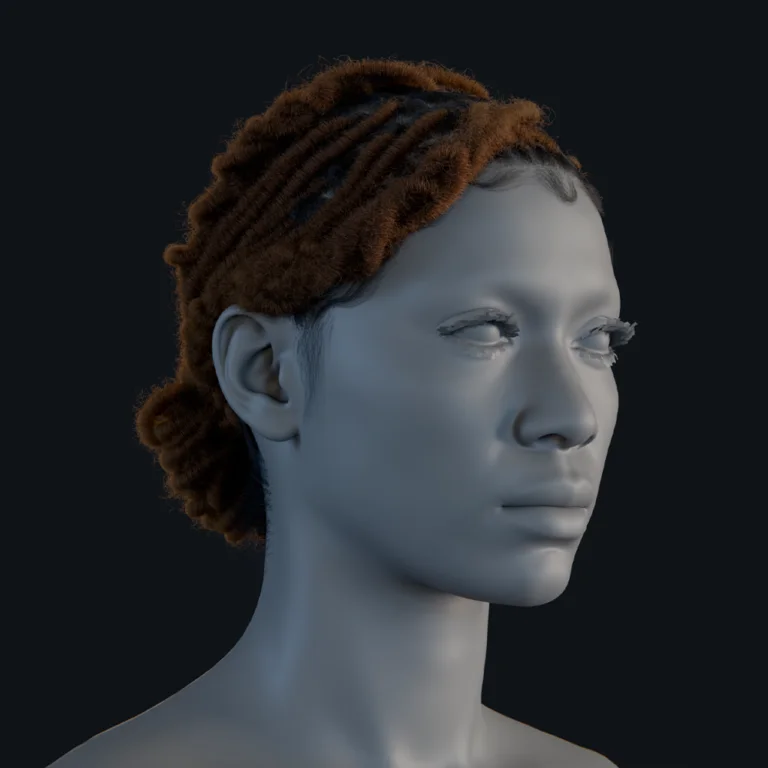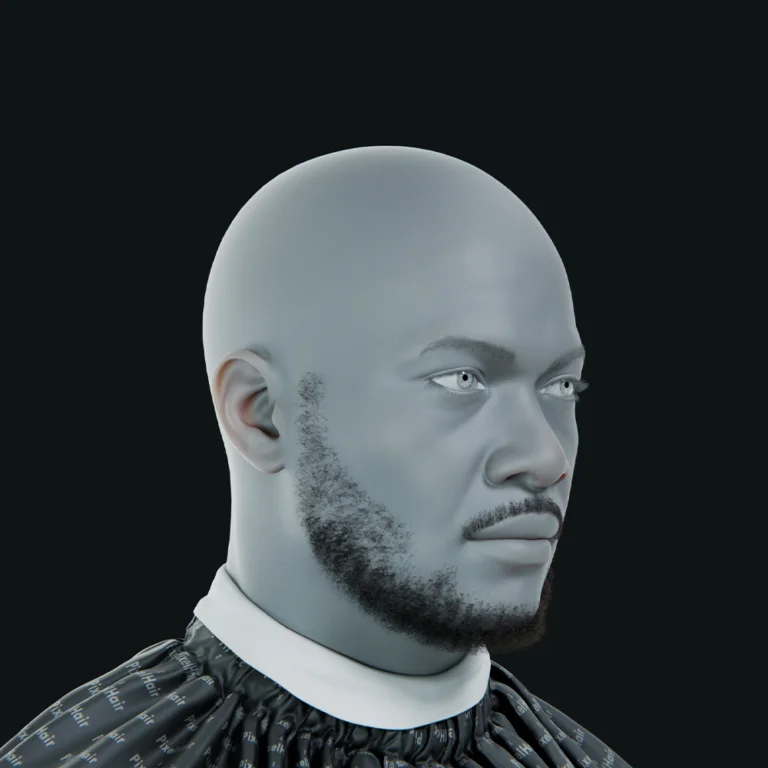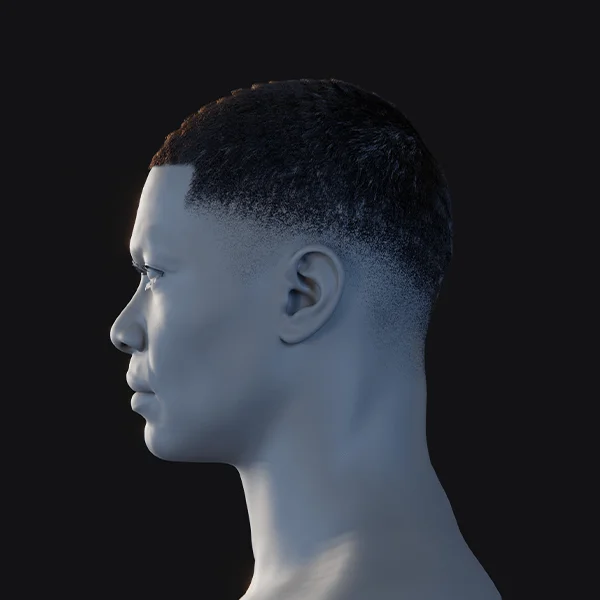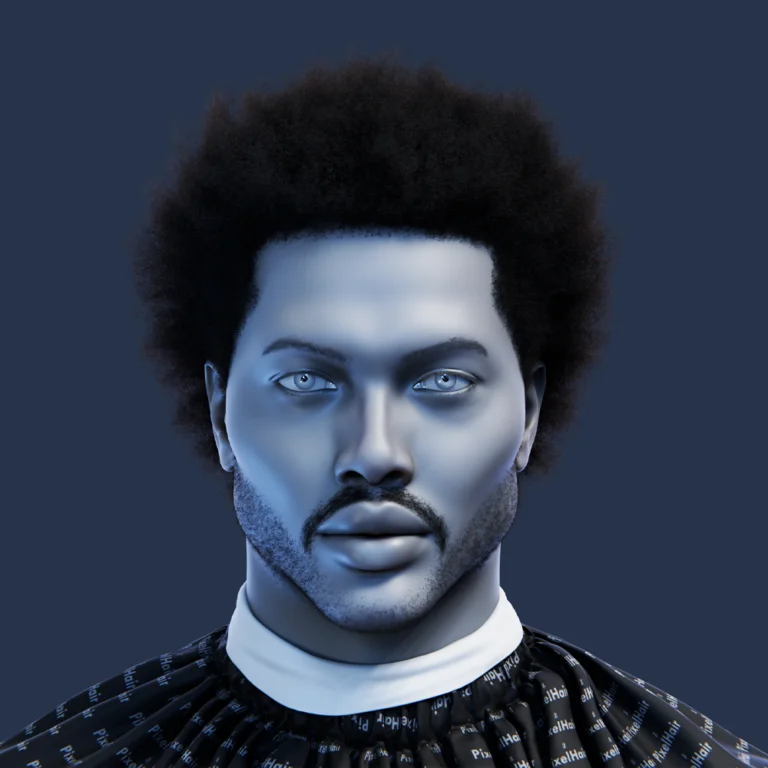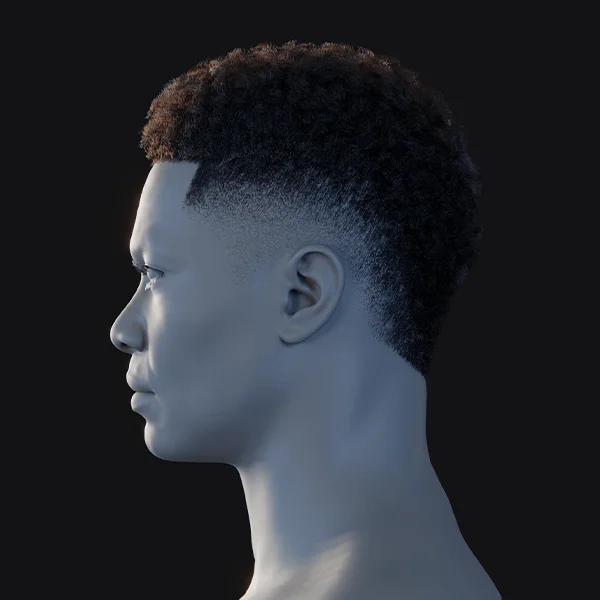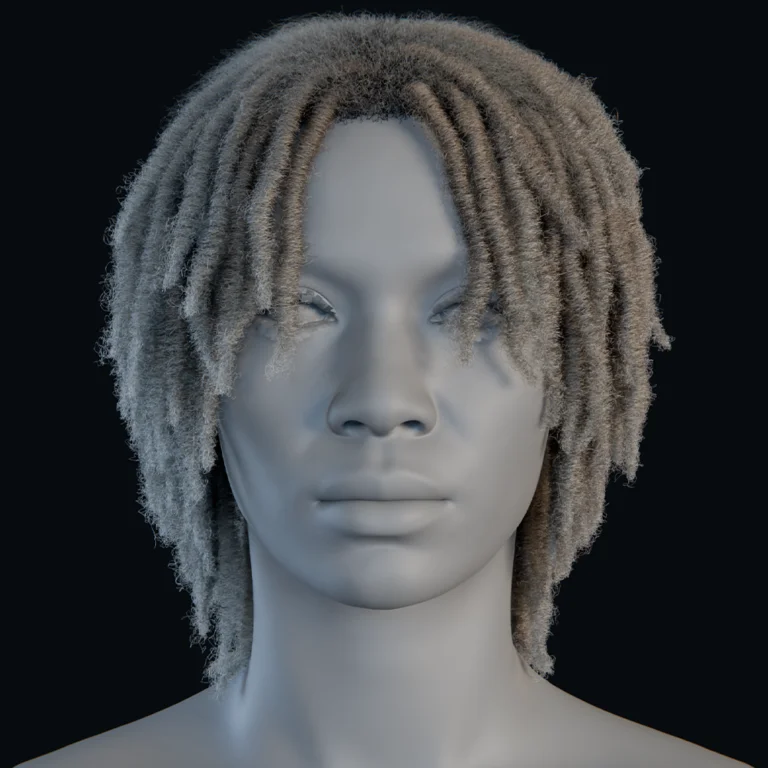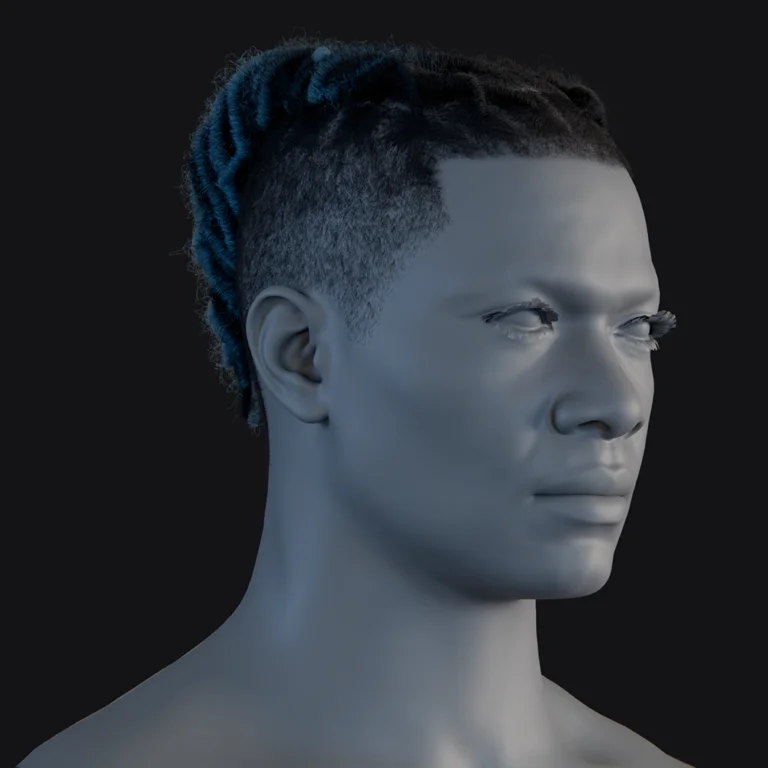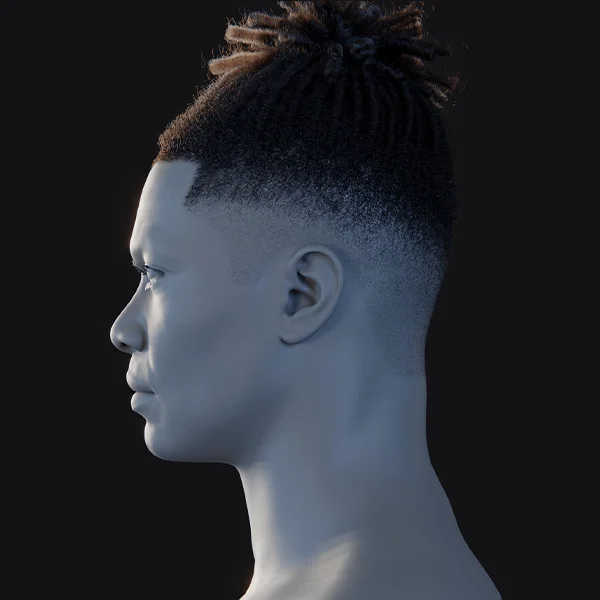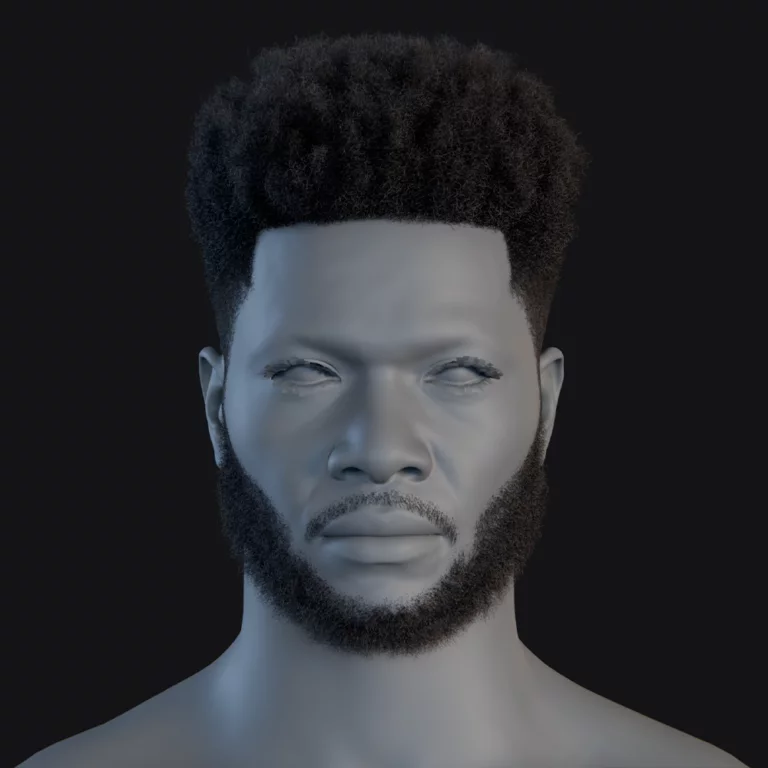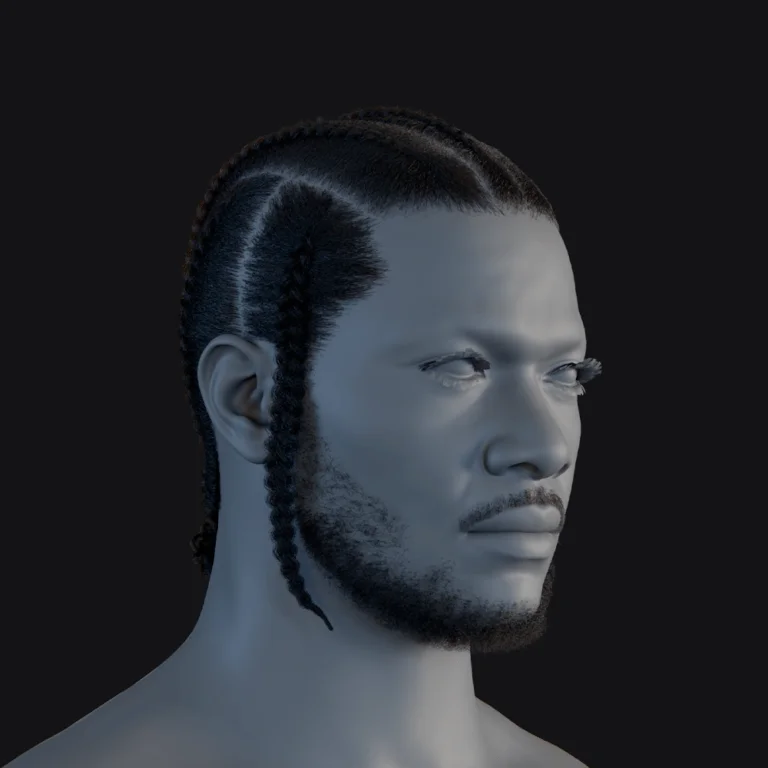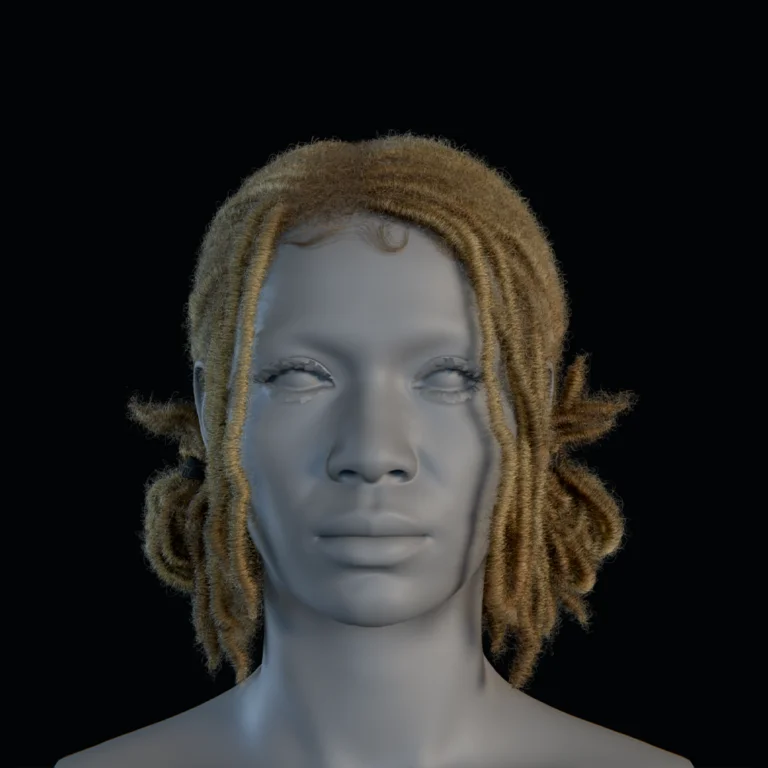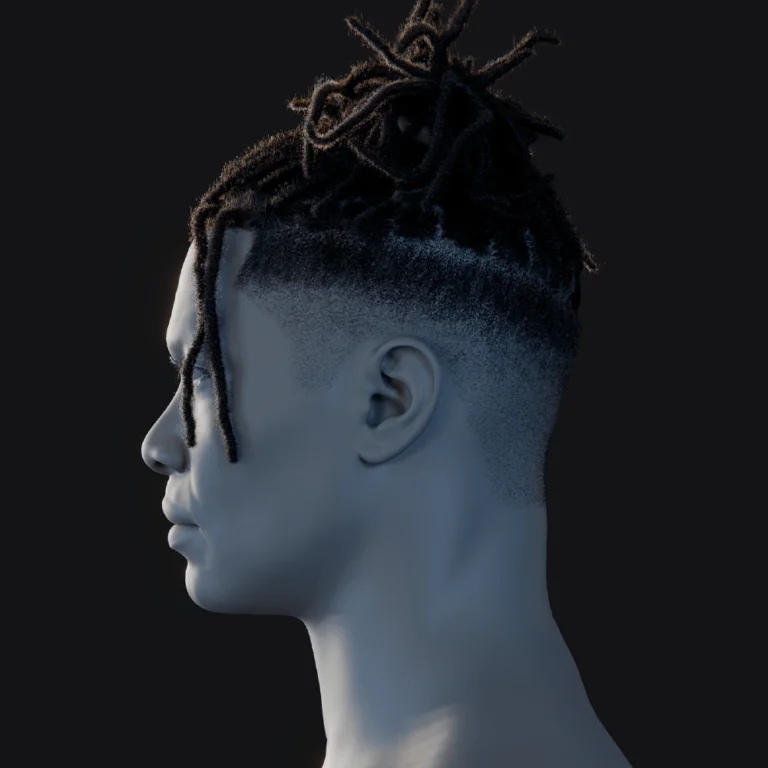








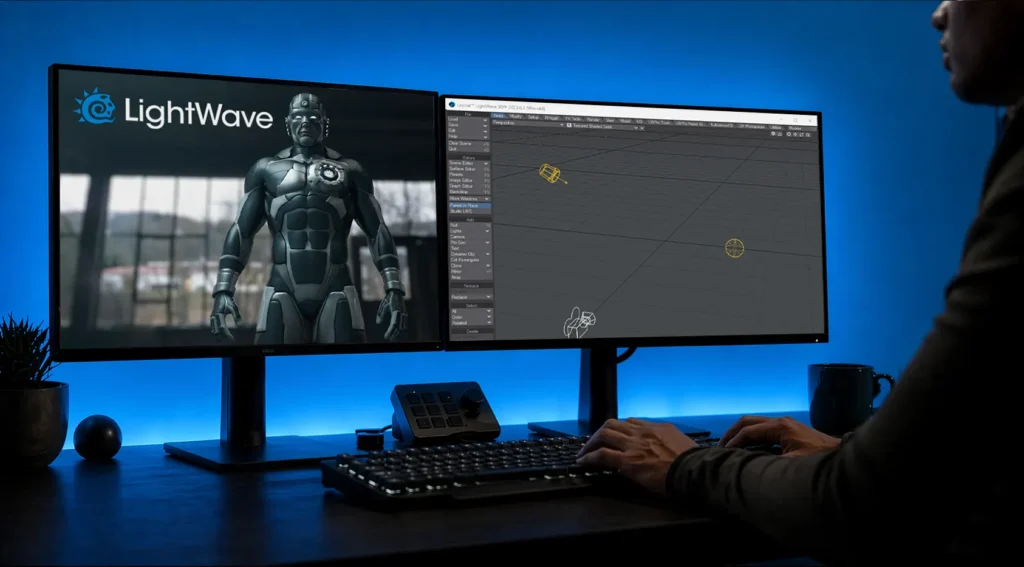
LightWave 2026 arrives as a substantial feature release focused on faster scene layout, smarter rigging, more built-in effects tools, and a broader asset-driven workflow. The most consistently confirmed additions are Advanced Placement for physics-based scattering, MotoRig for vehicle setup and animation, Fracture for pre-destruction workflows, THOR for lightning generation, Snow Falling 3D for snow and rain, RIPR 2 for faster viewport feedback, and a new asset browser with external-library hooks. Launch-week coverage also confirms that the release is in beta first, with full public release expected a few weeks later.
LightWave 2026 New Features Overview
The clearest way to understand LightWave 2026 is as a workflow-first update. Official launch materials and independent coverage both point to the same pattern: LightWave 2026 is not just adding isolated tools, it is linking layout, rigging, rendering preview, and effects generation into a more unified scene-building pipeline. The officially surfaced feature set includes Advanced Placement, MotoRig, THOR, Snow Falling 3D, the Fracture tool, the LightWave Asset Browser, and more features still being staged for the 2026 cycle.
That matters because the release emphasis appears to be less about one marquee renderer feature and more about reducing the amount of manual setup artists do before they can iterate. Advanced Placement speeds set dressing, MotoRig reduces vehicle setup time, RIPR 2 improves look-dev feedback, and the asset browser shortens the path from asset discovery to scene assembly. In practical production terms, LightWave 2026 looks designed to reduce friction in layout-heavy VFX, motion graphics, and visualization workflows.
LightWave Digital Unveils LightWave 2026 Announcement Details
Industry coverage dated Monday, May 4, 2026 identifies the announcement as the unveiling of the next major version of LightWave, positioning it for VFX, motion graphics, and visualization work. The same coverage states that LightWave 2026 is already in beta and that the final release is expected in “three or four weeks,” which places the launch window shortly after the announcement rather than months away.
The announcement also continues a recent annual-update cadence. CG Channel describes LightWave 2026 as the fourth annual update from LightWave Digital since the current team took over stewardship of the software. Around the same launch window, the official channel also streamed a “May 4th Weekend” presentation, giving the release far more public demonstration material than a short press note alone.
LightWave 2026 Advanced Placement Physics-Based Scattering Tool
Advanced Placement is one of the most important additions in LightWave 2026 because it directly targets a common production bottleneck: placing large numbers of objects in a believable way without hand-positioning every element. Official feature snippets describe it as a real-time LightWave tool for scattering and placing objects directly into LightWave and RIPR using a physics engine, while CG Channel says the system lets objects settle naturally under gravity in real time.
What makes Advanced Placement more than a standard scatter tool is the production-oriented behavior wrapped around that core physics. The launch coverage says objects can shatter automatically on impact with the ground, and the official RIPR 2 note says the system works interactively inside the preview renderer. Taken together, that means Advanced Placement is positioned as a set-dressing and shot-layout tool that can also generate believable clutter, debris, dropped props, and physically settled arrangements without leaving the main workflow.
LightWave 2026 MotoRig Vehicle Rigging and Animation Toolkit
MotoRig is LightWave 2026’s answer to a longstanding pain point in automotive and vehicle animation: the amount of repetitive technical work required before animation can even begin. Official launch materials describe MotoRig as a comprehensive vehicle rigging and animation tool with professional-grade automotive animation capabilities, while third-party coverage describes it as a semi-automated rigging system for vehicle models.
The depth of the tool is what makes it notable. CG Channel reports adjustable parameters for mass, weight distribution, and banking control, plus support for terrain following and advanced suspension dynamics, including presets for six types of shock absorber. The same report says MotoRig is not limited to four-wheel cars and can also be used for six- and eight-wheel military vehicles. That gives LightWave 2026 a more serious built-in vehicle animation story than a simple wheel-rotation helper or path follower.
LightWave 2026 RIPR 2 Viewport Preview System Improvements
RIPR 2 appears to be the rendering-feedback layer that ties several of the new 2026 workflow tools together. Existing LightWave documentation describes RiPR as a viewport plugin that provides real-time path tracing directly in the viewport. For 2026, the official new-features snippet says RIPR 2 works fully with Advanced Placement and enables “instant interaction” and near-instant photoreal feedback, making it easier to judge layout and look development while the scattering system is still live.
The most reliable conclusion at this stage is that RIPR 2 is less about changing the concept of RiPR and more about making it more central to scene iteration. CG Channel confirms that Advanced Placement results can be rendered in real time in RIPR 2 or baked for offline rendering afterward. Because public 2026 documentation was not yet live at announcement time, some lower-level technical details about all RIPR 2 improvements remain incomplete, but the workflow benefit is already clear: preview and decision-making happen earlier and with less round-tripping.

LightWave 2026 Workflow Improvements for Layout and Scene Building
The broader LightWave 2026 workflow story is about compressing the distance between asset import, scene assembly, physical placement, and visual review. Official materials confirm the asset browser and Advanced Placement, while launch reporting shows both tools feeding directly into real-time preview. That makes layout more iterative and construction more visual, which is especially valuable for environment dressing, previz, motion graphics scenes, and VFX setup.
There is also evidence of additional scene-building improvements that were shown in the launch presentation but had not yet been fully documented on public product pages. A community recap of the nearly six-hour presentation lists a 2D and 3D tracker system, Ocean, GODOT interchange, Construct enhancements, UV packing, Ivy, and asset-browser expansion beyond basic files. CG Channel separately notes that not all livestreamed features were yet publicly documented at the time of coverage. The safest reading is that LightWave 2026’s documented core is already strong, while the wider workflow package may expand further as final documentation catches up.
LightWave 2026 Fracture Tool for Destruction Simulations
Fracture is one of the most production-friendly additions in LightWave 2026 because it addresses a common need without pretending to be an everything solver. CG Channel describes it as a pre-fracturing tool for geometry used in destruction simulations, comparable in role to fracture toolsets found in other high-end DCC workflows, while the official feature snippet emphasizes that it preserves UVs and materials and produces clean internal cut surfaces.
That combination matters in practice. For many destruction shots, the slow part is not the simulation itself but preparing geometry in a way that survives shading and texturing. The coverage says Fracture works in real time on relatively simple meshes, preserves materials and UVs, and supports multiple shard distribution patterns. That makes it useful not only for VFX destruction setups, but also for asset preparation, debris modeling, broken walls, and pre-fragmented hero props.
LightWave 2026 THOR Procedural Lightning Plugin
THOR gives LightWave 2026 a dedicated procedural lightning system rather than forcing artists to fake arcs with particles, sprites, or custom meshes. Official feature text describes THOR as a powerful object-replacement plugin that creates realistic procedural lightning between two objects, and CG Channel adds that the lightning is generated as actual 3D geometry rather than a flat screen-space effect.
The geometry-based approach is the real advantage here. According to the launch coverage, THOR automatically builds thickness and heat weight maps for better material control, and it supports single bolts, forked lightning, and recursive branching with animatable parameters. That means THOR is not just a novelty effect: it is a controllable VFX tool for energy arcs, stylized weather events, sci-fi electrical discharges, and procedural animation that can be shaded like real scene geometry.

LightWave 2026 Snow Falling 3D Plugin for Snow and Rain Effects
Snow Falling 3D extends LightWave 2026’s built-in effects stack into weather work. Official feature text calls it a fast and easy setup tool for real-time snow or rain, and CG Channel describes it as a sophisticated mesh-deformer-style plugin designed to create snow and rain faster, and render them faster, than standard particle methods.
Its headline strength is selective generation. The launch article says Snow Falling 3D can generate snow only within a user-controlled volume or within the camera frustum, and that users can replace base particles with meshes or VDBs through instancing. Motion blur, gravity, wind, updraft, and turbulence are all called out as supported influences. In other words, this is not simply a snowfall preset; it is an optimization-minded atmospheric tool intended to keep weather effects controllable and render-efficient.
LightWave 2026 Built-in Asset Browser and Library Management
The new asset browser is a meaningful quality-of-life improvement because it moves a large part of content organization inside LightWave itself. Official product snippets describe the LightWave Asset Browser as a comprehensive asset system, while launch reporting confirms support for browsing and organizing 3D models, images, videos, HDRIs, and IES lighting data.
That setup is especially important for layout work. Instead of treating assets as files that live outside the DCC until drag-in time, LightWave 2026 begins to treat them as a browsable, reusable part of scene creation. Community recap material suggests the browser may extend beyond those officially confirmed categories to scenes and VDB-oriented use cases, but the conservative takeaway is that the officially documented browser already supports the most important day-to-day content types for visualization, look development, and shot assembly.
LightWave 2026 Quixel Megascans Integration and Maxtree Support
Third-party asset integration is one of the most commercially significant workflow upgrades in LightWave 2026 because it reduces friction for artists who already work from large scan and vegetation libraries. CG Channel reports that the new asset browser integrates with both Quixel Megascans and Maxtree libraries, which immediately broadens the software’s out-of-the-box content access for environment work and set dressing.
Official search snippets provide an extra detail on the Megascans side: LightWave’s browser can browse Quixel Megascans libraries from Bridge downloads, organize them by asset type such as 3D meshes, 3D plants, and surfaces, and preview and import assets with size and LOD choices. That is a concrete pipeline improvement for artists building natural environments, architectural exteriors, or heavily dressed scenes. Public launch snippets do not yet go into the same depth on the Maxtree side, but the integration itself is clearly stated.

LightWave 2026 Beta Download and Full Release Timeline
The current release status is one of the easiest points to summarize with confidence. CG Channel states that LightWave 2026 is already in beta and that the final release is expected in “three or four weeks” from the May 4, 2026 announcement. That places the public rollout on a short runway rather than a long open-beta cycle.
What is less clear is exactly how broad beta access is at launch. The launch article says the beta is available for existing users, while a community recap says upgraded users would begin receiving open-beta access on Monday, May 4. Meanwhile, official store snippets exposed by search also show catalog entries for a LightWave 2026 Trial and LightWave 2026 Educational listing, both at £0.00, but those snippets do not clarify whether those builds were already downloadable at the time of announcement. The most accurate reading is that beta access is confirmed for existing or upgraded users, while any wider public trial rollout needs to be verified against the live account portal as documentation catches up.
LightWave 2026 System Requirements for Windows and MacOS
As of launch coverage, the confirmed platform floor for LightWave 2026 is Microsoft Windows 10 or newer and Apple macOS 14.1 or newer. CG Channel reports that compatibility directly, but it also notes that public LightWave 2026 documentation was not yet available at the time of writing, so the deeper hardware guidance still has to be reconstructed from the most recent published LightWave docs.
Those current published docs list a 64-bit Intel Core 2 or better or AMD64 processor with SSE4 support on Windows, 4 GB of system RAM minimum, and a recommended GeForce 20X0-series or newer GPU at 1920×1080 or better. On the Apple Silicon side, the published docs list an M1 or better minimum, recommend macOS 15.x Sequoia or newer, and identify M3 as the recommended graphics baseline; the same docs also note compatibility with macOS 26 Tahoe, while warning that Octane is not currently compatible there. Until LightWave 2026’s dedicated public system-requirements page appears, these should be treated as the best published baseline rather than the final fully versioned 2026 matrix.
LightWave 2026 Price and Upgrade Cost Breakdown
The safest way to describe LightWave 2026 pricing is to separate standard published pricing from launch-period promotional pricing. For standard pricing, CG Channel reports new licenses at £795, and the currently published LightWave documentation also lists a new license at £795. The same documentation snippet lists standard upgrade pricing at £450 from LightWave 2024 and £550 from LightWave 2023 or earlier.
Launch-week store and community references show a more aggressive promotional route into 2026. Search snippets from the LightWave store page show a “pre-order LightWave 2026 Upgrade – from any previous version” at £295, and a Liberty3D recap says that offer ran through Monday, May 4 at midnight GMT. Store-search snippets also show LightWave 2026 Educational and LightWave 2026 Trial listings at £0.00, but the surfaced snippets do not spell out eligibility, feature limits, or download timing. The most accurate commercial summary is that £795 is the clear new-license anchor, while upgrade cost has existed in both standard bracketed pricing and a launch-promotion path depending on timing.

LightWave 2026 Livestream Recap and Where to See Feature Demos
The main feature-demo destination is the official livestream branded “LightWave Digital May 4th Weekend,” which appeared on the official LightWave channel on YouTube around the launch window. A community recap says the presentation ran for 5 hours and 55 minutes and covered not just the confirmed headline tools, but also additional items such as 2D and 3D tracking, Ocean, GODOT interchange, Construct enhancements, UV packing, Ivy, Snow Generator capabilities, and more Octane-related material.
For readers who want more curated pointers, CG Channel says the livestream recording was embedded with its launch coverage and notes that a timestamped feature list was available on the community Discord. A Japanese distributor page from DStorm also promoted the event in advance, specifically naming live demos of LightWave 2026 features and detailed looks at MotoRig, Snow Falling, THOR, and Advanced Placement. In short, the best places to see real demos are the official livestream replay, the launch article, and community timestamp references.
Frequently Asked Questions (FAQs)
- What is the biggest headline feature in LightWave 2026?
The broadest answer is Advanced Placement, because it changes how artists assemble scenes by combining real-time scattering, physics-based settling, and direct integration with RIPR 2 for immediate visual feedback. MotoRig is the other major headline addition because it tackles a similarly time-consuming task on the rigging side. - Is Advanced Placement just another scatter tool?
No. The available launch materials position it as a physics-based scene-layout and set-dressing system, not just a duplicator. It lets objects settle naturally under gravity and can also trigger shattering behavior on impact in some setups. - Can MotoRig handle more than standard cars?
Yes. The launch coverage says MotoRig supports standard four-wheel vehicles and can also be used for six- and eight-wheel military vehicles, with controls for suspension-related behavior. - Does the Fracture tool include full destruction simulation?
The confirmed wording points to pre-fracturing rather than a full end-to-end destruction solver. It is best understood as a geometry-preparation tool for destruction workflows, with real-time operation on simpler meshes and preservation of UVs and materials. - What makes THOR different from ordinary lightning effects?
THOR generates lightning as real 3D geometry between objects, not just as a flat compositing element. It also produces automatic thickness and heat weight maps and supports branching and animation controls. - Why is Snow Falling 3D important if LightWave already has particles?
Because it is positioned as a faster and more render-efficient way to produce snow and rain than standard particle workflows, with selective generation inside user volumes or the camera frustum and support for instanced meshes or VDBs. - Is RIPR 2 intended only for preview work?
RIPR 2 is primarily described as a real-time viewport preview system, but launch coverage specifically says Advanced Placement results can either be rendered in RIPR 2 for immediate feedback or baked for offline rendering later. - When is the full release expected after the beta?
Launch reporting says LightWave 2026 is in beta now and that the final release is expected in “three or four weeks” from May 4, 2026. That indicates a near-term release rather than a long beta cycle. - What operating systems does LightWave 2026 support?
The confirmed platform support surfaced at launch is Windows 10+ and macOS 14.1+. More detailed hardware guidance currently comes from the latest published LightWave docs, which provide the best available baseline until public 2026 docs are fully posted. - How much does LightWave 2026 cost?
The clearest standard new-license price is £795. Upgrade pricing is more nuanced: published docs show £450 from 2024 and £550 from 2023 or earlier, while launch-period store snippets and community recap point to a time-limited £295 upgrade promotion from any previous version.

Conclusion
LightWave 2026 looks like one of the most workflow-oriented LightWave releases in recent years. Its strongest confirmed story is not a single flashy feature, but a chain of connected improvements: Advanced Placement speeds layout, RIPR 2 improves visual feedback, MotoRig reduces setup time for vehicles, Fracture adds practical destruction prep, THOR and Snow Falling 3D expand built-in VFX, and the new asset browser brings external content sources closer to the heart of scene building.
The only real limitation in assessing the release this early is documentation completeness. At announcement time, CG Channel explicitly noted that the public LightWave 2026 docs were not yet fully online, so some livestreamed features remained demonstrated but not fully documented. Even with that caveat, the release already presents a clear direction: LightWave Digital is pushing LightWave 2026 toward faster iteration, better asset-driven assembly, and more built-in production tools for layout, animation, and effects work.
Sources and Citations
- Official LightWave new-features page
LightWave New Features Page - CG Channel launch coverage
CG Channel – LightWave Digital Unveils LightWave 2026 - Official LightWave documentation snippets
LightWave Documentation & Information Pages - Official LightWave store snippets
LightWave Store - Official livestream listing on the LightWave YouTube channel
LightWave Digital YouTube Channel - Liberty3D community recap
Liberty3D Community Forums - Event-promotion coverage from DStorm
DStorm LightWave Event Coverage - Discord timestamped feature list reference mentioned by CG Channel
CG Channel Reference to Timestamped Discord Feature List
Recommended
- Overwatch Hero 51 Revealed: Sierra Is the New DPS (And It’s Not Frankie)
- The Witcher 4: Everything We Know About CD Projekt Red’s Next Epic RPG
- The Ivors Academy Announces Ivors Composer Awards With New Video Game Music Category – Everything You Need to Know
- Marathon Gets New Experimental Mode: What It Is, How to Play, and What’s Changing
- Street Fighter: Who’s Who in the New Movie Trailer – Full Cast, Characters, and Hidden Details Explained
- Timothée Chalamet Boosted Royal Ballet and Opera Ticket Sales: What Happened and Why It Worked
- Custom Skyboxes with Blender: Create Equirectangular HDRIs, Fix Seams, and Export to Unity & Unreal
- Project Hail Mary Has Out of This World Start at the Box Office With $140 Million Opening Weekend
- Battlefield 6 2026 Roadmap Confirmed: New Maps, Naval Warfare, Ranked Play & Season Updates Explained