











In This Article (19 sections)
Outbound Off-Grid Survival Game Overview
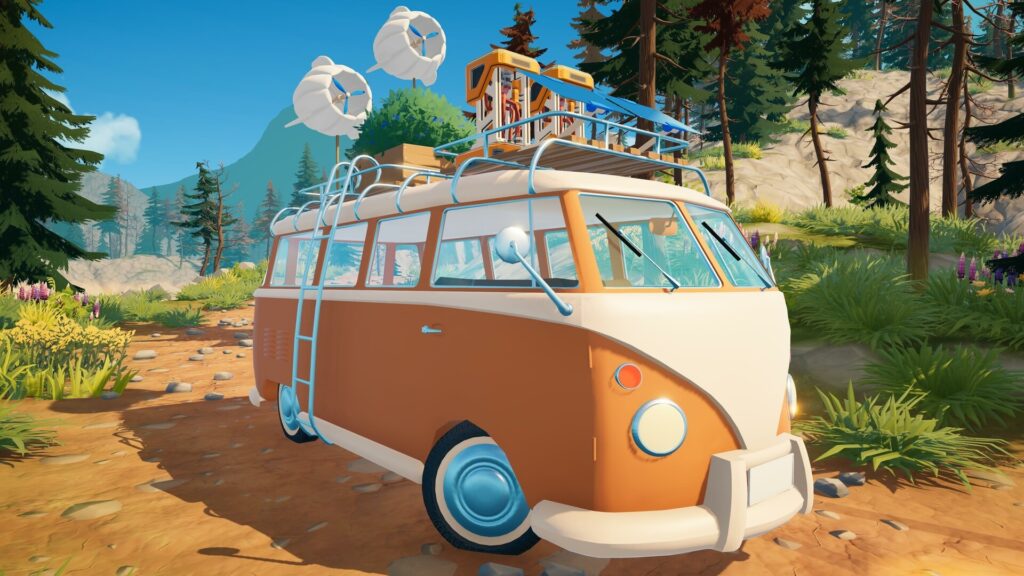
Outbound is a cozy open-world exploration, crafting, and survival game from Square Glade Games built around one clear fantasy: starting with an empty camper van and turning it into a sustainable home on wheels. Instead of focusing on combat-heavy survival, Outbound leans into off-grid living, renewable energy, relaxed exploration, crop growing, workstation crafting, and vehicle customization. The official Steam listing describes the game as a colorful world where players build a cozy mobile home, craft workstations, source energy from the sun, wind, or water, upgrade their vehicle, grow crops, and live sustainably off-grid with up to four players.
That premise gives Outbound a different identity from many survival crafting games. The player is not simply building a static base in one location. The van is the base, the home, the storage hub, the crafting center, the power station, and the vehicle that opens access to new parts of the world. This makes every upgrade feel meaningful because improvements to the camper directly affect how far players can travel, how efficiently they can craft, how much energy they can store, and how comfortably they can survive.
The game is set in a utopian near future, which is important to its tone. Outbound is not presented as a bleak post-apocalyptic survival game. It is closer to a hopeful sustainability fantasy where players solve problems through creativity, resourcefulness, and clean energy. Xbox’s store description also emphasizes building and exploring at your own pace, either alone or with friends, reinforcing that Outbound is designed as a relaxed open-world experience rather than a punishing survival test.
For players who enjoy cozy crafting games, van-life aesthetics, base building, and long-term progression, Outbound offers a strong hook. It combines the satisfaction of gradually improving a home with the mobility of a road-trip game. The result is a survival crafting experience where sustainability is not only a theme but the foundation of the gameplay loop.
Outbound Release Date and Platforms
Outbound was released on Steam on May 11, 2026. The Steam page lists Square Glade Games as both developer and publisher and shows the official release date as May 11, 2026.
The platform rollout became a notable talking point because Outbound’s release timing changed shortly before launch. PC Gamer reported that Outbound moved its PC and Xbox release to May 11, 2026, while PlayStation 5 and Nintendo Switch versions remained scheduled for May 14, 2026, after the developers adjusted around Subnautica 2’s May 14 release date.
That means the clearest release breakdown is May 11, 2026, for Steam and Xbox, with PlayStation 5, Nintendo Switch, and Nintendo Switch 2 following on May 14, 2026. Coverage from indiegame.com also lists PC through Steam and Epic, Xbox Series X|S, PlayStation 5, Nintendo Switch, and Nintendo Switch 2 as launch platforms, with May 11 for most versions and May 14 for Switch platforms.
Outbound’s presence across PC, Xbox, PlayStation, and Nintendo platforms is important for the game’s potential audience. Cozy survival crafting games often benefit from multiplayer accessibility, and Outbound’s focus on four-player co-op makes broad platform availability especially valuable. The game’s Steam listing also showed a launch discount and a Mostly Positive user review rating shortly after release, indicating strong early interest but also enough criticism to make the launch conversation more complex.

How to Build a Home on Wheels in Outbound
Building a home on wheels is the heart of Outbound. Players begin with an empty camper van and gradually turn it into a personalized, functional mobile base. This is not just decoration. Every system added to the van changes how the player survives, crafts, travels, stores resources, and manages energy.
The first priority is functionality. A new player needs storage, basic crafting stations, a place to sleep, and enough room to move through the van without making the layout frustrating. Because the van is compact, every object matters. Poor placement can make crafting slower, storage harder to manage, and upgrades more difficult later.
As progression opens up, the van becomes more advanced. Workstations can be added for crafting, repair, processing, and production. Renewable energy systems can be installed to power the mobile home. Farming systems can support food production. Storage areas can be expanded so longer trips become possible. The best van builds are not simply the ones that look good. They are the ones that balance comfort, efficiency, energy flow, and future expansion.
A strong early layout should separate living space, storage, food production, and workstations. This makes the van easier to use as more systems are added. Players should avoid filling every open space too quickly because later upgrades may require reorganizing the entire interior.
The most satisfying part of this system is how personal the van becomes. Outbound’s appeal comes from the feeling that the vehicle is not just transportation. It is a survival tool, a creative project, and a cozy home that reflects the player’s style.
Outbound Energy Systems Solar Wind and Water Power Explained
Outbound’s energy systems are one of its most distinctive features. The official Steam description specifically highlights sourcing energy from the sun, wind, or water, making renewable power a central pillar of the game rather than a small side mechanic.
Solar power is likely the easiest system for many players to understand. It fits the camper-van fantasy naturally because solar panels can support batteries, workstations, lighting, and other electrical needs. The main limitation is that solar generation depends on daylight and conditions, so it works best when paired with storage.
Wind power gives players another way to generate energy, especially when solar output is limited. In a survival crafting structure, wind systems are valuable because they diversify the player’s energy network. Relying on only one power source can create problems when conditions change.
Water power adds another sustainability layer. It reinforces Outbound’s broader theme of living with the environment rather than simply consuming resources from it. The exact balance of each energy system depends on how the full game handles biomes, weather, and placement rules, but the design direction is clear: players are expected to think about power production, power storage, and power consumption as part of everyday survival.
Battery management is the system that ties everything together. Renewable energy is only useful if players can store enough of it to keep essential systems running when generation drops. A good van build should include reliable energy production and enough battery capacity to avoid sudden shutdowns.
This is where Outbound becomes more strategic than it first appears. The cozy presentation may look simple, but energy planning gives the game a deeper management layer. Players who build smart, balanced power systems will have an easier time exploring, crafting, farming, and surviving away from familiar areas.
Outbound Crafting and Workstation Progression Guide
Crafting in Outbound is built around workstation progression. The Steam description specifically mentions crafting workstations as a core part of the game’s loop, which means players should expect advancement to depend on unlocking and organizing useful production tools.
In the early game, crafting should focus on survival essentials. Storage, basic tools, food-related systems, and simple utility stations are more important than decoration. A beautiful van will not help much if the player cannot process materials, repair equipment, or keep food and energy systems stable.
As players explore more of the world, they gather materials that allow them to expand the van’s capabilities. New workstations likely support better crafting recipes, improved vehicle upgrades, farming tools, and more advanced energy infrastructure. This creates a natural progression curve where each new station opens more possibilities.
The main challenge is space. Unlike survival games with unlimited base plots, Outbound asks players to build inside and around a mobile home. That makes workstation placement important. A smart layout keeps related stations close together and leaves room for future upgrades.
Crafting progression also supports the game’s cozy identity. Instead of simply producing weapons and armor, the player is building a lifestyle. Every workstation contributes to the fantasy of becoming more self-sufficient, more organized, and more capable of living off the grid.

Outbound Farming Crops and Sustainable Food Systems
Farming is another major part of Outbound’s sustainability loop. The Steam page confirms that players can grow crops as part of living sustainably off-grid, making food production one of the game’s defining systems.
Crop growing gives players a renewable food source and reduces dependence on scavenging. That is important in a mobile survival game because long trips can become risky if the player has no reliable way to feed themselves. A compact farming setup inside or attached to the camper can turn the van into a self-sustaining base.
Farming also creates a useful connection between food, water, energy, and crafting. Crops may require water systems, storage space, and possibly crafted planters or farming stations. This means sustainable food production is not isolated from the rest of the game. It is part of the wider off-grid infrastructure.
The best farming approach is likely to start small and expand gradually. Beginners should avoid using too much space on crops before they have enough storage, energy, and crafting capacity. Once the van has a stable layout, farming can become one of the strongest long-term systems.
Cooking and food preparation are also important to the survival fantasy. Even if the game keeps hunger management relaxed, prepared meals can give farming more value by turning crops into stronger resources. In a cozy survival game, this type of system adds comfort as well as function.
Outbound Co-Op Multiplayer up to 4 Players Explained
Outbound supports online co-op for up to four players. Steam’s official description states that players can live sustainably off-grid with up to four players, and Xbox’s store description also highlights playing alone or together with friends.
Co-op changes the rhythm of the game because responsibilities can be shared. One player can gather resources while another manages farming. Someone can focus on vehicle upgrades while another organizes crafting and storage. This division of labor fits Outbound’s relaxed survival structure well because the game is not built around constant combat pressure.
Four-player co-op also makes van layout more important. A design that works for one player may become crowded when several players are using the same workstations, storage containers, and farming systems. Multiplayer groups will need to think carefully about access routes, shared storage, and how to keep the van functional.
The appeal of co-op in Outbound is not only efficiency. It is also social creativity. Building a cozy mobile home with friends can turn the game into a shared design project. The group can decide whether to prioritize beauty, production, farming, exploration, or maximum sustainability.
This makes Outbound a strong fit for players who enjoy cooperative games without heavy competition. It is a survival crafting game, but its co-op fantasy is more about collaboration, comfort, and shared progress than fighting other players.
Outbound Best Starter Tips for Beginners
The best first tip for Outbound is to treat the van as a system, not just a room. Every item placed inside should support survival, crafting, storage, energy, food, or travel. Decoration can come later once the core systems are stable.
Beginners should prioritize storage early. A messy van slows everything down, especially when resources start piling up. Organized storage makes crafting easier and helps players understand what materials they still need.
Energy should be the next major priority. Because Outbound is built around renewable systems, players should not wait too long before investing in solar, wind, water, and battery infrastructure. A stable power setup makes everything else easier.
Food production should also begin early. Crops may take time to become reliable, so waiting until supplies are low can create unnecessary pressure. A small farming setup can support longer exploration trips and reduce dependence on random resource gathering.
Players should upgrade gradually. It may be tempting to fill the van with every available workstation, but space is limited. A better approach is to build what is needed now while leaving room for future systems.
Exploration should be planned around supplies. Before leaving a familiar area, players should check food, battery charge, repair materials, and storage space. Running out of capacity or energy during a trip can make progression slower.
Most importantly, beginners should not rush. Outbound is designed around building and exploring at your own pace. That slower rhythm is part of the game’s identity.

Outbound Vehicle Upgrades and Customization Guide
Vehicle upgrades are central to Outbound because the camper van is the player’s home, base, and progression hub. The official descriptions emphasize upgrading and customizing the vehicle, which means the van is meant to evolve constantly throughout the game.
Customization has two sides. The first is practical customization. This includes systems that improve crafting, energy, farming, storage, and travel. These upgrades make the van more capable and allow players to survive longer trips.
The second side is visual and personal customization. A cozy survival game needs the home to feel like a home. Furniture, layout choices, decorations, lighting, and exterior style all help the player become attached to the vehicle.
The strongest upgrade path should focus first on survival stability. Storage, renewable power, and workstations are more important than purely cosmetic changes in the early hours. Once the van becomes reliable, players can spend more time refining its look.
Exterior upgrades are especially important because they can support solar panels, wind systems, storage attachments, and other survival tools. The roof and outer frame of the vehicle should be treated as valuable upgrade space.
A good customization strategy is to build around the player’s preferred style. Some players will want an efficient crafting van. Others may want a farming-focused mobile homestead. Some may prefer a balanced build that supports co-op exploration. Outbound’s appeal comes from allowing those different approaches to feel valid.
Outbound Exploration Map and Biomes Overview
Exploration is one of Outbound’s main progression drivers. The world is described as colorful, open, and built for exploration, with players traveling through different environments while expanding their mobile home.
Biomes matter because different areas can support different resources, challenges, and building priorities. A forested region might be useful for organic materials and farming-related resources. A drier or more open region might make energy planning more important. A mountainous or remote area might reward players with rarer materials but require better preparation.
The mobile base structure makes exploration feel different from games where players return to one fixed home. In Outbound, the base travels with the player. That means every new area can become a temporary home if the van is prepared properly.
Weather and terrain are likely to be major parts of the exploration experience. Since renewable energy is central to the game, environmental conditions can affect how players think about power production. A player relying too heavily on one energy source may struggle more than someone with a balanced setup.
Exploration also supports the cozy road-trip fantasy. The game is not only about surviving. It is about discovering new places, improving the van, and enjoying the feeling of movement through a hopeful near-future world.
Outbound Hunger Health and Battery Management Tips
Hunger, health, and battery management form the main survival triangle in Outbound. The game’s cozy tone does not remove survival pressure completely. It simply makes that pressure more manageable and less hostile than in harsher survival games.
Hunger should be managed through farming and cooking as soon as possible. Scavenged food may help early, but crops create long-term stability. Players who build sustainable food systems will be better prepared for distant exploration.
Health management depends on preparation. Even if Outbound is not combat-focused, environmental challenges and poor planning can still create problems. Keeping supplies available is the safest way to avoid setbacks.
Battery management is the most unique of the three systems. Power affects crafting, lighting, water systems, farming support, and other utilities. A van with weak batteries may function during ideal conditions but fail when energy generation drops.
Players should avoid using every power-consuming system at once. It is better to understand which systems are essential and which can wait. Energy discipline is especially important before long trips.
The best survival strategy is redundancy. A good van should have more than one food source, more than one energy source, backup battery capacity, and enough stored materials for emergency crafting or repair.

Outbound Best Base Layouts Inside Your Van
The best base layouts inside the van are efficient, flexible, and easy to expand. Because the camper is both home and workstation, layout planning directly affects the quality of play.
A strong early layout should place storage near crafting stations. This reduces wasted movement and makes resource processing smoother. Food systems should be kept organized so farming, cooking, and water use do not interrupt the rest of the van.
Power systems should be easy to monitor. Batteries and energy-related equipment should not be buried behind clutter because players need to understand their power situation quickly.
Sleeping and comfort areas can be placed away from the busiest work zones. This helps the van feel more like a home rather than only a production machine.
For co-op, the layout needs wider movement paths and clear shared storage. Four players using one compact space can become chaotic if workstations are blocked or containers are scattered randomly.
The best layout is not permanent. Players should expect to rebuild and reorganize as new workstations and upgrades unlock. Outbound rewards iteration, so redesigning the van is part of the progression experience.
Outbound Demo vs Full Game Differences
The Outbound demo launched on Steam on February 17, 2026, according to SteamDB’s listing for the demo app. The demo gave players an early look at the game’s basic systems before the full release.
A demo usually exists to show the core loop, not the complete game. For Outbound, that means players could expect a sample of van building, crafting, exploration, renewable energy, and early customization, while the full game expands the amount of content, progression, biomes, upgrades, and long-term systems.
The full version released on Steam on May 11, 2026, with the complete product page listing adventure, indie, and simulation genres alongside the full game’s launch details.
The biggest difference between demo and full game is scope. The demo introduces the concept. The full game needs to prove that the concept can support many hours of progression. That means more workstations, more customization, more exploration variety, better co-op stability, and more reasons to keep upgrading the van.
Players comparing the demo and full game should also consider balance. Survival crafting demos often accelerate progression so players can experience key systems quickly. The final game may pace those unlocks more slowly to create a longer-lasting progression curve.
Outbound Review Impressions and Early Criticisms
Outbound launched with strong interest but also some controversy. Steam listed the game as Mostly Positive shortly after release, with 72 percent of 944 user reviews positive at the time captured in the search result. That suggests many players enjoyed the concept, but the response was not universally positive.
Early praise has focused on the game’s cozy atmosphere, van-life fantasy, renewable energy systems, and cooperative building. The idea of turning an empty camper into a sustainable home is distinctive, and it gives Outbound an identity that stands apart from darker survival games.
However, early criticism has included concerns around launch polish, multiplayer stability, and how the developers responded to negative reviews. GamesRadar reported that Square Glade Games apologized after developer responses to some negative Steam reviews encouraged players to seek refunds and remove their feedback, with the studio later acknowledging that the handling was inappropriate and saying it would stop responding in that manner.
That controversy matters because community trust is important for survival crafting games, especially ones that may evolve through updates. A game like Outbound depends on player feedback, balancing improvements, and long-term support.
Even with criticism, the core concept remains strong. Outbound has a clear audience: players who want a cozy, sustainable, mobile-base crafting game with co-op support. Its long-term reputation will depend on how well Square Glade Games improves stability, expands content, and responds constructively to feedback after launch.
Games Like Outbound Cozy Survival Crafting Alternatives
Players who enjoy Outbound may also enjoy other cozy or creative survival crafting games, especially those with mobile bases, cooperative play, or relaxed building systems.
Raft is one of the closest comparisons because it also revolves around a mobile base. Instead of a camper van, players expand a floating raft while gathering resources, crafting tools, and surviving with friends. The appeal is similar because the base moves with the player and gradually becomes a personalized home.
Subnautica is another strong alternative for players who enjoy exploration-first survival. It is less cozy and more mysterious, but its crafting, base building, resource gathering, and environmental discovery make it appealing to Outbound fans.
Astroneer is a good fit for players who like colorful worlds, exploration, crafting, and cooperative resource management. It has a more science-fiction structure, but its tone is accessible and creativity-focused.
No Man’s Sky may appeal to players who want a much larger exploration sandbox with base building, farming, vehicles, and long-term progression. It is broader than Outbound, but it shares the appeal of building a life around exploration and self-sufficiency.
My Time at Sandrock and My Time at Portia are better alternatives for players who prefer cozy crafting, farming, and community progression over survival pressure. They do not offer the same van-life structure, but they capture a similar sense of building a productive, personalized life.
Valheim is a stronger choice for players who want more danger, combat, and traditional survival challenge. It is not as cozy as Outbound, but its co-op building and exploration systems remain highly appealing.
Frequently Asked Questions (FAQs)
- What is Outbound?
Outbound is a cozy open-world exploration, crafting, and survival game where players build a home on wheels, craft workstations, generate renewable energy, grow crops, customize a camper van, and live sustainably off-grid alone or with friends. - Who developed Outbound?
Outbound was developed by Square Glade Games. The official Steam page lists Square Glade Games as both developer and publisher. - When did Outbound release?
Outbound released on Steam on May 11, 2026. PC Gamer reported that PC and Xbox moved to May 11, 2026, while PlayStation 5 and Nintendo Switch versions remained set for May 14, 2026. - What platforms is Outbound available on?
Outbound is available on PC through Steam, with additional platform coverage including Xbox Series X|S, PlayStation 5, Nintendo Switch, and Nintendo Switch 2. Coverage also lists Epic Games Store as part of the PC rollout. - Does Outbound have co-op multiplayer?
Yes. Outbound supports co-op multiplayer for up to four players. The Steam page says players can live sustainably off-grid with up to four players. - Is Outbound a survival game or a cozy game?
Outbound is both. It includes survival crafting systems such as food, energy, crops, workstations, and resource management, but its tone is cozy, relaxed, colorful, and focused on building and exploring at your own pace. - Can you customize the van in Outbound?
Yes. Vehicle customization is one of the main features. Players start with an empty camper van and upgrade it into a functional home with crafting stations, energy systems, crops, storage, and decorative choices. - What renewable energy systems are in Outbound?
Outbound includes renewable energy from the sun, wind, and water. These systems support the game’s off-grid survival structure and connect directly to battery and workstation management. - Is there an Outbound demo?
Yes. The Outbound demo launched on Steam on February 17, 2026, according to SteamDB. - Is Outbound worth playing?
Outbound is most worth playing for fans of cozy survival crafting, co-op base building, van-life themes, renewable energy systems, and relaxed exploration. Players looking for heavy combat or highly polished launch-state survival systems may want to check current reviews and patch notes before buying.
Conclusion
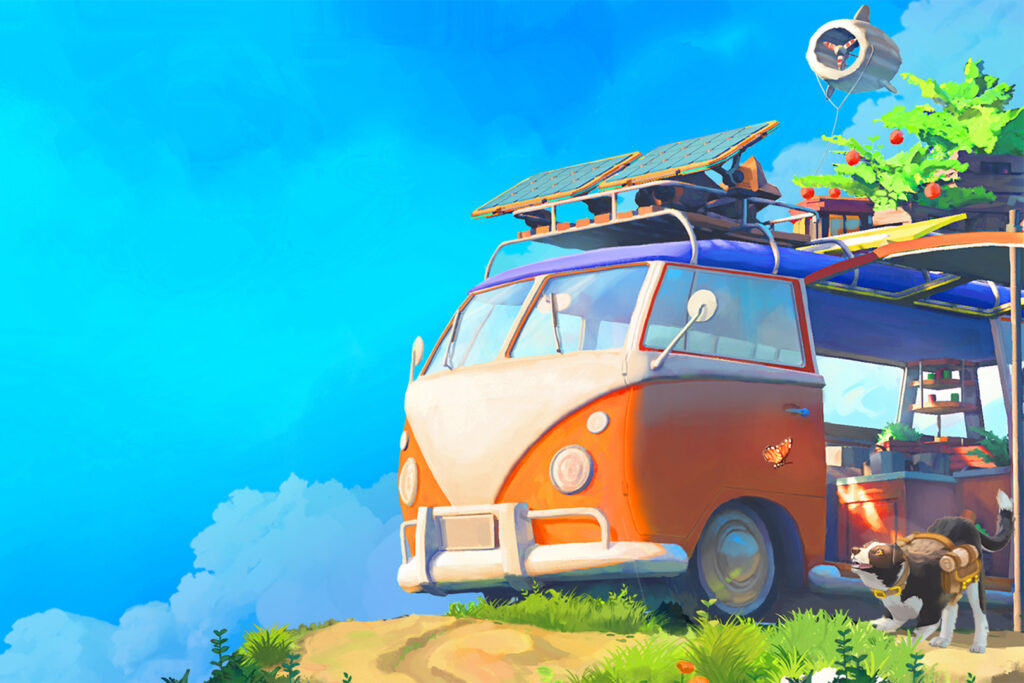
Outbound stands out because it turns the survival crafting formula into a cozy off-grid road-trip fantasy. Its strongest idea is simple but effective: the base is not a fixed house, fortress, or settlement. It is a camper van that grows with the player. Every workstation, solar panel, battery, crop system, storage upgrade, and decorative choice contributes to the feeling of building a real home on wheels.
The game’s focus on renewable energy gives it a distinctive identity. Solar, wind, and water power are not just decorative sustainability themes. They shape how players manage survival, plan travel, and build efficient systems inside a limited mobile space. Combined with farming, vehicle upgrades, and four-player co-op, Outbound offers a warmer and more relaxed alternative to harsher survival games.
The launch has not been perfect, and early criticism around polish, multiplayer issues, and developer review responses should not be ignored. Still, the core concept remains appealing. Outbound has a clear niche in the growing cozy survival crafting space, especially for players who want creativity, mobility, and sustainability without the constant pressure of combat-driven survival.
For players interested in van-life games, mobile base building, cozy co-op crafting, and off-grid systems, Outbound is one of the most distinctive survival releases of 2026.
Sources and Citations
- Steam Store: Outbound
- Xbox Store: Outbound
- PC Gamer Article
- Title: Subnautica 2 is the latest behemoth to mess with other games’ launch plans
- Link: https://www.pcgamer.com/games/survival-crafting/subnautica-2-is-the-latest-behemoth-to-mess-with-other-games-launch-plans/
- indiegame.com Article
- Title: A healing trip in a single camper van… Outbound officially released
- Link: https://www.indiegame.com/outbound-released/
- SteamDB: Outbound Demo
- Link: https://steamdb.info/app/2920530/
- (Direct link to the Outbound Demo app page – released February 17, 2026)
- GamesRadar Article
- Title: Devs behind one of Steam’s most-wishlisted games respond after asking players to change negative reviews
- Link: https://www.gamesradar.com/games/survival-crafting/devs-behind-one-of-steams-most-wishlisted-games-respond-after-asking-players-to-change-negative-reviews/
Recommendations
- Unity for Beginners: a Step-by-Step Guide to Getting Started with Game Development
- Lego Batman: Legacy of the Dark Knight’s release date moves up a week — new May 22, 2026 launch
- Wonder Dynamics and Wonder Studio: Revolutionizing VFX and Character Animation with AI
- Pizza Hut’s Drinkable Pizza Turns Curry Cheese into the Chain’s Weirdest Limited-Time Japan Menu Item
- Daniel Radcliffe No Longer Cringes at Early Harry Potter Films but Disagrees With Andrew Garfield’s Praise
- High-Level Metahuman Mocap Workflow: Professional Techniques for Unreal Engine 5 Animation
- Epic Games Acquires Meshcapade: What the Deal Means for Fortnite, Unreal Engine, and MetaHuman
- The Devil Wears Prada 2: Everything We Know (Release Date, Cast, Plot, Trailer, and Returning Characters)
- How to Animate a Camera in Blender
- A Kratos-less God of War Spin-Off Is In The Works: Latest Rumors, Leaks, and What We Know So Far (March 2026)



































































































