


For readers searching the topic “Harry Potter Star Daniel Radcliffe Says He No Longer Feels ‘Cringe’ When Watching Himself in The Early Movies — Though Disagrees With Andrew Garfield’s Praise That He Was Really Good”, the essential finding is straightforward: Daniel Radcliffe’s relationship with his earliest Harry Potter work has softened, but his standards for judging his own acting have not.
In an April 9, 2026 live taping of at hosted by , Radcliffe said the first films now look “sweet” to him, even as he still winces more at the late-teen phase of his performances. The episode was published on April 13, 2026, and the comments were quickly amplified because they arrived just after Andrew Garfield’s March 26 remarks on praising Radcliffe as “really good” in the franchise.
This research article prioritizes the primary-adjacent record of what Radcliffe actually said: the podcast listing, the event page, and the transcript, then cross-checks those details against corroborating reporting from entertainment outlets and earlier interviews that document how his self-assessment has changed over time. Read together, those sources show not a contradiction in Radcliffe’s thinking, but a more mature version of the same honesty that has defined his commentary on Harry Potter for
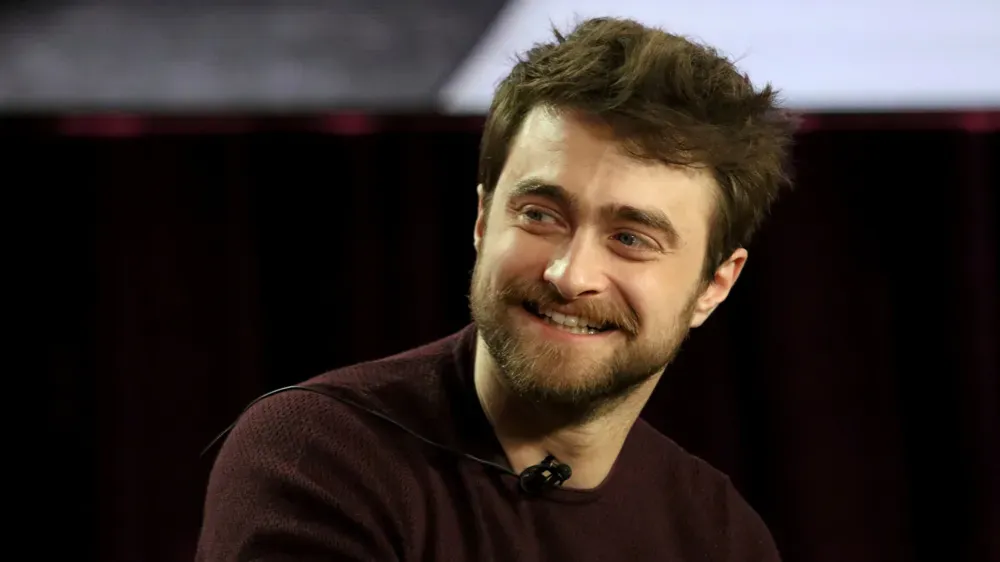
Why Daniel Radcliffe Says He No Longer Feels “Cringe” Watching Early Harry Potter Movies
Radcliffe’s own explanation is that time has changed the emotional temperature of those first films. In April 2026, he said that when he was 18, he used to cringe at the early movies, but now he sees those earliest performances as “sweet.” The key shift is not that he suddenly believes they were technically perfect. It is that age and distance have made the child-performer version of himself look more innocent than embarrassing.
That distinction matters. He is not rewriting his artistic standards upward; he is relocating sympathy. The first films now read to him less as evidence of mistakes and more as evidence of a kid learning in public. That is why the word “cringe” has not disappeared from his vocabulary so much as moved to a different phase of the franchise.
Daniel Radcliffe Reflects on His Child Acting in Harry Potter Films
A month before the podcast comments, Radcliffe gave a revealing demonstration of this softer view during an appearance on . When the program played his Harry Potter audition footage, he visibly recoiled and mouthed that it was bad, but he also immediately added that he can now look at it and think it is “cute.” That echoes the April 2026 podcast remark almost perfectly: the child version of his work does not escape his self-criticism, but it now receives more affection from him than it once did.
The result is a more nuanced position than headlines alone suggest. Radcliffe still does not watch those childhood performances as a fan would watch them. He watches them as the adult actor who can see every undeveloped instinct and every rough edge. Yet he no longer treats child-Daniel as someone who should have known better; he treats that version of himself as a very young actor doing difficult work under extraordinary scrutiny.
What Daniel Radcliffe Really Thinks About His Early Performances as Harry Potter
Radcliffe has been consistent for more than a decade in saying that he sees the Harry Potter films as a record of public growth rather than a smooth climb from good to great. In 2014, he said that the franchise was an “incredible blessing,” but also stressed that the moments he was not proud of were preserved on film for everyone to see. In that same period, he criticized his work in later Potter installments as “very one-note” and said some of what he intended simply did not come across.
By 2021, that attitude had not vanished. He told an interviewer he felt “intensely embarrassed” by some of his early acting and compared the feeling to being asked how one feels about one’s teenage years: too much is wrapped up in those memories to reduce it to a single reaction. That makes his 2026 comments less of a reversal than an evolution. He is still candid about limitations, but he is no longer flattening the whole early era into embarrassment alone.
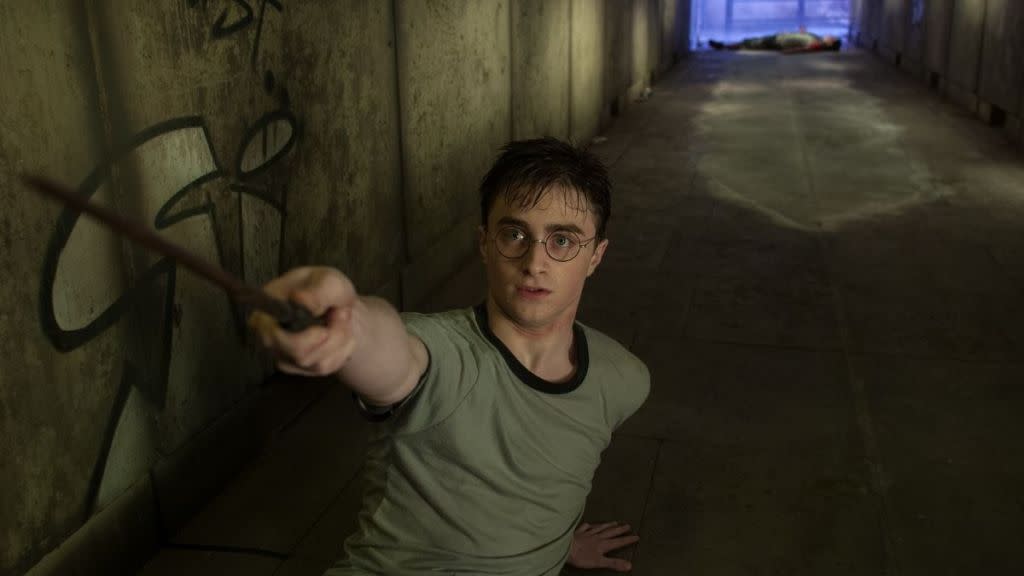
Daniel Radcliffe Explains Why His Perspective on Harry Potter Has Changed Over Time
The clearest reason is age. In February 2026, while discussing the new television adaptation, Radcliffe said he now looks back on what he did with “a lot more kindness” and finds it less embarrassing because he is older. That remark almost functions as the missing bridge between his harsher comments from the mid-2010s and his softer comments in April 2026. The change is not a retrospective claim of excellence; it is a change in how severely he judges a younger version of himself who was still learning.
His new vantage point also seems shaped by adulthood, fatherhood, and watching another generation of child actors step into the same franchise. In the same February 2026 conversation, he said seeing 11-year-olds now puts his own experience into perspective, and he added that he admires his parents more than he could at the time for getting him through something so intense. Separate 2026 interviews also show a man describing “profound happiness” and unusual career autonomy, suggesting that his broader life stability may be helping him revisit Potter without the same defensive discomfort he once felt. That is an inference, but it is a well-supported one.
Which Harry Potter Movies Daniel Radcliffe Finds Hardest to Watch Today
The most accurate answer is that Radcliffe did not definitively name a single Potter film as the hardest to watch in the April 2026 exchange. Instead, he said he now cringes more at the performances from when he was 18 or 19, and when asked whether there was any period he deliberately avoids, he joked that since he has not watched any of them in so long, the answer is basically all of them.
That said, the specifically named title he has criticized most sharply over the years is . In 2014 and 2015 coverage of his own comments, he singled out that film as especially hard to watch, said he was not very good in it, and described the performance as “one-note.” In the 2026 bracket-style ranking, he again put Half-Blood Prince at the bottom “for me,” explicitly because of his own work rather than because he thought the movie itself failed. So the precise reading is this: he now associates the most discomfort with his late-teen Potter era, and Half-Blood Prince remains the clearest title-level example of that discomfort.
Daniel Radcliffe Reveals Why He Now Finds His Teenage Acting More Cringe Than His Childhood Roles
His comments imply a difference between innocence and self-consciousness. The child performances now appear “sweet” because they belong to a young actor who was still discovering the basics. The late-teen performances are harder for him because they capture a phase in which he had more intent, more responsibility, and in his own view, not always better results. That is why the cringe has migrated forward in the timeline.
His earlier remarks about the sixth film sharpen that logic. In 2015, he said that the clear progression visible across the earlier films seemed to stop, or even reverse, in the sixth movie, and he explained that his idea for playing Harry as emotionally shut down may have made sense intellectually but was not the most interesting choice to watch on screen. In other words, the later-teen work troubles him more because it reflects decisions he was old enough to own, yet now regards as less effective.

Andrew Garfield Praises Daniel Radcliffe’s Harry Potter Performance — What He Said
Andrew Garfield’s side of the story is unusually direct. During a March 26, 2026 appearance on Hits Radio, Garfield said he had only recently watched the Harry Potter films and came away impressed. His praise was emphatic: he said “Daniel is so goddamn good,” added that Radcliffe was “really good” in those movies, and also called the films themselves good.
That praise matters because it came from an actor of Garfield’s stature and because it was retrospective. He was not participating in the original Potter-era publicity machine; he was reacting after the fact, as an accomplished peer watching the films with distance. That kind of outside validation carries a different weight than fan nostalgia, which helps explain why the question landed so sharply during Radcliffe’s April 2026 live interview.
Why Daniel Radcliffe Disagrees With Andrew Garfield’s “Really Good” Comment
Radcliffe’s disagreement seems rooted less in false modesty than in a long-established method of self-evaluation. Back in 2014, he said it was important for him to be critical precisely because people around him had often been inclined to tell him he was great, and he did not fully trust praise that might be shaped by kindness or deference. That older remark helps explain why Garfield’s compliment, generous as it was, did not suddenly override Radcliffe’s own internal assessment.
So when Radcliffe says he disagrees, he is not rejecting Garfield personally. He is reaffirming a private standard he has used for years: he measures those performances against what he now believes he could have done, not against what an admirer, a peer, or a fan experiences while watching the finished movies. The disagreement is therefore about craft, not gratitude.
Daniel Radcliffe Responds to Andrew Garfield’s Harry Potter Compliment
The tone of Radcliffe’s response is one of the most revealing parts of the exchange. He did not bristle, deflect with a joke, or act embarrassed by Garfield’s praise. Instead, he thanked him immediately, called Garfield “fantastic,” and then calmly added that he disagreed about his own Potter performance. It was a warm response paired with a firm self-assessment.
That combination is why the moment resonated: it showed Radcliffe accepting kindness without feeling obliged to revise his artistic judgment on the spot. In celebrity interviews, public compliments are often answered with automatic agreement or flattery in return. Radcliffe’s answer was more interesting because it remained gracious while preserving honesty.
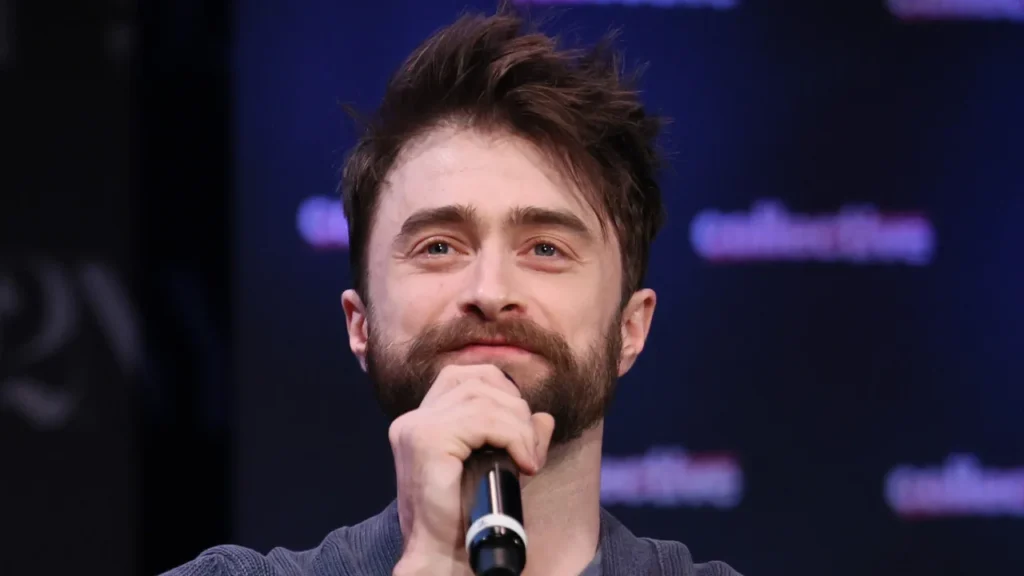
How Daniel Radcliffe’s View of His Acting Evolved After Years in Hollywood
The arc is now clear across at least three phases. In the mid-2010s, Radcliffe was bluntly dissatisfied, singling out Half-Blood Prince and, at one point, saying his best Potter film was the fifth because he could see progress there. In 2021, he still described himself as embarrassed by parts of the franchise. By early and mid-2026, however, he was emphasizing kindness toward his younger self and distinguishing between the sweetness of the earliest films and the discomfort of his later-teen performances.
That progression reflects what often happens when performers age out of the material that made them famous. The first stage is technical dissatisfaction; the second is emotional embarrassment; the third is integration. Radcliffe appears to be in that third stage now. He is neither pretending the work was uniformly strong nor using self-criticism as the only lens through which to understand it.
Daniel Radcliffe Talks Growth, Self-Criticism, and Watching His Old Movies
One reason Radcliffe sounds believable on this subject is that his self-criticism is not limited to Potter. In the April 2026 conversation, he talked about how even being praised for a single line reading can get into an actor’s head and make that line impossible to repeat the same way. He also said he still relies on trusted people, including his partner, to pre-digest reviews for him. That is the language of someone who takes performance seriously enough to know how destabilizing approval can be.
He has made similar points elsewhere. On The View, he said he would rather his son not become an actor because so much of an actor’s sense of self can become tied to work. Put together, these remarks show that his Potter comments are part of a larger philosophy: growth requires honesty, but honesty does not require cruelty toward one’s former self.
What Daniel Radcliffe Said on the Happy Sad Confused Podcast About Harry Potter
The April 2026 podcast appearance was not a one-note Potter nostalgia stop. The Apple Podcasts listing and 92NY event page show that the conversation ranged across his Broadway work, screen roles, mental-health themes, and a full ranking of the Potter films. Within that wider discussion, the Potter section stood out because it compressed several years of Radcliffe’s evolving self-assessment into a few unusually lucid answers.
In that segment, he said three core things: he disagreed with Garfield’s praise of his Potter acting, he now sees the earliest films as “sweet,” and he cringes more at the performances from around 18 or 19. When asked if there was any particular period he avoids, he replied that he has not seen any of them for so long that the honest answer is basically all of them. Those are the central quotes commentators have been building headlines around, and they are the backbone of the story.

Daniel Radcliffe’s Honest Ranking and Feelings About His Harry Potter Films
When Horowitz turned the conversation into a bracket, Radcliffe gave a more precise map of his feelings. He chose over , largely because he loves the basilisk material. He then chose over , even while acknowledging that many viewers would expect him to prefer Azkaban. He picked over Half-Blood Prince, and he chose over . In the final matchup, Deathly Hallows – Part 2 emerged as his favorite, with Goblet of Fire effectively his second-place choice.
The revealing detail is that his ranking was not purely about overall movie quality. He explicitly said Half-Blood Prince was near the bottom “for me” because of “my own stuff,” meaning his problem there was as much with his performance as with the film. That distinction is critical for interpreting his comments generally: Radcliffe often separates his judgment of the films as films from his judgment of himself inside them.
Why Daniel Radcliffe Thinks Fans View His Early Performances Differently Than He Does
Radcliffe and the audience are not watching the same object. Fans usually watch Harry Potter as story, feeling, character attachment, and cultural memory. Radcliffe watches the same scenes as evidence of process: accent choices, line readings, emotional texture, and whether an idea behind a performance actually translated. His 2014 comments about mistakes that other actors get to make in rehearsal rooms but he had to make on camera explain this gap well.
There is also strong evidence that outside viewers are kinder to his earliest work than he is. Garfield’s recent praise is the clearest example, but so are the reactions on The View, where Sunny Hostin praised the audition clip and Whoopi Goldberg argued that, whatever Radcliffe thinks, the early work was “really good” and clearly evolved. The divergence is therefore not hypothetical. It is visible in real time whenever other people watch those performances with affection while Radcliffe watches them with craft-based scrutiny.
Daniel Radcliffe on Moving Beyond Harry Potter and Embracing His Acting Journey
One of the strongest reasons Radcliffe can now talk about Potter with more composure is that his career no longer depends on defending or escaping it. Britannica notes that he became known after Harry Potter for seeking unconventional roles, and Radcliffe himself said in April 2026 that the financial security created by the franchise gave him rare autonomy to choose unusual work simply because he wanted to. That is not the language of an actor trapped in inherited fame; it is the language of an actor who has metabolized that fame into freedom.
His comments about the new series make the same point from another angle. Radcliffe said he does not want to become a “spectral phantom” hanging over the next generation and predicted that could be better than he was, adding that he now looks back on his own work with more kindness. He is also actively building a post-Potter identity through stage work and newer screen projects such as . The broader journey is not one of disowning Harry Potter, but of placing it inside a much larger acting life.
Frequently Asked Questions (FAQs)
1. Did Daniel Radcliffe say he still hates the early Harry Potter movies?
No. His April 2026 position is more nuanced: he now thinks the earliest films are “sweet,” even though he still feels cringe about parts of his old work.
2. What part of his Potter acting makes him cringe more now?
He said the performances from when he was about 18 or 19 are harder for him to watch now than the childhood-era performances.
3. Which specific Harry Potter film has he criticized most strongly over the years?
The clearest repeated example is Half-Blood Prince, which he has associated with complacency, “one-note” acting, and bottom-tier self-assessment.
4. What exactly did Andrew Garfield say about Daniel Radcliffe in Harry Potter?
Garfield said Radcliffe was “so goddamn good” and “really good” in the Potter films after watching them for the first time recently.
5. Did Daniel Radcliffe reject Andrew Garfield’s compliment rudely?
No. He thanked Garfield warmly, called him fantastic, and only then said he disagreed with Garfield’s assessment of his own performance.
6. What is Daniel Radcliffe’s favorite Harry Potter film now?
Based on his April 2026 bracket ranking, Deathly Hallows – Part 2 is his favorite, with Goblet of Fire effectively his runner-up.
7. Did Radcliffe always rank the films this way?
No. In 2014, he said his best Potter film was the fifth because he could see progress there, which shows his ranking and self-perception have changed over time.
8. Where did Radcliffe make these latest comments?
He made them during a live Happy Sad Confused conversation at 92NY on April 9, 2026; the podcast episode was published on April 13, 2026.
9. Why do fans often judge his early performances more positively than he does?
Because fans mostly experience the finished films emotionally and nostalgically, while Radcliffe sees the underlying learning curve, craft choices, and mistakes he believes are visible on screen.
10. Has Daniel Radcliffe fully moved beyond Harry Potter?
Professionally, yes in the sense that he has built a broader stage-and-screen career and says Potter gave him the autonomy to choose creative work freely; emotionally, he still engages with the franchise, but from a more settled and less defensive place.
conclusion
The most accurate interpretation of Daniel Radcliffe’s latest comments is not that he has suddenly decided his early Harry Potter acting was excellent, and not that Andrew Garfield’s praise changed his mind. Rather, Radcliffe has reached a stage where he can look at his earliest work with tenderness, his late-teen work with sharper skepticism, and the franchise as a whole with gratitude instead of pure embarrassment.
Garfield’s praise matters because it shows how strongly those performances still land for other accomplished actors. Radcliffe’s disagreement matters because it shows he still evaluates the films from the inside out, as a craftsman reviewing his own apprenticeship in public. That tension between outside admiration and inside critique is what makes this story interesting — and why it says as much about artistic growth as it does about Harry Potter nostalgia.
sources and citation
- Apple Podcasts listing for “Daniel Radcliffe, Vol. V”
Daniel Radcliffe, Vol. V – Happy Sad Confused (Apple Podcasts) - 92NY event page for the April 9, 2026 live conversation
Daniel Radcliffe in Conversation with Josh Horowitz – 92NY - Transcript excerpts from the Happy Sad Confused episode
Happy Sad Confused transcript listing for “Daniel Radcliffe, Vol. V” - Report from April 13, 2026, corroborating Radcliffe’s response to Garfield and remarks about the early films
Daniel Radcliffe Disagrees With Andrew Garfield’s Assessment of His ‘Harry Potter’ Performance – TheWrap - Report from March 27, 2026, corroborating Garfield’s comments after watching the films recently
Andrew Garfield Defends Watching ‘Harry Potter’ Despite J.K. Rowling Backlash – The Hollywood Reporter - Report from March 5, 2026, documenting Radcliffe’s reaction to seeing his childhood Potter audition on The View
Daniel Radcliffe cringes as The View makes him watch footage of his Harry Potter audition – Entertainment Weekly - Archival coverage preserving Radcliffe’s earlier criticism of Half-Blood Prince and broader self-assessment
Daniel Radcliffe admits he’s ‘not very good’ in Harry Potter films – The Guardian - Archival report preserving his 2014 comment that the fifth Potter film was his best because he could see progression
Daniel Radcliffe’s Least Favorite Harry Potter Movie – TIME - Biography entry for stable background facts on birth year, Harry Potter run, Tony Award, and post-Potter career direction
Daniel Radcliffe biography – Britannica
Recommended
- Helldivers 2’s First Content Roadmap Reveals New Enemies Are Coming Soon — What to Expect in Updates 6.1–6.3
- Timothée Chalamet Boosted Royal Ballet and Opera Ticket Sales: What Happened and Why It Worked
- Hollywood Is Trying Again To Make A Metal Gear Solid Movie – Everything We Know About The New Film Adaptation
- Top Gun Celebrates Its 40th Anniversary With New Limited Edition 4K Steelbook Blu-ray — Release Date, Preorder Details, Specs & Special Features
- Neverway Preview: A Compelling and Strange Mystery Adventure – Prologue Demo Impressions, Gameplay, Story, and Release Window
- Mortal Kombat 1 Has Sold Over 8 Million Copies: Latest Sales Milestone, Timeline, and What’s Nex
- BAFTA Film Awards 2026 Predictions: Marty Supreme, Timothée Chalamet, Leonardo DiCaprio, Sinners, Frankenstein and Hamnet
- Resident Evil: Requiem Sold 5 Million Copies in Five Days — Capcom Confirms Record-Breaking Launch
- How to Fix Blender Unsupported Graphics Card or Driver Error: A Step-by-Step Guide