










In This Article (9 sections)
Low Budget Repairs Release Date, Platforms, Developer and PC Requirements
Low Budget Repairs released on 13 August 2026. The official Steam listing credits Gray2RGB as the developer, with Simplicity Games and PlayWay S.A. serving as publishers. The currently supported commercial platform is Windows PC through Steam, and there are no announced PlayStation, Xbox or Nintendo versions in the official Steam or launch materials examined for this article.
The release followed a substantial wishlist campaign, with the developers announcing on 13 August that the game had exceeded 1.2 million wishlists. Reaching that final community milestone unlocked a 25% launch discount, while a prerelease update confirmed a launch time of 5 PM CEST. Those figures are notable for an indie renovation simulator and help explain why its launch attracted immediate attention, while also raising expectations that the final version would deliver the improvisational renovation showcased throughout its promotional campaign.
The game requires Windows 10 64 bit at both minimum and recommended levels. Minimum hardware includes an AMD Ryzen 5 2600 or Intel Core i5 8400 processor, 16 GB of RAM, an AMD Radeon RX 5700 8 GB or Nvidia GeForce RTX 2060 SUPER 8 GB graphics card, and 25 GB of available storage.
Recommended hardware increases the processor requirement to an AMD Ryzen 5 3600 or Intel Core i5 10400 and graphics to an AMD Radeon RX 6700 XT 12 GB or Nvidia GeForce RTX 3060 12 GB, while retaining 16 GB of RAM and 25 GB of storage. These specifications make the game more demanding than its deliberately rough visual style might initially suggest. Performance is also relevant because PCGamesN reported framerate difficulties during its review, while developer communications after launch have acknowledged continuing optimisation and technical fixes.
The current Steam credits identify Gray2RGB as developer and Simplicity Games and PlayWay S.A. as publishers, making them the clearest authoritative identification of the organisations behind the commercial release. PlayWay is strongly associated with the broader PC simulation market, making Low Budget Repairs a recognisable fit for its publishing portfolio, while Simplicity Games is also prominently connected through its Steam publisher presence.
The developers maintained an active Steam communication campaign before launch, using wishlist milestones and the demo to build interest. The demo launched on 24 July 2026, and by 11 August the team reported that more than 260,000 people had played it, with nearly 10,000 daily players on average during the period described in that update. Two days later, the full game crossed 1.2 million wishlists. The same communication channel remained active after release, with rapid patches addressing launch blocking problems, mission softlocks and other issues.

What Low Budget Repairs Is and How Its 1990s Polish Setting Shapes the Game
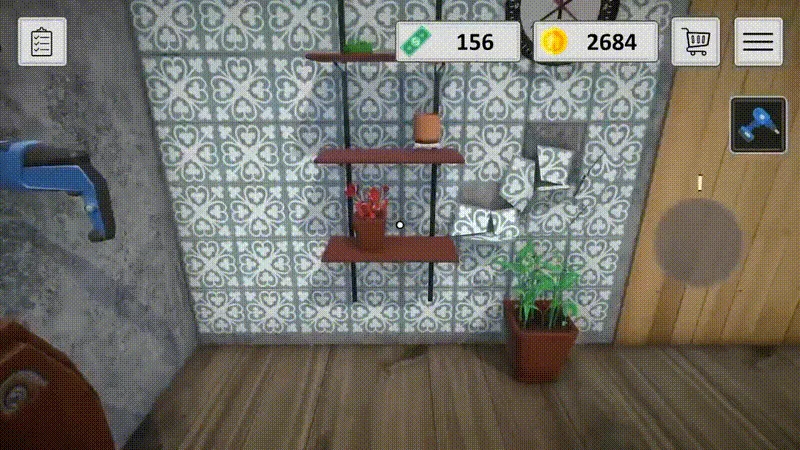
Low Budget Repairs is a comedic first person renovation and handyman simulator centred on running a small repair business in a Polish block of flats during the 1990s. Rather than aspiring to become the most professional contractor in town, the player is encouraged to maximise earnings while spending as little as possible. The official description openly promotes questionable shortcuts.
Paint can be diluted to stretch supplies, tiles can be placed without worrying too much about perfect levelling, cheap tools remain attractive even when their quality is suspect, and inconvenient furniture can meet a much more dramatic fate than careful removal. This gives the game a fundamentally different tone from renovation simulators built around perfection, because the appeal lies in discovering how badly a job can be performed while still satisfying enough of the objective to collect payment.
PCGamesN described that idea as one of the strongest parts of the game, noting that its systems sometimes encourage players to substitute cheaper items, misuse objects found in customers’ homes and adopt a deliberately unprofessional approach to repairs. The same review found some renovation mechanics repetitive or awkward, illustrating the divide between the strength of the concept and its execution at launch.
The comedy is similarly physical and absurd, with the official Steam description joking about throwing furniture out of windows, laying uneven tiles and using watered down paint. PCGamesN also highlighted unusual characters, improvised construction methods and scenarios that push players towards doing jobs the wrong way, finding the game more entertaining when it embraced this silliness than when it relied heavily on repetitive painting or plastering.
The 1990s Polish apartment block setting reinforces this identity. Steam describes the player as a DIY handyman operating a small business in a Polish block of flats, while the environment uses ageing apartments, dated interiors, improvised maintenance and cheap materials to support the fantasy of a contractor constantly searching for the least expensive solution. Prerelease communications identify the fictional locality through names including Hoofville and Kopytko depending on localisation and promotional context, with developers emphasising that players will meet residents and become involved in problems extending beyond straightforward apartment refurbishment.
The period setting also separates Low Budget Repairs from sleek contemporary home design games. It is not mainly about transforming every room into a modern catalogue interior. Its identity depends on old furniture, imperfect surfaces, questionable workmanship and the sense that both the building and its inhabitants may generate unexpected complications. That environment is therefore more than a visual theme because it supports the central mechanics. Improvising, reusing items and buying low quality equipment all fit naturally within the shabby fictional economy the game presents. Combined with its eccentric residents and narrative situations, Low Budget Repairs is closer to a comedic handyman adventure built around simulation mechanics than a completely serious construction simulator.
Low Budget Repairs Gameplay, Jobs, Tools and Cost Cutting Mechanics
The basic Low Budget Repairs gameplay loop revolves around accepting jobs, completing repair or renovation objectives, limiting expenses and keeping as much of the payment as possible. Earnings then feed into broader progression, including work on the player character’s own property. PCGamesN describes the game as balancing contract income against the desire to spend as little as possible on each task. Renovation activities cover painting, plastering, tiling, electrical work, wood panelling, furniture assembly and the installation of windows and doors, while the Steam store describes assignments ranging from repairing a flooded bathroom to carrying out a complete remodel.
What distinguishes these systems is the permission to improvise badly. Traditional renovation games often reward straight tiles, perfect paint coverage and pristine furnishings, but Low Budget Repairs asks whether an acceptable result can be produced with less effort or lower expenditure. The official store description gives examples such as thinning paint with water, laying tiles without a level, buying extremely cheap equipment and throwing obstructive furniture through a window. Every decision becomes a tradeoff between quick profit and the possibility of creating additional problems. A technically better repair is therefore not automatically the most profitable one because extra workmanship may not increase payment enough to justify its cost.
The job list also includes more unusual scenarios intended to prevent the campaign from becoming a sequence of identical flats. Developers promoted activities such as putting out a fire and other eccentric assignments involving residents and the surrounding neighbourhood. PCGamesN similarly encountered jobs involving fires, lock interactions and unconventional methods of moving unwanted furniture, finding the game most entertaining when these situations interrupted the more repetitive renovation mechanics. The basic trades provide the mechanical core, while strange jobs, characters and situations provide much of the personality. Players looking purely for meticulous construction simulation may therefore find a different experience from those seeking a humorous narrative driven handyman game.
Tools and materials are closely connected to the same cost cutting philosophy. The official Steam description presents the hardware store as a place where the player searches for equipment cheap enough to preserve profit, even when the bargain option may not be particularly durable. A professional contractor might automatically choose reliability, but the fictional handyman is encouraged to ask whether the cheapest available tool can survive long enough to finish the current task. Materials operate under the same logic. Diluting paint communicates the game’s design concept in a single action: reduce material cost, accept an inferior finish and collect the money before the consequences become someone else’s problem.
Cost cutting is therefore not simply a joke layered over a conventional renovation game. It is the central economic idea around which the game is structured. Instead of rewarding perfection, Low Budget Repairs asks what the minimum acceptable effort is to get paid. Spending more money to improve a wall may make it prettier while reducing the financial return, buying a cheaper item than the customer requested can preserve the difference, and improvising with objects already available may eliminate a purchase entirely.
PCGamesN found this tension between low expenditure and job completion to be among the title’s more engaging ideas. The mechanic also explains why flawed renovations are part of the game’s identity rather than simply failure states, although some early reviewers have criticised the released game for feeling more constrained than the freedom suggested by promotional footage.

How to Make More Money in Low Budget Repairs and Beginner Tips
Making money in Low Budget Repairs is based on a simple principle: keep as much of each job’s payment as possible by reducing expenses without preventing the contract from being completed. The official Steam description explicitly says the objective is to make as much money as possible by cutting costs. This changes the usual renovation strategy because buying premium equipment or completing more work than a job actually requires can be economically inefficient when a cheaper solution satisfies the objective. PCGamesN describes situations in which players can save money through substitutions and improvised use of household objects instead of buying everything expected of a professional contractor.
Profit therefore comes from understanding the difference between what the client appears to want and what the game actually requires to register progress. When several approaches complete the same objective, the cheaper route generally fits the game’s underlying design. New players should treat each contract as an economic puzzle rather than a craftsmanship examination. The first question should be what the job actually requires for completion, followed by how cheaply those requirements can be met. Players should avoid automatically purchasing premium materials and should compare the cost of substitutes or improvised methods with the benefit of doing the job perfectly.
That does not mean the ideal strategy is simply to do everything badly. Failed interactions, damaged work or mistakes that force tasks to be repeated can consume more time and resources than the original saving is worth. The better approach is controlled corner cutting: save money where the mechanics tolerate it while completing core objectives reliably. The profitable mindset is therefore to spend only where spending meaningfully improves the outcome.
Saving regularly is also sensible during the early postrelease period. Developers have already patched issues involving softlocks, job progression, localisation and game start problems, while community feedback has reported additional quest and interaction frustrations. Players should also prioritise learning mechanics that recur across multiple contracts. Efficient painting, tiling, plastering and item handling can reduce both wasted resources and time. Since income ultimately comes from completing jobs, speed and consistency can be just as important as choosing the cheapest material.
Low Budget Repairs vs House Flipper, Reviews and Early Player Reception
Low Budget Repairs and House Flipper share obvious similarities because both belong broadly to the first person renovation simulation space. Players manipulate interiors, perform practical tasks and transform properties through direct interactions. Steam currently sells a “Low Budget Flipper” bundle containing Low Budget Repairs, House Flipper and House Flipper 2, making the comparison particularly explicit at storefront level. The main difference is motivation. House Flipper generally revolves around cleaning, renovating, designing and improving properties, while Low Budget Repairs builds its identity around questionable workmanship, cost reduction and comedy. Its official description actively encourages watered down paint, cheap tools, imperfect tiling and other shortcuts.
PCGamesN similarly describes Low Budget Repairs as an enjoyably silly take on the renovation genre rather than a simulation about doing everything perfectly. Someone who enjoys the physical satisfaction of renovation games may therefore recognise the structure immediately, while encountering very different incentives and tone. Low Budget Repairs asks how cheaply a job can be completed, whereas House Flipper more often sells the fantasy of improving a property.
Early reception has been mixed. As checked on 17 August 2026, Steam displayed an overall Mixed rating based on 1,212 reviews from Steam purchasers in its primary review summary, while the wider review filter showed 1,275 submitted reviews when non purchaser reviews were included. Because the game had released only four days before that snapshot, these figures represent an early launch picture rather than a permanent verdict.
Professional criticism has also been divided. PCGamesN awarded the game 6 out of 10, praising its silly personality and deliberately unprofessional renovation concept while criticising dull mechanics, jank and other rough edges. Metacritic’s PC critic page remained extremely sparse when checked, displaying only one indexed critic review. That review, from Try Hard Guides, scored the game 80 out of 100 and praised its distinctive cheap comic atmosphere, dialogue and characters while wishing it were more open and made greater use of its immersive mechanics. With only one indexed review, however, that page cannot reasonably be treated as a mature critical consensus.
Steam criticism shortly after release has focused on repetitive activities, bugs and perceptions that some of the freedom suggested by earlier promotional material is more constrained in the finished version. Those individual reviews do not represent every player, but they help explain the Mixed overall score. The developer response is also relevant because fixes were issued on launch day for major progression problems, followed by additional changes addressing softlocks, descriptions and localisation. The team has said it is continuing to read feedback and work on further fixes, meaning the early technical and reception picture may continue to change as postrelease updates arrive.

Frequently Asked Questions (FAQs)
- Are Low-Budget Repairs reviews positive?
Reception is currently mixed rather than consistently positive. As of 17 August 2026, Steam classified the overall purchaser review score as Mixed, while early professional reviews ranged from 6 out of 10 at PCGamesN to an 80 out of 100 review from Try Hard Guides indexed by Metacritic. Since the game had only recently launched at that point, these results represent an early picture of its reception rather than an established long term critical consensus. - When did Low-Budget Repairs release?
Low-Budget Repairs released on 13 August 2026 for Windows PC through Steam. Its launch followed a substantial wishlist campaign, with the game surpassing 1.2 million wishlists shortly before release. This helped generate considerable attention around the launch of the indie renovation simulator. - Who developed Low-Budget Repairs?
The current Steam listing credits Gray2RGB as the developer of Low-Budget Repairs. The developers also maintained active communication with players around release, including updates covering the demo, wishlist milestones, technical problems and fixes issued shortly after launch. - Who publishes Low-Budget Repairs?
Steam lists Simplicity Games and PlayWay S.A. as the publishers. PlayWay is particularly associated with the wider PC simulation market, making the renovation and handyman concept of Low-Budget Repairs a recognisable fit within its publishing portfolio. - What platforms is Low-Budget Repairs available on?
The confirmed release covered here is the Windows PC version available through Steam. The official system requirements are also specifically provided for Windows, and no PlayStation, Xbox or Nintendo edition is presently announced in the official release information examined for this article. - Is Low-Budget Repairs multiplayer?
The official Steam features identify the released game as a single player title. Steam user generated tags should not be confused with the platform’s official feature specifications, so there is currently no officially listed multiplayer functionality for the released version. - What do you actually do in Low-Budget Repairs?
Players accept renovation and repair jobs involving activities such as painting, plastering, tiling, electrical work, wood panelling, furniture assembly and window or door installation. Unlike a traditional renovation simulator focused on perfection, the game encourages players to complete these jobs while spending as little money as possible, even if that means using cheap equipment or questionable methods. - How do you make money in Low-Budget Repairs?
The main objective is to complete paying jobs while keeping expenses low so that as much of each payment as possible becomes profit. The game encourages inexpensive tools, material saving tricks, substitutions and improvised methods when they reduce costs. However, players still need to complete the necessary objectives, so saving money must be balanced against actually finishing the contract. - Is Low-Budget Repairs like House Flipper?
Both are first person renovation games centred on practical tasks and transforming interiors, and Steam even bundles Low-Budget Repairs with House Flipper titles. The major difference is their approach to renovation. Low-Budget Repairs deliberately rewards cheap, imperfect and comedic workmanship, while House Flipper generally focuses more on cleaning, renovating, designing and improving properties. - What are the Low-Budget Repairs PC requirements?
Minimum specifications include Windows 10 64 bit, a Ryzen 5 2600 or Core i5 8400 processor, 16 GB of RAM, a Radeon RX 5700 8 GB or RTX 2060 SUPER 8 GB graphics card, and 25 GB of available storage. Recommended hardware increases the processor to a Ryzen 5 3600 or Core i5 10400 and graphics to an RX 6700 XT 12 GB or RTX 3060 12 GB, while retaining 16 GB of RAM and 25 GB of storage.

Conclusion
Low-Budget Repairs succeeds first and foremost at having a renovation-game identity that can be explained in a single sentence: make repairs, spend as little money as possible and hope the customer does not notice how questionable the workmanship is.
Released on 13 August 2026 for Windows PC, Gray2RGB’s game takes the familiar first-person renovation format and reverses its usual incentives. Rather than asking players to create perfect homes, it encourages cheap tools, watered-down materials, improvised solutions and imperfect results when those choices increase profit. Simplicity Games and PlayWay S.A. publish the Steam release.
Its mechanical range includes painting, plastering, tiling, electrical work, furniture assembly, wood panelling and installation jobs, while stranger narrative scenarios are designed to introduce comedy and chaos. More than 1.2 million pre-release wishlists and over 260,000 reported demo players demonstrate how effectively that premise attracted attention before launch.
The final release has not received universally positive feedback. Steam’s rating was Mixed when checked on 17 August, and some users and critics have reported repetitive interactions, constrained freedom, technical roughness and bugs. PCGamesN’s 6/10 review praised the personality while criticising parts of the execution, whereas the only critic review indexed on Metacritic at the time was considerably more positive at 80/100.
The developers have already issued fixes for launch and mission problems and said before release that development would continue through a post-launch roadmap. That makes the game’s longer-term condition difficult to judge only days after release.
As it stands in 2026, Low-Budget Repairs is most compelling for players who enjoy eccentric simulation games and can tolerate some roughness in exchange for a distinctive concept. It resembles House Flipper at a structural level, but its personality comes from rejecting the idea that renovation must be respectable. Instead, the cheapest technically acceptable solution is often the whole point.
Sources and Citations
- Steam — Low-Budget Repairs
https://store.steampowered.com/app/3167920/LowBudget_Repairs/ - Steam Community — Low-Budget Repairs Official News
https://steamcommunity.com/app/3167920/allnews/ - PCGamesN
https://www.pcgamesn.com/low-budget-repairs-review-let-me-throw-more-sofas-off-balconies - Metacritic
https://www.metacritic.com/game/low-budget-repairs/ - Try Hard Guides
https://tryhardguides.com/low-budget-repairs-review/
Recommendations
- Top 5 Things You Need to Know About World of Tanks: HEAT, Gameplay, Agents, Modes, and More
- Slay the Spire 2 Review Didn’t Hurt Sales Much, Steam Expert Says
- Sony Adds Nearly All of Destiny 2 to PS Plus Game Catalogue on Same Day as Final Update: What it Means for Players and Bungie’s Future
- LEGO 2K Drive Disappears Just 3 Years After Release: Delisting Date, Server Shutdown, and What Players Need to Know
- Minecraft Complete Guide and Walkthrough: Survival, Progression, and Everything You Need to Know
- Palworld Surpasses 40 Million Players Ahead of Version 1.0 Release
- The 10 Best New Anime in Spring 2026: The Must-Watch Fresh Series This Season
- Retro Rewind: Video Store Simulator: Gameplay, Features, Release Date & How to Build the Ultimate 90s Video Rental Store
- The Best Video Games of 2026 (So Far): 15 Top Games You Need to Play
- Spyder Games Files Lawsuit over Fortnite Creative “Stealing Brainrots” Copying Roblox Hit “Steal a Brainrot”



































































































