





In This Article (21 sections)
Why PC Components Are Becoming More Expensive in 2026
A “perfect storm” of economic factors has driven up the cost of computer hardware, making sub-$500 PCs nearly impossible to manufacture profitably.
- Memory Shortage: A global shortage of DRAM and NAND flash memory, fueled by massive demand from AI data centers, has led to record-high prices.
- Component Inflation: Memory is expected to account for 23% of a PC’s total cost in 2026. Combined DRAM and SSD prices are projected to surge 130% by the end of the year.
- Rising Baseline Specs: Windows 11 and new AI features (like Windows Copilot) require higher minimum RAM and CPU specs, forcing manufacturers to raise prices by an estimated 15–20%.
- Market Shrinkage: Analysts predict entry-level PCs under $500 may vanish by 2028.
Apple’s Strategy: Launching the Cheapest MacBook Ever
Apple is leveraging its vertical integration to offer a high-quality ecosystem experience at a breakthrough price point.
- Market Accessibility: The Neo is designed to bring millions of new users into the Mac ecosystem, specifically targeting the education sector dominated by Chromebooks.
- Product Segmentation: The Neo sits $500 below the MacBook Air, filling a gap in the lineup without cannibalizing the Air’s higher-margin sales.
- Vertical Integration: By using in-house silicon and existing supply chain efficiencies, Apple can hit price points that competitors using third-party chips struggle to match.

What Is the MacBook Neo and Why It Matters
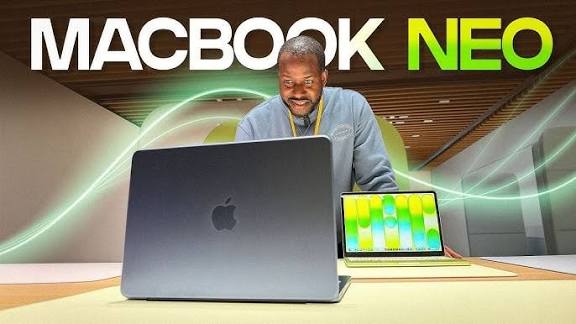
The MacBook Neo is a 13-inch, fanless laptop that runs full macOS but utilizes mobile-class hardware to save costs.
- iPhone-Class Silicon: It is the first Mac powered by an A-series chip (A18 Pro), blurring the lines between the iPhone, iPad, and Mac.
- Target Audience: It is designed for everyday tasks like web browsing, streaming, and schoolwork rather than professional video editing or gaming.
- Competitive Edge: It offers “Apple quality” (build, display, and software) at a price previously reserved for plastic budget laptops.
MacBook Neo Price: Apple’s First $599 Laptop Explained
Apple achieved the $599 price through specific hardware compromises and streamlined manufacturing.
- Base Model ($599): Includes 8GB RAM, 256GB SSD, and lacks Touch ID.
- Upgraded Model ($699): Includes 512GB SSD and adds a Touch ID fingerprint sensor.
- Education Pricing: Students can purchase the Neo starting at $499.
- Cost-Saving Measures: The device uses a simplified port configuration, lacks MagSafe, and utilizes a chip already produced in high volume for iPhones.
Processor and Performance
- Chip: Apple A18 Pro (6-core CPU, 5-core GPU, 16-core Neural Engine).
- Memory: 8GB unified memory (non-upgradeable).
- Efficiency: Built on a 3nm process, allowing for a fanless, silent design.
- AI Power: The 16-core Neural Engine makes it significantly faster for on-device AI tasks than many mid-range Intel-based PCs.

Battery and Charging
- Longevity: Rated for up to 16 hours of video playback or 11 hours of wireless web browsing.
- Power: Charges via USB-C using a compact 20W adapter.
Ports and Input
- Connectivity: Two USB-C ports (one USB 3.1, one USB 2.0), a 3.5mm headphone jack, Wi-Fi 6E, and Bluetooth 6.
- Keyboard: Backlit Magic Keyboard with color-matched keys (similar to the classic iBook aesthetic).
MacBook Neo vs. MacBook Air: Key Differences and Trade-Offs
Choosing between the $599 MacBook Neo and the $1,099 MacBook Air (M5, 2026) involves evaluating specific professional needs against budget constraints.
- Price and Value: The Neo provides a $500 savings over the latest Air. It is positioned for those who need “just enough” performance for web, office, and media, while the Air remains the choice for power users.
- Processing Power: The MacBook Air’s M-series chips offer higher core counts and greater memory bandwidth, making them superior for video editing, coding, and heavy multitasking. The A18 Pro in the Neo is optimized for single-task responsiveness and everyday fluidity.
- Display Quality:
- MacBook Air: 13.6-inch display (2560×1664) with P3 wide color and a camera notch.
- MacBook Neo: 13.0-inch display (2408×1506) with a uniform bezel (no notch) and 500-nit brightness. While sharp, the Neo may lack the full P3 color accuracy required by creative professionals.
- Battery and Portability: Both laptops weigh approximately 2.7 lbs. The Neo is slightly thicker but has a smaller overall footprint. Due to its lower-power components, the Neo may offer comparable or slightly better battery life in light-use scenarios than the more powerful Air.
- Design Aesthetics: The MacBook Air maintains a “premium-pro” look with traditional colors, while the Neo features a “playful” palette (blush pink, citrus yellow, etc.) and color-matched keycaps reminiscent of classic Apple designs.

MacBook Neo vs Budget Windows Laptops and Chromebooks
At $599, the MacBook Neo shifts the budget laptop conversation from “raw specs” to “build and experience quality.”
- Build and Design: While most sub-$600 Windows laptops use plastic, the Neo features a premium aluminum unibody. It provides a superior trackpad and keyboard experience compared to the flex-prone hardware often found in budget PCs.
- Display Quality: The Neo’s 500-nit Retina display outclasses the typical 250-nit 1080p panels found on Windows rivals. It is sharper, brighter, and offers better viewing angles.
- Performance vs. Specs: Windows laptops at this price may offer 16GB of RAM or larger SSDs, but the Neo’s A18 Pro chip and optimized macOS often feel faster in everyday tasks. However, the fixed 8GB of RAM may limit heavy multitaskers compared to 16GB Windows machines.
- AI and Future-Proofing: The Neo includes a dedicated Neural Engine, giving it a distinct advantage in on-device AI tasks (transcription, image processing) over budget PCs that lack specialized AI hardware.
- Ecosystem and Value: The Neo offers seamless integration with iPhone/iPad (AirDrop, iMessage) and lacks the “bloatware” common on cheap PCs. It also boasts higher resale value and longer software support (5+ years).
- The Chromebook Challenge: The Neo targets the “high-end Chromebook” market. While more expensive than a basic $300 Chromebook, it runs a full desktop OS (macOS), making it a more versatile long-term investment for students.
Who Should Buy the MacBook Neo
The MacBook Neo is designed for users who prioritize a polished, reliable experience over high-performance professional workloads.
- Students (K-12 and College): The primary audience. The $499 education price, 16-hour battery, and lightweight build make it ideal for campus life and research.
- First-Time Mac Users & Switchers: An accessible entry point for iPhone owners who want ecosystem integration (Messages, FaceTime, iCloud) without the $1,000+ price tag.
- Casual Home Users: Ideal for families needing a shared device for browsing, streaming, and personal finances. Its durable build and fanless design make it low-maintenance.
- Writers and Productivity Professionals: Journalists and office workers will benefit from the high-quality Magic Keyboard and extreme portability for word processing and light content creation.
- Small Business Owners: Offers a reliable, virus-resistant tool for basic business operations like invoicing and communication on a tight budget.
To put it succinctly, the MacBook Neo is ideal for:
- Casual users who primarily use their computer for internet, media, and light productivity apps.
- Students from middle school to university who need a durable, long-lasting laptop for schoolwork.
- Budget buyers who want an Apple laptop without breaking the bank.
- First-time Mac users making the jump from Windows or ChromeOS, seeking an affordable entry point.
- People who prioritize portability and battery and do not require high-end computing power.
Apple’s own positioning aligns with these groups. They emphasized the Neo is for “students, families, small business owners, new Mac users, and more”, offering a balance of quality and affordability. Likewise, one tech site summarized that the MacBook Neo is perfect for “casual users who primarily browse the web, stream videos, and use basic productivity apps,” as well as “students who need a reliable laptop for note-taking, research, and light multitasking,” and generally “budget-conscious buyers who want a high-quality Apple laptop without breaking the bank.”. If you see yourself in those descriptions, the MacBook Neo was practically made for you.
MacBook Neo for Students and First-Time Mac Users
Let’s delve a bit deeper into two groups that stand to benefit hugely from the MacBook Neo: students and first-time Mac users. These groups overlap somewhat, but each has specific reasons to be excited about the Neo.
Why the MacBook Neo is Great for Students:
- Affordability for tight budgets: Students (and their parents or schools) often have limited budgets. The MacBook Neo at $599 ($499 for education) is a game-changer in making Macs attainable for education. Many schools opted for Chromebooks purely due to cost – but now, for not much more, they can get full Mac laptops. For college students who might have been saving up for a computer, the Neo’s price leaves extra money for textbooks or living expenses.
- Portability and Battery for campus life: A student might start their day with classes, then study in the library, then hit a coffee shop – all without a chance to charge. The Neo’s ~11 hours of wireless web use means it can last from morning to evening on a single charge. And weighing only 2.7 lbs, it won’t break a student’s back when carried in a backpack all day. Its compact footprint fits on cramped lecture hall desks or library tables easily. Essentially, it has all-day unplugged endurance, which is exactly what a student needs for mobility.
- Durability and build: While the Neo is not a ruggedized device per se, its aluminum chassis is durable for everyday handling. It’s likely more robust than cheap plastic laptops that can crack or suffer hinge issues. Students can be rough on their tech, so build quality matters. Also, since there are no vents (fanless) on the Neo, there’s less worry about dust or crumbs getting in – a plus in dorm or classroom environments.
- Productivity and education software: The MacBook Neo can run a wide range of software useful for students. This includes Microsoft Office or Google Docs for assignments, Zoom or Microsoft Teams for remote classes, creative apps like GarageBand or iMovie for projects, and specialized apps (coding tools, SPSS for stats, etc.) if needed. ChromeOS is limited in this regard, and even Windows laptops at this price might struggle with heavy software. The Neo can even run Windows-specific apps via virtualization (Parallels, etc.) if absolutely necessary for a course, thanks to Apple silicon versions of those, though that’s a more niche use. Also, the Neo comes with Apple’s iWork suite (Pages, Numbers, Keynote) and GarageBand, iMovie free – out of the box a student has tools for writing papers, making presentations, etc.
- Focus and simplicity: macOS is relatively distraction-free compared to some other platforms that might bombard with ads or bloatware (as seen on some cheap Windows PCs). For a student, being able to focus on work is key. Plus, features like Focus mode in macOS, and the integration with an iPhone for things like texting via iMessage on the Mac, make student life a bit smoother.
- Educational discounts and support: Apple’s strong presence in education means students get not just the discount but also access to resources like Apple’s education pricing on software (some pro apps are heavily discounted for students). And Apple’s customer support and Apple Store help (if something breaks) can be more straightforward than dealing with various PC OEMs.
The MacBook Neo, Apple’s first $599 laptop ($499 for education), represents a historical shift in the personal computer market. By leveraging high-performance smartphone silicon and premium build materials, Apple is directly challenging the dominance of mid-range Windows PCs and Chromebooks.
The Impact of Apple’s Budget Laptop on the PC Market
Apple’s entry into the $599 bracket forces a broader industry readjustment.
- Market Share Shifts: Gartner predicts a 10.4% drop in global PC shipments in 2026. If Apple increases Mac sales via the Neo during this decline, it will result in a significant gain in macOS market share at the expense of Windows.
- Innovation Pressure: PC manufacturers (OEMs) may be forced to improve budget models by adopting higher-quality screens, better battery life, or ARM-based processors (like the Snapdragon X series) to match Apple’s fanless efficiency.
- Education Shake-Up: The Neo serves as a foothold for Apple to reclaim the K-12 market. School districts may opt for the $499 Neo over mid-range Chromebooks to provide students with a full desktop operating system.
- Supply Chain Leverage: Apple’s high-volume, controlled supply chain allows it to negotiate better component prices (DRAM/NAND) than smaller PC vendors, who are currently struggling with a 130% surge in memory costs.

Will Cheaper MacBooks Replace Entry-Level Windows Laptops
While a total replacement is unlikely, the “default” choice for a first computer is shifting.
- Ecosystem Lock-in: For users already owning an iPhone or iPad, the Neo offers a level of integration (AirDrop, iCloud, Continuity) that Windows cannot match, making it the logical choice for casual consumers.
- Niche Persistence: Windows laptops will remain the standard for:
- Ultra-Budget Needs: Laptops priced under $400.
- Specialized Software: Industries requiring legacy Windows applications or proprietary workflows.
- Tinkerers: Users who want the ability to upgrade RAM or storage, which are soldered and non-upgradeable on the MacBook Neo.
- Enterprise Standardization: Many large corporations rely on Windows-specific domain policies and management tools, ensuring a continued demand for basic Windows fleet laptops.
- Strategic Conclusion: The MacBook Neo does not “kill” the cheap PC, but it ends Apple’s era as a niche premium-only player. By competing on volume and accessibility, Apple is raising the baseline standard for what a budget laptop should provide.
The MacBook Neo, released in March 2026, represents a strategic shift for Apple into the budget laptop market. By offering a high-quality macOS experience at a $599 price point, Apple aims to capture casual users and students who previously found Macs cost-prohibitive.
Market Impact and Competition
The introduction of a budget-friendly MacBook creates a new dynamic in the laptop industry, challenging the long-standing dominance of Windows in the entry-level segment.
- Coexistence with Windows: Rather than replacing Windows entirely, the Neo is expected to carve out a significant minority share. Projections suggest a shift from a Windows-dominated market to a mix of roughly 60% Windows, 20% ChromeOS, and 20% Mac in the sub-$800 category.
- Microsoft’s Countermeasures: Microsoft is expected to emphasize the performance-per-dollar of Windows PCs (such as 16GB RAM/512GB storage models at $600) and promote services like Xbox Game Pass. Additionally, Microsoft may lean into “Cloud PCs” to mitigate Apple’s local hardware advantages.
- Developer Influence: A rise in student adoption of the Neo could lead to a virtuous cycle where developers prioritize macOS or web-friendly services, further pulling the Mac out of its traditional “niche” status.
- Aspirational Branding: The Neo leverages Apple’s brand desirability. For many, owning a “real Mac” at $599 outweighs the superior raw specifications of similarly priced Windows competitors.
MacBook Neo Release Date, Colors, and Availability
The MacBook Neo was officially launched in early 2026 with a focus on vibrant aesthetics and accessibility.
- Release Schedule: Announced on March 4, 2026, with pre-orders opening immediately. The official release and shipping date followed on March 11, 2026.
- Pricing and Configurations: * Base Model ($599): 8GB RAM, 256GB storage, no Touch ID.
- Higher Tier ($699): 8GB RAM, 512GB storage, includes Touch ID.
- Education Discount: Students and teachers receive $100 off, bringing the entry price to $499.
- Color Options: Available in four finishes: Silver (classic), Indigo (deep blue), Blush (soft pink), and Citrus (pastel yellow). These models feature color-matched keycaps and coordinating wallpapers.
- Sustainability: The Neo is Apple’s lowest carbon footprint Mac, utilizing 90% recycled aluminum and 100% recycled cobalt in the battery.
- Initial Constraints: Apple limited online purchases to two units per customer at launch, suggesting high anticipated demand or cautious initial production volumes.
The following summary concludes the analysis of the MacBook Neo’s market position, value proposition, and its role in shaping the future of the affordable laptop industry.

Final Verdict: Is the MacBook Neo Worth It in 2026?
For the average consumer or student in 2026, the MacBook Neo represents a significant convergence of price, quality, and brand strength.
- Unprecedented Value: The Neo delivers a premium experience—characterized by a sleek design, high-quality display, and long battery life—that was previously unavailable at the $599 price point.
- Target Demographic: It is specifically “worth it” for those with modest to medium computing needs who have historically been priced out of the Mac ecosystem.
- Polish vs. Power: While users with intensive professional workflows should still opt for higher-end models, the Neo handles everyday tasks with Apple’s signature smoothness and silent, fanless operation.
- The “Ticket” to Mac: For users who previously settled for budget Windows PCs, the Neo acts as an accessible entry point into the Apple ecosystem, redefining what a $600 laptop can provide.
Future of Affordable Laptops as PC Component Prices Rise
The introduction of the MacBook Neo occurs during a period of rising hardware costs, signaling a broader shift in how the industry defines “budget” computing.
- Redefining “Affordable”: As component costs (memory and storage) increase, the $300 laptop may disappear. The new budget baseline is shifting toward the $500–$700 range, a sweet spot that the MacBook Neo currently anchors.
- The Rise of ARM-based Laptops: Apple’s success with the A18 Pro chip is likely to accelerate the adoption of ARM architecture across the industry. Windows OEMs may increasingly turn to chips like Qualcomm’s Snapdragon X series to achieve similar efficiency and fanless designs at a lower cost.
- Disappearance of the Low-End: Predictions suggest that sub-$500 Windows PCs may vanish by 2028, leaving that space to Chromebooks and tablets, while the “new low end” of the laptop market becomes more capable and durable.
- Expanded Affordable Lineups: If the Neo succeeds, Apple may expand its value offerings, potentially introducing larger screen variants or keeping older M-series Air models at lower price points to maintain a multi-tier sub-$1000 strategy.
- On-Device AI and Software Optimization: With the inclusion of Neural Engines in budget devices like the Neo, software developers can assume a higher baseline of AI capability, leading to more local AI processing even on entry-level hardware.
- Cloud vs. Local Power: While some competitors may lean into cloud-powered virtualization to offset high local hardware costs, Apple’s strategy emphasizes local performance and privacy through powerful onboard silicon.
- Innovation through Competition: Apple’s entry into the budget segment forces Windows OEMs to differentiate through form factors Apple avoids at low costs, such as convertible touchscreens or hardware/service bundles (e.g., Office 365 subsidies).
- Long-Term Consumer Benefit: Although baseline prices are rising, consumers may benefit from a shift toward higher-quality, longer-lasting machines. Paying $600 for a laptop with a six-year lifespan offers better value and less electronic waste than a $400 “disposable” PC.

Frequently Asked Questions (FAQs)
- When and where was the MacBook Neo released?
Apple announced the MacBook Neo on March 4, 2026, and it became available on March 11, 2026. It launched in major markets (US, UK, Canada, Europe, etc.) simultaneously. You can buy it via Apple’s online store, Apple retail stores, and authorized resellers. Initial orders were limited to 2 per customer due to high demand.+1 - How much does the MacBook Neo cost, and are there different models?
The MacBook Neo starts at $599 USD (or £599 in the UK) for the base model with 8GB RAM and 256GB SSD. There is also a $699 model with 512GB SSD which additionally includes a Touch ID fingerprint sensor. Education customers get a $100 discount on either model, making the starting price $499 for students/teachers.+2 - What are the key specs of the MacBook Neo (display, processor, memory)?
The MacBook Neo features:- Display: 13-inch Liquid Retina display (2408×1506 resolution) at 500 nits brightness.
- Processor: Apple A18 Pro chip (6-core CPU, 5-core GPU, 16-core Neural Engine), the same chip used in the iPhone 16 Pro.
- Memory/Storage: 8GB of unified memory with either 256GB or 512GB SSD storage.
- Design/Battery: Fanless design with up to 16 hours of battery life on video playback.
- Connectivity: 2 USB-C ports (one supports USB 3.1 10 Gbps, the other USB 2.0 480 Mbps), a 3.5mm headphone jack, Wi-Fi 6E, and Bluetooth 6.
- Why did Apple use an A18 Pro iPhone chip instead of an M1/M2 chip in the Neo?
Using the A18 Pro helps Apple keep costs low and design the Neo to be ultra-efficient. The chip was already mass-produced for iPhones, making it cost-effective while providing sufficient performance for everyday tasks. This enables a fanless, lightweight design with long battery life and differentiates the Neo as an entry-level device that does not cannibalize more powerful M-chip MacBook Air or Pro models. - Is the MacBook Neo powerful enough for gaming or heavy tasks?
The MacBook Neo can handle casual and moderately heavy tasks, but it is not designed for high-end gaming or intensive professional workloads. The 5-core GPU runs Apple Arcade and lightweight games smoothly, and the CPU is fast in single-core performance. However, it will be slower than MacBook Pros or gaming PCs for AAA 3D games or 4K video editing. Additionally, the macOS game library is limited compared to Windows.+2 - How does the MacBook Neo compare to the MacBook Air?
The MacBook Air (with M-series chip) is more powerful and feature-rich but more expensive (starting at $999+). Key differences include:- Performance: The Air uses M1/M2/M3 chips with more cores for demanding apps and supports two external Thunderbolt displays.
- I/O and Charging: The Air features MagSafe charging and 2 Thunderbolt ports, while the Neo has 2 simpler USB-C ports and no MagSafe.
- Configurations: All Air models include Touch ID and can be configured with up to 24GB RAM and 2TB SSD; the Neo is fixed at 8GB RAM and a 512GB SSD maximum.
- Dimensions: Both weigh ~2.7 lbs, though the Neo is slightly thicker (0.50″ vs 0.44″).
- What are the color options for the MacBook Neo?
The MacBook Neo comes in four colors:- Silver (classic aluminum)
- Indigo (dark blue)
- Blush (pale pink)
- Citrus (pastel yellow) The keyboard keys are color-matched in lighter shades, and each option includes a matching default macOS wallpaper.
- Does the MacBook Neo have Touch ID and a webcam?
A 1080p FaceTime HD webcam with dual microphones is standard on all models, located in the top bezel (no notch). Touch ID is only included on the $699 model (512GB SSD); the base $599 model uses a plain power button without a fingerprint sensor. Face ID is not available on any MacBook model.+1 - Who is the MacBook Neo best suited for?
It is ideal for:- Students: Who benefit from the education discount and long battery life for campus use.
- Casual Users: Who primarily browse the web, use email, stream movies, and work on documents.
- First-time Mac Buyers: Seeking an entry point into the Apple ecosystem without high costs.
- Travelers: Existing Mac users wanting a cheap, light secondary laptop. It is not recommended for professionals needing intense computing power (video editors, developers) or those relying on Windows-specific applications.
- Can the MacBook Neo run Windows or other operating systems?
The Neo runs macOS 13 Tahoe. Because it uses an ARM-based chip, Boot Camp is not supported. Users can use virtualization solutions like Parallels Desktop or UTM to run ARM-compatible versions of Windows 11 or Linux, though performance is limited by the 8GB of RAM. There is no official way to replace macOS entirely.

Conclusion
In an era of expensive PC components, the introduction of the MacBook Neo at $599 is revolutionary, representing a bold move that is reshaping the personal computing landscape.
- For Consumers: The MacBook Neo provides features once out of reach for budget buyers, including top-tier build quality, a brilliant Retina display, long battery life, and the secure macOS experience. It bridges the gap between premium and budget devices.
- Target Groups: Students benefit from a colorful, long-lasting device that integrates with iPhones without draining savings. First-time Mac users can enter the Apple ecosystem affordably, while families and small businesses gain a superior alternative to plasticky, slow Windows laptops.
- Industry Impact: The Neo serves as a wake-up call. By leveraging vertical integration and efficient design rather than expensive parts, Apple has defied cost pressures. This will likely force competitors to improve their affordable offerings through ARM-based chips, better build quality, or added value in services.
- Future of Computing: The device suggests a future where budget-conscious users do not have to compromise on experience or longevity. Laptops under $600 may shift from frequently replaced commodities to quality devices meant to last, mirroring the evolution of mid-range smartphones.
- Market Shift: While Windows PCs remain vital for enterprise and specialized use, cheaper MacBooks like the Neo may nudge out entry-level Windows laptops for mainstream consumers and education markets who value ease-of-use and ecosystem integration.
The MacBook Neo is a game-changer that brings high-end flair to the low end of the market. It proves that an excellent laptop can be affordable, dramatically raising the bar for what is expected in the budget segment.
Sources and Citations
- Macworld, “Apple’s MacBook Neo is $599? Whoa.” March 4, 2026.
https://www.macworld.com/article/3077864/apples-macbook-neo-is-599-whoa.html - Apple Newsroom, “Say Hello to MacBook Neo.” March 4, 2026.
https://www.apple.com/newsroom/2026/03/say-hello-to-macbook-neo/ - Luke James, “Entry Level PC Market to Disappear by 2028.” Tom’s Hardware, March 2, 2026.
https://www.tomshardware.com/pc-components/memory/entry-level-pc-market-to-disappear-by-2028-as-memory-prices-surge - Hartley Charlton, “Apple Announces $599 MacBook Neo With A18 Pro Chip.” MacRumors, March 4, 2026.
https://www.macrumors.com/2026/03/04/apple-announces-macbook-neo/ - John Voorhees, “Apple Takes the Wraps Off the MacBook Neo.” MacStories, March 4, 2026.
https://www.macstories.net/news/apple-takes-the-wraps-off-the-macbook-neo/ - Tom’s Hardware Forum, “MacBook Neo Announcement Discussion.”
https://forums.tomshardware.com/ - Aisha Malik, “Apple Announced Budget Friendly MacBook Neo.” TechCrunch, March 4, 2026.
https://techcrunch.com/2026/03/04/apple-announces-budget-friendly-macbook-neo/ - Craig Hale, “Experts Warn PC Prices Could Rise Even More in 2026 as RAM Costs Soar.” TechRadar, January 2, 2026.
https://www.techradar.com/computing/experts-warn-pc-prices-could-rise-even-more-in-2026-as-ram-costs-soar - Ben Wilson, “My Interest Evaporated When I Saw the Specs.” Windows Central, March 4, 2026.
https://www.windowscentral.com/hardware/laptops/my-interest-evaporated-when-i-saw-the-specs-of-apples-usd599-macbook-neo - Macworld, “MacBook Neo Battery and Ports.” March 2026.
https://www.macworld.com/article/3078150/i-met-macbook-neo-everything-i-know-is-a-lie.html - Joe Rossignol, “Apple Accidentally Leaks MacBook Neo.” MacRumors, March 3, 2026.
https://www.macrumors.com/2026/03/03/apple-accidentally-leaks-macbook-neo/
Recommended
- A Woman Is Suing MrBeast’s Company for Alleged Sexual Harassment and Verbal Abuse: Full Lawsuit Breakdown, Claims, and Reactions
- A MAZE. / Berlin Is Back for Its 15th Edition: Dates, Tickets, Venues, and Awards for 2026
- Deep Dive Into the Behind-the-Scenes Creation of Avatar: Fire and Ash
- All Forza Horizon 5’s Rare, Time-Limited Cars Are Now Buyable In-Game (Horizon Backstage Shop Update)
- Musgrave Texture Removed in Blender 4.1 – Workarounds and Alternatives
- Best Blender Render Settings: Ultimate Guide to High-Quality Renders Without Wasting Time
- Forza Horizon 6 Limited Edition Xbox Wireless Controller and Headset Reportedly Leaked
- Valve’s “Higher Stakes” Reloads in CS2: Why Discarded Ammo Is Immediately Controversial Among Players
- Game File: DICE Summit Keynote Honors Vince Zampella, Call of Duty Co‑Creator and Respawn Co‑Founder
- Freelance and Indie Commercial License



































































































