










In This Article (22 sections)
What is DishBrain and how do brain cells play Doom
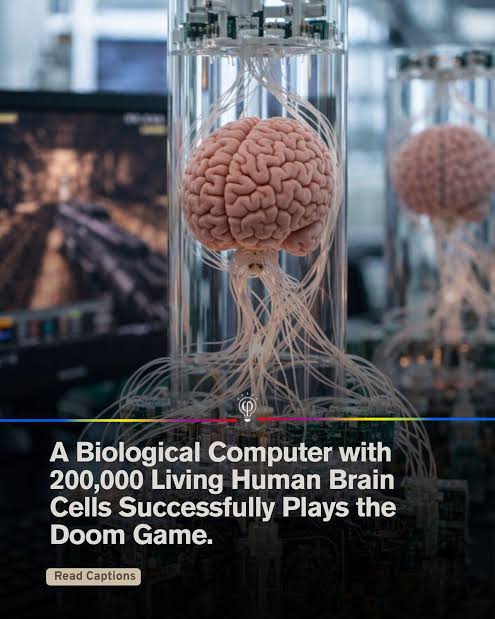
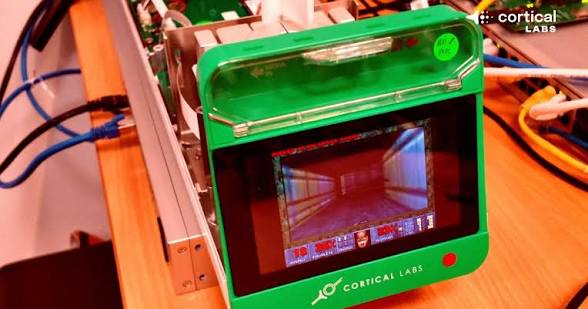
DishBrain is a biological computing system created by Cortical Labs that integrates approximately 800,000 living mouse or human neurons with a microelectrode chip. In 2022, these neurons learned to play Pong, and recently, they have been taught to control the “Doomguy” in a simplified version of the 1993 game Doom. The cells act as the player by receiving sensory data as electrical patterns and sending back signals that are translated into in-game actions like moving or firing weapons. This experiment demonstrates goal-directed learning in a “body-on-a-chip” environment, where disconnected neurons adapt to a virtual world.
Cortical Labs CL1 biological computer explained
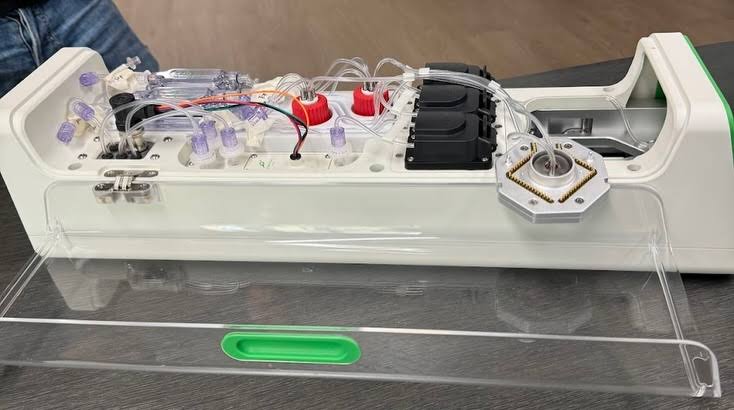
The CL1 is a commercial hybrid computing platform that treats living human neurons as a processing unit. It consists of neurons grown on a silicon chip within a specialized bioreactor that provides life support, including nutrients and temperature control. The system features a “biological intelligence operating system” (biOS) that manages the interface between biology and digital software. Consuming only about 20 watts, the CL1 allows programmers to interface with living tissue using a high-level API and languages like Python, effectively creating “wetware” that merges human cells with silicon electronics.
How neurons in a petri dish control a video game using electrodes
Neurons interact with the game via a two-way communication loop facilitated by a microelectrode array. The computer translates game events (such as enemy locations) into electrical pulses that stimulate specific regions of the neural culture, allowing the cells to “feel” the game state. Conversely, the system records the neurons’ electrical spikes; specific firing patterns are mapped to game commands like “move forward” or “shoot.” This setup allows a clump of cells without natural senses to embody a virtual avatar by reacting to electrode stimuli.
Microelectrode array brain cells gaming setup
The hardware core is a microelectrode array (MEA), a grid of microscopic electrodes that both stimulates and records neural activity. In the CL1, the array has evolved from 8 to 59 stimulation electrodes, providing higher bandwidth for complex data. The neurons are housed in a nutrient-rich chamber and wired to an amplifier and computer. This creates a closed-loop system where game data is converted into spatial patterns of stimulation, and the resulting neural “twitches” are interpreted as moves in the game.

How was Doom converted into signals brain cells can understand
Converting Doom required a sophisticated interface to translate 3D visual data into electrical “brain-speak.” The game’s field of vision was divided into segments; for example, an enemy on the left would trigger a “zap” on the corresponding left side of the neural dish. Pulse frequency or intensity was used to represent distance or health. Using the CL1 API, developers mapped neural firing bursts to specific actions like turning or firing. Initially random, the neurons’ activity became purposeful as they learned which signals resulted in successful game interactions.
How human neurons “learn” in DishBrain without traditional AI training
Unlike traditional AI that uses programmed algorithms and backpropagation, DishBrain relies on biological plasticity. Based on the Free Energy Principle, neurons naturally seek to minimize unpredictability in their environment. Researchers provide feedback by sending a chaotic “error signal” (random electrical bursts) when the neurons perform poorly (e.g., the character dies) and offering a predictable, stable state when they succeed. To avoid the punishing noise, the neurons self-organize and rewire their synaptic connections to achieve better game outcomes, demonstrating spontaneous, goal-directed learning.
DishBrain Pong experiment vs Doom experiment differences
While Pong was a simple 2D proof-of-concept requiring roughly 18 months of development, the Doom experiment represents a significant leap in complexity. Doom involves 3D navigation and multiple degrees of freedom (moving, turning, shooting), requiring much higher bandwidth (59 input channels versus 8). Due to the advancements of the CL1 platform, the Doom interface was implemented in just one week. While Pong demonstrated basic “sentient” behavior, Doom shows that biological computers can scale to complex, stochastic tasks, evolving from a “hello world” stage to a benchmark for biological intelligence.
How well did the brain cells play Doom and what “beginner level” means
The DishBrain-controlled Doom player functions at a “beginner” level, with its skill comparable to a human novice who has never seen a computer. While it is better than random button mashing, the neural culture often gets stuck, bumps into walls, or “occasionally dies a lot.” The success of the experiment is measured by demonstrated learning rather than game mastery; the neurons successfully learned to locate enemies, move, and fire, outperforming systems with no learning at all. They reached this rudimentary proficiency faster than some machine learning algorithms. However, with only 800,000 neurons, the DishBrain cannot execute complex tactics and typically operates in simplified game scenarios.
How long can lab-grown neurons stay alive in a biocomputer
In a platform like the CL1, lab-grown neurons typically remain viable and functional for approximately six months. Their lifespan is sustained by a built-in bioreactor that acts as a life-support system, providing a continuous supply of nutrients, maintaining ideal temperatures and oxygen levels, and removing waste. After this period, the culture may deteriorate or lose connectivity and must be replaced with a fresh batch of stem-cell-derived neurons. This six-month window is sufficient for extensive long-term training and research, though it is significantly shorter than the lifespan of traditional silicon hardware.
Is the CL1 a commercial product and who can buy a biocomputer
The Cortical Labs CL1 is a commercial product released in 2025, marketed as the world’s first commercially available biological computer. It was initially priced at approximately $35,000 per unit, or $20,000 each for bulk rack orders. Sales are restricted to organizations with proper laboratory facilities and ethical approvals, such as universities, pharma companies, and government labs. For those unable to house live cells, Cortical Labs offers “wetware-as-a-service,” allowing remote cloud access to the biocomputers for a fee of around $300 per week. This service democratizes access for researchers and developers to interface with living neurons via the internet.
What is “wetware computing” and why it’s different from silicon chips
Wetware computing uses living biological tissue, such as neurons, as the substrate for computation. It differs from silicon-based hardware in several ways: wetware is self-organizing and capable of self-repair, whereas silicon is static and fixed. Biological neurons operate with massive parallelism and analog signals, making them efficient for pattern recognition and emergent processing. Unlike deterministic silicon chips that follow exact instructions, wetware must be trained or conditioned through feedback. While neurons have slower raw signal transmission than transistors, their inherent plasticity and ability to learn from small datasets offer advantages that silicon-based AI must arduously emulate.
Energy use and efficiency of biological computers vs GPUs
Biological computers are significantly more energy-efficient than traditional GPUs and AI hardware. While AI data centers consume massive amounts of electricity often requiring tens of thousands of watts per rack a rack of CL1 biocomputers uses only about 850–1,000 watts, roughly the power of a toaster. A single human brain operates on approximately 20 watts, and biological neurons are estimated to be a million times more energy-efficient than artificial ones for certain operations. Because neurons learn more efficiently (sample efficiency), they require fewer iterations and less total energy to master a task compared to the brute-force calculations of silicon-based reinforcement learning.

EEthics of using human brain cells for computing and research
The use of human neurons in computing introduces significant ethical and moral considerations. While cells are grown in labs from adult donors using induced pluripotent stem cells similar to blood donation questions arise regarding informed consent and whether donors anticipated their cells being used to play games or power computers.
A major debate centers on the moral status and potential sentience of these networks. While current 800,000-neuron cultures lack the architecture for consciousness, scaling up to larger, 3D organoids could enter uncharted territory involving “rights” for neural networks. Ethicists and researchers, including those at Cortical Labs, collaborate to monitor “organoid intelligence” for emergent sentience. Other concerns include the potential “Frankenstein” public perception, the lack of specific regulations for biological computers, and the risk of misuse in autonomous weapons or surveillance. Most scientists currently view these neurons as a tool or “active material” rather than sentient beings, but they emphasize the need for proactive ethical guidelines as the technology scales toward human-level intelligence.
Do brain cells in a dish feel pain or have consciousness
Current scientific consensus holds that brain cells in a dish do not feel pain or possess consciousness. Pain is a subjective, whole-organism experience requiring nociceptors and complex brain structures (like a thalamus and layered cortex) that these 2D cultures lack. Electrical “error signals” used in training are biological inputs, not sensations of suffering.
Similarly, consciousness requires specialized networks and rhythms not found in isolated 800,000-neuron clusters. While researchers have used the term “sentience” to describe the neurons’ goal-directed behavior in Pong, they clarify this refers to basic responsiveness, not internal awareness. These cells, grown from stem cells, have no history of being part of a living brain or organism. They are viewed as mechanistic biological processors, analogous to muscle cells twitching in a dish rather than a functional, feeling heart.
Potential medical and research uses of DishBrain-style systems
DishBrain technology offers vast potential across several fields:
- Neurological Disease Modeling: Researchers can grow neurons with the genetic traits of Alzheimer’s, epilepsy, or Parkinson’s to study disease progression and test treatments in real-time.
- Drug Discovery: Racks of CL1 devices can screen hundreds of compounds on human neurons to identify efficacy or neurotoxicity more accurately than animal models.
- Reducing Animal Testing: Biological computers can serve as a biomimetic sandbox, potentially replacing animals in some neurological studies.
- Brain-Computer Interfaces (BCI): The technology may lead to better BCI for paralyzed patients or adaptive controllers for bio-robots.
- Personalized Medicine: Patient-specific cells can be used to test which medications best improve an individual’s unique neural function.
- NeuroAI: Insights into how biological networks learn from small data can inspire new, more efficient AI algorithms.
Can brain organoids outperform AI in specific tasks
While not a replacement for high-speed silicon computation, biological systems excel in specific niches. Their primary advantages include learning efficiency (sample efficiency), where they can master tasks like Pong or Doom in minutes with fewer trials than traditional reinforcement learning. They are also millions of times more energy-efficient per operation than current AI hardware.
Biological networks are natively robust and better at generalizing from noisy or incomplete data, avoiding the “catastrophic forgetting” often seen in AI. While computers dominate in brute-force arithmetic, brain organoids show promise for “fuzzy” tasks, real-time adaptation, and one-shot learning. Researchers anticipate that future hybrid systems merging organoid intelligence with traditional silicon will combine biological flexibility with digital precision.

What “code-deployable biological computer” means in practice
A “code-deployable biological computer” refers to a system like the CL1 where researchers can program living neurons using traditional software development tools. Rather than manually manipulating DNA or biological components, developers use a high-level API and common languages like Python to interface with the cells. The CL1’s hardware and firmware handle the translation of code into electrical stimulation and read neural spikes as data.
In practice, this allows for:
- High-level API access: Developers can use commands to stimulate electrodes or read data without needing deep knowledge of analog circuitry or cell biology.
- Standardized workflows: Biological experiments can be version-controlled, shared, and integrated into existing machine learning pipelines.
- Real-time interaction: Sub-millisecond latency allows code to respond dynamically to neural activity, creating closed-loop training environments.
- Accessibility: Non-biologists can create neural-driven applications, such as the Doom implementation, in a matter of days.
Future of biological computing after brain cells played Doom
The Doom milestone signals the transition from simple feedback tasks to managing complexity and real-time decision-making. Future developments include:
- Scaling and Complexity: Moving from 2D layers to 3D organoids with millions of neurons to handle more sophisticated navigation and logic tasks.
- Bio-Silicon Hybrids: Using biological processors as co-processors for tasks involving pattern recognition and uncertainty, while silicon handles arithmetic and storage.
- Organoid Intelligence (OI): Developing complex mini-brains with supporting cells to mimic actual brain architecture for enhanced cognition.
- Hardware Improvements: Implementing high-density 3D electrode grids and optogenetics (light-based stimulation) for finer communication with cells.
- Commercial and Industrial Growth: The establishment of “neural node farms” in data centers to provide low-power cognitive services.
- Ethical Frameworks: Establishing regulations for larger-scale cultures to monitor for potential emergent sentience.
Frequently Asked Questions (FAQs)
- Where did the human brain cells in DishBrain come from?
They are grown in a lab from adult skin or blood cells that have been reprogrammed into induced pluripotent stem cells and then into neurons. They are not extracted from living brains. - How do the neurons “see” what’s happening in the game Doom?
They receive electrical pulses via electrodes that represent game data (like enemy locations) as spatial patterns of zaps. It is an electrical “Braille” rather than visual sight. - Do the neurons actually know they are playing a game or understand Doom?
No. They have no awareness or context. They are simply reacting physiologically to stimuli and adjusting their firing to achieve a more predictable state. - How is this different from AI in a computer or a normal neural network?
Traditional AI is a mathematical simulation on silicon. DishBrain uses biological cells and real synaptic plasticity. Biological neurons are more energy-efficient and learn from fewer examples but are harder to scale and less predictable. - Can I buy a biocomputer like CL1 or use DishBrain for my own projects?
The CL1 is sold to research institutions for roughly $35,000. However, individuals can rent “wetware-as-a-service” cloud access for approximately $300 per week. - What games or tasks has DishBrain learned so far besides Doom?
It famously learned Pong in 2022. It has also performed basic pattern recognition and feedback-loop tasks in laboratory settings. - Could a system like DishBrain eventually become self-aware or conscious?
Current cultures are too small and disorganized for consciousness. While it is an ongoing topic for future ethics, these cells are currently viewed as unconscious biological processors. - Why did scientists choose Doom as a test for the neurons?
It is a culturally iconic computing benchmark (“Can it run Doom?”) and provides a significant 3D complexity leap over Pong to test the system’s real-time processing limits. - How do the neurons know if they made a “mistake” in the game or did something right?
They receive “error signals” in the form of chaotic electrical noise when they fail. They adapt to minimize this chaos, effectively “learning” the patterns that lead to stable, rewarding feedback. - How are the neurons kept alive and healthy during these experiments?
They are housed in a climate-controlled bioreactor that provides a continuous nutrient-rich bath, removes waste, and maintains a stable temperature and pH for up to six months.
Conclusion
Teaching brain cells to play Doom is a landmark for “wetware computing,” proving that biological hardware can be integrated into digital systems to solve complex problems. This technology bridges the gap between simulation and biology, offering a path toward highly efficient, adaptive computing and revolutionary medical research. While we must navigate ethical challenges regarding the scale and use of human cells, the evolution from Pong to Doom demonstrates that the era of biological system design has arrived, potentially leading to a future where living and digital intelligence work in harmony.
Sources and Citations
- GameSpot – Claire Lewis, “A Petri Dish Full Of Human Brain Cells Just Learned How To Play Doom” (March 9, 2026)
https://www.gamespot.com/articles/a-petri-dish-full-of-human-brain-cells-just-learned-how-to-play-doom/1100-6561234/ - The Register – Carly Page, “Bundle of human neurons hooked to silicon learns to stumble through Doom” (March 8, 2026)
https://www.theregister.com/2026/03/08/human_neurons_play_doom/ - Tom’s Hardware – Mark Tyson, “‘200,000 living human neurons’ on a microchip demonstrated playing Doom” (March 1, 2026)
https://www.tomshardware.com/tech-industry/artificial-intelligence/200000-living-human-neurons-on-a-microchip-demonstrated-playing-doom - Popular Science – Andrew Paul, “Computer run on human brain cells learned to play ‘Doom’” (March 2, 2026)
https://www.popsci.com/technology/human-brain-cells-play-doom/ - ScienceAlert – Tessa Koumoundouros, “You Can Now Rent a Flesh Computer Grown in a British Lab” (July 3, 2025)
https://www.sciencealert.com/you-can-now-rent-a-flesh-computer-grown-in-a-british-lab - IEEE Spectrum – Shannon Cuthrell, “Human Brain Cells on a Chip for Sale” (June 3, 2025)
https://spectrum.ieee.org/cortical-labs-cl1-biological-computer - Miracify Tech Blog – “CL1: A Deep Dive into the First Commercial Biological Computer” (November 14, 2025)
https://miracify.com/blog/cl1-first-commercial-biological-computer/ - UCL News – “Human brain cells in a dish learn to play Pong” (Oct 13, 2022)
https://www.ucl.ac.uk/news/2022/oct/human-brain-cells-dish-learn-play-pong - Impact Lab – Futurist Thomas Frey, “The Wetware Frontier: When Our Computers Are Literally Alive” (Oct 18, 2025)
https://www.impactlab.com/2025/10/18/the-wetware-frontier-when-our-computers-are-literally-alive/
Recommended
- Love, Death and Robots New Season: Release Date, Episode List, Studios, and Everything We Know So Far
- Project Hail Mary Review: A Spoiler-Free Guide to the New Sci-Fi Event
- Nearly Done Games’ Roll Together: Everything We Know About the Upcoming Online Co-Op Physics Adventure
- Super Mario Galaxy 2 Surprise Update Adds More Story: Version 1.4.0 Patch Notes, New Storybook Chapter, and How to Unlock It
- How do I align the camera to an object’s surface in Blender?
- Top Wonder Dynamics Alternatives: Exploring AI-Powered VFX Platforms for Creators
- Procedural Destruction Pipeline with Houdini and Unreal Engine 5: Complete Workflow for Real-Time VFX, Chaos Physics, and Game-Ready Simulations
- Action Roguelike Mortal Sin Has Sold Over 300,000 Copies: What the March 2026 Update Adds Next
- Hasbro CEO Promises No Generative AI in Its Video Games as Chris Cocks Draws a Line on AI
- Love Death and Robots on Netflix: Everything You Need to Know About the Groundbreaking Animated Anthology Series



































































































