









In This Article (7 sections)
Meccha Chameleon Sales Success, Viral Popularity, and Steam Growth
Meccha Chameleon has rapidly emerged as one of Steam’s biggest indie multiplayer success stories, with reports indicating that the hide and seek game has surpassed 2 million copies sold in a remarkably short period. The milestone is particularly notable because the game achieved mainstream attention in a market crowded with established multiplayer and live service titles. Its success shows that a simple social concept can still break through when it is immediately understandable, highly replayable, and capable of producing memorable moments that players want to share.
The game’s popularity comes from combining accessibility with unpredictable player behavior. Matches are relatively easy to understand, allowing newcomers to learn the basic objective quickly, but becoming consistently good requires knowledge of maps, camouflage, movement, positioning, and how other players think. Several elements have helped drive its popularity:
- Short and fast multiplayer matches
- Accessible controls and objectives
- Strong social interaction and deception
- Funny and unpredictable situations
- Streamer friendly gameplay
- High replay value from player created strategies
Streaming and short form video have played an important role in expanding the audience. Clever hiding spots, disastrous camouflage attempts, unexpected discoveries, and last second escapes naturally create clips that work well on social platforms. Viewers do not need extensive knowledge of the game to understand why a hiding attempt is funny or impressive, making Meccha Chameleon particularly easy to promote through community generated content.
The game reportedly experienced a major surge in concurrent players during its breakout period, with matchmaking activity increasing across regions and weekend peaks reflecting its viral growth. Like many successful indie multiplayer games, the initial spike appears to follow a familiar pattern of rapid adoption followed by a more stable community once the launch excitement settles. Steam itself has been important to that growth by providing visibility through trending charts, player recommendations, reviews, and community activity.
Player reactions have generally emphasized originality, humor, accessibility, and the satisfaction of fooling other players. Some criticism has focused on competitive balancing, which is common for asymmetric multiplayer games where the hiding and seeking sides must remain enjoyable despite using very different mechanics. Overall, the game’s identity remains centered more on entertaining social competition than on highly serious ranked play.
Its reported sales performance also demonstrates how smaller development teams can compete with much larger companies by building around a distinctive mechanic rather than attempting to match AAA production budgets. The game’s momentum has been driven by systems that encourage players themselves to create the memorable situations rather than relying entirely on scripted content.

How Meccha Chameleon Gameplay, Paint and Hide Mechanics, and Multiplayer Work
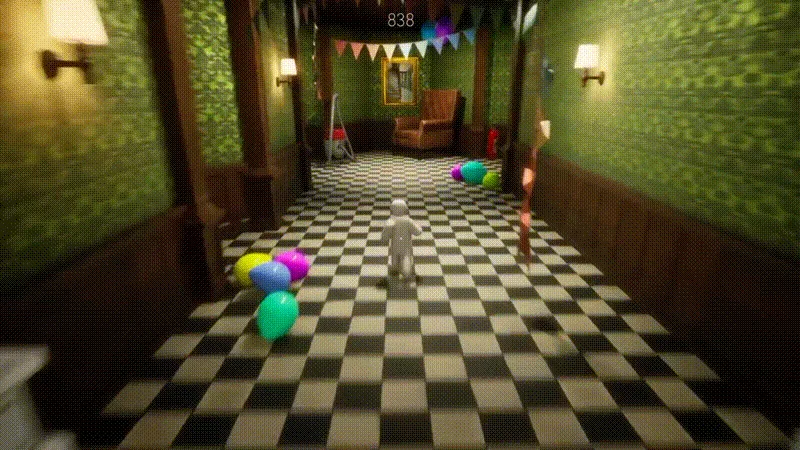
At its core, Meccha Chameleon is a competitive multiplayer hide and seek game built around camouflage, environmental awareness, deception, and detection. One side attempts to conceal itself within the environment while the opposing players search for visual inconsistencies and suspicious behavior before time expires. The simplicity of that structure makes the game accessible, while the camouflage mechanics create enough variation to keep individual matches unpredictable.
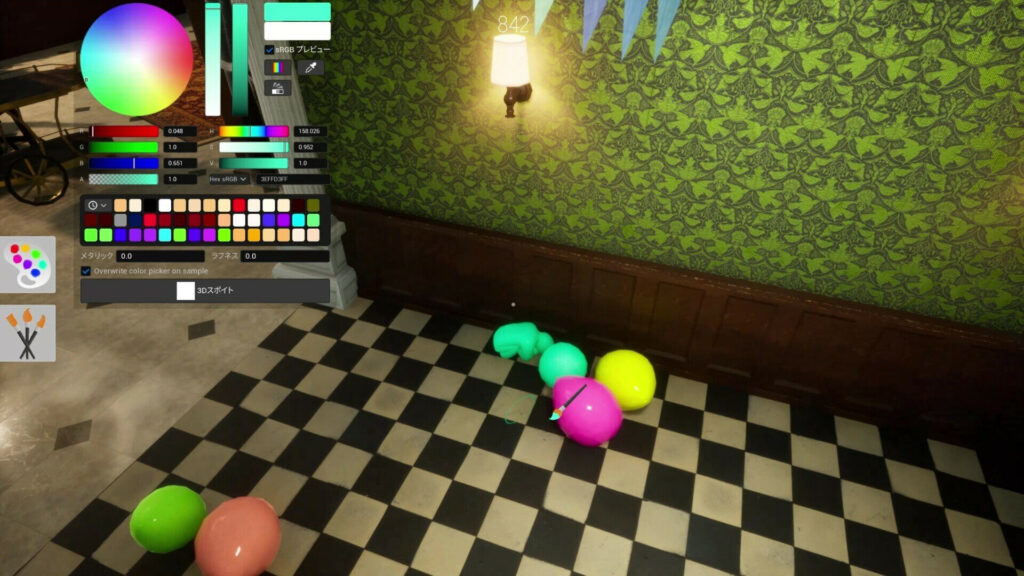
The paint and hide mechanic is one of the game’s most recognizable features. Rather than relying only on fixed prop transformation, players use their surroundings to disguise themselves by matching nearby surfaces and colors. Effective camouflage therefore depends on more than simply choosing a hiding spot. Players must consider background appearance, positioning, movement, lighting, and how closely their body blends into the surrounding environment.
The process can be understood through four basic ideas:
- Surface selection: Players identify a suitable wall, floor, object area, or environmental color to copy.
- Camouflage application: Their appearance is adjusted to better match the chosen surroundings.
- Positioning and posing: Players attempt to break up their recognizable silhouette and look like part of the environment.
- Exposure management: Movement, poor color matching, unusual shapes, or bad positioning can reveal the disguise.
This system creates a constant risk and reward decision. Staying completely still can make a strong disguise harder to notice, but remaining in an obvious location for too long may allow seekers to examine the area carefully. Repositioning can provide a better hiding opportunity, but movement itself can expose the player.
The mechanic also separates Meccha Chameleon from traditional Prop Hunt. Prop Hunt commonly asks players to transform into recognizable environmental objects and remain convincing among similar props. Meccha Chameleon places greater emphasis on visual camouflage and adapting the player’s appearance to the environment. This makes color matching, posing, lighting, and movement more important than simply selecting the correct object.
Multiplayer is especially entertaining with friends because familiarity creates another layer of deception. Players can recognize one another’s habits, predict preferred hiding styles, and react more strongly when someone successfully fools the group. Party matchmaking and private lobby style play therefore fit naturally with the game’s social design.
The multiplayer structure can support different match configurations and custom rules, but the central appeal remains the tension between hiding and seeking. The experience works because neither side performs the same task. Hiders think about camouflage, patience, and misdirection, while seekers focus on observation, environmental knowledge, and identifying anything that looks slightly wrong.
This asymmetric structure gives the game considerable replay value. Even when the maps remain familiar, human players continuously invent new hiding positions and strategies. A location that works perfectly in one round may fail immediately in the next because another seeker has learned the trick. That constant adaptation prevents the game from becoming entirely dependent on new scripted content.
Why Meccha Chameleon Stands Out in 2026 and What Could Come Next
Meccha Chameleon remains appealing in 2026 because its core multiplayer concept does not depend entirely on a constant stream of narrative expansions or large content updates. Hide and seek works because players themselves create variation through deception, observation, experimentation, and social interaction. A familiar map can continue producing different outcomes depending on who is playing and which strategies they attempt.
The game’s strongest qualities for long term play include its accessible rules, relatively short matches, social focus, emergent strategies, and the constant possibility of unusual situations. Players can participate casually without mastering complicated progression systems, while more experienced players can improve through map knowledge, camouflage skill, better positioning, and understanding common seeker behavior.
For players who enjoy multiplayer party games, Prop Hunt style tension, visual deception, and humorous competition, the game offers a distinctive alternative to more demanding competitive titles. Its lower barrier to entry also makes it easier to introduce to friends who may not regularly play complex multiplayer games.
The game’s reported 2 million sales milestone creates opportunities for the developers to expand without changing the foundation that made it successful. Potential additions discussed around its future include:
- New maps and environmental themes
- Additional camouflage abilities
- More multiplayer modes
- Seasonal events and challenges
- Expanded cosmetic progression
- Continued balancing and quality improvements
New environments would be particularly valuable because each map can introduce different camouflage opportunities, colors, lighting conditions, object layouts, and hiding strategies. Additional abilities could also broaden tactical options, although maintaining simplicity would be important because accessibility is one of the game’s biggest strengths.
The challenge after a viral launch is maintaining community activity once the initial surge slows. Multiplayer games depend heavily on active matchmaking populations, and adding too many complicated systems can sometimes weaken the straightforward experience that attracted players originally. Continued updates therefore need to provide variety without turning the game into something fundamentally different.
Its strongest path forward is likely to build around the same principles that drove its breakout success: easy to understand multiplayer, clever visual deception, short rounds, funny outcomes, and plenty of room for players to create their own strategies. If the developers can preserve those qualities while adding worthwhile maps, modes, and customization options, Meccha Chameleon has a foundation that can remain entertaining well beyond its initial viral moment.

Frequently Asked Questions (FAQs)
- What is Meccha Chameleon about?
Meccha Chameleon is a multiplayer hide and seek game built around camouflage, deception, and observation. Hiders attempt to blend their bodies into the surrounding environment, while seekers carefully search the map for suspicious shapes, color differences, movement, and other signs that reveal concealed players. - Is Meccha Chameleon free to play?
No. Meccha Chameleon is a paid title on Steam rather than a free to play game. Its exact price can vary depending on region, promotions, or future discounts, so players should check the current Steam listing when they are ready to purchase it. - How many players can join a match?
The game supports medium sized multiplayer lobbies designed to keep hide and seek matches manageable without making the maps feel either empty or excessively crowded. The multiplayer structure is intended to provide enough hiders and seekers to create unpredictable situations while maintaining the tension of searching and hiding. - Is it single-player?
No. Meccha Chameleon is primarily designed around multiplayer interaction rather than a traditional single player campaign. Its core gameplay depends on human players trying to deceive, predict, and discover one another, which is a major reason matches can play out differently even on familiar maps. - Can you play with friends?
Yes. Players can enjoy Meccha Chameleon with friends through party based multiplayer and private lobbies. Playing with people you know can make matches particularly entertaining because friends may begin recognizing one another’s favorite hiding strategies and trying to outsmart those habits in later rounds. - What makes it different from Prop Hunt?
The biggest difference is its emphasis on dynamic camouflage rather than simply transforming into a fixed environmental prop. Hiders use color matching, positioning, posing, and their surroundings to disguise themselves, making successful hiding depend more heavily on visual blending and how convincingly a player becomes part of the environment. - Why is it so popular?
Its popularity comes from an accessible multiplayer concept combined with unpredictable and often funny player interactions. Clever disguises, failed hiding attempts, last second discoveries, and unusual strategies create highly shareable moments, while streamers and short form videos have helped expose the game to a much larger audience. - Does it require a powerful PC?
No. The game is designed to run across a relatively broad range of PC hardware rather than requiring an extremely powerful gaming system. This accessibility makes it easier for groups of friends with different computer setups to participate without everyone needing high end hardware. - Are there ranked modes?
The game places greater emphasis on casual social multiplayer than on strict competitive ranking. Its main appeal comes from hiding, seeking, experimenting with camouflage, and creating entertaining situations rather than requiring players to constantly compete for positions on a serious ranked ladder. - Will there be updates?
Continued developer support is expected to help keep the multiplayer experience fresh. Future updates could provide balancing improvements, fixes, or additional content, although specific features such as new maps, modes, abilities, or seasonal content should only be treated as confirmed when the developers officially announce them.
Conclusion
Meccha Chameleon represents a modern evolution of multiplayer hide and seek design, combining accessible mechanics with high replay value and viral entertainment potential. Its rapid rise to over 2 million copies sold demonstrates the power of simple yet innovative gameplay systems in today’s gaming market. By blending stealth, humor, and social interaction, the game has secured its place as one of the most notable indie multiplayer hits in recent years.
Sources and Citations
- Steam. Official Storefront Listings, User Reviews and Community Information.
https://store.steampowered.com/ - Steam Community. Player Discussions, Guides and Public Community Feedback.
https://steamcommunity.com/ - SteamDB. Steam Player Counts, Historical Activity and Store Data.
https://steamdb.info/ - Metacritic. Player and Critic Review Aggregations.
https://www.metacritic.com/game/ - OpenCritic. Game Review Aggregations and Critical Reception.
https://opencritic.com/ - Game Developer. Multiplayer Game Design Analysis and Development Commentary.
https://www.gamedeveloper.com/design - GDC Vault. Multiplayer and Game Design Presentations.
https://www.gdcvault.com/ - Twitch. Gameplay Streams, Viewer Activity and Content Trends.
https://www.twitch.tv/directory/category/gaming - YouTube Gaming. Gameplay Videos, Streams and Community Content.
https://www.youtube.com/gaming - Steam Charts. Steam Player Activity and Engagement Estimates.
https://steamcharts.com/ - VG Insights. Steam Sales, Revenue and Player Engagement Estimates.
https://vginsights.com/ - Gamalytic. Steam Sales, Revenue, Player and Market Estimates.
https://gamalytic.com/
Recommendations
- Disney Won’t Give Moana a Sonic the Hedgehog-Style Revamp After The Rock’s Wig Backlash
- Dune: Part 3 Trailer Breakdown: Who’s Who, Robert Pattinson’s Scytale, and How Denis Villeneuve May Change Dune Messiah
- Clair Obscur: Expedition 33 on Switch 2 Is Still Too Early, Sandfall Says
- GDC Festival of Gaming 2026 Attendance Drops 30% to 20,000 Visitors After Rebrand
- Sonic, Shadow, Eggman and Tails Join Fortnite Chapter 7 Season 4 Override
- Final Fantasy 14 Nintendo Switch 2 Version Explained: Everything You Need to Know
- Lego Rumored To Be Releasing A $260 Poké Ball Display: 72154 Set Details, Release Date, Piece Count, and What’s Inside
- In This Skyrim Mod, You Have to Debate Dragons to Kill Them: How Blurbs’ Twitch Chat Dragon Debates Work
- Belkin Charging Case Pro for Switch 2 Review: Price, Battery Life, Features, and Is It Worth It?
- No Rest for the Wicked 1.5 Million Copies Sold! Moon Studios’ Early Access Sales Surge After the Together Co‑op Update



































































































