










In This Article (8 sections)
Meta’s 2025 Federal Tax Expense, Cash Taxes and the Limits of the 71% Claim
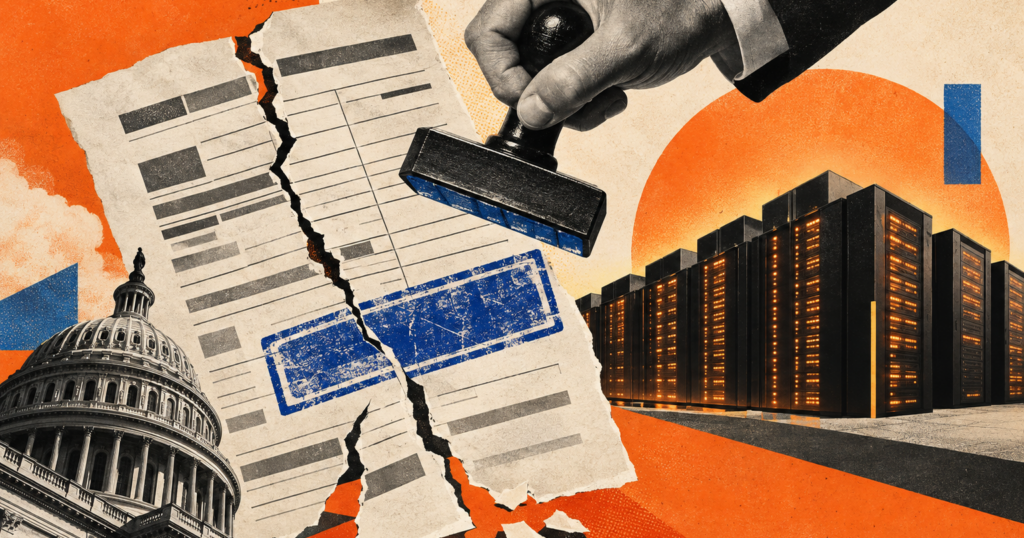
The claim that Meta cut its 2025 federal tax by 71% by classifying AI data centers as experimental combines a measurable accounting change with a much less certain explanation. Meta reported current federal income-tax expense of $2.820 billion for 2025, down from $9.569 billion in 2024. The $6.749 billion reduction equals approximately 70.53%, which explains the description of a nearly 71% decline. However, that percentage applies specifically to current federal income-tax expense. It does not represent Meta’s total tax expense, worldwide taxes, or the amount of federal tax actually paid in cash, and the company’s disclosures do not establish that experimental data center classifications caused the entire reduction.
The distinction becomes clearer when the other tax measures are compared. Meta reported $4.118 billion in federal cash income-tax payments, net of refunds, for 2025. Its combined current and deferred federal tax expense was $21.199 billion, compared with $4.860 billion in 2024, meaning total federal tax expense actually increased even as the current component declined. Worldwide income-tax provision rose from $8.303 billion to $25.474 billion, while worldwide cash income taxes paid fell from $10.554 billion to $7.578 billion, a reduction of approximately 28.2% rather than 71%.
These figures describe different parts of the same tax position rather than contradicting one another. Current taxes concern amounts payable or refundable for the current year, deferred taxes reflect future consequences of transactions already recognized, and cash payments measure money actually transferred to tax authorities.
Meta’s own explanation for lower federal cash-tax obligations emphasized the One Big Beautiful Bill Act, or OBBBA. In its third-quarter 2025 results, the company said implementation of the law would significantly reduce federal cash-tax payments during the remainder of 2025 and in future years. That supports a connection between the legislation and lower cash obligations, but it does not establish that a single AI data center classification independently produced the full decline in current federal expense. Determining that would require a detailed reconciliation separating research credits, research deductions, depreciation, transition provisions and other adjustments.
Meta also reported a $3.912 billion research-and-development tax-credit benefit for 2025, equivalent to approximately 4.6 percentage points in its effective-tax-rate reconciliation. That figure should not be presented as a separately disclosed $3.9 billion tax benefit specifically tied to experimental AI data centers. Meta also recorded $57.372 billion of research-and-development expense in its financial statements, up from $43.873 billion in 2024, but accounting R&D expense is not interchangeable with tax-qualified research expenditure. Section 41 limits qualifying costs to defined categories and applies its own statutory tests, so neither the credit benefit nor the accounting R&D total can by itself explain the $6.749 billion decline in current federal expense.

How Experimental AI Data Center Claims, Pilot Models and Research Tax Rules Work
Reports that Meta treats some AI facilities as experimental pilot models raise a narrower legal question than whether its data centers are technologically advanced. Research deductions and research credits have separate requirements, and simply using artificial intelligence, high-end computing or expensive infrastructure does not automatically qualify an expenditure for either treatment. The relevant inquiry is what was being developed, what technical uncertainty existed, which alternatives were tested and which specific expenditures are legally connected to that experimentation.
Research regulations describe a pilot model as a representation or model created to evaluate and resolve uncertainty during the development or improvement of a product. A pilot model can be fully functional and can eventually be used in the business without automatically losing its experimental character. However, the designation depends on the underlying development purpose rather than the label applied to the facility. The rules also distinguish between developing an experimental product and constructing infrastructure that happens to be used for research. Research performed on a computing system is therefore different from research merely conducted using that computing system.
This distinction is important for AI infrastructure. A company testing uncertain computing architectures, comparing system designs and resolving technical limitations presents a different factual situation from one installing additional copies of an established design. Even if an activity qualifies as research or experimentation under one provision, that does not automatically establish eligibility for the Section 41 research credit. The credit requires separate satisfaction of the research-expenditure, technological-information, business-component and experimentation requirements, including a process of evaluating alternatives to resolve uncertainty.
The experimentation requirement generally looks to whether at least 80% of the relevant research activities, measured using a reasonable and consistently applied basis, constitute elements of the experimentation process. That does not mean spending 80% of a facility’s budget on AI makes the entire facility eligible. The analysis applies to activities associated with the relevant business component. A defensible claim should therefore begin with the technical uncertainty and the work performed to resolve it, then identify the associated qualifying expenses rather than starting with a large capital budget and labeling the entire project experimental.
The same distinction applies to equipment. Purchasing Nvidia chips or other depreciable computing assets does not automatically generate a research tax credit because Section 41 excludes depreciable property from the definition of qualifying research supplies. That does not mean every project-related expense is disqualified. Qualifying employee services, eligible supplies, certain computer-use costs and appropriate contract research can receive different treatment. A computing asset may also qualify for depreciation deductions even if its purchase price does not qualify as a research-credit supply. Depreciation eligibility and research-credit eligibility are separate questions.
Research credits must also be distinguished from deductions. A credit reduces tax otherwise payable, while a deduction reduces taxable income. If a company receives a $1 billion deduction at a 21% marginal tax rate, the simplified tax reduction would be $210 million rather than $1 billion. Similarly, 100% bonus depreciation allows an eligible cost to be deducted immediately rather than reimbursing the company for the full purchase price. Research deductions and credits are also coordinated through Section 280C, which generally requires the relevant research expenditure amount to be reduced for the credit unless the taxpayer elects the applicable reduced-credit treatment.
Section 174A, OBBBA, IRS Scrutiny and Meta’s Tax-Risk Disclosures
Section 174A restored immediate deductions for qualifying domestic research or experimental expenditures paid or incurred in taxable years beginning after December 31, 2024. Taxpayers may alternatively elect to capitalize qualifying expenditures and amortize them over at least 60 months beginning when benefits are first realized. Foreign research remains subject to a different rule, generally requiring amortization over 15 years, so domestic and overseas development spending cannot automatically receive the same treatment.
Transition provisions can also materially affect current taxes. Taxpayers may elect to recover remaining unamortized domestic research expenditures from the 2022 through 2024 period either in the first taxable year beginning after 2024 or across two taxable years. Those deductions can create significant changes in current tax expense without requiring any new classification of a data center as experimental. Section 174A also does not make every research-related capital purchase immediately deductible under the research rules. Expenditures for acquiring or improving land and depreciable property remain restricted, while software development receives separate statutory treatment.
OBBBA changed several tax mechanisms at once, which is why its effects should not be compressed into one headline tax-savings figure. Research deductions and restored bonus depreciation affect the timing of deductions, while interactions with the Corporate Alternative Minimum Tax can create separate financial-accounting consequences. Meta’s third-quarter 2025 results illustrate this distinction. The company expected lower federal cash-tax payments but simultaneously recorded a $15.93 billion one-time, noncash tax charge related to implementing the legislation and CAMT. That charge was not a $15.93 billion payment to the IRS. It reflected accounting consequences associated with the expected use of future tax benefits.
A later development occurred in 2026, when Meta reported an $8.03 billion tax benefit that partially offset the earlier charge. The company attributed that benefit to Treasury Notice 2026-7 and its treatment of previously capitalized US research-and-development costs under CAMT. That benefit belongs to 2026 rather than the 2025 current-expense comparison and does not amount to an IRS determination approving any particular AI data center classification.
Meta’s financial filings also disclose substantial uncertainty around tax positions. At December 31, 2025, it reported $16.450 billion of gross unrecognized tax benefits, up from $15.131 billion a year earlier, primarily related to research credits and transfer pricing. This is an aggregate figure involving multiple issues and should not be portrayed as an expected repayment tied solely to AI data centers. Unrecognized tax benefits concern uncertainty over whether a tax position will be sustained, while valuation allowances can concern whether future tax benefits will actually be usable. Those are distinct accounting questions.
The IRS could examine any research-related AI infrastructure claim by testing both the underlying activities and the expenditures attached to them. Relevant evidence could include engineering records, design comparisons, test results, employee activity documentation and detailed expense allocations. A challenge could also affect only part of a project, since proving legitimate research in one area would not automatically qualify every building, server or service associated with it. Potential examination, however, is not proof that a claim is invalid, just as the absence of a public rejection is not proof that the IRS has affirmatively approved it.

Lawmaker Scrutiny, Big Tech Tax Comparisons and What the Debate Means for Taxpayers
On September 28, 2026, Senator Elizabeth Warren and other lawmakers announced an investigation into AI-related tax benefits involving Meta, Microsoft, Amazon and Alphabet. Their stated concern was that substantial deductions connected with artificial intelligence investment were reducing corporate tax obligations while major technology companies continued reporting strong profits. The inquiry extended beyond research credits to infrastructure spending, deductions and corporate efforts to influence tax policy. A September 27 letter to Meta requested information about AI-related expenditures and tax treatment, including data center construction and equipment, with a response requested by October 11, 2026.
The investigation raises both transparency and policy questions, but a congressional request for information is not equivalent to an IRS assessment or court ruling. Claims in political communications about subsidies, lobbying or corporate influence should be treated as the lawmakers’ arguments rather than established findings. Congress can question whether an incentive produces enough public value even if a company is using it lawfully, so legal compliance and policy effectiveness are separate issues.
Other major technology companies also reported large declines in certain current-tax measures, although direct comparisons require care. Amazon’s current federal income-tax expense fell from $9.039 billion in 2024 to $1.220 billion in 2025, a decline of approximately 86.5%, and its annual report connected new depreciation and research provisions with lower cash-tax payments.
Microsoft reported current federal expense of $2.461 billion for fiscal 2026, compared with $14.086 billion for fiscal 2025, approximately 82.5% lower, but its fiscal year ends June 30 and therefore does not match Meta’s calendar-year reporting period. Alphabet reported current federal and state taxes combined of $13.378 billion in 2025, down from $21.101 billion in 2024, approximately 36.6%, but that combined measure cannot be presented as federal-only expense.
These differences make a simple ranking of which company received the largest AI tax break unreliable. Similar movements in current tax expense do not establish identical legal strategies, and broadly available depreciation or research provisions can affect companies differently depending on their investments, fiscal years, assets and tax positions. Meta’s reported pilot-model approach therefore should not automatically be attributed to Amazon, Microsoft or Alphabet merely because their current-tax measures also declined.
For taxpayers, the broader question is whether these incentives generate enough additional public benefit to justify their cost. Immediate deductions accelerate when businesses receive tax benefits, while credits can directly reduce tax otherwise payable. Potential benefits could include additional domestic research, technological advances, productive investment and knowledge that ultimately benefits other firms or consumers. The counterargument is that some incentives may subsidize projects that companies would have undertaken anyway, reducing tax collections without meaningfully changing investment behavior.
Evaluating that trade-off requires two separate questions. The first is whether companies’ claims comply with existing law. The second is whether the law itself produces outcomes worth the public cost. Greater transparency about ordinary depreciation, domestic research deductions and narrower research-credit claims would make that assessment easier because grouping them together under a single label such as “AI subsidy” obscures which policy is actually responsible for each tax effect.
Frequently Asked Questions (FAQs)
- Did Meta cut its total federal tax expense by nearly 71% in 2025?
No. The nearly 71% figure refers specifically to Meta’s current federal income-tax expense, which fell from $9.569 billion in 2024 to $2.820 billion in 2025. It does not describe total federal tax expense. Once the deferred federal tax component is included, Meta’s total federal tax expense actually increased, so the word “current” is essential when describing the decline. - Did Meta’s worldwide cash-tax payments also fall by 71%?
No. Meta’s worldwide cash income taxes paid, net of refunds, fell from $10.554 billion in 2024 to $7.578 billion in 2025, a decline of approximately 28.2%. Cash taxes measure money actually transferred to tax authorities, while current federal tax expense is an accounting measure for a specific jurisdiction and period. The two figures answer different questions and should not be used interchangeably. - Does calling an AI data center experimental make it eligible for research credits?
No. A company cannot make an entire facility eligible for research credits simply by describing it as experimental. The underlying activities must satisfy the applicable research requirements, including showing that qualifying technical uncertainty existed and that a process of experimentation was used to evaluate alternatives. The specific expenditures claimed must also fall within eligible categories. - Is all of Meta’s disclosed research-credit benefit attributable to AI data centers?
No such allocation is provided in the disclosed reconciliation. Meta reported a $3.912 billion research-and-development tax-credit benefit for 2025, but that figure is not identified as a data-center-only benefit. It may reflect qualifying research activities across the company, so attributing the entire amount to experimental AI facilities would go beyond what the disclosure establishes. - Can a fully functioning system qualify as a pilot model?
Potentially. Research-expenditure regulations allow a pilot model to be fully functional, and later commercial use does not automatically disqualify the development work. The important question is whether the model was created to evaluate and resolve qualifying uncertainty during development, rather than whether it eventually became useful in ordinary business operations. - Are purchased GPUs automatically eligible research supplies?
No. The research-credit definition of qualifying supplies excludes depreciable property, which generally means purchased GPUs and similar computing hardware do not automatically qualify as research supplies. Other project costs, such as eligible employee research services, qualifying supplies, certain computer-use expenses or contract research, must be evaluated separately under their own rules. - What did Section 174A change?
Section 174A restored immediate deduction treatment for qualifying domestic research or experimental expenditures for taxable years beginning after December 31, 2024. Taxpayers can also elect to capitalize and amortize qualifying costs instead. The change affects the timing of deductions, but it does not automatically make every data center, server purchase or infrastructure expense a qualifying research expenditure. - Does 100% bonus depreciation mean equipment is free after taxes?
No. One hundred percent bonus depreciation means an eligible asset’s cost can generally be deducted immediately rather than spread across several years. The actual tax benefit depends on the applicable tax rate and other tax rules. For example, a $1 billion deduction at a 21% tax rate would produce a simplified $210 million tax reduction, not a $1 billion reimbursement. - Did Meta’s 2026 tax benefit establish IRS approval of its AI claims?
No. Meta attributed its 2026 tax benefit to Treasury guidance concerning Corporate Alternative Minimum Tax treatment of previously capitalized domestic research costs. That addresses a different tax-accounting issue from whether a particular AI data center or expenditure qualifies for the research credit. It should not be interpreted as a project-specific IRS approval of Meta’s reported AI-related classifications. - Does the lawmakers’ investigation prove Meta violated tax law?
No. The investigation is a request for information and a policy challenge concerning the scale and justification of AI-related tax benefits. It is not an IRS assessment, court ruling or other legal determination that Meta violated the law. Lawmakers can question whether tax incentives provide sufficient public value even when the underlying tax treatment may ultimately be found lawful.
Conclusion
Meta’s current federal income-tax expense fell dramatically in 2025, but the percentage alone cannot explain the cause. It does not measure total federal expense, worldwide tax expense or federal cash payments.
The reported experimental-facility strategy raises substantive questions about the boundary between qualified research and ordinary computing infrastructure. Those questions must be assessed separately from immediate research deductions, bonus depreciation and minimum-tax accounting.
The defensible conclusion is that Meta’s current federal tax expense fell nearly 71%, while the public disclosures do not establish that experimental AI data center classifications caused the entire decline. Evaluating the strategy requires project-level evidence and careful application of the research rules; not assuming that either a corporate label or a political accusation settles the matter.
Sources and Citations
- Financial figures are drawn from Meta’s 2025 Form 10-K and quarterly earnings releases, alongside Amazon’s and Alphabet’s 2025 annual reports and Microsoft’s fiscal 2026 filing. SEC
- The legal framework comes from Sections 41 and 174A, Treasury regulations, IRS Form 6765 instructions, Revenue Procedure 2025-28 and the relevant depreciation and CAMT notices. Legal Information Institute
- The congressional discussion is grounded in the lawmakers’ announcement and their letter to Meta; those documents establish the investigation’s questions, not the legal outcome of any tax claim. Senator Elizabeth Warren
Recommended
- EA Sports UFC 6 is Being Announced “This Week,” It’s Claimed: Reported June 19, 2026 Release Date, Platforms, and Price
- Focus Entertainment Will Publish Maverick Games’ Clutch in Spring 2027
- Blender Braid Hair Curves Geometry Nodes Preset: Comprehensive Guide
- Heroes of Might and Magic 3 Remake: Ubisoft’s 4K Return in 2027
- Samsung’s 2026 Micro RGB TVs: Release Date, Sizes, Pricing, and How Micro RGB Compares to OLED
- King’s Quest: Complete Guide to the Games, Characters, Story, and Walkthroughs
- What to Expect at Xbox’s Big Summer Showcase Event: Start Time, Predictions, and Rumored Reveals
- ‘Claiming What’s Due’ Quest Walkthrough In Assassin’s Creed Black Flag Resynced
- Palworld 1.0 Auri and Shaolong Tower Boss Guide: Location, Unlock Quest, Weaknesses, and Best Team
- What 3D Program Did Arcane Use? An In-Depth Look at the Animation Tools Behind Riot Games’ Hit Series



































































































