





In This Article (8 sections)
Deadlock City Never Sleeps Update Drives a New Concurrent Player Record
Valve’s Deadlock reached a new all-time concurrent-player peak following the September 29, 2026 release of the City Never Sleeps update. SteamDB recorded 228,086 simultaneous players that day, establishing a new record for Deadlock itself. The milestone should not be confused with Steam’s overall concurrent-player record, however. Deadlock climbed into the platform’s leading games but did not overtake Counter-Strike 2 or Dota 2. In the Steam chart snapshot reviewed for this article, Deadlock ranked ninth by current players with 146,343 active, compared with 1,113,686 for Counter-Strike 2 and 765,996 for Dota 2. These are live figures that change over time, while the 228,086 figure represents Deadlock’s historical peak.
Deadlock remains an unfinished, invitation-only project despite its growing audience. Valve describes it as an early-development multiplayer game containing experimental gameplay and temporary artwork, so City Never Sleeps should be understood as another major stage of the ongoing playtest rather than the launch of a completed product. The game itself combines a third-person hero shooter with MOBA systems, placing two teams of six against each other in matches built around shooting, character abilities, resource collection, lane pressure and defensive objectives. Players collect souls to improve their builds while ultimately trying to defeat the opposing team’s Patron. Mechanical skill matters, but individual kills must be weighed against objectives, resource advantages and the wider state of the map.
City Never Sleeps gave players several visible reasons to return, including a redesigned city, new neutral encounters, interface improvements, the Broker merchant and an announced six-hero rollout. The timing strongly connects the update with the record player count, but the available evidence does not establish which individual feature caused the surge. A substantially changed map can attract returning players immediately, while a staggered hero rollout creates multiple opportunities for renewed attention over subsequent weeks. Those explanations are plausible interpretations of the update’s appeal rather than findings from a retention study.
The distinction between a peak and sustained growth is also important. Concurrent players measure how many people were active at the same time, not the number who played during an entire day, downloaded the update or received invitations. A record demonstrates exceptional simultaneous interest, but it does not by itself reveal player satisfaction, retention, matchmaking quality or the size of Deadlock’s eventual audience after access becomes unrestricted. The stronger long-term measure will be whether activity remains elevated once the immediate curiosity surrounding City Never Sleeps and its hero releases subsides.

Deadlock Map Rework, New Districts, Neutral Enemies and Broker System
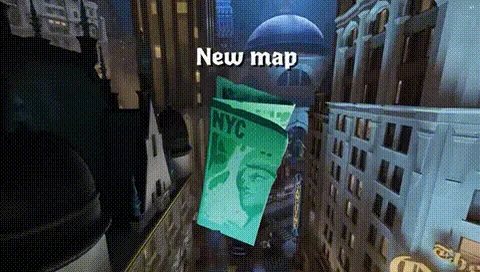
City Never Sleeps substantially changes the identity of Deadlock’s city without introducing the three-lane structure for the first time. The three main routes remain, but York, Broadway and Greenwich now have more distinctive visual and environmental identities. York emphasizes industrial scenery and financial landmarks such as the stock exchange, Broadway adopts a busier central-city atmosphere with signage, elevated infrastructure and taller buildings, while Greenwich leans toward occult education, vegetation and the university environment. The Hidden King and Arch Mother bases were reported as unchanged by this particular overhaul.
More distinctive areas can make the competitive map easier to read because recognizable surroundings help players understand their position without constantly checking the minimap. Returning players should still avoid assuming that visual familiarity means their old navigation habits remain correct. Routes can lead to different opportunities, and the important information is how each lane connects to nearby areas, how exposed those approaches are and how quickly teammates or opponents can rotate into a fight.
Four themed districts fill spaces between the primary streets: Theater, Chinatown, Haunted Lot and Plaza. Their inhabitants include Stage Hands, Crabbage Pots, Festival Spirits, Shrooms and Underhands, giving the side areas distinct supernatural identities. Neutral encounters are now organized around Haunts, with different strength variants and attacks involving projectiles, melee strikes, spores, shields and explosions. This makes them more than passive camps that players can approach in exactly the same way every time.
Environmental rewards also introduce clearer risk-reward decisions. The Chinatown Bell Tower offers concentrated souls but rings while they are being collected, potentially revealing that someone is there. The Sunken Plaza sends players into a deeper area where descending affects stamina and reduces awareness of outside sounds. In both cases, the resource opportunity carries a positional or information cost. Players need to consider remaining health, movement resources and nearby enemies before committing rather than treating every available reward as automatically worthwhile.
The Broker adds another layer to item decisions. This temporary merchant exchanges eligible high-tier equipment for Corrupted Items that provide additional benefits alongside penalties. The Broker was announced as a limited-time event lasting until the first new hero arrived, so it should not be treated as a permanent system guaranteed to remain throughout the entire hero rollout. Valve described the first shipment as arriving at roughly 30 minutes into a match, with later opportunities appearing at average intervals of about 15 minutes.
Corrupted Items are trade-offs rather than straightforward upgrades. Positive and negative attributes can vary, while corresponding rolls within a particular match are shared rather than independently generated for each purchaser. The important decision is whether a penalty interferes with what a specific build needs to accomplish. A powerful benefit may still be a poor choice if the drawback damages survivability, positioning or reliable execution at a critical stage of the match.
Several smaller environmental additions similarly reward awareness. Steam Vents provide invisibility and some regeneration while a player stands on them, Healing Snacks restore health and Tough Crates provide extra souls but require a Heavy Melee attack to open. These mechanics are most useful when incorporated into sensible rotations rather than pursued at the expense of urgent objectives. A Steam Vent provides concealment rather than invulnerability, while a Tough Crate’s reward must be weighed against the time and exposure required to break it.
Deadlock Six-Hero Rollout, Voting System and Multiplayer Changes
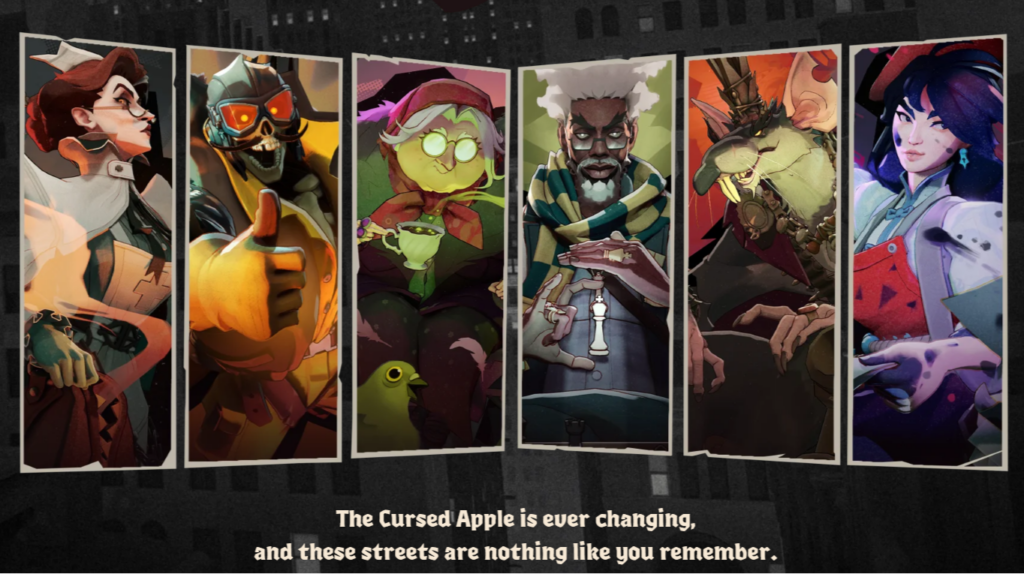
City Never Sleeps announced six new heroes: Nurse Harrow, Rat King, Solomon, Deadman Danny, Baba and Violet. Their presentation reinforces Deadlock’s supernatural-city identity, with concepts ranging from Nurse Harrow’s oversized syringe-like weapon and Rat King’s crowned-rat design to Solomon’s floating chess-inspired presentation, Deadman Danny’s skeletal appearance and explosives, Baba’s elderly-witch concept and Violet’s artist paintbrush motif. Those visual ideas should not be treated as complete role definitions. A character who looks medical is not automatically a traditional healer, just as a physically imposing design does not automatically establish a tank role.
The playable kits will determine how these characters actually function within Deadlock’s economy, objectives and team fights. Existing players therefore need to learn each new hero twice: first as someone they may choose to play and again as an opponent or teammate whose abilities affect positioning and coordination. Six additions expand the competitive environment beyond simply giving players six new personal choices.
Valve chose a staggered release schedule rather than making all six heroes available on September 29. Two hero releases were scheduled each week on Tuesdays and Fridays at 2:00 p.m. Pacific Time beginning October 2, producing rollout slots on October 2, 6, 9, 13, 16 and 20. Those dates establish release opportunities rather than a predetermined character order because the community vote decides which hero arrives next.
Voting takes place in the Pregame lobby during Standard or Street Brawl matches. The winning team’s votes count double, while the first win of the day supplies another doubling of the voting reward. This turns ordinary play into part of the roster rollout and gives the community some influence over which hero reaches the game first. Predictions, popularity and campaign activity should not be presented as official results until a winner has actually been established.
New Hero Priority Tokens form a separate system beginning with the first hero release. Voting affects which character is released next, while priority tokens concern the player’s chance of getting access to newly released heroes. Mixing the two systems together can create confusion because one determines community ordering and the other affects character selection after release.
The broader multiplayer structure remains rooted in six-versus-six matches, but City Never Sleeps alters the context in which those matches occur through new environmental risks, map identities and item decisions. A returning player may therefore experience a familiar hero differently even if that character received no major direct balance change. The surrounding map, interface information, new opponents and resource opportunities can all affect the decisions required during a match.

Deadlock HUD Improvements, Invite Access and Valve’s Plans Before Full Release
City Never Sleeps also makes substantial interface and accessibility changes. Updated health bars can display numerical health, stamina information and ultimate availability, while improved ally indicators make teammates easier to track. The Event Feed identifies the item or ability responsible for a killing blow, providing more information about how fights were decided. Valve followed the main September 29 update with additional adjustments to player-name display, health-bar presentation, enemy colors and the minimap signal associated with the Bell Tower, showing that readability remains an active area of refinement.
The shop now includes filters and recommendations based on live purchasing data. These can help players narrow large item lists, but popularity should not be mistaken for universal suitability because an item commonly purchased on a particular hero may still be inappropriate for a specific matchup or build. Accessibility additions include customizable enemy-interface colors, adjustable dialogue subtitles, reduced camera shake, reticle color controls, automatic mantling, automatic forward movement and a firing toggle. Auto Fire removes the need to hold the firing input continuously, but it does not automatically aim for the player.
Technical work includes a newer Source 2 codebase, rendering and audio performance changes, network prediction improvements and more immediate activation when abilities and items are triggered. Downward-projecting character shadows were also updated with performance and tracking in mind. These changes should be treated as reported technical improvements rather than guarantees of a specific frame-rate increase on every computer. Players returning after the update may benefit from reviewing their settings because older preferences may no longer provide the clearest or most comfortable presentation.
Access remains restricted through invitations from existing playtesters. Deadlock having a public Steam page does not mean Valve has opened unrestricted enrollment. The established process is to connect with someone who already has access and have that person use Deadlock’s in-game invitation system. Once processed, the recipient receives a Steam notification that allows access to be accepted. Menu placement and processing time can change during development, but players should keep the process within Steam and never provide passwords, authentication codes or account access to someone offering an invitation.
New players are better served by learning the fundamentals through tutorials and bot play before trying to understand every system during competitive matches. For City Never Sleeps specifically, using a familiar hero while exploring the revised city can reduce the number of unfamiliar elements at once. Learning a new map, new items and a new character simultaneously makes it harder to determine which decisions are causing problems.
Valve has not announced a public release date for Deadlock. Steam continues to list the date as “To be announced,” and neither the September update nor the October hero schedule establishes when unrestricted access will begin. A polished environmental overhaul does not necessarily mean the project is close to completion because visible presentation improvements can coexist with experimental systems, unfinished progression and modes still being tested.
Valve has confirmed ongoing work on progression and hero or Hideout customization, with plans to expose those systems to player feedback before full release. Other areas include continued work on the Midboss, Guardians and Walkers, along with gradual hero remodels. Larger item redesigns, additional items and alternate game modes remain more experimental and should not be treated as guaranteed simply because Valve is testing ideas. Reports of a possible PvE mode likewise remain speculation rather than a confirmed feature with a release schedule. City Never Sleeps is significant because it delivers substantial changes while reinforcing that Deadlock remains a game whose broader design is still being revised.
Frequently Asked Questions (FAQs)
- What is the Deadlock City Never Sleeps update?
It is the major September 29, 2026 update for Valve’s ongoing Deadlock playtest. City Never Sleeps substantially reworks the city, introduces new neutral encounters and environmental features, updates the interface, adds the temporary Broker system, and begins a staggered six-hero rollout. It is a major development milestone, but it is not Deadlock’s unrestricted public launch or final release. - What is Deadlock’s highest concurrent player count?
SteamDB records an all-time peak of 228,086 concurrent players on September 29, 2026. Concurrent means those players were active at the same time, so the number should not be interpreted as the total number of people who played during the entire day, downloaded the update, or received invitations. It is specifically a peak simultaneous-player figure. - Did Deadlock overtake Counter-Strike 2 and Dota 2?
No. In the current-player snapshot used for the article, Deadlock ranked ninth on Steam, while Counter-Strike 2 and Dota 2 were first and second. Deadlock’s 228,086 figure represents a new record for Deadlock itself, not a record for all of Steam or evidence that it became Valve’s most-played multiplayer game. - Who are the six new Deadlock heroes?
The announced heroes are Nurse Harrow, Rat King, Solomon, Deadman Danny, Baba, and Violet. They were revealed as part of the City Never Sleeps update, but all six did not become playable on September 29. Valve instead planned a staggered release process in which the community vote helps determine the order in which they are added. - When are the new Deadlock heroes scheduled to release?
The rollout begins on October 2, 2026, followed by release slots on October 6, 9, 13, 16, and 20. Valve scheduled two releases per week on Tuesdays and Fridays at 2:00 p.m. Pacific Time. These dates identify the six release slots, while community voting determines which specific hero occupies each slot. - How does Deadlock hero voting work?
Voting takes place in the Pregame lobby during Standard or Street Brawl matches. The winning team’s votes count double, while the first win of the day provides another doubling of the voting reward. These votes influence which unreleased hero becomes available next, so the release order is community-directed rather than fixed in advance. - Is the Broker a permanent Deadlock merchant?
No. The Broker and Corrupted Items were announced as a temporary City Never Sleeps feature rather than a permanent shop system. The planned availability was tied to the arrival of the first new hero, so the Broker should not be assumed to remain active throughout all six hero releases or become a permanent part of every future match. - What do Steam Vents and Tough Crates do?
Steam Vents grant invisibility and a small amount of regeneration while a player remains on them, making them useful for concealment and recovery. Tough Crates provide extra souls but must be opened with a Heavy Melee attack. Neither feature is automatically safe to use, because players can still be exposed to nearby opponents while stopping to recover or collect the reward. - Can anyone download and play Deadlock immediately?
No. Deadlock still uses limited playtest access through invitations from existing players. Having a public Steam page, following the game, or adding it to a wishlist does not automatically grant access. Players generally need an invitation from someone who already has access before they can join the playtest through Steam. - Has Valve confirmed Deadlock’s full release date?
No. Valve has not announced a full public release date, and Steam continues to list the game’s release date as “To be announced.” The September 29 City Never Sleeps update and the October hero-release schedule only apply to the ongoing playtest. They should not be interpreted as evidence that Deadlock’s unrestricted launch is scheduled for any particular date.

Conclusion
City Never Sleeps has given Deadlock a substantial new burst of attention, culminating in a record exceeding 228,000 simultaneous players. The update’s importance extends beyond that headline: it changes how the city looks, expands the encounters within it, and creates an ongoing reason to return through the new-character rollout.
The lasting test is whether those additions improve the experience after the initial excitement fades. Clearer information, meaningful environmental decisions, and understandable character interactions will matter more than a single chart position.
For now, the evidence supports a strong but measured conclusion: Deadlock is attracting a large audience while Valve continues to reshape it. That is a notable development milestone, not confirmation that the unfinished game has reached its final form or secured an imminent public launch.
Sources and Citations
- Valve’s Steam listing establishes the game’s access restrictions and release status. Its development announcement and official changelog document current priorities and follow-up changes. Steam Store
- SteamDB supplies the historical player-count record, while Steam’s official most-played chart supplies the comparative ranking snapshot. SteamDB
- GamesRadar+, PC Gamer, and Shacknews provide contemporaneous reporting. The unofficial unDeadlock database supplies supplementary documentation of individual mechanics, settings, and voting rules; it is not a Valve publication. GamesRadar+
Recommended
- Koei Tecmo Plans to Increase Its Staff by 1.5 Times, Targeting 5,000 Employees
- Onimusha Way of the Sword Uses Multi-Actor Motion Capture
- EA Sports FC 27: Kylian Mbappé Cover and July 23 Reveal
- Project Rabbit Official Reveal Trailer: Everything We Know, Release Date, Gameplay Details, Leaks & Full Breakdown
- High On Life VR Announced for Meta Quest, PS VR2 and SteamVR
- Like or Die: NC’s Survival FPS Where Streamers Reshape the Map With Blocks
- Corsair Cove: Principle Points Unlock Guide – Best Paths and Rewards
- Canva Starts Previewing a More Powerful Version of Its AI Assistant (Canva AI 2.0)
- PlayStation Plus June 2026 Games Revealed: Sony Confirms Grounded, Darktide & Nickelodeon All-Star Brawl 2
- Final Fantasy 7 Revelation Director Says Streaming Is a Crisis for RPGs Without Enough Choice



































































































