











In This Article (8 sections)
What the DOJ Meta Drug Probe Investigated and Why the Criminal Inquiry Changed Course
The DOJ Meta drug probe concerns federal scrutiny of whether Meta’s platforms facilitated or profited from illegal drug sales and how the company responded to that activity. Reuters reported in March 2024, citing The Wall Street Journal, that prosecutors in Virginia were examining drug-related activity on Meta platforms and had requested records, with assistance from the Food and Drug Administration.
The central legal question was broader than whether criminals used Facebook or Instagram to advertise prohibited substances. Investigators could also examine what the company knew, how employees responded, whether safeguards were effective, and whether particular conduct met the elements of an applicable criminal law. The existence of the investigation established federal scrutiny, but it did not prove that Meta or any executive committed a crime.
Bloomberg Law reported on October 15, 2026, that Justice Department leaders had halted the criminal investigation after Meta’s lawyers made representations to senior officials. According to the report, prosecutors in the Western District of Virginia were directed to stop the criminal inquiry, and executives were no longer being summoned before the grand jury. Officials were reportedly considering alternative outcomes that could include a civil fine or a non-prosecution agreement. This development changed the direction of the case without producing a courtroom determination about the underlying allegations. A decision to stop criminal investigative steps can reflect evidentiary concerns, prosecutorial priorities, negotiated cooperation, or several factors at once, so its significance depends on the reasoning and any eventual written resolution.
Meta’s legal team reportedly escalated its objections after subpoenas were issued to executives and emphasized the company’s cooperation and efforts to prevent illegal drug sales. Defense advocacy of this kind is a normal part of a federal investigation because attorneys can challenge the government’s theory, dispute factual assumptions, explain internal business processes, and argue for alternatives to prosecution. The relevant institutional question is how those arguments were evaluated against the investigative record. Public confidence depends partly on whether decision-makers identified specific evidentiary weaknesses, verified claimed improvements, and applied comparable standards to other organizations. The existence of sophisticated legal advocacy does not prove favoritism, but it makes documented reasoning especially valuable when senior officials redirect a major investigation.
The reported executive subpoenas should also be interpreted carefully. A federal grand jury investigates possible crimes and determines whether probable cause exists to support an indictment, but it does not determine guilt or innocence. Executives may be called because they can explain reporting structures, internal policies, escalation procedures, or decisions that documents alone cannot clarify. Receiving a subpoena does not establish that the person is a criminal target, and the reviewed reporting does not establish whether particular Meta executives were potential defendants or simply witnesses. The narrower conclusion is that prosecutors considered executive testimony relevant to their evidence-gathering process before headquarters reportedly halted that route.
The public safety context behind the investigation extends beyond Meta. The Drug Enforcement Administration has warned that criminal networks use social media to advertise counterfeit prescription pills and reach young people who may not understand what they are buying. Its threat materials identify services including Facebook and Instagram, helping explain why investigators and policymakers have focused on online drug distribution. That context does not establish criminal liability for a platform, but it provides a reason to examine whether moderation, reporting, account enforcement, and cooperation with law enforcement work effectively. The important distinction remains between criminals exploiting a platform and evidence showing that the platform itself committed a provable offense.
Assessing platform performance also requires more than counting content removals. Removal totals can show that enforcement activity occurred, but they do not reveal how many harmful offers remained visible, how quickly reports were handled, or whether previously identified sellers returned. Meta publicly states that illicit drug sales violate its rules, and its advertising policies prohibit promotion of illicit or recreational drugs and certain unsafe substances. Those policies provide evidence of the company’s stated position rather than independent proof that enforcement was effective in every case. A strong assessment would connect internal procedures with measurable evidence about exposure, repeat violations, response times, and outcomes.

Civil Fines, Non-Prosecution Agreements, and Why a Halted Probe is Not Exoneration
A possible civil financial resolution would need to be judged through its legal basis and written terms rather than the size of any payment alone. A settlement could include an admission, a denial of liability, or a resolution that leaves disputed facts unsettled. It could also apply only to specified conduct during a defined period rather than eliminating exposure for unrelated activity. The scope of the release, the agencies involved, and any continuing obligations would therefore be as important as the headline amount. Without a final document, it would be premature to describe a proposed fine as either meaningful accountability or an inadequate response.
Remedial obligations could be especially important if the government chooses a civil route. A financial payment might be accompanied by requirements concerning escalation procedures, record preservation, repeat offenders, compliance reviews, or reporting. Those possibilities are analytical examples rather than confirmed terms in Meta’s case. Their value would depend on whether responsibilities are clearly assigned, performance can be measured, and failures have consequences. A large payment without enforceable changes could produce a different outcome from a smaller payment combined with demanding and verifiable obligations.
A non-prosecution agreement would represent another possible resolution. Such agreements generally involve a government commitment not to prosecute specified conduct if the company complies with defined conditions. They should be distinguished from deferred prosecution agreements, where charges are generally filed and prosecution is delayed while the defendant satisfies the agreement. DOJ’s broader corporate prosecution framework allows prosecutors to consider cooperation, compliance, remediation, individual responsibility, and collateral consequences when selecting an enforcement response. These general principles provide context without establishing what a Meta agreement would contain.
The treatment of executives or other individuals would also need to be read separately from any corporate agreement. Protection given to a company should not automatically be assumed to cover every employee or executive, just as a negotiated resolution of one investigation would not necessarily resolve every legal dispute involving the business. The enforceability of the agreement would matter more than its label. Conditions are meaningful only when compliance is measurable, responsibility is assigned, and breach consequences are clear. A public resolution document would allow readers to determine exactly what conduct was covered and what obligations remained.
Halting the criminal probe does not amount to exoneration. An acquittal follows criminal proceedings and reflects the government’s failure to prove guilt under the applicable standard, while a prosecutorial decision not to charge may occur before a court evaluates the evidence. DOJ charging decisions involve both evidentiary assessment and prosecutorial judgment, so a decision not to proceed does not automatically establish that every disputed action was proper. The reverse is equally important: the existence of a federal investigation does not prove that Meta or its executives were guilty. Accurate reporting needs to preserve both limits.
The same principle applies if a settlement is eventually reached. If a written agreement contains admissions, those admissions should be reported precisely. If it contains no admission of wrongdoing, reporting should not invent one or imply that a payment automatically establishes criminal responsibility. A factual statement attached to a resolution could clarify what conduct the government believes occurred, while the release terms could identify which entities, individuals, time periods, and claims are covered. Without those documents, the case remains procedurally important but factually incomplete.
Several questions therefore remain unresolved. The public record reviewed here does not establish a completed agreement, the final payment amount, the exact legal theory the government considered, or the obligations Meta might accept. It also does not explain how evidence already collected by prosecutors would be treated after the reported halt. Later developments should be assessed against those specific questions rather than used to retroactively confirm every interpretation of the October 15 report. The absence of complete public detail creates uncertainty rather than proof of either corporate innocence or improper intervention.
Zuckerberg’s AI Policy Role, DOJ Leadership Intervention, and Questions About Transparency
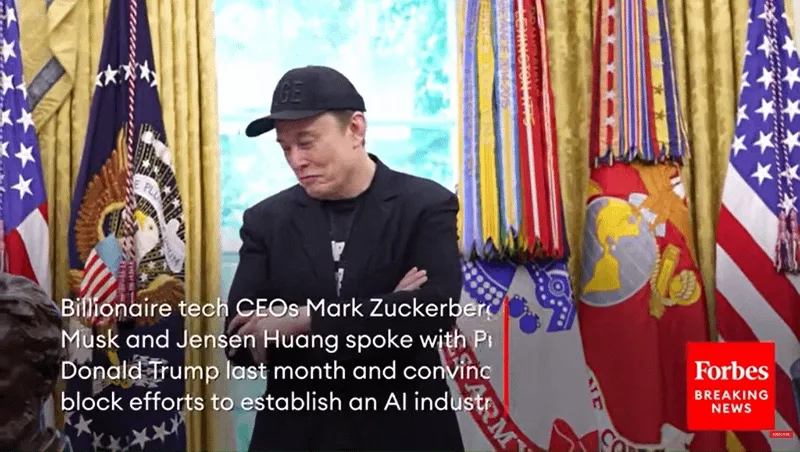
Mark Zuckerberg’s participation in federal AI policy discussions provides relevant context because Bloomberg Law’s October 15 report placed the DOJ decision alongside his involvement with the Trump administration’s AI initiatives. Reuters separately reported his participation in a White House event involving a voluntary AI safety accord, where he discussed internal controls. The Washington Post also reported that the administration’s AI task force was engaging technology leaders, including Zuckerberg, while considering AI risks and government expectations. These interactions establish policy access but do not demonstrate that Meta used that access to influence the separate drug investigation. The distinction between relevant context and evidence of causation is essential.
Chronology can justify scrutiny without proving a political bargain. Zuckerberg’s policy engagement occurred before the October 15 report concerning the Justice Department investigation, which explains why the two developments were discussed together. A stronger claim about improper influence would require evidence connecting particular communications, officials, requests, or decisions. Public appearances at AI policy events cannot establish what was privately discussed about an unrelated law-enforcement matter. Access creates an opportunity to advocate, but proving that the opportunity affected a prosecutorial decision requires more specific evidence.
A fair inquiry would examine contemporaneous communications, the stated legal reasoning behind the DOJ decision, normal review practices, and whether the case departed from comparable enforcement procedures. It should also consider explanations that do not depend on favoritism, including genuine concerns about evidence or legal theory. Officials should not be presumed to have acted improperly simply because a powerful company benefited from a decision. At the same time, the significance of Meta’s political access does not disappear merely because headquarters has authority to review investigations. Transparency is particularly valuable when legitimate government power and high-level corporate influence exist at the same time.
Bloomberg Law identified acting Deputy Attorney General Trent McCotter and Aakash Singh among officials considering alternative resolutions. Meta declined comment, while DOJ declined to discuss ongoing matters and referred to its broader corporate enforcement approach. Headquarters review can be a legitimate mechanism for resolving disagreements, ensuring consistency, and determining whether a case is legally sustainable. Career investigators may have detailed knowledge of the evidence, while senior officials are responsible for broader departmental judgments. Neither position is automatically correct simply because of institutional rank.
The key question is why the criminal route was reportedly stopped. A credible explanation could identify the disputed legal theory, the evidence that supported or weakened it, and the reasons an alternative resolution better served the public interest. Such an explanation need not disclose protected grand jury material. Transparency could instead come through a final agreement, a carefully limited public statement, congressional or inspector oversight, or another mechanism that explains the decision without compromising protected evidence. Internal disagreement is not proof of misconduct, but the way that disagreement is resolved can determine whether years of investigative work produce charges, negotiated obligations, or no public action.
Zuckerberg’s AI policy involvement also raises a broader governance question separate from the drug case. Technology executives can provide policymakers with valuable technical and operational information, but their companies also have commercial interests in how rules are designed. A voluntary AI framework raises questions about who defines adequate safeguards, who verifies compliance, what evidence reaches the public, and whether independent researchers or affected communities receive comparable access. Those issues deserve examination even without any connection to the DOJ probe. Corporate participation in policymaking is relevant to institutional accountability without being proof of influence over prosecution.
The appropriate standard therefore works in both directions. Meta’s access to senior policymakers should not be treated as evidence of a quid pro quo without supporting facts, but neither should the DOJ decision be shielded from scrutiny merely because prosecutorial discretion is lawful. The public needs enough information to understand whether ordinary review procedures were followed and whether the ultimate resolution addresses the conduct investigators were examining. Institutional credibility depends on demonstrating that enforcement decisions follow evidence and established standards rather than the political or economic importance of the company involved.

What the Meta Case Means for Platform Accountability and What Evidence is Still Needed
The broader importance of the Meta investigation lies in the challenge of holding platforms accountable for criminal activity conducted through services used by millions of legitimate users. Automatic corporate liability for every unlawful user action would ignore the distinction between operating a platform and committing an offense. At the same time, unrestricted corporate discretion would leave important questions about known risks, repeat offenders, safety systems, and foreseeable misuse unanswered. A credible accountability framework needs evidence connecting specific corporate conduct to the applicable legal and regulatory standards.
Platform governance and criminal enforcement address overlapping but different problems. Criminal prosecution requires proof of an offense under the relevant legal elements, while safety governance can address product design, transparency, moderation systems, escalation processes, and foreseeable misuse even when criminal charges are not appropriate. A serious platform failure may justify reforms without satisfying the evidentiary requirements for criminal prosecution. Conversely, a highly publicized social problem does not lower the legal standard required to charge a company or individual.
Useful accountability measures should focus on outcomes that can be tested. Companies can be evaluated on how quickly they respond to credible reports, whether repeat offenders return, whether evidence is preserved, how dangerous networks are disrupted, and whether safeguards reduce exposure for younger users. Internal activity metrics require context because increased removals could reflect better detection, more violations, or changes in reporting categories. Independent scrutiny helps distinguish those explanations and provides a check on company-generated measures.
Procedural fairness remains equally important. Meta and its executives should be judged according to evidence and established legal standards, while people harmed by illegal drug sales deserve serious examination of possible platform failures. A subpoena should not be treated as a finding of guilt, and a decision not to prosecute should not be treated as a declaration that every concern was unfounded. This evidentiary discipline allows accountability reporting to remain rigorous even when the allegations involve severe harm.
The final resolution, if one is published, should therefore be examined for several concrete elements. Readers need to know the legal authority used, the conduct covered, whether Meta admits or disputes particular facts, the amount of any payment, the duration of obligations, and the consequences if those obligations are breached. Compliance requirements, monitoring arrangements, information-sharing duties, and the treatment of individuals could be as important as the financial component. Those details would show whether the government’s alternative to criminal prosecution imposes measurable accountability.
An official explanation of why the criminal theory was abandoned or redirected would also help distinguish an evidence-based judgment from a policy preference. Without that explanation, outsiders may struggle to assess whether prosecutors discovered a legal weakness, whether Meta’s cooperation changed the appropriate remedy, or whether leadership simply chose a different enforcement philosophy. The October 15 reporting establishes that senior officials reportedly intervened in the course of the investigation, but it does not provide a complete record of the reasoning behind that decision. Later documentation could materially change how the episode should be interpreted.
The wider lesson is that institutional credibility depends on transparent, evidence-based enforcement. Companies should not be treated as criminally responsible merely because bad actors exploit their platforms, but their size and political access should not insulate them from appropriate scrutiny either. Negotiated resolutions can provide meaningful accountability when obligations are concrete, monitored, and enforceable. Prosecutorial discretion can also be legitimate when the evidence or legal theory does not support charges.
The DOJ Meta drug probe therefore remains best understood as an unresolved accountability case rather than a completed verdict on Meta’s conduct or government motives. The available reporting describes a significant shift from criminal investigation toward possible alternative resolution, while leaving key factual and legal questions unanswered. Clear final terms, documented reasoning, measurable compliance obligations, and appropriate oversight would provide the strongest basis for judging the outcome. Until those elements are available, conclusions about exoneration, political favoritism, or the adequacy of enforcement should remain proportionate to the evidence.

Frequently Asked Questions (FAQs)
- What is the DOJ Meta drug probe about?
The inquiry concerns potential corporate responsibility for illicit drug activity conducted through Meta’s services. The central legal question goes beyond whether criminal users created accounts or posted prohibited material on Facebook or Instagram. Investigators could examine what the company knew about the activity, how it responded to warnings, and whether particular corporate conduct satisfied the requirements of an applicable law. A platform can be exploited by criminals without the company itself necessarily committing an offense. Establishing corporate liability therefore requires evidence connecting the company’s actions or decisions to specific legal elements rather than simply demonstrating that illegal drug activity occurred on its platforms. - Has Meta been found guilty in this investigation?
No criminal conviction is established by the reporting discussed here. A federal investigation is an evidence-gathering process and does not by itself determine that the company or any individual committed a crime. The reported decision to halt or redirect the criminal inquiry is also different from a court ruling on the underlying allegations. A decision not to prosecute can involve evidentiary concerns, prosecutorial judgment, cooperation, or other considerations without producing a judicial finding about what happened. The investigation, allegations, prosecutorial decisions, and proven legal findings should therefore remain clearly separated. - Does an executive subpoena mean the executive committed a crime?
No. A subpoena requires a person to provide testimony, documents, or other evidence relevant to an investigation, but it is not a finding of wrongdoing. Senior executives may have useful knowledge about company policies, reporting structures, internal decisions, or how employees responded to particular problems. Their testimony could support investigators’ concerns, weaken them, or clarify the responsibilities of other people. An executive can therefore be an important witness without being a proposed criminal defendant. Determining whether someone was considered a witness, subject, or potential target requires evidence beyond the existence of the subpoena itself. - Why does a grand jury matter?
A federal grand jury plays an important role in investigating possible crimes and determining whether probable cause exists to support an indictment. It can receive testimony and other evidence presented during an investigation, including information obtained through subpoenas. Its function is different from that of a trial jury because it does not determine whether a defendant is guilty beyond a reasonable doubt. An indictment allows a criminal case to proceed but is not itself a conviction. The reported effort to obtain executive testimony before the grand jury therefore indicates an evidence-gathering stage rather than a completed judgment about Meta or its executives. - Would a civil fine establish criminal guilt?
No. A civil resolution and a criminal conviction carry different legal meanings and can involve different standards, authorities, and consequences. A company may agree to make a payment while admitting certain facts, denying liability, or resolving disputed claims without settling every factual disagreement. The actual agreement would need to be examined to determine which conduct and time periods were covered. Any admissions, denials, compliance obligations, or releases would also matter when describing the outcome. The existence or size of a civil fine alone would therefore not establish that Meta committed a criminal offense. - What should readers examine in a non-prosecution agreement?
Readers should examine the agreement’s scope, factual provisions, compliance requirements, duration, monitoring arrangements, and consequences if its conditions are violated. The document should clarify which conduct, entities, and time periods are covered by the government’s commitment not to prosecute. It is also important to identify whether Meta would have to make admissions, improve particular controls, preserve records, provide reports, or satisfy other measurable obligations. Protection for the corporation should not automatically be assumed to extend to executives or employees unless the agreement explicitly says so. The significance of a non-prosecution agreement therefore depends on its enforceable terms rather than the label attached to the resolution. - Does Zuckerberg’s policy access prove political interference?
No. Mark Zuckerberg’s access to senior policymakers and participation in federal AI discussions provide relevant context, but they do not by themselves prove that political influence changed the DOJ investigation. Establishing improper interference would require evidence connecting particular communications, requests, officials, and prosecutorial decisions. The timing of policy engagement and a favorable enforcement development can reasonably prompt scrutiny without proving causation. A careful assessment would compare the decision with ordinary Justice Department procedures and examine the documented reasons for changing the case’s direction. Neither political favoritism nor complete independence should be assumed without supporting evidence. - Why is fentanyl relevant to social media safety?
Fentanyl is relevant because law-enforcement warnings describe criminal networks using social media to market counterfeit prescription pills that may contain dangerous substances unknown to buyers. Young people can be especially vulnerable when familiar platforms make sellers appear accessible or when counterfeit pills resemble legitimate medication. This creates questions about exposure, reporting systems, repeat offenders, account enforcement, and how quickly platforms respond to credible warnings. These broader dangers help explain why federal authorities have examined online drug distribution and platform safeguards. They do not, however, independently establish that Meta committed a criminal offense, which would require separate evidence satisfying the relevant legal requirements. - Can a platform have strong policies and still face accountability questions?
Yes. Written policies establish what a company says users may or may not do, but enforcement determines how those rules operate in practice. A platform may prohibit illegal drug sales and remove substantial amounts of prohibited material while still facing questions about specific failures, repeat offenders, delayed responses, or information known to decision-makers. Removal totals alone also do not reveal how much harmful content remained visible or how often users encountered it. A complete assessment should therefore consider stated policies, actual enforcement, exposure, response times, and what happened after credible problems were identified. Strong policies are relevant evidence, but they do not automatically resolve questions about implementation or corporate responsibility. - What would clarify the investigation’s final outcome?
The clearest evidence would be an official resolution document, published agreement, factual statement, or sufficiently detailed Justice Department explanation of the decision. Such material could identify the legal basis of the resolution, the conduct covered, the relevant time period, and whether Meta admits or disputes particular facts. It could also explain any financial payment, compliance requirements, monitoring provisions, information-sharing duties, and consequences for failing to satisfy the agreement. An explanation of why the criminal investigation was halted or redirected would help outsiders distinguish evidentiary concerns from broader enforcement policy choices. Until that information is available, conclusions about exoneration, improper intervention, or the adequacy of the final resolution should remain proportionate to the evidence.

Conclusion
The reported shift in the DOJ Meta drug probe is significant because it sits at the intersection of platform safety, prosecutorial discretion, and public confidence in how major enforcement decisions are made. Its importance cannot be reduced to whether criminal charges ultimately appear, since the underlying questions also involve the evidence gathered, the legal theory considered, the reasons for changing course, and the obligations attached to any alternative resolution.
The same discipline should apply to political interpretation: Zuckerberg’s involvement in federal AI policy discussions is relevant context, but any claim that those relationships caused the DOJ decision requires direct supporting evidence rather than chronology alone. For social media accountability, the enduring test is whether safeguards, enforcement decisions, and negotiated remedies produce measurable changes in how harmful activity is detected, disrupted, and prevented. Until final terms and official reasoning are available, the strongest conclusion remains limited but important: a major change in enforcement strategy has been reported, while essential questions about its basis, fairness, and practical consequences remain unresolved.
Sources and Citations
- Bloomberg Law, October 15, 2026: Ben Penn reports that Justice Department leaders halted the Meta criminal drug investigation and were considering alternative resolutions, including a potential civil fine or non prosecution agreement. Bloomberg Law
Bloomberg Law: Meta Platforms Drug Sale Criminal Case Halted by DOJ Leaders - Reuters, March 16, 2024: Reports on the earlier federal investigation into whether Meta platforms facilitated illicit drug sales, based on reporting from The Wall Street Journal. Reuters
Reuters: US investigating Meta for role in illicit drug sales - U.S. Department of Justice, Principles of Federal Prosecution of Business Organizations: Provides DOJ policy governing corporate prosecution decisions, including cooperation, compliance programs, remediation, individual accountability, and possible negotiated resolutions. Department of Justice
DOJ: Principles of Federal Prosecution of Business Organizations - U.S. Department of Justice, Principles of Federal Prosecution: Explains the department’s general standards for charging decisions and prosecutorial judgment. Department of Justice
DOJ: Principles of Federal Prosecution - U.S. District Court for the Middle District of Alabama, Grand Jury Service: Provides official background on federal grand jury proceedings and their distinction from a criminal trial. almd.uscourts.gov
U.S. District Court: Grand Jury Service - U.S. District Court for the Middle District of Alabama, Handbook for Grand Jurors: Explains the investigative role of federal grand juries, indictments, evidence gathering, and probable cause. almd.uscourts.gov
U.S. District Court: Handbook for Grand Jurors - Drug Enforcement Administration, Social Media Drug Trafficking Threat Overview, January 2022: Describes criminal drug networks using platforms including Facebook and Instagram to advertise illicit drugs and counterfeit prescription pills. DEA
DEA: Social Media Drug Trafficking Threat Overview - Drug Enforcement Administration, Fake Pills Fact Sheet, November 2024: Provides public safety information on counterfeit prescription pills, fentanyl risks, and the use of social media and ecommerce platforms to sell fake pills. DEA
DEA: November 2024 Fake Pills Fact Sheet - Meta Transparency Center, Advertising Standards: Meta’s official advertising standards include restrictions governing illicit or recreational drugs and other prohibited or restricted substances.
Meta Transparency Center: Advertising Standards - Meta, March 11, 2026: Meta describes technology, verification measures, partnerships, and cooperation with law enforcement intended to combat scams and abusive activity across its platforms. About Facebook
Meta: Fighting Scammers and Protecting People With New Technology and Partnerships - Reuters, September 29, 2026: Reports on President Trump’s meeting with major AI executives, including Mark Zuckerberg, and their participation in a voluntary AI safety agreement and discussions about safeguards. Reuters
Reuters: Trump and AI CEOs sign voluntary safety pact - The Washington Post, October 9, 2026: Reports on the Trump administration’s AI task force, its engagement with technology industry leaders, and its effort to address AI safety concerns while maintaining rapid development. The Washington Post
The Washington Post: Trump’s Super Intelligence Force wants safety without slowing innovation
Recommendations
- Subnautica 2 Early Access Roadmap: Co-Op Updates, Sprinting, and More
- Virtua Fighter 6 Leak Explained
- Best Gaming Headsets for 2026: Top Wireless, Wired, PC, PS5, and Xbox Picks
- Take-Two CEO Comments on Roblox and GTA Explained
- All characters and color variations in Mario Tennis Fever: Full roster, unlocks, and alternate colors
- Assassin’s Creed Black Flag Remake
- How to Make a 3D VTuber Avatar: The Complete Guide for Beginners and Content Creators
- Farm to Table Grow Your Own Food & Make Fine Dishes in Cozy Restaurant Simulator: Complete Gameplay Guide
- Don’t Fret Hits All the Right Notes for a Frightening Survival-Horror Experience
- Assassin’s Creed Black Flag Resynced Post-Game Support Teased Ahead of GTA 6



































































































