






In This Article (9 sections)
Expeditions: Samurai Release Date, Early Access Details, and Gameplay Features Compared to Expeditions: Rome
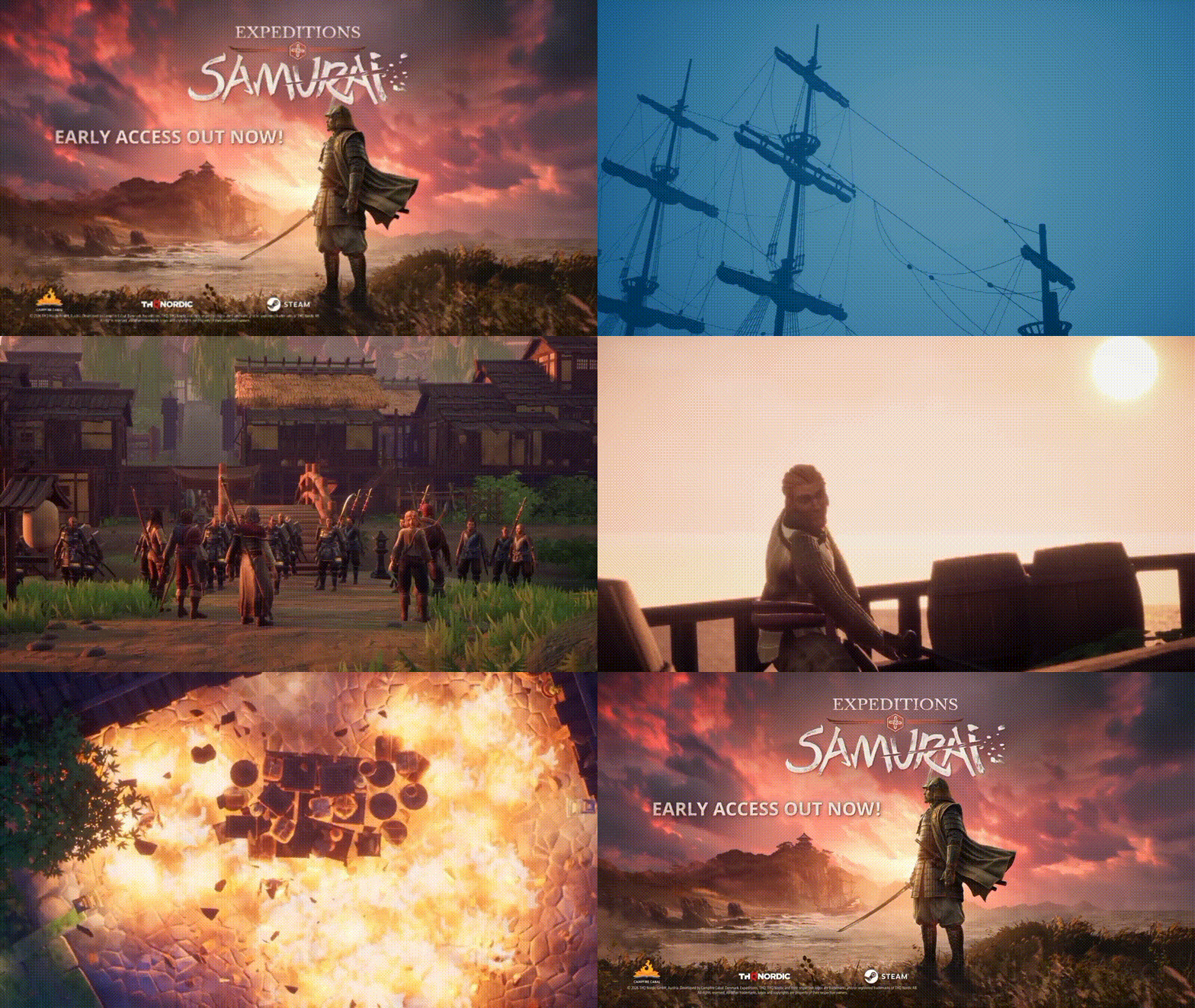
Expeditions: Samurai entered Steam Early Access on August 7, 2026. The Early Access version is available on Windows PC, while Campfire Cabal has said that PC is its immediate priority. No PlayStation, Xbox, or Nintendo console version has been officially confirmed. Creative director Jonas Wæver has said the studio will assess other platform possibilities after focusing on the PC release. He also indicated that a GOG release is planned for the finished version, although future storefront plans remain subject to change until they are formally announced.
The initial Early Access build contains the complete first act of the game. Campfire Cabal describes this launch content as five main story quests, three side quests, and approximately six to eight hours of gameplay. The build includes the core combat system, real-time exploration, stealth mechanics, world-map travel, character progression, companion interactions, cooperative play, and fully voiced quests. Save files created during Early Access are intended to remain compatible with later updates, meaning players should not need to restart their campaigns when additional acts are released.
Campfire Cabal plans three major Early Access updates. The first update will focus on responding to player feedback, technical reports, and balance concerns discovered after launch. The second is expected to be the largest content expansion, introducing Act Two, new locations, additional characters, and an estimated six to ten more hours of quests. The third update will focus more on gameplay additions, equipment, character options, and improvements based on feedback from Act Two.
The full release is currently targeted for the first quarter of 2027, although that schedule depends on development progress, community feedback, and the reception of the Early Access version. The completed game is planned to include the entire story, additional quests, more weapons and armor, expanded build customization, village rulership, crafting, improved balance, further polish, and quality-of-life improvements. The Q1 2027 release window should therefore be considered a development target rather than a fixed launch date.
Expeditions: Samurai is a historical party-based computer RPG focused on exploration, conversations, tactical combat, problem-solving, and decisions that influence the campaign. Like previous Expeditions titles, it uses a real historical setting as the foundation while allowing players to change events through the actions of a fictional protagonist.
The game follows Expeditions: Rome but tells a separate story in a different time period and location, meaning players do not need prior knowledge of Rome’s characters or events. Returning players will recognize systems such as historical storytelling, party management, equipment-based abilities, branching dialogue, companion relationships, and turn-based battles. However, Samurai introduces several changes designed to make the experience closer to a traditional CRPG.
Campfire Cabal built Samurai using the foundation of Expeditions: Rome while upgrading the project to Unreal Engine 5 and adding features such as a full stealth system, environmental interactions, dynamic three-dimensional character portraits, controller support, and cooperative multiplayer. The game also brings back attributes and noncombat skills similar to those found in Expeditions: Viking while maintaining the class and equipment systems developed in Rome.
The difference between Samurai and Expeditions: Rome is also reflected in their campaign structures. Rome focused on armies, military command, conquest, and the responsibilities of a Roman political figure. Samurai instead returns to a more personal and companion-focused adventure style associated with Expeditions: Viking. Flynn begins the story without an army, official authority, or a secure position. The opening act focuses on survival, gathering resources, building trust, finding shelter, and protecting a small crew rather than controlling a large military force.
Stealth is another major distinction. Exploration takes place in real time, allowing party members to separate, move into advantageous positions, avoid guards, search for alternate routes, or prepare surprise attacks. Combat switches to turn-based encounters when violence becomes unavoidable or when players choose to begin an assault. This creates a closer connection between exploration and combat by allowing players to influence how encounters start.
Expeditions: Samurai also introduces two-player campaign co-op, creating another major difference from Expeditions: Rome. Both players can control their own version of Flynn, participate in conversations, share responsibility for companions, coordinate strategies, compete for romantic attention, and influence important decisions. The feature is not a separate challenge mode but a cooperative version of the main narrative campaign.

Expeditions: Samurai Story, Setting, Character Creation, and Role-Playing Explained
The story of Expeditions: Samurai is set in 1600, at the end of more than a century of political fragmentation and warfare in Japan. The death of Toyotomi Hideyoshi in 1598 created a struggle over the future of the country and the authority exercised in the name of his young heir. Rival coalitions eventually formed around powerful daimyō, leading to the Eastern Army associated with Tokugawa Ieyasu and the Western Army organized around Ishida Mitsunari.
Historically, these forces met at the Battle of Sekigahara on October 21, 1600. Tokugawa’s victory made him Japan’s dominant military leader, and he later received the title of shōgun in 1603. The battle became a defining turning point between the Sengoku period and the political order established under the Tokugawa shogunate.
Expeditions: Samurai places Captain Flynn in Japan before this decisive confrontation. The privateers aboard the De Albatros have survived a disastrous voyage, but reaching land does not solve their problems. The crew is hungry, poorly supplied, politically vulnerable, and unfamiliar with the competing interests surrounding them. Their arrival draws attention from Japanese authorities, missionaries, merchants, armed retainers, and foreign groups seeking influence in the region.
The opening of the campaign intentionally places Flynn at the bottom of the political hierarchy. Many Japanese characters view him as an unreliable outsider, while the Jesuit mission sees him as a potential religious opponent. Flynn’s first goal is not to command armies or influence national politics but to keep the crew alive, recover supplies, find allies, and prove that De Albatros represents more than a damaged foreign ship.
The story gradually expands from survival into larger political struggles. Campfire Cabal has said that Act Two will bring Flynn into influential circles in Osaka, where he can begin interacting with powerful figures. By proving his usefulness, Flynn can eventually earn the status of hatamoto and take on responsibilities that extend beyond the immediate crew. The completed game is also planned to include village rulership, creating a progression from unwanted outsider to landholding retainer.
The historical setting is used as more than background decoration. Religious competition, European trade, gunpowder weapons, piracy, cultural misunderstandings, regional loyalties, and rival political interests all influence the world Flynn enters. Campfire Cabal has said it researched historical sources and worked with consultants to create a credible foundation before allowing players to alter events through their decisions.
Captain Flynn is a customizable protagonist rather than a direct recreation of William Adams. Players can choose Flynn’s first name, appearance, gender presentation, attributes, and initial class. The character becomes the leader of the surviving privateers aboard De Albatros, meaning leadership involves managing disputes, making moral decisions, negotiating for resources, and deciding which groups deserve the crew’s trust.
Unlike the Roman political figure from Expeditions: Rome, Flynn begins as a privateer without official authority or military power. Players can shape him into an honorable captain, pragmatic survivor, manipulative negotiator, religious believer, ruthless opportunist, compassionate outsider, or another type of leader through dialogue choices and actions.
In co-op, the second player creates another version of Flynn, and the story treats both protagonists as twins. They can be designed as identical or fraternal twins, with some conversations adjusted to acknowledge that both characters share the central role rather than making one player a simple companion.
The game’s role-playing systems are built around character development, dialogue choices, and specialization. Flynn begins with one of four classes, while the eight companions each have unique classes connected to their personalities and combat roles. Players gain Skill Points and Perk Points as they level, allowing them to develop combat abilities and noncombat expertise separately.
A main class provides an active ability, eight class perks, and access to a class resource that powers additional abilities. Later in the campaign, characters are expected to unlock trained classes that provide another specialization, while general perks and equipment-based abilities allow further customization.
Attributes and skills also affect situations outside combat. Authority and Persuasion can influence negotiations, Manipulation can support deceptive solutions, Insight can reveal motives, Lockpicking and Breaking provide alternative approaches to obstacles, and Survival or Tinkering can create different solutions during exploration.
Dialogue is therefore part of the gameplay rather than only a storytelling feature. A diplomatic Flynn may resolve conflicts peacefully, while a character focused on physical strength may force a solution. Players can choose respectful, humorous, aggressive, compassionate, or opportunistic responses that affect relationships and outcomes.
Expeditions: Samurai Combat, Stealth, and Tactical Gameplay Systems
Expeditions: Samurai combines real-time exploration with turn-based tactical combat. Players can move through settlements, investigate locations, trade, speak with characters, sneak through areas, and position their party before combat begins. Once a fight starts, the game switches to a tactical battlefield where movement, abilities, equipment, positioning, and turn order determine the outcome.
The combat system builds on ideas from Expeditions: Rome while introducing additional flexibility. Campfire Cabal describes encounters as fast and adaptable, with movement, attacks, and interruptions capable of resolving together rather than forcing every action into a strict sequence. In co-op, both players can plan and act during the same allied phase before enemies respond.
Positioning is central to combat. Ranged characters need clear lines of sight and protection, while melee fighters must consider enemy reach and the risks of moving between targets. Cover can reduce ranged threats, flanking creates offensive opportunities, and leaving an enemy’s range may trigger attacks of opportunity.
The environment also plays an active role in battles. Players can knock enemies through weak structures, ignite flammable areas, shoot down lanterns, exploit narrow spaces, and use objects around the battlefield to create advantages. Fire can spread or behave differently depending on the surface, making the environment part of the tactical decision-making process.
Equipment and class choices determine available strategies. Weapons, armor, and clothing can provide active abilities, meaning changing equipment may alter a character’s actions rather than only improving statistics. A player might use one character to hold a doorway, another to attack from cover, and another to provide support or reposition allies.
Stealth expands these options before combat begins. Players can separate party members, move them independently, observe patrol routes, avoid detection, find alternate paths, and prepare ambushes. Characters with strong infiltration abilities can quietly remove threats, unlock routes, or position themselves for surprise attacks.
Gadgets support stealth-based approaches. Firecrackers can distract guards and create openings, allowing another party member to move unnoticed or prepare a takedown. Cooperative play can use these systems together, with one player creating a distraction while another approaches an enemy from behind.
However, splitting the party also creates risks. A character who moves too far ahead may become isolated if detected, while companions outside the combat area may not immediately participate. Successful stealth requires careful attention to patrol patterns, positioning, escape routes, and the location of the rest of the party.
Stealth is not designed to replace combat entirely. It can provide peaceful solutions, remove specific threats, collect information, or create a stronger opening position before a battle. Players can still rely on direct combat or diplomacy, but ignoring stealth removes one of the game’s most flexible tools.
The tactical system also connects with character builds and party composition. Companions can cover weaknesses, allowing a combat-focused Flynn to rely on others for diplomacy or infiltration, while a socially focused captain can depend on stronger fighters during difficult encounters.
Early previews described combat as flexible and fast-paced, with environmental interactions, classes, stealth, and positioning creating many possible approaches. However, some impressions of the first act suggested that normal difficulty may not fully test the available mechanics. Since the Early Access version only represents the beginning of the campaign, later updates, additional abilities, higher difficulties, and balance changes may significantly affect the final experience.

Expeditions: Samurai Equipment, Companions, Co-Op, and Choice Systems Explained
Expeditions: Samurai combines European privateer equipment with traditional Japanese weapons, giving players access to firearms, blades, bows, polearms, armor, and utility items. The equipment system is designed around creating different character roles rather than simply increasing damage numbers.
Weapons can provide up to four active abilities, while outfits and helmets or hats can contribute two additional defensive or utility abilities. This means equipment directly affects what a character can do during combat, making loadout decisions an important part of character development.
Unlike the randomized equipment abilities found in Expeditions: Rome, Samurai uses consistent ability sets for equipment variants. For example, an Ornate Naginata has a fixed ability package that remains the same between copies of that weapon, while a Balanced Naginata provides a different set of abilities. Players can therefore understand what a specific item does without repeatedly checking randomized versions.
Any character can equip any item, but advanced abilities require the appropriate proficiency perks. A character without heavy armor proficiency can still wear heavy armor and receive its basic defensive benefits, but may not be able to use the specialized abilities attached to it. The same applies to weapons, where basic attacks are available while training unlocks the full tactical potential of the equipment.
This system allows players to experiment with different builds. A frontline fighter can combine defensive armor abilities with crowd-control weapons, while a mobile character can focus on ranged attacks and movement-based perks. Characters can specialize in one role or adapt depending on the needs of the party.
Crafting is planned as part of the full Expeditions: Samurai experience, but it is important to separate the complete game from the Early Access version. The official Early Access information lists crafting as a feature intended for the finished release, meaning players should not assume the complete crafting system is available in the August 7 launch build. Additional equipment options, deeper customization, and crafting systems are expected to expand during development.
The equipment system also connects with the companion and relationship mechanics. Expeditions: Samurai features eight main companions, each with a personal history, unique combat identity, individual questline, and different reactions to Flynn’s choices. Relationships can develop into friendship, romance, rivalry, resentment, or hostility.
The companions include:
- Antje: Orphaned during the fall of Antwerp and later raised in an Amsterdam convent, Antje becomes a skilled infiltrator after turning to burglary before hiding aboard De Albatros. She specializes in mobility, evasion, and hunting bow combat.
- Étienne: A Franciscan priest searching for a missing friend in Japan, Étienne opposes unnecessary violence and provides diplomatic, moral, and support-focused abilities.
- Johan: The son of a Dutch viscount who abandoned another commission to join his uncle’s ship, Johan hopes to restore his lost status through a combination of swordsmanship and firearm skills.
- Kage: A rōnin and former Toyotomi retainer who fought during the failed invasions of Korea, Kage is shaped by his past experiences and seeks vengeance while using weapons such as the yumi, katana, and flute.
- Piet: The experienced quartermaster of De Albatros, Piet is protective, dependable, and built around resilience and frontline defense.
- Raina: The ship’s medical practitioner, who joined the crew during its time in Argentina, contributes through support abilities and ranged combat while maintaining a dry sense of humor.
- Tora: An onna-musha and high priestess connected to the Shintō shrine at Kanseidō, Tora is confident, courageous, and effective in direct combat.
- Ishiko: A trained shinobi specializing in disguise, deception, stealth, evasion, and surprise attacks.
Companion relationships are connected to gameplay rather than existing only for story purposes. Approval changes based on Flynn’s words and actions, and reaching certain levels can provide bonuses. Keeping a companion at the Mutinous level for too long can cause them to leave the crew or potentially fight Flynn, while reaching Devoted approval can create a permanent friendship.
Romance is also part of the companion system, but friendship is intended to be equally important. Every companion is romanceable, though each has defined romantic and sexual preferences. Flirtation options are clearly marked, and successful romance requires positive approval. A failed attempt does not automatically destroy the entire relationship.
Co-op introduces additional relationship conflicts because both Flynn characters can pursue the same companion. However, companions are not polyamorous, meaning the two players may compete for affection while still working together during missions.

Expeditions: Samurai Co-Op, Choices, Factions, and PC Requirements
Expeditions: Samurai supports two-player online cooperative play through a drop-in and drop-out campaign system. The entire story can be played solo, but a second player can join without requiring a separate co-op mode.
When another player joins, the story treats both protagonists as Flynn twins. Each player creates their own Flynn with different appearances, classes, attributes, skills, and equipment. This allows one player to focus on diplomacy or stealth while the other specializes in combat.
Both players can explore areas at the same time and make independent decisions. One player may start a conversation while the other investigates, sneaks around, or accidentally triggers combat elsewhere. Campfire Cabal has described maintaining story consistency during these situations as one of the biggest challenges of developing the co-op system.
Dialogue decisions are shared between players rather than permanently controlled by the host. Both participants can contribute, and the player who selects a response first may take control of the conversation. This creates opportunities for genuine disagreement, such as one player preferring diplomacy while the other wants intimidation or violence.
Combat uses the same tactical structure as the single-player campaign. Both players can control their characters and assigned companions during the allied phase, coordinate abilities, create crossfires, protect each other, and execute coordinated stealth attacks.
The host owns the campaign save and progression. A guest does not receive a separate copy of the complete campaign, so players planning a long cooperative playthrough need to decide who will consistently host the game.
Choices throughout Expeditions: Samurai affect personal relationships, tactical situations, and larger political developments. Dialogue options, quest decisions, and gameplay approaches can determine who trusts Flynn, who becomes an enemy, which resources remain available, and which characters survive.
Skills such as Persuasion, Authority, Manipulation, and Insight provide alternative ways to handle situations, while Survival and Tinkering can also unlock different solutions. Some encounters can be resolved without combat, including situations that may be settled through negotiation or unusual approaches such as a drinking contest.
Companion reactions are also shaped by player decisions. A choice that improves Flynn’s relationship with one character may damage another. A ruthless decision may impress one companion while causing others to lose trust. Since approval levels can lead to friendship, departure, or conflict, relationships directly influence the available party.
Strategic choices matter as much as dialogue. A stealth approach can avoid casualties and keep Flynn’s involvement hidden, while an aggressive attack may secure immediate rewards but create new enemies. Diplomacy can prevent violence but may require promises that affect future decisions.
The consequences expand as Flynn gains influence. The protagonist begins as a struggling outsider trying to protect a small crew but can eventually enter political circles in Osaka, gain land, and influence powerful figures. Decisions made while powerless can determine which factions trust Flynn later.
Co-op adds another layer because two players share control of the story. One player can interrupt negotiations, pursue a different romance, spend resources differently, or start a conflict before the other player is ready. The campaign becomes shaped by both cooperation and disagreement.
The political setting is built around Japan’s transition from the Sengoku period into the Tokugawa era. Major forces include rival daimyō, Tokugawa Ieyasu’s growing influence, Ishida Mitsunari’s coalition, Christian missions, foreign merchants, and European interests.
The year 1600 was defined by uncertainty, with regional leaders making decisions based on survival, loyalty, family interests, land, and political calculation. This provides the foundation for Flynn’s role because the privateers possess valuable knowledge, weapons, and trade connections but lack official status.
Flynn’s crew can be viewed as useful allies, spies, pirates, or religious threats depending on their actions. The Jesuit mission also creates tension because the crew arrives during a period of competition between Catholic missionaries, Protestant sailors, Japanese Christians, and local authorities concerned about foreign influence.
Diplomacy depends on Flynn’s skills, reputation, and information. Persuasion may create cooperation, Authority may force concessions, Manipulation can exploit rivalries, and Insight can reveal hidden motives. Violence can solve immediate problems but may close future opportunities.
Companions also influence political situations. Étienne’s religious background can affect negotiations, Antje and Ishiko can provide information through less direct methods, Kage’s history connects the crew to Toyotomi conflicts, and Tora provides a perspective tied to Japanese religious and martial traditions.
The political system is designed around uncertain alliances. Flynn may cooperate with a faction without fully supporting its goals, and helping one group may create problems with another. Political success may require compromises that affect companion loyalty or Flynn’s personal identity.
For PC players, Expeditions: Samurai requires a 64-bit version of Windows 10 or Windows 11. The minimum system requirements include an Intel Core i5-8600K or AMD Ryzen 5 2600X processor, 12 GB of RAM, and either an Nvidia GeForce GTX 1070 with 8 GB of VRAM or an AMD Radeon RX Vega 56. DirectX 11 and a DirectX-compatible sound device are also required.
The recommended specifications include an Intel Core i5-12400 or AMD Ryzen 5 5600 processor, 16 GB of RAM, and either an AMD Radeon RX 6700 or Nvidia GeForce RTX 2060 Super. The recommended configuration uses DirectX 12.
Both minimum and recommended specifications list 15 GB of storage space. Players should keep additional room available for patches, save data, and the major Early Access updates planned during development. The final installation size may increase as new acts, environments, equipment, and other content are added.
The game includes full controller support, which was planned as a core feature rather than a later addition. The creative director has also discussed making the game suitable for PC handheld devices, although controller support does not automatically confirm Steam Deck verification or guaranteed performance across all handheld hardware.
Frequently Asked Question (FAQs)
- When was Expeditions: Samurai released?
Expeditions: Samurai entered Steam Early Access on August 7, 2026. The Early Access launch includes the first act of the campaign, while the complete version is currently targeted for the first quarter of 2027. However, the final release window depends on development progress, player feedback, and the changes Campfire Cabal makes during Early Access. - What platforms is Expeditions: Samurai available on?
The Early Access version of Expeditions: Samurai is available on Windows PC through Steam. Campfire Cabal has said that PC is the immediate priority, and no PlayStation, Xbox, or Nintendo console versions have been officially confirmed at this time. The studio has indicated that it will consider additional platforms after focusing on the PC release, while a GOG version is planned for the completed game. - Can Expeditions: Samurai be played alone?
Yes. Expeditions: Samurai is designed as a complete single-player campaign and does not require another player to experience the full story. Co-op is an optional feature that allows another player to join through the drop-in and drop-out system. A player can begin or continue a campaign alone and later allow a second player to take part without needing a separate co-op mode. - How many players can play Expeditions: Samurai co-op?
The campaign supports two-player online cooperative play. Each player creates and controls their own version of Captain Flynn, and the story explains the two protagonists as twins so that both characters naturally fit into the narrative. Players can customize their individual Flynn, divide control of companions, explore areas together or separately, and make different choices during conversations and missions. - Is the complete story available in Early Access?
No. The Early Access launch only includes Act One of the campaign. This opening section contains five main story quests, three side quests, and an estimated six to eight hours of gameplay. Later updates are planned to expand the story, with the second major update expected to introduce Act Two, additional locations, characters, and roughly six to ten more hours of content before the full release. - Do players need to finish Expeditions: Rome first?
No. Expeditions: Samurai tells a separate story with a new protagonist, companions, setting, and historical period. Players who have experienced Expeditions: Rome may recognize returning design ideas such as party management, tactical combat, and meaningful choices, but knowledge of the previous game is not required to understand Samurai’s story or mechanics. - Can Captain Flynn be customized?
Yes. Players can customize Flynn’s first name, appearance, gender presentation, attributes, and starting class. Character development continues throughout the campaign through Skill Points, Perk Points, equipment choices, class abilities, and additional specializations. These systems allow players to shape Flynn into different types of leaders, such as a diplomatic negotiator, stealth-focused infiltrator, powerful fighter, or adaptable all-rounder.
- Does Expeditions: Samurai include romance?
Yes. Romance is included as part of the companion relationship system. All eight main companions are potentially romanceable, but each character has their own preferences and requires positive approval before romantic advances are accepted. Relationships are not limited to romance, as companions can also become close friends, rivals, resentful allies, or even enemies if Flynn’s decisions repeatedly damage their loyalty.
- Is crafting available in the Early Access launch version?
Crafting is planned as part of the complete Expeditions: Samurai experience, but the full system is not confirmed as being available in the August 7 Early Access launch build. The finished game is expected to expand equipment options, customization, and build variety through additional features introduced during development. Players should not assume the complete crafting system is included from the start of Early Access.
- Will an Early Access save work with future updates?
Campfire Cabal has stated that saves created during the initial Early Access version are intended to remain compatible with future updates and the final release. This means players should not need to restart their campaign when new content arrives. However, because Early Access development can involve major changes to systems and content, unexpected compatibility issues are always possible during development.

Conclusion
Expeditions: Samurai transforms the final stage of the Sengoku period into a character-driven tactical RPG about survival, cultural conflict, personal loyalty, and political ambition. Its alternate-history premise replaces William Adams with Captain Flynn, allowing players to begin as vulnerable privateers and potentially rise into the service of Japan’s most powerful figures.
The combination of real-time exploration, turn-based combat, stealth positioning, environmental attacks, dialogue skills, equipment abilities, companion approval, romance, and two-player co-op makes Samurai the most structurally ambitious Expeditions game to date. Its emphasis on a small crew and gradually earned authority also differentiates it from the immediate military power offered by Expeditions: Rome.
Early Access buyers must accept that the campaign is incomplete. Act One provides the main systems and approximately six to eight hours of content, but Act Two, village rulership, full crafting, additional equipment, greater build customization, and the conclusion of the civil-war story remain in development.
For players willing to experience the campaign in stages and help refine its systems, Expeditions: Samurai already offers a promising historical role-playing foundation. Those who prioritize a complete narrative, polished performance, fully developed romances, and final balance should wait for the planned full release. Either way, the game’s mixture of history and player-directed alternate history gives it the potential to become one of the most distinctive tactical CRPGs set in feudal Japan.
Sources and Citations
- Historical information was checked against History Today, The Japan Society, Nippon.com, and the National Park Service’s educational chapters on the Sengoku period, Sekigahara campaign, and Battle of Sekigahara. These sources support Adams’s appointment as a hatamoto, his relationship with Ieyasu, Ieyasu’s rise, the Warring States context, and the political and military importance of Sekigahara. (History Today)
- The official Expeditions: Samurai website was used to verify the branching historical story, Captain Flynn, the fictional alteration of William Adams’s journey, the eight companions, relationship paths, turn-based combat, stealth, gadgets, equipment, crafting, and drop-in/drop-out two-player cooperative play. (expeditionssamurai.thqnordic.com)
- The official Steam store page confirms the August 7, 2026 Early Access release, Campfire Cabal as developer, THQ Nordic as publisher, the conditional Q1 2027 full-release target, current Early Access systems, planned additions, and the 15 GB PC storage requirement. (Steam Store)
- Campfire Cabal’s official Early Access roadmap, Behind Early Access vlog, character-progression diary, and story-writing diary provide the details about Act One’s five main and three side quests, six-to-eight-hour estimate, save compatibility, update plans, classes, perks, skills, equipment abilities, story progression, approval, friendship, and romance. (Steam Community)
- THQ Nordic’s official launch announcement, Early Access plan, historical-research feature, gameplay feature, and companion announcement verify the Sengoku setting, research process, different gameplay approaches, companion design, Early Access date, and cooperative campaign. (THQ Nordic)
- RPG Site’s interview with creative director Jonas Wæver explains Campfire Cabal’s history, its connection to Expeditions: Rome, the move to Unreal Engine 5, co-op development, host-owned saves, controller support, handheld considerations, the PC-first strategy, possible later console versions, and the confirmed GOG release for the finished game. (RPG Site)
- Turn Based Lovers’ preview was used for build-specific observations about character progression, stealth, party positioning, cover, flanking, attacks of opportunity, environmental combat, crashes, missing voices, and the unfinished condition of the pre-Early-Access version. (Turn Based Lovers)
- The Wand Report’s Early Access impressions provided critical analysis of the opening story, political setting, dialogue, stealth implementation, tactical combat, character building, first-act structure, and areas that may require further refinement. (The Wand Report)
Recommendations
- How to Save Time in Blender Animations with The View Keeper: A Comprehensive Guide
- How do I adjust the camera’s sensor size in Blender?
- The Original Final Fantasy 7 Gets a New Re-release for PC on Steam: New Features, Free Upgrade, and Known Issues
- Diablo 4’s Evil Mommy Lilith Sure Seems A Lot Less, Well, Evil Now — Lord of Hatred Cinematic Breakdown
- Gears of War: E-Day Open Beta Start Date, Early Access Details, and How to Join the 2026 Multiplayer Test
- My Adventures with Superman Season 3 Review: Reign of the Supermen, Supergirl’s Rise, and DC’s Most Ambitious Animated Chapter Yet
- Tekken 8 Emergency Patch After Season 3 Backlash: Complaints, Negative Steam Reviews, and What Happens Next
- Saros: How to Get the “Fall from Grace” Trophy (Environment Kill Guide + Best Setup)
- Subnautica 2 PS5 Release: Why It’s Not on PlayStation 5 yet and When it Could Arrive
- Mina the Hollower Hidden Side Quests You Should Not Miss



































































































