










In This Article (16 sections)
Meta Ordered to Pay $25 Billion in New Mexico Privacy Case Over Cambridge Analytica
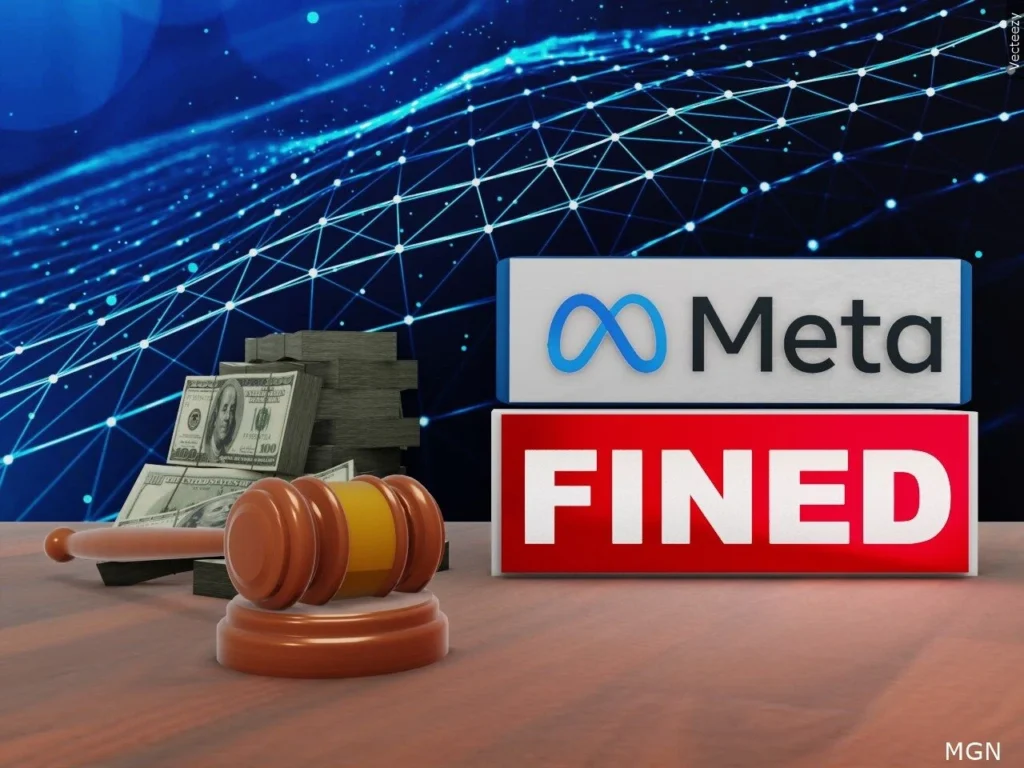
Meta has been ordered to pay $25 billion in civil penalties following a New Mexico consumer protection case connected to the Cambridge Analytica scandal. The October 21, 2026, ruling followed a September jury verdict finding that Facebook misled consumers about its handling of personal information and other platform practices. New Mexico pursued the case independently, taking its allegations through trial rather than resolving them through a broader settlement. The decision raises questions beyond the headline amount because the court initially assessed a much larger statutory penalty, the judgment does not establish direct compensation for Facebook users, and Meta intends to appeal.
The penalty followed findings that Facebook made misleading representations about matters central to consumers’ use of the platform. These included the protection and sharing of personal information, assurances about harmful content, and the company’s response after Cambridge Analytica’s data practices became public. The case examined whether Facebook’s public promises accurately reflected its operations and whether those statements influenced consumers’ decisions to create accounts, share information, or continue using the service. Reporting on the judgment identifies the duration of the conduct, repeated statements, involvement of senior executives, and large audiences reached as factors supporting substantial penalties. The judge also considered evidence of differences between Facebook’s internal knowledge and its external assurances.
The resulting $25 billion award is a civil penalty under New Mexico’s consumer protection law. It is not a criminal sentence or a calculation that each affected individual suffered a particular financial loss. Understanding that distinction is important because the penalty addresses alleged violations of commercial standards rather than directly compensating everyone whose information may have been exposed.
Cambridge Analytica Background and Jury Findings
Cambridge Analytica provided the background to the litigation, but New Mexico’s case extended beyond the original transfer of Facebook information. In April 2018, Facebook disclosed that information belonging to as many as 87 million people, predominantly in the United States, might have been improperly shared with Cambridge Analytica. That number represented potentially affected accounts, not proof that every person’s information was collected or used in the same way.
The controversy also raised questions about when Facebook learned of the problem and how it communicated that knowledge. In a separate 2019 enforcement action, the Securities and Exchange Commission alleged that Facebook discovered the misuse in 2015 but continued describing data misuse risks to investors as hypothetical for more than two years. These events explain why New Mexico’s lawsuit examined both the original data controversy and Facebook’s subsequent representations about investigations, notifications, and corrective measures.
The New Mexico lawsuit, filed in 2021, became a broader examination of Facebook’s conduct over time. Its central legal concern was whether consumers received accurate information about the company’s data practices and other platform assurances.
The September 25, 2026, jury verdict found willful violations involving Facebook’s representations about consumers’ control over personal information. According to the New Mexico Department of Justice, the findings included statements concerning information sharing, providing personal data to advertisers, and buying or selling user information. Jurors also identified misleading representations about the company’s investigation of third party applications following Cambridge Analytica, including commitments to investigate applications with extensive access, audit developers, address misuse, and notify affected people.
The verdict additionally addressed content moderation and the application of community standards. Consequently, describing the dispute exclusively as a privacy case does not capture every issue considered at trial. Source New Mexico reported that the jury sided with the state on 31 of 34 questions across the submitted categories, meaning the verdict should not be described as a finding that every allegation succeeded.
The principal findings concerned:
- Consumer privacy assurances: Statements about the protection, control, and sharing of personal information.
- Advertising and data practices: Representations involving the use, provision, purchase, or sale of user information.
- Third party application investigations: Commitments to investigate developers and applications with extensive access to Facebook data.
- Responses to misuse: Assurances about audits, corrective measures, and notifying affected users.
- Content moderation: Statements concerning harmful content and the enforcement of community standards.
These findings should not be expanded into unsupported claims about every transaction conducted by Facebook. The litigation examined particular representations and whether they were misleading under the applicable law. It did not establish that Facebook directly sold every user’s complete profile to Cambridge Analytica.
State Court Penalties Under New Mexico’s UPA
Judge Francis J. Mathew of New Mexico’s First Judicial District Court in Santa Fe County was responsible for determining the financial consequences following the jury’s liability findings. The division of responsibility matters because jurors decided the submitted factual questions concerning Facebook’s conduct, while Mathew addressed civil penalties and issued the October judgment. Bloomberg Law reported that the trial included video deposition testimony from Mark Zuckerberg and former chief operating officer Sheryl Sandberg, with the proceedings examining statements made by the company and senior leadership.
Although constitutional arguments feature in the dispute, Mathew was acting as a state district court judge applying New Mexico law, not as a federal judge. The financial judgment also did not resolve every possible remedy. The court reserved the question of injunctive relief, meaning possible orders requiring changes in Meta’s conduct remained subject to further consideration.
The case was brought under New Mexico’s Unfair Practices Act, commonly called the UPA. The law addresses unfair or deceptive commercial practices and separately defines unconscionable conduct. Its provisions cover knowingly made representations connected with commercial activity that may deceive or mislead consumers, along with certain material ambiguities and omissions. Unconscionable practices can include taking grossly unfair advantage of someone’s lack of knowledge, ability, experience, or capacity.
These provisions explain why the truthfulness of Facebook’s public assurances became central to the case. Privacy statements can influence consumer decisions, making them relevant to commercial conduct rather than merely technical descriptions of platform operations.
Section 57-12-11 of the UPA authorizes the attorney general to recover civil penalties on behalf of the state of up to $5,000 for each willful violation. The phrase “up to” is significant because the statute establishes a maximum rather than automatically requiring that amount for every violation.
State enforcement also differs from an individual damages lawsuit. The government seeks to enforce standards governing commercial behaviour, while a consumer seeking compensation must satisfy separate legal requirements. This distinction explains why an extremely large state penalty does not automatically create individual payments for Facebook users.
How New Mexico Calculated Meta’s $25 Billion Penalty and Why the Company Plans to Appeal
The unusually large penalty resulted from the method used to count consumer protection violations. Rather than treating each public statement as a single violation, the court considered the audiences reached by misleading representations. This produced millions of violations from statements distributed to large groups of New Mexico consumers.
Courthouse News reported that statements appearing through major news outlets were assigned approximately 2.1 million violations, corresponding to New Mexico’s population. Statements distributed through company channels were assigned approximately 1.4 million violations, reflecting an estimate of Facebook users in the state. The approach multiplied individual misleading representations by the relevant audience rather than counting only the number of separate public announcements.
The overall findings comprised 43,899,720 willful unfair or deceptive practice violations, alongside five willful unconscionable practice violations. Together, these produced the widely reported total of 43,899,725. The financial calculation used the 43,899,720 deceptive practice violations.
At the statutory maximum of $5,000 per violation, the calculation produced $219,498,600,000, or approximately $219.5 billion. However, the court reduced the payable penalty to $25 billion in its final financial order.
The principal figures are:
- 43,899,720: Willful unfair or deceptive practice violations used in the financial calculation.
- Five: Additional willful unconscionable practice violations.
- 43,899,725: Combined number of findings across the two categories.
- $5,000: Maximum statutory civil penalty for each willful violation.
- $219.5 billion: Approximate amount produced by applying the maximum penalty to the deceptive practice violations.
- $25 billion: Final civil penalty ordered by Judge Francis J. Mathew.
- 15% annually: Interest ordered until payment, subject to subsequent legal proceedings.
Neither violation count represents the number of unique Facebook users whose information reached Cambridge Analytica. The same individual could be included in the audience for several statements, while the additional five findings concerned a separate legal category.
The Court’s Reduction and New Mexico’s Position
The court’s reduction from approximately $219.5 billion to $25 billion is an important part of the judgment. However, the written decision does not provide a detailed mathematical formula explaining why the final figure was exactly $25 billion. It should therefore not be described as a negotiated compromise, a specific percentage discount established through a published formula, or a calculation of compensation for identifiable individual losses.
The competing requests provide context. New Mexico sought between $35 billion and $40 billion, while Meta argued for a cap of approximately $3.45 billion. Both sides addressed the constitutional implications of a large aggregate financial award. Dividing the reduced penalty by the deceptive practice violation count produces an average of approximately $569.48 per violation, although this is an arithmetic comparison rather than a separate rate expressly adopted in the judgment.
The reduction establishes two distinct conclusions. The court considered the conduct sufficiently serious to assess the statutory maximum calculation, but ultimately ordered a substantially smaller final penalty. Meta remains entitled to challenge that amount, and the reduction does not resolve its constitutional objections.
New Mexico Attorney General Raúl Torrez presented the ruling as evidence that major technology companies remain subject to state consumer protection laws. His announcement emphasized the importance of honesty about personal information and accountability for misleading consumers. Torrez also defended New Mexico’s decision to pursue its own trial instead of resolving its claims through a multistate settlement, describing the case as having significance beyond one company or scandal.
The attorney general’s position frames the judgment as an enforcement example. Companies making broad assurances about consumer information may be required to defend those statements against evidence of their actual practices. However, descriptions of the ruling as historic do not establish that every part of the judgment will survive appellate review.
Meta’s Decision to Appeal and Legal Objections
Meta rejected the decision and announced its intention to appeal. Chief legal officer C.J. Mahoney criticized the judgment and the attorney general’s enforcement approach, arguing that the resulting financial exposure made conducting business in New Mexico extremely difficult. He also characterized the lawsuit as imposing financial consequences on speech.
Meta has disputed the state’s legal theory, challenged the demonstration of actual consumer harm, and defended aspects of Facebook’s data practices. Associated Press reporting also described the company’s argument that its policies had changed since the lawsuit began. These are the company’s positions and should be distinguished from the findings already reached by the jury and court.
Changes in platform practices after the relevant statements may influence arguments about future remedies, but they do not automatically resolve whether earlier conduct violated the law. Historical liability and future operational requirements remain separate questions.
Meta’s objections raise several issues that may become important during the appeal:
- Consumer harm: Whether the state sufficiently established the legal significance of the alleged misleading representations.
- Audience calculations: Whether assigning violations according to estimated audiences was legally appropriate.
- Overlapping statements: Whether some representations were counted more than once.
- Penalty proportionality: Whether the aggregate financial award satisfies constitutional limitations.
- Speech protections: Whether aspects of the state’s enforcement approach improperly penalize protected expression.
- Future remedies: Whether additional court orders should require changes in Meta’s business practices.
The company’s lawyers have questioned whether New Mexico demonstrated that particular residents saw, relied upon, or suffered harm from the statements. They have also challenged the multiplication of representations by audience estimates and argued that some statements overlapped. These objections address the relationship between the conduct established at trial and the size of the resulting punishment.
New Mexico Political Report described Meta’s arguments under state and federal constitutional protections against excessive fines. The distinction between liability and punishment is important because an appeal can challenge the legal basis of a verdict, the permissible number of violations, the amount imposed, or several issues simultaneously.
Meta’s speech related criticism may also feature in its legal arguments, but a public statement should not be treated as an appellate brief. Until the relevant filings identify the questions formally presented, it would be premature to describe every possible objection as a confirmed ground of appeal or predict how a reviewing court will respond.
Comparisons to Earlier Privacy Enforcement Actions
The case also has similarities to earlier privacy enforcement proceedings, although their legal foundations differ. Facebook’s most prominent previous monetary penalty was the $5 billion FTC settlement announced in 2019, which resolved allegations involving violations of a 2012 privacy order and imposed governance and compliance requirements. The New Mexico judgment is five times that monetary amount, but the two proceedings involved different enforcement authorities, legal claims, and procedural histories.
Facebook also agreed to a $100 million SEC penalty in 2019 concerning misleading investor disclosures about data misuse risks. That action addressed securities law obligations and was settled without the company admitting or denying the SEC’s allegations. Separately, consumer class action litigation produced a $725 million settlement. According to co-lead counsel Keller Rohrback, the district court approved that settlement in October 2023, the Ninth Circuit affirmed in February 2025, and it became effective in May 2025.
These proceedings illustrate different routes to accountability. The FTC addressed federal privacy enforcement, the SEC examined investor disclosures, private litigation concerned consumer claims, and New Mexico pursued state consumer protection violations. Their monetary amounts should not be combined into a single Cambridge Analytica payment without explaining their different legal purposes, recipients, and outcomes.
The New Mexico judgment also includes an annual interest provision of 15% until payment, creating an additional financial consideration while the dispute continues. However, subsequent court rulings could affect enforcement, payment timing, or the ultimate obligation.
Appeal Status and Possible Next Steps
As of October 22, 2026, Meta had announced its intention to appeal. That announcement should be distinguished from confirmation that a particular appellate filing had been accepted or that a reviewing court had established a hearing schedule. New Mexico’s court guidance explains that district court appeals generally begin with a notice of appeal, followed by further filings identifying the issues for review. Applicable deadlines depend on procedural rules and the status of the final written order.
The remaining question of injunctive relief may also produce additional proceedings because Judge Mathew reserved that matter for further briefing. The appeal and any future orders concerning Meta’s business practices should therefore be monitored as separate developments.
Possible outcomes include leaving the judgment intact, modifying portions of it, or returning issues to the trial court for reconsideration. None can be assumed at this stage. The next significant developments will involve Meta’s formal filings, any rulings affecting enforcement, decisions concerning injunctive relief, and eventual appellate consideration of the violation calculations and financial penalty.
Cambridge Analytica Data Misuse, Facebook User Compensation, and Meta’s Other New Mexico Cases
The Cambridge Analytica scandal originated from Facebook information collected through an application developed by Aleksandr Kogan, commonly known as “thisisyourdigitallife” or GSRApp. The application presented users with personality questions and accessed information associated with their Facebook profiles. Its most consequential feature was the ability to collect information about participants’ Facebook friends, allowing a relatively small number of app users to expose information associated with a much larger population.
The FTC’s 2019 allegations described approximately 250,000 to 270,000 American application users and information concerning tens of millions of their friends. The agency explained that the collected information supported personality scoring that could be matched with voter records for profiling and targeted advertising. Its account also described a transition period during which older applications retained access to friends’ data after Facebook announced restrictions.
In December 2019, the FTC issued an opinion and order against Cambridge Analytica concerning deceptive conduct in collecting Facebook information. The matter included misleading assurances that the application would not gather identifiable information, despite collecting identifiers linked to Facebook profiles.
The incident therefore involved application permissions, downstream data use, and enforcement of platform rules. It should not be reduced to an account password hacking incident. Its importance also lies in the distinction between agreeing to complete a personality questionnaire and authorizing political profiling. Information could be used beyond the immediate purpose understood by participants, while their Facebook friends might have had no direct interaction with the application.
These practices helped establish the broader concerns that later informed enforcement actions against Facebook. New Mexico’s case focused not only on data access but also on whether the company accurately described its protections and response to misuse.
State Penalty vs Consumer Claims
However, the $25 billion judgment does not create automatic payments for individual Facebook users. It awards civil penalties through a state enforcement action, meaning the financial consequences are directed toward the government rather than distributed through a consumer claims programme.
New Mexico’s constitution directs fines collected under general laws into the state’s current school fund. Reporting on the judgment described education related uses for potential proceeds, including Torrez’s discussion of school construction. The amount cannot simply be divided among Facebook users to calculate personal compensation because the judgment does not establish that form of distribution.
This distinction also separates the New Mexico penalty from the earlier $725 million Facebook consumer privacy settlement. That class action had its own eligibility requirements, notices, deadlines, and claims process. According to counsel’s information page, its claim, exclusion, and objection deadlines have already passed. The New Mexico judgment does not reopen that settlement or establish a new claims process under the same terms.
An announced judgment and collected money are also different stages. Meta’s appeal and subsequent court orders may affect enforcement, payment timing, and the amount ultimately recovered. Consequently, the most accurate description is that New Mexico obtained a substantial civil penalty award, not that a $25 billion compensation fund has become available to Facebook account holders.
Separate Youth Safety Litigation Distinction
The New Mexico case should also be distinguished from the state’s separate litigation involving the safety of Meta’s platforms for children. That proceeding examined allegations concerning sexual exploitation, harmful design features, and misleading assurances about the protection of young users.
In March 2026, a jury awarded $375 million in civil penalties in the youth safety litigation. The state’s announcement described findings involving risks to children and Meta’s representations about platform safety. An August judgment subsequently required an additional $567 million for measures addressing youth mental health, bringing the financial total in that proceeding to $942 million.
Judge Bryan Biedscheid oversaw the two phase youth safety trial, while Judge Francis Mathew handled the Cambridge Analytica related consumer protection case. The proceedings involved different factual records, allegations, and remedies, although both used consumer protection theories.
The distinction is important because the $25 billion privacy penalty is not a revision of the $942 million youth safety award. The cases should also not be treated as having identical appeal schedules or imposing the same requirements on Facebook and Instagram.
The financial developments can be distinguished as follows:
- 2019 FTC settlement: $5 billion involving federal privacy enforcement and compliance obligations.
- 2019 SEC settlement: $100 million concerning investor disclosures about data misuse risks.
- Facebook consumer privacy class action: $725 million settlement with its own claims process.
- New Mexico youth safety litigation: $942 million in combined financial awards arising from separate proceedings.
- New Mexico Cambridge Analytica related case: $25 billion civil penalty ordered on October 21, 2026.
These figures demonstrate the range of legal consequences arising from different allegations concerning Meta’s platforms. However, their significance depends on the particular laws, findings, remedies, and procedural status involved. Comparing monetary amounts alone cannot establish that the cases are legally equivalent.
Broader Implications and Appeal Prospects
The Cambridge Analytica related judgment raises broader questions about consumer protection in large digital platforms. A statement made through a national news outlet or company communication can reach millions of people, creating substantial potential exposure when consumer protection violations are calculated according to audience size.
New Mexico’s approach demonstrates how a statute authorizing a relatively limited penalty for each willful violation can produce an enormous aggregate amount when repeated statements reach large audiences. Whether that approach remains legally sustainable will depend on subsequent proceedings.
The judgment also highlights the relationship between privacy assurances and consumer decisions. People may share personal information because they believe a platform’s public statements about protection, control, and oversight. When those assurances are misleading, enforcement authorities may examine whether the representations themselves violated consumer protection standards, independently of the original data misuse.
At the same time, the case illustrates the importance of distinguishing regulatory accountability from individual compensation. A government may obtain a civil penalty without establishing a payment programme for consumers, while private lawsuits may provide separate remedies under different conditions.
Meta’s announced appeal means the current financial order is not necessarily the final outcome. The appellate process may examine liability findings, the method used to calculate violations, constitutional objections, and the proportionality of the penalty. The remaining request for injunctive relief also leaves open the possibility of additional orders concerning future business practices.
Ultimately, the New Mexico ruling represents a significant state enforcement action concerning Facebook’s representations about privacy, data sharing, and other platform practices. Its importance extends beyond the $25 billion figure because it raises questions about how consumer protection laws apply when corporate statements reach millions of digital platform users. The final legal and financial consequences will depend on the appeal and subsequent court proceedings.

Frequently Asked Questions (FAQs)
- When was Meta ordered to pay New Mexico $25 billion?
Meta was ordered to pay $25 billion in civil penalties on October 21, 2026, when Judge Francis J. Mathew issued the financial judgment in New Mexico’s consumer protection case. The order followed a September 25 jury verdict finding willful violations involving Facebook’s representations about personal information and other platform practices. The jury determined liability, while the judge subsequently calculated and imposed the financial penalty. Meta has announced its intention to appeal. - Was the entire case limited to Cambridge Analytica?
No. Although the Cambridge Analytica scandal provided the central background, New Mexico’s lawsuit examined a broader range of Facebook representations. These included assurances about personal information, data sharing, third party application investigations, user notifications, harmful content, and enforcement of community standards. The case therefore concerned both the original privacy controversy and the accuracy of statements Facebook made about its practices and response to misuse. - Did the jury find that 43 million different people were harmed?
No. The approximately 43.9 million violations were calculated using repeated misleading statements and estimates of the audiences those statements reached. The figure does not represent 43 million unique victims or individuals whose information was transferred to Cambridge Analytica. A person could be included in the audience for several statements, meaning the calculation reflects alleged consumer protection violations rather than a count of distinct people who suffered measurable financial losses. - Why do reports mention both $219 billion and $25 billion?
The approximately $219.5 billion figure resulted from multiplying 43,899,720 deceptive practice violations by the statutory maximum of $5,000 per violation. Judge Francis Mathew subsequently reduced the payable penalty to $25 billion. These figures represent different stages of the same financial calculation rather than separate penalties Meta must pay. The written judgment does not provide a detailed mathematical formula explaining why the final amount was set at exactly $25 billion. - Will Facebook users receive money from the judgment?
The October 2026 judgment does not establish direct payments to Facebook users. It imposes civil penalties payable through New Mexico’s state enforcement process rather than creating an individual compensation fund. This differs from the separate $725 million Facebook consumer privacy settlement, which had its own eligibility requirements and claims deadlines. The New Mexico ruling does not reopen that settlement or automatically entitle Facebook account holders to a share of the $25 billion award. - Has Meta accepted the decision?
No. Meta disputes the ruling and has announced plans to appeal. The company has challenged the enforcement approach, the calculation of violations, and the proportionality of the financial penalty. It has also raised concerns about speech protections and the effect of the judgment on conducting business in New Mexico. However, announcing an appeal does not automatically reverse the existing trial court decision. The final outcome will depend on subsequent legal proceedings. - Is the $25 billion penalty larger than the FTC’s 2019 settlement?
Yes. The $25 billion New Mexico penalty is five times the $5 billion monetary penalty announced in Facebook’s 2019 Federal Trade Commission settlement. However, the two proceedings involved different legal authorities and allegations. The FTC action concerned federal privacy enforcement and alleged violations of an earlier privacy order, while New Mexico pursued violations of its state consumer protection law. The amounts can be compared financially, but the cases should not be treated as legally identical. - Did Cambridge Analytica receive information from 87 million people?
Facebook estimated in April 2018 that information belonging to as many as 87 million people might have been improperly shared with Cambridge Analytica. This was an estimate of potentially affected accounts, not confirmation that every person’s information was collected or used in exactly the same way. The controversy involved a personality questionnaire application that accessed information from participants and many of their Facebook friends, allowing data associated with a relatively small number of app users to expose a much larger population. - Is this the same case as New Mexico’s child safety lawsuit?
No. New Mexico’s child safety litigation was a separate proceeding examining allegations involving sexual exploitation, harmful platform features, and representations about protecting young users. That case produced a $375 million civil penalty and an additional $567 million award, totaling $942 million. The Cambridge Analytica related case focused on privacy, data sharing, and other consumer protection representations, resulting in the separate $25 billion judgment. The two cases were also overseen by different judges. - Does the ruling immediately require Facebook to change its operations?
The October 21 judgment established the $25 billion civil penalty and an annual interest provision, but Judge Francis Mathew reserved the question of injunctive relief for further briefing. Injunctive relief could involve additional court orders concerning future business practices, although the specific requirements had not been decided in the financial judgment. Any operational changes legally required by the case must therefore be determined from subsequent court orders rather than assumed from the size of the penalty alone.

Conclusion
Meta’s $25 billion New Mexico judgment highlights the substantial financial consequences of misleading consumers about personal information. By combining repeated representations with consumer protection laws allowing penalties for individual violations, the court imposed an award significantly larger than earlier privacy settlements.
However, the judgment does not provide direct compensation to Facebook users, and possible operational remedies remain unresolved. Meta intends to appeal, potentially challenging the violation calculations and proportionality of the penalty. While the ruling represents a major trial court victory for New Mexico, its final financial and legal consequences will depend on further proceedings.
Sources and Citations
- New Mexico Department of Justice, September 25, 2026: Jury Finds Facebook Violated New Mexico Consumer Protection Law, Faces Billions in Potential Civil Penalties
Official announcement confirming the jury found 43,899,725 violations of New Mexico’s Unfair Practices Act involving Facebook’s representations about personal information, misinformation, and hate speech. New Mexico Department of Justice - New Mexico Department of Justice, October 21, 2026: The New Mexico Department of Justice Secures Another Landmark Victory Against Big Tech, with Historic $25 Billion Penalty Against Facebook
Official announcement confirming the $25 billion civil penalty, the nearly 44 million violations, and New Mexico’s independent prosecution of the Cambridge Analytica-related case. New Mexico Department of Justice - First Judicial District Court of New Mexico, October 21, 2026: Findings of Fact, Conclusions of Law and Judgment
The court’s judgment in State of New Mexico v. Meta Platforms, Inc., Case No. D-101-CV-2021-00132. It calculates a statutory penalty of $219,498,600,000, reduces it to $25 billion, orders 15% annual interest until paid, and reserves injunctive relief for additional briefing. New Mexico Courts - New Mexico Courts: High Profile Cases: State of New Mexico v. Meta Platforms, Inc.
Official court page confirming the September 25 jury verdict and linking the First Judicial District Court’s October 21, 2026 findings, conclusions, and judgment. New Mexico Courts - Source New Mexico: New Mexico judge orders Meta to pay state $25B
Reports that Judge Francis Mathew ordered Meta to pay $25 billion after the jury found close to 44 million violations, with the judgment carrying 15% annual interest. Source New Mexico - Bloomberg Law: Meta to Pay Historic $25 Billion in New Mexico Deception Case
Coverage of the verdict, the more than 43 million consumer-protection violations, statements by Meta executives, and the resulting $25 billion civil penalty. Bloomberg Law - Reuters: New Mexico wants Meta to pay up to $40 billion in penalties after data privacy trial
Covers the penalty hearing, New Mexico’s requested $35 billion to $40 billion award, Meta’s proposed roughly $3.45 billion limit, the more than 43 million violations, and the parties’ constitutional arguments. Reuters - Federal Trade Commission: FTC Sues Cambridge Analytica, Settles with Former CEO and App Developer
Documents how Aleksandr Kogan’s GSRApp collected Facebook information from app users and their friends for Cambridge Analytica, including tens of millions of Facebook profiles. Federal Trade Commission - Federal Trade Commission: FTC Issues Opinion and Order Against Cambridge Analytica
Official FTC finding that Cambridge Analytica engaged in deceptive practices while harvesting Facebook information for voter profiling and targeting. Federal Trade Commission - Securities and Exchange Commission: Facebook to Pay $100 Million for Misleading Investors About the Risks It Faced From Misuse of User Data
Confirms the SEC alleged Facebook knew about misuse of user information by 2015 while continuing to characterize the risk in investor disclosures as hypothetical. Facebook agreed to a $100 million penalty. SEC - Securities and Exchange Commission: SEC v. Facebook, Inc., Case No. 3:19-cv-04241-JD
Official case page summarizing the SEC enforcement action and Facebook’s $100 million civil penalty relating to misleading disclosures about misuse of user information. SEC - Facebook, April 2018: An Update on Our Plans to Restrict Data Access on Facebook
Facebook’s own disclosure stating that information belonging to up to 87 million people, mostly in the United States, may have been improperly shared with Cambridge Analytica. About Facebook - Facebook: Hard Questions: Q&A With Mark Zuckerberg on Protecting People’s Information
Zuckerberg explained that the 87 million figure represented Facebook’s calculated maximum potential exposure and acknowledged the company should have done more regarding third-party application access. About Facebook - New Mexico Legislature: New Mexico Constitution, Article XII, Section 4 reference
Legislative analysis quotes Article XII, Section 4, which provides that fines collected under general laws constitute part of New Mexico’s current school fund. New Mexico Legislature - New Mexico Courts: When Should I Appeal?
Official court guidance explaining that an appeal from a district-court decision generally begins with a notice of appeal filed in the district court, followed by a docketing statement in the Court of Appeals. New Mexico Courts - New Mexico Court of Appeals / Rule 12-201 NMRA: New Mexico appellate filing guidance
Confirms that, in most cases, a notice of appeal must be filed within 30 days after the district court judgment or order is filed, subject to the applicable appellate rules and extensions. lrgadjudication.nmcourts.gov
Recommendations
- Echoes of Aincrad Crafting Guide: Recipes, Materials and Unlock Requirements
- Did Christopher Nolan’s Depiction of the Gods Pay Off in The Odyssey?
- Castlevania: Belmont’s Curse Runs at Only 30 FPS on Nintendo Switch
- EA Sports College Football 27 Preview: Defense Wins Championships
- Jurassic World Evolution 2 Complete Edition Comes to Nintendo Switch 2 on July 30, 2026
- Unity-Based Tool for JRPG Game Development: RetroGig’s Retro JRPG Template for SNES/PSX-Style RPG Systems
- Keanu Reeves & China Miéville BRZRKR: Light Draws Breath — Release Date, Story, Creative Team & Variant Covers
- CD Projekt Raises Profit Goals with Witcher 4, 5, and 6 Coming: 5 Billion PLN Target Explained
- Creepshow Official Announcement Trailer Reveals a New Anthology Horror Game Experience
- GTA 6 Leans Into Vice City’s Influencer Hustle Where Looks Matter



































































































