





In This Article (9 sections)
Miya Cech’s Toph Preparation and Vision-Restricted Performance in Avatar: the Last Airbender Season 2
In discussions surrounding the expanding live-action adaptation and the evolving narrative direction of Avatar: The Last Airbender, one of the most widely examined developments is the introduction of Toph Beifong in Season 2. Within adaptation reporting and production analysis, the casting choice has been framed as part of Netflix’s broader effort to deepen character authenticity and physical storytelling. Toph Beifong, originally introduced in the animated series, is a blind earthbending prodigy whose combat style relies heavily on seismic sensing rather than vision, making the adaptation challenge not simply a matter of casting an actor but of translating a unique sensory experience into live-action performance.
Miya Cech’s association with the role has been widely discussed in casting commentary, particularly regarding how her performance would integrate physical limitation techniques and immersive acting tools such as vision-restricting contact lenses. A defining feature of Toph’s character is her complete reliance on non-visual perception, and to faithfully represent this on screen, production teams reportedly explored multiple methods of restricting visual input for performance authenticity. Among these, vision-blocking contact lenses are frequently discussed as a key tool.
The use of such lenses serves several purposes. It helps the actor internalize the spatial limitations of blindness, allowing movement and reaction to be shaped by sound, vibration, and memory rather than sight. It also enhances consistency in performance, ensuring that scenes involving combat or earthbending maintain continuity in physical orientation. For Miya Cech, the adoption of vision-restricting contacts is often described in production commentary as part of a broader immersion strategy in which blindness is not simulated through acting alone, but approached through partial or full sensory obstruction during rehearsals and selected filming sequences.
This technique is not without challenges, as actors must adjust to reduced depth perception, altered balance, and increased reliance on stunt coordination. However, in productions like Avatar: The Last Airbender, where physical realism is central to bending choreography, such methods are considered essential for grounded performance. The decision to incorporate these tools aligns with modern production trends in fantasy adaptations, where realism in sensory portrayal is prioritized alongside visual spectacle, framing Cech’s interpretation of Toph as a blend of physical discipline, sensory training, and character-driven choreography designed to replicate blindness in a controlled filming environment.

Miya Cech’s Physical Training and Behind-the-Scenes Preparation for Toph
The preparation process for portraying Toph Beifong in live-action involves a combination of martial arts training, sensory adaptation exercises, stunt choreography, and character study. The goal is to replicate the grounded, earth-connected fighting style that defines Toph’s identity while also embodying the sensory logic of a character who relies on seismic perception rather than sight. For Miya Cech, this preparation is framed as an extension of method acting principles, emphasizing not only memorized choreography but also movement shaped by sound, vibration, spatial memory, and tactile feedback.
In adaptation analysis, preparation reportedly includes stance training focused on low-center-of-gravity movement, ground-contact awareness exercises to simulate seismic perception, partner drills with restricted visual input, choreographed bending sequences using stunt teams, and environmental navigation under controlled blindness conditions. Training for Toph’s portrayal is often described as one of the most physically demanding actor preparations in the series because it integrates both stunt choreography and sensory restriction conditioning.
Key training components include blindfold and contact-based navigation drills, surface vibration recognition exercises, partner-based combat timing without visual cues, weighted stance training to simulate earth connection, and reaction training using sound-based prompts. These exercises are designed to create muscle memory that compensates for lack of sight, allowing performers over time to identify movement patterns through auditory and tactile feedback. Within Avatar: The Last Airbender, Toph’s role is especially demanding because earthbending is visually dynamic yet rooted in tactile realism, requiring the performer to convey both explosive power and grounded awareness simultaneously.
Behind-the-scenes production work for Toph’s introduction reportedly focuses heavily on integrating practical stunt work with digital enhancement. Scenes involving earth manipulation require coordination between actors, stunt performers, and visual effects teams, with sequences often broken down into micro-movements to ensure safety and precision. When vision-restricting contacts are used, additional safety spotters and tactile markers are placed on set to guide movement without breaking immersion.
Season 2 is widely anticipated to expand bending choreography complexity, and Toph’s introduction is especially significant because it introduces seismic-based combat interpretation that requires ground-level visual effects integration. Miya Cech’s participation in these scenes is often described as blending stunt rehearsal with adaptive sensory performance so that each movement remains consistent with the character’s blindness and combat intuition.
Vision-Restriction Tools, Actor Insights, and On-Set Support for Toph’s Portrayal
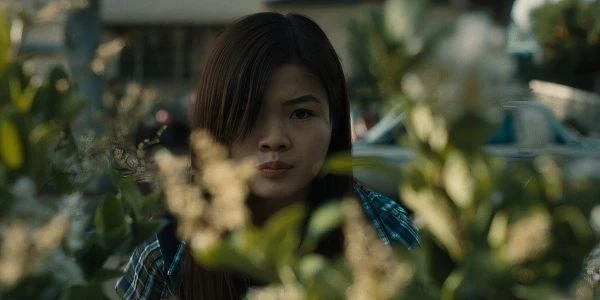
In commentary attributed to Miya Cech about portraying characters with physical or sensory differences, the emphasis is often placed on understanding the character’s internal experience rather than simply copying outward behaviours. In discussing Toph Beifong in Avatar: The Last Airbender, this approach involves learning to trust sound, vibration, touch, and spatial memory instead of relying on sight. It also requires adapting facial and emotional expression without depending on eye contact, while recognising that blind navigation is not defined by helplessness or constant dependence on others. These ideas support a broader acting method in which sensory limitation becomes a source of focus, confidence, and character depth rather than merely an obstacle to overcome.
Vision-restricting contact lenses used in film production generally fall into two categories: partial-diffusion lenses and fully opaque lenses. Each serves a different purpose depending on the demands of a scene. In the context of portraying Toph, such lenses may be used selectively to create a more convincing physical performance while still protecting the actor’s safety. Partial lenses can reduce clarity while allowing some awareness of light, movement, or nearby objects.
Fully opaque lenses create a stronger visual restriction but are more suitable for controlled rehearsals, close-up shots, or scenes involving minimal movement. During stunts or complex choreography, less restrictive methods are usually preferred. For Miya Cech, these tools function as temporary immersive aids, helping her explore how Toph responds to the world without making the filming environment unnecessarily dangerous.
Strong support systems are especially important when an actor performs with restricted vision. Production teams may involve stunt coordinators, movement coaches, accessibility consultants, and off-camera assistants who help make each action predictable and repeatable. On a production such as Avatar: The Last Airbender, this can include tactile floor markings, verbal cue systems, carefully rehearsed movement patterns, and clearly established procedures for restoring full vision when necessary.
Sets and props may also be arranged consistently so that the actor can build reliable spatial memory during rehearsals. This structured preparation allows Miya Cech to perform with greater confidence while keeping the simulation of blindness controlled, temporary, and reversible. It also helps ensure that authenticity is pursued through preparation and informed performance rather than through avoidable risk.
Live-Action Adaptation, Blindness Realism, and Consultant Guidance for Toph
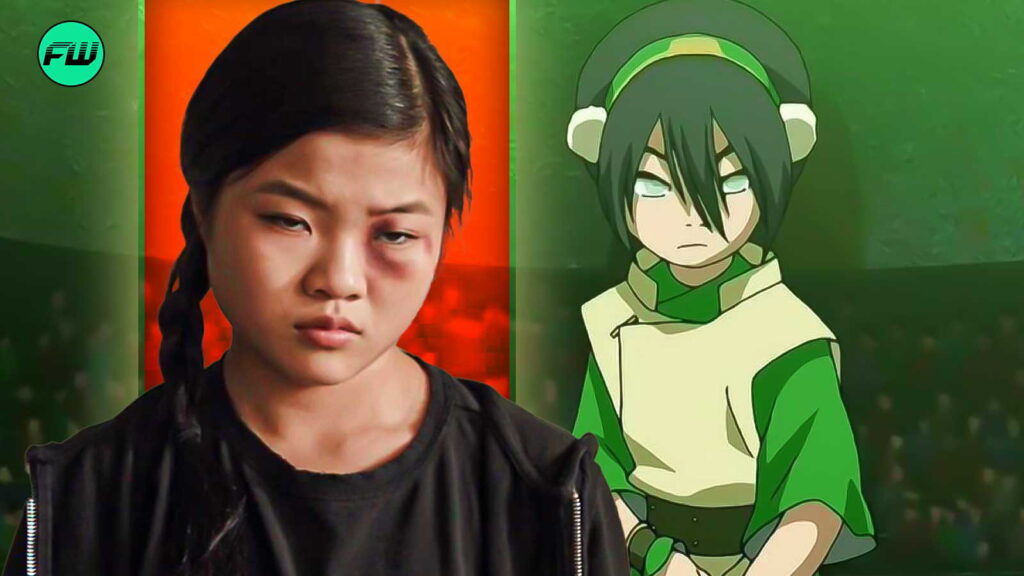
The transition of Toph Beifong from animation to live-action requires several interpretive changes. While the core character remains consistent, certain physical and narrative elements are adjusted for realism, including more grounded earthbending visual effects, expanded emotional grounding for character development, realistic depiction of blind navigation mechanics, and adjusted combat pacing for live-action choreography. Within Avatar: The Last Airbender, these changes are designed to maintain narrative fidelity while enhancing believability in a physical production space.
Realism in portraying blindness is a central focus of Toph’s adaptation. Rather than treating blindness as a limitation, the production emphasizes it as a different sensory framework. Techniques used in portrayal include ground vibration emphasis in sound design, camera angles simulating non-visual awareness, movement choreography based on spatial memory, and dialogue cues emphasizing perception over sight. For Avatar: The Last Airbender, realism is not only visual but sensory, ensuring that audiences experience Toph’s world from a non-visual perspective where possible.
Consultants specializing in blindness representation are increasingly common in modern film and television, and their role is to ensure accuracy, respect, and authenticity in depiction. Responsibilities typically include advising on movement realism, reviewing scripts for accurate language, guiding actor training methods, and ensuring respectful portrayal of blindness. In productions like Avatar: The Last Airbender, such consultation helps balance fantasy storytelling with grounded human experience.
Toph’s Fight Scenes, Fan Expectations, and Season 2 Introduction
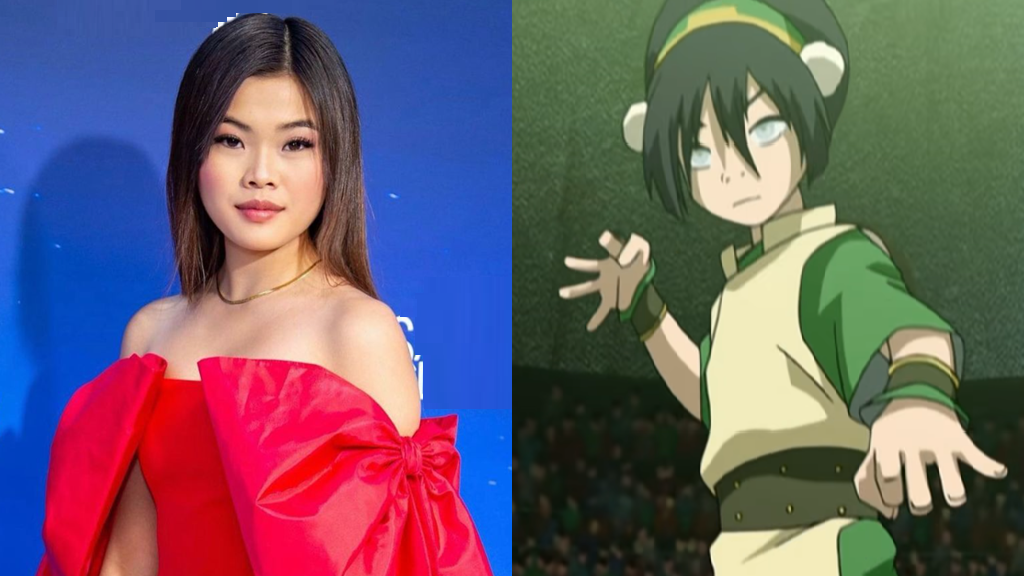
Earthbending fight choreography is among the most physically complex components of Toph’s role because it requires synchronization between actor movement and visual effects timing. For Miya Cech, performing these scenes under vision restriction adds a layer of difficulty, requiring precise spatial awareness and trust in stunt coordination teams. Fight scenes typically involve pre-marked impact points, coordinated ground strikes, reactive timing to sound cues, and controlled fall and recovery mechanics. Within Avatar: The Last Airbender, these sequences are designed to maintain the illusion of seismic power while ensuring actor safety.
Audience anticipation for Toph’s live-action debut has generated extensive discussion across fan communities. Reactions often focus on casting authenticity, adaptation accuracy, and performance expectations, with common themes including interest in how blindness is portrayed realistically, curiosity about earthbending visual effects, comparison with the animated Toph interpretation, and support for immersive acting methods. For Miya Cech, fan engagement reflects strong interest in how she will interpret one of the most iconic characters in the franchise.
Season release timelines for Avatar: The Last Airbender are structured around production completion and post-production visual effects work. Toph’s introduction is expected to occur in a narrative arc aligned with the original source material, marking a significant expansion of the main cast and elemental dynamics. For Miya Cech, this role represents a key moment in the adaptation’s progression, introducing one of the most powerful earthbenders in the storyline.
Frequently Asked Questions (FAQs)
- What is Toph’s role in Avatar live action?
Toph is a blind earthbender who uses seismic perception to fight, navigate, and understand the world around her. Her role is significant because she introduces a unique form of earthbending that depends on ground contact, vibration, and spatial awareness rather than sight. - Why are vision-blocking contacts used for Toph scenes?
Vision-blocking contacts are used to help simulate blindness and support a more authentic performance. By reducing visual input in controlled settings, they can help the actor rely more on sound, movement memory, and physical orientation when portraying Toph. - Did Miya Cech train specifically for blindness portrayal?
Yes, the preparation described for the role includes sensory restriction and movement adaptation. This type of training helps the performer develop physical habits that reflect non-visual navigation, including spatial memory, controlled movement, and reliance on auditory or tactile cues. - How does Toph fight without sight?
Toph fights by sensing vibrations through the ground, allowing her to detect movement, position, and impact around her. This seismic perception is central to her earthbending style and shapes the way her combat is choreographed in live action. - Are the contacts fully blindfolding the actor?
They are typically used in controlled, safety-supervised conditions, and the level of restriction can vary depending on the scene. Partial diffusion lenses may allow limited light perception, while more restrictive versions may be used selectively, especially when safety can be closely managed. - What makes Toph’s earthbending unique?
Toph’s earthbending is grounded, physical, and based on direct contact with terrain. Unlike bending styles that rely more heavily on visual targeting, her technique is built around balance, stance, vibration, and the ability to interpret the environment through the ground. - How is blindness portrayed realistically in the show?
Blindness is portrayed through movement design, sound cues, sensory storytelling, and choreography based on spatial memory. The goal is to present blindness as a different sensory framework rather than simply a limitation. - Is Miya Cech doing her own stunts?
Some sequences involve supervised performance alongside stunt coordination. Because Toph’s scenes include complex movement, earthbending choreography, and possible vision restriction, stunt teams help ensure that the performance remains safe and consistent. - How does production ensure safety with vision restriction?
Production ensures safety through guides, tactile markers, verbal cue systems, pre-rehearsed movement maps, and strict stunt supervision. These systems allow the actor to perform under sensory restriction while keeping the filming environment controlled and reversible. - When does Toph appear in the series?
Toph is expected to debut during the Season 2 storyline progression. Her introduction marks a major expansion of the main cast and brings one of the franchise’s most important earthbenders into the live-action adaptation.
Conclusion
The portrayal of Toph Beifong in the live-action adaptation of Avatar: The Last Airbender represents a complex fusion of performance technique, sensory simulation, and character-driven storytelling. Through the involvement of Miya Cech, the role is shaped by immersive methods such as vision-restricting contacts, physical training, and adaptive choreography. These elements collectively aim to translate one of animation’s most iconic characters into a grounded live-action experience that respects both narrative legacy and realistic representation of blindness.
Sources and Citations
- Netflix Production Notes: Avatar: The Last Airbender Live Action Series Overview
https://www.netflix.com/title/80237957 - Avatar Franchise Background Information: Character and Worldbuilding Reference
https://avatar.fandom.com/wiki/Avatar_Wiki - Industry Interviews on Motion Restriction Acting Techniques in Film Production
https://www.variety.com - Actor Training and Stunt Coordination Practices in Fantasy Television
https://www.hollywoodreporter.com - Accessibility and Disability Representation in Modern TV Productions
https://www.bbc.com/culture/article/disability-representation-tv-film
Recommended
- Mario Movies Got One Thing Right: Why Skipping Toilet Humor Doesn’t Rule Out Wario in a Future Sequel
- Disclosure Day Review: Plot Breakdown, Cast Details, Ending Explained & What Spielberg’s New UFO Movie Gets Right
- Vampire Crawlers: All Relics and Where To Get Them (Complete Relic Locations Guide)
- NVIDIA RTX Spark Chip Could Deliver Windows’ Apple Silicon Moment in AI-Powered PCs
- Nudity in Love, Death and Robots: Episode Guide, Artistic Use, and Viewer Insights
- THE BEAR Season 5 Official Trailer (2026): Final Season Release Date, Plot, and Episode Count
- Blender Extremely Soft Fur/Hair Look! How to Create Fluffy Fur and Silky Hair in Cycles
- New Metal Gear series 65.5 million sales milestone explained
- Blender vs Maya: A Comprehensive Comparison Across Industries
- Subnautica 2: Where to Find Sulfur



































































































