


As of April 13, 2026, the official marketing for Mortal Kombat 2 (often stylised as “Mortal Kombat II”) is heavily centred on the tournament itself, with an official synopsis positioning Earthrealm’s champions—now joined by Johnny Cage—in a brutal fight to stop Shao Kahn and his rule from threatening Earthrealm.
At the same time, a persistent fan theory has exploded in trailer discourse: that Cole Young—introduced as the audience-entry protagonist in 2021—either dies early or is “Fatality’d” to clear the runway for legacy characters, possibly staging a rebirth arc via Netherrealm mechanics that the franchise openly references.
Is Cole Young Going to Die in Mortal Kombat 2? Latest Trailer Clues Explained
The most current marketing beat that pushed this theory into overdrive is the ticket-on-sale trailer released around April 9, 2026, which multiple outlets describe as leaning into videogame-accurate “levels” (including side-scrolling framing) and foregrounding iconic match-ups and fatalities.
Two trailer-linked facts do the most work for the “Cole dies” argument:
First, the spotlight of the trailer narrative is largely on Johnny Cage as the audience-friendly point-of-view fighter entering the tournament world, with the marketing framing him as central to the sequel’s tone and set pieces.
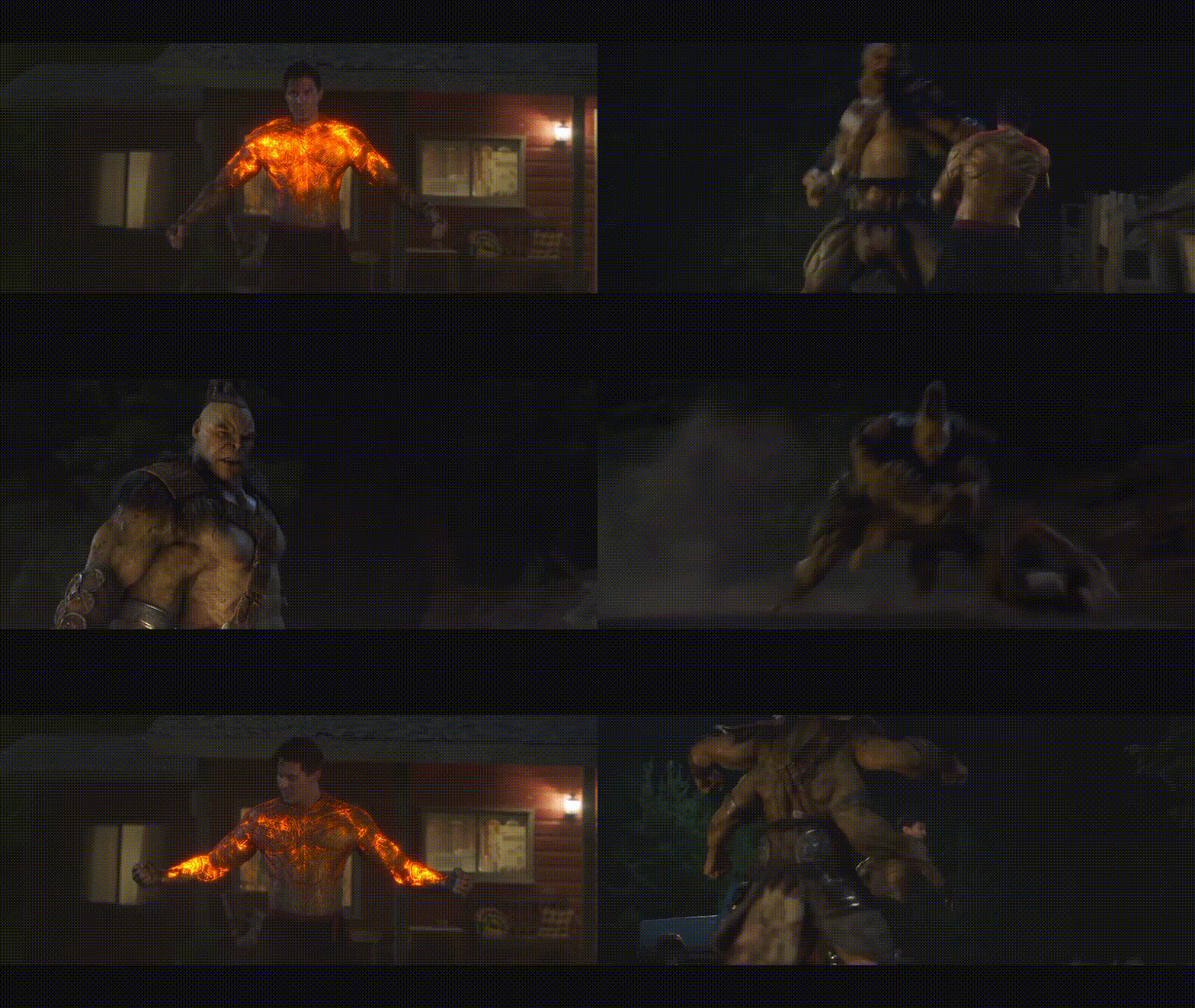
Second, the ticket-on-sale trailer breakdowns note that Cole is present but comparatively fleeting—most notably via a shot that appears to place him directly against Shao Kahn, the film’s top-tier threat figure. Several commentators interpret that as less “hero moment” and more “telegraphed doom,” because fighting Shao Kahn is often treated as endgame-level danger.
None of this confirms a death—trailers are constructed to misdirect and compress story beats—but it does explain why the theory persists even among viewers who are otherwise cautious about trailer over-reading.
Why Fans Think Cole Young Will Be Killed Off Early in Mortal Kombat 2
The strongest “why” behind the theory is not a single shot; it’s an accumulation of emphasis signals across the marketing campaign.
A widely circulated early-trailer observation is that Cole appears extremely briefly and—at least in that footage—does not speak, while the campaign invests more dialogue, exposition, and showcase moments in Johnny Cage. That imbalance is repeatedly interpreted as a “protagonist swap” rather than a simple ensemble shift.
Another driver is strategic: fans know the first film’s biggest recurring complaint was structural—no full tournament—and that the sequel is now explicitly built around tournament stakes and scorekeeping. If the sequel is intentionally “resetting” to a more game-native structure, a high-impact early death (especially of a divisive newcomer) becomes, in theory, a fast way to raise stakes and refocus on legacy rivalry dynamics.
There is also a pure marketing logic: if the campaign’s core promise is “real tournament, game levels, iconic match-ups,” then centring a legacy character as the cinematic “tour guide” is a safer bet for broad audiences and long-time fans alike.
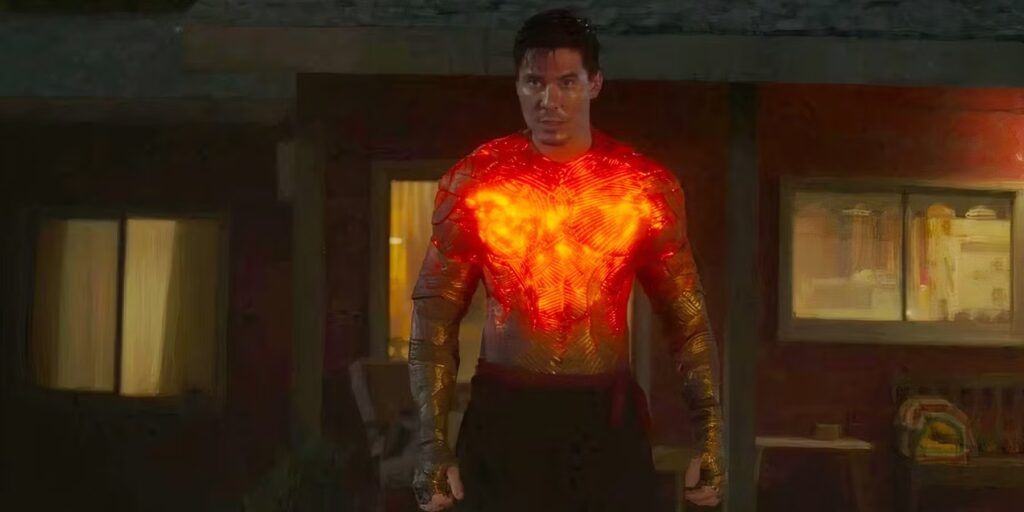
Mortal Kombat 2 Trailer Breakdown: Hidden Signs of Cole Young’s Fatality
A careful, evidence-first way to phrase the “hidden signs” claim is to separate what the marketing explicitly shows versus what audiences infer.
What the marketing explicitly communicates is a more game-faithful presentation: the ticket-on-sale trailer is described as including side-scrolling level homage, heavy fatality imagery, and a major lore confirmation that Sub-Zero returns as Noob Saibot.
That last point matters because it reminds viewers that “death isn’t always final” in this franchise’s cinematic vocabulary—so a possible Cole death can be theorised not just as removal, but as transformation or afterlife repositioning.
What audiences infer—based on breakdowns and earlier trailer reactions—is that Cole’s reduced prominence functions like a deliberate misdirection or a deliberate exit ramp. The most frequently cited “tell” is the apparent Cole-vs-Shao-Kahn beat: if the film wants to demonstrate Shao Kahn’s menace fast, having him demolish a character the audience already knows is an efficient way to do it.
In other words, the “Cole fatality” reading is less about catching a literal on-screen fatality in a trailer frame and more about interpreting narrative signalling: who the marketing positions as the emotional centre, and who it treats as expendable cannon fodder.
Which Iconic Mortal Kombat Stage Could Feature Cole Young’s Death Scene?
If the theory is “Cole dies,” the follow-up theory is “he dies on a classic stage,” because stage fatalities are one of Mortal Kombat’s most recognisable signatures. In the games, stage-specific fatalities include environmental kills such as knocking a defeated opponent into a pit/abyss, into spikes, or into an acid pool.
The 2026 ticket-on-sale trailer coverage explicitly emphasises that the sequel is recreating classic game “levels” and leaning into fan-service staging, which makes a stage-fatality-inspired set piece feel plausible as a cinematic beat—not guaranteed, but plausible.
With that framing, the most commonly floated “Cole death stage” candidates are those that are both visually iconic and easy for mainstream audiences to understand instantly:
The spike pit variant (most popularly associated with “The Pit” family of arenas) is a straightforward, cinematic-friendly image: one uppercut, one fall, instant consequence—exactly the kind of brutality that reads cleanly even for viewers who haven’t memorised lore. The prominence of Pit-style stage fatalities in series history is well documented in overviews of Mortal Kombat II’s stage fatality mechanics.
The acid pool (“Dead Pool”-style logic) is similarly cinematic: it’s gruesome, legible, and close to the franchise’s brand identity. Stage fatalities that involve acid pools are explicitly referenced as classic examples in broader explanations of stage fatality design.
A “living” arena such as “The Living Forest” is the wild-card option: it is visually distinctive enough to be marketed, and it signals “other realm” weirdness immediately, which fits a sequel trying to be more unapologetically game-like.
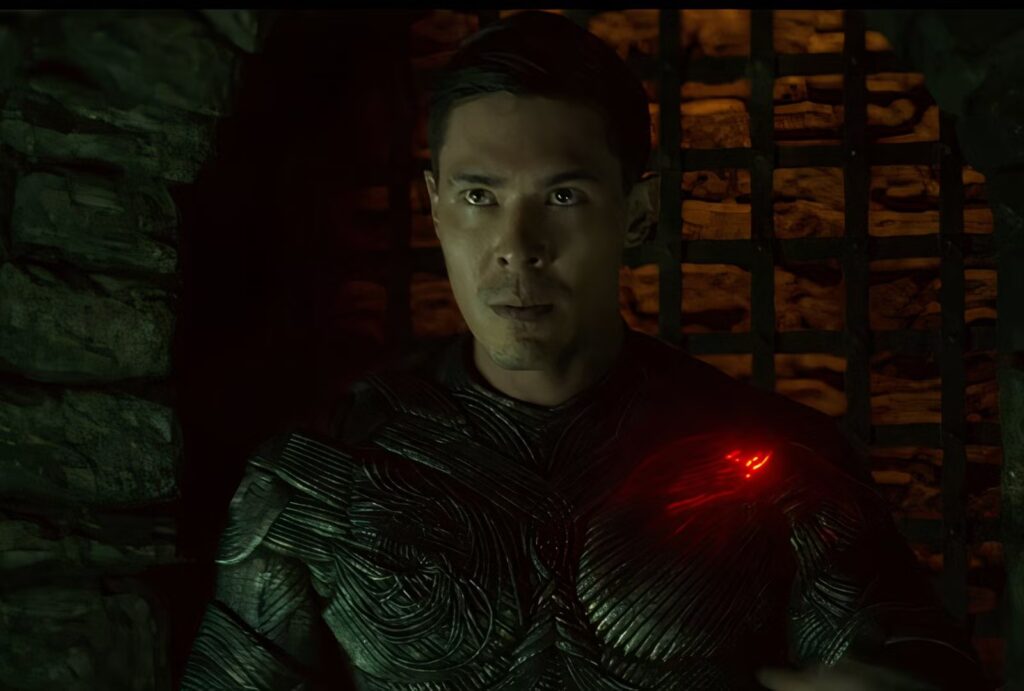
The Living Forest and Other Classic MK Stages That Could Appear in Mortal Kombat 2
The most useful way to talk about stages in an evidence-based MK2 movie context is to treat them as a menu of fan-recognisable motifs that the sequel is already signalling it wants to reproduce.
On the game-history side, Mortal Kombat II is repeatedly cited for its memorable arenas and stage fatality concepts, and it is associated (in mainstream commentary) with locations like the Dead Pool, Living Forest, Tower, Wasteland, and Shao Kahn’s arena-style stage presentation.
On the movie-marketing side, the film’s recent trailer coverage stresses that it is “fully embracing” videogame roots—down to game-level-style staging and nostalgia-forward presentation—making it more reasonable to expect classic arena homages than it would have been for the 2021 film.
Importantly, the sequel does not appear limited to MKII-only arenas. An official trailer breakdown notes that the production recreated a Tarkatan village environment, explicitly tying it to inspiration from story mode in newer games. That suggests the film’s “stage” approach may blend multiple eras of Mortal Kombat location design rather than strictly recreating one specific game’s stage list.
Could Cole Young’s Death Mirror a Classic Johnny Cage Twist from the Games?
The franchise has precedent—especially in game canon—for off-screen or abrupt character deaths being used as tone-setters.
A commonly referenced example: Johnny Cage’s biography/canon threads in certain eras include him being killed during Shao Kahn’s invasion, with later continuity/timeline shifts changing outcomes in subsequent games. That “death as escalation” pattern is part of why fans find it believable (as a type of story move) even if they disagree on whether Cole is the right character to receive it.
The 2026 Cole theory also draws on film precedent and audience memory: the idea that a sequel might kill a high-profile character early to shock the audience is strongly associated with how Mortal Kombat: Annihilation treated Johnny Cage. A recent theory piece explicitly argues that Mortal Kombat 2 may invert that infamous beat by applying it to Cole (a character some viewers wanted de-centred), turning a historically unpopular move into crowd-pleasing course correction.
This is best treated as pattern-recognition rather than prediction: franchise history makes the move conceivable, but the current official materials do not confirm it.
Mortal Kombat Lore Explained: How Characters Return After Death
Whether Cole dies or not, the sequel’s marketing has already placed “death-and-return” mechanics near the centre of the conversation.
The clearest public-facing example is the marketing-confirmed transformation of Sub-Zero into Noob Saibot, which multiple trailer reports describe as a major lore reveal intended to excite game fans.
Beyond that, Ed Boon has explicitly pointed to afterlife mechanics as a tool the film series can use. In Entertainment Weekly coverage around the first trailer cycle, he notes that the story can deal with spirits and the NetherRealm, and that there are ways to bring dead characters back—an important statement in a franchise where multiple characters (in various media) die and return in altered forms.
The same Entertainment Weekly coverage also highlights a practical implication: characters who died in the 2021 film are nevertheless included in the sequel’s cast/character roster in marketing coverage, reinforcing the expectation that the sequel is not bound by “one death equals permanent exit.”
From a story-engineering perspective, this means that “Cole dies” and “Cole is gone” are not the same claim. Mortal Kombat stories can use death as (a) a permanent removal, (b) a temporary setback, or (c) a transformation that reclassifies a character’s role and allegiance.
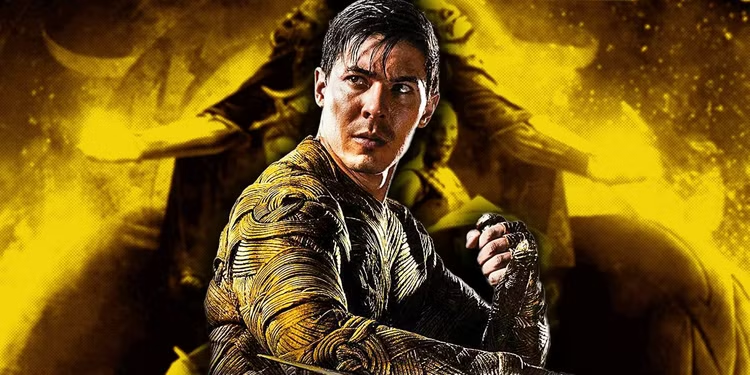
Could Cole Young Be Reborn as Scorpion or Another Legacy Character?
The “reborn as a legacy character” idea runs into one major continuity constraint that the film itself has already established: Cole is positioned as a descendant of Scorpion, not a re-embodiment of Scorpion as a person. Entertainment Weekly’s coverage of the sequel explicitly describes Cole as a descendant of Hanzo Hasashi/Scorpion.
That makes a literal “Cole becomes Scorpion” twist unlikely without a heavy rewrite of what “Scorpion” means in this cinematic universe.
However, the broader shape of the theory—death followed by return in a new form—does align with an on-the-table franchise mechanism. The same marketing wave that fuels “Cole dies” discourse also foregrounds the concept of rebirth via the Sub-Zero → Noob Saibot change.
If the sequel wanted a “reborn” arc for Cole that stays compatible with the established setup, the more lore-consistent options would be:
A Netherrealm-linked revenant or wraith-style return, using the franchise’s stated interest in spirits/NetherRealm as the narrative bridge.
A “power reclassification” rather than an identity swap—i.e., Cole survives but is narratively repositioned from protagonist to specialised fighter within the ensemble, which is a simpler explanation consistent with some trailer-absence theories.
Is Cole Young Becoming a Classic Mortal Kombat Fighter After Death? Top Theories
Theories about Cole’s endpoint tend to cluster into three buckets, each with different levels of compatibility with what’s officially known.
The “early fatality for stakes” theory argues that the sequel wants to demonstrate the tournament’s danger immediately. Because the official synopsis frames the sequel as a no-holds-barred fight against Shao Kahn’s rule—with the fate of Earthrealm at risk—killing a familiar character early would cheaply but effectively move the story into “anyone can die” territory.
The “lead swap without death” theory is less sensational but arguably better aligned with trailer marketing realities: Johnny Cage is presented as a major, audience-facing lead in the campaign, while Cole appears less central in the footage discussions. This reading treats Cole’s reduced presence as simple ensemble rebalancing rather than a death sentence.
The “death then return” theory uses the franchise’s explicit openness to afterlife mechanics as the bridge: Cole could be removed from the “Earthrealm champion on-screen” role while still being available as a later twist, cameo, or altered fighter (revenant, corrupted champion, or other transformation logic). This is strengthened by the marketing’s emphasis on rebirth (Noob Saibot) and by Ed Boon’s comments about bringing back the dead.
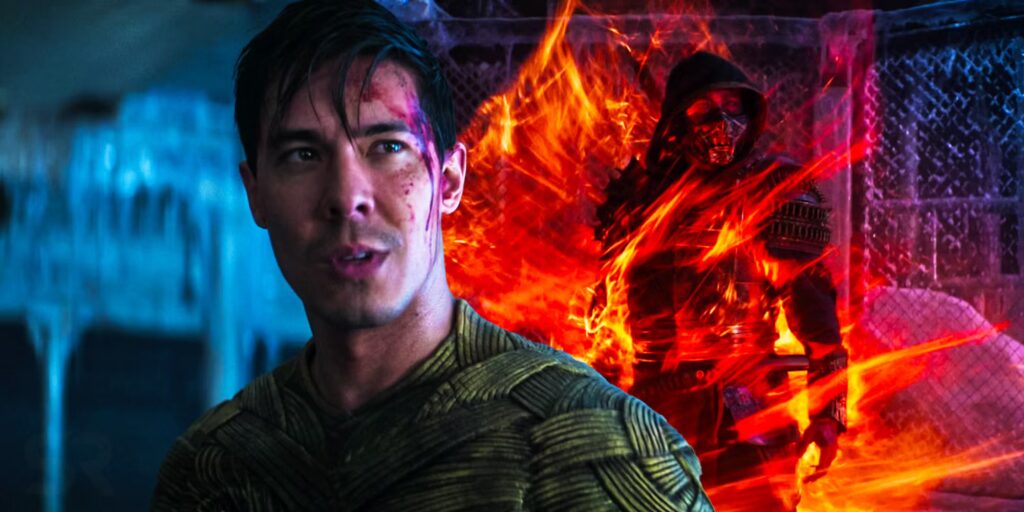
Why Mortal Kombat 2 Might Replace Cole Young with Johnny Cage as the Main Character
To understand why a “protagonist swap” is so easy for fans to believe, it helps to revisit why Cole existed in the first place.
In an interview about the 2021 film, producer Todd Garner explains that Cole was created as a practical narrative tool: a fresh character who can ask the questions newcomers would ask, allowing the film to bring non-fans “up to speed” on complicated lore. He also describes why a blank slate helped the filmmakers avoid clashing with decades of pre-existing character history.
That logic naturally weakens in a sequel. Once a franchise has established its baseline rules, it can afford to shift perspective to a legacy figure—especially one whose personality and “fish out of water” quality can replicate the audience-surrogate function in a different flavour.
The current marketing provides a direct reason: the sequel is openly built around the tournament, and the official synopsis explicitly highlights the champions being joined by Johnny Cage for the central conflict against Shao Kahn.
From an SEO-and-storytelling standpoint, this also helps the sequel align with the dominant “Mortal Kombat movie expectations” keyword cluster—tournament, iconic fighters, fatalities, and game-accurate staging—without needing a wholly original POV character to justify the world to the audience.
Why Cole Young Was Controversial in the 2021 Mortal Kombat Movie
Cole’s controversy is not primarily about performance; it is about role and narrative design.
The official plot synopsis for Mortal Kombat positions Cole as an MMA fighter pulled into realm-spanning conflict, introducing him as the audience’s lens into the franchise’s mythology and powers—specifically via the film’s “arcana” framework.
Producer explanations clarify the intention: Cole exists to solve onboarding problems for viewers unfamiliar with Mortal Kombat’s deep lore, and to give the filmmakers flexibility without rewriting legacy character backstories.
But that intention collided with two fan expectations that are repeatedly referenced in commentary around the sequel:
Many fans wanted the film series’ narrative weight to sit on established game characters rather than an original protagonist, and they wanted the story structure to prioritise the tournament framework that defines the brand. A recent theory article about the sequel summarises this tension directly, pointing to audience frustration with both “arcana” as a power explanation and the original film’s lack of the titular tournament as a major grievance cluster.
The result is that “Cole dies” is not just a plot theory—it functions as a symbolic theory: a belief that the sequel is intentionally course-correcting toward a more legacy-led Mortal Kombat identity.
How Mortal Kombat 2 Is Fixing the Franchise’s Biggest Story Problems
Multiple official and semi-official signals suggest the sequel is leaning into exactly the areas the 2021 film was accused of under-serving.
First, the sequel is explicitly about the tournament. People’s 2026 overview describes the film as centring the deadly tournament teased in the first movie, and Entertainment Weekly likewise frames the sequel as finally placing Earth’s champions into an actual Mortal Kombat where defeat has invasion consequences.
Second, it is leaning harder into game-accurate spectacle. Recent trailer coverage highlights side-scrolling “level” framing and game-stage homage as a key selling point of the newest footage.
Third, it appears to be formalising stakes with clearer structure. Ed Boon’s comments to Entertainment Weekly about “keeping score” and having a visible representation of who is winning (plus “huge consequences” and “twists”) indicate the tournament is being treated as a narrative engine, not just an excuse for fights.
Finally, it is widening the playable-world feel by building recognisable environments. An Entertainment Weekly trailer breakdown explicitly discusses the filmmaking choice to make a Tarkatan village feel real, taking inspiration from story mode in the more recent games—suggesting the sequel’s locations may be curated as “stages you can step into.”
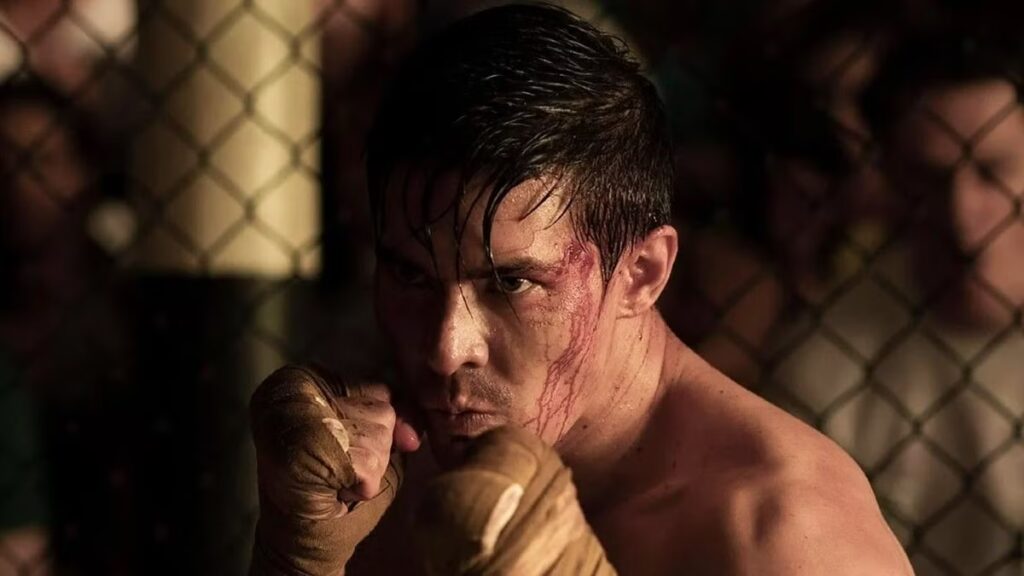
Mortal Kombat 2 Cast and Characters: Who Replaces Cole Young If He Dies?
Even without assuming Cole’s death, the official cast listings and marketing coverage clarify who the sequel is structurally built around—and who would naturally absorb “main character space” if Cole were removed or reduced.
The official synopsis used by major ticketing platforms frames the film as Earthrealm’s champions being joined by Johnny Cage for the central battle against Shao Kahn’s rule.
Major characters and roles publicly associated with Mortal Kombat 2 include:
Lewis Tan as Cole Young; Karl Urban as Johnny Cage; Jessica McNamee as Sonya Blade; Mehcad Brooks as Jax; Ludi Lin as Liu Kang; Tadanobu Asano as Lord Raiden; Hiroyuki Sanada as Hanzo Hasashi/Scorpion; Joe Taslim as Bi-Han (linked in marketing to Noob Saibot); Martyn Ford as Shao Kahn; Chin Han as Shang Tsung.
Newer additions highlighted in major entertainment coverage include Adeline Rudolph as Kitana; Tati Gabrielle as Jade; and CJ Bloomfield as Baraka, among others.
If Cole were to die early, the marketing already suggests the “replacement protagonist function” is most naturally filled by Johnny Cage: he is introduced as a central marketing hook, a tone driver (humour plus action), and a character whose learning curve about the tournament can double as audience onboarding.
What the Mortal Kombat 2 Story Means for Earthrealm vs Outworld War
At the macro level, Mortal Kombat 2 is positioned as a war-of-realms story whose immediate battlefield is the tournament.
The core premise across official synopsis language and mainstream coverage is consistent: Earthrealm’s champions must win against Outworld’s forces to prevent Shao Kahn’s invasion/tyranny from threatening Earthrealm’s existence.
What the sequel appears to add—based on creator commentary—is a more explicit “score” structure: wins and losses matter in a trackable way, and the film intends viewers to feel the tournament’s progression rather than experiencing the fights as disconnected set pieces.
This has a direct implication for Cole theories: in a scored tournament narrative, a single shocking death can serve multiple functions at once—raising the stakes, moving the “scoreboard,” and forcing character alliances or growth. That’s why the “Cole dies early” theory is often paired with the idea that his death would be used to harden Earthrealm’s resolve and define Shao Kahn as a near-unstoppable obstacle.
Mortal Kombat 2 Release Date, Plot Details, and What to Expect from the Tournament
Mortal Kombat 2 is scheduled to release in cinemas (including IMAX) on May 8, 2026.
A widely circulated official synopsis describes the set-up as Earthrealm’s champions—now joined by Johnny Cage—being pitted in a gory, no-holds-barred battle to defeat Shao Kahn’s dark rule threatening Earthrealm and its defenders.
Tournament expectations are unusually concrete for a Mortal Kombat adaptation because key creative voices have described structural elements publicly: Ed Boon has stated the film “keeps score,” uses a visible representation of who is winning, and includes twists with “huge consequences,” suggesting the tournament is more than background flavour.
Finally, the most recent trailer coverage has stressed a stronger commitment to game-native aesthetics—“levels,” fatalities, and lore drops (notably Noob Saibot)—which aligns with the idea that this sequel is intentionally designed to feel more like “playing Mortal Kombat” than the 2021 film did.
10 Frequently Asked Questions (FAQs)
- Is Cole Young confirmed to appear in Mortal Kombat 2?
Yes. Major entertainment coverage and ticketing/cast listings include Cole Young in the film’s publicly listed cast. - Who plays Johnny Cage in Mortal Kombat 2?
Karl Urban is publicly credited as Johnny Cage in key cast listings and official marketing coverage. - When is Mortal Kombat 2 coming out?
The theatrical release date is May 8, 2026. - Is Mortal Kombat 2 finally about the tournament?
Yes. Mainstream coverage describes the sequel as focusing on the Mortal Kombat tournament that was teased in the 2021 film, with creator commentary indicating that the story tracks wins/losses and treats the tournament as consequential. - Is Sub-Zero in Mortal Kombat 2?
Yes. Cast/marketing coverage continues to include Bi-Han/Sub-Zero, and recent trailer reporting states he returns as Noob Saibot. - Is Noob Saibot really in Mortal Kombat 2?
Recent trailer coverage explicitly describes a Sub-Zero-to–Noob Saibot reveal as a headline lore moment. - Who is the main villain of Mortal Kombat 2?
Public synopsis language and entertainment coverage frame Shao Kahn as the major Outworld threat whose rise/dark rule endangers Earthrealm. - Can dead characters come back in this movie universe?
Yes—at least in principle. Ed Boon has directly referenced spirits and the NetherRealm as story tools and stated there are ways to bring dead characters back, and marketing coverage also highlights returning characters who died in the prior film. - Is there evidence Cole Young dies in Mortal Kombat 2?
There is no official confirmation. The theory is driven by trailer-emphasis patterns (Cole appearing less prominently in discussed footage) and by the marketing’s positioning of Johnny Cage as central. - How long is Mortal Kombat 2?
Major ticketing listings describe the runtime as 1 hour 56 minutes.
Conclusion
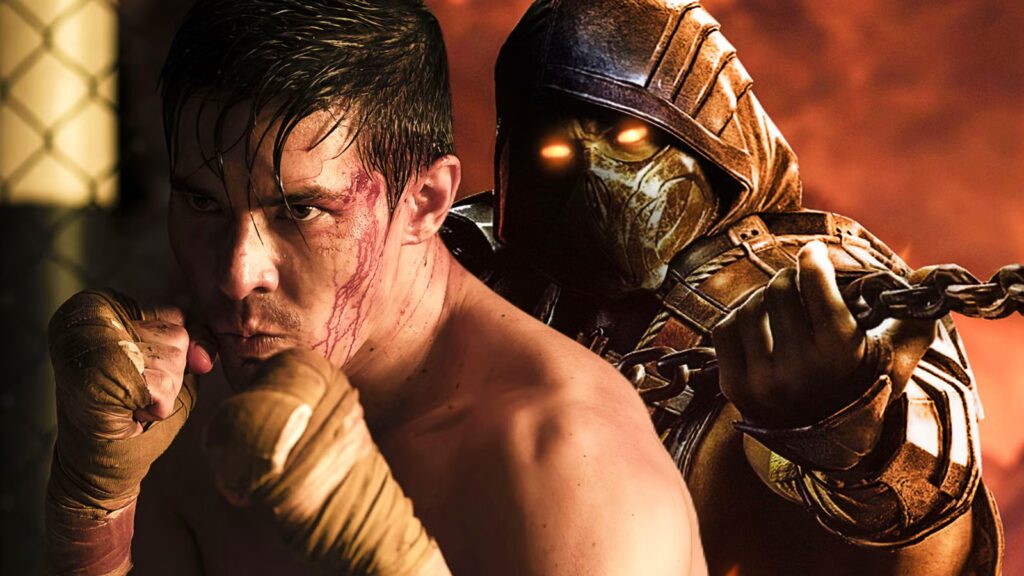
The current, evidence-based state of the “Cole Young dies and is reborn” theory is this: the marketing most strongly supports a shift in narrative centre toward Johnny Cage and a harder commitment to tournament structure, game-level staging, and resurrection-adjacent lore (Noob Saibot; NetherRealm discussion).
Whether that shift is achieved through an early Cole fatality, a reduced role, or a death-and-return curve remains unconfirmed by official plot disclosures; the theory persists because it matches both franchise precedent (death not always being final) and the sequel’s apparent course correction toward classic Mortal Kombat storytelling.
Sources and citation
- Fandango – “Mortal Kombat II (2026) film page, tickets, synopsis, cast, FAQs”
https://www.fandango.com/mortal-kombat-ii-2026-234567/movie-overview - Entertainment Weekly – “Mortal Kombat 2 first look and Ed Boon interview (tournament, ‘keeping score,’ NetherRealm returns)”
https://ew.com/mortal-kombat-2-first-look-karl-urban-johnny-cage-kitana-shao-kahn-exclusive-11696968/ (EW.com) - GamesRadar – “Mortal Kombat 2 trailer breakdown, release date, cast, and gameplay-style framing (April 2026 coverage)”
https://www.gamesradar.com/entertainment/sci-fi-movies/mortal-kombat-2-movie-release-date-cast-plot-trailer/ (GamesRadar+) - Inverse – “Why Cole Young was created for Mortal Kombat (producer Todd Garner interview)”
https://www.inverse.com/entertainment/mortal-kombat-cole-young-todd-garner-interview - Bloody Disgusting – “Official Mortal Kombat (2021) synopsis and Cole Young arcana details”
https://bloody-disgusting.com/movie/3657895/mortal-kombat-official-synopsis-reveals-cole-youngs-role/ - ComicBook.com – “Mortal Kombat 2 theory: Cole Young’s fate and sequel direction (March 2026 feature)”
https://comicbook.com/gaming/news/mortal-kombat-2-cole-young-theory/
Recommended
- Steam Machine (2026): Release Date, Price, Specs, and SteamOS Explained
- Slay the Spire 2 Record Metrics: Steam Player Peaks, China Popularity, and the Deck-Building Roguelike Genre in 2026
- Oscars 2026: Everything You Should Know (98th Academy Awards Date, Host, Nominees, and How to Watch)
- How Do I Track an Object With a Camera in Blender?
- Canva Just Bought Cavalry & MangoAI: What the 2026 Acquisitions Mean for Motion Design and AI Video Ads
- Resurrection of the Insomnia Gaming Festival cancelled: Insomnia 74 (i74) called off, refunds, and what happens next
- Devil May Cry Vergil: Complete Guide to Dante’s Iconic Rival, Powers, and Storyline
- Why The View Keeper Is the Best Blender Add-on for Scene Management
- Blender Restore Curve Segment Length Geometry Nodes Preset: Complete Guide
- How to Import Metahuman into Unreal Engine 5: Step-by-Step Guide for Beginners and Artists