








In This Article (7 sections)
Neolix Raises Nearly $400 Million in Series E Funding With Boyu Capital and Alibaba Backing
Neolix has raised nearly $400 million in Series E funding as the Chinese autonomous delivery company prepares to expand its international operations. Announced on October 20, 2026, the financing brings together Boyu Capital, Alibaba’s AEF NextGen Fund and several other investors supporting the commercial development of driverless logistics. Bloomberg reported that the investment increased Neolix’s cumulative fundraising to more than $1.4 billion, although the company’s latest valuation was not disclosed. The announcement comes as autonomous delivery businesses face growing pressure to demonstrate that their technology can support reliable commercial operations rather than simply complete successful demonstrations.
Navigating a route autonomously is one challenge, but delivering goods consistently across different cities, regulatory environments and customer requirements introduces additional responsibilities. Neolix’s expansion plans increasingly address these operational demands through local service infrastructure, regional partnerships and continued investment in autonomous driving technology.
The Series E represents Neolix’s latest major financing round, with Boyu Capital identified as the lead investor in reporting from Bloomberg and DealStreetAsia. Chinese coverage also described an unnamed national level fund as a joint lead investor, providing additional detail beyond the shorter international reports. These accounts agree on Boyu Capital’s central role, although their descriptions of participating institutions differ. The Series E designation identifies the company’s fundraising stage but does not establish profitability, an imminent public listing or the absence of technical and commercial risks.
The practical significance is that Neolix has secured additional capital to support vehicle engineering, autonomous driving software, manufacturing, customer services and international operations. These activities require considerable spending, particularly when the company enters markets where its operating network has not yet reached a mature commercial scale.
The amount raised should be described as nearly $400 million rather than an exact $400 million transaction. Bloomberg rounded the financing to $400 million, while DealStreetAsia and Chinese reporting retained the qualification. The available announcements do not disclose a precise transaction amount of $400,000,000. Bloomberg also reported that Neolix had raised more than $1.4 billion in cumulative financing, while Chinese reports described total fundraising exceeding RMB 10 billion. These figures refer to capital raised over time rather than annual revenue, available cash or company valuation. Money secured through earlier rounds may already have been invested in technology, manufacturing and operations, meaning cumulative fundraising should not be interpreted as the amount remaining in the company’s accounts.
The latest investment follows a previously announced Series D financing round worth more than $600 million. A company release distributed in October 2025 documented that earlier transaction, establishing that the Series E follows another substantial period of capital raising. However, neither financing announcement reveals how much every investor contributed, the precise ownership changes or the complete transaction terms. Without those details, ownership percentages, governance arrangements and changes in corporate control cannot be calculated reliably. Similarly, the size of the financing does not independently establish the company’s financial performance or determine how quickly overseas operations will become profitable.
Boyu Capital’s participation is important because it places the investment firm at the center of another substantial financing round for autonomous logistics. However, the available reporting does not provide a detailed public explanation of Boyu’s investment committee decisions, expected returns or preferred exit timetable. The broader commercial rationale can be examined through the nature of autonomous delivery. Logistics involves recurring transport requirements, including moving goods between depots, stores, collection points and industrial facilities. These activities can provide relatively consistent routes and measurable service expectations, allowing operators to evaluate reliability, vehicle utilization and delivery costs across repeated journeys.
That repeatability creates a potential business opportunity for autonomous vehicles. A company transporting goods along established routes can examine whether automation reduces operating expenses, improves scheduling or provides reliable additional capacity. Compared with a broad promise of autonomous driving across every possible environment, a clearly defined logistics service offers more specific conditions against which performance can be assessed. However, a large fleet also creates maintenance requirements, customer support obligations and exposure to changing local conditions. Boyu Capital’s investment demonstrates a willingness to finance the opportunity, but it does not establish that Neolix has already resolved profitability, safety or international scaling challenges.
Alibaba’s AEF NextGen Fund is another important participant in the Series E. Neolix appears in NextGen Partners’ portfolio as an autonomous delivery company developing Level 4 RoboVan solutions for urban and final stage logistics. Alibaba Entrepreneurs Fund describes its investment approach as supporting companies seeking to expand through resources connected to Alibaba’s wider business ecosystem. This provides context for why an Alibaba associated investment fund may find autonomous logistics commercially relevant. Delivery technology can potentially serve businesses involved in retail distribution, parcel movement and other activities connected to large commercial networks.
However, investment by Alibaba’s AEF NextGen Fund does not mean Alibaba has acquired Neolix or committed to using its vehicles across its logistics operations. Financial investment and commercial procurement are separate decisions. A fund may invest in a company without every business associated with the wider corporate group adopting its products. Any future vehicle purchase, exclusive delivery agreement or deeper commercial partnership would require its own announcement. The confirmed development is that Neolix has attracted another financial backer with connections to a broader business ecosystem.
The financing attracted both new and returning investors, with international reporting naming several participating institutions:
- Boyu Capital: Identified as the lead investor in the Series E financing.
- Unnamed national level fund: Described in Chinese reporting as a joint lead investor.
- Alibaba AEF NextGen Fund: Participated as a new financial backer associated with Alibaba’s investment ecosystem.
- Monolith Management: Named among the participating investors.
- Granite Asia: Identified as another investor supporting the financing.
- Vertex Growth: Included among the new participants.
- Meridian Capital: Named in DealStreetAsia’s coverage of the round.
- GAC Capital: Also identified among the participating institutions.
- Trustar Capital: Reported as a returning investor.
- CDH VGC: Included among existing investors participating in the financing.
- Yunqi Partners: Another returning investor identified in the coverage.
- Stone Venture: Named by Bloomberg among existing shareholders supporting the transaction.
Chinese reporting provided a broader list of participating institutions and returning shareholders, while international reports included different levels of detail. Some names also appeared in translation, meaning a shortened English language list should not automatically be treated as the complete transaction register. New investors bring additional capital and their own assessments of the business opportunity, while returning shareholders demonstrate a willingness to maintain or increase their financial exposure. Neither category guarantees future success, and outside observers generally do not have access to the financial models, investment conditions or strategic priorities used by individual institutions.
The financial support is particularly relevant because autonomous logistics companies must develop technology and operating infrastructure together. A vehicle may function successfully during testing but still require investment in route assessment, maintenance facilities, customer onboarding, training and local partnerships before becoming part of a dependable delivery network. Entering a new country can generate substantial expenses before the first regional fleet produces consistent income. Neolix’s financing gives it more resources to pursue these activities, but the company must still demonstrate that its services can operate at an economically useful scale.
The wider investor interest in driverless delivery reflects the possibility of automating recurring transport work within existing logistics networks. Customers already spend money on local distribution, making the potential demand easier to identify than services requiring entirely new consumer behavior. However, the commercial opportunity depends on whether autonomous vehicles can meet delivery requirements more effectively than available alternatives. A technically advanced vehicle provides limited value if it cannot complete routes reliably, carry useful loads or fit the customer’s operating schedule.
The Series E therefore represents an investment in both technology and organizational development. Investors are supporting the systems that allow vehicles to navigate roads, but they are also financing the infrastructure needed to deploy, maintain and support those vehicles. The success of that investment will depend on whether Neolix can translate growing technical capabilities into dependable commercial services across multiple markets.

Neolix Autonomous Delivery Vehicles, RoboVan Technology and International Expansion Plans
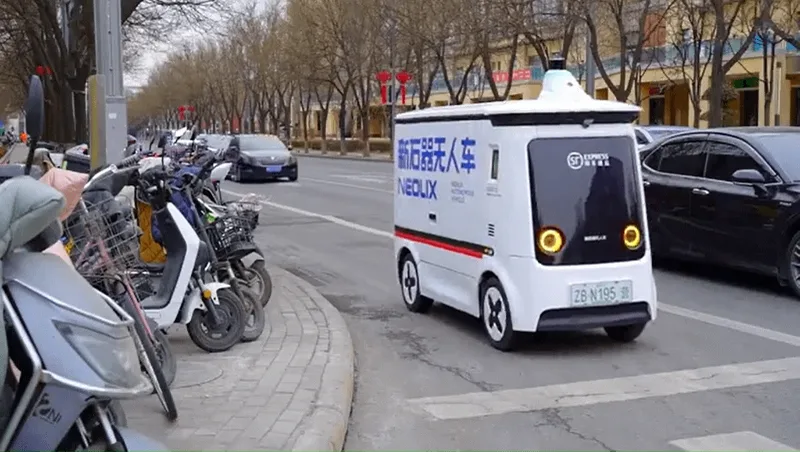
Neolix develops autonomous vehicles designed specifically for transporting goods rather than passengers. Its product range includes the Xolra 3 and Xolra 6, which serve different cargo requirements and logistics applications. The company’s website lists cargo volumes of approximately three cubic metres for the Xolra 3 and 8.8 cubic metres for the larger Xolra 6. The Xolra 6 is also advertised in a configuration offering a 2,000 kilogram payload, while the broader product range includes refrigerated transport, mobile locker and flatbed applications. These specifications describe manufacturer advertised capabilities, and the practical capacity of an individual deployment depends on the selected configuration, operating conditions and relevant permissions.
The vehicles are designed for recurring goods movement, including deliveries between distribution centers, retail locations, parcel collection points and industrial facilities. Different configurations allow the company to address more than one logistics requirement. A smaller vehicle may be suitable for limited urban deliveries, while a larger cargo model may support heavier or more substantial shipments. Refrigerated versions can address products requiring controlled temperatures, while mobile locker configurations may support parcel collection arrangements. The relevance of each design depends on whether its capacity and operating characteristics match the customer’s workflow.
Neolix describes its vehicles as Level 4 autonomous driving solutions, a classification that requires careful interpretation. According to the United States National Highway Traffic Safety Administration, Level 4 automation allows the driving system to perform the driving task within defined operating conditions or service areas without requiring a human driver to operate the vehicle there. It does not mean that a vehicle can travel autonomously on every road, in every environment or under every possible condition. A deployment remains dependent on the system’s capabilities, its supported operating environment and the permissions applying to that route.
For commercial customers, the most important question is not simply whether a vehicle has Level 4 capabilities, but whether it can perform a useful delivery task within its permitted operating conditions. A vehicle may navigate an approved urban route successfully while remaining unsuitable for roads, weather conditions or operating environments outside its supported domain. That distinction matters because commercial autonomy depends on matching technical capability with practical requirements rather than assuming universal operation.
Neolix describes an autonomous driving approach that does not require prebuilt high definition maps. Its technology documentation refers to real time perception, bird’s eye view vision and occupancy networks used to understand surroundings, determine location and plan movement. These systems are intended to help the vehicles respond to their environments using information gathered during operation. However, functioning without prebuilt high definition maps does not mean vehicles can be deployed without preparation. The company still describes route configuration, site setup and validation before operations begin.
This distinction is important because route preparation involves more than constructing a digital map. Operators must understand the locations where vehicles will travel, where goods will be loaded and unloaded, what access restrictions apply and how the service should respond when a planned delivery cannot be completed normally. A vehicle may be capable of navigating roads autonomously while still requiring a carefully organized logistics process to ensure that goods reach the intended destination.
Consider a supermarket replenishment service. Staff load products at a distribution facility, an autonomous vehicle travels along an approved route, and receiving employees unload the goods at the store. The vehicle automates the driving portion, while humans continue managing inventory, loading and customer facing responsibilities. If the receiving area is blocked or a delivery cannot be accepted, the wider operation needs a procedure for resolving the problem. The commercial goal is therefore not simply to complete a journey autonomously, but to complete the delivery service reliably.
Neolix’s service offering reflects this wider requirement. Its business information describes route planning, deployment, customer onboarding, training, maintenance and other operational support. The company presents its vehicles as part of connected logistics infrastructure rather than isolated transportation products. That approach is significant because commercial customers need a functioning service that integrates with existing schedules, facilities and personnel. Purchasing or deploying a vehicle is only one part of the process.
The new financing is intended to support Neolix’s international expansion by strengthening its operating and customer service network while continuing development of autonomous driving technology. Reporting identifies local service hubs, safety improvements, vehicle performance and reduced lifetime operating costs among the priorities. These goals reflect the challenges of moving from individual demonstrations to repeatable commercial operations. Establishing local teams and partnerships can help the company support vehicles after deployment, respond to customer needs and manage the practical requirements of operating in different regions.
Neolix’s expansion strategy can be understood through several important areas:
- Local operating infrastructure: Establishing regional teams and facilities to support customers, vehicle maintenance and daily operations.
- Customer service networks: Providing assistance, onboarding and operational support for businesses integrating autonomous vehicles.
- Technology development: Improving autonomous driving models, perception capabilities and vehicle performance.
- Safety improvements: Expanding testing and validation to support reliable operation under defined conditions.
- Regional partnerships: Working with local logistics companies and other organizations familiar with market requirements.
- Regulatory preparation: Addressing testing permissions, road access, vehicle approvals and relevant data requirements.
- Commercial deployment: Moving beyond isolated demonstrations toward sustained operations that meet customer delivery needs.
- Operating cost reduction: Improving vehicle utilization, maintenance efficiency and lifetime service economics.
- International market development: Building the organizational capacity needed to support fleets across different countries.
The company’s European plans provide a concrete example of this approach. In September 2026, Neolix announced plans to establish its European headquarters in Luxembourg. The proposed base is intended to support corporate, regulatory and commercial activities as the company expands its regional presence. Neolix described developing local infrastructure and partnerships to move beyond individual pilot programs toward repeatable commercial operations. The announcement indicates an intention to establish a more substantial European organization, but it does not independently establish permission to operate throughout every European country.
The Luxembourg plan is particularly relevant because overseas expansion introduces different regulatory and organizational requirements. Autonomous delivery services may need to address vehicle approval, public road testing, insurance, data handling and local operating arrangements. Establishing a regional headquarters can support those processes, but the location of an office does not automatically authorize vehicles to operate across national borders. Each deployment remains dependent on the rules and approvals applying to its intended environment.
Neolix’s Brussels pilot illustrates how regulatory preparation affects practical deployment. The company described plans for a 12 month pilot targeted to begin in the fourth quarter of 2026, subject to required federal testing authorizations. Its September announcement stated that the application was under review and that regional and municipal coordination was also involved. The proposed schedule should therefore be treated as a target rather than confirmation that operations had already begun. The project demonstrates how a company may have vehicles, partners and operational plans prepared while still awaiting approval for public road activity.
The Brussels announcement also highlights the continuing importance of human involvement. Neolix described a depot coordinator and customer facing specialist supporting each vehicle during the pilot. These personnel were responsible for logistics activities rather than supervising driving, and the company indicated that the vehicle to staff ratio was expected to change at commercial scale. This demonstrates that autonomous driving does not eliminate every human task associated with delivery. Loading, unloading, customer communication, maintenance and exception handling remain important parts of the service.
Malaysia represents another stage of Neolix’s international development. In June 2026, the company announced that it had received approval for public road sandbox testing in Cyberjaya, working with partners including Tiong Nam Logistics, Asia Mobiliti and MindHub. The testing arrangement provides an opportunity to evaluate vehicles under a defined framework, but sandbox participation should not be described as unrestricted nationwide commercial authorization. The announcement also indicated that participating companies must complete technical and safety evaluations before operating on public roads under the relevant testing conditions.
These examples show that international expansion involves a series of separate milestones. Establishing an office, forming a partnership, obtaining testing approval and operating a sustained commercial route represent different achievements. Each can contribute to growth, but none automatically guarantees the next. A company may need to validate its technology and service model repeatedly because road conditions, traffic patterns, customer requirements and regulatory expectations differ between markets.
The company’s wider business model also depends on serving different logistics applications rather than relying on a single delivery format. Neolix describes opportunities across retail, express delivery, industrial logistics and other goods movement services. However, the reviewed information does not provide an audited breakdown of revenue from vehicles, software and operational support. It would therefore be premature to assign precise financial contributions to individual business activities or describe a particular service category as the company’s most profitable.
Commercial success depends on whether the overall service provides useful value at a price that covers the provider’s costs. A vehicle operating frequently along a dependable route may contribute more economic value than one used occasionally in a demonstration. Utilization, contract terms, maintenance requirements, service reliability and customer retention all influence the quality of revenue. Fleet growth can indicate expanding activity, but it does not automatically establish that the underlying business is profitable.
Neolix’s international strategy therefore involves developing a logistics organization alongside its autonomous driving technology. Vehicles must perform the transport task, but regional operations must manage customers, support equipment and respond to unexpected situations. The latest financing strengthens the company’s ability to build that combined capability, while successful expansion will depend on how effectively the technology fits real delivery workflows.

Neolix Business Model, Autonomous Delivery Competition, Safety and Future Growth Challenges
The commercial opportunity for autonomous delivery depends on whether driverless vehicles can perform recurring transportation tasks reliably and economically. Logistics provides an established market because companies already spend money moving goods between warehouses, retail locations, distribution centers and customers. Autonomous vehicles may offer advantages in situations involving predictable routes, frequent journeys and goods that can be loaded and unloaded through organized processes. However, technical capability must be considered alongside the complete cost and quality of the delivery service. A vehicle that drives without an onboard operator does not automatically eliminate every expense associated with transportation.
Autonomous delivery vans and conventional human driven logistics offer different strengths. Automation may be attractive for repeated journeys between known locations, particularly when trips can be consolidated and scheduled. Human drivers provide flexibility, local knowledge and the ability to handle varied physical tasks during deliveries. A meaningful comparison must account for the entire workflow rather than focusing exclusively on the absence of driver wages. Vehicle financing, energy, insurance, maintenance, communications, loading, unloading, recovery procedures and customer assistance all affect operating costs.
A driverless vehicle could appear cheaper per kilometre while completing fewer successful deliveries during a shift, reducing its practical economic advantage. Conversely, a well utilized autonomous shuttle could allow employees to focus on loading, inventory management and customer service while the vehicle performs repetitive transport work. The result depends on route design, utilization and how efficiently the service integrates with existing operations. These examples demonstrate why total delivery output and operating resources provide a more useful comparison than vehicle autonomy alone.
Neolix’s Brussels pilot provides an example of how human roles can remain part of an autonomous delivery system. The company described staff responsible for logistics coordination and customer facing activities, even though the vehicles would handle the driving task within their approved conditions. The proposed change in vehicle to staff ratios at commercial scale also illustrates how operating requirements may evolve as deployments grow. However, fewer employees per vehicle would not mean that every human task disappears. Commercial autonomy may change how workers contribute to logistics rather than remove all human involvement.
Investors are supporting the possibility that autonomous vehicles can complete recurring transport tasks at sufficient scale to create a sustainable business. Delivery operations offer identifiable customers, existing transport budgets and measurable service expectations. Research on autonomous final stage logistics has highlighted route planning, delivery timing, uncertainty and pedestrian safety as interconnected challenges. A vehicle must operate safely while meeting the practical requirements of the delivery process, making performance across the complete service more important than the ability to navigate an isolated route.
Repeated operations may also create opportunities for improving the technology. Deployments can expose difficult situations involving road layouts, blocked access, changing traffic conditions and interactions with pedestrians or other vehicles. Information from those situations can inform further development when it is collected, evaluated and incorporated into validated improvements. However, accumulating additional driving distance does not automatically produce better software. The quality of the data, the effectiveness of analysis and the reliability of subsequent testing all matter.
Competition in autonomous logistics extends beyond the technical specifications of individual vehicles. Zelostech is another company developing autonomous goods transportation, and its announcement described an integration with Cainiao RoboVan involving a business contribution and strategic equity investment. Cainiao became a shareholder under the arrangement, with the stated objective of combining autonomous driving and manufacturing capabilities with logistics resources. This demonstrates how partnerships can influence competition by connecting technology providers with existing delivery networks, customer relationships and operational infrastructure.
Neolix also competes with conventional delivery solutions. A logistics customer can choose human driven electric vans, cargo bikes, consolidated delivery routes or other transportation arrangements without adopting autonomous vehicles. The relevant comparison is therefore practical: which service meets the customer’s requirements for cost, reliability, capacity, delivery timing and geographic coverage? Autonomous technology must demonstrate advantages against those alternatives rather than assuming that removing the onboard driver automatically makes it the preferred solution.
Fleet size also requires careful interpretation. Manufacturers may report vehicles produced, sold, delivered, deployed or actively operating, but those categories do not describe the same level of commercial activity. A vehicle participating in a controlled trial differs from one completing regular contracted deliveries. Similarly, a large fleet may indicate manufacturing capacity without revealing utilization or profitability. Meaningful competitive comparisons require consistent definitions, reporting periods and operating conditions.
Safety remains one of the most important challenges because autonomous delivery vehicles operate among people who have not agreed to participate in a technology experiment. Pedestrians, cyclists, road workers and other drivers create complex situations that cannot always be predicted from a route plan. Neolix’s technical documentation describes perception systems using a unified bird’s eye view, surrounding sensing and occupancy modeling to understand the environment. These are relevant approaches to autonomous navigation, but manufacturer descriptions alone do not establish complete safety performance.
Some of the most difficult situations involve uncertainty about visibility or intent. A pedestrian may emerge from behind a parked vehicle, roadworks may change an established traffic pattern, or a blocked delivery entrance may require the vehicle to stop or seek another permitted action. The autonomous system must recognize relevant objects and events while remaining within its supported operating conditions. A commercially reliable service also needs procedures for responding when the vehicle cannot safely complete the planned task.
NHTSA’s automated driving guidance identifies several considerations relevant to evaluating these systems, including operational design domain, object and event detection, fallback behavior and validation. These concepts provide a framework for understanding what an autonomous vehicle is designed to handle and how it responds when conditions become unsuitable. A vehicle capable of operating safely within a defined route does not automatically possess the same capability in an unfamiliar environment. Safety performance must therefore be assessed according to the conditions under which the system is intended to operate.
Important measures for evaluating autonomous delivery include:
- Operating exposure: The number and nature of journeys completed under defined conditions.
- Incident severity: The consequences of safety events rather than simply counting all incidents equally.
- Intervention patterns: Situations requiring external assistance or alternative operating procedures.
- Route reliability: The proportion of planned journeys completed successfully within expected conditions.
- Fallback behavior: How the system responds when it encounters circumstances outside its supported capabilities.
- Customer service performance: Whether deliveries arrive correctly and problems are resolved effectively.
- Vehicle utilization: How frequently deployed vehicles perform commercially useful work.
- Maintenance requirements: The resources needed to keep vehicles operating reliably over time.
- Regulatory compliance: Whether each deployment meets the applicable testing and operating conditions.
- Operating economics: The relationship between revenue, service output and the total cost of running the fleet.
A large cumulative mileage figure can provide useful context, but it cannot independently establish that one autonomous system is safer than another. The types of roads, traffic conditions, vehicle exposure and severity of incidents all influence the interpretation. Similarly, successful operation during a limited pilot does not guarantee that identical performance will continue at a larger scale or across more difficult environments. Neolix’s additional funding can support continued testing and technology development, but financial investment cannot substitute for demonstrated safety outcomes.
International regulations add another layer of complexity. Depending on the jurisdiction, companies may need to address vehicle approval, public road testing authorization, insurance, data protection and local operating requirements. Neolix’s European expansion announcement specifically identified data protection, AI governance and vehicle homologation among its compliance priorities. Its planned Luxembourg headquarters may support those activities, but it does not provide blanket authorization throughout Europe. Individual deployments remain subject to the relevant local requirements.
The Brussels and Cyberjaya projects illustrate why testing approval and unrestricted commercial operation should remain separate concepts. The Brussels pilot was described as dependent on federal authorization and coordination with regional and municipal authorities, while the Malaysian sandbox involved technical and safety evaluations within a controlled framework. A proposed operating schedule can change if required approvals are delayed, creating costs even when vehicles and staff are otherwise prepared. Regulatory readiness therefore forms part of the business model rather than an administrative issue that can be addressed after expansion.
These challenges help explain why autonomous delivery companies require substantial capital. Developing driving systems, manufacturing vehicles, establishing regional operations and supporting customer deployments all demand resources before a market reaches mature operating scale. The nearly $400 million Series E gives Neolix greater financial capacity to pursue those activities, but its value will depend on how effectively that capital supports commercial progress.
The company’s growth should ultimately be assessed through measurable operating results rather than financing headlines alone. Important questions include whether customers renew contracts, whether vehicles complete useful deliveries consistently, whether operating costs improve with scale and whether regional deployments progress from testing to sustained commercial service. Safety performance and regulatory achievements also need precise interpretation because opening an office, receiving testing authorization and operating a regular delivery route establish different levels of progress.
The broader implication is that autonomous logistics increasingly requires companies to develop dependable service organizations alongside their driving technology. Local maintenance, customer integration, route planning and operational support become part of the product’s commercial value. A company may possess advanced autonomous vehicles but still struggle to build a sustainable business if those vehicles cannot meet customer requirements reliably or economically.
Neolix’s latest financing strengthens its position as it pursues international expansion and develops its Level 4 delivery technology. The investment reflects confidence from several financial institutions in the potential of autonomous goods transportation, but it does not prove that the company is profitable or that every planned market will become commercially successful. The most meaningful future developments will involve sustained customer operations, verified safety performance, improving economics and the successful expansion of regional service networks. Those results will determine whether Neolix can transform another major fundraising round into a durable international autonomous logistics business.

Frequently Asked Questions (FAQs)
- How much did Neolix raise in its Series E funding round?
Neolix announced nearly $400 million in Series E financing on October 20, 2026. Bloomberg rounded the amount to $400 million, while other reporting retained the qualification. The company’s cumulative fundraising has reportedly exceeded $1.4 billion, although the latest valuation was not disclosed. The financing provides additional capital for expansion and technology development but does not establish the company’s current profitability or available cash balance. - Who led the Neolix Series E investment?
Boyu Capital was identified as the lead investor in international reporting from Bloomberg and DealStreetAsia. Chinese coverage also described an unnamed national level fund as a joint lead investor. Several other institutions participated in the financing, including new and existing shareholders. However, the available reports do not reveal the exact amount invested by each institution or the ownership changes resulting from the transaction. - Did Alibaba invest in Neolix?
Yes. Alibaba’s AEF NextGen Fund participated in Neolix’s Series E financing, and Neolix is also listed in NextGen Partners’ portfolio. The investment demonstrates financial backing from an Alibaba associated fund, but it does not mean Alibaba acquired Neolix or committed to purchasing its autonomous vehicles. Any exclusive partnership, commercial deployment agreement or guaranteed order would require a separate announcement. - What does Neolix manufacture?
Neolix develops autonomous vehicles designed for transporting goods, including the Xolra 3 and Xolra 6 product families. These vehicles serve different cargo capacities and logistics applications, with the larger Xolra 6 advertised in configurations offering substantial payload capacity. The company also presents refrigerated transport, mobile locker and flatbed solutions. Its business extends beyond manufacturing because it provides deployment, maintenance and operational support for autonomous delivery services. - Can Neolix vehicles drive anywhere without a human?
No. Neolix describes its vehicles as Level 4 autonomous driving solutions, meaning they can perform driving tasks without a human driver within supported operating conditions or service areas. This does not establish universal autonomy across every road, weather condition or environment. Each deployment depends on the vehicle’s capabilities, route suitability, local permissions and the operating limits established for the service. - How will Neolix use the new funding?
The reported priorities include expanding international operations, strengthening customer service networks and continuing development of autonomous driving technology. Neolix also intends to invest in safety, vehicle performance, data and training for its driving models while working to reduce lifetime operating costs. These activities support the company’s effort to move beyond demonstrations toward reliable commercial delivery services across different markets. - Where is Neolix planning its European headquarters?
Neolix announced plans in September 2026 to establish its European headquarters in Luxembourg. The proposed office is intended to support corporate operations, regulatory preparation, commercial partnerships and the development of local infrastructure. Luxembourg would provide a regional base for expansion, but establishing headquarters there does not automatically authorize autonomous vehicle operations throughout Europe. Individual deployments remain subject to applicable national and local requirements. - Does autonomous delivery eliminate all human work?
No. Autonomous delivery can remove the need for an onboard driver during supported operations, but the wider logistics process still involves loading, unloading, maintenance, customer communication and handling unexpected situations. Neolix’s Brussels pilot specifically describes human personnel supporting logistics and customer facing activities. Automation therefore changes how some tasks are performed rather than eliminating every human responsibility associated with transporting goods. - Who competes with Neolix?
Zelostech is another company operating in autonomous logistics and has announced an integration with Cainiao RoboVan involving business cooperation and an equity investment. However, Neolix also competes with traditional transportation options, including human driven vans, electric delivery vehicles, cargo bikes and consolidated distribution services. Customers ultimately compare these alternatives according to cost, reliability, capacity and the ability to meet their delivery requirements. - Does the funding prove that Neolix is profitable?
No. Raising nearly $400 million demonstrates that investors have committed additional capital to the business, but it does not establish positive net income, sustainable operating margins or profitable international operations. Profitability depends on revenue, customer demand, vehicle utilization, maintenance costs and other operating expenses. A reliable assessment would require financial disclosures and evidence that Neolix can deliver services at a sustainable cost as its fleet and regional operations expand.

Conclusion
Neolix’s nearly $400 million Series E funding strengthens its position in autonomous delivery and supports international expansion. Led by Boyu Capital, with participation from Alibaba’s AEF NextGen Fund and other investors, the financing reflects confidence in the company’s growth potential. However, its success will depend on turning regional plans and pilot programs into reliable commercial services, improving operating costs and expanding local customer support. Neolix’s European headquarters plans and Malaysian testing program highlight the operational challenges involved in scaling autonomous logistics.
Sources and Citations
- Bloomberg, October 20, 2026, Alibaba Backs Chinese Robovan Maker in $400 Million Fundraising: Reporting by Saritha Rai confirming Neolix’s approximately $400 million Series E financing, Boyu Capital’s leadership, participation by Alibaba’s AEF NextGen Fund and other investors, and cumulative fundraising exceeding $1.4 billion.
https://news.bloomberglaw.com/mergers-and-acquisitions/alibaba-backs-chinese-robovan-maker-in-400-million-fundraising - DealStreetAsia, October 20, 2026, Chinese Robovan Developer Neolix Raises Nearly $400m Series E: Detailed funding report identifying Boyu Capital, Alibaba’s AEF NextGen Fund, Monolith Management, Granite Asia, Vertex Growth, Meridian Capital and existing investors, alongside Neolix’s international expansion and planned investment in autonomous driving models.
https://www.dealstreetasia.com/stories/neolix-series-e-funding-498589 - TechNode, October 20, 2026, Autonomous Delivery Vehicle Maker Neolix Raises Nearly $400 Million in Series E Funding: Reporting on the financing round, the involvement of Boyu Capital and a national-level investment fund, additional investors, cumulative funding above RMB 10 billion, and plans to expand global services and AI model training.
https://technode.com/2026/10/20/autonomous-delivery-vehicle-maker-neolix-raises-nearly-400-million-in-series-e-funding/ - Gasgoo, October 22, 2026, Neolix Closes Nearly $400 Million Series E Round, Largest Single Autonomous-Driving Fundraising in China This Year: Automotive industry reporting detailing the financing participants, returning shareholders, international expansion, and Neolix’s development of vision-centric autonomous driving technology.
https://autonews.gasgoo.com/articles/market-industry/2113103853427240960 - Neolix, Official Company Overview: Primary company information describing its Level 4 autonomous delivery operations, international logistics partnerships, commercial deployments, vehicle technology, and expansion into overseas markets.
https://www.neolix.ai/en/company-overview/ - Neolix, Official Business Cooperation and Autonomous Delivery Services: Company documentation explaining its autonomous logistics service offerings, partnership models, fleet operations, maintenance support, licensing assistance, and commercial deployment requirements.
https://www.neolix.ai/en/business-cooperation/ - Neolix, September 2026, Neolix Makes European Debut With Live Demonstration of L4 RoboVan at IAA TRANSPORTATION: Official announcement detailing the company’s European demonstration, mapless autonomous driving technology, vehicle perception systems, international fleet operations, and safety-related certifications.
https://www.neolix.ai/en/news/iaa-transportation-live-demo/ - Neolix, June 29, 2026, Neolix Approved for Autonomous Delivery Vehicle Sandbox Testing in Malaysia: Official announcement documenting regulatory approval for Level 4 delivery vehicle testing in Cyberjaya, Malaysia, including public-road trials, logistics applications, and Southeast Asian expansion plans.
https://www.neolix.ai/en/news/malaysia-sandbox-testing/ - Neolix, May 8, 2026, Neolix and TELD Launch TIDE-ISLAND Automated Charging and Service Hub: Official announcement describing automated charging infrastructure for RoboVan fleets, operational support systems, and plans to establish 330 service hubs across 110 cities.
https://www.neolix.ai/en/news/tide-island-launch/ - Templewater, Neolix Investment Overview: Investor-published information confirming participation in Neolix’s Series D financing, the company’s commercial logistics applications, autonomous delivery technology, and expansion into international markets.
https://www.templewater.com/investments/neolix - National Highway Traffic Safety Administration, Automated Vehicle Safety: Official U.S. government guidance explaining the levels of driving automation, including Level 4 high automation, operational limitations, safety considerations, and the distinction between driver assistance and automated driving systems.
https://www.nhtsa.gov/vehicle-safety/automated-vehicle-safety - National Highway Traffic Safety Administration, Levels of Driving Automation: Official technical reference describing SAE automation Levels 0 through 5, including the responsibilities of automated driving systems and the restricted operating environments associated with Level 4 vehicles.
https://www.nhtsa.gov/sites/nhtsa.gov/files/2022-05/Level-of-Automation-052522-tag.pdf - China Daily, April 18, 2025, Zelostech Ushers in L4 Logistics Solutions: Industry reporting examining Zelostech’s autonomous logistics technology, international expansion, Level 4 driving capabilities, investment activity, and commercial challenges in deploying autonomous freight systems.
https://efile.fara.gov/docs/3457-Informational-Materials-20250521-712.pdf
Recommendations
- No Rest for the Wicked 1.5 Million Copies Sold! Moon Studios’ Early Access Sales Surge After the Together Co‑op Update
- Xbox CEO Asha Sharma Says New Franchises Are Key to Survival
- Rambo Fortnite Debut: Everything We Know About the Upcoming Collaboration
- The Blood of Dawnwalker Will Follow Classic Fallout Formula With Player-Driven RPG Freedom
- Palo Alto Networks in Talks to Acquire AI Agent Security Startup Clutch for $500M
- Outbound: 8 Beginner Tips for Effective Outreach and Lead Generation
- The Super Mario Galaxy Movie and Everything New to Streaming (2026 Release Guide, Digital Watch Options & Platform Updates)
- What Time Does WoW Patch 12.0.7 Release in Your Time Zone? Full Midnight: Revelations Launch Guide
- Shiny Xerneas is available now through January 7 in Pokémon Legends: Z-A via Mystery Gift code CELEBRATE30TH, and shiny Yveltal arrives December 10 through February 4
- Take-Two CEO Strauss Zelnick says the company doesn’t rule out a GTA movie or TV series, but would only make one if the creative teams were passionate about it



































































































