








In This Article (8 sections)
Palo Alto Networks’ Clutch Acquisition Talks, Deal Terms, and Financial Context
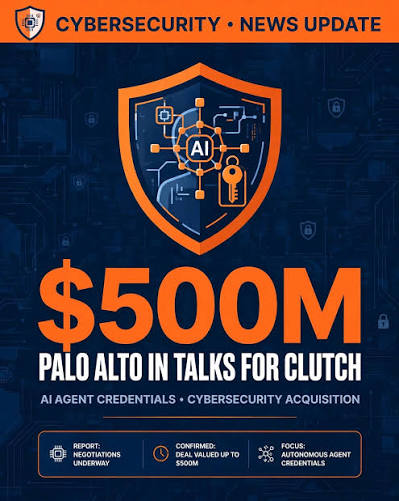
Palo Alto Networks is in talks to acquire Clutch Security for approximately $500 million, according to reporting first published by The Information on November 4, 2026. TechCrunch followed on November 5 with details of a proposed cash payment and additional milestone payments. According to Calcalist’s coverage, Palo Alto Networks told The Information that it does not comment on market speculation. TechCrunch said neither company responded to its request for comment. As of November 9, no signed agreement or completed acquisition had been publicly confirmed. Negotiations concern reaching agreement on terms, signing establishes a definitive agreement that may remain subject to conditions, and closing is when the transaction takes effect.
TechCrunch reported a proposed structure of $500 million in cash, with further payments conditional on milestones. The amounts and triggers for those additional payments were not disclosed. If that structure were agreed and the conditions met, the eventual consideration could exceed the headline figure. Milestone payments can link part of a transaction’s value to future business performance or product delivery over a specified period. They can help bridge differences between how a buyer and seller value future outcomes. No particular revenue target, product deadline, or employee-retention requirement has been identified as part of the Clutch discussions.
Ofir Har-Chen, Sagi Haas, and Tal Kimhi founded Clutch Security in late 2023. Har-Chen is co-founder and chief executive officer, Haas is co-founder and chief technology officer, and Kimhi is co-founder and vice president of research and development. The company publicly introduced its non-human identity security platform in July 2024. SignalFire says Har-Chen previously served as chief operating officer at Hunters and worked at Sygnia. The investor also describes Haas and Kimhi as having held technical leadership roles in Israel’s Unit 8200. Their initial product addressed existing software identities across enterprise systems, with the company’s AI agent products extending that work to software capable of selecting tools and initiating actions across several services.
Clutch disclosed $28.5 million in funding across its seed and Series A rounds. Its $8.5 million seed round, announced in July 2024, was led by Lightspeed Venture Partners, with participation from Merlin Ventures, Cyber Club London, and angel investors. The January 2025 Series A raised $20 million and was led by SignalFire, with existing investors Lightspeed and Merlin participating. TechCrunch reported an $85 million valuation for that Series A, while Clutch’s own announcement confirmed the funding and investors without publishing a valuation. The proposed $500 million cash amount is approximately 5.9 times that reported valuation, excluding contingent payments. This compares company-level figures from different transactions and does not establish any individual investor’s return.
TechCrunch also reported, citing a source familiar with the discussions, that Clutch was nearing $10 million in annual recurring revenue. The reporting did not include a company-issued financial disclosure confirming the figure. ARR expresses recurring business on an annual basis and can differ from revenue recognized over a completed financial year. It does not, by itself, establish profitability, customer concentration, or renewal performance. Using $10 million as a rounded benchmark, a $500 million price represents approximately 50 times ARR. A figure below $10 million would produce a higher multiple at that price, while any eventual milestone payments would also change the calculation. A final acquisition multiple would require agreed consideration and a precise, consistently measured ARR figure.
Capital raised, financing valuation, acquisition consideration, and shareholder proceeds answer different questions. Venture funding gives a company resources to develop its business and values an investment at that point in time. An acquisition price can also reflect the value a particular buyer places on the product, engineering team, customer relationships, and opportunities to combine them with existing capabilities. Comparing $500 million with the $28.5 million raised therefore cannot establish investment returns. Ownership stakes, share classes, dilution, and the final transaction terms would determine how proceeds were distributed. Those undisclosed details prevent the headline figure from establishing a payout for any founder, employee, or investor.
How AI Agent Identities, Credentials, and Permissions Create Security Risks
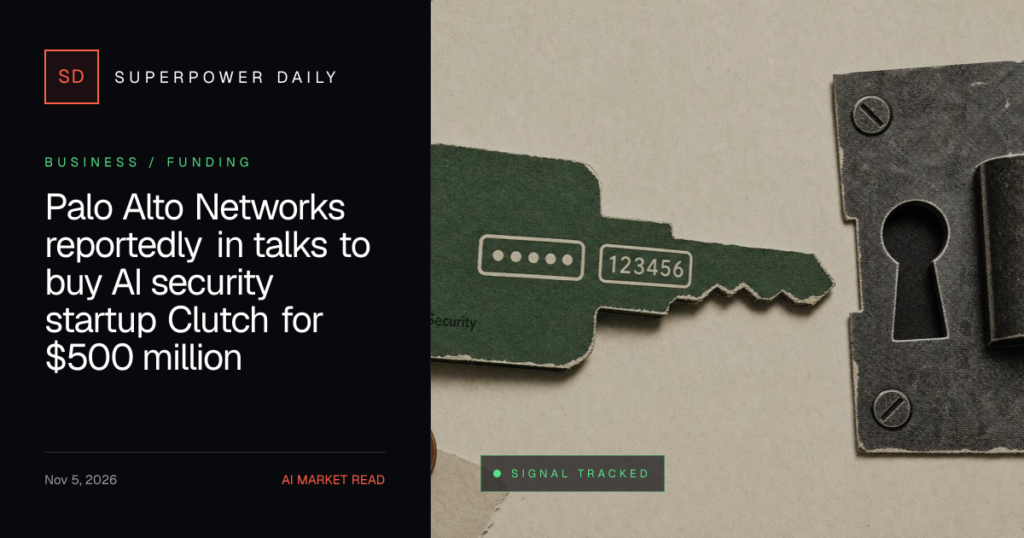
A non-human identity is a digital identity used by software, a workload, or an automated process. Examples include service accounts, application identities, and cloud workload identities. Credentials prove or convey authority associated with those identities, with API keys, access tokens, and certificates serving that purpose in different authentication systems. Security inventories often track both because either can be central to an incident. AI agents typically access external systems through tools, connectors, or application code that handles authentication. Depending on the integration, the model may see only a tool’s description and inputs while the credential remains with the software executing the request.
A support agent checking a delayed shipment might query an order system through a connector and prepare a response for a support team. An API key could identify that connector, while the associated account permissions determine which order records it can read. Some integrations instead obtain short-lived tokens or authenticate through dedicated service accounts. If the integration can also change delivery details or issue refunds, those actions may become available wherever the exposed tools and downstream controls permit them. The agent’s practical authority therefore depends on the combination of tool functionality, credential permissions, and restrictions in the receiving service. Its ability to request an action should be examined alongside what the integration can actually execute.
NIST’s October 2026 design tenets propose distinct, verifiable identities for agents and a traceable connection to the person or organization authorizing their work. They also address narrowing permissions when an agent delegates part of a task. An employee with permission to edit every file in a project might authorize an agent only to summarize one document. If that agent asks another to summarize a single page, the secondary agent needs only the material required for that assignment. The receiving systems need to distinguish the authorizing user, the acting agent, and the specific authority delegated. Keeping those relationships traceable helps investigators reconstruct how a workflow’s scope changed without assuming that each agent should inherit all available access.
OWASP describes excessive agency through overly broad functionality, permissions, or autonomy. These conditions can increase the consequences of a mistaken decision, malicious instruction, or compromised credential. An email assistant intended to summarize messages might also have access to sending functions and attachments. Malicious content could attempt to persuade it to transmit confidential files, with the outcome depending on its handling of the instruction, exposed tools, and the email service’s controls. Limiting it to read access or requiring approval before sending changes the actions available even when it processes hostile content. Effective assessment therefore examines what the agent can do, which resources it can affect, and whether it can act without approval.
Identity reuse can also make unusual actions difficult to investigate. A procurement agent might use one identity to read approved vendor records and another to create a draft purchase request through a workflow service. If several agents and scripts share an integration account, destination logs may show the account without identifying the originating agent or authorizing person. Investigators must then distinguish legitimate automation from an agent mistake or the use of stolen credentials. Distinct identities, combined with records of the originating task and any delegation, help separate those possibilities. The resulting audit trail supports investigations into routine errors as well as deliberate abuse.
Clutch Security’s Platform, Identity Mapping, and Agent Guardrails
Clutch’s platform covers non-human identities, AI agents, and secrets. The company says it connects to cloud providers, software-as-a-service applications, code repositories, continuous integration and delivery pipelines, vaults, endpoints, and AI platforms. Its Identity Lineage Graph connects identities or secrets with their origin, owner, storage location, consumers, and reachable resources. A basic inventory may identify a service account or a copied key, while these relationships help explain which jobs, applications, or agents depend on it. That context can show which resources might be affected if a credential is revoked. Clutch describes the platform as supporting discovery, risk assessment, and monitoring across connected environments.
The company identifies excessive privileges, exposed credentials, and unusual identity activity among the risks its platform helps teams investigate. An unused key associated with a retired test account and an exposed key with access to production customer records both warrant attention. Their likely impact and remediation requirements can differ substantially. The production credential may create greater exposure, while the retired key may be easier to revoke. Identifying owners and dependencies helps security teams prioritize findings and coordinate changes with the teams responsible for affected systems. Clutch also says it monitors identity and agent activity patterns and alerts teams to unusual behavior in connected environments.
A reporting agent that queries a data warehouse illustrates why credential relationships matter. The connector may hold the credential while the agent merely requests a query. If that credential can read every dataset, the agent may gain access to payroll or customer information, depending on the integration’s query restrictions.
Discovery reveals the dependency, and a permissions review can establish whether the task requires access to the entire warehouse or only approved views. Credentials also change over time as keys are copied into other workflows, owners leave, or application privileges expand. Before rotating or revoking a key, teams need to identify legitimate services that still use it and arrange replacements where necessary. Clutch’s emphasis on ownership, usage, and access scope addresses that operational context.
Clutch’s Agent Guardrails documentation describes controls at five points: the person deploying or operating an agent, the agent itself, its tools, its authenticating identities, and the resources it can reach. The company also describes recording policy triggers and enforcement decisions alongside identity and resource relationships. A tool’s destination matters because an action suitable for a development environment can be sensitive in production. A coding assistant might be permitted to create a pull request in one repository while a separate release process controls changes to a protected branch. Policies need to account for those differences in context and authority. Clutch presents its enforcement approach as a way to support such distinctions across connected systems.
Discovery and enforcement serve different purposes within that process. Discovery identifies available access paths, including those created by connectors or inherited permissions. Enforcement determines whether a particular attempt is allowed when it occurs. Restricting one tool may leave another route available through a shared identity or different connector. Understanding the complete set of relationships is therefore relevant to deciding whether a restriction addresses the intended risk. Clutch’s documentation describes its approach, while actual policy coverage depends on the integrations and enforcement points present in each customer’s deployment.

How Clutch Could Fit with CyberArk, Portkey, and the AI Security Market
Clutch could give Palo Alto Networks additional ways to connect AI agent activity with the enterprise permissions behind it. An inventory showing that a coding assistant exists does not necessarily explain whether it can read private repositories, modify a protected branch, or deploy to production. Clutch’s relationship mapping offers a potential strategic explanation for the acquisition discussions, although Palo Alto Networks has not published its own rationale.
The company completed its CyberArk acquisition on February 11, 2026, positioning identity security across humans, machines, and agents as a core part of its platform strategy. CyberArk already addresses privileged access and has published guidance on agent discovery, credential management, and reducing standing privileges. A potential Clutch purchase would therefore involve overlapping capabilities as well as possible complementary features.
Palo Alto Networks also completed its acquisition of AI gateway company Portkey in May 2026. It positioned that transaction as extending Prisma AIRS with monitoring and governance of agent interactions. Gateway telemetry can show which AI application sent a model request and which model handled it, while a deployment service may record a resulting action under a service account. Reconstructing the workflow requires connecting the request, agent, tool call, identity, and destination resource.
Clutch’s lineage information could help identify the credential and other workflows depending on it, while privileged access controls could govern how it is issued or used. That is a possible division of responsibilities based on published capabilities, with no combined product, integration architecture, or migration plan announced. Its effectiveness would depend on the systems connected and the reliability of matching records across them.
A completed acquisition at the reported price would represent a significant purchase of a specialist in non-human identity and AI agent access. It could give customers an example of a vendor combining gateway controls, privileged access management, and visibility into agent credentials. Enterprise workflows often cross several vendors, with an AI application calling a connector maintained by one team and authenticating to a cloud account managed by another. Investigating an action requires evidence linking those steps. NIST’s guidance on distinct identities, traceable delegation, and limits on downstream authority addresses related requirements. These principles provide a way to assess what relationships and actions a security product can actually verify across the systems an organization uses.
The reported valuation reflects the possible value of this startup to this particular buyer. A strategic acquirer can consider its distribution, existing products, engineering capabilities, and integration plans when assessing a purchase. Other AI agent security vendors will have different capabilities, growth prospects, and routes to customers. The amount under discussion therefore does not establish a common valuation for the sector or prove that broader market effects have occurred. Until a definitive agreement is announced, the final consideration, transaction outcome, and resulting product strategy remain unresolved.
Frequently Asked Questions (FAQs)
- Has Palo Alto Networks acquired Clutch Security?
No completed acquisition had been publicly confirmed as of November 9, 2026. The available reporting describes acquisition talks between Palo Alto Networks and Clutch Security. Negotiations involve discussing price and other terms, but they do not establish that a definitive agreement has been signed. Even a signed agreement can have conditions that must be satisfied before the transaction closes. The reported $500 million amount should therefore be treated as a proposed price rather than the value of a completed purchase. - Who first reported the Palo Alto Networks and Clutch Security talks?
The Information first reported the discussions on November 4, 2026, citing people familiar with the matter. TechCrunch followed on November 5 with additional details about the proposed payment structure. Its report described $500 million in cash plus potential payments tied to milestones. According to Calcalist’s coverage, Palo Alto Networks told The Information that it does not comment on market speculation. TechCrunch said neither company responded to its request for comment. - Could Palo Alto Networks pay more than $500 million for Clutch Security?
It could if a transaction includes the reported milestone payments and the conditions for those payments are met. TechCrunch described a proposed $500 million cash payment with additional contingent payouts. Neither the size of those payouts nor their triggers was disclosed. Such arrangements can make part of an acquisition’s value dependent on later business performance or product outcomes. The eventual total cannot be calculated from the public reporting, and no final purchase consideration has been confirmed. - What does Clutch Security’s platform protect?
Clutch’s platform covers non-human identities, AI agents, and secrets used across enterprise systems. The company says it connects to environments including cloud services, applications, code repositories, development pipelines, and AI platforms. Its Identity Lineage Graph links identities and credentials to their owners, storage locations, users, and reachable resources. That context helps teams investigate exposed credentials, excessive privileges, and dependencies that could be affected by changing access. Clutch also describes monitoring unusual activity and applying policies, with coverage depending on the customer’s integrations and available enforcement points. - Who founded Clutch Security?
Ofir Har-Chen, Sagi Haas, and Tal Kimhi founded Clutch Security in late 2023. Har-Chen serves as CEO, Haas as CTO, and Kimhi as vice president of research and development. The company publicly introduced its non-human identity security platform in July 2024. According to SignalFire, Har-Chen previously served as chief operating officer at Hunters and worked at Sygnia. The investor also describes Haas and Kimhi as having held technical leadership roles in Israel’s Unit 8200. - How much venture funding has Clutch Security disclosed?
Clutch disclosed $28.5 million across its seed and Series A financing rounds. The $8.5 million seed round, announced in July 2024, was led by Lightspeed Venture Partners. Merlin Ventures, Cyber Club London, and angel investors also participated. The January 2025 Series A raised $20 million, led by SignalFire with participation from existing investors Lightspeed and Merlin. This total measures capital raised and should not be confused with the company’s valuation or the proceeds investors might receive from an acquisition. - What is Clutch Security’s reported annual recurring revenue?
TechCrunch reported that Clutch was approaching $10 million in annual recurring revenue, citing a source familiar with the acquisition discussions. An official company financial disclosure confirming that amount had not appeared in the public reporting. ARR expresses recurring business on an annual basis and helps describe the subscription customer base at a particular point in time. It can differ from revenue recognized during a completed financial year. The figure alone does not establish profitability, customer concentration, or how consistently customers renew. - Why can sharing a service account make AI agents harder to audit?
If several agents or scripts use one service account, a destination system may record only that account as the actor. The record may not reveal which agent initiated the request or whose authority it was using. Investigators can then struggle to distinguish legitimate automation, an agent’s mistake, and activity involving a stolen credential. Distinct identities make individual agents and workloads easier to identify. Records of the originating task and delegated permissions help trace how a request reached its destination and whether it stayed within its authorized scope. - What are AI agent guardrails in Clutch Security?
Clutch describes its guardrails as policies covering the person deploying or operating an agent, the agent itself, its tools, its authenticating identities, and the resources it can reach. These controls are intended to distinguish permitted actions by context, such as allowing a deployment tool in development while restricting its use in production. The company also describes recording policy triggers and enforcement decisions alongside the relevant identity and resource relationships. Discovery identifies possible access paths, while enforcement determines whether a particular attempt is allowed. Actual coverage depends on the integrations and enforcement points available in the customer’s deployment. - Is CyberArk already part of Palo Alto Networks?
Yes, Palo Alto Networks announced the completion of its CyberArk acquisition on February 11, 2026. The company positioned the acquisition as strengthening security for human, machine, and agent identities. CyberArk already addresses privileged access and provides guidance on credential management, agent discovery, and reducing standing privileges. The Clutch discussions concern a separate potential transaction whose outcome remains unconfirmed. No combined Clutch and CyberArk product, integration architecture, or migration plan has been announced, so any integration would depend on the talks and subsequent product decisions.
Conclusion
The reported talks between Palo Alto Networks and Clutch Security bring together two aspects of enterprise AI security. One is monitoring what agents do as they interact with models and tools. The other is governing the identities and credentials that let those actions reach real systems. Clutch’s focus on tracing an agent’s access from its operator through its tools to the underlying resources explains how it could fit alongside CyberArk and Portkey. Any specific integration remains a possibility pending an agreement and a product announcement. Clutch Security
The proposed financial terms remain subject to the outcome of the talks. The reporting points to a $500 million cash amount with potential milestone payments, against a privately sourced estimate of ARR approaching $10 million. A definitive announcement would establish whether the companies agreed to transact and what consideration they committed to pay. It would also give Clutch customers a clearer basis for understanding what the acquisition could mean for the products they use. TechCrunch
Sources and Citations
- The Information, November 4, 2026: First reported that Palo Alto Networks was in talks to acquire Clutch Security for around $500 million. The report says discussions were ongoing and might not lead to a deal, and it describes Clutch as a security startup focused on tracking credentials used by AI agents. The Information
Palo Alto Networks in Talks to Pay $500 Million for AI Security Startup – The Information - TechCrunch, November 5, 2026: Reported that the proposed transaction involved $500 million in cash plus additional milestone-based payouts. TechCrunch also reported a privately sourced $85 million Series A valuation and said Clutch was approaching $10 million in ARR. TechCrunch
Palo Alto Networks in Talks to Buy Clutch for $500M – TechCrunch - Calcalist, November 5, 2026: Covered the acquisition negotiations and Clutch Security’s background. It describes Clutch as an Israeli cybersecurity company that develops software for tracking and securing passwords, authentication codes, and other credentials used by AI agents, while reiterating the reported $500 million price. ctech
Palo Alto Networks in Talks to Acquire Clutch Security – Calcalist - Clutch Security – Platform: Clutch’s official platform page describes its coverage of non-human identities, AI agents, and secrets across cloud providers, SaaS applications, code repositories, CI/CD pipelines, vaults, endpoints, and AI platforms. It also explains how its Identity Lineage technology maps identities and agents to owners, storage locations, permissions, consumers, and reachable resources while supporting posture assessment and behavioral monitoring. Clutch Security
Clutch Security Platform - Clutch Security – Agent Guardrails: Clutch documents guardrails covering five layers in the agent chain: the person, agent, tools, identities, and resources involved. It says policies can restrict agent actions according to context and that policy triggers and enforcement decisions are recorded with lineage information. Clutch Security
Clutch Security Agent Guardrails - Clutch Security – About Us: The company’s official leadership page identifies Ofir Har-Chen as co-founder and CEO, Sagi Haas as co-founder and CTO, and Tal Kimhi as co-founder and VP of R&D. Clutch Security
Clutch Security About Us - Clutch Security, January 30, 2025 – Series A: Clutch officially announced a $20 million Series A led by SignalFire, with participation from Lightspeed Venture Partners and Merlin Ventures, bringing its disclosed total funding to $28.5 million. Clutch Security
Clutch Security Raises $20M Series A - SignalFire, January 29, 2025: SignalFire confirmed that it led Clutch Security’s $20 million Series A. It also provides background on the founders, stating that Ofir Har-Chen previously held senior cybersecurity roles, while Sagi Haas and Tal Kimhi served as technical leaders in Israel’s Unit 8200 before later working at Axonius. signalfire.com
Why SignalFire Led Clutch Security’s Series A - Palo Alto Networks, February 11, 2026: Palo Alto Networks officially confirmed completion of its CyberArk acquisition, positioning identity security as a core part of its platform strategy and describing CyberArk as covering human, machine, and agentic identities. Palo Alto Networks
Palo Alto Networks Completes CyberArk Acquisition - Palo Alto Networks, May 29, 2026: Palo Alto Networks confirmed completion of its acquisition of Portkey, describing Portkey’s AI Gateway as a control plane for monitoring, orchestrating, and governing autonomous AI-agent interactions and integrating those capabilities into Prisma AIRS. Palo Alto Networks
Palo Alto Networks Completes Portkey Acquisition - CyberArk – AI Agents and Identity Risks: CyberArk explains how AI agents rely on credentials and entitlements to interact with databases, cloud services, code repositories, and other systems. It highlights agent discovery, securing credentials and access, reducing standing privileges, monitoring anomalous activity, and using identity threat detection and response as central controls for agent security. Palo Alto Networks
AI Agents and Identity Risks: How Security Will Shift in 2026 – CyberArk - NIST, October 27, 2026: NIST’s Design Tenets for Agent Identity Management Systems proposes principles for agentic identity, authentication, and authorization, including traceable authority, constrained delegation, human-in-the-loop escalation for sensitive actions, and explicit mandates and limits on agent behavior. NIST
Design Tenets for Agent Identity Management Systems – NIST - OWASP GenAI Security Project – LLM06:2025 Excessive Agency: OWASP defines Excessive Agency as the risk created when an LLM-based application or agent has excessive functionality, permissions, or autonomy. It explains how overly broad tool access can allow damaging actions following hallucinations, prompt injection, malicious extensions, or compromised peer agents. genai.owasp.org
OWASP LLM06:2025 Excessive Agency
Recommendations
- Where Winds Meet, Official Imperial Palace Gameplay Trailer Explained: Release Date, Story, Combat Details & Everything We Know
- Diablo 4 3Rd Anniversary Event: Goblins, Massive XP Boost, Free Cosmetics, and Full June 2–9 Celebration Guide
- IO Interactive and Build A Rocket Boy End MindsEye Partnership as Hitman Crossover DLC Is Canceled
- All Anomalies in Animal Hospital Guide: Every Roblox Anomaly Explained
- Every Release Date from Every Event at Summer Game Fest 2026
- First Gameplay Trailer of Silent Hill: Townfall: It’s a First-Person Game and Everything We Know (2026)
- Best New Anime to Watch Right Now: Spring 2026 Picks
- Switch 2 Software Update Adds “Handheld Mode Boost” for Old Games – Performance Upgrade Explained
- We Build LEGO Winnie the Pooh: A 100th Anniversary Set Worth the Hype for Disney and LEGO Fans
- Echoes of Aincrad: Complete Guide to Growth Points (Best Stat Builds & Leveling Tips)



































































































