




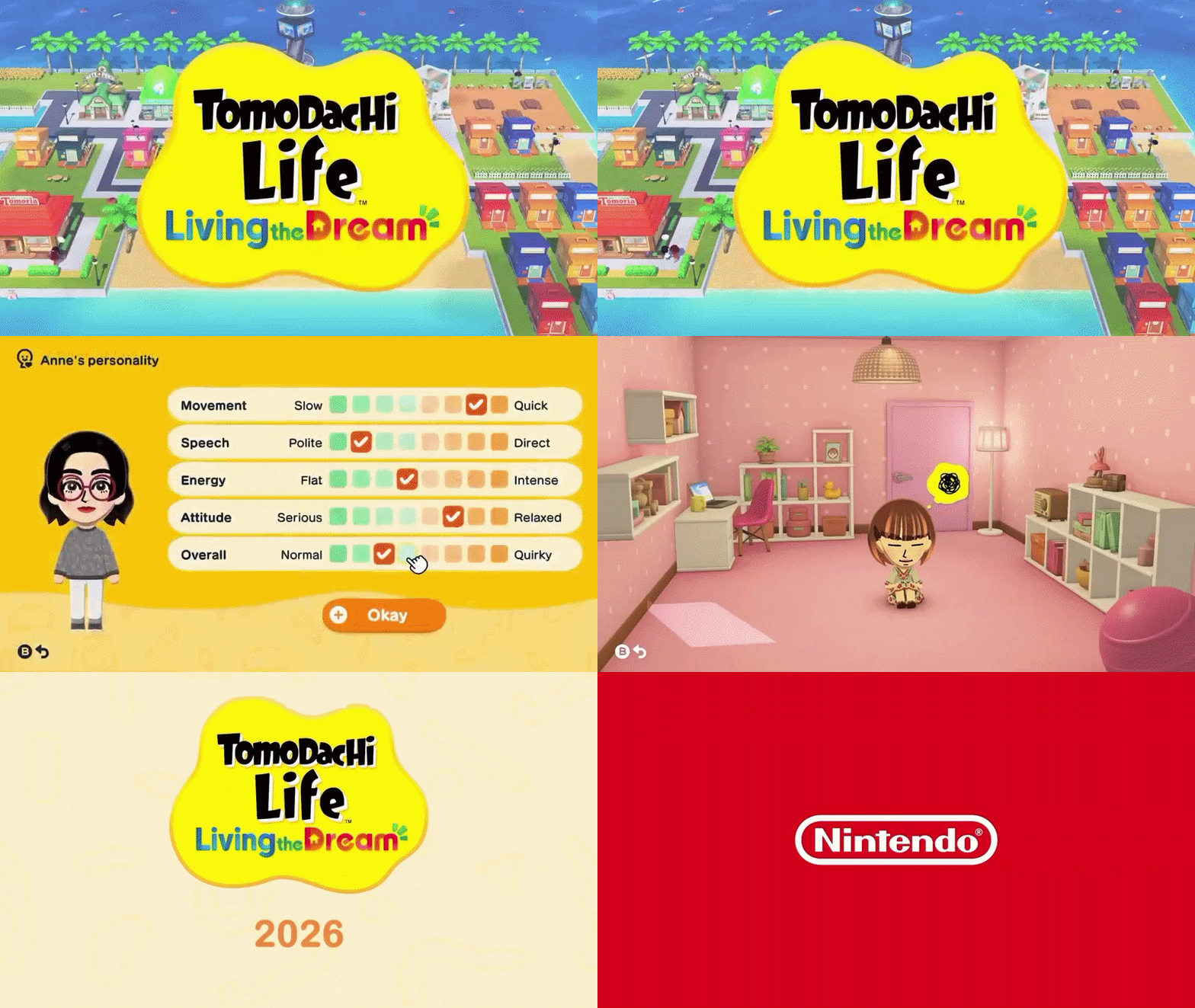
The strange but real story behind the phrase “Nintendo Developers Obsessed Over Getting Farting Right In Tomodachi Life” comes directly from Nintendo’s own developers. In the company’s official Ask the Developer interview, director Ryutaro Takahashi, sound director Toru Minegishi, programmer Takaomi Ueno, and art director Daisuke Kageyama said the team debated whether Miis should be able to “break wind,” then spent repeated takes and visual experiments trying to make the effect land as funny rather than gross or out of place. The sequel launched on April 16, 2026 for Nintendo Switch and is officially listed as playable on Nintendo Switch 2 with behavior consistent with the Switch version.
That level of care makes more sense when you remember how important the series is to Nintendo. The original Tomodachi Life released in Japan in April 2013 and in North America and Europe in June 2014, sold 3.12 million copies by September 2014, and had reached 6.72 million lifetime units by December 31, 2025. This sequel therefore was not a throwaway joke project. It was a long-awaited follow-up to one of Nintendo’s most commercially successful and culturally distinctive 3DS games.
How Long Tomodachi Life: Living the Dream Was in Development
Nintendo’s official timeline shows that development started around 2017, after things had settled down on Miitomo, when Takahashi and producer Yoshio Sakamoto decided the 3DS game had been pushed as far as it could go. The sequel then launched on April 16, 2026, which means the project stretched across roughly nine years from early conception to release. Takahashi even described the finished game as having “nine years’ worth of ideas crammed into one game.”
What made the wait especially long was not just content volume, but system design. Takahashi explained that the team originally thought they could finish the user-generated content tools in about a year and a half, but continued layering new ideas on top because they wanted players to enjoy the game simply by observing Mii behavior. In the end, he said they spent “six or seven years” on that work alone.
What Makes Tomodachi Life an “Inside Joke Game” According to Developers
Nintendo’s own definition of the series is revealing: Takahashi said the concept of Tomodachi Life is to be “the ultimate inside joke game,” something enjoyed by people who are close to each other or who share common references. That philosophy explains why the sequel leans so hard into custom people, custom objects, and tiny personal details. The game is funniest when the player knows exactly who a Mii is supposed to be and why a certain behavior is absurdly accurate.
The development team used themselves as proof of concept. In the official interview, they described building a “Development HQ Island,” making staff security cards and paychecks as gifts, and even creating Pikmin pets because those were references the developers themselves would instantly understand. Ueno said the basic idea was simple: if the developers laughed at their own inside jokes, players would likely enjoy making their own too.

How User-Generated Content Shapes Gameplay in Tomodachi Life
User-generated content is not a side activity in Tomodachi Life: Living the Dream; it is the structure around which the whole sequel was rebuilt. Takahashi said Nintendo shifted away from simply adding more pre-made content and instead toward letting players create their own content, because the combination of developer-made systems and player-made creations would produce “infinite ways” to enjoy the game.
That approach affects nearly every layer of play. Nintendo’s official materials say players can customize personalities, little quirks, living spaces, and large parts of the island itself; create pets, drinks, clothing, house exteriors, and tiles in the Palette House Workshop; and exchange Miis and creations locally with friends. In the developer interview, Takahashi even called the island “the biggest gift” players can give their residents. The programmers then had to build rule sets to stop all those combinations from collapsing into nonsense, because without those rules Miis would pace in the same area, crowd the same item, or otherwise produce “pure chaos.”
Nintendo’s “Little Quirks” System Explained in Tomodachi Life
Nintendo created the “little quirks” system because the old personality framework was no longer expressive enough. Ueno explained that the original 16 personality types still exist in the sequel, but Takahashi said they were not sufficient to represent specific details such as a loud voice, light eating, or restless sleep. If those details were forced into the older personality categories, a Mii might stop feeling like the real person the player was trying to recreate.
So Nintendo added a separate layer of customization. Official feature descriptions say little quirks can shape poses, eating habits, and sleep behavior, among other flourishes. In the developers’ own telling, that system was a “huge breakthrough” because it allowed players to tune Miis more precisely without flattening them into a rigid template.
How Tomodachi Life: Living the Dream Adds “Farting” as a Character Trait
In the official interview, Takahashi said the team had a “big debate” over whether Miis should be able to break wind. The answer they reached was not to make it a universal behavior or a defining personality archetype. Instead, they folded it into the little quirks system, meaning it becomes an optional trait that players can assign if it suits the Mii they have in mind. If it does not, the game imposes nothing.
That is the key design decision behind the now-viral anecdote. “Farting” exists in Tomodachi Life: Living the Dream not as a mandatory punchline, but as a modular piece of characterization. Nintendo framed it as one more expressive detail in a game built around the pleasure of recognizing human oddities in simplified, Mii-sized form.
How Optional Traits Like Farting Enhance Mii Personalities
Optional traits matter because Tomodachi Life works best when the player feels they are authoring a person without fully controlling them. Takahashi said the little quirks system lets players make Miis feel closer to the people they are based on, while the rest of the design protects Mii autonomy. Players can nudge a Mii toward a social situation, but the game still tries to preserve the surprise of what happens next.
That balance is why an optional trait like farting fits the sequel better than a fixed personality label would. It lets a player say, “This specific person would absolutely do this,” or, just as importantly, “This person definitely would not.” The developers even joked that some little quirks go beyond ordinary human habits, such as floating in midair, which shows the system is meant to support both faithful imitation and exaggerated comedy.
The Role of Humor and Absurdity in Tomodachi Life Gameplay
Nintendo did not build Tomodachi Life as a pure simulation. It built it as a comedy engine powered by observation. In the official interview, the developers repeatedly described Miis as innocent, silly, eccentric, and not fully logical. They said the game’s funniest moments happen when players watch characters say strange things, misunderstand each other, or create unexpected social combinations that spark the player’s imagination.
Takahashi made an especially important point: if Miis themselves point out how ridiculous everything is, the joke begins and ends inside the game. Nintendo instead wants the player to be the one laughing and reacting. That philosophy lines up with the sequel’s official store description, which promises “absurd situations,” “weird and wonderful” outcomes, and daily surprises, while the original 3DS game was also sold on bizarre drama, unlikely romances, and plain silliness.
Why Nintendo Developers Focused on Fart Sounds in Tomodachi Life
Once farting became an optional little quirk, Nintendo had to make it fit the larger Mii identity. That is where the obsession with sound came from. Minegishi was not just a composer; he oversaw background music, sound effects, and Mii voices. His part of the job was deciding how far realism should go before a sound stopped feeling like Tomodachi Life.
The official interview shows that this realism question ran across the whole project. Minegishi said new text-to-speech technology made Mii voices much more realistic, but he intentionally processed them to sound robotic because realism expressed too directly no longer sounded Mii-like. Kageyama said animation staff had similar debates about movements becoming too realistic. In that context, the fart sound needed to be audible and funny without feeling like an intrusive real-world bodily-noise recording dropped into a whimsical Mii universe.
The Debate Inside Nintendo Over Adding Farting to Miis
Nintendo’s internal argument was not about technical feasibility. It was about tone. Takahashi said some team members thought the idea was hilarious, while others felt it was vulgar. That is exactly the kind of problem Tomodachi Life has to solve over and over: how do you stay weird and memorable without tipping into something that feels mean, gross, or unlike a Nintendo Mii game.
The compromise was elegant. By making farting a little quirk, Nintendo turned a potentially divisive joke into an opt-in character detail. Players who think it is funny can use it; players who do not can ignore it completely. That design choice is one of the clearest examples of Nintendo protecting the series’ broad appeal while still embracing its eccentric edge.

Behind the Scenes of Nintendo’s Sound Design Process
Minegishi’s official role on the project was broad: he organized development of the background music, sound effects, and Mii character voices, and composed much of the soundtrack himself. In practice, that meant he was responsible for how the sequel felt as much as how it sounded. He said his goal was to make the audio feel current while preserving the essence of Tomodachi Life, and he specifically considered how music and sound effects would translate between handheld play and television speakers.
The sound process was therefore about balance, not mere fidelity. Nintendo had more advanced hardware, more accurate text-to-speech, and more audio power to work with, but the team kept pulling back from straightforward realism whenever it threatened the identity of the Miis. That broader philosophy helps explain why a single comic effect could receive so much attention. In Tomodachi Life, sound design is not garnish; it is part of character design.
How Sound Designers Perfected Fart Audio in Tomodachi Life
The most direct evidence comes from Nintendo’s own words. Minegishi said the team “really obsessed over getting the sound just right,” and Ueno immediately added that they did “so many retakes.” Those remarks are unusually candid and show that the effect was not treated like disposable toilet humor. It was tested, judged, revised, and retested until it matched the game’s tonal needs.
What “perfected” means here is not realism for realism’s sake. It means making an absurdly specific sound effect communicate a joke cleanly, fit the Mii aesthetic, avoid feeling overdone, and work as one optional note in a broader personality system. The same interview connects the fart sound to the game’s larger design principle: playful on the surface, but carefully balanced underneath.
Why Some Fart Sound Effects Were Too Realistic for the Game
Minegishi said he received feedback that at least one version of the fart sound was “a bit too realistic” for some listeners. That reaction mirrors the team’s broader concern that voices, movement, and other presentational details could become so polished or lifelike that they stopped feeling like Miis. In other words, the problem was not that realism was technically bad, but that it could break the fragile comic abstraction the series depends on.
This is one of the most revealing details in the whole story. Nintendo is often stereotyped as perfectionist, but this interview shows a subtler reality: the company was not chasing maximum realism. It was chasing the right amount of unreality. For Tomodachi Life, “too realistic” was not praise; it was a sign the joke had moved outside the game’s aesthetic boundaries.

Why Tomodachi Life Developers Did Multiple Retakes for One Sound Effect
The repeated retakes make sense once you understand how many jobs the sound had to do at once. It had to read instantly, remain funny on repetition, fit a family-friendly game rated for comic mischief, align with the Mii voice-and-motion style, and still avoid sounding fake in a way that made the joke fall flat. Nintendo’s developers do not spell that checklist out in one sentence, but the combination of their comments about retakes, realism, speaker output, and tonal balance makes the reason clear.
There is also a practical reason. Because farting is an optional quirk rather than a universal state, the sound has to communicate the trait efficiently whenever a player chooses it. The effect cannot rely on heavy explanation. It has to work the instant it happens, which naturally invites multiple iterations when the team is trying to calibrate a tiny but high-risk joke.
How Visual Effects for Farting Were Tested and Changed
Nintendo did not stop at audio. Kageyama said the art team tried “all sorts of visual effects,” and that for a while the fart effect looked like “an explosion going off.” That line is funny on its own, but it also confirms that the team was solving a full audiovisual problem, not just recording one silly noise.
The visual experimentation fits perfectly with the project’s wider realism debate. Kageyama also said the team kept asking whether motion and presentation were becoming too realistic, then deliberately pushed the game toward bolder, more memorable movement instead. In that light, turning the fart into an explosion-like effect was probably too far in one direction, while a realistic-looking emission was too far in the other. The final version had to land somewhere in the narrow middle where the player laughs but the scene still feels unmistakably Mii-like.
What Tomodachi Life: Living the Dream Adds Compared to the Original Game
Compared with the 2013–2014 3DS release, Tomodachi Life: Living the Dream is clearly designed as a much broader creation platform. The original game centered on apartments, fixed island locations, daily check-ins, gifts, voices, personalities, and emergent drama among up to 100 residents, with features such as QR-code sharing, StreetPass travel, and unlockable destinations. Nintendo’s current sequel, by contrast, has been rebuilt from the ground up around a larger island, free-moving Miis, deeper facial customization, face paint, local wireless exchange of creations, direct island editing, the Palette House Workshop, roommate housing for up to eight residents, and the new little quirks layer.
The change is not only about more content, but about different kinds of control. In the original, players often had to wait and hope for certain social outcomes. In the sequel, Nintendo says players can pick up Miis and place them near others to encourage encounters, while still preserving Mii agency after the drop. Official pages also show new creative systems for designing pets, food, clothes, TV shows, houses, and the landscape itself. And according to coverage of the January 2026 Direct, the sequel also adds non-binary Miis and far more flexible dating preferences, including same-sex relationship options that the original game lacked after its 2014 controversy.
Taken together, those additions explain why the “farting” story matters. It is not just one goofy gag. It is part of a much larger sequel philosophy: make Miis more customizable, make the world more player-authored, and make each tiny detail feel more expressive without losing the awkward innocence that defines the series.

Frequently Asked Questions (FAQs)
- Did Nintendo really say it obsessed over fart sounds?
Yes. In Nintendo’s official Ask the Developer interview, Minegishi said the team “really obsessed over getting the sound just right,” and Ueno said they did many retakes. - Is farting mandatory in Tomodachi Life: Living the Dream?
No. Takahashi said the behavior was made into a little quirk, which means players can assign it to a Mii if they want, or ignore it completely. - When did development of the sequel begin?
Takahashi said development started around 2017, after things had settled down on Miitomo. - Why did the project take so long?
The biggest reason Nintendo gave was the complexity of user-generated content and Mii behavior. The team originally thought the UGC tools might take about a year and a half, but ultimately said they spent six or seven years on that work. - What are “little quirks”?
They are extra, player-assigned traits that sit on top of the core personality system and can affect details like poses, eating habits, sleep behavior, and other bits of individuality. - Why were some fart sounds rejected as too realistic?
Because Nintendo felt overly realistic presentation could stop feeling Mii-like. The developers made similar comments about voices and animation, so the fart audio had to stay within the same stylized tone. - What does Nintendo mean by calling Tomodachi Life an “inside joke game”?
Takahashi said the series is designed to be enjoyed by people who are close to each other or share common references, and that player-made content lets those private jokes become gameplay. - How does user-generated content affect actual gameplay?
It shapes the island, gifts, pets, items, visual designs, and even the conversations that emerge around those creations. Nintendo also said the island itself is effectively one of the biggest gifts players can give their Miis. - What are the biggest additions over the original 3DS game?
The clearest additions are a rebuilt island structure, free-moving Miis, direct pick-up-and-drop social nudges, Island Builder customization, the Palette House Workshop, little quirks, roommate housing, deeper face customization, and broader gender and dating options. - Is Tomodachi Life: Living the Dream a Switch 2 game?
It is officially a Nintendo Switch game that launched on April 16, 2026, and Nintendo’s store says it is supported on Switch 2 with behavior consistent with the Switch version.
Conclusion
The fart-sound story is funny because of its subject, but important because of what it reveals. Nintendo did not spend years polishing a toilet joke by accident. The developers were rebuilding a beloved life-sim around a new philosophy of expression: more player authorship, more specific personality, more room for inside jokes, and more careful control over what still feels “Mii-like.” In that framework, even a one-second gag sound becomes a design problem worth debating, retaking, and revising.
That is the real reason Nintendo developers obsessed over getting farting right in Tomodachi Life. The joke sits at the crossroads of the sequel’s biggest ideas: optional characterization, absurd humor, audiovisual balance, and a refusal to let realism overwhelm charm. After nearly a decade of development, Nintendo shipped a game where even the smallest, silliest detail had to serve the larger identity of the series.
Sources and Citations
- Nintendo Ask the Developer Vol. 21 Part 1
https://www.nintendo.com/us/whatsnew/ask-the-developer-vol-21-tomodachi-life-living-the-dream-part-1/ - Nintendo Ask the Developer Vol. 21 Part 2
https://www.nintendo.com/us/whatsnew/ask-the-developer-vol-21-tomodachi-life-living-the-dream-part-2/ - Nintendo Ask the Developer Vol. 21 Part 3
https://www.nintendo.com/us/whatsnew/ask-the-developer-vol-21-tomodachi-life-living-the-dream-part-3/ - Nintendo official Tomodachi Life: Living the Dream page
https://www.nintendo.com/us/store/products/tomodachi-life-living-the-dream-switch/ - Nintendo official Tomodachi Life: Living the Dream Direct coverage
https://www.nintendo.com/us/whatsnew/tomodachi-life-living-the-dream-direct-spotlights-quirky-fun-with-player-made-mii-characters-game-launches-on-nintendo-switch-april-16/ - Nintendo Direct September 2025 coverage
https://www.nintendo.com/us/whatsnew/new-nintendo-direct-kicks-off-the-super-mario-bros-40th-anniversary-and-brings-slate-of-new-announcements/ - Nintendo IR 3DS top-selling software sales
https://www.nintendo.co.jp/ir/en/finance/software/3ds.html - Nintendo FY2015 six-month earnings PDF with 3.12 million figure
https://www.nintendo.co.jp/ir/pdf/2014/141029e.pdf - Nintendo official Tomodachi Life 3DS page
https://www.nintendo.com/en-gb/Games/Nintendo-3DS-games/Tomodachi-Life-871968.html - GameSpot report on same-sex relationships and non-binary Miis
https://www.gamespot.com/articles/tomodachi-life-living-the-dream-adds-same-sex-relationships-and-non-binary-miis/1100-6537765/ - Nintendo Life report on same-sex relationships and non-binary Miis
https://www.nintendolife.com/news/2026/01/tomodachi-life-living-the-dream-will-allow-same-sex-relationships-and-non-binary-miis - TIME report on Nintendo’s 2014 Tomodachi Life apology
https://time.com/94738/nintendo-apology-tomodachi-life/
Recommended
- Tom Holland Confirms Spider-Man: Brand New Day Reshoots Add More Humor and a New Mystery Villain Twist
- Crusader Kings 3 Will Let You Play as a Pope: New DLC Features, Gameplay Changes, and Release Details
- Sony Honda Mobility Wants Game Devs To Build Apps for the Afeela EV: AFEELA Creator Hub, SDK, and In-Car App Platform Plans
- How to Convert a Real Human to Metahuman Using Photogrammetry: Complete Workflow Guide for Unreal Engine 5
- The Elder Scrolls: Blades Will Shut Down on June 30, 2026: Shutdown Time, Delisting, and What Players Need to Know (Nintendo Life)
- How to Use MetaHuman Animator: A Step-by-Step Guide for Realistic Facial Animation
- Every Viltrumite In Invincible Explained: Complete Character Guide to the Viltrumite Empire
- Skin Texturing in Substance Painter: How to Create Realistic Digital Skin Step by Step
- The Future of 3D Modeling: Insights on AI Advancements
- Hades 2 Aphrodite Guide: Boons, Character Design, and Gameplay Mechanics