









In This Article (9 sections)
No, I’m Not a Human Full Game Overview, Story, Humans, and Visitors Explained
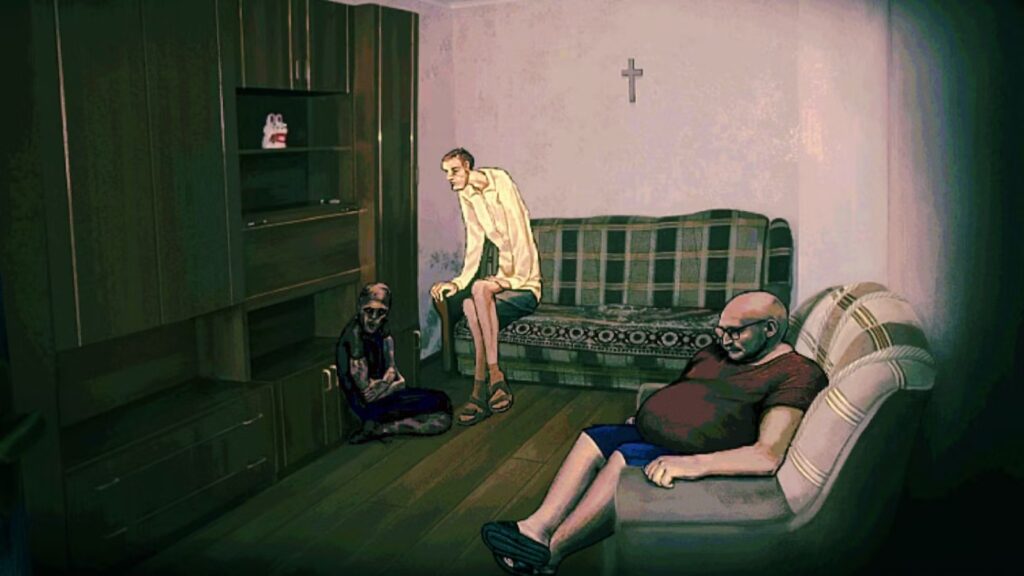
No, I’m Not a Human is a narrative-driven survival horror game built around paranoia, identity uncertainty, and social deduction under pressure. The player is placed in an isolated environment where not every character can be trusted, and where the difference between a Human and a Visitor is deliberately difficult to confirm. The core experience revolves around repeated encounters with NPCs whose identities may appear stable at first but can become dangerous depending on hidden conditions, player choices, and the structure of each run.
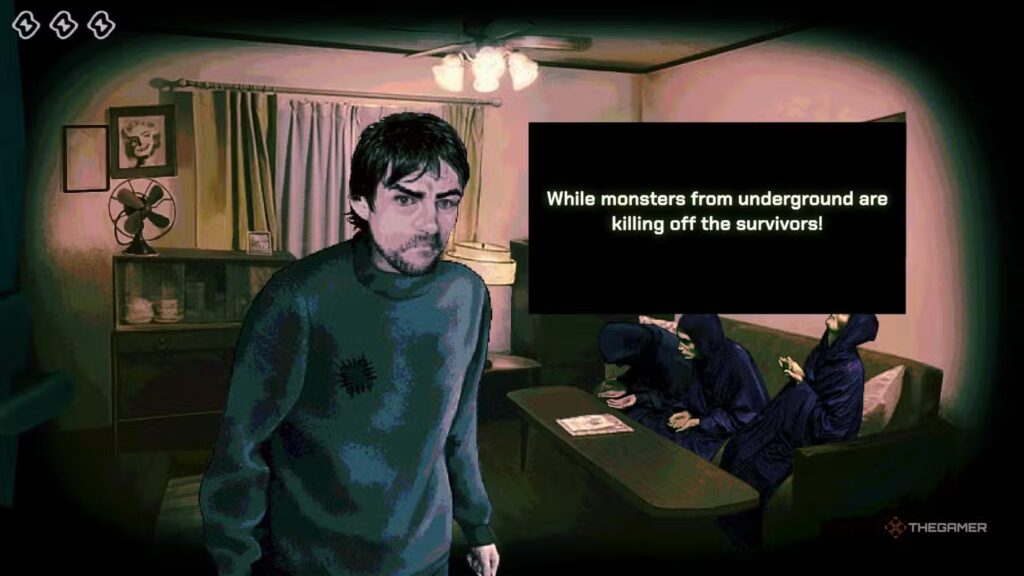
The story centers on an outbreak-like phenomenon known as the Visitor presence. Visitors imitate human behavior while slowly replacing individuals in society, creating a constant sense that any character could be an infiltrator. The player moves through a confined loop of nights and interactions, where each decision can determine whether the group survives or whether infiltration spreads. Unlike traditional horror games focused on combat, No, I’m Not a Human emphasizes observation, dialogue interpretation, and behavioral analysis.
At the center of the gameplay is a dual-identity system in which each character is classified as either Human or Visitor, though that classification is often hidden or only partially suggested. Humans usually behave normally but may show stress responses when questioned repeatedly. Visitors imitate humans with high accuracy, but they can reveal inconsistencies through dialogue, physical traits, timing, or behavior. This makes each interaction a test of trust rather than a simple yes-or-no puzzle.
Gameplay is usually structured around encounter, interrogation, observation, and judgment. During an encounter, the player meets a character and begins gathering impressions. Interrogation uses dialogue options to provoke inconsistencies or confirm stability. Observation allows the player to inspect physical and behavioral details. Judgment then forces the player to decide whether the NPC should be trusted, rejected, or isolated. The difficulty comes from the fact that no single clue guarantees accuracy, since some Visitors can appear fully human and some Humans can seem suspicious because of fear, stress, or scripted deception.

How to Identify Visitors and Recognize Trustworthy Humans in No, I’m Not a Human
Identifying a Visitor requires cross-referencing multiple signals instead of relying on one clue. The most reliable approach is to compare dialogue consistency, physical traits, reaction timing, and behavior over several interactions. Visitors may respond too quickly or too slowly to emotional prompts, suggesting artificial processing rather than natural hesitation. They may also repeat phrases in slightly altered forms, especially when similar questions are asked more than once.
Dialogue avoidance is another major sign. A Visitor may refuse to provide concrete personal history or may answer with overly generalized statements that sound emotionally plausible but lack detail. The game also uses contradiction layering, where a Visitor claims familiarity with an event that a Human later contradicts in the same timeline. Experienced players learn to prioritize behavioral consistency over emotional persuasion, because a convincing emotional performance is not always proof of humanity.
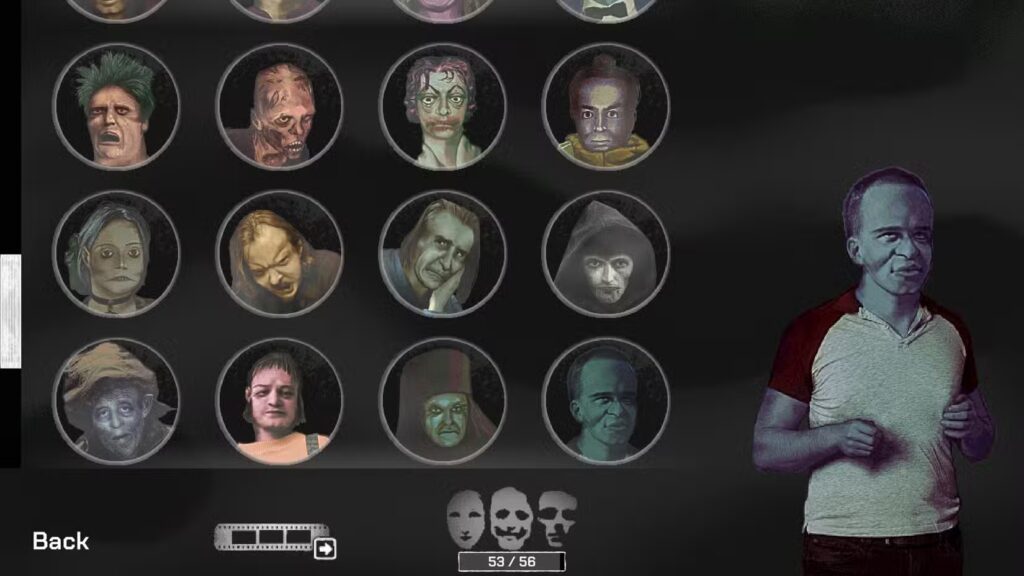
Physical anomalies are another important detection layer, although they are not definitive on their own. Visitors often replicate human appearance with high accuracy, but small imperfections can appear under closer inspection. Eye behavior may seem unnatural, with poor light tracking, slight misalignment during movement, or irregular blinking. Teeth can show overly uniform structures or unusual gum coloration. Hands are often especially revealing, with elongated fingers, inconsistent nail textures, unnatural joint motion, or skin tone transitions that appear too smooth.
Breathing rhythm can also be a subtle clue. Visitors may maintain a perfectly steady breathing pattern even under stress, while Human NPCs are more likely to show irregular breathing when frightened or pressured. Still, Human characters can display suspicious traits because of stress, environmental exposure, or narrative misdirection. This is why the game rewards layered verification rather than quick visual judgment.
Human characters function as emotional anchors and sources of information, but their reliability can vary depending on scenario triggers. Trusted Humans typically show consistent memory recall, stable emotional reactions, and a willingness to verify their identity under repeated questioning. Some Humans act as static anchors across multiple playthroughs and provide consistent lore information, while others are semi-randomized and depend on the conditions of a specific run. The most trustworthy Humans avoid major contradictions, even when pressured, and their uncertainty feels natural rather than mechanically evasive.
Visitor Characters, Randomized Identities, and NPC Role Systems
Visitor characters are dangerous because their main threat is infiltration and misdirection rather than direct aggression. Their goal is usually to blend into the population long enough to influence decisions, redirect suspicion, or eliminate key Human anchors. They often present themselves as overly cooperative or excessively neutral, making them appear safe while quietly destabilizing the player’s judgment.
Some Visitors attempt to redirect suspicion toward other NPCs by creating false narratives. Others rely on emotional mimicry, imitating fear, distress, or vulnerability without maintaining consistent behavioral grounding. Their adaptability makes them more dangerous in later cycles, especially when the player has begun to rely on familiar trust patterns. Unlike Humans, Visitors do not depend on emotional authenticity. They simulate expected responses based on player behavior.
No, I’m Not a Human uses a hybrid character system that combines fixed lore NPCs with randomized identity roles. Fixed characters maintain consistent identities across playthroughs and often function as lore pillars or tutorial guides. Their behavior and classification remain stable so the game can preserve narrative continuity. These characters help the player understand core mechanics and broader story truths.
Randomized characters are assigned Human or Visitor roles dynamically at the start of each run. This means a character who seemed trustworthy in one playthrough may be a Visitor in another. The system prevents players from relying only on memorization and reinforces the game’s core theme of uncertainty. Some characters exist in a semi-fixed state, where their identity remains constant but their behavioral traits shift slightly, creating further ambiguity.
NPC roles are based more on narrative function than fixed identity. A character may act as a guide, suspect, informant, or decoy depending on their classification in a given run. Guide NPCs provide exposition and help explain mechanics. Suspect NPCs introduce ambiguity and support Visitor detection gameplay. Informants provide fragmented truths that may or may not be reliable depending on who they really are. Decoy NPCs mislead players through emotionally persuasive dialogue. This structure ensures that a helpful character can become dangerous in another cycle, while a suspicious character may turn out to be essential for survival.
Hidden Clues, Visitor Infection Lore, and Night Survival Strategy
Dialogue in No, I’m Not a Human contains hidden diagnostic cues that can help players identify Visitors faster. Repetition testing is one of the most useful methods, because it asks the same question in different forms and compares the answers. Humans usually maintain semantic consistency, even if their wording changes. Visitors may alter phrasing, emotional tone, or narrative details in ways that feel unnatural.
Temporal anchoring questions are another strong tool. These questions ask about shared past events or specific memories. Humans tend to provide vague but consistent recollections, while Visitors often fabricate narratives that sound detailed but contain inconsistencies. Hesitation patterns also matter. Humans naturally pause when recalling uncertain information, while Visitors may either eliminate hesitation entirely or insert artificial pauses at predictable intervals.
The Visitor infection is not presented as a simple biological process. In the game’s lore, it functions more like a conceptual transformation tied to identity replication. Visitors do not spread only through physical contact. Instead, prolonged exposure to a Visitor can increase the probability of behavioral assimilation through cognitive alignment. Once a Human is fully converted, they lose narrative continuity and begin operating through Visitor logic structures.
This transformation includes deception, emotional mimicry, and the suppression of inconsistent memory fragments. The infection is often implied to spread through observation and interaction rather than direct transmission. That makes isolation strategies useful but not completely reliable, since mental exposure can still happen through dialogue. Survival therefore depends on structured decision-making rather than instinct alone.
The best strategy is layered verification. No NPC should be trusted based on a single trait, no matter how convincing that trait appears. Players should prioritize consistency over emotional appeal, since characters who maintain stable responses across repeated questioning cycles are more likely to be Human. Limiting unnecessary interactions can also help, because excessive questioning may create too much contradictory data. Controlled isolation is another important tactic, allowing suspicious NPCs to be separated from the main group until further verification reduces the risk of Visitor influence spreading through group dialogue.
Common Player Mistakes, the Truth About Perfect Tests, and Endings Explained
One of the most common mistakes players make is relying too heavily on physical traits. Physical anomalies can be useful, but they are not definitive proof of Visitor identity. A Human may appear suspicious because of minor visual inconsistencies, lighting, stress, or scripted narrative deception. Eliminating a character based only on appearance can cause the player to remove a genuine Human and weaken future survival chances.
Emotional bias is another major mistake. Players often trust NPCs who express fear, grief, vulnerability, or panic because they assume emotional display equals authenticity. Visitors exploit this assumption by mimicking distress convincingly. A character who seems scared may still be dangerous if their story changes, their timing feels unnatural, or their behavior contradicts earlier statements. The safest approach is to compare emotion against memory, physical clues, and response stability.
Players also frequently ignore contradiction stacking. Small inconsistencies may seem harmless in isolation, but they can accumulate into a clear pattern over time. Failing to track these minor discrepancies often leads to misclassification in later stages. The game expects players to notice when details drift, when memories do not align, and when a character’s emotional tone does not match their previous behavior.
There is no perfect Human test in No, I’m Not a Human. The game is intentionally designed to resist 100 percent certainty. Every detection method has a margin of error, and even layered verification can fail under certain conditions. The closest approximation combines physical inspection, dialogue consistency analysis, and behavioral tracking across multiple cycles, but scripted deception events and randomized identity shifts can still undermine that process.
Endings are determined by cumulative trust decisions across multiple cycles. High Human survival rates usually lead to stabilization endings where the Visitor threat is contained but not eliminated. High Visitor survival rates lead to infiltration endings, where the player loses control of identity verification and the environment becomes fully compromised. Mixed outcomes produce ambiguous endings where the state of humanity remains unresolved. These endings reinforce the game’s central theme that uncertainty is permanent and trust is always conditional.
Frequently Asked Questions (FAQs)
- What is the main objective in No, I’m Not a Human
The main objective is to survive each cycle by correctly identifying Humans and Visitors while preventing infiltration. Players must observe NPC behavior, question their stories, inspect physical traits, and make careful trust decisions. Survival depends on keeping Human characters safe while limiting the influence of Visitors. - Can Visitors always be detected visually in No, I’m Not a Human
No, visual detection alone is unreliable because Visitors can replicate most physical traits accurately. Physical signs such as unusual eyes, teeth, hands, or breathing patterns can help, but they should be combined with dialogue analysis and behavioral tracking. A character who looks suspicious is not automatically a Visitor. - Do Human characters ever lie in No, I’m Not a Human
Yes, Human characters can lie because of fear, confusion, stress, or scripted narrative uncertainty. However, their overall patterns tend to remain more consistent than those of Visitors. A Human may withhold information or make mistakes, but they are less likely to show the same level of unnatural contradiction or artificial emotional mimicry. - Is memory important in identifying Visitors in No, I’m Not a Human
Yes, memory tracking is one of the most effective ways to identify Visitors. Players should pay attention to contradictions across conversations, especially when characters describe past events or personal details. Small inconsistencies can build into a larger pattern that reveals whether an NPC is unreliable. - Can a Visitor become Human again in No, I’m Not a Human
No, once a character is classified as a Visitor, the transformation is considered irreversible within the game logic. The lore presents Visitor conversion as a loss of narrative continuity and identity rather than a temporary condition. After conversion, the character operates through deception, mimicry, and Visitor logic structures. - Are all NPCs randomized in No, I’m Not a Human
No, not all NPCs are randomized. Some characters are fixed and keep consistent identities across playthroughs, often serving as lore anchors or guides. Others are randomized at the start of each run, meaning a character who was Human in one playthrough may be a Visitor in another. - What is the biggest sign of a Visitor in dialogue
The biggest signs are inconsistent storytelling and unnatural repetition of phrases. Visitors may change details when asked similar questions, avoid concrete personal history, or produce emotional responses that do not match their earlier behavior. Dialogue clues become strongest when compared across multiple conversations. - Does the game have multiple endings
Yes, the game has multiple endings based on how the player manages Human survival and Visitor infiltration. If more Humans survive, the outcome may lean toward stabilization. If Visitors are allowed to remain and spread influence, the ending can shift toward infiltration. Mixed decisions can produce ambiguous results. - Is there a guaranteed safe character in every run
No, safety is conditional and depends on randomized identity assignment and the structure of the run. Some fixed characters may provide more reliable narrative guidance, but the game is designed to prevent players from relying only on name recognition. Trust must be earned through repeated observation and verification. - What is the hardest part of No, I’m Not a Human
The hardest part is managing uncertainty without becoming either too paranoid or too trusting. Players must avoid eliminating Humans based on weak evidence while also refusing to accept emotional performances at face value. The game’s challenge comes from balancing suspicion, memory, observation, and timing across multiple cycles.
Conclusion
No, I’m Not a Human is fundamentally a psychological deduction experience built around ambiguity, identity instability, and survival under uncertainty. The constant tension between Humans and Visitors creates a system where certainty is impossible, and every decision carries long-term consequences. Mastery of the game requires understanding behavioral patterns, managing trust carefully, and accepting that mistakes are part of the intended experience. The deeper meaning of the game lies in its exploration of perception versus reality, making every interaction a test of judgment rather than memory alone.
Sources and Citations
- Transactions of the Digital Games Research Association, “Scarcity and Survival Horror: Trade as an Instrument of Terror in Pathologic”
This peer-reviewed study provides a useful foundation for survival-horror design analysis. It examines how scarcity, restricted player options, uncertainty, and resource pressure can generate terror and vulnerability rather than empowerment. These principles support analysis of narrative structures that deliberately limit information, resources, or player security. ToDigra
Citation: Scarcity and Survival Horror: Trade as an Instrument of Terror in Pathologic - Game Developer, “Fear in Unpredictability: Alien: Isolation’s Brand of Survival Horror”
Creative lead Al Hope explains that Alien: Isolation was deliberately structured around unpredictability, vulnerability, anticipation, and the sensation of being hunted. The developers found that uncertainty over where the threat might appear could generate anxiety even when the enemy was not visible, making this a strong design reference for paranoia-driven survival horror. Game Developer
Citation: Fear in Unpredictability: Alien: Isolation’s Brand of Survival Horror - PlayStation Blog, “Behind the Terror of Alien: Isolation”
Creative Assembly describes designing Alien: Isolation around an underpowered and underprepared protagonist facing overwhelming odds, with influences from survival-horror games where hiding and avoidance are necessary. This supports comparative analysis involving vulnerability, uncertainty, stalking threats, and limited player control. PlayStation.Blog
Citation: Behind the Terror of Alien: Isolation - Scientific Reports, “Finding Deceivers in Social Context With Large Language Models and How to Find Them: The Case of the Mafia Game”
This peer-reviewed study explicitly describes social deduction games as systems built around hidden roles, incomplete information, social interaction, and intentional deception. In Mafia, an informed minority hides among an uninformed majority, while other players must infer identities from partial information and behavior. This directly supports comparisons involving concealed identities and mistrust. Nature
Citation: Finding Deceivers in Social Context: The Case of the Mafia Game - AAAI, “CSP4SDG: Constraint and Information-Theory Based Role Identification in Social Deduction Games”
This 2026 AAAI paper identifies concealed identity and deliberate misleading as defining challenges in games such as Mafia, Werewolf, and Avalon. It describes hidden-role inference as a central mechanic in which players continually update beliefs about who other participants really are, making it especially relevant to identity-deception and suspicion-based narrative analysis. AAAI Publications
Citation: CSP4SDG: Role Identification in Social Deduction Games - SAGE Open, “Winning Through Deception: Using Social Deception Games to Teach Small Group Communication Theory”
This academic article defines social deduction or social deception games through hidden roles, hidden teams, traitor mechanics, bluffing, uncertainty, and sabotage. It is particularly useful for supporting comparisons between narrative horror and systems where characters may secretly belong to opposing factions or conceal their true identity. Sage Journals
Citation: Winning Through Deception - ACL Anthology, “Putting the Con in Context: Identifying Deceptive Actors in the Game of Mafia”
This NAACL research paper examines how players assigned honest and deceptive roles behave differently in Mafia and how other participants can infer suspicious identities from conversation. It provides a strong research reference for narrative systems built around uncertainty over who is truthful, who is concealing information, and who may secretly represent a threat. ACL Anthology
Citation: Putting the Con in Context: Identifying Deceptive Actors in Mafia - PLOS ONE, “Speech Timing Cues Reveal Deceptive Speech in Social Deduction Board Games”
This peer-reviewed study analyzes naturally occurring deceptive communication during a social deduction game in which players receive roles that encourage either honest or dishonest interaction. It supports discussion of suspicion, behavioral interpretation, deception detection, and uncertainty about other characters’ identities or intentions. PLOS
Citation: Speech Timing Cues Reveal Deceptive Speech in Social Deduction Board Games - GameSpot, “The Thing Review”
GameSpot’s analysis of The Thing discusses its fear, trust, and infection system, in which companions can potentially be infected and transform into hostile creatures. The review specifically connects the mechanic to the paranoia created by uncertainty over whether companions remain human, making it a useful interactive reference for imitation, infiltration, and identity uncertainty. GameSpot
Citation: GameSpot: The Thing Review - BFI, “Alien: Isolation 10th Anniversary: A Decade of Horrifyingly High-Stakes Hide-and-Seek”
The British Film Institute highlights how Alien: Isolation sustains continuous paranoia by forcing players to judge whether it is safe to move while an unpredictable threat may be nearby. This provides an additional critical reference for horror structures built around anticipation, uncertainty, vulnerability, and incomplete knowledge rather than constant direct confrontation. BFI
Citation: BFI: Alien Isolation 10th Anniversary
Recommendations
- Echoes of Aincrad Crafting Guide: Recipes, Materials and Unlock Requirements
- Did Christopher Nolan’s Depiction of the Gods Pay Off in The Odyssey?
- Castlevania: Belmont’s Curse Runs at Only 30 FPS on Nintendo Switch
- EA Sports College Football 27 Preview: Defense Wins Championships
- Jurassic World Evolution 2 Complete Edition Comes to Nintendo Switch 2 on July 30, 2026
- Unity-Based Tool for JRPG Game Development: RetroGig’s Retro JRPG Template for SNES/PSX-Style RPG Systems
- Keanu Reeves & China Miéville BRZRKR: Light Draws Breath — Release Date, Story, Creative Team & Variant Covers
- CD Projekt Raises Profit Goals with Witcher 4, 5, and 6 Coming: 5 Billion PLN Target Explained
- Creepshow Official Announcement Trailer Reveals a New Anthology Horror Game Experience
- GTA 6 Leans Into Vice City’s Influencer Hustle Where Looks Matter



































































































