







In This Article (8 sections)
Xbox Project Helix is a Next-Generation Console Platform Built Around a Broader Family of Devices
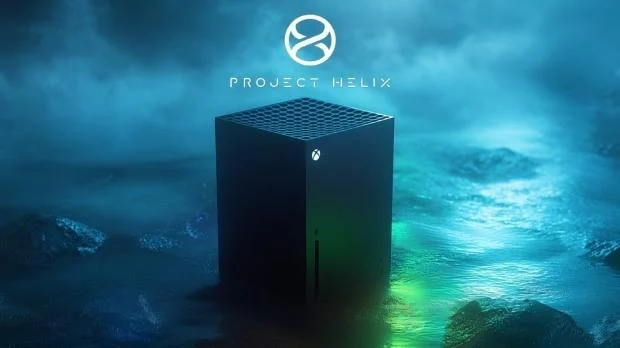
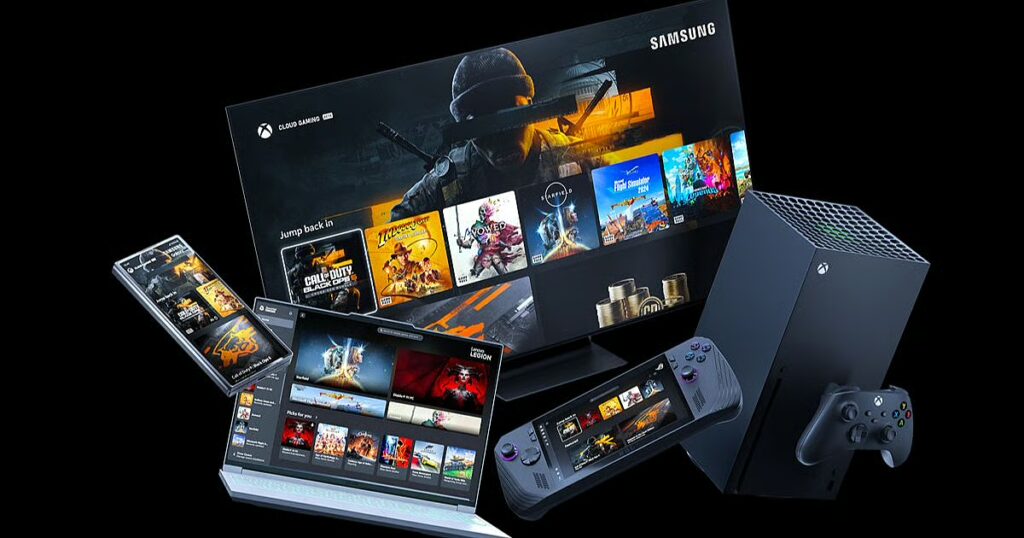
Xbox Project Helix is Microsoft’s codename for its next-generation hardware initiative, and the company has confirmed that a first-party console remains central to the plan. Microsoft’s March 11, 2026 announcement described hardware designed to play both Xbox console and PC games, while Xbox chief executive Asha Sharma later told the BBC that Microsoft was working on a “great family of devices for Helix.” Those statements are compatible rather than contradictory. A Microsoft-designed console can remain the primary product while other devices extend the same platform experience, but Microsoft has not confirmed exactly how many Helix devices there will be or whether handhelds, gaming PCs and other form factors will all carry the codename. Pasted text
Sharma’s August 2026 BBC interview emphasized efficiency, affordability and greater purchasing choice, including consideration of storage, memory use, components and per-unit manufacturing cost. Her remarks describe design priorities rather than finished products or retail offers. They do not confirm a low launch price, installment program, hardware rental model or subscription-only console. The memory-cost warning connected with those remarks came from an earlier Game File interview, reported by Windows Central on April 27, rather than from the BBC discussion itself. Taken together, the interviews show Microsoft considering both hardware performance and how much customers will ultimately be asked to pay, but neither constitutes a complete Helix launch presentation. Pasted text
The “family of devices” concept could theoretically support different priorities. A traditional living-room console could emphasize sustained performance, quiet operation and controller-first use, while a handheld would have to balance battery life, thermals, screen size and portability. A gaming PC-oriented device could place more emphasis on Windows applications and software flexibility.
Microsoft’s existing partnership with ASUS on the ROG Xbox Ally and ROG Xbox Ally X demonstrates that Xbox is willing to collaborate on branded handheld hardware, but those 2025 products are not evidence that a specific Helix handheld has been approved. Likewise, Microsoft’s Xbox mode for Windows 11 provides a controller-oriented full-screen interface for PCs, but a computer using that software does not automatically become a Helix device. Pasted text Pasted text
Third-party manufacturers could also become part of the broader strategy, but Microsoft has not announced a licensed Helix hardware program with named partners. Its June leadership memo discussed the need for new hardware partnerships while reaffirming commitment to Helix, which leaves several possibilities open. A manufacturer could build Microsoft-designed hardware, sell its own officially licensed platform device or simply release a conventional Windows computer containing Xbox software without joining the Helix family.
The ASUS relationship demonstrates that such partnerships are possible, but it does not establish that ASUS or another PC maker has been authorized to sell a Helix console. A multi-manufacturer strategy would also create practical questions about warranties, firmware, repairs, certification and long-term support that Microsoft would need to define clearly. Pasted text
Microsoft has also confirmed an important architectural foundation: Helix will use a custom AMD system-on-chip and is being co-designed around the next generation of DirectX and AMD FidelityFX Super Resolution technology. “Custom” does not mean every underlying technology is exclusive to Xbox or that the console can be directly equated with a particular desktop GPU. The final design will have to balance graphics performance, CPU capability, memory, power use, thermals, manufacturing costs, compatibility and software support. CPU core counts, clock speeds, memory capacity, storage configurations and total system power remain unconfirmed, so leaked specification tables should not be treated as official product information. Pasted text

Memory and Storage Costs Could Shape Project Helix Pricing, Availability and Purchasing Options
Component costs have become one of the most important uncertainties surrounding Project Helix. Microsoft’s June 10, 2026 leadership memo said the prices it paid for console storage components had more than doubled by February compared with the previous autumn and then doubled again. Looking toward the 2027 holiday period, Microsoft forecast costs exceeding five times what it had paid two years earlier, with memory following a broadly similar trajectory. Those figures concern Microsoft’s procurement costs and forecasts, not a prediction that the next Xbox retail price will increase fivefold. Memory and storage also perform different functions, with system memory supporting active workloads while SSD storage holds games and persistent data. Pasted text
Higher component costs create several possible responses without determining which Microsoft will choose. The company could accept lower margins, increase retail prices, alter storage or memory configurations, limit production, change launch sequencing or offer multiple models with different specifications. Availability creates a separate problem because Microsoft’s memo also said it could not manufacture as many consoles as customers wanted. Even a competitively priced Helix would therefore provide little practical benefit if component constraints prevented sufficient regional supply.
This pressure helps explain why Microsoft is discussing flexibility alongside performance. Sharma’s BBC comments left open the possibility of multiple purchasing models, while Xbox strategy chief Matthew Ball separately said in June that Microsoft was reconsidering aspects of Helix to improve affordability and flexibility without abandoning the console. Those comments do not announce specific financing arrangements. Installment payments, hardware-and-service bundles, trade-in programs or different storage tiers are possible examples of what flexibility could eventually mean, but none has been formally unveiled. Pasted text
Affordability also cannot be judged from a monthly payment alone. A financing plan might simply spread the same purchase cost over time, while another arrangement could increase total spending by bundling services or extending payments. A serious comparison would need the complete payment term, included services, cancellation rules, required subscriptions and ownership status at the end. Different Helix models would create similar questions because a lower-cost device might achieve its price through reduced performance, storage or portability rather than through a simple discount on identical hardware.
Microsoft has not announced final Helix pricing, model names or complete consumer specifications. Regional pricing, taxes, included controllers or accessories, storage capacity and any required services would all affect the actual cost. Hardware comparisons likewise need finished products rather than assumed desktop equivalents, while model comparisons need an official explanation of what each device is intended to do. The term “family” alone does not reveal whether differences will center on performance, portability, storage, software access or something else. Pasted text
The release timetable is similarly unresolved. Microsoft plans to begin providing alpha Helix hardware to developers in 2027, but developer kits are development milestones rather than retail launch announcements. They may differ from final consumer hardware in enclosure, software and performance characteristics, and there is no fixed industry interval between developers receiving preliminary systems and consumers receiving retail units. Microsoft’s June memo discussed component planning for the 2027 holiday period, but that language does not confirm Helix will launch then. Both 2027 and 2028 consumer-release predictions remain forecasts unless Microsoft publishes an explicit launch window, supported territories and ordering information. Pasted text
Helix Aims to Combine Xbox and PC Games with Backward Compatibility, Game Pass and Play Anywhere
Support for both Xbox console games and PC games is central to Microsoft’s public description of Helix. That ambition should be separated into technical compatibility, store compatibility and ownership entitlement. A game may technically run on the hardware without being sold through every storefront, while an existing purchase may or may not grant access to the version required on another device. Xbox Play Anywhere demonstrates how Microsoft can connect purchases across supported Xbox and Windows systems, but its entitlement rules apply only to participating games and should not be generalized to every title bought from Steam, Epic Games Store or another PC storefront. Pasted text
Microsoft’s broader Windows development work provides useful context. Advanced Shader Delivery, introduced in 2025, distributes precompiled shaders for supported hardware configurations to reduce lengthy preparation and runtime interruptions. Features like this show that making PC games feel console-like requires software and infrastructure as well as capable hardware. However, it does not prove that every Steam title, launcher, anti-cheat system, peripheral or modification will operate identically on Helix. The meaningful test will be whether Microsoft publishes clear support rules for specific games and storefronts.
Backward compatibility remains another major goal. Microsoft’s March announcement reaffirmed its commitment to keeping games from four Xbox generations playable. That is a significant preservation promise but should not be interpreted as an unconditional guarantee that every original Xbox, Xbox 360, Xbox One and current-generation title, accessory and online feature will work. Microsoft’s existing compatibility system already distinguishes most Xbox One software from selected Xbox and Xbox 360 titles, and running older game software does not restore discontinued multiplayer servers or legacy peripheral functionality. Helix will eventually need title-level support information and clear rules for purchases, saves and migration. Pasted text
Physical games create another unresolved hardware question. Microsoft has not confirmed whether Helix will contain an internal disc drive, support an optional external drive, offer separate digital and disc configurations or use another arrangement. However, on August 26, 2026 Microsoft announced a separate system allowing owners of supported Xbox One and Xbox Series X discs to claim digital entitlements by inserting the disc into a compatible existing console and launching the game. Insider testing was scheduled to begin August 31, and Microsoft said the original disc would continue to function while Play Anywhere and cloud benefits could apply where supported. Pasted text
That entitlement system does not answer the Helix disc-drive question. Whether a console can physically read a disc, whether a particular title is supported by the entitlement program, whether the owner receives a digital license and what conditions remain attached are different issues. Microsoft also said not every disc-based title would be supported at launch, so the program should not be interpreted as universal conversion of every physical Xbox game into an unrestricted digital copy.
Game Pass and Play Anywhere likewise address different aspects of access. Game Pass provides subscription-based access according to plan, platform, region and catalog availability, while Play Anywhere allows qualifying digital purchases and progress to carry across supported Xbox and Windows devices. The two could complement one another within a Helix family, but neither should be assumed to cover every title or purchase.
Microsoft also announced that beginning in November 2026 customers would be able to purchase cloud playtime for certain owned games without a Game Pass subscription, illustrating another way Xbox access can expand independently from hardware ownership. That cloud program should not be confused with Helix financing or treated as evidence that a particular subscription will be bundled with the console. Pasted text
Project Helix Promises Major Ray-Tracing Gains, but Final Performance and Product Specifications Remain Unknown
Microsoft’s most aggressive performance claim for Helix is an order-of-magnitude improvement in ray-tracing performance and capability. That statement reflects Microsoft’s technical ambition rather than an independently verified result from finished retail hardware, and it should not be translated into a claim that every game will run ten times faster. Ray tracing concerns specific lighting calculations such as reflections and shadows, while overall game performance also depends on CPU simulation, rasterization, memory behavior, storage, software design and other workloads. Pasted text
Developers could use increased graphics capacity in different ways. One title might target a higher frame rate, while another could spend the additional performance on more complex lighting, richer scenes or improved image quality. A game could therefore receive a major ray-tracing improvement without multiplying its displayed frame rate by the same amount. Final benchmarks will need to document native rendering resolution, reconstruction methods, ray-tracing settings, frame pacing and responsiveness rather than relying on one headline performance figure.
AMD’s FidelityFX Super Resolution technology adds another distinction because upscaling and frame generation solve different problems. Upscaling reconstructs a higher-resolution image from a lower-resolution render, while frame generation creates interpolated frames between traditionally rendered ones. A displayed frame rate using generated frames does not mean the game engine is updating simulation, input processing and every other system at that same rate. Any future Helix comparison should therefore explain how the frame rate was produced instead of treating all displayed frames as equivalent.
This makes Microsoft’s commitment to efficiency particularly important. Sharma’s BBC comments indicate that next-generation performance is being evaluated alongside storage, memory use, component selection and cost per unit. A theoretically faster component would not necessarily be the best console component if it made the complete system too expensive, difficult to cool or impossible to manufacture at sufficient scale. Helix’s success will depend on balancing those pressures rather than maximizing one specification in isolation. Pasted text
The central strategic picture is therefore clearer than the consumer product itself. Microsoft has confirmed a first-party next-generation Xbox console, a custom AMD system-on-chip, Xbox and PC game support, continued backward-compatibility ambitions and a broader family strategy. It has also acknowledged substantial cost pressure and spoken openly about affordability, flexibility and new hardware partnerships. What remains unknown includes the retail lineup, memory and storage configurations, exact CPU and GPU specifications, disc-drive design, third-party Helix models, purchasing plans, final price and consumer release date.
Until Microsoft connects those pieces in a formal launch presentation, Project Helix should be understood as a defined platform direction rather than a fully specified product family. The available information establishes Microsoft’s goals and some of the technology underneath them, but it does not justify inventing a handheld, assigning a retail price, guaranteeing specific PC-store compatibility or converting developer hardware plans into a confirmed consumer launch window.
Frequently Asked Questions (FAQs)
- What is Xbox Project Helix?
Project Helix is Microsoft’s codename for its next-generation Xbox hardware initiative. Microsoft has confirmed that the effort includes a first-party Xbox console designed around support for both Xbox and PC games, while Asha Sharma has also described a broader “family of devices.” The final consumer branding, however, has not been announced, so the development codename should not automatically be treated as the retail product name. Pasted text - When will Xbox Project Helix be released?
Microsoft has not announced a consumer release date. The confirmed 2027 milestone concerns alpha Helix hardware being sent to developers so studios can begin testing the platform. Developer hardware can arrive well before retail systems, so that schedule should not be converted into a confirmed 2027 launch window without a separate consumer announcement. Pasted text - Has Microsoft confirmed a Project Helix handheld?
No. Sharma’s description of a broader hardware family leaves room for different device types, but Microsoft has not specifically announced a Helix handheld. The existing ROG Xbox Ally and ROG Xbox Ally X show that Microsoft is willing to work with ASUS on Xbox-branded handheld hardware, but those products are separate from the unannounced final Helix lineup. Pasted text - How much will Project Helix cost?
No official retail price has been announced. Xbox leadership has acknowledged that rising memory and storage costs could affect both pricing and availability, but Microsoft has not translated those pressures into a consumer price. Any exact Helix price appearing before a formal announcement should therefore be treated as an estimate, forecast or rumor rather than confirmed information. Pasted text - Why do rising memory prices matter for the next Xbox?
Higher memory and storage costs increase the expense of manufacturing the same hardware configuration and can also make it harder to secure enough components for large-scale production. Microsoft’s June 2026 leadership memo described sharp increases in console storage costs and similar pressure on memory, while also warning that supply could limit how many consoles the company could produce. That means component inflation can affect both retail economics and availability. Pasted text - Will Project Helix play every Steam game?
That has not been confirmed. Microsoft has said Helix is being designed around support for both Xbox and PC games, but technical compatibility, storefront access and ownership rights are separate questions. A game being available on Steam does not guarantee that its launcher, anti-cheat, controls, peripherals or other requirements will automatically work on every Helix device. Pasted text - Will existing Xbox games remain playable?
Microsoft has reaffirmed a goal of preserving games across four Xbox generations, which indicates strong backward-compatibility ambitions. However, that should not be interpreted as a guarantee covering every historical title, accessory or online service. Microsoft’s existing compatibility program already distinguishes supported games from the complete back catalog, and discontinued servers or specialized peripherals can create additional limits. Pasted text - Will Project Helix have a disc drive?
Microsoft has not confirmed whether Helix will include an internal disc drive, support an external one or offer separate digital and disc-based models. The company has announced a separate disc-to-digital entitlement feature for supported Xbox One and Xbox Series X games, but that concerns ownership rights rather than the physical design of the next console. Pasted text - Will Game Pass be required to use Project Helix?
No reviewed announcement says Game Pass will be mandatory for general use of Helix. Game Pass is a subscription service that provides access to eligible games according to plan, platform and region, while Xbox games can also be purchased separately. Microsoft will still need to explain any specific online-service requirements attached to the final hardware, but Game Pass itself has not been established as a universal requirement. Pasted text - Does improved ray tracing mean every game will run ten times faster?
No. Microsoft’s order-of-magnitude ray-tracing claim concerns a particular area of graphics performance rather than every part of a game’s workload. CPU simulation, memory behavior, native rendering resolution and other graphics tasks still affect overall performance, while technologies such as FSR upscaling and frame generation can change presentation without increasing the underlying simulation rate by the same amount. Pasted text
Conclusion
Xbox Project Helix presents a more complicated proposition than a simple replacement console. Its significance lies in the attempt to connect dedicated hardware, broader game access, preservation, and different ways of participating in Xbox.
The research supports the headline direction: Sharma has discussed a family of devices, and Microsoft’s leadership has acknowledged substantial component-cost pressure. What it does not support is a finished catalog of consoles, handhelds, and gaming PCs with settled prices and identical capabilities. thegamebusiness.com
The most important distinction is between ambition and implementation. A family could offer meaningful choice, but only if compatibility and product differences are transparent. Flexible payments could improve access, but only if the complete cost is clear. Advanced graphics could deliver a major improvement, but the finished experience will need more than an isolated performance claim.
Helix will ultimately be judged by how well those pieces work together. The strongest outcome would not merely be a faster machine. It would be hardware that makes existing libraries easier to retain, new games easier to access, and the financial commitment easier to understand.
Sources and Citations
- Xbox Wire Project Helix Building the Next Generation of Xbox
https://news.xbox.com/en-us/2026/03/11/project-helix-building-next-generation-of-xbox/ - Xbox Wire Official News and Leadership Announcements
https://news.xbox.com/ - BBC News Asha Sharma Why You’ll Still Need an Xbox
https://www.bbc.com/news - Podscan BBC News Asha Sharma Why You’ll Still Need an Xbox
https://podscan.fm/podcasts/bbc-news-2/episodes/asha-sharma-why-youll-still-need-an-xbox-bbc-news - Windows Central Asha Sharma Xbox and Project Helix Interview Coverage
https://www.windowscentral.com/gaming/xbox - Game File Official Website and Xbox Interview Coverage
https://www.gamefile.news/ - The Game Business Xbox Next Generation Hardware Interview Coverage
https://www.thegamebusiness.com/ - Microsoft Windows Developer Documentation
https://learn.microsoft.com/en-us/windows/ - Microsoft DirectX Developer Documentation
https://learn.microsoft.com/en-us/windows/win32/directx - AMD FidelityFX Super Resolution Documentation
https://gpuopen.com/fidelityfx-super-resolution/ - AMD FidelityFX Official Developer Resources
https://gpuopen.com/fidelityfx/
Recommendations
- 10 Most Anticipated Anime of Summer 2026: New Releases, Returning Series & Hidden Gems
- Adobe Releases Photoshop 27.8 With Custom AI Models, OCIO 2.5, and Windows HDR Support
- Echoes of Aincrad: Complete Guide to Growth Points (Best Stat Builds & Leveling Tips)
- Splatoon Raiders Returns With New Trailer: Release Date, Gameplay & Co-Op Details Revealed
- Disney Lorcana: A Complete Guide To Coconut Format
- Kingdom Come Deliverance 2 Balatro Crossover Adds Massive Dice Minigame Bonus with Jimbo Quest Explained
- IBM World’s First Sub-1 Nanometer Chip: How IBM’s 0.7Nm Breakthrough Could Change AI Computing
- Marathon Game New Blueprint Explained: How Bungie Plans to Expand the Player Base
- Warcraft 3 Reforged Forsaken Kingdom Review
- Persona Developer Atlus To Increase Salaries & Reduce Fixed Overtime (April 2026 Update)



































































































