








In This Article (19 sections)
What is No Man’s Sky the Swarm Update 6.4? Full Overview Explained
The Swarm Update 6.4 is described as a large-scale community-driven expansion concept for No Man’s Sky, focusing on an escalating galactic threat known as the Swarm. This update centers around a mysterious biomechanical phenomenon that spreads across star systems, corrupting planets, fleets, and space structures through a crystalline intelligence referred to as the Hive of Glass.
Unlike traditional updates that focus on singular mechanics, The Swarm Update introduces a layered progression system where player actions directly influence galactic stability. The update reportedly blends exploration, cooperative war efforts, and large-scale space battles into a unified narrative arc. Players are drawn into a galaxy-wide crisis where entire systems begin to collapse under the influence of the Swarm entity.
At its core, version 6.4 emphasizes emergent gameplay: planetary invasions evolve over time, NPC factions respond dynamically, and space anomalies become more frequent as the Hive expands. The update is structured to feel like a living galactic war rather than a static content drop.
Hive of Glass Explained: the Massive Death Star Like Construct in No Man’s Sky
The Hive of Glass is the central antagonist structure of the Swarm Update. It is described as a colossal, moon-sized crystalline megastructure that resembles a fractured “Death Star-like” sphere suspended in deep space.
This structure is not merely decorative. It functions as a living intelligence network composed of trillions of nanocrystalline shards that absorb energy from nearby star systems. As it grows, it alters gravitational fields, distorts hyperspace travel routes, and generates hostile Swarm fleets.
The Hive of Glass evolves over time based on player interaction. If players fail to contain its spread, it expands into entire sectors, converting planets into reflective crystalline husks. If successfully resisted, its growth slows, revealing weaker sub-nodes that can be targeted for resources and lore discovery.
Visually, the Hive is represented as a shimmering, fractured orb that refracts starlight into shifting geometric patterns. Its surface constantly restructures, giving the impression that it is alive and self-repairing.
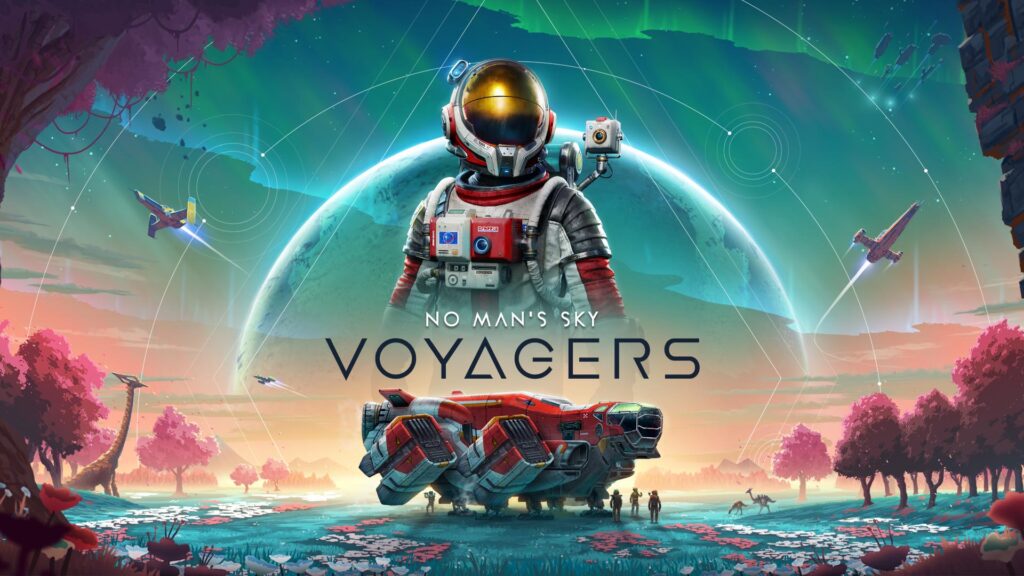
No Man’s Sky Swarm Update Release Date and Patch 6.4 Launch Details
The Swarm Update 6.4 is positioned as a major content expansion phase within the ongoing evolution of No Man’s Sky. While exact timing varies depending on platform deployment, the patch is framed as a mid-cycle galactic overhaul introducing new systems rather than a simple seasonal event.
Patch 6.4 reportedly includes backend improvements to multiplayer synchronization, improved fleet AI behavior, and expanded planetary event scripting. These technical enhancements are essential for supporting large-scale invasions and dynamic Swarm behavior across thousands of star systems simultaneously.
The rollout structure is divided into three phases: initial Swarm emergence, escalation of Hive expansion, and final community containment or collapse outcomes. Each phase unlocks progressively more difficult encounters and higher-tier rewards.
New Community Expedition 22: How the Swarm Event Works
Expedition 22 introduces a structured cooperative progression path where players collectively contribute to the containment or expansion of the Swarm.
Participants begin with basic scouting missions, identifying infected systems and scanning corrupted planetary biomes. As the expedition advances, players unlock access to deep-space anomaly zones where Swarm activity is strongest.
The expedition is designed around shared milestones. For example, once a global threshold of destroyed Hive Nodes is reached, all participating players unlock new technologies or cosmetic rewards. Conversely, failure to meet objectives results in increased Swarm aggression in subsequent phases.
This system encourages both solo exploration and large-scale cooperation across the player base of No Man’s Sky.
Three Factions Explained: Royal, Sage, and Weaver Teams Guide
The Swarm Update introduces three competing ideological factions that shape player alignment and rewards:
The Royal faction prioritizes structured order and attempts to control the Swarm through militarized suppression. Players aligned with Royal forces gain access to enhanced combat modules and fleet coordination upgrades.
The Sage faction focuses on research and understanding the Swarm’s crystalline biology. Their approach emphasizes scanning, analysis, and reverse engineering Hive technology.
The Weaver faction believes the Swarm is a form of evolution rather than a threat. They attempt to integrate with it, unlocking hybrid technologies that blend organic and crystalline systems.
Each faction offers unique progression paths, and player decisions influence galactic stability and narrative outcomes across the Swarm campaign.

How to Participate in the Swarm Community War Effort in No Man’s Sky
Participation in the Swarm War Effort involves contributing resources, completing missions, and engaging in planetary defense operations. Players can join public fleets, assist in defending outposts, or directly assault Hive nodes in space combat scenarios.
Resource donation plays a major role in progression. Materials gathered from corrupted planets can be refined into anti-Swarm technology, which is then used to stabilize infected systems.
Players are also encouraged to establish forward bases in high-risk regions. These bases serve as staging points for coordinated attacks against expanding Swarm zones.
What is the Prismatic Core and Why Players Must Build it Together
The Prismatic Core is a central community objective introduced in the Swarm Update. It is a massive construct built from collective player contributions and serves as the primary countermeasure against the Hive of Glass.
Once completed, the Prismatic Core emits a stabilizing frequency that weakens Swarm influence across nearby systems. However, its construction requires continuous input from the entire player base.
This mechanic reinforces the cooperative design philosophy of the update, making the survival of the galaxy dependent on collective action rather than individual progression.
New Enemy Types in No Man’s Sky Swarm Update: Swarmers and Hive Boss Ships
The Swarm Update introduces several new enemy archetypes, the most common being Swarmers. These are fast-moving crystalline drones that attack in coordinated formations, overwhelming unprepared pilots.
Hive Boss Ships represent large-scale capital threats. These massive vessels function as mobile extensions of the Hive of Glass and are equipped with adaptive shielding that evolves during combat.
Defeating these enemies requires strategic targeting of weak points, coordinated fleet attacks, and sustained damage phases. Unlike traditional enemies in No Man’s Sky, Swarm units adapt to player tactics over time.

Space Combat Changes in the Swarm Update 6.4 Explained
Space combat has been significantly restructured to accommodate large-scale Swarm encounters. Dogfighting mechanics now include dynamic swarm formations, multi-target tracking, and enhanced fleet coordination systems.
Enemy AI behavior has been upgraded to allow for adaptive maneuvering, meaning Swarm fleets can reorganize mid-battle depending on player strategies.
Capital ship engagements now feature phased destruction systems, where players must disable specific subsystems before delivering final blows to Hive-linked vessels.
How the Hive of Glass Changes No Man’s Sky Space Battles Forever
The introduction of the Hive of Glass fundamentally transforms how space battles unfold. Instead of isolated encounters, combat becomes part of a larger systemic conflict that spreads across entire regions.
The Hive actively influences battle conditions by deploying environmental hazards such as gravitational distortion fields and crystalline storm zones. These conditions force players to adapt continuously during combat.
Over time, entire star lanes may become inaccessible due to Hive expansion, reshaping galactic navigation strategies permanently.
Rewards in the Swarm Update: Direwasp Armor, Jetpack, and Rifle Explained
The Swarm Update introduces new reward tiers tied to participation in the war effort. Among the most notable is the Direwasp Armor set, which features crystalline plating designed to resist Swarm energy attacks.
The updated jetpack system includes enhanced propulsion capabilities, allowing players to escape Swarm ambush zones more effectively.
The new rifle variant, often referred to as the Prismatic Rifle, is capable of dealing increased damage to crystalline enemies while also applying disruption effects that weaken Hive shielding.
These rewards are distributed based on expedition milestones, faction alignment, and contribution to the Prismatic Core.
New Planetary Threats and Swarm Invasions on Dissonant Worlds
Planetary exploration becomes significantly more dangerous in Swarm-infected regions. Dissonant Worlds are newly introduced corrupted planets where environmental conditions are unstable.
These worlds feature shifting terrain, hostile crystalline flora, and periodic Swarm invasion events that alter planetary geography in real time.
Settlements on these planets may become overrun unless actively defended by players or faction forces.
Cooperative Gameplay Features in No Man’s Sky Swarm Update
Cooperative gameplay is a central pillar of the Swarm Update. Players can now form persistent task forces that track Swarm activity across multiple systems.
Shared objectives include base defense, Hive node destruction, and resource recovery missions. These cooperative systems are designed to scale dynamically depending on player population in a given region.
The update strengthens the multiplayer ecosystem of No Man’s Sky by making cooperation essential for progression rather than optional.
PixelHair and the View Keeper: Community Reactions to the Swarm Update Impact
Community discussions surrounding PixelHair and The View Keeper highlight strong engagement with the Swarm Update’s visual and narrative direction. Players describe the Hive of Glass as one of the most visually striking additions due to its fractal crystalline design and evolving geometry.
PixelHair commentary focuses on customization enhancements tied to the Direwasp armor sets, while The View Keeper discussions emphasize cinematic immersion during large-scale space battles.
Overall, community reaction reflects a blend of excitement and strategic analysis, particularly regarding how the Swarm mechanic reshapes long-term gameplay loops.

Will the Swarm Update Lead into Future No Man’s Sky Expansions?
The Swarm Update is widely interpreted as a foundation for future narrative expansions within No Man’s Sky. Its scalable war system and evolving Hive structure suggest long-term content integration.
Future expansions may build upon the Prismatic Core system, introduce new Hive evolutions, or expand faction conflicts into deeper intergalactic warfare.
The modular design of the update ensures that additional content can be layered onto the Swarm framework without disrupting existing progression systems.
Frequently Asked Questions (FAQs)
- What is the Swarm Update in No Man’s Sky?
It is a large-scale galactic event concept involving a crystalline invasion called the Swarm. - What is the Hive of Glass?
A massive evolving space structure that spreads corruption across star systems. - Is the Swarm Update multiplayer?
Yes, it is designed around cooperative global participation. - What is Expedition 22?
A community event where players contribute to Swarm containment efforts. - What are Swarmers?
Fast-moving crystalline enemy drones that attack in groups. - What is the Prismatic Core?
A community-built structure used to weaken the Hive influence. - What are Dissonant Worlds?
Corrupted planets affected by Swarm invasions. - Can players stop the Hive of Glass?
Yes, through coordinated community actions and progression milestones. - What rewards are available?
Armor sets, jetpacks, and advanced weapons tied to Swarm progression. - Does the Swarm Update change space combat?
Yes, it introduces large-scale fleet battles and adaptive enemy AI.

Conclusion
The Swarm Update concept represents a major evolution in large-scale cooperative gameplay within No Man’s Sky. By introducing a living galactic threat, dynamic faction systems, and a community-driven progression structure, it reshapes how players interact with both exploration and combat systems. The Hive of Glass serves as a central narrative and mechanical anchor, driving persistent conflict across the universe and encouraging long-term collaboration between players.
Sources and Citations
- No Man’s Sky Official Site
https://www.nomanssky.com - Hello Games Updates Page
https://www.nomanssky.com/news - No Man’s Sky Community Wiki
https://nomanssky.fandom.com/wiki/No_Man%27s_Sky
Recommended
- Pentagon Reveals First Wave of UFO Files as the Internet Tries to Make Sense of Them: Full Breakdown of Declassified UAP Documents
- Diablo 4: Lord of Hatred – Narrative Deep-Dive With Blizzard Reveals Mephisto’s Master Plan, Skovos, and the Final Chapter of the Saga
- WWE 2K26 Hands-On Preview: Gameplay Changes, New Modes, Roster Updates, and Release Details
- LiveScore Group Nearly Halved Its Annual Losses for the Financial Year 2025: Full Financial Breakdown and Future Outlook
- Nintendo Switch Is More Popular Among Japanese Teens Than Disney, Pokémon and Nintendo Itself, Survey Finds – Full Breakdown of Brand Japan 2026 Results
- The View Keeper Add-on: Why Every Blender Artist Needs It
- Moosa Dirty Fate – World Premiere Trailer | Xbox Partner Preview Showcase 2026: Gameplay, Story, Release Date & Everything We Know
- All ARC Raiders Quests (2026) – Full Mission List, Quest Chains, and Unlock Order
- How to Transfer Daz 3D Hair to Unreal Engine: Groom Workflow for Metahuman Integration
- How to Get the Scanner Upgrade in Subnautica 2: Bioscanner Guide, Blueprint Location, Alien Structure Scanning Explained



































































































