










In This Article (8 sections)
Warren and Coons Demand Nvidia-China Export Records as National Security Scrutiny Intensifies
Senators Elizabeth Warren of Massachusetts and Chris Coons of Delaware demanded on November 11, 2026, that senior Trump administration officials preserve records concerning Nvidia’s semiconductor exports to China and companies suspected of facilitating the diversion of restricted American technology. Their request covers documents, communications, intelligence assessments, licensing information, enforcement materials, and other records that could help reconstruct the administration’s handling of advanced AI chip exports. Warren and Coons addressed the letter to Commerce Secretary Howard Lutnick, Secretary of State Marco Rubio, and White House Chief of Staff Stephen Miller.
They requested written confirmation by November 17 that preservation directives had been distributed throughout the relevant agencies and offices. The senators also requested a congressional briefing on the national security implications of the reported intelligence operation and the administration’s decisions involving Nvidia’s advanced AI chips.
The preservation request reflects broader concerns about the intersection of semiconductor technology, foreign intelligence activity, corporate influence, and government export-control decisions. Warren serves as the ranking member of the Senate Banking, Housing, and Urban Affairs Committee, while Coons holds a senior Democratic position on the Senate Foreign Relations Committee’s East Asia, Pacific, and International Cybersecurity Policy Subcommittee. Their committee responsibilities connect directly with financial oversight, export controls, international security, and the protection of sensitive American technology.
The senators want to determine what government officials knew about the reported intelligence concerns, when they received the information, and whether appropriate defensive or regulatory actions followed. Preserving the records is an initial oversight step intended to prevent potentially relevant evidence from being deleted, overwritten, or otherwise lost before congressional investigators can examine it.
The November 11 letter identifies the Department of Commerce, Department of State, White House, Bureau of Industry and Security, State Department’s Bureau of Intelligence and Research, National Security Council, and other components of the Executive Office of the President as potential repositories of relevant records. The senators are seeking intelligence evaluations, export licensing decisions, enforcement proceedings, diplomatic communications, and interactions between Nvidia representatives and administration officials. They also cite the Federal Records Act and Presidential Records Act as part of the basis for preserving official materials.
The request extends beyond individual export licenses because the senators want to understand how intelligence warnings, commercial considerations, corporate communications, and national security policy interacted during the relevant period. The request itself does not establish wrongdoing by Nvidia or administration officials, but it seeks to ensure that investigators can later reconstruct the government’s decision-making process.
The preservation request covers several specific categories of records. Warren and Coons want intelligence memoranda, briefings, evaluations, and communications concerning the suspected Chinese intelligence operation, Alice Huang, Jensen Huang, Megaspeed, Megaspeed affiliates, and former parent company 7Road Holdings. They also seek communications involving Nvidia representatives and administration officials, including materials concerning meetings between Jensen Huang and President Donald Trump, as well as reported correspondence involving Nvidia General Counsel Tim Teter and Commerce Department official Jeffrey Kessler.
Additional requested materials concern the Commerce Department’s investigation of suspected semiconductor diversion, inventory verification at overseas facilities, potential Entity List actions, licensing applications, compliance assurances, and diplomatic discussions involving China. Communications with governments including Singapore, Malaysia, and Taiwan are also considered potentially relevant because those jurisdictions reportedly featured in efforts to understand Megaspeed’s operations and the movement of advanced hardware.
The November 17 deadline is specifically a deadline for confirmation that records are being preserved rather than a demand that every relevant document immediately be delivered to Congress. Preservation and production are separate stages because federal agencies and White House offices maintain large volumes of electronic correspondence, internal messages, memoranda, and administrative records that may be subject to different retention processes.
A preservation directive can help prevent potentially important material from disappearing through routine deletion, archiving, or system changes while questions concerning disclosure are resolved. Written confirmation would also create a record showing whether the administration acknowledged the request and instructed personnel to retain the relevant information. As of November 13, 2026, the deadline remained upcoming, and the available material did not establish whether every requested office had completed the preservation process.

Jensen Huang, Megaspeed, and the Alleged China Intelligence and Chip Diversion Concerns
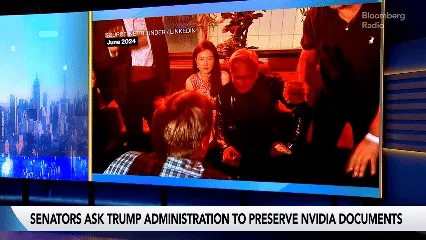
The controversy intensified because of reports involving Nvidia co-founder Jensen Huang, a woman associated with Singapore-based computing company Megaspeed, and a suspected Chinese intelligence operation. The senators’ letter describes an intelligence memorandum reportedly distributed to senior administration officials before President Trump’s May 2026 visit to China. That memorandum reportedly concerned a suspected operation involving Jensen Huang and a Megaspeed executive identified in subsequent reporting as Alice Huang. Jensen Huang publicly acknowledged having had a close personal relationship with a Megaspeed executive, according to the congressional letter and contemporary reporting. However, the existence of that relationship does not establish that Huang knowingly cooperated with Chinese intelligence or deliberately disclosed protected information.
The national security concern is whether a foreign intelligence organization obtained sensitive information, influenced commercial or government decisions, or exploited access to the leader of a strategically important semiconductor company. Nvidia occupies a central position in global artificial intelligence infrastructure because its accelerators and software are widely used in advanced computing facilities. Information concerning future products, customers, supply chains, export strategies, and technical capabilities could therefore have significant intelligence value. Foreign intelligence organizations may seek such information through cyber operations, commercial relationships, recruitment, or personal access. Warren and Coons consequently want to know whether government officials considered providing Nvidia leadership with a defensive counterintelligence briefing or warning and whether any recommended protective measures were implemented.
The related Megaspeed investigation concerns allegations that advanced Nvidia AI chips may have been diverted to China through international commercial arrangements. According to the senators’ letter, Megaspeed acquired more than $4.8 billion in advanced Nvidia AI chips beginning in June 2024. The scale of those purchases attracted scrutiny because large AI infrastructure deployments can involve thousands of accelerators distributed among multiple facilities and customers. Investigators are interested in where the hardware was delivered, who controlled it, who ultimately received computing access, and whether those uses complied with American export restrictions. Megaspeed has denied allegations that it illegally shipped chips to China and has maintained that it takes U.S. export-control compliance seriously.
The reported $4.8 billion figure requires careful interpretation because it describes reported purchases rather than a confirmed total of unlawfully exported chips. It does not establish that all of the hardware reached China or that every transaction involved restricted products. Investigators would need information about specific accelerator models, quantities, shipment dates, authorized destinations, customers, and applicable export regulations to determine the significance of individual transactions. The timing also matters because American semiconductor export rules have changed as technologies and geopolitical concerns have evolved. Large hardware purchases can also support legitimate data center expansion, cloud computing, or resale operations and are not inherently evidence of illegal conduct.
Separate reporting has referenced at least $7.5 billion in Nvidia chip shipments connected to the broader controversy, but that number should not be treated as interchangeable with the reported $4.8 billion in Megaspeed purchases. The figures may refer to different transaction groups, scopes, or periods. Congressional and federal investigators will need to distinguish documented purchases, licensed exports, suspected diversions, and violations established through evidence. Treating large financial totals alone as proof of wrongdoing would obscure those distinctions. A credible investigation therefore requires procurement records, shipping documents, financial transactions, ownership information, data center inventories, licensing materials, and customer agreements.
The Commerce Department’s handling of earlier inquiries is also part of the requested investigation. The congressional letter describes reporting that a Commerce investigation concerning possible chip diversion was transferred to the Department of Justice and later altered following communications between Nvidia representatives and Commerce officials. Those claims remain distinct from established findings of improper interference. Companies routinely communicate with regulators about licensing, compliance, investigations, and enforcement matters, so the existence of such communications does not itself establish misconduct. The oversight question is whether any interactions improperly changed an investigation, caused officials to disregard relevant evidence, or otherwise affected enforcement outside established procedures.

Trump Administration Export Decisions, Federal Enforcement, and the Wider AI Chip Security Challenge
The Trump administration faces congressional scrutiny because the controversy combines sensitive semiconductor exports with questions about how officials responded to intelligence indicating possible foreign exploitation. Advanced AI accelerators are used for commercial research, scientific computing, large-scale artificial intelligence development, cybersecurity, intelligence analysis, and potentially military applications. This dual-use character has led Washington to restrict certain transfers of advanced computing technology to China. However, modern AI infrastructure increasingly spans multiple countries, subsidiaries, distributors, cloud providers, and data centers. As a result, enforcement must address not only direct exports but also complex arrangements in which hardware or computing capacity can potentially reach restricted users indirectly.
An advanced chip can be manufactured outside the United States, sold through an international company, installed in a data center in another country, and used to provide computing services to customers somewhere else. These arrangements complicate the distinction between legitimate overseas commerce and activity intended to evade U.S. export controls. A foreign data center containing Nvidia accelerators does not automatically violate American law merely because Chinese customers might seek computing services from it. Legal questions depend on the applicable regulations, technical capabilities of the hardware, end users, controlled activities, and nature of the transaction. Warren and Coons are therefore seeking records concerning end-use verification, international facilities, ownership structures, and the government’s assessment of intermediaries purchasing advanced hardware.
The senators’ broader concern is that export restrictions have limited value unless agencies can identify suspicious transactions, investigate possible violations, verify destinations, and impose appropriate consequences when required. Advanced semiconductor controls can involve licensing obligations, restrictions based on technical specifications, customer ownership, military applications, sanctions, and evidence of attempted circumvention. International ownership structures and cloud-based access can make it difficult to identify who ultimately controls the equipment or benefits from its computing capacity. These enforcement difficulties become more serious when intelligence agencies identify potential foreign government involvement. The congressional inquiry seeks to determine whether the administration had relevant national security information and whether recommendations based on that information were adequately considered.
Howard Lutnick’s Commerce Department is central to the inquiry because the Bureau of Industry and Security administers U.S. export controls, evaluates licensing requirements, monitors compliance, investigates suspected violations, and participates in decisions concerning trade restrictions such as Entity List designations. The senators specifically seek records concerning interactions between Nvidia personnel and Commerce officials, including Jeffrey Kessler, as well as meetings and communications involving Lutnick. Those records could help establish the reasoning behind regulatory decisions affecting Nvidia technology and Megaspeed.
The inquiry is not limited to the final decisions because internal objections, alternative proposals, intelligence assessments, and agency recommendations may provide important context. Congressional investigators may examine whether procedures were consistently followed and whether national security information reached officials responsible for licensing and enforcement.
Marco Rubio’s responsibilities involve a different part of the process. As Secretary of State and National Security Advisor, his offices are involved in foreign policy, diplomatic engagement, national security coordination, and the communication of intelligence concerns. Reporting cited in the controversy indicates that Rubio had previously briefed President Trump about intelligence concerns involving Jensen Huang. Congressional investigators may consequently examine whether intelligence and diplomatic warnings were communicated effectively to officials responsible for export decisions and whether recommendations were modified, delayed, or rejected during interagency discussions. The request also extends to Stephen Miller because White House records could contain presidential discussions and policy decisions relevant to the matter.
The controversy has also exposed possible disagreements within the administration. Associated Press reporting on November 13 described Treasury Secretary Scott Bessent publicly criticizing the Commerce Department’s handling of proposed restrictions involving Megaspeed and reported that other officials supported stronger measures. Differences among Commerce, State, Treasury, Defense, intelligence agencies, and the White House do not themselves establish unlawful conduct because agencies can legitimately weigh trade, diplomacy, industrial policy, and national security differently. Congressional oversight could nevertheless clarify what recommendations each office made, which officials had authority to act, and why particular decisions prevailed. Such records may reveal weaknesses in interagency coordination, or they may show that the relevant risks were considered through established procedures.
The broader policy question concerns whether current export rules can remain effective as computing infrastructure becomes more geographically distributed. Regulators may increasingly need to evaluate not only hardware shipments but also data center ownership, overseas computing services, intermediary customers, and access to processing capacity. Congressional investigators could examine whether the existing system adequately addresses these indirect routes. The outcome could influence future rules for Nvidia and other semiconductor companies, but any policy response must also consider legitimate international commerce, U.S. competitiveness, compliance costs, and relationships with overseas partners. The investigation therefore sits at the center of a broader debate about how Washington can protect strategically sensitive computing technology without unnecessarily disrupting lawful global technology markets.

Congressional Investigation, Potential Export Policy Changes, and What Happens Next
A full investigation into suspected Nvidia chip diversion would require Congress and federal investigators to reconstruct the movement of advanced semiconductor hardware through procurement, shipment, delivery, installation, and use. Investigators could identify original sellers, intermediary companies, destination facilities, ultimate customers, and the parties controlling the equipment. They would also need to determine whether particular transactions required licenses and whether the necessary authorizations were obtained. Corporate ownership is another likely focus because complex international structures can obscure who ultimately controls a company or benefits from its activities. Megaspeed’s relationship with former parent company 7Road Holdings and other affiliates may therefore receive additional scrutiny.
Commerce Department records concerning investigations, inventory verification, enforcement proceedings, licensing decisions, and communications with Nvidia could help determine whether regulators followed established procedures. Intelligence assessments could provide information about the suspected Chinese intelligence operation and the risks identified by national security officials, although sensitive material may require classified handling. Communications with governments including Singapore, Malaysia, and Taiwan could also become relevant because foreign authorities may hold information concerning corporate facilities, ownership, and chip movements. International cooperation could be necessary to establish where hardware was located and whether particular transactions violated U.S. law. Congressional investigators may ultimately request testimony from company representatives, intelligence officials, export-control personnel, and senior administration officials.
Congressional oversight and criminal investigations have different purposes even when they examine overlapping events. Congress primarily investigates government policy, administrative accountability, and the possible need for legislative reform. The Department of Justice determines whether available evidence supports criminal enforcement under applicable statutes. A congressional finding about weak procedures would not automatically establish a criminal violation, just as a criminal investigation would not by itself resolve questions about broader export-control policy. Investigators must therefore maintain distinctions among intelligence concerns, administrative decisions, suspected diversion, corporate communications, and proven legal violations.
The inquiry could lead lawmakers to consider stronger controls on advanced AI accelerators and customers considered at elevated risk of facilitating diversion. Potential options include increased scrutiny of intermediaries, stronger verification of overseas data centers, more detailed equipment inventories, expanded reporting requirements, and additional documentation for transfers involving sensitive hardware. Congress could also examine whether cloud computing and remote access to foreign data centers require stronger safeguards when restricted users may obtain advanced computing capacity without physically importing the chips. These possibilities remain policy proposals rather than enacted requirements. Any new restrictions would require policymakers to balance national security concerns against costs for American companies, international partners, and legitimate users of AI infrastructure.
Stricter export rules would involve tradeoffs. Technology companies could face greater compliance costs, longer approval processes, and reduced access to international markets, while foreign customers might seek alternative suppliers or technologies. Overly broad restrictions could also create uncertainty for countries investing in American AI infrastructure. Conversely, weak controls could allow sensitive computing resources to reach users whom existing policies are intended to restrict. The central challenge is developing measures targeted closely enough to address identifiable risks without unnecessarily constraining lawful commerce. The Nvidia-Megaspeed controversy may therefore become a test case for how Congress and executive agencies approach future semiconductor enforcement.
The issue has already attracted interest beyond Warren and Coons. Reporting on November 12 described additional congressional interest in testimony and tighter export controls, including calls from Republican lawmakers for clearer explanations of the controversy. Associated Press reporting on November 13 also described internal administration disagreements concerning Megaspeed. These developments suggest that questions surrounding the company and U.S. chip policy extend beyond the original Democratic request. However, calls for stricter rules, hearings, or testimony should not be confused with enacted legislation or established findings of wrongdoing.
The immediate next step remains the November 17 deadline for written confirmation that Commerce, State, the White House, and relevant offices have preserved the requested records. After that, the senators may seek specific documents, classified or unclassified briefings, testimony, or additional information concerning licensing and enforcement decisions. The ongoing Department of Justice investigation into possible diversion may proceed separately and could involve evidence that cannot immediately be disclosed publicly. Congressional hearings could also bring testimony from Howard Lutnick, Nvidia representatives, intelligence officials, and export-control personnel. Any leadership changes at Nvidia would not eliminate questions about earlier transactions or government decisions because investigators can continue examining events that occurred under prior management.
The long-term significance of the inquiry will depend on whether investigators can establish a reliable chronology of what government officials knew, what national security recommendations were made, how Nvidia and Megaspeed-related decisions were handled, and whether existing safeguards operated as intended. Records may reveal weaknesses in enforcement or interagency coordination, but they could also show that officials evaluated the relevant risks and acted within lawful authority.
The documented November 11 preservation request and November 17 deadline are distinct from unresolved allegations concerning intelligence activity, improper influence, or unlawful semiconductor diversion. Maintaining those distinctions will be essential as congressional and federal investigations continue. The ultimate policy consequences will depend on evidence, agency decisions, congressional action, and whether the investigation identifies specific weaknesses that justify changes to U.S. export-control rules.

Frequently Asked Questions (FAQs)
- Why are Senators Elizabeth Warren and Chris Coons demanding Nvidia-China export records?
Senators Warren and Coons are demanding preservation of the records because they want to examine how the Trump administration handled concerns involving Nvidia’s advanced AI chip exports, a suspected Chinese intelligence operation, and possible weaknesses in export-control enforcement. Their November 11, 2026, letter asks relevant agencies and White House offices to retain documents, communications, intelligence assessments, licensing records, and enforcement materials that could be important to congressional oversight. The senators want to determine what government officials knew about the reported intelligence concerns, when they received that information, and whether any recommendations followed. They are also examining whether commercial or diplomatic considerations affected decisions involving Nvidia and companies suspected of facilitating chip diversion. The preservation request itself does not establish wrongdoing, but it is intended to ensure that potentially relevant evidence remains available for later review. - When did Warren and Coons send their Nvidia export records letter?
The senators sent their formal letter on November 11, 2026. It was addressed to Commerce Secretary Howard Lutnick, Secretary of State Marco Rubio, and White House Chief of Staff Stephen Miller because their departments and offices may hold records relevant to semiconductor export policy, intelligence concerns, and White House decision-making. The letter asks for preservation of government materials connected to Nvidia, Megaspeed, export licensing, enforcement activity, and the reported intelligence operation. It also requests a congressional briefing on the national security implications of the situation. The Senate Banking Committee announcement accompanying the request likewise identifies November 11 as the date of the congressional action. - What is the November 17, 2026, deadline about?
November 17 is the deadline for the administration to confirm in writing that appropriate record-preservation directives have been issued. The senators are not demanding that every document be produced to Congress by that date, nor are they expecting the entire investigation to be completed. Instead, they want assurance that potentially relevant materials will not be deleted, overwritten, or lost through routine record-management processes while congressional oversight continues. The request covers records involving Nvidia exports, export licensing, intelligence assessments, Megaspeed, administration communications, and related enforcement activity. Once preservation is confirmed, lawmakers could later seek specific documents, briefings, or testimony as the inquiry develops. - What is Megaspeed’s connection to Nvidia and China?
Megaspeed is a Singapore-based computing company that reportedly purchased more than $4.8 billion in advanced Nvidia AI chips beginning in June 2024. The company has attracted scrutiny because investigators and lawmakers are examining allegations that some advanced hardware may have been diverted to China through international commercial arrangements. Its significance increased further because a former Megaspeed executive, Alice Huang, has been connected in reporting cited by the senators to a suspected Chinese intelligence operation. Investigators are therefore interested in where the chips were delivered, who controlled the hardware, which customers accessed the computing capacity, and whether those activities complied with U.S. export restrictions. Megaspeed has denied allegations that it illegally shipped Nvidia chips to China and has said it takes U.S. export-control compliance seriously. - What allegations involve Jensen Huang and Chinese intelligence?
The allegations concern Jensen Huang’s reported relationship with Alice Huang, a former Megaspeed executive who was suspected by American intelligence authorities of links to a Chinese intelligence operation. The national security concern is whether that relationship could have provided access to sensitive technological, commercial, or strategic information connected to Nvidia. Because Nvidia plays a major role in advanced AI computing, information about its products, customers, supply chains, export strategy, or future hardware could have significant intelligence value. The senators are also asking whether administration officials considered giving Nvidia leadership a defensive counterintelligence briefing or warning. Importantly, the allegations do not by themselves establish that Jensen Huang knowingly participated in espionage, intentionally disclosed protected information, or deliberately violated export restrictions. - Why is the Department of Commerce involved in the investigation?
The Department of Commerce is involved because its Bureau of Industry and Security administers major U.S. export controls affecting advanced semiconductors. BIS evaluates licensing requirements, monitors compliance, investigates suspected violations, and participates in decisions about whether companies should face additional trade restrictions. Warren and Coons are seeking records concerning Commerce Department decisions involving Nvidia, Megaspeed, related companies, licensing applications, inventory verification, and possible Entity List actions. They also want to examine reporting that an earlier Commerce investigation was changed after communications involving Nvidia representatives and department officials. Those reported communications do not automatically establish improper interference, so investigators would need to determine whether normal regulatory procedures were followed. - Could Nvidia face penalties over the alleged chip exports to China?
Potentially, but only if investigators establish that Nvidia or another involved party violated applicable export-control laws or regulations. Any consequences would depend on the specific transactions, the technical characteristics of the chips, licensing requirements in effect at the time, destination, end users, and available evidence. Possible outcomes in export-control cases can include regulatory enforcement, financial penalties, licensing restrictions, or other legal measures, but none should be assumed before findings are made. The congressional record-preservation request is an oversight action and does not itself prove that Nvidia committed a violation. Investigators must distinguish lawful sales, authorized exports, suspected diversion, and confirmed violations before penalties could be justified. - Why are Nvidia AI chips considered important to American national security?
Advanced Nvidia accelerators provide the computing power used to train and operate sophisticated artificial intelligence systems. These systems have major commercial uses in medicine, scientific research, manufacturing, software development, and communications, but similar computing capabilities can also support military research, intelligence analysis, cybersecurity operations, and other strategically sensitive activities. This dual-use nature is why U.S. policymakers restrict certain transfers of advanced hardware to particular destinations and end users. The concern is not that every Nvidia chip is inherently dangerous, but that the most capable accelerators can materially increase access to advanced computing. Export controls are therefore intended to limit access where policymakers believe the technology could contribute to prohibited or sensitive activities. - Could the investigation affect Nvidia’s international semiconductor business?
Yes. If the investigation identifies weaknesses in current export-control procedures, it could contribute to stricter licensing rules, stronger customer verification, expanded reporting requirements, or greater scrutiny of overseas intermediaries and data centers. Such measures could affect Nvidia’s international sales, compliance costs, approval timelines, and relationships with customers operating outside the United States. Regulators could also place more emphasis on confirming where hardware is installed and who ultimately receives access to its computing capacity. However, the commercial impact remains uncertain because the investigation has not yet produced complete public findings or binding policy changes. Any future effect would depend on the evidence gathered and the regulations or legislation that follow. - What is the likely outcome of the Warren and Coons Nvidia investigation?
The immediate next step is the November 17, 2026, deadline for the administration to confirm that relevant records are being preserved. After that, lawmakers could request specific documents, classified or unclassified briefings, testimony from government officials, or appearances by Nvidia representatives and other relevant parties. The inquiry could also contribute to congressional hearings, legislative proposals, changes to export-control procedures, or recommendations concerning overseas data centers and semiconductor licensing. Separate Department of Justice investigations may continue independently and could involve evidence that is not immediately available to Congress or the public. Any conclusions about unlawful exports, improper government intervention, or intelligence-related misconduct will require evidence gathered through those investigative processes rather than assumptions based on the existence of the inquiry.

Conclusion
Senators Warren and Coons’ demand that the Trump administration preserve Nvidia-China export records comes at a consequential moment for American semiconductor policy, national security oversight, and the regulation of advanced artificial intelligence technology. Their November 11, 2026, letter represents a significant congressional effort to determine whether federal officials properly responded to intelligence concerns involving Nvidia, Megaspeed, and possible attempts to obtain restricted AI computing capabilities for China.
The preservation request reaches across export licensing, federal investigations, diplomatic discussions, corporate communications, and counterintelligence assessments. It is therefore broader than a dispute over individual chip sales or one company’s business relationships. At its core, the inquiry is examining whether the government’s existing safeguards operated as intended when commercial, diplomatic, and national security interests overlapped.
The reported $4.8 billion in Megaspeed Nvidia chip purchases has intensified scrutiny because of the scale of the transactions and the allegations surrounding possible semiconductor diversion. However, those reported purchases should not be treated as proof that the hardware was unlawfully exported, diverted to prohibited users, or connected to criminal activity. The same caution applies to intelligence suspicions, internal government disagreements, and political criticism of agency decisions. A credible investigation must separate lawful commercial transactions from potential violations and determine whether officials acted within their legal authority. It must also establish whether intelligence warnings were properly communicated, evaluated, and reflected in export-control decisions.
The November 17 deadline gives the administration an early opportunity to demonstrate that potentially relevant records are being retained for review. Once preservation is confirmed, congressional investigators may be able to reconstruct how Commerce, State, the White House, intelligence agencies, and other officials approached the issues involving Nvidia and Megaspeed. That process could reveal how senior officials balanced economic objectives, diplomatic considerations, corporate concerns, and national security risks. It may also clarify whether disagreements between agencies reflected ordinary policy differences or weaknesses in coordination and enforcement. Those distinctions will be important if Congress later considers hearings, testimony, legislative changes, or tighter oversight of advanced chip exports.
The controversy also highlights how difficult semiconductor regulation has become in a global AI economy. Advanced chips can move through international distributors, data centers, subsidiaries, cloud services, and complicated ownership structures before reaching their final users. This makes it harder to distinguish legitimate overseas business from arrangements designed to circumvent export restrictions. For Nvidia and other technology companies, the investigation reinforces the importance of export compliance, transparent engagement with regulators, and stronger safeguards against unauthorized access to sensitive computing technology. For policymakers, it raises the larger question of whether existing laws and enforcement tools are sufficient for a market in which access to computing power can be separated from physical ownership of the chips themselves.
Ultimately, the significance of the Warren-Coons investigation extends beyond Nvidia, Megaspeed, or any individual executive or administration official. Its findings could influence how the United States regulates advanced AI hardware, evaluates intermediaries, oversees overseas data centers, and cooperates with international partners on semiconductor enforcement. The inquiry may also shape how Congress approaches the relationship between commercial competitiveness and national security in future technology policy. Whether it leads to stricter rules will depend on the evidence gathered and the conclusions reached through the appropriate investigative processes. What is already clear is that advanced AI chips have become central to a broader policy debate over how the United States protects strategically important technology in an increasingly interconnected global market.
Sources and Citations
- U.S. Senate Banking Committee, November 11, 2026: Official announcement detailing Senators Elizabeth Warren and Chris Coons’ demand that the Trump administration preserve Nvidia export records following reports of a suspected Chinese intelligence operation.
https://www.banking.senate.gov/newsroom/minority/senators-warren-and-coons-direct-lutnick-rubio-and-miller-to-preserve-nvidia-records-following-reports-of-foreign-intelligence-operation-targeting-ceo-jensen-huang - U.S. Senate, Warren and Coons Official Letter, November 11, 2026: Primary-source five-page congressional letter identifying the requested documents, relevant officials, intelligence concerns, investigations, and November 17 records preservation deadline.
https://www.banking.senate.gov/imo/media/doc/20261111_warren_coons_letter_to_wh_commerce_state_re_nvidia_record_retentionpdf.pdf - Reuters, November 11, 2026: Reporting on the congressional records request, Nvidia’s China-related export controversy, Jensen Huang’s reported relationship, and questions concerning national security enforcement.
https://www.investing.com/news/stock-market-news/senior-us-democratic-senators-urge-administration-to-preserve-nvidia-export-records-amid-china-security-concerns-5020284 - Roll Call, November 12, 2026: Congressional reporting examining growing calls for investigations, testimony, and tighter controls on advanced AI chip exports to China.
https://rollcall.com/2026/11/12/calls-for-nvidia-probes-new-chip-export-limits-intensify/ - Associated Press, November 13, 2026: Coverage of Treasury Secretary Scott Bessent’s criticism of the Commerce Department’s handling of Nvidia-related restrictions and Megaspeed’s response to allegations of unlawful chip diversion.
https://apnews.com/article/17582a5098a5fb4c8fe866a084a6e52b - Fox Business, November 12, 2026: Examination of the senators’ preservation demand, reported Megaspeed purchases, suspected intelligence links, and congressional questions about export licensing decisions.
https://www.foxbusiness.com/politics/democratic-senators-demand-nvidia-records-from-trump-administration-over-alleged-chinese-spy-ties - Anadolu Agency, November 12, 2026: Independent reporting on the November 11 congressional letter and its request for preservation of records concerning advanced Nvidia chip exports and suspected Chinese intelligence activity.
https://www.aa.com.tr/en/americas/us-senators-demand-trump-administration-preserve-nvidia-records-amid-china-spy-allegations/4121608 - Federal Register, January 15, 2026: Bureau of Industry and Security regulatory notice concerning revisions to license review policy for advanced computing commodities, cited in the senators’ letter.
https://www.federalregister.gov/documents/2026/01/15/2026-00789/revision-to-license-review-policy-for-advanced-computing-commodities - Federal Register, November 12, 2025: Regulatory notice addressing the one-year suspension of expanded end-user controls for affiliates of certain listed entities, relevant to the senators’ review of semiconductor export policy.
https://www.federalregister.gov/documents/2025/11/12/2025-19846/one-year-suspension-of-expansion-of-end-user-controls-for-affiliates-of-certain-listed-entities - The New York Times, November 9, 2026: Investigation cited in the congressional letter concerning the Commerce Department’s handling of the Megaspeed chip inquiry and reported communications with Nvidia representatives.
https://www.nytimes.com/2026/11/09/business/economy/nvidia-megaspeed-investigation-huang.html - The New York Times, November 6, 2026: Intelligence-related reporting cited by the senators concerning the suspected Chinese intelligence operation involving a woman associated with Jensen Huang.
https://www.nytimes.com/2026/11/06/us/politics/chinese-spy-agency-nvidia-jensen-huang.html - Bloomberg, November 9, 2026: Reporting cited in the congressional letter concerning Nvidia’s reported intervention in the government’s investigation of suspected Megaspeed chip smuggling.
https://www.bloomberg.com/news/articles/2026-11-09/nvidia-intervened-in-us-probe-of-megaspeed-chip-smuggling
Recommendations
- Teenage Mutant Ninja Turtles Arcade: Wrath of the Mutants. Ninja Edition on Switch 2: Release Date, New Characters and Upgrades
- BOMBANANA! Launches on PC: Release Date, Three-Monkey Roles, and Bomb-Defusal Gameplay
- Mortal Shell 2 Bear Traps: Why Players Hate the Great Arbiter of Flesh Arena
- God of War Laufey Backlash Explained: Why the New Faye-Led Game Sparked Culture War Reactions
- CISA Adds Ray CVE-2025-62593 to KEV: Federal Patch Deadline and ShadowRay 2.0 Risks
- Blender “Generate Hair Curves” Geometry Nodes Preset: A Comprehensive Guide for Hair Grooming
- Rayman Origins Enhanced Edition Appears on Xbox Store With 4K and 60FPS Support
- Xsolla Accessibility, Social Impact & Entertainment IP Licensing at London Games Festival 2026
- League of Legends Classic Launches July 29 with Update 26.15: Everything You Need to Know
- Nintendo of America’s Nate Bihldorff Discusses Localizing the Ocarina of Time Remake’s Most Obscure Secrets



































































































