









In This Article (9 sections)
The Blood of Dawnwalker Release Date, Launch Details, and Story Premise
The Blood of Dawnwalker launched on September 3, 2026 for PlayStation 5, Xbox Series X|S, and PC. Its release date had originally been confirmed during Rebel Wolves’ Road to Launch presentation on April 28, 2026, where the studio and publisher Bandai Namco paired the announcement with a new story trailer, gameplay footage, edition information, and an initial look at PC requirements. As of September 22, 2026, the game is already available, so earlier coverage describing an approaching September launch should now be understood as prerelease reporting rather than current availability information.
Bandai Namco later confirmed the actual September 3 launch, describing the game as the beginning of Rebel Wolves’ original saga and noting that a day one patch accompanied release. That patch reference specifically concerns the launch day update and should not be treated as identifying the latest patch available after release. The September 3 date was an official announcement from Rebel Wolves and Bandai Namco rather than a retailer estimate or an unconfirmed release window.
There was also no paid early access period attached to the more expensive editions. Standard, Eclipse, Day One, and Collector’s Edition buyers all shared the same official starting date. Choosing a premium edition changed the included extras rather than providing earlier campaign access, so September 3 remained the release date across editions.
The game itself is an open world dark fantasy action RPG following Coen, a young man caught between humanity and vampirism as he tries to save his family. Its central ideas extend beyond the supernatural premise. Day and night create different opportunities, quests compete for limited in game time, and player decisions influence personal relationships as well as the wider struggle for control of Vale Sangora. The result is a structure where progression is shaped not only by combat and exploration but also by when the player chooses to act and which objectives receive priority.

TThe Blood of Dawnwalker Story, Coen, Brencis, and Vale Sangora
The April story trailer expanded the focus beyond Coen’s transformation by introducing more of the people and places surrounding his struggle. Bandai Namco described it as a look at characters who could become allies or enemies, alongside previously unseen areas of Vale Sangora. The Road to Launch event also included a separate presentation with more than ten minutes of PC gameplay, which should not be confused with the story trailer itself. A different launch trailer followed on August 26, 2026, returning attention to Brencis, Coen’s divided nature, and the wider dark fantasy conflict. The April story trailer and August launch trailer therefore belong to different stages of the promotional campaign even though both reinforce the same central story.
Several of the characters introduced around Coen reflect the game’s emphasis on uncertain loyalties. Marat is a charismatic rebel leader opposing the vampire rulers, but his experiences have made him cautious, so Coen must demonstrate that he deserves his trust. Lacra is driven by vengeance and carries a personal history that players can uncover through their interactions and decisions.
Anca has a more intimate connection to Coen’s life before the crisis. She helped teach him to read and has known him since before his supernatural transformation, but Rebel Wolves also makes clear that she is hiding a secret. Together, these characters suggest relationships shaped by suspicion, personal history, and competing motivations rather than a simple division between obvious friends and enemies.
Coen himself comes from Laslea, a village in Vale Sangora affected by plague and harsh human rule. He is the eldest of four children, with younger siblings Yanna, Mirto, and Lunka, and his parents are Pieter and Esme. His sense of responsibility therefore predates his transformation. He worked alongside his father in the silver mines, learned basic swordsmanship from Pieter, a former mercenary, and secretly studied Latin because he hoped for a life beyond the limits of his circumstances. His bond with his youngest sibling, Lunka, is especially important.
Becoming a Dawnwalker leaves Coen caught between two states. During daylight he remains human, while at night he gains vampiric abilities. Creative director Mateusz Tomaszkiewicz has described this duality as central to both the story and gameplay rather than a cosmetic transformation. Different powers and opportunities accompany each state, meaning Coen’s identity directly affects how he approaches the world. The person trying to save his family must also decide what he is willing to become, creating tension between protecting the people he loves and preserving his own humanity.
That conflict begins with Brencis, whose introduction complicates a simple villain role. In the opening material described by PlayStation Blog, Coen attempts to protect his plague stricken sister from execution. Brencis intervenes and uses vampire blood to heal her, but the apparent rescue becomes part of a new political order in which the population owes its rulers a blood tax. The family’s resistance and eventual captivity turn Coen’s personal crisis into the central objective of the campaign.
The ruling vampires are collectively known as the vrakhiri, with Brencis at their head. His history stretches back to the Roman Empire, where he was born in AD 131 as Caeso Burrienus Laurentius and pursued political influence before becoming a vampire. His court contains figures with similarly distinct backgrounds. Xanthe’s past reaches into ancient Greece, where she served as a priestess. Bakir carries a history of warfare connected to the Central Asian steppes, while Ambrus, the youngest member of the group, comes from poorer origins and embraces the opportunities provided by vampiric power. These histories distinguish the vrakhiri from a group of interchangeable monsters and reinforce the political character of their rule.
The central conflict therefore involves more than defeating a powerful creature. Coen is confronting a regime that presents protection and healing as justification for domination. Brencis’s decision to save Coen’s sister while imposing a blood tax creates an uncomfortable question about whether rescue remains benevolent when it produces an obligation that cannot be freely refused.
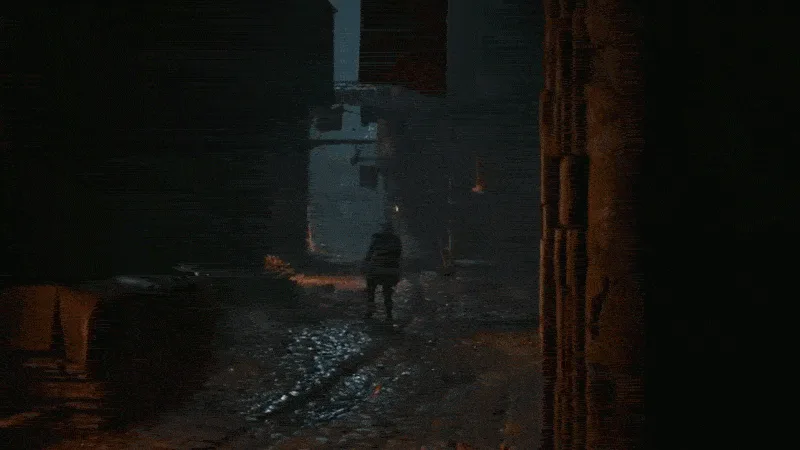
Vale Sangora provides the larger setting for that struggle. The Blood of Dawnwalker takes place in a fictional version of fourteenth century Europe, with the vampire takeover situated in AD 1347. Vale Sangora is an invented region within the real Carpathian mountain range rather than a historical country or direct recreation of a modern location. Rebel Wolves’ world building draws on Central and Eastern European environments and cultural influences, with forests, swamps, caves, mountain routes, villages, and other settlements shaping the valley. Dynamic weather, including fog that affects visibility, further contributes to the atmosphere.
The valley also contains a history older than Brencis’s occupation. Ancient structures and forgotten locations suggest that the current vampire regime is only one layer of a much older supernatural world. The official bestiary reinforces this by introducing kobolds in underground areas, ancient undead occupying ruins, corrupted canine creatures known as psoglavs, and Blood Guards created through vampiric transformation and control. Other creatures draw on regional folklore, making Vale Sangora more than a medieval landscape dominated solely by vampires.

The Blood of Dawnwalker Platforms and 30 Day Time System
The Blood of Dawnwalker is available on PlayStation 5, Xbox Series X|S, and PC. The PlayStation Store lists the PS5 version as a single player experience with offline play enabled, while also confirming DualSense vibration support and PS5 Pro enhancements. Those details apply specifically to the PlayStation release and should not automatically be extended to every PC storefront or platform configuration.
Xbox Wire has also confirmed Xbox Play Anywhere support. A qualifying Xbox digital purchase can therefore provide access on both Xbox Series X|S and Xbox on PC without requiring separate purchases for those two supported versions. That entitlement is tied to the Xbox ecosystem and should not be interpreted as meaning that a Steam or other PC purchase automatically includes an Xbox console copy.
The platform choice does not change the game’s fundamental single player structure. This is Coen’s authored adventure rather than a multiplayer campaign built around several player created vampires. On PS5, published accessibility information also includes controller adjustments and difficulty options, providing additional considerations beyond raw hardware performance.
The campaign’s unusual structure revolves around a thirty day and thirty night limit for saving Coen’s family. The important distinction is that this is not a continuously running real time countdown. Spending several minutes exploring scenery or moving through the world does not automatically consume an equivalent amount of the campaign calendar. Instead, specific decisions and commitments advance time.
Xbox Wire’s hands on coverage explains that each day and each night is divided into eight units. Certain actions consume one or more of those units, with hourglass indicators showing the cost before a decision is made. Time therefore behaves more like a resource that must be allocated carefully than a stopwatch constantly punishing exploration.
Rebel Wolves’ official FAQ further clarifies that ordinary exploration and combat do not move the calendar forward. Completing quests and selecting particular dialogue options can consume time, and some forms of character development do as well. PlayStation Blog interviews identify learning abilities as one activity that can advance the calendar, creating a practical tension between becoming stronger and acting quickly. Preparation can be valuable, but it is not always free.
The system encourages players to distinguish investigation from commitment. Looking around, gathering information, and evaluating possible choices do not necessarily consume precious days. The meaningful pressure arrives when the player decides which quests, conversations, upgrades, or opportunities deserve part of Coen’s limited schedule.
The thirty day period also does not function as a simple game over timer. Rebel Wolves has confirmed that the game continues after the deadline, although Coen’s family may suffer consequences. Continuing the campaign after time expires is therefore not the same as preserving the original rescue objective unchanged. The calendar is designed to make choices carry weight rather than abruptly ending the entire game when the final day passes.
The Blood of Dawnwalker Day and Night Combat, Exploration, Quests, and Player Choices
Day and night change much more than the appearance of Vale Sangora. In human form, Coen relies on swordsmanship and witchcraft, while his vampiric state at night opens different possibilities for movement, combat, and interaction. Rebel Wolves presents these as two connected approaches to the same world rather than a simple division between a weaker daytime state and a stronger nighttime state. Human witchcraft depends on carving runes into Coen’s body, while vampiric regeneration closes those wounds at night and prevents the same spellcasting method from functioning in that form. Daytime therefore has its own advantages rather than existing only as a period spent waiting for vampire powers to return.
Nighttime abilities can radically change how locations are approached. Shadowstep provides short range teleportation, while supernatural traversal creates routes across walls and elevated structures that may not be available during the day. A location with a conventional entrance in human form can therefore offer an entirely different infiltration path after dark. Rebel Wolves has also connected these changes to investigation and quest access, making the difference between forms relevant to more than combat.
The cost of vampiric power is Blood Hunger. If Coen fails to feed sufficiently, he can lose control and may attack an important character, potentially affecting relationships or closing off quests. Blood can come from enemies, animals, villagers, and blood vials, turning hunger management into both a survival mechanic and a narrative responsibility. The vampire state is therefore not an uncomplicated upgrade. A powerful nighttime route may create a feeding problem, while daytime witchcraft may solve situations that brute strength cannot.
Combat combines directional sword fighting, magic, and vampiric abilities. The sword system rewards attention to enemy attacks, timing, and positioning, while omniattack and omniblock options can automate some directional selection for players who want less direct management. The developers cite Historical European Martial Arts as an influence, but the combat is adapted for an action RPG rather than presented as an exact fencing simulation. Short swords, long swords, and great swords provide different speeds and approaches, and sword based builds remain viable during both day and night.
Character progression is divided across Swordmastery, Witchcraft, and Vampirism, but these are not completely separate leveling systems. The official Skills & Power bulletin describes a shared experience bar and common pool of skill points, with experience earned through combat, quests, exploration, and encounters. Unlocking individual abilities can require more than skill points. Sword techniques may depend on manuals, witchcraft on discovering magical knowledge, and deeper vampiric growth on corruption. Some progression choices also consume campaign time, tying character development directly to exploration and the thirty day schedule.
Magic includes offensive, defensive, and disruptive abilities. Burning Blood deals damage over time, while other effects can interfere with enemy behavior or alter combat statistics. Human witchcraft and vampiric powers should still be treated as different systems connected to Coen’s two states, even though both contribute to the overall build.
Vale Sangora itself is a handcrafted open world containing forests, plains, swamps, mountains, settlements, caves, and ancient ruins. Exploration is intended to reveal hidden knowledge, unusual encounters, and evidence of civilizations and supernatural forces that predate Brencis’s occupation. The relationship between abilities and locations is especially important. An official cathedral investigation demonstrated how returning at night with different powers could reveal routes and clues that were not accessible through a normal daytime approach.
Svartrau serves as the valley’s capital, while Greifberg is associated with Brencis’s power. Beyond those major locations, the world contains shrines, ruins, secrets, and discoveries connected to local beliefs and history. Exploration therefore serves both practical progression and a deeper understanding of the setting rather than functioning only as travel between mandatory quests.
The quest structure is also designed around flexibility. Lead quest designer Rafał Jankowski has explained that the final objective can be attempted without completing a conventional checklist of prerequisite quests. Following side stories, gathering allies, learning more about the world, and strengthening Coen can make the confrontation easier, but the game does not require every supporting thread to be completed first. This is the basis of Rebel Wolves’ description of a “narrative sandbox”: the rescue of Coen’s family provides a clear destination, while the route toward it varies depending on relationships, knowledge, and abilities developed along the way.
Player choices influence those relationships and can determine which quests remain available. Coen can be pushed further toward vampiric corruption or toward preserving his humanity, while important characters can die, including through poorly managed Blood Hunger. Their deaths can close associated questlines, making individual decisions capable of changing the available narrative rather than merely altering dialogue.
The Infamy system tracks Coen’s wider reputation, but it is not a simple good versus evil meter. Violence and theft can increase Infamy, but actions against Brencis and his organization can do the same. A person considered dangerous by the vampire regime may simultaneously be viewed as useful or admirable by its opponents. Brencis can respond with increased patrols, bounty hunters, or movement restrictions, while the same reputation can help Coen intimidate others or gain support from people resisting the regime.
Individual characters can also remember specific actions and dialogue choices, and relationships can develop through quieter assistance rather than only dramatic confrontations. Romance options are confirmed, but Rebel Wolves emphasizes that those relationships require development. The official FAQ also avoids a rigid morality system and indicates that achieving Coen’s goals does not necessarily require killing every vampire, leaving room for outcomes more complicated than straightforward extermination.

The Blood of Dawnwalker Developer Background, Platforms, and Standard, Eclipse, Day One, and Collector’s Editions
The Blood of Dawnwalker was developed by Rebel Wolves and published by Bandai Namco. Its most direct connection to The Witcher 3: Wild Hunt comes through Konrad Tomaszkiewicz, who directed that game before becoming a cofounder of Rebel Wolves and game director of Dawnwalker. Interviews with Tomaszkiewicz and lead quest designer Rafał Jankowski show how experience from earlier narrative RPGs informed the new studio’s priorities, particularly authored characters, consequential decisions, and morally uncomfortable situations. That connection concerns personnel and creative experience rather than making The Blood of Dawnwalker a Witcher sequel or part of the same fictional universe.
The game uses Unreal Engine 5 and is presented as the first chapter of a new saga. Its dual human and vampire forms, limited time structure, and narrative sandbox approach give it a distinct identity even where its creators draw on lessons from earlier RPG work.
The released platform lineup consists of PlayStation 5, Xbox Series X|S, and PC. The game remains a single player experience, and Xbox Play Anywhere support allows a qualifying digital Xbox purchase to provide access on both Xbox Series X|S and Xbox on PC. That entitlement applies to the Xbox ecosystem and should not be interpreted as meaning every PC storefront purchase includes an Xbox copy.
The game is available in Standard, Eclipse, Day One, and Collector’s Editions, and all four contain the complete base campaign. The differences concern digital extras and physical collectibles rather than exclusive story content or separate versions of the adventure. The Standard Edition provides the base game without the additional digital or physical packages.
The Eclipse Edition adds the Digital World Compendium, Digital Comic Book, and Digital Soundtrack. These extras focus on lore, artwork, background material, and music rather than new gameplay systems. The digital comic serves as a prequel, while the compendium expands on the history and artistic development of Vale Sangora.
The Day One Edition combines the base game with a Steelbook and printed world map. The Collector’s Edition expands that physical package with a 23 centimeter PureArts Coen figurine, a collector box, and a 60 page hardcover World Compendium. It also contains the digital extras included with the Eclipse Edition. The published Collector’s Edition map measures 33 by 40 centimeters.
The Eclipse digital content can also be purchased as an upgrade for Standard and Day One owners, so choosing the base game does not necessarily prevent a later purchase of the digital extras. Physical Collector’s Edition items are different because availability depends on limited production and remaining stock.
The preorder incentive was early access to the Sangoran Wayfarer’s Armor Set. That armor was not permanently locked to preorder customers because it can also be obtained through normal gameplay later. Since the game has already released, current buyers should distinguish between an old preorder promotion and the content actually guaranteed by a present retail listing.
The practical difference between editions is therefore straightforward. Standard focuses on the complete game, Eclipse adds digital lore and music, Day One adds selected physical items, and Collector’s combines the larger physical package with the digital extras. None of these editions should be interpreted as containing an additional campaign or granting access to a different version of Coen’s story.

Frequently Asked Questions[FAQs]
- When did The Blood of Dawnwalker release?
The Blood of Dawnwalker released on September 3, 2026 for PS5, Xbox Series X|S, and PC. Bandai Namco confirmed the game’s availability on that date, following its earlier release date announcement during the April Road to Launch presentation. As of September 22, 2026, it is already available, so older coverage describing an upcoming September launch should now be read as prerelease information. - Is The Blood of Dawnwalker multiplayer?
No. The game is a single player action RPG centered on Coen and his struggle to save his family in Vale Sangora. The PlayStation Store lists support for one player and offline play on PS5, with no cooperative campaign or competitive multiplayer mode announced. The story, progression, quests, and character relationships are therefore built around a single player experience.
- What does being a Dawnwalker mean?
Being a Dawnwalker means Coen exists between humanity and vampirism rather than fully belonging to either state. During the day he remains human and can use swordsmanship and witchcraft, while at night he gains vampiric abilities and different traversal options. The two forms are part of the same character and campaign, but they change which tools and opportunities are available at different times.
- Who is Coen trying to save?
Coen’s main objective is to save his family from the vampire rulers controlling Vale Sangora. His parents are Pieter and Esme, and his younger siblings are Yanna, Mirto, and Lunka. These relationships are important because Coen’s journey is driven by a personal family crisis rather than by a general desire to defeat vampires or become a hero.
- Does the thirty-day timer run while exploring?
No. Ordinary exploration and combat do not continuously move the campaign calendar forward. Time is spent through specific quest actions, dialogue choices, ability learning, and other meaningful commitments. This means players can investigate locations, look for clues, and explore the world without constantly losing time simply because they are moving slowly or examining the environment.
- Does the game automatically end after thirty days?
No. Rebel Wolves has confirmed that the game can continue after the thirty day period expires. However, the deadline still matters because Coen’s family may suffer consequences if he fails to act in time. Continuing to play after the deadline therefore does not mean the original rescue objective remains unchanged or that the passage of time has no narrative impact.
- Can Coen use a sword at night?
Yes. Swordmastery remains available in both Coen’s human and vampire states, so players do not lose access to sword combat after nightfall. Vampiric abilities add new offensive and traversal options, but they expand Coen’s toolkit rather than replacing his weapons. This allows a sword focused build to remain useful throughout the full day and night cycle.
- What does the Eclipse Edition include?
The Eclipse Edition includes the complete base game along with a Digital World Compendium, Digital Comic Book, and Digital Soundtrack. These extras expand the lore, artwork, background information, and music associated with Vale Sangora. They do not add a separate campaign, exclusive story chapters, or a different version of Coen’s main adventure.
- Was the preorder armor permanently exclusive?
No. The Sangoran Wayfarer’s Armor Set was offered as an early unlock for players who preordered the game, but it was not permanently restricted to those buyers. Bandai Namco confirms that the armor can also be obtained later through normal gameplay. Missing the preorder period therefore means losing the early access benefit, not losing the armor forever.
- How much PC storage and RAM are required?
Both published PC specification tiers require 16 GB of RAM and 60 GB of available SSD storage. That means the memory and storage requirements remain the same across the listed minimum and recommended configurations, while other hardware requirements such as the processor and graphics card differ between tiers. Players should also make sure the 60 GB is available on an SSD rather than assuming any storage device will meet the stated requirement.

Conclusion
The Blood of Dawnwalker’s September 3, 2026 launch followed a promotional campaign that gradually connected its family-rescue premise with a broader system of relationships, supernatural abilities, and consequential decisions. The April story trailer introduced important figures around Coen, while the August launch trailer returned attention to his conflict with Brencis and the dark fantasy world surrounding it.
Its distinctive proposition is the relationship between freedom and urgency. Vale Sangora can be explored without a continuously draining clock, yet meaningful commitments consume time that might otherwise be spent preparing, helping someone else, or confronting the ruling vampires. That structure turns the rescue objective into a series of priorities rather than a simple sequence of mandatory missions.
For understanding the released game, the essential distinctions are clear: day and night offer different capabilities, the deadline is not an automatic ending, and the premium editions add supplementary material rather than a different core adventure.
Sources and Citations
- Bandai Namco Entertainment, official Road to Launch announcement: Published April 28, 2026. Confirms September 3, 2026 as The Blood of Dawnwalker’s release date for PC, PlayStation 5 and Xbox Series X|S. It documents the Road to Launch presentation’s story trailer, new gameplay, edition information and PC requirements. This establishes when the release date was announced, rather than when the game became available. (Bandai Namco Europe)
Citation: The Blood of Dawnwalker Will Launch September 3: Road to Launch Details - Bandai Namco Entertainment America, official availability announcement: Published September 3, 2026. Confirms that the game had launched on PC, PS5 and Xbox Series X|S, identifies Rebel Wolves as the developer, and describes it as the first chapter of an original dark-fantasy saga. It also confirms a day-one patch intended to further polish the experience. The announcement was verified through indexed official publisher text because direct retrieval did not load. (Bandai Namco Entertainment)
Citation: The Blood of Dawnwalker Is Now Available on PC, PlayStation 5 and Xbox Series X|S - Rebel Wolves, official Community Bulletin Board on world-building: Published by Bandai Namco Europe on April 10, 2026. Explains how Vale Sangora’s landscapes and cultures draw inspiration from Central and Eastern Europe, with the fictional valley situated in the Carpathian Mountains. It describes forests, swamps, caves, settlements and ruins, introduces Anca’s connection to herbalism, and confirms that dynamic weather can affect gameplay, including reduced visibility in fog. (Bandai Namco Europe)
Citation: Community Bulletin Board #6: Creating a World - Rebel Wolves, official Community Bulletin Board on characters and relationships: Published June 1, 2026. Introduces characters including Marat, Lacra and Anca, explaining their motivations, secrets and potential importance to Coen’s journey. It establishes that relationships can open opportunities and influence the story, while explicitly describing supporting characters as having their own backgrounds and emotions. This supports character descriptions without assuming that every potential ally remains loyal in every playthrough. (Bandai Namco Europe)
Citation: Community Bulletin Board #8: Forging Connections - Rebel Wolves, official Community Bulletin Board on Coen’s background: Published June 30, 2026. Identifies Laslea as Coen’s home village and provides background on his parents, Pieter and Esme, and siblings Yanna, Mirto and Lunka. It discusses his childhood work in the silver mines, sword training from his former-mercenary father, secret Latin studies and responsibility for his family. This is the strongest direct reference for Coen’s personal history and the family relationships underpinning his rescue mission. (Bandai Namco Europe)
Citation: Community Bulletin Board #9: Coen’s Roots - Rebel Wolves, official sword-combat explanation: Published July 29, 2026. Documents automatic omniblocks and omniattacks alongside manually directed combat, explaining the importance of positioning, timing and reading incoming attacks. It also describes learning techniques through books, developing passive perks and using different sword types with different attack speeds. The discussion of Historical European Martial Arts concerns the team’s inspiration, not a claim that combat is a one-to-one historical simulation. (Bandai Namco Europe)
Citation: Community Bulletin Board #10: Swordmastery - Rebel Wolves, official Skills & Power explanation: Bandai Namco’s version is dated August 31, 2026. Establishes the three progression paths: Swordmastery, daytime Witchcraft and nighttime Vampirism. It confirms a shared experience bar and shared skill points, while explaining that advancement also involves time, manuals for Swordmastery and Witchcraft, and increased Corruption for stronger vampiric abilities. The complete official text was available through search indexing, although the page did not reopen directly. (Bandai Namco Europe)
Citation: Community Bulletin Board #11: Skills & Power - PlayStation Blog, Mateusz Tomaszkiewicz, Rebel Wolves Creative Director: Published August 20, 2025. This developer-authored explanation introduces the narrative sandbox, different daytime and nighttime approaches, Shadowstep, directional combat and the Compel Soul ability. Crucially, it says that major actions advance the 30-day-and-night schedule, while roaming the open world does not. It also explains that quests can be approached in different orders or missed, and that character deaths can change subsequent events. This is pre-release design documentation rather than a complete guide to final quest outcomes. (PlayStation.Blog)
Citation: Inside The Blood of Dawnwalker’s Narrative Sandbox and Dual Gameplay - Xbox Wire, Will Fulton, hands-on preview: Published July 7, 2026. Based on approximately four hours of gameplay and a group developer interview, this report describes the prologue, time-cost prompts, directional blocking and parrying, feeding, nighttime traversal and character interactions. It distinguishes the writer’s observed gameplay from developer explanations of the wider campaign. It is particularly useful for checking how the advertised systems behaved in the preview build, rather than treating promotional descriptions as firsthand testing. (XBOX Wire)
Citation: The Blood of Dawnwalker: Dead and Loving It - Game Informer, Brian Shea, direct interviews about quest structure: Published May 25, 2026. Includes comments from Konrad Tomaszkiewicz, Mateusz Tomaszkiewicz and lead quest designer Rafał Jankowski about building quests around a central objective instead of a mandatory linear mission chain. The developers explain that players can pursue allies, strengthen Coen or attempt to confront the antagonist without completing the surrounding stories. This supports the discussion of player freedom, optional preparation and consequences without implying that every approach is equally easy. (Game Informer)
Citation: The Blood of Dawnwalker: Just How Choice-Driven Is Rebel Wolves’ Debut Game? - Game Informer, Brian Shea, direct interviews about romance and Infamy: Published May 15, 2026. Explains Infamy as Coen’s negative notoriety among the vampire court and Vale Sangora’s inhabitants, with consequences such as bounty hunters, increased patrols and restrictions imposed by Brencis. It also describes potential benefits when dealing with Brencis’s opponents. Importantly, individual relationships are tracked separately, with dialogue and actions affecting trust and possible romance. This is the clearest source for keeping public notoriety distinct from personal relationships. (Game Informer)
Citation: The Blood of Dawnwalker: Exclusive Details on How Romance and Infamy Are Handled - Bandai Namco Entertainment, official edition guide: Published August 18, 2026. Compares Standard, Day One, Eclipse and Collector’s Editions. It identifies Eclipse’s digital compendium, comic and soundtrack; Day One’s Steelbook and map; and Collector’s additional 23 cm Coen figurine and 60-page hardcover compendium. It explicitly states that no edition provided early access, and that the preorder armor was an early unlock obtainable later through gameplay, not permanently exclusive content. The guide was verified through indexed official text. (Bandai Namco Europe)
Citation: The Blood of Dawnwalker Edition Guide: Choosing the Best Version for You - Bandai Namco Entertainment, official product listing and PC specifications: Provides the publisher’s hardware requirements, including 16 GB RAM, 60 GB of SSD space, Windows 10 and DirectX 12 for both listed tiers. Minimum examples are an Intel Core i5-11400F or Ryzen 7 2700X, with a GTX 1060 or Radeon RX 580. Recommended examples are an i7-11700K or Ryzen 7 5700X, with an RTX 4060, RX 7600 XT or Intel Arc B580. These are published requirements, not independent benchmarks or guarantees of a particular frame rate. (Bandai Namco Entertainment)
Citation: The Blood of Dawnwalker: Official Product Page and System Requirements
Recommendations
- Echoes of Aincrad Crafting Guide: Recipes, Materials and Unlock Requirements
- Did Christopher Nolan’s Depiction of the Gods Pay Off in The Odyssey?
- Castlevania: Belmont’s Curse Runs at Only 30 FPS on Nintendo Switch
- EA Sports College Football 27 Preview: Defense Wins Championships
- Jurassic World Evolution 2 Complete Edition Comes to Nintendo Switch 2 on July 30, 2026
- Unity-Based Tool for JRPG Game Development: RetroGig’s Retro JRPG Template for SNES/PSX-Style RPG Systems
- Keanu Reeves & China Miéville BRZRKR: Light Draws Breath — Release Date, Story, Creative Team & Variant Covers
- CD Projekt Raises Profit Goals with Witcher 4, 5, and 6 Coming: 5 Billion PLN Target Explained
- Creepshow Official Announcement Trailer Reveals a New Anthology Horror Game Experience
- GTA 6 Leans Into Vice City’s Influencer Hustle Where Looks Matter



































































































