










In This Article (7 sections)
Paralives Food Skill Explained, Cooking Skill Differences, and Recipe Progression
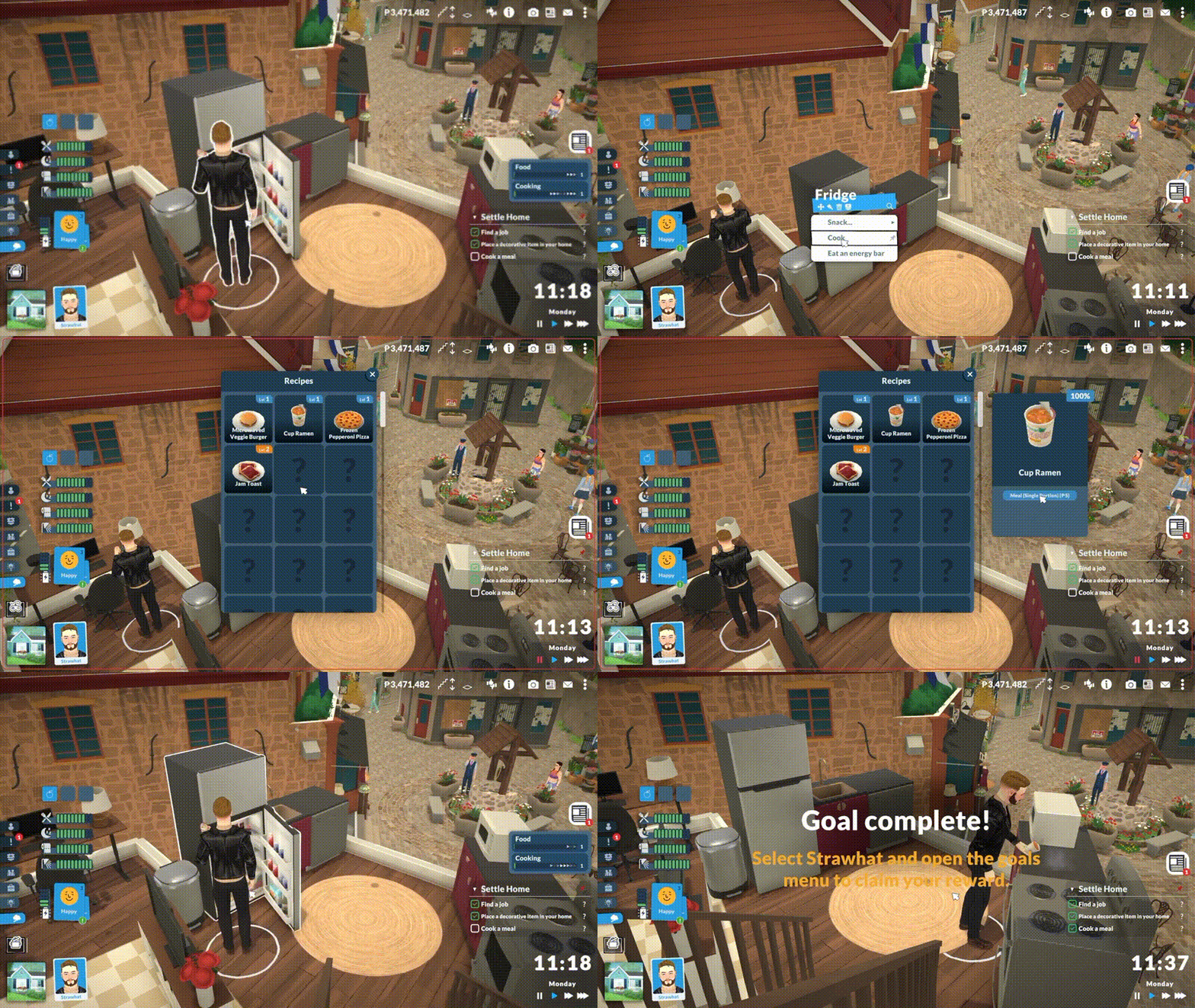
The Food Skill in Paralives is a life simulation progression system connected to a character’s ability to prepare meals, understand ingredients, improve meal quality, and expand culinary knowledge. Like other skills, it develops naturally through repeated actions, experimentation, and lifestyle habits rather than through a single isolated mechanic.
As Food Skill increases, characters are expected to prepare more complex recipes, reduce cooking failures, improve meal quality, and gain access to stronger culinary options. These improvements may also influence mood, hunger satisfaction, social interactions, and possible food related career paths.
Food Skill and Cooking Skill are closely related but serve different purposes. Cooking Skill focuses more on execution, including preparation speed, success rate, and efficiency. Food Skill represents broader knowledge, recipe access, quality, and culinary expertise.
Developing both together creates the strongest progression path. Higher Cooking Skill reduces mistakes and speeds up preparation, while Food Skill improves recipe options and overall meal quality. This combination allows characters to complete more successful meals in less time.
Recipe unlocking is one of the main incentives for increasing Food Skill. As characters progress, they gain access to more advanced dishes that can provide stronger effects and better experience gains.
Higher level recipes may offer:
- Better hunger satisfaction
- Improved mood effects
- Greater Food Skill experience
- More complex preparation steps
- Better social benefits when meals are shared
Early players should begin with simple foods such as basic breakfasts, sandwiches, salads, pasta dishes, snacks, and easy dinners. These recipes are faster to prepare and easier to complete successfully, making them useful for repeated practice without wasting time or ingredients.
Attempting overly complicated dishes too early can slow progression because failures reduce efficiency and consume resources. A gradual transition from simple meals to more advanced recipes provides a more reliable path toward culinary mastery.

How to Level Up the Food Skill Fast With Cooking, Reading, Study, and Mood
Cooking regularly is the most reliable method for gaining Food Skill experience. Each completed meal contributes directly to progression, making consistency more important than occasionally preparing a difficult dish.
A daily cooking routine allows characters to accumulate steady experience. Early on, simple meals work well because they are fast and easy to repeat. As Food Skill improves, intermediate and advanced recipes become more efficient because they provide stronger experience rewards despite taking longer to complete.
Players can also combine active cooking with passive learning methods. Cooking books provide a steady and low risk source of skill progress, particularly when characters cannot spend all their time preparing meals. Higher level books are expected to become more valuable as progression advances.
Studying cooking through a computer offers another passive option. Digital research, recipes, and tutorials can provide incremental experience without consuming ingredients. Alternating between study sessions and practical cooking creates a more balanced progression path than relying on only one method.
Food related dreams may also contribute small passive gains or mood benefits. While these increases are likely to be minor, they can support long term progression and reward characters who maintain healthy sleep routines.
Mood has an important influence on cooking efficiency. Happy or inspired characters are more likely to complete meals successfully, experiment with recipes, and produce better results, while tired, stressed, or unhappy characters may perform less efficiently.
To improve Food Skill progression, players should:
- Cook regularly rather than occasionally
- Use simple recipes early for quick repetition
- Move toward more complex recipes as skill improves
- Read cooking books during downtime
- Study cooking on the computer
- Cook when characters have high energy and positive moods
- Maintain a clean and well equipped kitchen
- Improve Cooking Skill alongside Food Skill
Success rate also matters because completed meals provide better progression than repeated failures. Better appliances, stronger Cooking Skill, and good mood conditions can improve consistency while reducing wasted ingredients.

Best Food Skill Strategies, Common Mistakes, and Advanced Progression Tips
Efficient Food Skill progression depends on balancing repetition, difficulty, mood, equipment, and learning methods. Players who optimize these areas can gain experience more quickly while avoiding wasted actions.
A strong early game strategy is to cook simple meals frequently. These dishes require less time and have lower failure risks, allowing more successful attempts each day. Once the character becomes more experienced, transitioning to intermediate recipes provides better experience without dramatically increasing risk.
At higher levels, complex dishes become more valuable. Advanced recipes generally involve more steps but reward players with stronger progression and better meal quality. Rotating between different recipe types can also prevent the cooking routine from becoming repetitive.
Kitchen quality can affect efficiency. Better appliances reduce cooking problems and allow characters to complete meals more consistently. A clean environment can also support smoother routines by minimizing interruptions and wasted time.
Several mistakes can slow Food Skill progression:
- Cooking too infrequently
- Attempting difficult recipes before the character is ready
- Ignoring mood and energy levels
- Using poor quality kitchen equipment
- Relying exclusively on cooking while ignoring reading or study
- Allowing repeated failures to consume ingredients and time
Players aiming for faster progression should combine active and passive methods instead of depending on a single activity. Cooking provides direct experience, while reading and computer study continue building knowledge during quieter periods.
At advanced levels, efficiency becomes more important than simple repetition. Scheduling cooking sessions during positive moods, maintaining strong equipment, developing Cooking Skill, and selecting recipes that balance completion time with experience rewards can produce faster long term gains.
The most effective approach is therefore a layered one. Regular cooking remains the foundation, but supporting that routine with study, reading, strong mood management, improved appliances, and gradually increasing recipe difficulty creates the fastest and most consistent path toward higher Food Skill levels.

Frequently Asked Questions (FAQs)
- What is the fastest way to level Food Skill in Paralives?
The fastest method is to cook regularly while maintaining a high success rate. Frequent meal preparation provides steady experience, and gradually moving from simple recipes to more advanced dishes can increase progression without creating too many failures. - Does mood affect Food Skill XP?
Yes, mood can influence how efficiently a character performs cooking actions. Positive moods such as happiness or inspiration can improve consistency and meal quality, while stress, tiredness, or poor emotional states may reduce efficiency and increase the chance of mistakes. - Are books useful for Food Skill progression?
Yes. Cooking books provide passive skill growth and are especially useful when a character cannot spend all of their time cooking. They work best when combined with practical meal preparation rather than being used as the only training method. - Should I cook complex meals early?
No. Early progression is usually more efficient with simple recipes because they take less time and have a lower failure risk. Once the character gains more experience, moving into intermediate and advanced dishes becomes more worthwhile. - Does failure give XP?
Failed cooking attempts may provide reduced experience or no meaningful progress depending on how the system handles unsuccessful actions. Because failures also waste time and ingredients, maintaining a strong success rate is generally better for fast leveling. - How important is Cooking Skill?
Cooking Skill is very important because it can improve preparation speed, reduce mistakes, and increase the likelihood of successful meals. Developing it alongside Food Skill creates a more efficient progression path and makes advanced recipes easier to handle. - Can studying replace cooking?
No. Studying is best treated as a supplementary method rather than a full replacement for practical cooking. Computer study and reading can provide additional progress, but regular meal preparation remains the main source of Food Skill experience. - Do better kitchens help skill gain?
Yes. Better kitchen equipment can improve cooking efficiency by reducing interruptions, mistakes, and preparation problems. A well equipped and clean kitchen also helps characters complete more successful meals in less time. - When do new recipes unlock?
New recipes become available as Food Skill increases. Higher level dishes are generally more complex but can provide stronger benefits, better meal quality, and more efficient experience gains once the character is skilled enough to prepare them reliably. - What is the best strategy overall?
The most effective approach is to combine frequent cooking with passive study, strong mood management, better kitchen equipment, and gradual recipe progression. Developing Cooking Skill at the same time also improves success rates and makes Food Skill growth more consistent.

Conclusion
Paralives: How To Level Up The Food Skill is a progression system centered on consistent practice, efficient learning methods, and strategic gameplay optimization. In Paralives, mastering the Food Skill requires balancing active cooking, passive study, mood control, and gradual advancement into more complex recipes. Players who apply structured routines and avoid common mistakes will experience significantly faster progression and unlock the full culinary potential of their characters.
Sources and Citations
- Paralives, official development updates and gameplay showcases : The official development page documents gameplay systems, including skills and cooking, and links to demonstrations of live mode, building, and character creation. Paralives
Citation: Paralives Development Progress. (Paralives) - Electronic Arts, life simulation skill progression systems : This official guide explains how skills develop in The Sims 4 through practice, reading, classes, and other activities. It provides a concrete reference for discussing progression mechanics within the life simulation genre. help.ea.com
Citation: The Sims 4 Skills: Mentoring, Skill Mastery Perks, and How to Level Up. (EA Help) - Electronic Arts, cooking mechanics in life simulation games : This cooking guide documents recipe requirements and unlocks across skill levels in The Sims 4. It supports comparisons with established genre mechanics; its details apply specifically to The Sims 4. help.ea.com
Citation: Cooking Skill Guide in The Sims 4: Recipes and Cheats. (EA Help)
Recommended
- Character Creator and Blender Workflow: How to Seamlessly Integrate Your 3D Pipeline
- Persona 5 Royal Returns to Xbox Game Pass in June: Full Dates, Platforms, and What Else Is Coming
- First Look at Xbox’s Gaming Copilot Leaves a Bad Impression as Microsoft Pushes AI Help to Consoles
- Which gadget tank should you pick in Splatoon Raiders?
- The Princess Diaries 3 Is Taking Its Time to Get the Story Right
- Artemis II Crew Watched Project Hail Mary in Quarantine Before Launch Astronaut Jeremy Hansen Gives Ryan Gosling a Thumbs Up Halfway to the Moon
- The Lord of the Rings: War in the North, Remaster Rumor Explained, After Legacy Edition Appears Online
- Sandfall Interactive Used UE5 Blueprints for All Gameplay Systems in Clair Obscur: What We Learned From GDC
- The Odyssey Director Christopher Nolan Says He First Dreamt About Making an IMAX Movie in 1986
- Kusan: City of Wolves Delivers Hardcore Top-Down Action in a Neon Urban Jungle
- PikiMov 5: A Free Motion Graphics Tool With 3D Support (Web-Based After Effects Alternative)
- What Are the 7 Basic Camera Movements in 3D Animation? A Complete Guide
- The Wait For Subnautica 2 Is Finally Over In May After Messy Legal Battle Shakes Development
- Steam’s New Update Simplifies Gifting & Brings Custom Wishlist Categories
- BLEACH Mirrors High Official Gameplay Trailer Breakdown: Combat, Characters, Story, and Release Details



































































































