




In This Article (8 sections)
Paul Bettany’s Infinity War Script Slip and How the Missing Screenplay Was Recovered
Paul Bettany has revealed that he once left what he described as the entire Avengers: Infinity War screenplay on an aircraft, creating a potentially serious confidentiality problem during production of one of Marvel’s most closely guarded films. The actor recalled discovering the mistake only after leaving the plane and reaching his car, at which point he realized the script was no longer with him. He then asked an airport greeter to retrieve the document, and the screenplay was successfully returned.
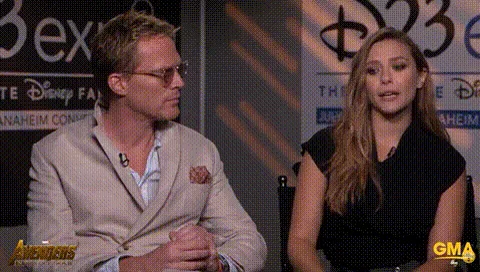
Bettany said he rewarded the greeter with a tip of approximately $500, presenting the payment as a sign of gratitude and relief rather than anything connected with a formal Marvel security process. The story resurfaced during his October 13, 2026 appearance on Virgin Radio UK’s The Chris Evans Show with Moneybox alongside VisionQuest co-star Emily Hampshire, turning a discussion about Marvel’s script secrecy into an example of how easily confidential production material can leave an actor’s possession.
The available account establishes that Bettany misplaced the script and recovered it, but many smaller details remain unspecified. He did not identify the airline, airport, flight number, exact travel date, or the precise location where the document had been left inside the aircraft. There is also no confirmed description of whether the screenplay was loose, bound, inside another item, or placed in a seat pocket. Those gaps should remain unresolved rather than being replaced with plausible travel scenarios that Bettany never described. The key sequence is simply that he left the aircraft, realized the script was missing after reaching his car, and relied on someone else to retrieve it.
The greeter’s role was important because Bettany had already moved beyond the point where he could simply return to his seat himself. His story does not describe how the greeter obtained access to the aircraft, which airport personnel assisted, or how long the recovery took. It would therefore be inaccurate to embellish the incident with claims about bypassing security or rushing onto a plane without authorization. What the anecdote does demonstrate is a basic weakness in any confidentiality system that still depends on physical documents being handled by people during ordinary travel. Even extensive restrictions on distribution cannot eliminate the possibility that a screenplay will be forgotten, misplaced, or temporarily separated from the person responsible for it.
The $500 tip is memorable because it communicates how seriously Bettany regarded the mistake once the pages were returned. A screenplay’s production value extends far beyond the cost of printing it because it can reveal character deaths, surprise appearances, scene order, emotional turning points, and the resolution of a story audiences have followed for years. There is no evidence that the greeter demanded payment, that the money purchased silence, or that it was part of an official Marvel policy. Describing it as a bribe or ransom would therefore misrepresent Bettany’s account. The payment is best understood as his personal expression of relief after confidential material was recovered before the situation became more serious.
The incident also should not be described as a confirmed public leak because Bettany’s story ends with the script being recovered. Nothing in the available reporting establishes that the screenplay was photographed, copied, sold, uploaded, or circulated online. It is equally impossible to prove that no one else briefly saw the pages before they were returned, because Bettany’s account does not resolve what happened during that interval. That uncertainty is different from evidence that a leak occurred. The safest conclusion is that the event created the possibility of exposure but did not produce a documented chain of spoilers tied to the missing script.

Marvel’s Infinity War Script Secrecy, Fake Scenes, and the Russo Brothers’ Approach
Bettany’s plane story becomes more interesting when placed alongside his earlier comments about receiving misleading versions of the Infinity War screenplay. Before the film’s release, he said that material he read contained fake scenes and that the Russo brothers helped distinguish those sequences from the story they actually intended to shoot. Joe Russo and producer Trinh Tran also discussed distributing different versions, reinforcing the idea that actors could receive scripts whose reliability was deliberately limited.
The phrase “fake script” should not be interpreted to mean an entirely unrelated screenplay, because a version could preserve most of the genuine story while altering selected deaths, major twists, or the ending. Bettany’s 2026 description of leaving a complete script on a plane therefore does not establish whether the recovered copy matched the final film scene for scene.
Bettany had already described some frustration with this system in 2018. In an MTV interview later discussed by ComicBook.com, he recalled reading a version of the script, speaking with Anthony and Joe Russo, and then learning that significant parts had been intentionally altered. He said he was subsequently given the same misleading material again when he expected to receive the correct version, which was particularly frustrating because reading a full screenplay required substantial time for him as a dyslexic performer.
Another public telling referred to three readings rather than two, showing that the anecdote has varied slightly across retellings. Those variations are best understood as differences in recollection rather than a precise administrative record of how many copies were issued.
The reason for distributing misleading material was straightforward: possession of a script would not automatically provide an accurate roadmap of the finished film. If an unauthorized reader encountered an altered death, invented sequence, or false ending, the document itself would be less useful as a source of reliable spoilers. That written misdirection should also be distinguished from filming fake scenes. Anthony Russo separately explained that the filmmakers were not spending their limited production time shooting large amounts of false material purely to deceive potential leakers. The security method therefore involved controlling and altering information on the page rather than maintaining a large library of deliberately filmed false outcomes.
The Russo brothers also described a system in which actors could receive only the information necessary for their own work while directors supplied additional context. Elizabeth Olsen discussed receiving material focused on her participation, and the directors explained that performers could understand the emotional objective of a scene without necessarily knowing every part of the larger narrative.
This approach allowed the production to limit how much sensitive information any one person carried while still giving actors enough reliable context to perform effectively. The method required careful communication because incomplete or misleading written material could create confusion about motivation, continuity, or the true stakes of a scene. Bettany’s repeated experience with altered pages illustrates how a security measure could serve its purpose while still creating friction for the people making the film.
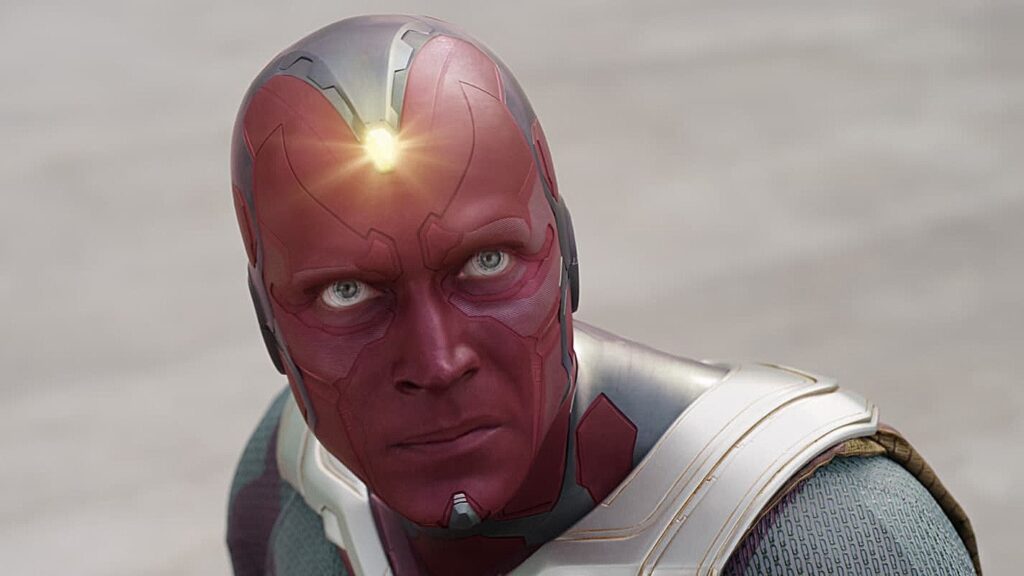
Vision’s storyline made secrecy particularly important because his personal fate was tied directly to Infinity War’s central conflict. The Mind Stone embedded in his forehead was one of the Infinity Stones sought by Thanos, turning Vision into both a character with intimate relationships and a strategic target. The finished film eventually forces Wanda Maximoff to destroy the Stone at the cost of Vision’s life, only for Thanos to reverse the moment and take it anyway. Knowing that full sequence in advance would fundamentally change how an audience experiences the repeated attempts to save him. Vision’s pages therefore contained exactly the kind of emotional and structural information Marvel had strong reason to protect.
Emily Hampshire’s VisionQuest Experience and Marvel’s Handling of Script Pages
The October 2026 Virgin Radio conversation also included Emily Hampshire, whose experience involved VisionQuest rather than Infinity War. She discussed daily filming pages, commonly called sides, and explained that those documents had to be returned after the relevant scenes were filmed. Hampshire also described the production following up to retrieve pages that had not been handed back, which surprised her because she had not initially understood how closely the material was being tracked. Her story concerns a different kind of document from the full screenplay Bettany misplaced, but the underlying issue is similar. Both anecdotes show that Marvel’s confidentiality practices involve not only controlling who receives information but also accounting for where physical copies go afterward.
Daily sides contain less material than a complete screenplay, but their smaller size does not necessarily make them unimportant. A single scene can still reveal a new character, unexpected return, major confrontation, death, or other development that a studio wants to keep private. This means a production may continue treating pages as sensitive even after filming has finished because completing a scene does not make its contents public. Editing, visual effects, scoring, marketing, and release may still be months away. Collecting the pages reduces the number of copies left in circulation while also helping the production determine which issued documents remain outstanding.
Hampshire’s account should not be expanded into claims about what Marvel does with every returned document. The interview does not establish whether all pages are shredded immediately, archived, digitally logged, or processed through one universal security system. It only supports the narrower point that returning daily sides was part of her VisionQuest production experience and that the production followed up when pages remained unreturned. The process she described may differ from procedures used on Infinity War years earlier. Evidence from one actor and one production should not be treated as proof that every Marvel film or television series follows exactly the same routine.
Taken together, Bettany’s and Hampshire’s stories reveal how confidentiality depends on ordinary behavior as much as specialized security systems. Bettany immediately understood the significance of the missing screenplay when he noticed it was gone, while Hampshire described learning how seriously the production treated pages that initially felt like routine working materials.
Both situations involve the same basic document lifecycle problem: confidential information has to be distributed so actors and crew can do their jobs, but the production still needs to control where that information goes afterward. A sophisticated secrecy policy can reduce risk, yet every copy remains dependent on people remembering to carry, return, or store it properly. The practical vulnerability is therefore not necessarily a failure of technology or policy but a moment when everyday handling breaks down.
The interview also demonstrates why a security lapse should be distinguished from its consequences. Bettany described temporarily losing a screenplay and then recovering it, while Hampshire described a collection procedure designed to prevent pages from remaining outside production control. Neither story establishes that protected plot information actually became public through those incidents. A mistake can create risk without producing a leak, just as a strict collection process can exist without proving that every piece of confidential information is perfectly controlled. That distinction keeps the anecdotes interesting without exaggerating what they establish.

What Bettany’s Script Story Reveals About Marvel Spoilers and Production Security
Marvel’s concern about Avengers scripts is understandable because one screenplay can contain the answers to many interconnected stories at once. Trailers can reveal carefully selected images, dialogue, and broad conflicts while withholding the scenes that explain how those moments connect or resolve. A complete script can reveal who survives, which heroes reunite, whether a victory is temporary, and how one character’s decision affects another storyline. For Infinity War, the official premise openly presented Thanos as the central threat pursuing the Infinity Stones while protecting the outcome of that pursuit. The production therefore needed to distribute enough information for actors and crew to work while preventing the entire narrative from spreading beyond those who required it.
The accounts surrounding Infinity War describe several complementary ways of reducing exposure, including altered material, partial script access, and more controlled reading arrangements. Each method addresses a different risk because carrying fewer pages limits the amount that can be lost, misleading scenes reduce the reliability of any unauthorized copy, and controlled access prevents some materials from being taken elsewhere.
Those approaches should not be collapsed into an invented universal Marvel rule because different productions, performers, and scenes may receive different treatment. Bettany’s airport anecdote is particularly useful precisely because it proves that at least one sensitive document remained portable enough to accompany him during travel. Whatever other safeguards existed, the system still had to contend with the possibility of simple human forgetfulness.
The older story about fake scripts should also remain separate from the later plane incident unless evidence directly connects them. Bettany’s comments about altered material do not prove that the screenplay he left behind was one of the misleading drafts, and the airport story does not identify its exact version. Similarly, there is no evidence that the missing script caused any of the rumors or leaks that circulated around Infinity War during production. Large franchise films can generate inaccurate plot summaries, leaked images, speculation, and legitimate reporting from many unrelated sources. Connecting any of those developments to Bettany’s temporary loss would require evidence that the available account does not provide.
The broader lesson from Bettany and Hampshire is that secrecy operates through both policy and routine. Marvel can restrict access, alter scripts, collect daily pages, and limit what individual performers know, but those systems still rely on actors and production staff handling documents correctly. The effectiveness of security therefore depends partly on shared expectations about which material can travel, which copies must be returned, and how quickly a problem is reported when something goes missing.
Bettany’s immediate attempt to recover the screenplay and Hampshire’s description of production staff following up on unreturned sides both illustrate that human response is part of the security process. Confidentiality is not maintained only by preventing mistakes but also by containing them when they occur.
The most accurate conclusion is that Bettany’s Infinity War story describes a potentially serious lapse that ended with recovery rather than a confirmed spoiler disaster. The anecdote is memorable because it combines Marvel’s well-known secrecy with an extremely ordinary mistake: leaving something behind while traveling.
His earlier experience with altered scripts shows how aggressively the production tried to limit reliable information, while Hampshire’s VisionQuest account demonstrates that similar concerns continue years later in a different Marvel project. Together, the stories show that keeping major franchise plots confidential involves both elaborate information controls and mundane responsibilities such as remembering where the pages are. The tension between those two realities is what makes Bettany’s $500 recovery story more revealing than a simple celebrity travel mishap.
Frequently Asked Questions (FAQs)
- What did Paul Bettany say about losing his Infinity War script?
Bettany said he once left what he described as the entire Avengers: Infinity War screenplay on a plane. He did not realize the document was missing until after leaving the aircraft and reaching his car. Because he could no longer simply return to retrieve it himself, an airport greeter helped recover the script and return it to him. Bettany recalled the incident years later while discussing Marvel’s secrecy during publicity for VisionQuest. His account describes a potentially serious confidentiality mistake that ended with the material being recovered rather than a confirmed public leak. - When did Bettany discuss the missing screenplay?
Bettany discussed the incident during a Virgin Radio UK appearance alongside his VisionQuest co-star Emily Hampshire. Their episode of The Chris Evans Show with Moneybox was published on October 13, 2026. The conversation focused partly on how Marvel handles confidential scripts and filming pages, which prompted Bettany to recall the older Infinity War incident. This means the story concerns something that happened during the production of the 2018 film rather than a newly misplaced VisionQuest screenplay. October 13, 2026 is therefore the date the anecdote became public through this interview, not the date the original mistake occurred. - How much did Paul Bettany tip the airport greeter?
Bettany recalled giving the airport greeter approximately $500 after the missing screenplay was successfully retrieved. The amount was presented as a substantial tip reflecting his gratitude and relief. A complete Marvel screenplay could contain major character developments, deaths, twists, and other information the production wanted to protect before release. There is no evidence in the reported account that the greeter demanded the money or used possession of the script as leverage. The payment should therefore be understood as Bettany’s reward for the assistance rather than a ransom, bribe, or payment for silence. - Which airline or airport was involved?
The available reporting does not identify the airline, airport, flight number, or exact date on which Bettany lost the screenplay. It also does not establish precisely where the script had been left inside the aircraft. Details such as whether it was on a seat, inside a seat pocket, or stored with another item have not been publicly confirmed. Bettany’s account focuses on realizing the loss after reaching his car and asking an airport greeter to recover the document. Any more detailed reconstruction of the travel circumstances would therefore go beyond the information he provided. - Did the lost Avengers: Infinity War script appear online?
No public leak has been established as a result of Bettany leaving the screenplay on the aircraft. His account ends with the document being successfully retrieved and returned to him. The reporting does not connect the incident with any plot summaries, photographs, copied pages, or other Infinity War material that later appeared publicly. At the same time, the available information cannot prove that nobody briefly saw the script before it was recovered. The accurate conclusion is that the incident created a risk of exposure, but there is no confirmed evidence that it produced an actual public leak. - Was the recovered document definitely the final shooting script?
That has not been established. Bettany described what he misplaced as the entire Infinity War screenplay, but his earlier interviews reveal that Marvel had provided him with versions containing deliberately misleading material. A script can be complete in the sense that it contains a beginning, middle, and ending while still including altered scenes or false outcomes. The 2026 interview does not identify the exact draft he carried or explain whether every scene in it matched the finished film. It is therefore safer to describe it as a complete screenplay according to Bettany’s recollection without claiming it was definitively the final shooting version. - Why did Marvel use fake Infinity War scripts?
Altered scripts were intended to make unauthorized access less useful for revealing the finished movie’s biggest surprises. A document could contain substantial genuine material while changing selected deaths, major twists, or other sensitive outcomes. Someone who obtained that copy would therefore have difficulty knowing which parts accurately represented the final story. This approach helped Marvel limit reliable spoiler information while still providing performers with enough material to work. Written fake scenes should also be distinguished from shooting expensive false sequences, because the Russo brothers indicated that they were not spending production time filming large amounts of fake material purely to mislead potential leakers. - Did Bettany read a fake script more than once?
Yes. Bettany previously described reading misleading Infinity War material more than once while attempts were being made to provide him with the correct version. He recalled discovering after one reading that significant portions were false, then being given misleading material again when he expected the proper script. Another public telling referred to a different number of total readings, so the exact count varies depending on the interview. Bettany also explained that reading a full script required considerable time for him because he is dyslexic, which made the repeated mistake particularly frustrating. The consistent point across the accounts is that he had to deal with altered material multiple times rather than receiving one straightforward final screenplay. - What are the script sides Emily Hampshire discussed?
Sides are shorter sets of script pages containing the scenes an actor needs for a particular day of filming. Hampshire discussed receiving these pages while working on VisionQuest and being expected to return them after the relevant filming was completed. Although sides contain less information than a complete screenplay, one scene can still reveal an important character appearance, confrontation, death, or other protected plot development. Hampshire also described the production following up when pages had not been returned, demonstrating that the documents continued to be treated as sensitive after filming. Her experience therefore provides a separate example of Marvel attempting to control physical copies of story material throughout production. - Does the interview reveal a new Infinity War spoiler?
No. The new information is Bettany’s story about temporarily losing confidential production material, not a newly revealed Infinity War plot point. His account does not provide previously unknown scenes, dialogue, alternate endings, or other story information from the misplaced screenplay. It also does not establish that a copy of the document is currently circulating or that any of its contents leaked publicly. The significance of the anecdote comes from the contrast between Marvel’s extensive efforts to protect spoilers and an ordinary travel mistake that temporarily put a complete script outside Bettany’s control. It is therefore a production-security story rather than a new Infinity War story revelation.

Conclusion
Paul Bettany’s missing Avengers: Infinity War screenplay is a memorable example of how even tightly controlled production material can briefly slip beyond the possession of the people entrusted with it. According to Bettany, he realized the script was missing only after leaving the aircraft and reaching his car, forcing him to rely on an airport greeter to retrieve it. The document was successfully recovered, and Bettany recalled giving the greeter approximately $500 in gratitude. His account establishes a potentially serious security lapse that ended without a confirmed public leak. It does not establish that the screenplay was copied, circulated, or connected to any of the Infinity War leaks and rumors that appeared elsewhere during production.
The exact version of the recovered screenplay also remains uncertain, which matters because Bettany had previously described receiving scripts containing deliberately misleading material. His later story confirms that he regarded the document as a complete Infinity War screenplay, but it does not identify the draft or prove that every scene matched the finished film.
Combined with Emily Hampshire’s account of VisionQuest production staff collecting daily script pages after filming, the anecdote offers a practical view of how Marvel approaches story secrecy. Protecting major plot developments depends not only on limiting who receives information, but also on tracking the physical documents that carry it throughout production. Bettany’s experience ultimately shows that elaborate spoiler protections can still depend on something remarkably ordinary: making sure the script does not get left behind.
Sources and Citations
- Virgin Radio UK, The Chris Evans Show with Moneybox, October 13, 2026 : Hosts the episode featuring Paul Bettany and Emily Hampshire discussing Marvel’s VisionQuest. Provides the original podcast page for their appearance, including the episode date, guest names and an embedded audio player, making it the primary interview source associated with the subsequent news coverage. Acast
Citation: The One with Paul Bettany & Emily Hampshire. (Virgin Radio UK). - GamesRadar+, Lauren Milici, October 14, 2026 : Reports Bettany’s recollection of leaving the complete Avengers: Infinity War script on an aircraft and tipping an airport greeter approximately $500 after it was recovered. Also covers Emily Hampshire’s comments about Marvel collecting used script pages, connecting the anecdote to the studio’s handling of confidential production materials. GamesRadar+
Citation: VisionQuest Star Paul Bettany Once Left a Complete Avengers: Infinity War Script on a Plane. (GamesRadar+). - tbreak, Dima Mohanna, October 13, 2026 : Summarizes Bettany’s account of the recovered screenplay and Hampshire’s separate experience with missing VisionQuest scene pages. Revisits Bettany’s earlier stories about deliberately altered Infinity War scripts and explains that the available reporting does not establish which script version was involved in the airport incident or whether a public leak resulted. tbreak.com
Citation: Paul Bettany Says He Left the Infinity War Script on a Plane. (tbreak). - ComicBook.com, Nicole Drum, July 23, 2018 : Reports Bettany’s San Diego Comic-Con interview with MTV, in which he said he was mistakenly given the same altered Infinity War script twice despite the directors intending him to read the genuine version. Provides background on the Russo brothers’ use of changed endings, plot developments and character deaths to preserve secrecy. ComicBook.com
Citation: Paul Bettany Kept Getting Fake Avengers: Infinity War Scripts. (ComicBook.com). - ComicBook.com, Nicole Drum, February 4, 2018 : Covers Bettany’s account of invented scenes being added to Infinity War scripts to protect story details following earlier leaks. Includes his claim that only three designated iPads contained the genuine screenplay and discusses Anthony Russo’s explanation that writing misleading scenes did not mean the production filmed fake material. ComicBook.com
Citation: Avengers: Infinity War Script Had Fake Scenes as a Precaution in Case of Leaks. (ComicBook.com). - ComicBook.com, Adam Barnhardt, June 23, 2018 : Reports Bettany’s appearance at Seattle’s Ace Comic Con, where he recalled reading a fake script three times and spending approximately eighteen hours on it. Also includes Elizabeth Olsen’s explanation that actors received their own scenes while the directors verbally supplied context about events involving other characters. ComicBook.com
Citation: Paul Bettany Read Avengers: Infinity War Fake Script Three Times. (ComicBook.com). - ComicBook.com, Matthew Aguilar, April 20, 2018 : Covers Joe Russo and producer Trinh Tran discussing fake scenes and different script drafts during a Channel NewsAsia interview. Reports Russo’s comments questioning whether Benedict Cumberbatch read the complete genuine screenplay, alongside Cumberbatch’s explanation that he needed a broader understanding of the story to portray Doctor Strange. ComicBook.com
Citation: Avengers: Infinity War Director Says Benedict Cumberbatch Only Thinks He Read the Entire Script. (ComicBook.com). - Marvel, Official Avengers: Infinity War Film Information : Provides an official reference for the film’s production details, including its April 27, 2018 release date and directors Anthony and Joe Russo. Introduces the film as the culmination of a decade of Marvel Cinematic Universe stories, establishing background for the screenplay discussed in Bettany’s account. Cast, & Release Date
Citation: Avengers: Infinity War. (Marvel). - Marvel, January 12, 2021 : Recaps Wanda Maximoff’s MCU history before WandaVision, including her involvement in the Avengers’ split and Vision’s request that she destroy the Mind Stone to prevent Thanos taking it. Provides official character context for understanding Wanda and Vision’s relationship and the events leading into the Disney+ series. marvel.com
Citation: WandaVision Primer: Where We Last Left Off with Wanda Maximoff. (Marvel). - D23, Zach Johnson, January 2021 : Traces Wanda and Vision’s MCU histories, from Bettany’s work as the voice of J.A.R.V.I.S. through Vision’s creation, the couple’s developing relationship and the events of Infinity War and Endgame. Explains Vision’s connection to the Mind Stone and the circumstances surrounding his death, providing background for WandaVision. D23
Citation: Wanda Maximoff and Vision’s MCU Origins Explained. (D23).
Recommendations
- Vivian Kubrick Debunks Eyes Wide Shut Deleted Scenes Theory
- Battlefield 6 2026 Roadmap: More Maps, “Legendary” Battlefield 4 & Battlefield 3 Remakes, and Wake Island’s Return
- Apple TV’s Widow’s Bay is the First Breakout TV Hit of 2026: Why Everyone is Talking About the Horror Comedy
- Pitchify Launches New Service to Connect Developers and Publishers: How Pitch Direct Works
- Pokémon Pokopia Bubbly Basin DLC Release: Date, New Pokémon, and Everything You Need to Know
- Nordic Game 2026 (NG26 Spring): Dates, Venue, Passes, Speakers, Expo & Awards in Malmö
- Subnautica 2 Early Access Roadmap: Co-Op Updates, Sprinting, and More
- Virtua Fighter 6 Leak Explained
- The Future of 3D Modeling: Insights on AI Advancements
- GTA 6 is Already Outselling Everything Else: Why Pre-Orders Are Dominating Gaming



































































































