








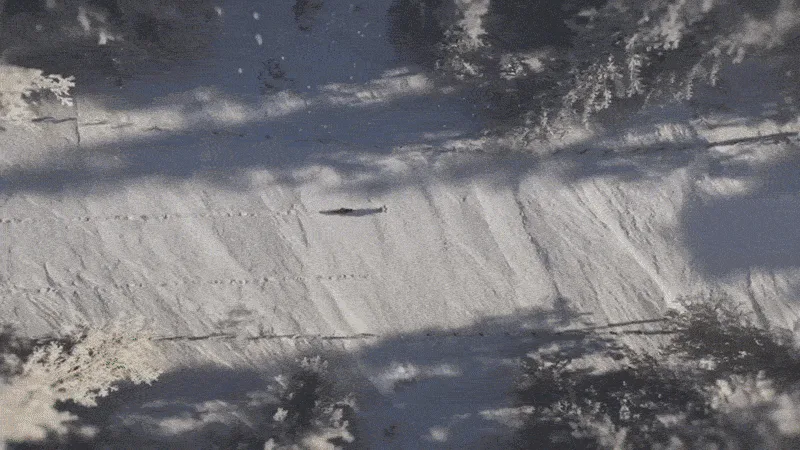
Permafrost enters Early Access on PC on October 9, 2026, placing SpaceRocket Games’ frozen survival sandbox among the major survival releases of the month. Published by Toplitz Productions, the game is set on a near future Earth devastated by a chain of catastrophes that culminated in the destruction of the moon, an event known as “The Shattering.” The disaster leaves the planet transformed into a frozen wasteland filled with abandoned cities, dangerous wilderness, hostile survivors, wildlife, extreme cold and scarce supplies, creating a survival experience where preparation is just as important as combat.
Players take the role of Rook, an engineer who leaves relative safety after receiving a radio transmission connected to a long lost friend. Survival involves much more than gathering food and constructing one permanent shelter. Players need to explore increasingly dangerous areas, recover lost technology, restore shelters, collect resources, craft equipment, hunt, deal with competing factions and establish a network of safe locations that makes deeper exploration possible. This structure encourages players to expand gradually rather than relying on a single base for the entire game.
The Early Access version supports both single player and online cooperative play for up to four survivors. At launch, it already includes multiple biomes, hundreds of items, crafting recipes, building blueprints, the opening portion of the main narrative, side quests and functional four player cooperative play. SpaceRocket Games plans to spend at least 12 months expanding and refining the game before version 1.0, although the final length of the Early Access period has not yet been fixed.
The October 9 release replaces an earlier August 21 launch plan. Toplitz Productions announced in July that the game would be delayed so the development team could spend additional time improving performance, content and overall polish. The Early Access launch is therefore intended to arrive in a more stable and complete state while still leaving substantial room for future updates.
The PC release is not limited to Steam. Permafrost launches through Steam, GOG and the Epic Games Store on October 9. Steam currently lists the release date, while Steam database information points to an unlock at 12:00 UTC. The official global launch map places the release within the same worldwide window, with exact local times varying by region and time zone.
The announced US Early Access price is $24.99. SpaceRocket Games has also confirmed a 20 percent launch discount along with regional pricing in supported territories. Because the game is launching in Early Access, the developers have warned that the price may increase over time as more content, systems and features are added on the path toward the full 1.0 release.
The October launch also follows a limited Steam playtest held from October 2 to October 6. That test gave players an opportunity to experience the game shortly before release while providing the developers with additional technical feedback. SpaceRocket Games acknowledged that some participants encountered issues during the playtest and said fixes were being prepared for the Early Access version.
Taken together, Permafrost launches as a survival game already built around substantial exploration, crafting, shelter development, cooperative play and narrative progression, while still using Early Access as a period for continued expansion. Its frozen setting, network based shelter system and focus on careful preparation distinguish it from survival games built primarily around constant combat or one central base.

In This Article (8 sections)
Permafrost Story, Frozen Open World and Survival Gameplay Explained
Permafrost is a story driven open world survival sandbox set on a near future Earth devastated by environmental catastrophe rather than zombies, aliens or supernatural forces. The defining event is known as The Shattering, a chain of disasters that culminates in the destruction of the moon and leaves Earth trapped in an apparently endless winter. Snow and ice consume huge areas of civilization, communication networks collapse and the surviving population fractures into separate communities and factions competing for resources, influence and safety.
Players take the role of Rook, an engineer whose technical knowledge becomes especially valuable in a world where functioning shelters, machinery and old infrastructure can determine whether an expedition succeeds or ends in disaster. Rook leaves relative safety after receiving a radio transmission from a friend believed to have been lost, giving the story a personal mystery that gradually expands into questions about what happened during the catastrophe and how the remaining human communities have changed.
The wider narrative is also about rebuilding and reconnecting a divided society rather than simply surviving from one day to the next. Official descriptions repeatedly refer to rival factions and Rook’s potential role in bringing separated groups together. Exploration therefore has a narrative purpose. Traveling farther into the world is not only about finding stronger equipment but also about discovering settlements, histories, survivors, factions and clues about how civilization has adapted since The Shattering.
Gameplay combines third person exploration, crafting, scavenging, hunting, building, environmental survival, combat and story progression. The game is designed around scarcity, isolation and preparation, with extreme cold often representing a greater danger than direct combat. Players need to consider where they are going, how long the journey might take, what supplies and equipment are required and where they can retreat if the weather becomes too dangerous.
Progression is closely connected to expanding the player’s ability to travel. Rather than remaining permanently inside one fortified settlement, survivors are encouraged to push deeper into the world, restore abandoned shelters, recover useful technology, repair machinery and gather the materials needed for longer expeditions. Food, warmth, carrying capacity, equipment condition and available shelter all feed into this loop, while earlier demonstrations have also shown hunting, trapping, farming, resource processing and machinery restoration as important parts of survival.
Combat exists but is not intended to dominate every journey. Hostile survivors and dangerous wildlife can threaten the player, yet avoiding an unnecessary fight may sometimes be more valuable than winning one. Ammunition, medical supplies, weapon durability, warmth and time are all limited resources, meaning an avoidable encounter can leave the player vulnerable to the environment even after the enemy has been defeated.
The open world reinforces that tension by combining ruined urban areas with frozen wilderness. Dense forests, exposed tundra, destroyed settlements, abandoned infrastructure and metropolitan ruins create different environments despite the permanent winter. Each area can vary in shelter availability, wildlife, valuable resources, human activity and the severity of environmental hazards.
Cold Zones are among the most dangerous locations. These areas reach temperatures significantly lower than those encountered throughout the rest of the world and can kill an unprepared survivor within minutes. Entering them requires stronger equipment, enough supplies and a clear understanding of how long the player can remain exposed. This creates a natural form of progression gating, with weather itself preventing deeper exploration until the player is properly prepared rather than relying on artificial barriers.
Taken together, the story and survival systems make exploration the center of Permafrost. Each successful expedition can uncover more of the world’s history, provide new resources and improve the player’s ability to travel farther, while failure to plan carefully can leave even a well equipped survivor stranded in conditions that are more dangerous than any enemy.
Permafrost Co-Op, Crafting and Shelter Building Systems Explained
Permafrost supports online cooperative multiplayer for up to four players, allowing one survivor to travel with as many as three friends while preserving full solo play for anyone who prefers a more isolated experience. Cooperative play is designed around shared responsibilities rather than simply giving the group more firepower. Players can divide tasks such as gathering resources, exploring nearby structures, hunting, building shelters, transporting supplies, crafting equipment and watching for threats during difficult journeys.
The developers describe the system as symbiotic co-op because players are intended to complement one another. Four survivors can gather and build faster than one, but the group also consumes more food, equipment and shelter capacity. That means cooperative play does not automatically remove the survival challenge. Larger groups still need to manage resources carefully and prepare for severe weather, wildlife and Cold Zones.
Shelter networks become particularly useful in co-op. One player can work on strengthening or stocking a location while others scout nearby areas, recover machinery or search for supplies. During longer expeditions, players can divide tools and materials between inventories so that no single survivor needs to carry everything required for every possible situation.
Crafting provides the foundation for much of this progression. The Early Access version already contains hundreds of items alongside numerous recipes and building blueprints. Resources gathered from wilderness areas, ruined buildings and abandoned infrastructure can be converted into tools, survival equipment, weapons and construction materials.
Crafting serves several purposes at once. Basic tools make gathering more efficient, survival equipment helps players endure extreme environmental conditions, weapons support hunting and defense, while building materials allow survivors to create or restore safer locations. Rook’s engineering knowledge is important, but useful technology is not automatically available simply because the character understands it. Much of the old world is broken, so players still need to locate machinery, obtain the required materials and repair systems before they become useful.
Salvage is therefore a major part of progression. Scrap and abandoned technology can be repurposed into practical equipment, reinforcing the idea that nearly anything left behind by civilization may become valuable after traditional supply chains have disappeared.
Construction is also designed around more than creating one enormous permanent fortress. Permafrost encourages players to establish a network of shelters across the map, with each location acting as a staging point for deeper exploration. Because distance and exposure are dangerous, having reliable places to warm up, recover and resupply can significantly extend the player’s operational range.
A useful shelter can be stocked with essential supplies and used as a foothold for reaching the next region. Over time, this creates a chain of safe locations through hostile territory. The progression loop therefore becomes one of exploration, recovery and expansion: players enter an unfamiliar area, collect resources or technology, secure a new location and then use that foothold to push farther into the world.
Official material refers to both smaller shelters and larger bases, suggesting that construction can support simple expedition outposts as well as more ambitious settlements. Even after a shelter is built, preparation remains important because a building is useful only if the player can reach it and if enough food, warmth and supplies have been stored there to recover from difficult conditions.
The crafting, building and cooperative systems therefore support the same central philosophy as the rest of Permafrost. Progress depends on preparation and extending a survivable network through the frozen world rather than simply accumulating stronger weapons. Each new shelter, restored machine and carefully stocked outpost expands how far players can safely travel and how much of the post apocalyptic landscape they can uncover.

Permafrost Cold, Exploration, Hunting and Resource Survival Systems
Cold is the defining survival mechanic in Permafrost. The developers describe it as the player’s true enemy because exposure is persistent rather than limited to occasional scripted storms. Frostbite, freezing temperatures, severe weather and gradually increasing chill can affect expeditions throughout the game, making preparation essential before traveling far from safety. Warm clothing, appropriate supplies, shelter locations and the timing of a journey can determine whether the player returns successfully.
Weather can also change how familiar areas behave. A route that feels manageable under calm conditions may become far more dangerous during a storm, especially when reduced visibility makes navigation difficult and exposure shortens the time available before Rook needs warmth. This gives the environment a dynamic role in survival rather than treating temperature as a simple background statistic.
Cold Zones intensify that system further. These extreme regions can contain valuable resources and rare loot, creating a direct risk and reward decision. Better equipment does more than improve a numerical resistance value because it can expand the amount of the world the player can safely explore. A location that is almost impossible to survive early in the game may become accessible later after the player upgrades clothing, supplies and shelter options.
Exploration is closely linked to scavenging because the remains of civilization contain many of the materials required to survive. Abandoned cities, industrial structures, ruined settlements, shelters and wilderness locations can provide equipment, resources and technological components. Players need to balance what they collect against inventory space, exposure, nearby threats and the distance back to safety.
Scarcity appears to be a deliberate part of the atmosphere. The frozen world is intended to feel abandoned rather than filled with endless supplies, so finding useful equipment can have real importance, especially when it contributes to crafting or allows access to more dangerous regions. Rare loot in Cold Zones also gives players reasons to return to difficult areas after improving their equipment instead of treating each location as disposable once explored.
Rook’s canine companion can make these expeditions more manageable. The dog can scout, warn the player about threats, carry supplies and help identify loot, giving it a practical survival role rather than functioning only as a cosmetic companion.
The wilderness provides another major source of resources. Animals have reclaimed parts of the environment following humanity’s collapse, with some providing food and materials while predators create additional danger. Hunting can involve weapons such as bows, while earlier gameplay demonstrations also referenced traps, making it part of the broader resource economy rather than optional combat.
Every hunt creates another survival decision. Chasing an animal may provide valuable food or crafting materials, but it also costs time, equipment durability and exposure. If weather worsens or the player travels too far from shelter, a successful hunt can still become a dangerous expedition.
The game therefore uses two complementary resource environments. Nature provides hunting, gathering and potentially renewable survival opportunities, while ruined civilization supplies manufactured goods, scrap, machinery and technological components. Earlier demonstrations also showed crop cultivation, suggesting that longer term survival can eventually depend on more stable food production rather than endlessly searching abandoned buildings for supplies.
Permafrost Factions, Rook’s Story and Early Access Content at Launch
Humanity survived The Shattering, but the remaining population did not stay united. Different factions occupy parts of the world and compete for resources, territory, influence and survival. Official descriptions repeatedly mention rival groups and faction controlled regions, adding another layer of danger beyond cold weather and wildlife.
This means exploration can involve more than simply checking environmental conditions. Players may need to consider who controls a region, whether hostile survivors are nearby and whether valuable resources justify entering dangerous territory. Factions also connect directly to the game’s broader theme of rebuilding society because Rook enters a world where communication networks have collapsed and communities have become increasingly isolated from one another.
The protagonist, Rook, is an engineer with valuable reconstruction skills but limited wilderness experience. That distinction helps ground the character because Rook is not presented as an experienced post apocalyptic survivor from the beginning. Instead, the player starts with technical knowledge that is useful for rebuilding while still needing to learn how to survive extreme conditions.
The main story begins when Rook detects a radio transmission connected to a long lost friend. Following the signal requires leaving safer territory and traveling deeper into the frozen world, creating a personal reason for exploration while gradually exposing the player to the wider mysteries surrounding The Shattering and the communities that survived it.
Rook’s engineering background also fits naturally with the game’s progression systems. Restoring damaged machinery, reclaiming technology, repairing shelters and turning ruined infrastructure into something useful all make sense for the character rather than existing only because crafting is expected in a survival game.
The Early Access launch contains only the beginning of that larger narrative. Players should expect unresolved questions because SpaceRocket Games plans to expand the main story, NPC roster, quests, enemies and world content throughout development. The same caution applies to the faction system, which may continue growing as Early Access progresses rather than arriving in its complete final form on day one.
The October 9 Early Access version is nevertheless intended to contain substantial content rather than function as a minimal technical prototype. SpaceRocket Games says most of the planned core systems are already implemented, with multiple biomes, hundreds of items, numerous crafting recipes, building blueprints, the opening portion of the main story, side quests and cooperative multiplayer for up to four players available at launch.
Side quests are particularly useful within this kind of survival sandbox because they give players reasons to explore beyond simple resource gathering. Additional objectives can lead toward unfamiliar regions, characters, factions, environmental hazards and valuable supplies, helping the open world feel connected to the narrative rather than functioning only as a place to harvest materials.
Early Access still means the game remains unfinished. Systems may change, balancing will continue, technical problems can occur and substantial new content is planned before version 1.0. The October playtest demonstrated that reality when some players encountered crashes and other technical issues. SpaceRocket Games acknowledged those reports and said fixes were being prepared for the Early Access launch.
Players entering Permafrost on October 9 should therefore expect a game with a functioning survival loop, story beginning, multiplayer, quests and substantial crafting content, but not a finished final version. The Early Access period is intended to expand and refine those systems while gradually completing the larger story and frozen world.

Frequently Asked Questions[FAQs]
- When is Permafrost releasing in Early Access?
Permafrost enters Early Access on October 9, 2026. The game was previously scheduled for August 21, but SpaceRocket Games and Toplitz Productions moved the release to October so the team could spend additional time improving performance, polishing systems and preparing more content. The October launch therefore represents a more refined Early Access build rather than a completely finished version 1.0 release. - What time does Permafrost release on PC?
Current Steam database information lists October 9, 2026 at 12:00 UTC as the expected Steam unlock time. Local release times will vary depending on region and time zone, so players in different countries may see different clock times even though the launch occurs within the same global window. Storefront timing can also change close to release. - Is Permafrost only available on Steam?
No. The October 9 Early Access release is planned for PC through Steam, GOG and the Epic Games Store. This gives players several storefront options rather than tying the game to one platform. The available version is still the same Early Access game regardless of which supported PC store is used. - Does Permafrost have multiplayer?
Yes. Permafrost supports online cooperative multiplayer for up to four players, meaning one survivor can team up with as many as three friends. Co-op is built around sharing responsibilities such as gathering resources, building shelters, hunting, carrying supplies and exploring dangerous areas. Players who prefer a more isolated survival experience can also play the entire game solo. - What caused the apocalypse in Permafrost?
The world was devastated by a chain of catastrophes that eventually culminated in The Shattering, an event in which the moon was destroyed. The aftermath pushed Earth into extreme winter conditions, shattered communication networks and contributed to the collapse of civilization. Humanity survives in scattered communities and rival factions across a frozen landscape where cold and scarcity are constant threats. - Who is Rook in Permafrost?
Rook is the playable protagonist and an engineer with valuable skills in rebuilding, repairing machinery and restoring old technology. However, Rook is not initially presented as an experienced wilderness survivor, which means players must learn how to cope with cold, scarcity and hostile environments over time. The main story begins when a radio transmission connected to a long lost friend draws Rook away from relative safety. - Does Permafrost have base building and crafting?
Yes. Crafting and construction are major parts of progression. Players can gather resources, create survival equipment, build shelters and larger bases, restore abandoned structures and repair useful machinery found in the world. The game also encourages building a network of safe locations rather than relying only on one permanent base, making each shelter useful for deeper exploration. - Does Permafrost have a dog companion?
Yes. Rook can travel with a rescued dog that provides practical help rather than serving only as a cosmetic companion. The dog can scout ahead, warn about danger, assist with finding useful items and carry some supplies. This makes the companion particularly valuable during long expeditions where inventory space and awareness of nearby threats can be important. - How long will Permafrost remain in Early Access?
SpaceRocket Games currently expects Permafrost to remain in Early Access for at least 12 months, although there is no guaranteed date for the full 1.0 release. The actual development period may change depending on technical work, planned content and community feedback. Players should therefore view October 9 as the beginning of an ongoing development phase rather than the final completed version. - What will be added before Permafrost version 1.0?
The developers plan to expand the game with additional biomes, quests, NPCs, enemies, equipment, vehicles and other world content. Existing systems will also continue receiving balance changes, performance improvements and quality of life updates. Feedback from Early Access players is expected to influence which areas receive the most attention as SpaceRocket Games works toward the full release.

Conclusion
Permafrost releasing October 9 2026 in Early Access on PC begins what SpaceRocket Games intends to be a lengthy development period for its frozen open-world survival experience. The game distinguishes itself through an environment where cold is not simply atmospheric decoration but one of the primary systems controlling exploration, preparation, progression, and survival.
Its strongest concept is the relationship between distance and preparation. Moving deeper into the world means surviving increasingly dangerous weather, establishing shelters, recovering technology, improving equipment, managing resources, and deciding when an expedition has become too dangerous to continue. Extreme Cold Zones reinforce that design by turning valuable locations into environmental challenges that require preparation rather than simply higher combat statistics.
The world also has a narrative reason to be explored. Rook’s search for a long-lost friend, the mystery surrounding The Shattering, competing human factions, ruined settlements, abandoned technology, and the possibility of reconnecting fragmented communities provide structure beyond ordinary resource gathering.
Co-op adds another layer without replacing the survival mechanics. Up to four players can share responsibilities and establish shelter networks together, while solo players can experience a more isolated journey with the dog companion providing practical support.
The October 9 build already contains the central gameplay framework, including various biomes, hundreds of items, building blueprints, crafting recipes, side quests, the beginning of the main narrative, and four-player cooperative multiplayer. At the same time, players should remember that it remains an Early Access product. More environments, characters, enemies, quests, equipment, vehicles, quality-of-life improvements, and optimization are planned before version 1.0.
For survival game players interested in exploration, severe environmental hazards, rebuilding technology, open-world scavenging, narrative progression, and cooperative survival, Permafrost enters Early Access with a substantial foundation and an ambitious development plan. The frozen apocalypse opens on October 9, 2026, and surviving it will depend less on how many bullets players can carry than on whether they prepared for what waits beyond the next shelter.
Sources and citations
- Steam — Permafrost official store page
Permafrost on Steam - Toplitz Productions — Permafrost official game page
Permafrost — Toplitz Productions - Toplitz Productions — Release Date for Permafrost Moved to October 9, 2026
Release Date For Permafrost Moved to October 9, 2026 - Toplitz Productions — Permafrost Deep Dive
Permafrost — Deep Dive - Toplitz Productions — Weather and Biomes of Permafrost
Permafrost — Weather and Biomes - Toplitz Productions — Permafrost Early Access 2026 Announcement
Permafrost — Early Access Announcement - Epic Games Store — Permafrost
Permafrost on Epic Games Store - GOG — Permafrost
Permafrost on GOG - Steam Community — Permafrost official announcements
Permafrost Steam Community - SteamDB — Permafrost release information
Permafrost on SteamDB
Recommendations
- DC Completely Reinvents Joker’s Personality and Mental State in Shocking New Batman Story (Batman #7): Patient 10 and the Crown of Storms Explained
- Pokémon Go stop removed from Epstein island following outrage: why the Little Saint James “Sun Dial” PokéStop was deleted
- Ananta Launches January 15, 2027 on PS5, PC and Mobile
- Broken Sword Movie Confirmed: What’s Officially Announced
- Game Industry Conference 2026: Minsk Event Recap and Upcoming Moscow Edition Preview
- Prince of Persia Creator on Sands of Time Remake Cancelation: Fan, Developer, and Community Reaction
- This New Co-Op Dark Fantasy RPG Is Like Elden Ring Meets Arc Raiders Overview
- Fallout Season 3: Todd Howard Teases New Things Never Seen Before in the Games as Fallout Expands Beyond New Vegas
- Mistfall Hunter Surpasses 100,000 Players in Just 8 Hours
- Indie Loop | Three New Indie Games to Check Out: Husk Protocol, the Wilds of Dacrima, Pawsome Resort



































































































