






In This Article (13 sections)
Pretty Cool Games’ Launch, Founders and Human: Fall Flat Experience
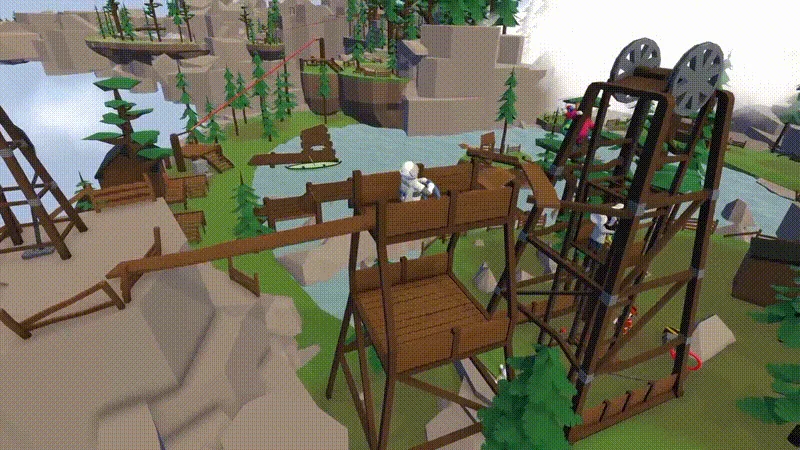
Human: Fall Flat veterans have launched a new Leeds-based studio with Hypergryph funding at a time when independent developers are facing a difficult financing environment, making the UK team’s arrival especially notable. The company is led by Sitara Shefta and Will Dudley, two experienced developers whose careers include work on the hugely successful physics-driven platformer Human: Fall Flat, alongside projects spanning AAA, independent, console, PC, and experimental development. The studio publicly emerged in August 2026 after developing prototypes behind the scenes and securing investment from Coreblazer, the investment initiative associated with Chinese game company Hypergryph.
The new developer is now creating an original physics-based AA sandbox built around player expression, emergent systems, comedy, experimentation, and rapid iteration. It has also begun expanding its small remote UK team while seeking further investment and a publishing partner. There is still a great deal that the company has deliberately not disclosed. No commercial release date has been announced, no final platform list has been confirmed for the debut project, and the team has not presented a full gameplay reveal.
However, information from the studio, its job listings, the UK Games Fund, interviews with Shefta, and reporting surrounding the investment provides a considerably clearer picture of what the developers are building and how the Human: Fall Flat veterans intend to approach development.
Public Launch and Studio Background
The studio formally entered the public spotlight on August 19, 2026. Its founders are Sitara Shefta and Will Dudley, both veterans of the Human: Fall Flat development operation. The company is headquartered around Leeds but has been established as a fully remote UK developer rather than a conventional office-centered company. Its public positioning emphasizes original intellectual property, playful games, creativity, quality, and a deliberately compact team structure.
The announcement combined three important developments: the public unveiling, confirmation of investment, and the start of a major recruitment phase. The founders had already been developing prototypes before the public announcement, meaning the company was not launched around a pitch deck or purely conceptual idea. Those playable prototypes helped attract interest from both investors and publishers.
There is also a distinction between the public launch and the underlying corporate history. Companies House records Pretty Cool Games Ltd as an active private limited company incorporated on September 13, 2024. The studio nevertheless remained largely out of the public spotlight until its August 2026 announcement. Its founders’ Human: Fall Flat connection carries substantial weight. Human: Fall Flat launched in 2016 and has become one of the most commercially successful physics-oriented independent games. No Brakes Games said in July 2026 that the title had reached the 60 million shipped-units mark, while publisher Curve Games described the franchise as having reached more than 60 million players across PC, consoles, mobile, and VR.
The company is not being presented as a continuation of Human: Fall Flat or as the developer of its sequel. Instead, its importance lies in how Shefta and Dudley are taking expertise developed across physics gameplay, level design, production, technical art, and small-team creativity and applying it to an entirely new intellectual property. Shefta serves as CEO, while Dudley is chief creative officer. Both have substantial experience beyond Human: Fall Flat, giving the company a combination of production leadership, studio management, game direction, technical development, art, and design experience.
Sitara Shefta’s Development Career
Shefta previously served as CEO and studio director at No Brakes Games in Tenerife, where she established and directed the development team working on Human: Fall Flat. Her wider credits reported in the studio announcement include LittleBigPlanet 3, Dead Island 2, Disney Infinity, and Arca’s Path, with previous experience involving companies including Sumo Digital and Dream Reality Interactive. TIGA has also described her earlier No Brakes Games responsibilities as spanning studio direction, game direction, and production management.
Shefta additionally holds industry positions outside her new company. She joined TIGA’s board of directors in 2026 and is a member of BAFTA’s Games Committee. BAFTA’s current committee information lists Shefta among the co-opted Games Committee members.
Will Dudley’s Creative and Technical Experience
Dudley brings a different but complementary background. The launch announcement identifies projects in his career including Human: Fall Flat, Tom Grennan VR, Transformers, Fable: The Journey, and Kinect Sports Season Two. His past employers include No Brakes Games, Sony Interactive Entertainment, Lionhead Studios, and Rare. His career has encompassed environment art, technical art, technology work, and creative development, giving him experience on both AAA productions and smaller projects.
That mixture matters for a studio describing its debut as an AA production. The team is attempting to occupy a middle ground where production quality and commercial ambition can exceed the constraints normally associated with very small indie games without adopting the enormous budgets and headcounts increasingly associated with AAA development.
A New Physics-Based IP
The debut project is not Human: Fall Flat 3, nor has the studio suggested that it intends to duplicate its founders’ previous work. Nevertheless, the influence of their experience with the physics platformer is difficult to miss. Human: Fall Flat demonstrated how relatively simple physics rules can create large numbers of unscripted outcomes. Its puzzles frequently allow different approaches, while imprecise physical interactions become a source of comedy rather than merely a technical simulation. The combination proved extraordinarily durable commercially, reaching more than 60 million players according to Curve Games’ July 2026 anniversary announcement.
The new team is again talking about physics, emergent systems, multiplayer-oriented expertise, player expression, and unexpected scenarios. Dudley has said the goal is to surprise players, make them laugh, and create memorable moments. The important distinction is that the new developer appears to be treating those principles as design knowledge rather than simply copying Human: Fall Flat’s presentation. Its founders have experience seeing how physics can serve puzzles, comedy, experimentation, cooperative play, and long-term audience engagement. Their new project provides an opportunity to apply those lessons to a separate world and a different IP.

Coreblazer Funding, Prototyping Strategy and Publishing Plans
The new Leeds studio arrives during a turbulent period for game development. In an August 2026 interview, Shefta discussed layoffs, studio closures, growing production expectations, and increasingly risk-averse investors. She argued that studios are being asked to demonstrate higher quality while operating with less money and shorter schedules, and that investors and publishers increasingly expect playable proof that an idea works instead of relying solely on a presentation or pitch. That environment directly influenced how the company was built. Shefta said the founders bootstrapped their early work and received UK Games Fund grant support while developing a prototype designed to prove the project’s underlying concept. That prototype work ultimately helped lead to the Coreblazer relationship.
The UK Games Fund independently confirms support for a project called Possession. Its listing identifies the developer as a Round 18 recipient and describes Possession as a physics-based adventure sandbox featuring multiplayer mayhem in a whimsical new world. Rather than trying to recreate a large studio immediately, Shefta and Dudley are emphasizing creative autonomy and sustainability. Shefta has described the desired organization as a “small but mighty” team in which developers are empowered to contribute directly. The company’s official website similarly calls itself a small, people-focused studio making original PC and console intellectual property.
The developer secured financing from Coreblazer, which the studio announcement identifies as an investment initiative of Hypergryph. Coreblazer itself describes its operation as an investment and incubation brand established under Hypergryph to encourage and assist game development teams through financial support, incubation, and resource sharing. The amount invested has not been publicly disclosed. Investment tracking coverage similarly records the transaction without a disclosed value. The financing is particularly notable because the deal was described as Coreblazer’s first European investment.
Hypergryph is most closely associated internationally with the Arknights franchise, including Arknights: Endfield. Coreblazer functions more broadly as an investment and game-development support initiative rather than simply as a traditional publisher. For the Leeds team, the importance of the deal is therefore not a publicly known cash figure but the validation represented by an established game company investing after evaluating playable prototypes. Most of the current effort is centered on turning the first original project into a production-ready commercial game.
Hypergryph investment head Clare Yang specifically pointed to the prototypes when explaining the decision to back the developer. Yang said the investment team could recognize the creativity and potential of Shefta and Dudley’s work from the earliest prototypes and expressed confidence in their ability to turn the concept into a finished project. That detail helps explain the broader development strategy. The company did not secure backing primarily by announcing a famous license or promising an enormous content roadmap. Its pitch appears to have depended on demonstrating a playable idea with a strong mechanical identity.
This is consistent with the funding environment Shefta has described. She said publishers and investors increasingly expect developers to prove ideas before receiving financial backing. The founders’ response was to bootstrap prototype development and focus resources on demonstrating how the game actually feels to play. The partnership also suggests that Hypergryph sees value in original European PC and console development outside its own established franchises. Coreblazer’s first European investment being a small UK studio developing original intellectual property indicates that distinctive gameplay prototypes can still attract financing despite broader industry caution.
Shefta has described the company as “gameplay-first,” and the development approach starts with quickly turning ideas into something playable. Instead of committing extensive time and resources to a concept before testing it, developers prototype an idea, evaluate how it feels in the player’s hands, and iterate from there. That philosophy is evident across the recruitment requirements. Designers are expected to prototype, create, iterate, polish, playtest, and fix problems directly rather than operate exclusively through documentation. Artists are likewise expected to create quick proof-of-concept work and respond to gameplay requirements instead of treating art production as a separate downstream process.
Rapid prototyping is especially useful for physics-driven games because interactions often produce results that cannot be fully predicted on paper. A mechanic may sound entertaining conceptually but prove frustrating once forces, collision, movement, animation, multiplayer behavior, and environmental systems begin interacting. Conversely, apparently simple mechanics can generate unexpectedly entertaining situations once players start experimenting. The team therefore appears to be using prototyping not only as a cost-control measure but as a way to discover the game. Systems that consistently create interesting player behavior can be expanded, while ideas that do not survive hands-on testing can be changed before large production resources are committed.
Coreblazer’s backing does not appear to represent the final financing stage. Reporting based on GamesIndustry.biz’s coverage says the company is seeking additional investment as well as a publishing partner for its first title. That should not be interpreted as evidence that the existing financing is insufficient or that the project is experiencing trouble. Game-development financing is commonly staged around prototypes, production milestones, vertical slices, publishing agreements, and marketing requirements. The team has simply reached a point where the first investment enables further development while the founders continue building the commercial framework needed for the complete game.
Shefta has acknowledged that fundraising has become significantly harder as investors have become more risk-averse. She nevertheless argues that reduced investment appetite does not mean consumer demand for fresh games has disappeared. Her approach is to prove the product through playable development, keep costs disciplined, and work with partners whose expectations align with the studio’s long-term strategy. The search for a publisher could ultimately determine several elements that remain unknown, including marketing strategy, release timing, specific target platforms, distribution arrangements, localization, certification planning, and post-launch support.

First AA Sandbox, Emergent Gameplay and Creative Influences
The clearest description of the debut comes directly from Dudley. He characterized the project as a unique, characterful game in the AA market with highly playful physics-based gameplay. More specifically, it is being developed as a sandbox focused on player expression, emergent gameplay, and interconnected systems. The term AA is important. The studio is not positioning the project as a tiny experimental title, but it also does not appear interested in adopting the enormous team sizes and budgets of contemporary AAA production.
Shefta has described AA as a useful middle ground between quality and budget, allowing the team to build something innovative without creating the financial exposure associated with the biggest productions. In her Metro interview, she argued that smaller studios can potentially provide investors with more manageable budgets while still producing novel experiences capable of reaching large audiences. Physics is central rather than incidental. The company’s current recruitment pages repeatedly describe the game as playful and physics-based. Design candidates are specifically expected to understand physics-oriented games and co-op experiences, reinforcing the idea that physical interaction and systemic behavior are fundamental components of the design.
The debut has not yet received a full public reveal, but there are several confirmed pieces of information. The project is an original IP. It occupies the AA space, uses physics-driven gameplay, features a sandbox structure, prioritizes player expression, and relies on emergent systems. Public messaging consistently emphasizes playfulness, creativity, imagination, comedy, and memorable interactions. There is also significant information from the UK Games Fund.
Its official database names a project called Possession and describes it as a physics-based adventure sandbox with multiplayer mayhem in a whimsical new world. Because the developer has not subsequently carried out a formal consumer-facing announcement identifying the commercial game by that name, Possession should currently be treated as the publicly documented UK Games Fund project name rather than assumed to be the final retail title.
Development Details From Job Listings
Current job descriptions reveal additional development characteristics. Level designers will create gameplay and puzzles, develop ideas from early concepts through grey-box implementation, collaborate with artists and programmers, work with player progression and environmental composition, and repeatedly playtest and iterate. The Lead Designer listing also refers to shaping gameplay systems and mechanics directly in Unity. Environment artists are expected to transform designer grey-boxes into complete environments, create locations and props, develop proof-of-concept assets, and collaborate closely with design. Job requirements also repeatedly reference Unity, indicating that the engine is part of the project’s current development pipeline.
Player expression is one of the most frequently repeated concepts surrounding the debut. In this context, expression does not necessarily refer only to cosmetic character customization. It refers more broadly to giving players systems that support their own solutions, experiments, interactions, and stories. Shefta has said that the team wants players to feel free to be creative in how they play. Reporting based on the founders’ interviews describes a design in which physics, systems, and level design can combine to produce wild and unexpected situations.
Emergent gameplay is especially compatible with sandbox design because the developer creates rules and interacting systems rather than scripting every meaningful event. The result can produce situations the designers anticipated only broadly rather than choreographing individually. The job listings reinforce this approach. The company wants level designers interested in expressive games, physics systems, co-op experiences, gameplay puzzles, experimentation, and direct implementation. The Lead Designer will also work with programmers to refine mechanics and determine how individual content fits into the overall player experience.
For the developer, the commercial advantage could be replayability and social storytelling. Physics-based sandboxes can generate personal anecdotes, unexpected failures, unconventional puzzle solutions, and multiplayer mishaps that players naturally share. Human: Fall Flat demonstrated how powerful that quality can become when the basic systems remain accessible. Reporting surrounding the studio’s launch identifies a deliberately broad collection of influences for its first project: Nintendo, Hazelight Studios, Disney theme parks, and physical comedy such as The Pink Panther.
Those influences make more sense when considered as design philosophies rather than indications that the game will resemble one specific existing title. Nintendo is frequently associated with mechanically readable games that introduce ideas through interaction and then explore those mechanics in increasingly creative ways. Hazelight has built its reputation around highly authored cooperative experiences and constant gameplay variation. Disney theme parks point toward a different quality: carefully constructed environments in which spaces themselves contribute to storytelling, mood, surprise, and spectacle. The concept and environment-art vacancies emphasize environmental storytelling, imaginative locations, strong theming, readable spaces, and the integration of art with gameplay.
The Pink Panther influence provides another clue. Physical comedy depends heavily on timing, movement, escalating consequences, misunderstandings, and interactions between characters and their surroundings. Physics simulations can reproduce those ingredients interactively because apparently routine player actions can produce chaotic chains of consequences. Taken together, the references suggest the team is trying to create an accessible, visually characterful sandbox where environmental design and physics systems repeatedly generate comedy rather than relying primarily on scripted jokes.

Pretty Cool Games’ Remote Team, Recruitment, Release Date and Platforms
Pretty Cool Games does not intend to become a large developer immediately. Reporting around the studio’s launch said the team had four full-time employees and planned to increase that figure to approximately 10. Its corporate LinkedIn profile also categorizes the company in the two-to-ten employee range. That small-team strategy is deliberate. Shefta has repeatedly discussed building a sustainable company where employees can meaningfully influence both the game and studio culture. Pretty Cool Games’ official description likewise emphasizes a small, friendly, people-focused environment in which team members contribute directly.
The founders themselves are based in Leeds, but the company is fully remote within the UK. That allows Pretty Cool Games to recruit people beyond Leeds without requiring relocation to a central studio office. Current vacancies are described as permanent, UK-based, remote roles. The benefits advertised on the studio’s careers page include 25 days of holiday plus UK bank holidays, EMI share options, life insurance, private healthcare, flexible working hours, team events and meet-ups, and remote working. The share-option component is particularly consistent with Shefta’s stated objective of allowing employees to participate in the company’s success rather than viewing them only as production capacity.
As of September 10, 2026, the official Pretty Cool Games careers page lists four open positions: Level Designer, Concept Artist, Lead Designer, and Environment Artist. All form part of the studio’s push to turn its prototypes into a larger production effort. The roles cover the following responsibilities and requirements:
- Level Designer: The position is open across junior, mid, senior, or principal experience levels. Candidates are expected to develop gameplay and puzzles, take ownership of levels, build grey-boxes, prototype and iterate content, collaborate with art and technology, and work directly in Unity. Pretty Cool Games explicitly says it will consider demonstrable ability from personal projects as well as conventional professional experience.
- Concept Artist: The vacancy is similarly open across multiple experience levels. Its responsibilities include defining environmental concepts, supporting environmental storytelling, helping shape the project’s art direction, and translating high-level creative direction into visual ideas practical enough for designers and environment artists to use.
- Environment Artist: The role focuses on turning grey-box layouts into cohesive environments, creating architecture, organic elements, props, materials, textures, lighting, and gameplay assets. Its requirements again mention Unity and emphasize characterful intellectual property as well as close cooperation between art and design.
- Lead Designer: This more senior position involves responsibility for level design from prototype through final polish, collaboration with programmers on game systems, consideration of the metagame and overall player experience, and hands-on implementation.
Industry reporting has indicated that subsequent recruitment could eventually extend into areas such as QA, character art, audio, user interface development, and composition as the project expands. Pretty Cool Games has not announced a release date for its debut game. There is currently no confirmed launch year or release window that should be treated as official. The studio has likewise not announced a final platform list for the project. Pretty Cool Games describes its broader mission as making PC and console games, and several vacancies request experience shipping PC or console titles, but that is not equivalent to confirmation that every major PC and console platform will receive the first game.
No PlayStation, Xbox, Nintendo, or specific PC storefront version has been individually confirmed. Any claim assigning the game to PS5, Xbox Series X|S, Nintendo Switch 2, Steam, or another storefront would therefore go beyond what the studio has publicly announced as of September 10, 2026. The strongest official indication regarding the actual project remains the UK Games Fund listing for Possession, which describes a physics-based adventure sandbox featuring multiplayer mayhem in a whimsical new world. The studio’s August announcement adds that its AA project will feature physics-based gameplay, player expression, and emergent systems.
The latest concrete development activity is recruitment. The studio’s official careers page continues to advertise Level Designer, Concept Artist, Lead Designer, and Environment Artist positions, suggesting that Pretty Cool Games remains in an active team-building and production-expansion phase. Until Pretty Cool Games carries out a formal game reveal, it is safest to regard the project as an early-stage original AA physics sandbox with multiplayer indications rather than attach unsupported details about its launch date, final title, platforms, characters, story, or precise gameplay structure.

Frequently Asked Questions (FAQs)
- Who founded Pretty Cool Games?
Pretty Cool Games was co-founded by Sitara Shefta and Will Dudley. Shefta serves as CEO, while Dudley is chief creative officer. Both previously worked on Human: Fall Flat and bring broader experience across AAA and independent development. Their combined backgrounds cover studio management, production, game design, technical art, and creative direction, giving the company experience in both running a development team and building the systems behind its first original game. - Did the founders of Pretty Cool Games work on Human: Fall Flat?
Yes. Shefta established and directed the No Brakes Games development team in Tenerife that worked on Human: Fall Flat, while Dudley also contributed to the franchise’s development. That experience helps explain their new studio’s interest in physics, experimentation, puzzles, and unexpected comedy. However, Pretty Cool Games is developing a separate intellectual property, not another Human: Fall Flat installment. The connection concerns the founders’ experience and design knowledge rather than a continuation of the existing series. - Who funded Pretty Cool Games?
Pretty Cool Games secured investment from Coreblazer, the investment and incubation initiative associated with Hypergryph. The investment amount has not been publicly disclosed, and the deal was described as Coreblazer’s first European investment. The founders also bootstrapped early development and received UK Games Fund support while creating playable prototypes. Those prototypes helped demonstrate the project’s potential to investors. The studio is still seeking additional financing and a publishing partner as development expands. - What kind of game is Pretty Cool Games developing?
The studio is developing an original AA physics-based sandbox focused on player expression and emergent gameplay. Its interacting systems are intended to let players experiment, discover different approaches, and create unexpected or humorous situations rather than follow only tightly scripted sequences. The UK Games Fund describes the supported project as a physics-based adventure sandbox featuring multiplayer mayhem in a whimsical world. The AA approach aims to balance production quality and ambition with a more manageable budget and team size. - Is Pretty Cool Games’ first game called Possession?
Possession is the name used for Pretty Cool Games’ supported project in the official UK Games Fund listing. That makes it a publicly documented project name, but not necessarily the final title players will see at release. Pretty Cool Games has not yet held a consumer-facing reveal confirming the commercial name. It is therefore accurate to mention Possession in connection with the grant listing while keeping the distinction between that listing and a formal game announcement clear. - Will Pretty Cool Games’ new game have multiplayer?
The UK Games Fund description explicitly mentions “multiplayer mayhem,” providing strong evidence that multiplayer is part of the funded project’s concept. The studio’s recruitment materials also reference experience with physics-based games and cooperative play. However, these details do not establish the final multiplayer format. Pretty Cool Games has not announced player counts, online functionality, or whether solo play will be supported, so specific claims about how players will participate together would be premature. - What games and entertainment inspired Pretty Cool Games?
Reporting identifies Nintendo, Hazelight Studios, Disney theme parks, and physical comedy such as The Pink Panther among the project’s influences. These references point toward playful mechanics, cooperative interaction, imaginative environments, and comedy created through movement and unexpected consequences. Disney theme parks also suggest an interest in spaces that communicate atmosphere and stories through their design. These are creative influences rather than confirmation that the game will copy a particular title or feature characters from those properties. - Is Pretty Cool Games hiring?
Yes. As of September 10, 2026, its official careers page lists Level Designer, Concept Artist, Lead Designer, and Environment Artist vacancies. The positions are permanent, UK-based, and remote, allowing applicants to work outside Leeds without relocating to a central office. Several vacancies accommodate different experience levels, while the Lead Designer position carries more senior responsibilities. Recruitment supports the studio’s plan to expand its small team and develop its prototypes into a fuller production. - What platforms will the Pretty Cool Games project release on?
No specific platforms have been formally announced for the debut project. Pretty Cool Games describes itself as a developer of PC and console games, but that broader company focus does not confirm particular versions or storefronts. PlayStation, Xbox, Nintendo, and individual PC storefront releases therefore remain unconfirmed. Its recruitment requirements also mention PC and console experience, but those requirements should not be treated as a substitute for an official platform announcement. - When will Pretty Cool Games’ first game be released?
Pretty Cool Games has not announced a release date, launch year, or release window. The studio is concentrating on development, recruitment, additional financing, and securing a suitable publishing partner. Although playable prototypes helped attract its initial investment, that does not establish how close the project is to completion. A full public game reveal is also still pending, so any specific release timing should be treated as speculation until the studio makes an official announcement.

Conclusion
The decision by Human: Fall Flat veterans to launch Pretty Cool Games with Hypergryph-related Coreblazer funding represents more than another studio formation announcement. Sitara Shefta and Will Dudley are attempting to use lessons from both AAA development and one of the most successful physics-driven independent games to construct a smaller, more sustainable company built around original intellectual property.
Their debut project already has a clear identity even though its full reveal remains ahead. It is an AA sandbox driven by physics, player expression, emergent systems, creativity, and comedy. Official UK Games Fund information adds that the project it supported, currently listed as Possession, is a physics-based adventure sandbox featuring multiplayer mayhem in a whimsical world.
The development philosophy is equally significant. Rather than scaling rapidly and committing enormous resources before mechanics have been validated, Pretty Cool Games intends to prototype quickly, test ideas in players’ hands, iterate aggressively, and keep its permanent team comparatively small. The founders believe that this combination can preserve the creative speed associated with independent development while retaining lessons about polish and quality learned from larger productions.
Coreblazer’s investment provides external validation of that approach. Hypergryph’s investment team specifically cited the quality and potential evident in Pretty Cool Games’ early prototypes, and the transaction has been described as Coreblazer’s first European investment.
The Human: Fall Flat connection will inevitably shape expectations. That game has reached more than 60 million players after a decade on the market and demonstrated how physics, accessible controls, multiplayer interaction, and unexpected outcomes can produce enduring appeal. Pretty Cool Games is not simply recreating that formula, but its founders clearly understand why physical interaction and freedom can generate memorable experiences.
As of September 10, 2026, the important unknowns remain the game’s final title, complete gameplay structure, confirmed platforms, publisher, release window, and commercial scope. What is confirmed is that Pretty Cool Games has moved beyond being merely an idea. It has a legally established UK company, playable prototype work, UK Games Fund support, Coreblazer investment, active recruitment, and a clearly articulated creative direction.
Whether the new physics-based AA game can reproduce anything approaching the extraordinary reach of Human: Fall Flat will depend on execution, financing, publishing, and audience response. For now, Pretty Cool Games stands out because it is trying to combine ambitious original game development with constrained scope, rapid experimentation, employee participation, and a design philosophy that gives players room to create the memorable moments themselves.
Sources and Citations
- MCV/DEVELOP — “Pretty Cool Games announces formation of new remote independent studio, funding and debut title in development” — August 2026.
MCV/DEVELOP - Pretty Cool Games — Official company website.
Pretty Cool Games - Pretty Cool Games — Official Careers page.
Careers
currently lists Level Designer, Concept Artist, Lead Designer and Environment Artist, along with remote working and benefits. - Pretty Cool Games — Level Designer vacancy.
Level Designer
covers physics-based gameplay, puzzles, prototyping, level design and Unity. - Pretty Cool Games — Lead Designer vacancy.
Lead Designer
covers hands-on engine work, gameplay systems, mechanics, prototyping and level design. - Pretty Cool Games — Concept Artist vacancy.
Concept Artist - Pretty Cool Games — Environment Artist vacancy.
Environment Artist - UK Games Fund — “Possession: Pretty Cool Games.”
Possession
identifies Possession as a Round 18 Pretty Cool Games project and describes it as a physics-based adventure sandbox with multiplayer. - Video Games Chronicle — “New UK indie studio Pretty Cool Games announced, led by former Human: Fall Flat devs.” — August 19, 2026.
VGC - Game Developer — “Human: Fall Flat veterans launch new UK studio Pretty Cool Games.” — August 19, 2026.
Game Developer - GamesIndustry.biz / GameDev.net — “Human: Fall Flat veterans launch new UK studio Pretty Cool Games with funding from Arknights developer Hypergraph.”
GameDev.net coverage
preserves the GamesIndustry.biz reporting on Hypergryph funding, the four-person team, planned growth to around 10, recruitment and the game’s influences. - Metro GameCentral — Sitara Shefta interview.
Metro GameCentral - UK Companies House — Pretty Cool Games Ltd (15954388).
Company overview
confirms company number 15954388, active status, private limited company and incorporation on September 13, 2024.
Companies House filing history - Curve Games / No Brakes Games — “10th Anniversary of Human Fall Flat.”
No Brakes Games
official anniversary material confirms Human: Fall Flat reached the 60 million shipped units milestone in July 2026. - BAFTA — BAFTA Games Committee / Our People.
BAFTA — Our People
the current Games Committee listing includes Sitara Shefta as a co-opted member. - TIGA — Board appointment coverage.
GameDev.net — “TIGA appoints nine industry veterans to board of directors”
confirms Sitara Shefta’s 2026 appointment to the TIGA board.
Recommendations
- Project Hail Mary’s Ryan Gosling Confirms Marvel Discussions About Playing Ghost Rider
- BLEACH Mirrors High Official Gameplay Trailer Breakdown: Combat, Characters, Story, and Release Details
- Most Anticipated May 2026 Game Releases Ranked by Wishlist Count
- Marvel Rivals Roadmap Includes MCU Tie-Ins Leading Up To Avengers: Doomsday — Full “Path to Doomsday” Timeline (2026)
- Stonemachia: Official Release Date Trailer Breakdown and Everything We Know (Release Date, Demo, Gameplay, Story, and Platforms)
- Remedy CEO Says GTA 6 Will Boost the Entire Games Industry, Not Hurt Competing Releases, as He Claims Big Launches “Raise the Tide”
- A GTA-Style Game Is Coming To Fortnite: Grand Heist City Release Date, Gameplay, Map, And Everything We Know
- The Biggest Nintendo Switch 2 Games Coming in 2026: Summer Release Update
- Rhythm Heaven Groove Finally Brings Back Nintendo’s Rhythm Series After More Than a Decade
- Steam Reviews Will Now Let You Share What Hardware You Used To Run Games: How the New Specs Feature Works (Steam Beta)



































































































