







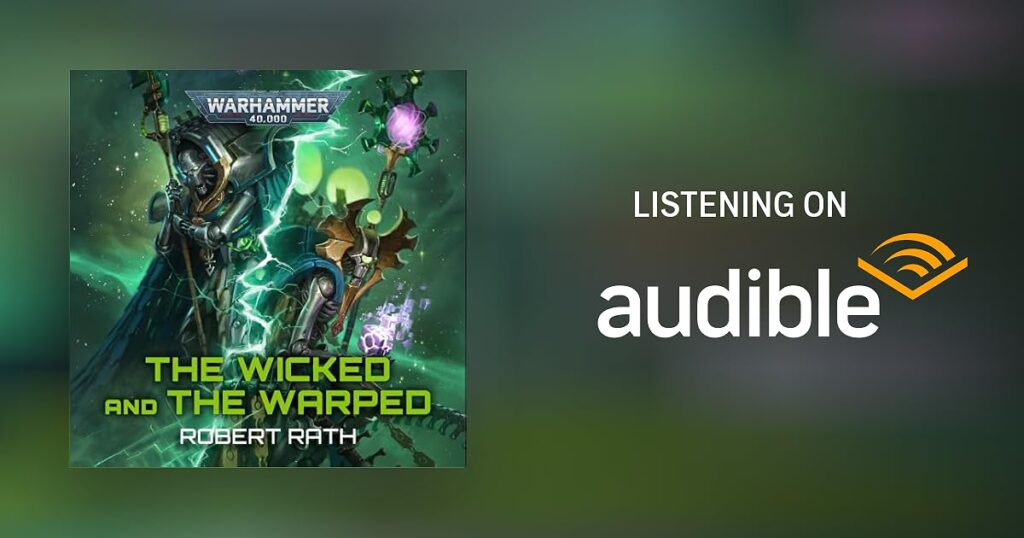
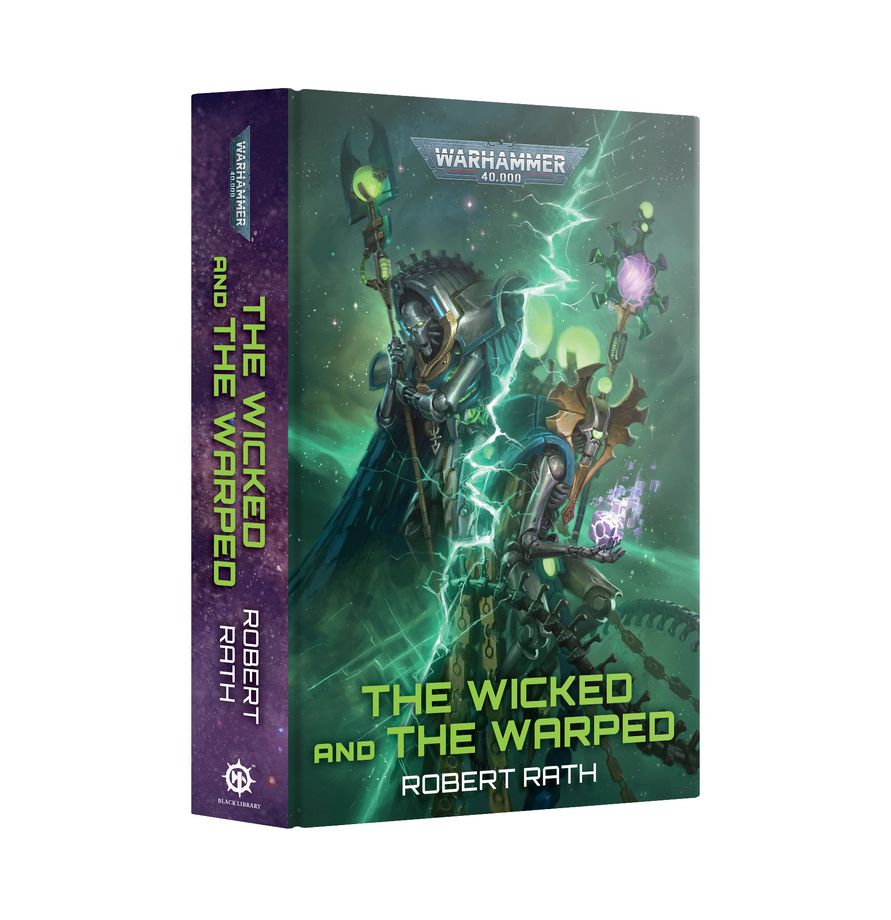
A Warhammer 40,000 audiobook includes an AI training warning read out by the narrator, placing Games Workshop’s opposition to unauthorized machine-learning use directly inside the recording. The audiobook is The Wicked and the Warped, Robert Rath’s NWarhammer 40,000 Audiobook AI Training Warning Explained
A Warhammer 40,000 Necron novel narrated by Richard Reed includes a spoken restriction addressing the use of the recording for data mining and artificial intelligence development or training. Reports published on August 24, 2026 highlighted the notice, which Reed reads as part of the audiobook’s closing material. The distinction is important because this is not a disclosure that artificial intelligence narrated the book. It is a rights notice delivered by the credited human performer concerning how the finished recording may be reused.
Rather than relying exclusively on written terms accompanying the product, the publisher has included its position within the audio itself. The practical message is that Games Workshop is not offering the audiobook as material for text and data mining or for developing and training AI systems. This aligns with restrictions on the company’s websites, where the use of website content to train generative AI is expressly prohibited. Although the spoken notice and website terms concern different material, they communicate a consistent position regarding permission for AI training and related uses.
The notice should still be understood as a statement of rights and intended restrictions rather than a technical protection that makes copying impossible. It also does not establish that someone has already trained an AI model using this particular audiobook. A warning against an activity is not evidence that the activity has already occurred. The central issue is therefore authorization and whether access to a finished entertainment product also gives someone permission to repurpose it for a substantially different use. Applicable copyright exceptions and the enforceability of particular restrictions remain separate questions, meaning the significance of the warning depends on distinguishing Games Workshop’s stated creative policies and performers’ concerns from the broader legal limits of an anti training notice.
In This Article (7 sections)
Warhammer 40,000 Audiobook AI Training Warning and Games Workshop’s Position
A Warhammer 40,000 Necron novel narrated by Richard Reed includes a spoken restriction addressing the use of the recording for data mining and artificial intelligence development or training. Reports published on August 24, 2026 highlighted the notice, which Reed reads as part of the audiobook’s closing material. Importantly, this is not a disclosure that artificial intelligence was used to narrate the book. Reed is the credited human performer, and the statement instead serves as a rights notice concerning how the finished audiobook may be reused.
Rather than relying only on written terms accompanying the product, the publisher has included its position directly within the recording. The practical message is that Games Workshop is not offering the audiobook as material for text and data mining or for developing and training AI systems. This approach is consistent with restrictions on the company’s websites, where the use of website content to train generative AI is expressly prohibited. Although the spoken audiobook notice and the website terms apply to different types of material, they communicate a consistent position regarding permission for AI training and related uses.
The spoken restriction has attracted attention because it places an AI-related rights warning directly inside a commercial audiobook rather than limiting the notice to written licensing information. The inclusion of the statement allows listeners to hear the publisher’s position while accessing the recording and clarifies that purchasing or listening to the audiobook does not grant permission to use the audio as training data.
The warning also reflects wider discussions across creative industries about how copyrighted works are used in artificial intelligence development. Publishers, authors, actors, and other creators have increasingly examined whether their work can be collected, analyzed, or reused by AI systems without additional authorization. In this case, Games Workshop’s message focuses specifically on preventing the audiobook recording from being used for those purposes.
The notice does not indicate that every form of AI-related technology is prohibited from interacting with Warhammer content. Instead, it addresses specific uses involving data mining and AI development or training. The audiobook remains a traditionally produced release featuring a credited narrator, while the warning establishes the company’s position on how the finished recording may be handled after purchase.
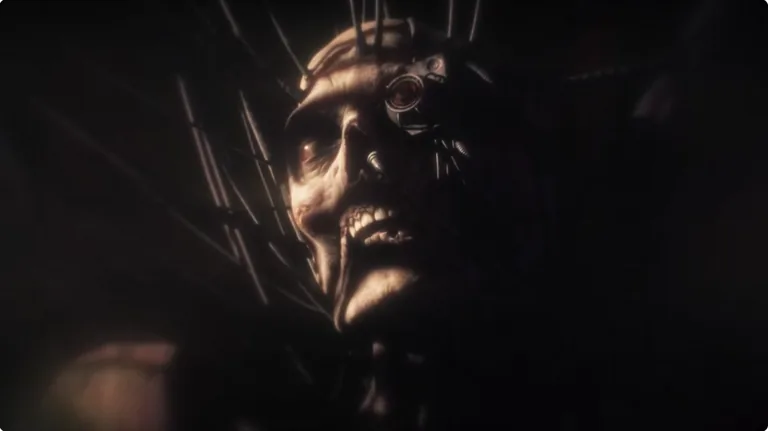
Games Workshop’s AI Policy, Audiobook Training Warning, and Human Creator Protections
Games Workshop has publicly taken a cautious position on generative AI, particularly when it concerns creative work, intellectual property, and the rights of human creators. In its half year report published on January 13, 2026, covering the 26 weeks ending November 30, 2025, the company described restrictions on AI generated content and the use of AI in design processes while also raising concerns about unauthorized external use of its material. The report stated a commitment to protect Games Workshop’s intellectual property and “respect our human creators,” alongside continued investment in creative staff working in areas such as writing, art, and sculpting. This makes the company’s position more substantial than a spoken AI training warning attached to a single audiobook.
The policy behind the AI training warning was not presented as an absolute rejection of every technology associated with AI. Games Workshop said a small number of senior managers could continue exploring the subject, preventing its cautious creative policy from being interpreted as a complete ban on all machine learning related technology.
Its July 2026 annual results reinforced restrictions involving product design and intellectual property creation while acknowledging that AI capabilities were becoming increasingly embedded in third party software. The company noted that this made broad claims about completely avoiding AI outside the Warhammer studio more difficult. The more accurate description, when considering the AI training warning, is that Games Workshop restricts AI in its core creative work and objects to unauthorized training uses while recognizing the operational complications created by modern software.
That broader position helps explain the AI training warning included with Black Library’s audiobook. The notice concerns the published recording, while Black Library’s website separately displays a restriction against using website content to train generative AI. Both statements communicate a similar position, but they apply to different material. Website content and a commercially distributed audiobook carrying an AI training warning should not automatically be treated as the same legal object.
The audiobook’s product listing includes copyright and sound recording notices naming Games Workshop Limited. Audiobook production can also involve performers’ rights and contractual terms governing the narrator’s contribution. Equity guidance encourages performers to address these issues explicitly before recording. For anyone considering using the audio that carries the AI training warning, the important question is therefore not simply whether the recording can be accessed. The relevant issue is whether the intended use is authorized or falls within a legal exception. Access to a recording does not automatically establish permission for copying, computational analysis, or other forms of reuse.
The AI training warning does not reveal the complete contractual relationship between Robert Rath, Richard Reed, Black Library, or distribution platforms. It therefore cannot support assumptions about royalty arrangements, ownership transfers, union coverage, or special clauses concerning voice replicas. Its clear purpose is narrower: the recording is not being offered for the AI training uses identified in the notice.
That distinction becomes particularly important when interpreting the AI training warning and separating AI training from AI narration. AI training involves developing or adapting a model using data, while AI narration involves generating spoken audio through a system. A recording performed by a human could later be used as training material without having been generated by AI. Likewise, synthetic narration can be produced using systems that were trained before a particular audiobook project existed.
The Wicked and the Warped credits Richard Reed as its narrator, so the AI training warning should not be treated as a disclosure that a synthetic voice performed the novel. The available information instead points to two separate facts: Reed provided the credited human performance, and the recording carries a restriction concerning subsequent AI related reuse.
There is also a technical distinction relevant to the AI training warning between model training and voice replication. Some speech generation systems can use a reference recording as a prompt to produce speech resembling an unfamiliar speaker without specifically retraining a model on that individual. Microsoft’s VALL E research demonstrates this type of personalized speech synthesis. As a result, performer protection may need to address more than training alone.
Agreements can also consider digital replicas, synthesized performances, approved purposes, and later reuse. SAG AFTRA’s audiobook guidance similarly distinguishes digital voice replicas from training AI systems, showing why the two ideas should not be treated as interchangeable. None of this establishes that Reed’s recording, which carries the AI training warning, has been used by such a system.
Narrators’ concerns therefore extend beyond whether a machine can read text aloud. The larger question is whether an existing performance can be reused to generate new speech and whether the performer retains meaningful control over what that generated speech is used for. Microsoft’s discussion of speech synthesis research has acknowledged risks such as impersonation while identifying consent and detection as important considerations. Those risks help explain the concerns behind the AI training warning and why performers may treat access to their recordings as a professional rights issue rather than only a question of audio quality.
Equity’s AI principles emphasize informed consent, transparency, appropriate payment, and the ability to refuse particular uses, all relevant to the discussion surrounding the AI training warning. These are standards advocated by the union rather than laws that automatically apply in every jurisdiction, but they illustrate the types of decisions performers may want to retain when their work or identity could be used by AI systems. A narrator hired to perform one novel, for example, would face different questions if someone later proposed using a replica of that voice for advertising, another author’s book, or speech in another language. Agreement to create the original audiobook should not automatically be treated as consent to every possible later use.
In July 2025, SAG AFTRA also reminded its members that they could not enter agreements with companies seeking to create, license, or use digital voice replicas, or train AI systems for audiobooks, unless those companies became signatories to an appropriate SAG AFTRA agreement. That rule applies to the union’s members and should not be presented as a universal statutory restriction. Together, these industry concerns, which provide context for the AI training warning, help explain why an audiobook narrator might support an explicit anti training warning without revealing anything about the terms of Reed’s individual contract.
Copyright, AI Training Law, and the Warhammer 40K Abominable Intelligence Comparison
A spoken copyright warning, such as an AI training warning, cannot technically prevent someone from copying or analyzing a recording. Its main role is to communicate the rights holder’s position. Whether that statement has a particular legal effect depends on copyright rights, contractual terms, statutory exceptions, the relevant jurisdiction, and the specific use being considered.
Copyright protection also does not exist only because a notice is spoken aloud. The U.S. Copyright Office explains that copyright generally arises automatically once an eligible original work is fixed in a tangible medium. The absence of an AI training warning should therefore not be interpreted as permission to use a work without considering copyright. At the same time, adding a warning such as an AI training warning does not automatically remove legal exceptions that might otherwise apply.
In the United States, fair use requires a case specific examination of factors including the purpose of the use, the nature of the copyrighted work, the amount used, and the effect on the potential market. A publisher stating in an AI training warning that it objects to AI training does not replace that legal analysis, just as a developer describing its use as transformative does not automatically establish fair use.
The United Kingdom has a different framework for assessing an AI training warning. The Intellectual Property Office describes a text and data mining exception for noncommercial research where the researcher has lawful access. Its guidance states that contractual terms preventing qualifying copying under that exception are unenforceable. That provision should not be described as a general exemption covering all commercial AI training projects. The policy debate also changed over time. In its March 2026 copyright and AI report, the UK government said that a broad training exception with an opt out was no longer its preferred approach, meaning earlier consultation proposals should not be treated as though they had already become law.
European Union law introduces another distinction relevant to an AI training warning. Article 4 of the Digital Single Market Copyright Directive makes its text and data mining exception conditional on rights not having been expressly reserved in an appropriate manner, with machine readable reservations specifically referenced for publicly available online content. Article 3 separately covers qualifying scientific research by research organizations and cultural heritage institutions. It would therefore be premature to assume that a single spoken AI training warning automatically satisfies every European reservation requirement. Distribution methods, accompanying terms, national implementation, and the exact proposed use could all affect the analysis.
The AI training warning is best understood as an explicit objection rather than a technological barrier or an automatic legal judgment. Its importance should not be dismissed simply because someone could ignore it, but its legal power should not be exaggerated either. Its effect depends on the surrounding rights, laws, exceptions, and agreements.
The situation surrounding the AI training warning also has an obvious thematic connection to Warhammer 40,000 itself. Within the fictional setting, Abominable Intelligence, sometimes called Silica Animus, refers to artificial minds prohibited by the Imperium. That prohibition is tied to the setting’s history of dangerous machine intelligence and technological rebellion. A real world AI training restriction appearing in a Warhammer audiobook therefore creates an especially memorable contrast between the franchise’s fictional hostility toward autonomous machine minds and a contemporary publisher’s attempt to limit machine learning use of its creative material.
The similarity should remain a thematic comparison in discussions of the AI training warning rather than a literal explanation of Games Workshop’s corporate policy. The company’s public statements focus on intellectual property, creative processes, and respect for human creators rather than Imperial doctrine. Likewise, the presence of Necron characters does not turn the novel into a direct analogy for modern generative AI. The story concerns ancient characters, rivalry, history, and the return of a dangerous world rather than contemporary model training.
Warhammer lore therefore helps explain why the audiobook notice has attracted attention, but it does not determine whether the AI training warning is legally enforceable. Questions about copying, consent, training, and compensation must still be answered through real policies, contracts, and applicable law. The fictional comparison gives the story its resonance, while the legal significance of the notice containing the AI training warning depends on the real world framework surrounding the recording.
Frequently Asked Questions[FAQs]
- Why do narrators want AI protections in their contracts?
Narrators want clearer contractual protections so they can control whether their recorded performances or distinctive voices are reused for AI development, synthetic voice creation, or other purposes beyond the original production. These protections can establish requirements for consent, payment, permitted uses, and limitations on reuse, while Equity’s guidance specifically recommends contractual safeguards against unauthorized AI use. - Which Warhammer 40,000 audiobook includes the AI training warning?
The reported audiobook is The Wicked and the Warped, written by Robert Rath and narrated by Richard Reed. Reports published in August 2026 highlighted that the recording includes a spoken warning restricting its use for data mining and artificial intelligence development or training. - When was The Wicked and the Warped audiobook released?
Audible lists the English language, unabridged audiobook as released on August 15, 2026. The recording has a listed running time of 13 hours and 24 minutes, making it a full length audio production rather than a shortened adaptation of the novel. - Where is the warning in the audiobook?
The warning appears in the closing copyright material at the end of the recording rather than within the main story. Available reporting confirms its placement among the closing material, but does not establish a precise timestamp that can be applied to every edition or distribution platform. - Is The Wicked and the Warped a sequel to The Infinite and the Divine?
Yes. Warhammer Community identifies The Wicked and the Warped as the sequel to The Infinite and the Divine. Robert Rath returns to Trazyn the Infinite and Orikan the Diviner, continuing the complicated and often hostile relationship between the two Necron characters. - Does the AI warning mean the audiobook uses an AI narrator?
No. Richard Reed is the credited human narrator of the audiobook. The warning addresses how the completed recording may be reused for AI related purposes, including development or training, and should not be interpreted as a disclosure that artificial intelligence or synthetic speech was used to narrate the novel. - Has Games Workshop banned every possible use of AI throughout its business?
No. Describing Games Workshop’s position as a complete ban on every possible use of AI would go beyond what the company has publicly stated. Its restrictions focus on areas such as product design and intellectual property creation, while the company has also acknowledged that third party business software increasingly incorporates AI based capabilities. - Can the spoken warning automatically stop AI companies from using the audio?
No. A spoken warning clearly communicates that certain forms of reuse are restricted, but it cannot technically prevent someone from copying or processing the audio. Whether the restriction can be legally enforced in a particular situation depends on the applicable copyright and contractual rights, the jurisdiction involved, and any statutory exceptions that may apply. - Does the warning prove Richard Reed’s voice has already been cloned?
No. The existence of a preventative warning does not establish that Richard Reed’s voice has already been cloned. His support for stronger AI protections also does not prove that this particular audiobook or his performances have appeared in a specific AI training dataset, so those claims should not be assumed without separate evidence. - Is the same warning included in every Black Library audiobook?
That has not been established by the available reporting. The Wicked and the Warped is the documented example discussed in reports about the spoken restriction, but there is not enough evidence here to conclude that the same warning has been added to every Black Library audiobook or represents a confirmed catalogue wide change.
Conclusion
The Wicked and the Warped places an explicit AI-training restriction inside a professionally narrated Warhammer 40,000 audiobook. Read by Richard Reed, the notice makes Games Workshop’s objection part of the recording rather than leaving it exclusively in surrounding written material.
Its significance should be understood precisely. It is not an AI-narration disclosure, evidence of a confirmed training incident, or proof that every Black Library recording contains identical language. It is a clear statement about intended restrictions, situated within a wider debate over the reuse of creative work.
For publishers and performers, the important questions concern permission, compensation, attribution, and control. For legal analysis, the distinction between a rights holder’s stated position and enforceable restrictions remains essential. A spoken warning can communicate a boundary; determining what follows from it requires more than hearing the words.
Sources and Citations
- Audible Product Page and Richard Reed Narrator Listing: Confirms The Wicked and the Warped audiobook details, including Robert Rath as author, Richard Reed as narrator, Black Library as publisher and the 13-hour-24-minute runtime. The listings also provide the release information and publisher synopsis.
Citation: The Wicked and the Warped Audiobook on Audible - Warhammer Community Official Announcement: Introduces The Wicked and the Warped as Robert Rath’s sequel to The Infinite and the Divine. Covers the return of Trazyn and Orikan and the mystery surrounding the lost expedition to Amenthis.
Citation: Trazyn and Orikan Return in The Wicked and the Warped - IGN AI Training Warning Coverage: Reports on the audiobook notice read by narrator Richard Reed, explaining that the recording includes a restriction against using the audiobook for text and data mining or AI model training. The report applies specifically to this audiobook rather than every Games Workshop release.
Citation: Warhammer 40,000 Audiobook Includes AI Training Warning - Richard Reed Public Response: Provides Reed’s own acknowledgment of his involvement with the spoken notice, separating his personal response from Games Workshop’s broader policies.
Citation: Richard Reed’s Public Response on X - Games Workshop Half-Yearly Report 2026: Explains Games Workshop’s approach to artificial intelligence, including restrictions on AI-generated content and the company’s focus on protecting intellectual property and human creativity.
Citation: Games Workshop Half-Yearly Report 2026 - Games Workshop Annual Report 2026: Further explains the company’s AI position, stating that Games Workshop does not use AI in product design or creation of its intellectual property while acknowledging that external software environments may involve AI tools.
Citation: Games Workshop Annual Report 2026 - Equity AI Vision Statement and Toolkit: Provides the performers’ union perspective on AI, covering consent, licensing, compensation, transparency and concerns around digital voice and likeness replication.
Citation: Equity AI Vision Statement - SAG-AFTRA Audiobook Resources: Explains audiobook contract protections related to digital replicas and informed consent. Provides broader industry context but does not establish the specific agreement used for Richard Reed’s recording.
Citation: SAG-AFTRA Audiobook Contracts and Industry Resources - U.S. Copyright Office AI Training Report: Examines copyright, licensing and fair-use questions surrounding AI training. Explains that legal analysis depends on factors such as the work involved, purpose of use, output controls and market effects.
Citation: Copyright and Artificial Intelligence, Part 3: Generative AI Training - U.S. Copyright Office Digital Replicas Report: Covers synthetic voice and likeness issues, providing legal context for discussions about AI voice replication separately from audiobook-copying questions.
Citation: Copyright and Artificial Intelligence, Part 1: Digital Replicas - UK Intellectual Property Office Copyright Exceptions Guidance: Explains UK text and data mining exceptions for non-commercial research, lawful access requirements and the limits of contractual restrictions.
Citation: UK Intellectual Property Office: Exceptions to Copyright - UK Government Copyright and AI Report: Provides updated policy context following consultation on copyright and AI. Clarifies that earlier proposals for broad copyright exceptions with opt-outs were not enacted as law.
Citation: Report on Copyright and Artificial Intelligence - European Union Copyright Directive: Provides the EU legal framework for text and data mining through Articles 3 and 4, including provisions on rights reservations. It supplies legal background rather than a final determination about this specific audiobook notice.
Citation: Directive (EU) 2019/790 - Microsoft Research VALL-E Project: Provides technical context on AI voice synthesis, explaining systems capable of generating personalized speech from short voice prompts. It does not mean that a complete AI model is trained from a single short recording.
Citation: Microsoft Research: VALL-E X - Audible AI Narration Announcement: Provides platform context for Audible’s AI narration and translation initiatives. It does not show that The Wicked and the Warped was AI-narrated or used to train an AI system.
Citation: Audible Expands Catalog With AI Narration and Translation
Recommendations
- Echoes of Aincrad Crafting Guide: Recipes, Materials and Unlock Requirements
- Did Christopher Nolan’s Depiction of the Gods Pay Off in The Odyssey?
- Castlevania: Belmont’s Curse Runs at Only 30 FPS on Nintendo Switch
- EA Sports College Football 27 Preview: Defense Wins Championships
- Jurassic World Evolution 2 Complete Edition Comes to Nintendo Switch 2 on July 30, 2026
- Unity-Based Tool for JRPG Game Development: RetroGig’s Retro JRPG Template for SNES/PSX-Style RPG Systems
- Keanu Reeves & China Miéville BRZRKR: Light Draws Breath — Release Date, Story, Creative Team & Variant Covers
- CD Projekt Raises Profit Goals with Witcher 4, 5, and 6 Coming: 5 Billion PLN Target Explained
- Creepshow Official Announcement Trailer Reveals a New Anthology Horror Game Experience
- GTA 6 Leans Into Vice City’s Influencer Hustle Where Looks Matter



































































































