






In This Article (8 sections)
Why the Cracked Marvel Tōkon PC Build Reportedly Runs Better
The cracked Marvel Tōkon PC build reportedly runs better because it does not execute all the background security, integrity checking and platform services used by the legitimate version. Processes that verify files, monitor memory, communicate with platform services or check for unauthorized modifications can consume processor resources. This cost may be relatively small in a properly optimized game, but it can become noticeable when added to existing CPU bottlenecks and other performance faults.
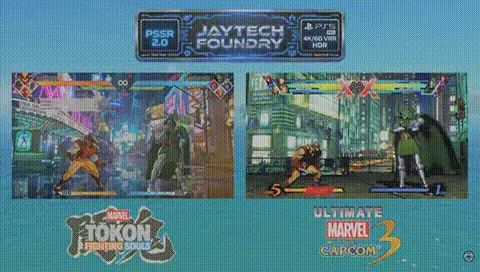
MARVEL Tōkon: Fighting Souls launched for PlayStation 5 and PC on August 6, 2026. Its Steam version immediately attracted complaints about stuttering, unusually high CPU usage, inconsistent frame pacing and difficulty maintaining the 60 FPS battle target expected from a competitive fighting game. Comparisons shared after an unauthorized build appeared claimed that it could maintain 60 FPS on computers where the official release dropped into the mid 40s. Some players also reported lower processor usage and fewer micro stutters, creating suspicion that the official build’s protection systems were worsening the performance of an already inefficient PC version.
The official Steam listing confirms that MARVEL Tōkon uses kernel level Easy Anti-Cheat. However, reports concerning additional anti tamper technology, real time decryption and the exact software removed or bypassed in the cracked build are less certain because Sony and Arc System Works have not publicly documented every protection layer. An unauthorized executable may differ from the retail version in several ways at once. Anti cheat components may be disabled, anti tamper checks may be bypassed, PlayStation related services may operate differently and online functionality may be unavailable. A single comparison cannot therefore identify which removed component produced the reported improvement.
Arc System Works also confirmed that ordinary optimization problems contributed to the official version’s performance issues. The developer released a major PC performance patch on August 10, only a few days after launch, reducing CPU usage and correcting excessive processor use during startup, periodic audio processing overhead, repeated audio input checks and frame rate drops at certain resolutions. These confirmed faults show that security software was not necessarily the only cause of stuttering or reduced performance in the retail release.
The timing and conditions of each comparison are therefore important. Meaningful testing would require the official and unauthorized builds to use the same underlying game version, graphics settings, drivers, shaders, scenes and operating conditions. Comparing an unpatched Steam installation with a later cracked build could exaggerate the apparent performance difference. Community testing suggests that removing protection related processes can improve performance on some computers, but it does not prove that Easy Anti-Cheat alone is responsible. The extra load may instead come from another anti tamper layer, PlayStation integration, existing optimization faults or an interaction among several of these systems.

Why the Cracked Marvel Tōkon PC Build Reportedly Runs Better Than the Steam Version
MARVEL Tōkon: Fighting Souls launched for PlayStation 5 and PC on August 6, 2026, but the Steam version immediately received complaints about stuttering, unusually high CPU usage, inconsistent frame pacing, and difficulty maintaining the 60 FPS battle target expected from a competitive fighting game.
Comparisons shared after launch claimed that the cracked Marvel Tōkon PC build performed better because it operated without some of the background security and platform services included in the official release. Players reported fewer micro stutters, lower processor usage, and a more stable frame rate on computers where the Steam version dropped into the mid 40s. Arc System Works later released patches addressing confirmed technical problems, including excessive processor usage during startup, periodic audio processing overhead, repeated audio input checks, and frame rate drops at certain resolutions.
The official Steam listing confirms that MARVEL Tōkon uses kernel-level Easy Anti-Cheat. Security systems that verify files, monitor memory, communicate with platform services, or detect unauthorized modifications can consume processor resources. This cost may be relatively small in a properly optimized game, but it can become more noticeable when combined with existing CPU bottlenecks and other technical faults. The reported reduction in processor usage after these systems were bypassed created suspicion that the official build’s protection measures were adding to the performance problems of an already inefficient PC version.
However, the community comparisons do not conclusively prove that Easy Anti-Cheat is solely responsible for the difference. An unauthorized executable can differ from the retail release in several ways at once. Anti-cheat components may be disabled, anti-tamper checks may be bypassed, PlayStation-related services may operate differently, and online features may be unavailable. Reports about additional anti-tamper technology, real-time decryption, and the exact protections removed from the cracked build also remain uncertain because Sony and Arc System Works have not publicly documented every security layer. A direct comparison therefore cannot determine whether the improvement comes from Easy Anti-Cheat, another protection system, PlayStation integration, or an interaction between several background processes.
The timing of each comparison is also important because Arc System Works released a major PC performance patch on August 10, only a few days after launch. The update reduced CPU usage and corrected specific audio-related faults, meaning an unpatched Steam installation could perform worse than a later unauthorized build even when security software was not the only difference. Meaningful testing would require both builds to use the same game version, hardware, graphics settings, drivers, shaders, scenes, and operating conditions. The reports suggest that removing protection-related processes can improve performance on some computers, but the official patch notes also show that ordinary optimization bugs contributed significantly to the retail version’s problems.
The most widely repeated comparison involved a computer using an Intel Core i7-6700K. According to a player account relayed by Kotaku, the cracked version consumed roughly 34 percent of the system’s CPU resources, while the retail build used slightly more than 57 percent. The player also alleged that the official executable performed real-time decryption in small data blocks on one CPU core.
Other accounts described a similar pattern. One player claimed to achieve a locked 60 FPS at medium settings with processor and graphics utilization of around 40 to 50 percent in the unauthorized build, while the retail version reportedly remained close to 45 FPS even at an extremely low resolution. Another account said the cracked version delivered considerably lower CPU utilization at high settings. None of these figures have been independently verified by Arc System Works, Sony, or a professional benchmarking laboratory.
These observations are notable, but they should not be treated as universal benchmark results. CPU percentages are affected by the number of cores and threads, clock speed, monitoring software, background programs, and how Windows distributes work. A reading of 57 percent on one processor does not mean that every official copy consumes the same amount of processing capacity. It also does not reveal whether one heavily loaded thread is limiting the entire game while the remaining cores have unused capacity.
Resolution changes can help indicate whether a game is limited by the processor rather than the graphics card. Lowering the resolution primarily reduces the GPU workload, so performance remaining around 45 FPS after a dramatic reduction suggests that the graphics card is probably not the limiting component. The bottleneck may instead involve the main game thread, audio operations, shader work, security checks, file access, or another CPU-side service. This behavior supports concerns about processor overhead, but it does not identify one specific process as the cause without controlled testing.
The claim that the cracked Marvel Tōkon PC build reaches a flawless 60 FPS originated in community posts and was subsequently reported by gaming and technology publications. Players described stable battles on hardware that struggled to reach the same target with the retail version, although some said that menus or elaborate super move sequences still produced occasional stutters. Stable 60 FPS is especially important in a traditional fighting game because the frame rate is closely tied to animation timing, input interpretation, and online synchronization. A drop from 60 to 45 FPS is not merely a visual inconvenience. It can disrupt the rhythm of attacks, increase apparent rollback, and create a worse match for both participants.
Steam’s official product page describes 60 FPS as the locked battle rate on PC, making an inability to sustain that target a functional problem rather than a disagreement over whether 60, 90, or 120 FPS looks preferable. Players can reasonably expect a system that meets the requirements to preserve the game’s intended combat timing. However, terms such as “flawless” and “rock solid” are informal descriptions rather than frame-time analyses. A rigorous comparison would capture frame times across multiple matches, stages, super moves, and shader conditions while also recording one percent lows, individual CPU thread activity, graphics utilization, temperatures, and background processes.
No widely published controlled comparison has established that every cracked copy maintains 60 FPS or that every official installation performs worse. The available reports support a meaningful performance difference on some machines, including stable 60 FPS in situations where the Steam version reportedly struggled. That pattern is consistent with the developer’s patch notes, which confirmed that the retail game contained several CPU-related faults. The unauthorized build may remove a protection-related source of overhead while also benefiting from other bypassed services, but the evidence does not establish one fixed advantage across every PC configuration or prove that Easy Anti-Cheat alone caused the official version’s performance problems.

Marvel Tōkon CPU Usage, Stuttering, Easy Anti-Cheat, and Performance Controversy
The retail version’s high CPU usage appears to result from several overlapping workloads. Marvel Tōkon must calculate combat logic, animation, collision detection, effects, assists, stage transitions, input handling, and rollback networking. On PC, those game tasks operate alongside audio processing, shaders, platform services, and security components. Arc System Works confirmed several sources of excessive processor demand in its August 10 update. One caused high CPU usage during startup, while another created additional load through periodic audio processing during matches. The developer also found that the game repeatedly searched for available audio inputs even when those checks were unnecessary. Removing these operations reduced sudden performance drops, while another fix addressed lower frame rates at certain display resolutions.
These findings are important because they replace part of the speculation with confirmed causes. A player who observed high processor utilization was not necessarily seeing only anti-cheat activity, as some of the load came from inefficient game and audio behavior acknowledged by the developer. Total utilization can also conceal a single-thread bottleneck. A processor with eight logical threads may report moderate overall usage while one critical core is fully occupied.
If Marvel Tōkon depends heavily on one main thread, background verification or decryption running on the same core could reduce the time available to prepare each frame. The GPU would then wait for instructions, producing low graphics utilization and poor performance regardless of the selected graphical settings. This could explain why some systems with powerful graphics cards still struggled and why an older CPU might show a dramatic improvement when background work is removed.
The official Steam page states that MARVEL Tōkon: Fighting Souls uses kernel-level Easy Anti-Cheat. The disclosure appears alongside the game’s online and account requirements and notes that EAC may need to be removed manually after the game is uninstalled. This is one of the few parts of the controversy that can be stated without qualification. Easy Anti-Cheat is present in the official PC release, but the precise amount of CPU time it consumes during ordinary play remains unclear, as does whether its configuration changed in a post-launch update.
EAC is intended to prevent unauthorized software from manipulating competitive games, which is relevant to a fighting game with ranked matches and cross-platform competition. Cheating can include automated inputs, altered game states, manipulated network behavior, and other modifications that undermine legitimate play. The dispute is therefore not simply about whether anti-cheat should exist. It concerns whether the chosen implementation places an unreasonable burden on legitimate customers, blocks additional platforms, or continues running when players access offline content. Ideally, the system would protect competitive online play while creating negligible overhead and avoiding unnecessary restrictions on offline modes.
Anti-cheat is a plausible contributor to Marvel Tōkon’s PC performance problems, but the available evidence does not prove that it causes all of them. Kernel-level access allows security software to inspect system activity at a deeper level, although its actual performance cost depends on how it is configured and used. Anti-cheat systems may perform integrity checks, monitor processes, inspect suspicious behavior, and communicate with remote services, all of which require some resources. However, many games use Easy Anti-Cheat without suffering severe performance problems, so the presence of EAC alone cannot explain Marvel Tōkon’s behavior.
Anti-cheat can affect frame rates when its activity competes with the game for CPU time or creates irregular processing spikes. A small continuous workload may reduce maximum performance, while an intermittent scan or integrity check can produce a momentary increase in frame time that players experience as stuttering. At 60 FPS, every frame must be completed in approximately 16.67 milliseconds. If another task unexpectedly occupies the main thread or delays access to required data, the game can miss that deadline. Average FPS may still appear acceptable, but uneven frame delivery can make movement look and feel inconsistent. The effect depends on the specific implementation rather than the anti-cheat brand alone because developers integrate and configure security systems differently.
Reports concerning Marvel Tōkon also describe multiple PlayStation-related runtime processes that may handle account functionality, networking, overlays, or other forms of integration. Their presence does not prove that they cause slowdowns, but together with anti-cheat and possible anti-tamper operations, they increase the number of active systems surrounding the game. The cracked version’s reported advantage could therefore result from cumulative overhead. Removing one modest task may not transform performance, but bypassing several security and platform operations could free enough CPU time to stabilize a frame rate that was already close to missing its target. This explanation fits the reported observations without presenting any unverified component as the sole cause.
The game’s reported PC problems included micro stutters, sudden frame drops, inconsistent frame pacing, and difficulty maintaining 60 FPS. Complaints appeared during the pre-release PC test and continued after the retail launch, including on computers that exceeded the recommended specifications. Arc System Works acknowledged the beta complaints before launch and advised affected players to use the shader warm-up function, disable frame generation, switch from borderless fullscreen to exclusive fullscreen, and turn off recording or overlay tools. The studio also investigated unnecessary shader compilation and problems associated with OBS or Discord capture.
Shader compilation can cause stuttering when the game encounters an effect for which the necessary shader has not yet been prepared. A warm-up tool compiles those shaders in advance, reducing interruptions during battles. Updating graphics drivers or clearing a cache may cause the shaders to compile again, which can make the first session after a change less smooth. Player responses indicated that the August 10 patch substantially improved performance for many users, although it did not resolve every case.
Online rollback can make the remaining symptoms more visible because rollback netcode assumes that both systems can simulate a battle consistently. When one computer cannot maintain the target frame rate, the game may display additional rollback frames or apparent network instability. This allows a local performance problem to affect an opponent whose computer is otherwise working normally, making stable performance especially important in competitive matches.
The confirmed use of EAC does not verify every claim about the game’s other protection systems. Some reports allege that the retail version uses an undisclosed anti-tamper or digital rights management system in addition to Easy Anti-Cheat. TechSpot identified the alleged layer as Theia, while a community investigator claimed that the official build decrypted game data in 64 KB chunks on one CPU core. Neither Sony nor Arc System Works has publicly confirmed those technical details. Steam discloses Easy Anti-Cheat but does not identify Theia on the store page. Its absence from the listing does not prove that another protection system is present or absent. It only means that the allegation requires independent verification.
Real-time decryption is intended to make program code or data more difficult to inspect and modify. Instead of leaving every protected element plainly available in memory or storage, the software decrypts information as the game needs it. If this operation happens frequently on a performance-critical core, it could consume processing time and interfere with consistent frame delivery. However, the size of a data block alone does not reveal the performance cost. Efficiency depends on the encryption method, frequency of operations, caching, thread scheduling, and amount of protected code being executed. A claim involving 64 KB chunks may describe observed behavior, but it does not independently establish how many frames are lost.
It is also misleading to label every protection system as “Denuvo-style” as though that identifies a specific product. The phrase is generally used to describe a broader anti-tamper approach. There is no verified indication on the Steam listing that MARVEL Tōkon uses Denuvo, so accurate reporting should refer to alleged anti-tamper protection or real-time decryption unless stronger evidence becomes available.
The frequently cited CPU comparison placed the cracked build at approximately 34 percent processor usage, compared with more than 57 percent for the official build on an Intel Core i7-6700K. If measured under identical conditions, that difference would represent a major reduction in total processor demand. However, the comparison is limited by missing methodology. Public accounts do not provide a complete description of the operating system state, game version, stage, settings, monitoring interval, or background software. It is also unclear whether the figures represent peaks, averages, or momentary Task Manager readings.
A stronger benchmark would restart the computer between tests, use matching game files and patches, repeat the same scripted battle, record individual core activity, and capture detailed frame-time data. Online services would also need to be controlled because the unauthorized version cannot reproduce the official network environment. Without those conditions, the cracked build reports cannot provide a clean scientific test of any individual security component.
Even without that level of testing, the comparisons are consistent with broader reports of reduced CPU utilization after protection-related components were bypassed. They also align with the developer’s admission that the official build contained excessive CPU workloads. What the evidence cannot determine is how much of the reported improvement came from Easy Anti-Cheat, alleged anti-tamper operations, disabled PlayStation services, corrected game behavior, or differences between the builds.
The official August patch further complicates comparisons because it corrected startup and audio problems and narrowed the performance gap for many customers. Any current test would need to compare the latest authorized build with an equivalent underlying version rather than relying on launch-day figures. The cracked build reports strengthen the possibility that security-related overhead contributes to the slowdown, but they do not establish the exact share attributable to anti-cheat. Until the publisher provides more technical details, removes a component from the official release, or permits controlled testing with individual protections enabled and disabled, the cause of the remaining performance difference will remain uncertain.

Why Marvel Tōkon Performs Poorly on Some PCs and How Arc System Works Can Improve It
High end PCs can perform poorly when software is limited by something other than raw graphics power. MARVEL Tōkon’s confirmed issues were strongly CPU related, so an expensive graphics card could remain underused while the processor struggled to deliver frames on time.
The game’s minimum requirement is an Intel Core i5 8400 or AMD Ryzen 5 1600X, with an RTX 2060 or Radeon RX 6600 XT. Recommended specifications rise to an Intel Core i7 8700 or Ryzen 5 3600X and an RTX 3070 or Radeon RX 7600 XT. Both tiers call for 16 GB of RAM and Windows 11.
Meeting those requirements does not guarantee stability if a software fault creates excessive load. Hardware recommendations assume that the program behaves as intended. Repeated audio device checks, unnecessary shader compilation or contention from background services can break that assumption.
Single core performance matters too. A modern system may have many processor cores, but a fighting game’s main simulation cannot always be divided evenly among them. If one critical thread falls behind, additional idle cores cannot automatically finish that thread’s work. Security or decryption operations sharing the same core could worsen the bottleneck.
Overlays, recording software, driver level frame generation and background applications introduce further variables. Arc System Works specifically acknowledged difficulties involving capture and overlay tools. Consequently, a high end machine running several utilities may perform worse than a modest computer with a cleaner software environment.
Players should first install every official MARVEL Tōkon update. The August 10 patch corrected significant CPU and audio defects, while the August 28 update added further stability, online and gameplay improvements. Using an outdated launch build makes troubleshooting much less effective.
The developer’s shader warm up function should be completed before competitive play. Shader compilation during a match can produce sudden stutters, so preparing the shaders in advance is particularly important after a driver update or cache reset.
Frame generation should be disabled when diagnosing problems. Generated frames can improve displayed smoothness in some games, but they do not accelerate the underlying simulation and can complicate frame pacing or input latency. A fighting game benefits more from a genuine, stable 60 FPS simulation than from an artificially increased display counter.
Players experiencing problems in borderless mode should test exclusive fullscreen. Recording and overlay features in the NVIDIA App, Discord, Steam or OBS should also be disabled temporarily. If performance improves, the tools can be reintroduced one at a time to identify the conflict.
Reducing graphical settings may help when the GPU is fully utilized. If GPU usage is low and changing resolution produces almost no improvement, the system is probably CPU limited. In that case, closing background programs, completing shader warm up and removing overlay conflicts will be more useful than reducing texture quality.
Drivers should be updated carefully, and Windows power settings should allow the processor and graphics card to operate normally. Temperatures should also be checked because thermal throttling can resemble software related frame drops. None of these measures justifies downloading an unauthorized executable, which can carry malware, compromise accounts and eliminate official online functionality.
Arc System Works has already demonstrated that the PC version can be improved through patches. The August 10 update reduced processor load and corrected several specific causes of frame drops. Many players reported a smoother experience afterward, even though some continued to encounter performance or online problems.
Further optimization could distribute work more efficiently, reduce background checks, improve shader handling and refine the interaction between the game and platform services. The developer can also work with Sony and Epic Games to review the configuration of EAC and any other protection technology.
An offline only path with unnecessary online services disabled could potentially reduce background activity, although no such redesign has been promised. Any change involving security must also preserve the integrity of ranked and cross platform play.
The August 28 patch confirms that support is continuing. However, its publication does not establish that anti cheat or alleged anti tamper overhead has been removed. Players should distinguish between general stability improvements and a verified change to the protection stack.
The strongest long term solution would be transparent patch documentation accompanied by reproducible performance improvements across minimum, recommended and high end systems. If future updates consistently hold 60 FPS without unusual CPU demand, the cracked build controversy will become less relevant regardless of which internal component caused the original problem.

Frequently Asked Questions[FAQs]
- Does the cracked Marvel Tōkon PC build really run better?
Several players have reported lower CPU usage, fewer stutters and a steadier 60 FPS when comparing the unauthorized build with the official Steam release. While these reports are consistent across multiple community discussions, they are based on user testing rather than controlled benchmarking, so they cannot conclusively prove that the cracked version performs better in every situation. - Is Easy Anti-Cheat confirmed in MARVEL Tōkon?
Yes. The official Steam store page confirms that MARVEL Tōkon uses kernel level Easy Anti Cheat. The listing also notes that the software may need to be removed manually after uninstalling the game, making its inclusion one of the few aspects of the controversy that is officially verified. - Is anti-cheat definitely responsible for the poor performance?
No. Easy Anti Cheat may contribute to performance overhead, but there is no official confirmation that it is the primary cause. Arc System Works has acknowledged several other issues, including excessive startup CPU usage, repeated audio processing, constant audio input checks and resolution related frame rate problems, all of which can affect performance. - Does MARVEL Tōkon use Denuvo?
The official Steam page does not list Denuvo or any other named anti tamper software besides Easy Anti Cheat. Some online discussions describe the game’s behavior as “Denuvo style,” but that is only a comparison based on perceived behavior and should not be interpreted as evidence that Denuvo is actually installed. - What is the reported CPU difference between the builds?
One widely shared community comparison using an Intel Core i7 6700K reported roughly 34 percent CPU usage in the unauthorized build versus slightly more than 57 percent in the official Steam version. Although these figures have been repeated frequently, they come from player testing rather than an independent technical laboratory, so they should be treated as anecdotal evidence. - Is MARVEL Tōkon designed to run at 60 FPS?
Yes. The Steam page describes the game as targeting a locked 60 FPS during battles. Maintaining that frame rate is particularly important in fighting games because gameplay timing, player inputs and rollback networking all rely on consistent frame delivery rather than simply achieving a high average frame rate. - Did Arc System Works patch the PC performance problems?
Yes. The August 10 update reduced CPU usage and addressed several startup, audio and resolution related issues identified after launch. Many players reported smoother performance afterward, but community feedback suggests that some users continued to experience stuttering or inconsistent frame rates depending on their hardware. - Can MARVEL Tōkon run on Steam Deck or Linux?
The official version is not currently supported for Linux or SteamOS, and Easy Anti Cheat compatibility has prevented reliable operation on those platforms. Although Proton can work with some Easy Anti Cheat protected games, developers must specifically enable and configure that support for it to function correctly. - What settings can reduce MARVEL Tōkon stuttering?
Allow the shader warm up process to finish before playing, disable frame generation if it is enabled and test exclusive fullscreen mode instead of other display modes. You should also temporarily disable overlays or recording software and install the latest official patch, since those updates contain the developer’s performance fixes. - Should players download the cracked version for better performance?
No. Even if some community reports suggest higher performance, downloading unauthorized executables carries significant risks. They may contain malware, compromise personal accounts, disable official online features and violate copyright law. Using the official version and installing future optimization patches remains the safest and most reliable option.

Conclusion
The claim that the cracked Marvel Tōkon PC build runs better without anti-cheat is supported by multiple community reports, but the exact cause has not been conclusively established. Players have described a stable 60 FPS, lower CPU usage and reduced stuttering after security and platform components were bypassed. The most notable comparison placed processor use at roughly 34 percent in the unauthorized build versus more than 57 percent in the official version.
Those numbers should not be presented as universal facts. They come from uncontrolled testing, and an unauthorized build may differ from the Steam version in several ways simultaneously. Removing EAC, alleged anti-tamper operations, PlayStation services and online functionality makes it impossible to assign the entire improvement to one component.
Official evidence confirms that the retail version had substantial optimization faults of its own. Arc System Works corrected high startup CPU utilization, periodic audio-processing overhead, repeated audio-input checks and frame-rate drops at certain resolutions. These problems existed independently of any unverified theory about DRM.
The best-supported conclusion is therefore nuanced: protection-related overhead probably contributed to poor performance on some systems, but anti-cheat was not the only confirmed problem. Continued patches can narrow or eliminate the gap without requiring players to accept the risks associated with unauthorized software. Transparent technical communication and a reliable 60 FPS official build remain the clearest ways for Arc System Works and Sony to resolve the controversy.
Sources and Citations
- Steam: MARVEL Tōkon: Fighting Souls Store Page: The official Steam listing confirms the August 6, 2026 release, Arc System Works as developer, PlayStation Publishing as publisher and the 4v4 tag-fighting format with 20 launch characters. It also provides the available editions, online and offline features, PC requirements, 60 FPS battle limit, required PlayStation account for online features and use of kernel-level Easy Anti-Cheat. (Steam Store)
citation: Steam Store: MARVEL Tōkon: Fighting Souls - MARVEL Tōkon: Fighting Souls Support: Official FAQ: The official support page covers the release schedule, PS5 and PC availability, Standard, Digital Deluxe and Ultimate Editions, pricing, online-account requirements, offline modes, accessibility features, PC specifications and all 20 characters available at launch. It also explains how players unlock access to the remaining team members during a match. (Marvel Tōkon)
citation: MARVEL Tōkon Support: Official FAQ - SteamDB: MARVEL Tōkon Patch Update, August 10, 2026: SteamDB’s archive reproduces the official first post-launch patch notes. The update reduced CPU usage during startup and matches, removed unnecessary audio-input checks associated with sudden performance drops, corrected frame-rate drops at certain resolutions, improved automatic graphics detection and instructed PC players to complete shader warm-up after updating. (SteamDB)
citation: SteamDB: MARVEL Tōkon August 10 Patch Notes - Steam Community: MARVEL Tōkon Patch Update, August 28, 2026: The official update adds Wolverine’s Battle Reborn suit for the playable character and online-lobby avatar. It also covers further PC and PS5 fixes, including a Windows Update-related crash, excessive Steam platform-update calls, battle-transition crashes, Arcadia Rumble network stability, matchmaking-area settings, replay problems and other gameplay and online issues. (Steam Community)
citation: Steam Community: MARVEL Tōkon August 28 Patch Update - Kotaku: “Pirated Marvel Tōkon Copies Reportedly Run Much Better on PC”: Lewis Parker’s August 18, 2026 report compiles player comparisons claiming that an unauthorized build without the retail version’s security layers used less CPU and maintained a steadier 60 FPS. Kotaku presents these as community reports and notes that the comparisons were not independently confirmed by the writer. (Kotaku)
citation: Kotaku: Pirated MARVEL Tōkon Copies Reportedly Run Better - Wccftech: “Marvel Tōkon’s Pirated Build Hits Flawless 60 FPS”: Alessio Palumbo’s August 19, 2026 article covers reported comparisons between the official PC release and a cracked build. It discusses complaints about inconsistent frame rates, stuttering, crashes and CPU usage, alongside player speculation that Easy Anti-Cheat, PlayStation-related background processes and other protection systems contributed to the performance difference. (Wccftech)
citation: Wccftech: MARVEL Tōkon Pirated Build Performance Report - TechSpot: “A Cracked Version of Marvel Tokon: Fighting Souls Runs Better Than the Original Game”: Alfonso Maruccia’s August 22, 2026 report covers claims that the cracked build ran at a stable 60 FPS on systems where the retail version remained closer to 45 FPS. The article attributes the suspected difference to removed security and anti-tamper layers, but the performance figures and identification of the responsible software remain based largely on player reports rather than controlled independent testing. (TechSpot)
citation: TechSpot: Cracked MARVEL Tōkon Version Reportedly Runs Better - Valve Steamworks: Steam Hardware and Proton: Valve’s developer documentation explains how Proton allows Windows games to run on Linux and how developers can enable compatible Easy Anti-Cheat support. Valve recommends user-space anti-cheat components for Proton, states that kernel-space solutions are not supported and warns that anti-tamper or DRM systems may affect disk use and overall performance. This is general technical guidance and does not independently prove what caused MARVEL Tōkon’s performance problems. (Steamworks)
citation: Valve Steamworks: Proton and Anti-Cheat Support
Recommendations
- Dead as Disco is the Stylish Rhythm Beat-‘em-up that Mixes Batman Arkham Combat with Rock Star Energy
- Mina The Hollower Combat Guide: 6 Essential Tips for Winning More Battles
- Gears of War: E-Day Open Beta Start Date, Early Access Details, and How to Join the 2026 Multiplayer Test
- Final Fantasy VII Rebirth Progression Update Now Live: Streamlined Gameplay, Head Start Mode & Full Patch Breakdown
- Kemuri Gameplay Trailer Shows Yokai Battles and Great Fashion: Combat, Co-Op, and Style
- After Falling Big, Nintendo Stock Soars 10% After Pokémon Pokopia Releases and Sells Out
- OpenAI’s Advertising Business Could Miss Its Revenue Forecast by 90%
- The Sinking City 2 Has Gone Gold Ahead of Release
- First Trailer for Apothecary Diaries Anime Movie Reveals Maomao’s New Hidden Treasure Mystery
- Slay the Spire 2 Is Powered by Godot: Why Mega Crit Switched Engines and What It Means for Players



































































































