









In This Article (15 sections)
PS5 Pro Upgraded PSSR Update: Release and Rollout
Sony has confirmed the launch of the upgraded PlayStation Spectral Super Resolution (PSSR) update for mid-March 2026.
- Release Date: March 16, 2026, at 10:00 PM PT (March 17, 1:00 AM ET).
- Rollout Method: Phased rollout; the system software (version 26.02-13.00.00) will become available to users gradually over several days.
- Future Refinements: Sony plans to refine the PSSR algorithm for six months following this launch, meaning further quality improvements will arrive throughout 2026.
Users are encouraged to keep consoles in Rest Mode with auto-updates enabled to receive the firmware as soon as it is available in their region.

What is PSSR and How AI Upscaling Works
PSSR is Sony’s proprietary AI-powered image upscaling technology, exclusive to the PS5 Pro.
- Function: It allows games to render at a lower internal resolution (e.g., 1440p) and upscales them to 4K using a trained neural network.
- Collaboration: Developed with AMD under “Project Amethyst,” it is similar to NVIDIA’s DLSS or AMD’s FSR 4.
- Benefit: Provides sharp, high-resolution visuals while maintaining high frame rates (60 FPS), offering a “best of both worlds” experience.
Key Improvements in the Upgraded PSSR
The upgraded version (colloquially “PSSR 2.0”) addresses several visual artifacts found in the first iteration:
- Reduced Shimmering: Greatly diminishes flickering on fine geometry, foliage, and distant textures.
- Enhanced Detail: Specifically improves the rendering of hair, fur, and sub-pixel details with less “pixel crawl.”
- Sharpness and Stability: Delivers a crisper image without over-sharpening halos and improves temporal stability during fast camera movement.
- Motion Clarity: Responds faster to scene changes, reducing blur or ghosting in high-action sequences.

How to Enable Upgraded PSSR on PS5 Pro
To use the new features, users must toggle a specific system setting:
- Update Console: Ensure the March 2026 firmware is installed.
- Navigate to Settings: Go to Settings > Screen and Video > Video Output.
- Toggle Feature: Enable “Enhance PSSR Image Quality.”
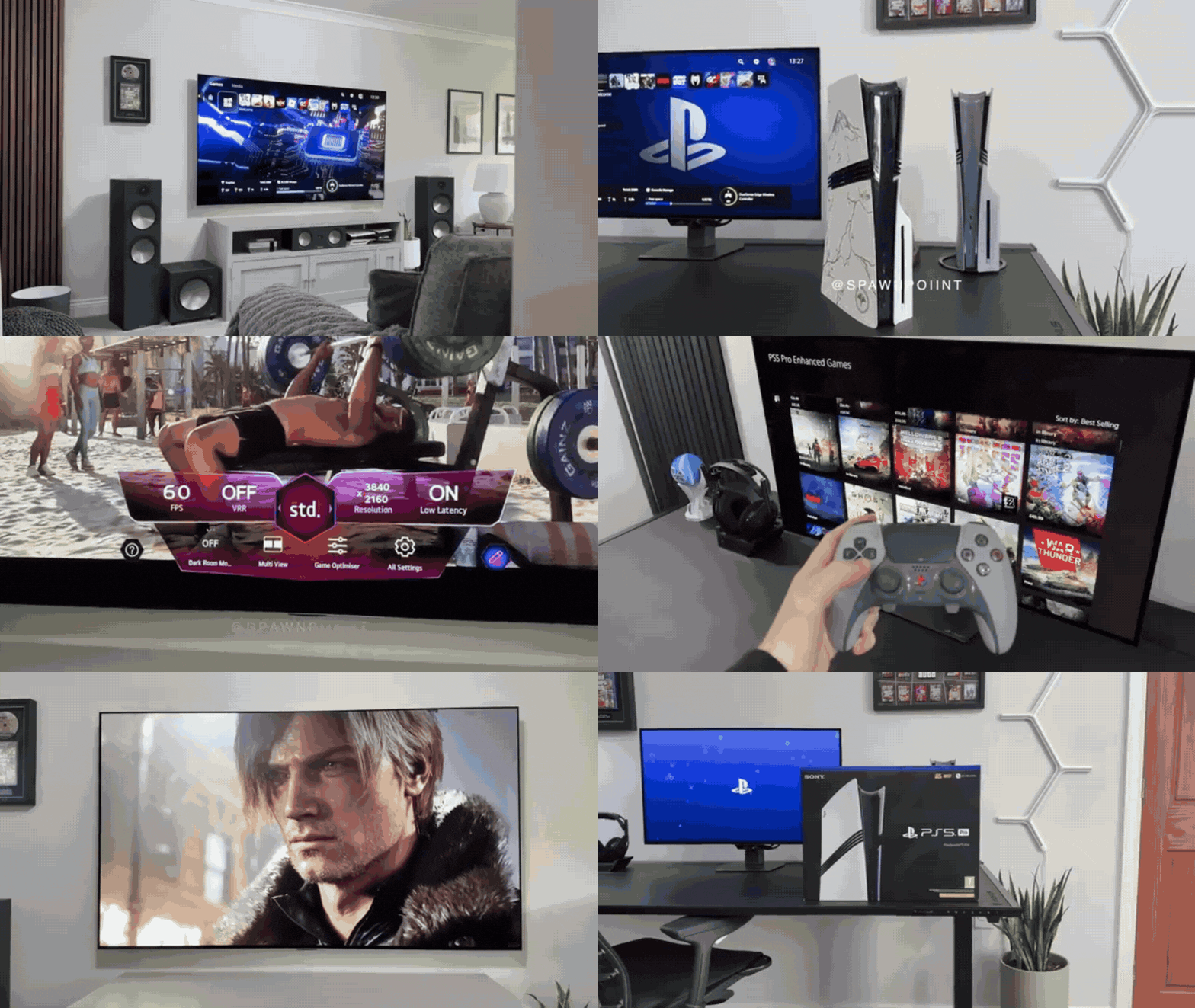
- In-Game Settings: While there is no in-game toggle, using a game’s Performance Mode typically yields the most visible benefits from PSSR upscaling.
First Games Supporting Upgraded PSSR
A variety of titles feature official support via patches or native integration:
- Konami: Silent Hill 2 (Remake) and Silent Hill f.
- Capcom: Monster Hunter Wilds, Resident Evil Requiem, and Dragon’s Dogma 2.
- Square Enix: Final Fantasy VII Rebirth.
- Remedy: Alan Wake 2 and Control.
- Others: Dragon Age: The Veilguard, Hellblade II, Nioh 3, Rise of the Ronin, Crimson Desert, Assassin’s Creed: Shadows, and Cyberpunk 2077 (upcoming).

Detailed Game Enhancements
Silent Hill 2 & Silent Hill f
- Visuals: AI upscaling cleans up dense fog and dark environments, reducing aliasing on flashlight beams and decrepit textures.
- Silent Hill f: Specifically benefits from sharper rendering of overgrown vegetation and traditional Japanese architecture.
Final Fantasy VII Rebirth
- Character Detail: Naturally restores detail to character hair (e.g., Cloud Strife) with far less flickering in 60 FPS mode.
- Stability: Spells, magic effects, and fast-paced combat remain stable and clear without “afterimage” artifacts.
Monster Hunter Wilds
- Environment: Sharpens dense foliage and rocky biomes, reducing shimmering during camera rotations.
- Action: Maintains motion clarity during chaotic battles with large monsters and heavy particle effects.
Cyberpunk 2077
- Night City: Reduces shimmering on neon signs, holographic displays, and complex urban geometry.
- Performance: A forthcoming “technological update” will allow the 60 FPS performance mode to closely mimic the sharpness of the native 4K quality mode.

Alan Wake 2 & Control
- Remedy Engine: Both games see improved temporal stability. In Alan Wake 2, PSSR 2.0 cleans up stochastic effects and maintains detail in dark, wooded areas.
- Control: Brutalist architecture and sharp geometric edges appear cleaner and more stable on the PS5 Pro.
In essence, Project Amethyst symbolizes the fusion of console engineering and PC graphics tech. It underscores Sony’s commitment to ensuring the PS5 Pro stays at the forefront of what’s possible in real-time rendering. These PSSR updates matter because they indicate a future where console graphics can continuously improve through AI, even without new chips. It’s a strategic move that keeps the PS5 Pro relevant and exciting for developers (who can rely on it to handle their ambitious visuals) and for players who get to see their games looking better over time. And as AMD integrates these advancements into FSR for more platforms, the whole gaming ecosystem benefits – a rising tide lifts all boats, as the adage goes.
Ultimately, the Sony–AMD collaboration via Project Amethyst has delivered a tangible result in PSSR 2.0, and it will continue to influence the graphics of games on both console and PC in the coming years. That’s why this seemingly technical update is actually a big deal: it’s a glimpse into how AI and partnerships are shaping the future of game graphics, making our current machines more capable than when we first bought them.
Frequently Asked Questions (FAQs)
- Is the upgraded PSSR available on the standard PS5 or only PS5 Pro?
The upgraded PSSR is exclusive to the PS5 Pro. The base PS5 hardware does not support this AI upscaling feature, and the “Enhance PSSR Image Quality” setting will not appear on standard consoles. Base PS5 games will continue to use existing techniques like TAA or older versions of FSR. - Do I need to update my PS5 Pro or games to use the new PSSR?
Yes. You must install the March 2026 PS5 system software update. Additionally, while the system toggle can be forced on unpatched games, the best results come from games that have received specific developer patches to optimize for PSSR 2.0 (such as Control, Alan Wake 2, and Final Fantasy VII Rebirth). - How can I tell if PSSR is working or active in a game?
There is no on-screen icon, but you can verify activity by ensuring “Enhance PSSR Image Quality” is enabled in the PS5 Pro settings. Visually, the game will appear sharper with reduced aliasing in performance modes. You can test the difference by toggling the setting and restarting a game to compare static scenes. - Does PSSR affect frame rate or just resolution?
PSSR primarily affects resolution and image quality. It does not change a game’s internal frame rate cap (e.g., 30fps or 60fps). However, it allows a game to achieve high-resolution visuals with less GPU strain, which can improve overall performance stability and reduce frame drops. - Is PSSR similar to DLSS or FSR on PC?
Yes. PSSR is the PS5 Pro’s equivalent to NVIDIA’s DLSS and AMD’s FSR. Co-developed with AMD under “Project Amethyst,” it uses a trained neural network to upscale lower-resolution renders into high-quality images. While DLSS uses Tensor cores, PSSR is optimized to run on the PS5 Pro’s compute units. - What if I prefer the old look or notice any visual bugs with PSSR?
Users can disable the enhanced PSSR in system settings at any time. This reverts the console to the original PSSR or the game’s default rendering. While glitches are expected to be rare and addressed during a six-month refinement window, the option to opt-out is available for those who prefer a native look or encounter artifacts. - Will future games all use PSSR by default?
Sony indicates that most new PS5 Pro titles will integrate enhanced PSSR support natively during development. It is expected to become a standard feature of the PS5 Pro rendering pipeline, similar to HDR or ray tracing, and will likely be enabled by default in “PS5 Pro Enhanced” games. - Can I use the upgraded PSSR at 1080p or only 4K?
PSSR works at all output resolutions, including 1080p. On a 1080p display, it provides a cleaner image with improved stability and less aliasing. However, the benefits are most significant on 4K displays, where upscaling from 1440p to 2160p (4K) allows 60fps modes to match the visual clarity of 30fps quality modes. - Does using PSSR introduce any input lag or other drawbacks?
No. PSSR is a GPU-side process designed to function within the standard rendering time budget, resulting in no noticeable input lag. While some purists may find the reconstructed image slightly less sharp than a 100% native render in rare instances, it generally eliminates prior issues like ghosting and flicker with zero performance cost. - How does the PSSR update affect ray tracing or other graphics features?
PSSR does not directly upgrade features like ray tracing or texture quality, but it complements them. It allows developers to enable high-end effects (like ray-traced reflections) in 60fps modes by handling the upscaling, ensuring the final image remains sharp despite the lower internal resolution required for performance.

Conclusion
The PS5 Pro’s upgraded PSSR update represents a significant leap forward in console graphics technology. By harnessing AI-powered upscaling, Sony and AMD have given PS5 Pro owners a gift: visibly sharper, cleaner, and more stable visuals in their games, all without needing new hardware. The rollout of this feature – starting now with the latest firmware – means that the gap between high-end PC graphics and console graphics narrows even further, as consoles can now leverage sophisticated upscalers much like DLSS on PC.
From what we’ve seen across various titles, the benefits are widespread. Early adopter games like Resident Evil Requiem demonstrated how PSSR can maintain great image quality while delivering high frame rates. Now, with PSSR 2.0 in play, games like Silent Hill f, Final Fantasy VII Rebirth, and Control are showing off just how crisp and immersive a PS5 Pro game can look when freed from the shackles of traditional rendering resolution. Even massive open-worlds and fast-paced action titles stand to gain, as evidenced by the range of first-wave supported games. And this is just the beginning – as developers build PSSR support into new releases and Sony continues to refine the algorithm, the experience on PS5 Pro will only get better.
Crucially, all these enhancements come at no detriment to performance. In fact, maintaining (or even improving) performance while boosting image quality is the entire point of PSSR. It’s heartening to see that player choice is preserved: you can always toggle it off if needed, but the vast majority will find it to be a set-and-forget upgrade that simply makes games look more polished. We’ve also discussed how best to configure your games post-update – generally embracing those higher frame rate modes now that the trade-offs are so minimal.
Looking at the broader picture, the Sony–AMD Project Amethyst partnership underlying PSSR shows how console makers are innovating in the software realm to extend the life and capabilities of their systems. It’s an approach that will benefit not only PS5 Pro users but gamers as a whole, as advancements make their way to other platforms and future consoles. In practical terms, for PS5 Pro owners, it means your console just got more “Pro” than ever. If you fire up your favorite games after updating, you’re in for a treat seeing them with fresh eyes – finer detail in Geralt’s hair, clearer vistas over Night City, stabler views as you swing through Manhattan, you name it.
In conclusion, the upgraded PSSR is a real game-changer for the PS5 Pro. It delivers on the promise of the mid-generation refresh by substantially elevating the visual experience without asking players to compromise on performance. As more games adopt it and more time goes into perfecting it, we can expect the PS5 Pro to continue impressing us with feats that might have seemed improbable for a 2023 console. It’s an exciting time to be a console gamer, and if you have a PS5 Pro, make sure to grab that update, turn on PSSR, and enjoy your games looking better than ever.
Sources and Citations
- Darryn Bonthuys. “PS5 Pro’s Upgraded PSSR Is Rolling Out Today—Here Are The First Games Getting It.” GameSpot (March 16, 2026)
- Sid Shuman. “Upgraded PSSR rolling out to Silent Hill f, Monster Hunter Wilds, Final Fantasy VII Rebirth, Crimson Desert, and more.” PlayStation Blog (March 16, 2026)
- Emma Roth. “Sony’s AI graphics upscaling for PS5 Pro games is getting a big update tonight.” The Verge (March 16, 2026)
- Zarmena Khan. “PS5 Update Out Now for Base Console Feature & PS5 Pro PSSR 2.” PlayStation LifeStyle (March 16, 2026)
- Tony Polanco. “PS5 Pro to get upgraded PSSR for better graphics and performance — here’s the game you’ll see it in first.” Tom’s Guide (February 27, 2026)
- PC Gamer Staff. “The PS5 Pro gives console players the guilt-free 60 fps that PC players have enjoyed for years.” PC Gamer (November 10, 2024)
- Remedy Entertainment developer comments (Alan Wake 2 / Control) via PlayStation Blog
- BioWare developer comments (Dragon Age: The Veilguard) via PlayStation Blog
- Konami / Silent Hill f developer comments via PlayStation Blog (Upgraded PSSR announcement)
- CD Projekt Red – Cyberpunk 2077 PS5 Pro upgrade announcement (Official X/Twitter account, March 16, 2026)
Recommendations
- After Johnny Cage, Karl Urban Wants To Play Red Dead’s John Marston What It Means for a Red Dead Redemption Movie
- Anime Story 2 Roblox Guide: Ultimate Beginner to Advanced Progression Guide (2026)
- How Blizzard Got People to Spend 93 Million Hours in One Month Playing a 26-Year-Old Game, Reign of the Warlock Was Played for a Total of 93.4 Million Hours, and Players Created Around 1.92 Million New Warlocks.
- Rayman Legends Original Will Stay on Sale After Remake Release: Ubisoft Confirms No Delisting for Retold Launch
- Can You Use Perspective and Orthographic Cameras in Blender?
- Steam Machine (2026): Release Date, Price, Specs, and SteamOS Explained
- Until Dawn 2 Feels Like Cabin in the Woods in a Jungle: New Horror Setup Explained
- Google Spends $1 Million On AI-Generated Kids Videos: What Google’s Animaj Investment Means for YouTube Kids
- The Christophers Review (2026): Cast, Plot, Ending Explained & Why Steven Soderbergh’s Art Drama Is a Must-Watch
- The Post-PlayStation-Showcase Fallout: Biggest Talking Points, Controversies, and Surprises



































































































