







In This Article (13 sections)
PlayStation Pulse Elevate Wireless Speakers Release Date and Regional Preorder Details
PlayStation Pulse Elevate wireless speakers are scheduled to launch starting November 12, 2026. Sony Interactive Entertainment confirmed the date in an August 18, 2026 update to its original announcement. As of September 7, 2026, the speakers remain an upcoming product, although the announced September preorder dates have already passed. That distinction matters because a preorder reserves hardware ahead of release rather than providing immediate access. Sony also qualifies availability by market and retailer, meaning November 12 marks the beginning of a regional rollout rather than a guaranteed delivery date for every order.
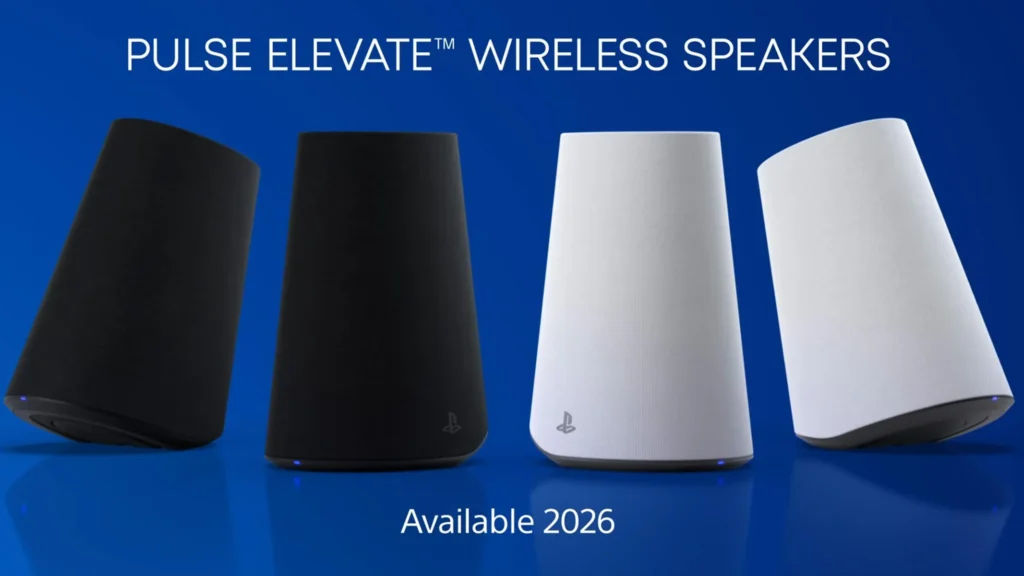
Pulse Elevate expands PlayStation’s audio lineup into desktop speakers, joining the Pulse Elite wireless headset and Pulse Explore wireless earbuds. The product combines a pair of speakers with wireless connectivity, rechargeable batteries, and an integrated microphone. Its intended role goes beyond replacing a monitor’s speakers, with Sony positioning it as an audio and communication option for gaming across compatible devices without requiring a headset.
The announced preorder opening was September 1, 2026, at 10 a.m. local time, with the United States specifically using 10 a.m. Eastern Time. For the contiguous United States, that corresponds to 9 a.m. Central, 8 a.m. Mountain, and 7 a.m. Pacific, not a separate 10 a.m. opening in every American time zone. PlayStation’s UK messaging specified 10 a.m. British Summer Time, while other participating European markets covered by the general announcement followed 10 a.m. local time rather than the American Eastern Time opening. These times marked the start of preorders, not delivery appointments or a promise that stock would remain continuously available afterward.
Regional exceptions mean September 1 should not be presented as a universal worldwide preorder date. Sony’s Japanese announcement stated that reservations began progressively through PlayStation retailers on September 1, without establishing a single opening time for every Japanese store. Meanwhile, Sony’s Southeast Asian announcement specified September 2, 2026, for preorders through local retailers. The applicable date and opening arrangements therefore depended on the market, with some regions following a different schedule from the main announcement.
With those preorder dates now in the past, the practical consideration is current allocation rather than when the initial window opens. Retailer reporting published in early September confirmed that preorder listings went live, but a listing does not guarantee continuing availability for a particular delivery address or color. Product availability, order processing, and delivery confirmation remain separate considerations, especially for buyers seeking a specific color or ordering outside the main launch markets. An available preorder should therefore not be treated as confirmation that the speakers will arrive on November 12.
Pulse Elevate Pricing, Preorders and Color Availability
The announced Pulse Elevate recommended retail prices are $219.99 in the United States, £199.99 in the United Kingdom, €219.99 in European markets priced in euros, and ¥37,980 in Japan. These are regional recommended prices rather than conversions of the American price using a single exchange rate. The Japanese price explicitly includes tax, but that treatment should not automatically be applied to the other currency figures. Buyers should check the final checkout amount, as regional pricing, shipping arrangements, and retailer order conditions can differ.
The advertised price covers a speaker pair, not one separately priced speaker. Retail listings identify the package as a pair, while PlayStation Direct specifies both left and right units, so a second purchase is not required to obtain both stereo channels. Assessing the price therefore means considering the complete package and the functions that will actually be used. Someone seeking straightforward desktop playback may value it differently from someone who also needs wireless voice chat, portable listening, and connections across several gaming devices.
PlayStation Direct is an official preorder destination, with product pages for the speakers and their color options. Participating retailers also carry Pulse Elevate, although availability varies by country and finish. In the United States, Best Buy lists a Black model with a November 12, 2026 release date and identifies Best Buy as the seller. Early September retailer coverage also identifies preorder availability through Amazon and Best Buy, but this does not guarantee identical stock across marketplace sellers, regional storefronts, or physical stores. Buyers should confirm that the seller, product description, selected color, and expected dispatch date match their intended purchase before checkout.
PlayStation Direct’s preorder support explains that completing an eligible order generates a confirmation email with an order reference number. Its UK guidance distinguishes payment authorization from the eventual charge: a card may be checked when the reservation is placed, while payment is taken when the order is ready to ship. A temporary authorization does not therefore mean that the speakers have shipped. For orders placed well before November, keeping a valid payment method and retaining access to the confirmation email is especially important. Expectations about charges, cancellation, and delivery should follow the selected retailer’s conditions rather than assumptions based on an unrelated PlayStation purchase.
Pulse Elevate comes in Midnight Black and White, but their distribution arrangements differ. Midnight Black has the broader announced retail rollout, while White is exclusive to PlayStation Direct in the United States, United Kingdom, France, Germany, Austria, Belgium, Luxembourg, the Netherlands, Italy, Spain, and Portugal. Selected retailers can sell White in other regions. This exclusivity concerns the sales channel within those eleven countries, not whether the White model exists elsewhere. Sony’s Japanese announcement includes both colors, and Best Buy Canada’s listing presents Midnight Black and White as product selections.
Sony also states that White availability lasts while supplies remain. This indicates a stock limitation, not a published worldwide production count, and the announced color information provides no basis for assigning White different acoustic specifications or treating it as a higher performance model. The choice therefore comes down to appearance and purchasing availability. A finish that matches the desktop may matter aesthetically, but buyers should weigh that preference against the actual delivery estimate rather than an assumed technical advantage.
Pulse Elevate Box Contents and PS5, PC and Mac Compatibility
PlayStation Direct lists a left Pulse Elevate speaker, a right speaker, two charging docks, one PlayStation Link USB adapter with a USB Type-C connector, two USB Type-C to USB Type-C cables, and a user manual. The package therefore includes the stereo speaker pair and the wireless adapter needed to connect to a compatible USB host. The docks provide a convenient place to return the speakers for charging, while the Link adapter handles the host connection. The inclusion of charging cables should not be treated as confirmation that the speakers support every possible wired USB audio arrangement.
Connector compatibility deserves attention before setting up the speakers. Sony’s support documentation says the separately sold CFI-ZWA3 PlayStation Link adapter includes both USB-A and USB-C connectors, but the Pulse Elevate box contents specifically list a USB-C connector. Buyers should not assume that the standalone adapter package matches the accessories bundled with the speakers. A separate wall power adapter is also absent from the published contents list. Anyone planning to power both docks from wall outlets rather than suitable USB connections should check the final regional package and charging requirements instead of assuming that two mains chargers are included.
Pulse Elevate officially supports PS5, including Tempest 3D AudioTech in supported games. Sony presents the speakers as a way to experience spatial game audio without headphones, but this does not mean every game, application, or connected platform delivers the same spatial presentation. The speakers are a left and right pair rather than a physical surround sound package with additional rear speakers. Their spatial presentation therefore depends on the game’s processing, the listening arrangement, and the room. Sony’s general 3D audio guidance also distinguishes between output configurations, so instructions for television speakers or headphones should not automatically be treated as setup instructions specifically for Pulse Elevate.
On PS5, Sony’s general audio guidance places output selection under Settings, Sound, and Audio Output. The console can also switch output devices automatically when compatible equipment connects, making the selected output a useful first troubleshooting check when several audio options are available. Placement is another sensible starting point: general stereo monitor guidance recommends symmetrical positioning, with both speakers aimed toward the listener and comparable distances between each speaker and the listening position. These are useful desktop audio practices, but they do not replace Sony’s eventual instructions specifically for Pulse Elevate.
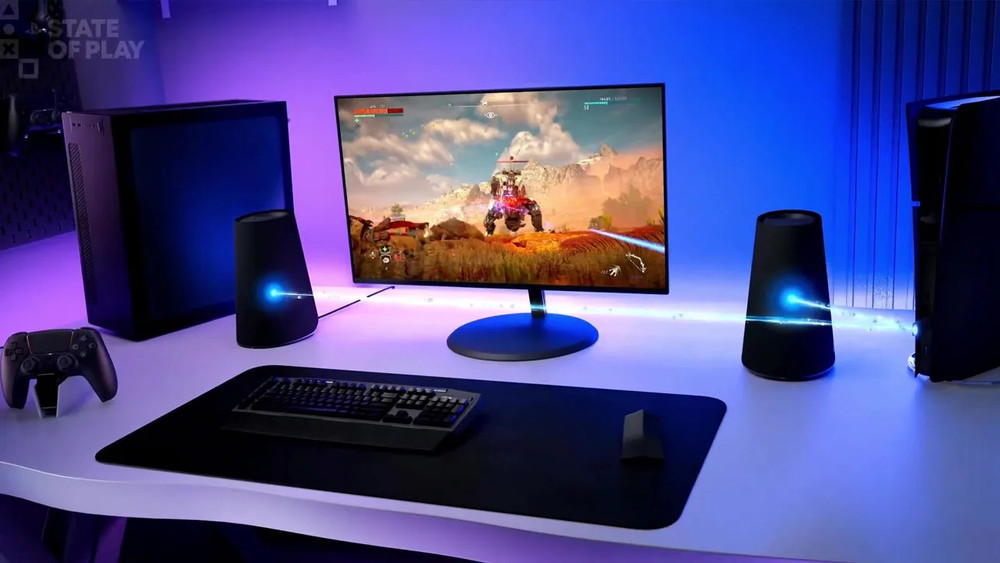
Sony also identifies PC and Mac compatibility alongside PS5 support and includes Pulse Elevate in its broader PC accessory lineup. The speakers are therefore not restricted to PlayStation branded screens or console setups, making a desk used for both gaming and other activities an intended application rather than an unofficial workaround.
However, basic compatibility should be separated from advanced configuration support. Sony’s PC accessories page associates Pulse Elevate with the PlayStation Link PC Driver, which provides functions such as audio adjustment and firmware management for supported devices. The Elevate product information still states that its PC options will become available after launch, while the existing driver support table reviewed for this article lists Pulse Elite, Pulse Explore, and the Link adapter rather than establishing complete Elevate support today.
Mac users should similarly distinguish playback compatibility from a dedicated Sony control interface. Apple’s standard route for choosing an audio output is System Settings, Sound, and Output, where available devices appear and controls depend on the connected equipment. These operating system settings are not equivalent to a confirmed macOS version of Sony’s advanced speaker controls. For computers shared between gaming, meetings, and media, checking both the operating system’s selected output and the application’s chosen audio device is a sensible setup habit. The essential purchasing distinction is whether basic playback meets the user’s needs or whether the additional controls scheduled for later availability are also required.
Pulse Elevate Prices, Preorders and Color Availability
The announced Pulse Elevate recommended retail prices are $219.99 in the United States, £199.99 in the United Kingdom, €219.99 in European markets priced in euros, and ¥37,980 in Japan. These are regional recommended prices rather than conversions of the American price using a single exchange rate. The Japanese price explicitly includes tax, but that treatment should not automatically be applied to the other figures. Each advertised price covers a complete speaker pair, with left and right units included, rather than a single speaker that requires a second purchase for stereo playback. Buyers should still check the final checkout amount, since regional pricing, shipping arrangements, and retailer conditions can differ.
PlayStation Direct is an official preorder destination, with product pages for the speakers and their color options. Participating retailers also carry Pulse Elevate, although availability varies by country and finish. In the United States, Best Buy has a Black model listing that identifies November 12, 2026 as the release date and names Best Buy as the seller. Early September retailer coverage also identifies preorder availability through Amazon and Best Buy, but this does not guarantee that every marketplace seller, regional Amazon storefront, or physical store carries the same stock. Before checkout, buyers should confirm that the seller, product description, selected color, and expected dispatch date match the intended purchase.
PlayStation Direct’s preorder support explains that completing an eligible order generates an email confirmation containing an order reference number. Its UK guidance also distinguishes payment authorization from the eventual charge: a card may be checked when the reservation is placed, while payment is taken when the order is ready to ship. A temporary authorization therefore does not mean that the speakers have shipped. For orders placed well before November, keeping a valid payment method and retaining access to the confirmation email are especially important. Expectations about charges, cancellation, and delivery should follow the selected retailer’s conditions rather than assumptions based on an unrelated PlayStation purchase.
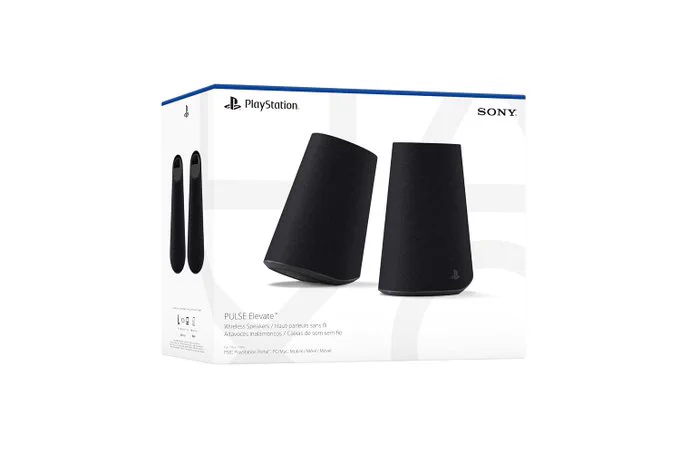
Pulse Elevate is offered in Midnight Black and White, but the distribution arrangements differ. Midnight Black has the broader announced retail rollout, while White is exclusive to PlayStation Direct in the United States, United Kingdom, France, Germany, Austria, Belgium, Luxembourg, the Netherlands, Italy, Spain, and Portugal. Selected retailers can sell White in other regions. This exclusivity concerns the sales channel within those eleven markets, not whether the color exists elsewhere. Sony’s Japanese announcement includes both finishes, and Best Buy Canada’s listing presents Midnight Black and White as product selections.
Sony qualifies White availability as lasting while supplies remain, which indicates a stock limitation rather than a published worldwide production count. The announced color information does not establish different acoustic specifications or identify White as a higher performance model, so the choice comes down to appearance, purchasing availability, and delivery estimates. The overall value of either finish also depends on the functions a buyer expects to use. Someone seeking straightforward desktop playback may assess the price differently from someone who also needs wireless voice chat, portable listening, and connections across several gaming devices.
Pulse Elevate Box Contents and PS5, PC and Mac Compatibility
PlayStation Direct lists the following items in the Pulse Elevate package:
- One left Pulse Elevate speaker and one right speaker.
- Two charging docks.
- One PlayStation Link USB adapter with a USB Type-C connector.
- Two USB Type-C to USB Type-C cables.
- A user manual.
The package therefore includes both speakers and the wireless adapter needed for the intended USB host connection. The docks provide a place to return the speakers for charging, while the Link adapter handles the connection to a compatible host. The included charging cables should not be treated as confirmation that every possible wired USB audio arrangement is supported. A separate wall power adapter is also absent from the published contents list, so buyers planning to connect both docks to wall outlets should check the final regional package and charging requirements rather than assume that two mains chargers are included.
Connector compatibility also deserves attention before setting up a desk. Sony’s support documentation says the separately sold CFI-ZWA3 PlayStation Link adapter includes both USB-A and USB-C connectors, whereas the Pulse Elevate box contents specifically identify a USB-C connector. The accessories supplied with the standalone adapter should therefore not be assumed to match those bundled with the speakers. Checking the listed connector against the intended console or computer is more useful than relying on the contents of a different PlayStation Link package.
Pulse Elevate officially supports PS5, including Tempest 3D AudioTech in supported games. Sony presents the speakers as a way to experience spatial game audio without wearing headphones, but that compatibility does not mean every game, application, or connected platform will produce the same spatial presentation. The speakers remain a left and right pair rather than a physical surround system with additional rear speakers. Their spatial presentation depends on the game’s processing, the listening arrangement, and the room, so the advertised support should be understood within those limits.
On PS5, Sony’s general audio guidance places output selection under Settings, Sound, and Audio Output, and the console can switch output devices automatically when compatible equipment connects. When several audio options are available, checking the selected output is a useful first troubleshooting step. General stereo monitor guidance also recommends symmetrical placement, with both speakers aimed toward the listener and positioned at comparable distances from the listening position. These are useful starting points, but neither general placement advice nor Sony’s instructions for television speakers and headphones should be treated as a substitute for Elevate specific setup guidance.
Sony also identifies PC and Mac compatibility, making a desk used for gaming, meetings, and media an intended application rather than an unofficial workaround. The speakers are not restricted to PlayStation branded screens or console use, and Sony includes them in its broader PC accessory lineup.
However, basic playback compatibility should be separated from advanced configuration support. Sony’s PC accessories page associates Pulse Elevate with the PlayStation Link PC Driver, which provides functions such as audio adjustment and firmware management for supported devices, while the Elevate product information states that its PC options will become available after launch. The existing driver support table reviewed for this article lists Pulse Elite, Pulse Explore, and the Link adapter, rather than establishing complete Elevate support at present.
Mac users should similarly distinguish playback compatibility from a dedicated Sony control interface. Apple’s standard output selection route is System Settings, Sound, and Output, where available devices appear and controls depend on the connected equipment. Those operating system settings do not confirm a macOS version of Sony’s advanced speaker controls. On either PC or Mac, checking both the system’s selected audio device and the application’s chosen device is a sensible setup habit. Buyers should establish whether basic playback meets their needs or whether they require additional controls, particularly those Sony has scheduled for availability after launch on PC.
Pulse Elevate Connectivity, PlayStation Portal Support and Simultaneous Audio
Pulse Elevate connects to PlayStation Portal through PlayStation Link. Portal already functions as a Link host, unlike a desktop computer or PS5 configuration that uses a USB adapter for the wireless audio connection. Sony established this direct connection when introducing the Link ecosystem, and its Elevate materials specifically confirm Portal compatibility. However, Portal’s gaming connection and audio connection serve different purposes: its network connection handles streamed gameplay, while Link provides the local wireless audio path to compatible equipment. Using external speakers does not remove the separate requirements or potential limitations of the game streaming connection.
PlayStation Link is Sony’s dedicated wireless audio technology, described as offering low latency and lossless transmission. Latency concerns delay, while lossless transmission concerns preserving audio information across the supported wireless connection. For gameplay, the objective is to keep audible events closely aligned with what happens on screen.
Pulse Elevate uses Link for its main compatible gaming connections, while Bluetooth provides another route for devices such as phones; the two modes are not technically interchangeable. Sony’s public Elevate materials do not provide an independently verified measurement of total audio latency, so “ultra low latency” should not be interpreted as zero delay or converted into an invented millisecond figure. Likewise, a lossless wireless connection does not guarantee identical listening results across different source files, game mixes, or applications.
Sony confirms that Pulse Elevate can play audio from a PlayStation Link device and a Bluetooth device simultaneously. A compatible gaming system can supply the main soundtrack through Link while a smartphone supplies music or call audio through Bluetooth, allowing the second source to remain audible without replacing the gaming connection. This confirmed arrangement is specifically Link plus Bluetooth, not support for mixing two separate Link hosts, synchronizing audio throughout a home, or accepting unlimited simultaneous sources.
Volume balance also matters, since music that suits a quiet exploration sequence may compete with dialogue or useful game sounds elsewhere. Establishing a comfortable game volume before introducing the second source at a lower level is a practical starting point. The feature should not be treated as a complete production mixer, and details about independent channel controls, microphone routing between applications, or particular Bluetooth codecs require additional specifications.
Pairing should follow instructions specifically supplied for Pulse Elevate. Sony’s currently available Portal audio support page describes procedures for Pulse Elite and Pulse Explore, demonstrating how existing Link accessories work without confirming Elevate’s button hold durations or indicator sequences. Those details should therefore not be copied into an Elevate guide without confirmation. Once connected, the speakers offer flexibility for Portal sessions at a table or another desktop, where headphones may not be necessary. They can be moved to suit the listening location, although an open speaker arrangement should be considered in relation to the surrounding space: portability and private listening address different needs.
Wireless placement deserves attention alongside pairing. Sony’s general Link troubleshooting guidance recommends avoiding obstructions, moving potential interference sources away, and testing the adapter in a more suitable USB position. Nearby wireless equipment and certain high speed USB configurations are also identified as possible contributors to connection problems. These are general troubleshooting considerations rather than evidence of a confirmed Elevate reliability defect. For a desktop installation that uses an adapter, its position matters as well as the speakers’ placement, since a convenient USB socket hidden behind several devices may not provide the most favorable location for a wireless transmitter.
Pulse Elevate Audio Drivers, Microphone, Battery Life and Portability
Each Pulse Elevate speaker combines a planar magnetic driver with a built in woofer, bringing together components intended to provide detailed reproduction and bass output without relying on a separate bass unit elsewhere in the package. A planar magnetic driver uses a thin diaphragm carrying conductive traces within a magnetic field. When an audio signal passes through those conductors, the diaphragm moves to produce sound. This differs from a conventional dynamic arrangement, in which a voice coil drives a diaphragm through a more concentrated mechanical connection. Audeze’s technical explanation describes how distributing the driving force across a planar diaphragm can help control its movement.
The built in woofers handle lower frequencies, adding weight to effects, instruments, and environmental sound, while clear reproduction across the rest of the spectrum helps preserve dialogue and smaller details. Sony’s stated aim is a fuller desktop soundscape from the pair rather than simply louder output.
However, driver type alone does not establish the quality of the finished speakers. Audeze notes that planar magnetic designs are not automatically equivalent and that factors such as the uniformity of magnetic force affect performance. Sony’s accuracy claims should therefore remain distinct from independently demonstrated results, including measured frequency response, distortion testing, and comparative listening. A meaningful assessment needs to examine the complete system rather than treating “planar magnetic” as a verdict on sound quality.
Pulse Elevate’s microphone is integrated into the right speaker, with AI enhanced noise rejection that Sony says helps identify and remove unwanted background noise from voice communication. Its purpose is to support chat without a headset, but noise rejection in the microphone path should not be confused with preventing the listener from hearing the surrounding room.
The feature concerns captured voice communication, not the acoustic isolation associated with enclosed headphones. Its effectiveness also depends on the environment. Shure’s general technical guidance explains that background noise and microphone placement affect speech intelligibility, and that reducing noise sources or improving the microphone’s position relative to the speaker can help. Applied as setup advice, this favors leaving the right speaker unobstructed rather than hiding it behind a monitor or placing it beside a loud fan.
On PS5, microphone settings allow users to select the input device and adjust its input level. Sony recommends speaking normally and setting the level so the indicator remains within the appropriate range, providing a useful check before joining voice chat, particularly when several connected devices contain microphones. This setup check complements sensible speaker placement, while the distinction between voice processing and listening isolation remains important: an integrated microphone supports communication without headphones, but an open speaker arrangement does not provide private listening.
PlayStation Direct advertises up to 12 hours of portable sound for Pulse Elevate. The accompanying qualification states that actual battery life varies with usage, settings, and environmental conditions, and that testing used preproduction hardware connected through PlayStation Link. This makes the figure a conditional manufacturer estimate rather than a guaranteed duration for every listening arrangement. It should not be doubled because the package contains two speakers: both operate during the same stereo listening session, so adding their stated hours would not describe that session’s usable duration. Meaningful battery testing should reflect actual listening conditions, since moderate volume gaming, louder playback intended to fill a room, and simultaneous wireless sources should not be assumed to produce identical results.
The charging docks support a straightforward desktop routine, allowing the speakers to occupy their usual positions while docked before being taken elsewhere for listening on battery power. Sony’s published compliance information identifies the product as using rechargeable lithium ion polymer batteries. These features make the pair movable between suitable listening locations, but portability should not be confused with durability in every environment. Rechargeable batteries alone do not establish weather resistance, impact protection, or suitability for every outdoor setting, as those characteristics require separate specifications.
Pulse Elevate Connectivity With PlayStation Portal, PlayStation Link and Bluetooth
Pulse Elevate connects to PlayStation Portal through PlayStation Link. Portal already functions as a Link host, unlike a desktop computer or PS5 configuration that uses a USB adapter for the wireless audio connection. Sony established this direct connection when introducing the Link ecosystem, and its Elevate materials specifically confirm Portal compatibility. The distinction between Portal’s gaming connection and its audio connection remains important: Portal uses its network connection for streamed gameplay, while Link provides the local wireless audio path to compatible equipment. Changing the speakers therefore does not remove the separate requirements or potential limitations of the game streaming connection.
Pairing should follow instructions specifically supplied for Elevate. Sony’s currently available Portal audio support page describes procedures for Pulse Elite and Pulse Explore, but their button hold durations and indicator sequences should not be copied into an Elevate guide without confirmation. The practical appeal of Portal compatibility is flexible placement. A session at a table or another desktop does not necessarily require headphones, and the speakers can be moved to suit that listening location. However, an open speaker arrangement must still be considered in the context of the surrounding space, since portability and private listening serve different needs.
PlayStation Link is Sony’s dedicated wireless audio technology, described as offering low latency and lossless transmission. Latency concerns delay, while lossless transmission concerns preserving audio information across the supported wireless connection. For gameplay, the objective is to keep audible events closely aligned with what happens on screen.
Pulse Elevate uses Link for its main compatible gaming connections, while Bluetooth provides another route for devices such as phones; the two modes are not technically interchangeable. Sony’s public Elevate materials do not provide an independently verified measurement of total audio latency, so “ultra low latency” should not be interpreted as zero delay or assigned an invented millisecond figure. Likewise, a lossless connection does not guarantee identical listening results from every source file, game mix, or application.
Wireless placement also matters. Sony’s Link troubleshooting guidance recommends avoiding obstructions, moving potential interference sources away, and testing the adapter in a more suitable USB position. Nearby wireless equipment and certain high speed USB configurations are identified as possible contributors to connection problems. These are general Link troubleshooting considerations, not evidence of a confirmed Elevate reliability defect. A sensible desktop installation therefore considers the adapter’s position alongside the speakers themselves, since a convenient USB socket hidden behind multiple devices may not be the most favorable location for a wireless transmitter.
Sony confirms that Pulse Elevate can play audio from a PlayStation Link device and a Bluetooth device simultaneously. A compatible gaming system can supply the game soundtrack through Link while a smartphone provides music or a call through Bluetooth. This means the second source does not have to replace the gaming connection to become audible, allowing both devices to remain in use. The confirmed arrangement is specifically Link plus Bluetooth, however. It does not establish support for mixing two separate Link hosts, synchronizing audio throughout a home, or accepting an unlimited number of simultaneous sources.
Simultaneous playback makes volume balance worth considering, particularly when music or a call could compete with dialogue or useful game sounds. A practical approach is to establish a comfortable game volume first, then introduce the second source at a lower level. Music that suits a quiet exploration sequence may become distracting during a busier scene. This remains a listening feature rather than a promise of a complete production mixer, and assumptions about independent channel controls, microphone routing between applications, or particular Bluetooth codecs require specifications beyond Sony’s statement about simultaneous playback.

Pulse Elevate Planar Magnetic Drivers, Microphone and Portable Battery Life
Each Pulse Elevate speaker combines a planar magnetic driver with an integrated woofer, providing the intended combination of detailed reproduction and bass without relying on an external bass unit elsewhere in the package. A planar magnetic driver uses a thin diaphragm carrying conductive traces within a magnetic field. When an audio signal passes through those conductors, the diaphragm moves to produce sound. This differs from a conventional dynamic arrangement, where a voice coil drives a diaphragm through a more concentrated mechanical connection. Manufacturer Audeze’s technical explanation describes how distributing the driving force across a planar diaphragm can help control its movement.
The integrated woofers handle lower frequencies, giving weight to effects, instruments, and environmental sounds, while clear reproduction across the rest of the spectrum helps preserve dialogue and smaller details. Sony’s stated goal is a fuller desktop soundscape from the pair rather than simply louder output.
However, driver type alone does not establish the final quality of a complete speaker. Audeze notes that planar magnetic designs are not automatically equivalent and that factors such as the uniformity of magnetic force affect performance. Sony’s accuracy claims should therefore be treated as product claims rather than substitutes for measured frequency response, distortion testing, or comparative listening. The strongest assessment will examine the finished system instead of treating “planar magnetic” as a verdict on its own.
Pulse Elevate’s microphone is integrated into the right speaker. Sony says its noise rejection, enhanced by AI, helps identify and remove unwanted background noise from voice communication, enabling chat without a headset. This processing concerns the microphone’s captured audio, not the sound that reaches the listener from the surrounding room. It should not be confused with acoustic isolation or interpreted as a claim that open desktop speakers can block surrounding noise in the same way as enclosed headphones.
Microphone effectiveness also depends on the listening environment. Shure’s technical guidance explains that background noise and microphone placement affect speech intelligibility, and that reducing noise sources or improving the microphone’s position relative to the person speaking can help. As general setup advice, this favors keeping the right speaker clear and unobstructed rather than hiding it behind a monitor or placing it beside a loud fan. On PS5, microphone settings allow users to select the input device and adjust its level. Sony recommends speaking normally and setting the level so the indicator remains within the appropriate range, providing a useful check before voice chat, especially when several connected devices contain microphones.
PlayStation Direct advertises up to 12 hours of portable sound for Pulse Elevate, with actual battery life varying according to usage, settings, and environmental conditions. Testing used preproduction hardware connected through PlayStation Link, making the figure a conditional manufacturer estimate rather than a guaranteed duration for every listening arrangement. The charging docks support a straightforward desktop routine: the speakers can remain in their usual positions while docked, then be moved elsewhere for listening on battery power. Sony’s published compliance information identifies the product as using rechargeable lithium ion polymer batteries.
The 12 hour figure should not be doubled because the package contains two speakers. When both are used together, they operate during the same listening session, so adding their stated hours would not describe the usable duration of stereo playback. Portability also does not automatically establish weather resistance, impact protection, or suitability for every outdoor setting, since those characteristics require separate specifications. Meaningful battery testing will need to reflect actual listening conditions: a gaming session at moderate volume, louder playback intended to fill a room, and simultaneous wireless sources should not be assumed to produce identical results simply because they use the same speakers.
Frequently Asked Questions[FAQs]
1. When do PlayStation Pulse Elevate wireless speakers release?
The announced release begins November 12, 2026, and Best Buy’s American listing also identifies that date. This is the scheduled product launch, rather than a guarantee that every preorder will arrive on the same day. Customers should check the delivery estimate attached to their individual order, since the launch date and the date a purchase reaches its destination are not necessarily identical.
2. Have Pulse Elevate preorders already started?
Yes. The main announced preorder opening was September 1, 2026, and reporting from early September confirms that listings went live. Sony’s regional announcement gives Southeast Asia a separate opening date of September 2. These dates establish when reservations began, but they do not confirm that every retailer still has units available. Customers should check current listings for their market rather than assume availability from the original preorder announcement.
3. How much do Pulse Elevate wireless speakers cost?
The announced recommended prices are $219.99 in the US, £199.99 in the UK, €219.99 in euro-priced European markets, and ¥37,980 in Japan. The Japanese price explicitly includes tax. Each price covers a pair of speakers, not one speaker sold individually, so buyers do not need to purchase two separately priced units to obtain the intended stereo arrangement. Local listings remain relevant when checking the actual purchase price.
4. Is the White Pulse Elevate model available outside the United States and Europe?
Yes. References to the US and European markets concern PlayStation Direct exclusivity, not a worldwide restriction on the White model. Sony’s Japanese announcement includes White, while Best Buy Canada lists it as a color selection. These examples show that the color is not limited to the named US and European markets, although customers should still check local retailers because availability and remaining stock can differ.
5. Do Pulse Elevate speakers require a headset for voice chat?
No separate headset is required for the speakers’ intended voice chat function. An integrated microphone with AI noise rejection allows users to speak without wearing a headset, while helping reduce unwanted background sound picked up by the microphone. However, a connected system may have several available microphone inputs. Selecting the Pulse Elevate microphone is therefore an important setup step rather than assuming it will automatically become the active input.
6. Can Pulse Elevate work with both PC and Mac?
Yes. Sony lists both PC and Mac as compatible platforms, but that does not mean they receive identical customization features. Elevate’s PC configuration options are described as arriving after launch, so compatibility should not be confused with immediate access to every advanced control. The available Sony documentation also does not establish an equivalent dedicated Mac control interface, making it important to distinguish general platform support from the availability of specific settings.
7. Does PlayStation Portal use Bluetooth to connect to Pulse Elevate?
No. The announced connection between PlayStation Portal and Pulse Elevate uses PlayStation Link. Bluetooth is a separate option for compatible devices such as smartphones, rather than the connection method described for Portal. Because Portal already acts as a PlayStation Link host, its audio connection differs from the USB adapter arrangement used with compatible desktop hosts. The speakers’ Bluetooth support should therefore not be mistaken for Bluetooth audio support on Portal.
8. Can game audio and smartphone audio play together?
Yes. The confirmed function combines audio from one PlayStation Link source with audio from one Bluetooth source. For example, game audio can remain audible while a connected smartphone supplies music or a call, rather than requiring the listener to switch entirely between those sources. However, this specific Link and Bluetooth combination does not establish support for mixing audio from two separate PlayStation Link hosts at the same time.
9. What is the announced Pulse Elevate battery life?
Sony advertises up to 12 hours of portable listening. This figure comes from testing hardware before production over PlayStation Link and is qualified by usage, settings, and environmental conditions. It should therefore be understood as an advertised upper estimate, not a promise that every listening session will last 12 hours. Actual runtime can vary, so users should allow for the possibility of needing to recharge sooner.
10. Can Pulse Elevate sidetone be adjusted?
Sidetone adjustment should not be treated as a supported feature. Sidetone lets users hear their own microphone input through the audio output, but Sony corrected its original announcement because it had included adjustment of that setting incorrectly. EQ, volume, and microphone controls remain among the announced customization features. Their availability is still subject to the stated platform and rollout qualifications, so the corrected sidetone claim should not be grouped with those confirmed controls.

Conclusion
PlayStation Pulse Elevate brings together a speaker pair, wireless gaming audio, voice communication, and portable listening in one desktop-oriented product. Its confirmed November 12, 2026 launch and regional pricing provide a clear purchasing reference, while the September preorder openings have moved the discussion from announcement timing to actual retailer availability.
The most important distinction is between confirmed specifications and expectations. Sony has described the intended connections and controls, but those descriptions should not be expanded into unsupported claims about zero latency, universal spatial-audio behavior, identical software support across platforms, or guaranteed battery duration.
The purchasing decision ultimately depends on which functions solve a real need. A desktop user seeking headset-free chat and easy movement between compatible devices may value the combined design differently from someone who only needs basic stereo playback. Color availability, the computer’s available ports, and the timing of advanced PC controls are worth considering alongside price.
The strongest final judgment will come from evaluating the retail hardware under realistic conditions: sound quality at ordinary listening levels, microphone clarity during gameplay, wireless stability, and battery performance away from the docks. Until then, the announced capabilities establish what Pulse Elevate is designed to offer, not a substitute for a measured review.
Sources and Citation
- Sony’s updated PlayStation Blog announcement provides the launch information and the explicit sidetone correction. Its regional Japanese and Southeast Asian announcements clarify market-specific preorder arrangements and availability.
- PlayStation’s product pages, Direct listings, and support documentation provide the package contents, battery qualification, platform information, connector guidance, and audio-setting context used throughout. Retail listings corroborate the sales rollout rather than serving as independent performance tests.
- Apple, Audeze, Genelec, and Shure supply the general operating-system and audio-engineering explanations. Their guidance is used for context, not as evidence that they independently tested Pulse Elevate.
- The Verge
- PlayStation’s wireless gaming speakers launch in November
- 20 days
- t3.com
- PlayStation’s Sonos-rivalling wireless speakers finally get a release date and pricing details
- 18 days ago
Recommended
- Atlus Offers a First Look at Persona 6 and Fans Have Questions
- Best Blender Add-ons for Camera Management: Why The View Keeper Stands Out
- Every Release Date from Every Event at Summer Game Fest 2026
- Quick Resume Xbox’s Best Feature In Years Just Got A Huge Fix: How to Disable It Per Game (April 2026 Update)
- Psycho Killer Review (2026): Does the Satanic Slasher Thriller Live up to the Hype?
- Google Has Allowed Online Gambling Advertising in the UAE: What the March 2026 Google Ads Policy Update Means
- GTA 6 Official Cover Art and Vice City Details Breakdown
- New Horrified D&D board game goes to Ravenloft, and here’s your exclusive first look at it
- The 10 Best New Anime in Spring 2026: The Must-Watch Fresh Series This Season
- Star Trek: Outposts Unknown Release Date, Gameplay, Demo, and Everything We Know



































































































