












In This Article (8 sections)
Star Wars: Galactic Racer Release Date, Platforms, Editions, and Access Requirements
Star Wars: Galactic Racer is scheduled to launch worldwide on October 6, 2026, bringing competitive racing to PlayStation 5, Xbox Series X|S, and PC through Steam and the Epic Games Store. Developed by Fuse Games and published by Secret Mode, the game expands beyond traditional podracing into a broader competition built around speed, vehicle handling, upgrades, environmental hazards, and aggressive contact. Its story takes place after the fall of the Empire and centres on the Galactic League, an unsanctioned racing competition operating across the Star Wars galaxy.
Secret Mode announced the October 6 release date on April 30, 2026, alongside the opening of preorders. The game was originally revealed during The Game Awards 2025, when it was introduced more broadly as a new Star Wars racing adventure. Later announcements have provided clearer details about the campaign, vehicle categories, multiplayer modes, progression systems, editions, and pricing. The release date is therefore an official commitment rather than an estimate based on an earlier 2026 window.
Preview versions have already been played by journalists, but those sessions do not mean the finished game is publicly available. Steam and the other official storefronts continue to identify October 6 as the planned release date. The distinction matters because a prerelease build can demonstrate handling, upgrades, and multiplayer structure, but it cannot establish how stable the final online service will be once a large public audience begins playing.
The announced platforms are PS5, Xbox Series X|S, and PC. No other system should be assumed until Secret Mode or Fuse Games makes an additional announcement. The current minimum PC requirements include:
- Windows 10
- Intel Core i5-8400 or AMD Ryzen 5 2600
- 12 GB of RAM
- NVIDIA GeForce RTX 2060, Intel Arc A580, or AMD Radeon RX 5600 XT with 6 GB of VRAM
- 50 GB of available SSD storage
These are minimum requirements rather than a promise of a particular resolution, graphics preset, or frame rate. A computer that meets them should be treated as satisfying the entry specification, while release-version testing will be needed to determine how different systems handle crowded races, collisions, environmental effects, and demanding circuits.
Console multiplayer access is separate from purchasing the game. The PlayStation Store states that PlayStation Plus is required for online play on PS5. The Xbox listing says online console multiplayer requires Xbox Game Pass Essential, Premium, or Ultimate. These subscription requirements do not mean Galactic Racer is included in any subscription catalogue. They only describe what console players need to access its online features.
The solo campaign, Scenarios, and Arcade events can be played offline. Multiplayer and connected Arcade leaderboards require an internet connection. The leaderboards compare times with friends rather than operating as public global rankings, according to the publisher’s information. Each solo mode also serves a different purpose. The campaign uses a runs-based structure with event choices and consequences for repeated crashes, Scenarios provide character-focused challenges, and Arcade offers faster access to individual racing events.
Local split-screen multiplayer is not supported. Fuse Games explained that implementing it would have required visual or performance compromises that the development team did not want to make. Offline single-player support should therefore not be confused with offline couch multiplayer.
The PC version also lists Denuvo anti-tamper. That disclosure exists separately from the offline-play information. A game containing offline modes does not necessarily mean that installation, initial activation, updates, or supporting software will never require an internet connection.
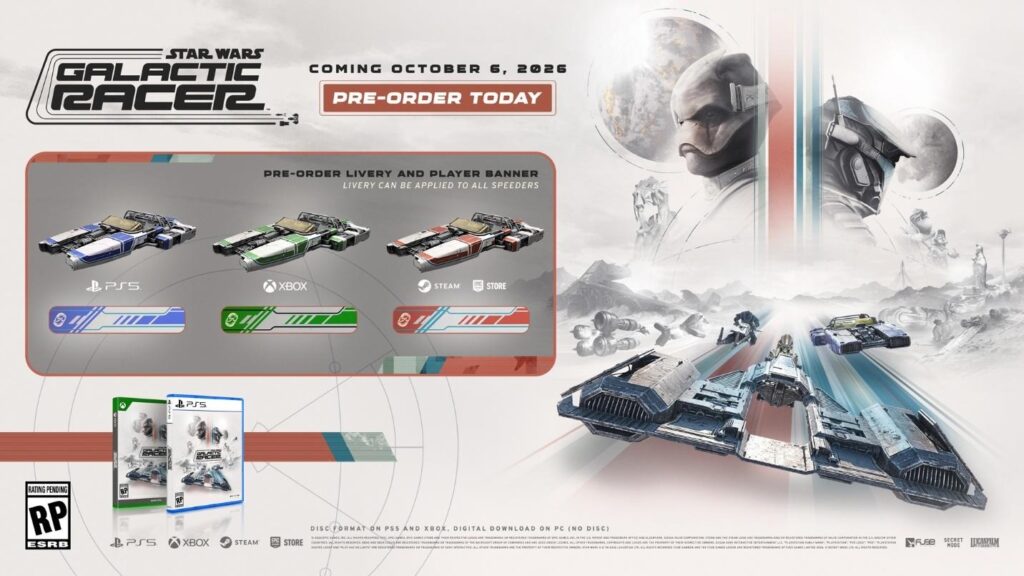
Secret Mode has announced three main editions:
- Standard Edition: $59.99, £49.99, or €59.99
- Deluxe Edition: $79.99, £64.99, or €79.99
- Collector’s Edition: $159.99, £139.99, or €159.99
These are announced suggested prices in their respective currencies. Individual retailers, taxes, and regional storefront policies may affect the final checkout price.
The Deluxe Edition includes three additional vehicles: the Kor Sarun: Darc X landspeeder, Kor Sarun: Ciza T speeder bike, and Kor Sarun: Rak S skim speeder. It also contains a livery inspired by the Naboo N-1 starfighter, three Arcade events designed for the included vehicles, a multiplayer banner, and a digital art book. A separate Deluxe Upgrade will be released alongside the game for players who initially purchase the Standard Edition.
The Collector’s Edition includes all Deluxe digital content and adds physical items such as a Darc X landspeeder model, a Kestar Bool banner, pilot patches, a physical art book, special packaging, and a steel case. Its appeal is therefore based on combining the upgraded game package with physical Star Wars racing memorabilia.
Preorders include a bonus livery for the three main speeder categories and a multiplayer Player Banner background. The colour of the preorder livery depends on the platform used to purchase the game. Physical Standard and Deluxe editions are planned for PS5 and Xbox Series X|S, while the Collector’s Edition also has a PC offering.
Store descriptions warn that preorder bonuses may later become available separately. They should not be advertised as guaranteed permanent exclusives. The Deluxe package should also not be described as purely cosmetic because it includes additional vehicles and Arcade events. However, the presence of those vehicles does not prove they will provide a competitive advantage in multiplayer. Their final value will depend on balancing, progression rules, and how the game handles edition-specific content online.
Multiplayer Modes, Crossplay, Player Counts, and Tour Structure
Fuse Games brings experience from the Burnout and Need for Speed series to Star Wars: Galactic Racer. That background helps explain the emphasis on immediate handling, a strong sense of speed, dramatic collisions, and destructive contact rather than simulation-style racing regulations. The developer nevertheless presents the game as a new racing adventure designed specifically around the Star Wars setting, not an older racing formula with familiar vehicles replaced by speeders.
Published hands-on impressions suggest that the multiplayer’s most distinctive feature is the relationship between racing and building a competitive vehicle throughout a session. GamesRadar highlighted the satisfaction of gradually accumulating upgrades before a final showdown, while PC Gamer found the racing entertaining but sometimes punishing. These observations come from prerelease builds and should not be treated as final judgments about launch balancing.
In a Gamereactor interview, creative director Matt Webster explained that vehicle feel comes first, while the story and surrounding structure establish why the racing competition belongs in this period of the Star Wars universe. The project is therefore trying to combine accessible driving with strategic decisions that remain interesting after players learn the basic controls.
Galactic Racer supports up to 12 online players in speeder events and up to eight players in podracing. The publisher’s FAQ separates these limits clearly. The general “up to 12 players” language used on some storefronts represents the game’s overall maximum rather than the capacity of every individual mode.
Those numbers describe the maximum number of racers in an event. They do not confirm the maximum size of a premade party, guarantee a particular private-lobby configuration, or explain how many friends can join matchmaking together. Party limits and lobby options remain separate social features that require their own specifications.
Traxion reported that the preview matchmaking system prioritised getting players into races quickly rather than using skill-based matchmaking. If that remains true at launch, new players could be matched against racers who already understand the tracks, vehicle classes, upgrades, and aggressive contact systems. The final matchmaking experience will need to be assessed once the public servers are active.
Crossplay is confirmed across the supported platforms. The PC storefronts list cross-platform multiplayer, while Secret Mode explains that Epic Online Services supports cross-platform play, friend management, and invitations. On Steam, the Epic Online Services redistributable library must be installed before the game launches, with a download prompt appearing when the required software is absent.
Signing into an Epic Games account is specifically required for managing and inviting non-Steam friends while playing through Steam. That should not be expanded into the inaccurate claim that every part of Galactic Racer requires an Epic account. Installing the supporting software, signing in to manage cross-platform friends, and buying the game through a particular launcher are separate actions.
Crossplay should also be distinguished from cross-save and cross-buy. Racing against someone on another platform does not automatically mean progress can transfer between platforms or that purchasing one version provides access to every other version. The reviewed information confirms cross-platform multiplayer and friend invitations, but not those additional ownership or progression features.
The announced online menu includes several options:
- Quick Race
- Quick Podrace
- Multiplayer Tour
- Podracing Tour
Quick Race and Quick Podrace allow players to enter shorter competitions without committing to an extended session. Multiplayer Tour and Podracing Tour provide longer structures in which several races contribute to a larger championship.
Multiplayer Tour consists of six races. The first five events allow players to earn credits, select rewards, and develop their vehicles before a decisive final race. Fuse Games told Traxion that a complete Tour is intended to last approximately 30 to 40 minutes, compressing the campaign’s longer upgrade process into a focused online competition.
The speeder Tour concludes at Derven Acos, a purpose-built Galactic League arena designed to test the vehicle build developed throughout the session. Tour mode therefore asks players to consider more than their next finishing position. A component selected after the second race may influence several later events and become particularly important in the final showdown.
A hypothetical choice between immediate speed and stronger protection becomes more meaningful when several races remain. Additional pace could improve placements and rewards, while protection could preserve consistency when the field becomes aggressive. The better option depends on the selected vehicle, the remaining circuits, and the player’s driving habits rather than one upgrade being universally superior.
The format also depends on maintaining a reason to continue after a poor early result. If a disappointing opening race still leaves meaningful upgrade decisions, contracts, predictions, and comeback opportunities, the six-event structure can remain competitive. If the first result creates an overwhelming disadvantage, the Tour risks becoming several disconnected races whose outcome feels settled too early. Preview impressions suggest potential, but the final comeback balance requires launch testing.
Podracing operates as a separate online discipline rather than another vehicle choice inside every speeder event. Podraces support eight players, while the three speeder categories compete in fields of up to 12. Fuse Games explained that podracers are the fastest and most technically demanding machines, making direct competition with ordinary speeders impractical.
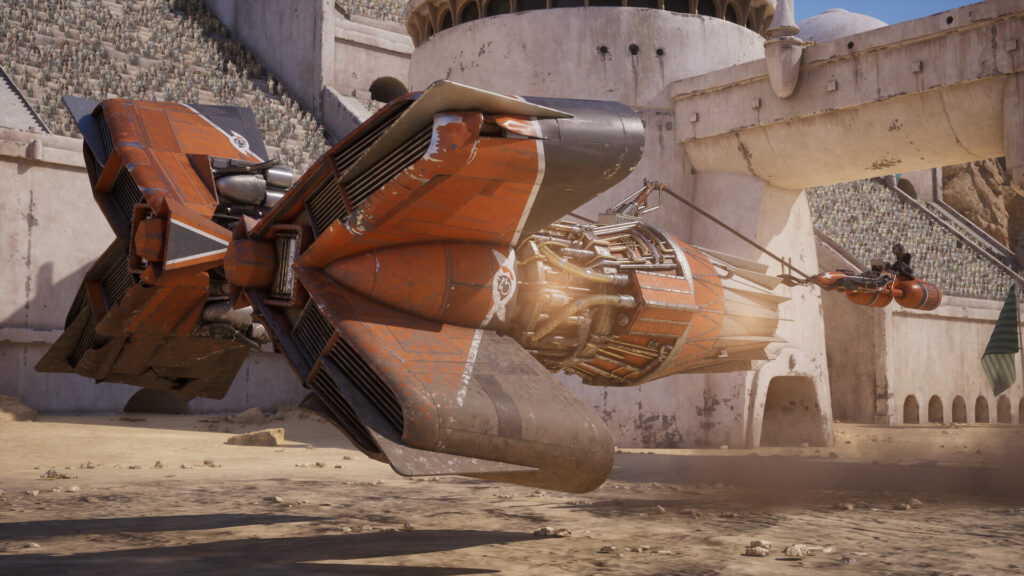
Players can enter Quick Podrace for an individual event or Podracing Tour for an extended series. The Podracing Tour concludes on Tatooine and allows players to choose recognisable competitors with their own vehicles. Podracing is not limited to recreating the Mos Espa Circuit. Secret Mode has shown the machines racing in other environments, and Arcade mode provides access to podracing from the beginning.
Podracers cannot be customised in the same way as landspeeders, speeder bikes, and skim speeders. This restriction should remain separate from broader marketing about vehicle customisation. Speeder racing centres on selecting a class and developing a temporary build, while podracing offers a distinct high-speed discipline built around recognisable machines and more technically demanding handling.

Vehicle Classes, Racers, Upgrades, Credits, and Racing Combat
The four vehicle categories are not interchangeable visual skins. Their handling differences affect corner entry, racing lines, durability, acceleration, and how comfortably a driver can tolerate physical contact.
Landspeeders are the heavier, drift-oriented option. Fuse Games describes them as a natural starting point because they combine stability with the ability to withstand collisions. They suit players who want a substantial vehicle that can hold its line and survive aggressive racing more comfortably.
Speeder bikes emphasise speed and a more delicate handling approach. Their cornering system allows them to store and release energy, rewarding players who understand how to carry momentum through turns. Their lighter design may provide strong pace but makes poorly judged contact more dangerous.
Skim speeders use banking and sideways positioning through corners. They are built around maintaining momentum and approaching turns differently from both landspeeders and bikes. Their distinctive movement creates racing lines that may intersect with routes preferred by other vehicle categories.
Podracers occupy a separate performance tier. They are faster and more technically demanding, which is why they compete in dedicated events rather than joining the mixed speeder field.
These handling models create natural opportunities for close racing. A drifting landspeeder may take a broad line through a corner, while a speeder bike or skim speeder follows a different route through the same space. The lines can intersect even when both drivers are controlling their vehicles correctly, creating contact without requiring every collision to be accidental or malicious.
Learning a circuit and mastering a vehicle are therefore related but separate tasks. Memorising the road does not automatically reveal the best braking, turning, overtaking, or defensive approach for every class. A useful early goal is to become consistent with one vehicle category before changing machines in response to every difficult track section.
Multiplayer character selection also affects the starting build rather than only changing the portrait or outfit shown before a race. The multiplayer overview describes racers with different traits, with more characters becoming available as players level up.
GamesRadar provided several examples from its preview. Griff Halloran specialises in Afterburner-related performance, while Biddy Blas has a fire-focused identity involving flames from his vehicle. PC Gamer tested a Survivor loadout containing a shield, a speed bonus that disappeared after the first crash in each race, and a boost activated when the shield broke. This setup rewards avoiding early damage while still providing a benefit once its protection fails.
Shade remains the central campaign protagonist, but multiplayer expands the selection to include additional new and returning figures. Matt Webster explained that Fuse Games worked with Lucasfilm Games when developing the characters, balancing original personalities with recognisable competitors appropriate to the period.
Starting traits should not be treated as complete or permanent builds. They provide the foundation for later upgrade choices during a Tour. Players can reinforce a racer’s existing strength or use later rewards to compensate for a weakness. A dependable character tier list will require final statistics, interactions, and balancing rather than a small number of prerelease demonstrations.
Credits form part of the Tour progression economy. PC Gamer described players earning them through race placement and by predicting the bracket in which they expected to finish. During a 12-player event, the observed prediction options were top nine, top six, and top three. More ambitious predictions carried stronger potential rewards.
The multiplayer presentation also showed a Legendary reward connected to a successful all-in top-three prediction. Marking another participant as a rival creates an additional personal objective within the wider field, giving players a reason to pay attention to one particular opponent.
Podracing Tour includes bounties, with previewed examples rewarding elimination-focused play. Backer Contracts add another objective layer by allowing players to select a challenge before an event. GamesRadar described examples involving jumps or using the Ramjet. These mechanics make the manner in which someone races relevant to progression rather than leaving finishing position as the only source of rewards.
Contracts, bounties, rival objectives, and finishing predictions should not be treated as identical systems merely because all can influence rewards. They may use different goals, risks, and payouts. They are also fictional in-game mechanics and should not be described as a real-money betting service.
The strategic tension lies between ambition and reliability. A difficult prediction or contract may accelerate a successful build, while repeatedly choosing goals beyond the player’s current ability could leave the vehicle underdeveloped. Conservative decisions may provide steadier progress but fewer opportunities to obtain the strongest rewards.
Vehicle construction combines conventional performance improvements with active abilities that alter what happens during a race. PlayStation Blog’s hands-on report describes Afterburner as a shorter speed boost, while Ramjet provides more sustained and powerful acceleration. Ramjet use generates heat, creating the risk of an explosion, and the ability must recharge after being released. Shields and offensive equipment provide further options.
The value of an upgrade depends on how it interacts with the rest of the build. A boost-focused setup still needs safe places to use its acceleration. A defensive build must turn additional survivability into better positioning or more consistent results. An ability that looks powerful on paper may be less useful when it repeatedly causes the player to overheat, crash, or lose control.
Campaign and Multiplayer Tour use the same upgrade perks, but their mechanical progression remains separate. A vehicle developed in the campaign is not permanently imported into each multiplayer session. Tour builds are temporary and are created again during each six-race competition.
Campaign-unlocked liveries and cosmetic parts can carry into multiplayer, preserving some visual continuity between modes. Solo play can also help players understand how individual components and classes behave, but completing the campaign should not be described as providing a permanent mechanical advantage in every online race. Cosmetic progression and performance progression are distinct systems.
Physical aggression is an intended part of racing. The official description explicitly includes shunting, slamming, and taking down opponents, establishing contact as a supported path to victory rather than incidental disorder.
GamesRadar described cinematic takedowns, slow-motion wreckage, and the danger of misjudging a Ramjet attack. The same acceleration used to destroy an opponent can send the attacker into a wall, obstacle, or hazard. Continuing to use the ability recklessly can also cause overheating.
PlayStation Blog similarly reported that forcing competitors into walls and debris could produce destructive results. The environment and opposing vehicle therefore work together. A collision on an open straight may be recoverable, while the same impact beside a canyon wall, acid river, or narrow structure could end the victim’s race.
Positioning functions as a defensive resource. Drivers must consider where they are in relation to rivals and environmental threats, not simply whether they currently have enough speed to attack. Refusing to retaliate in a dangerous section may be more valuable than attempting a takedown that exposes both vehicles to elimination.
Campaign elimination rules should not automatically be applied to multiplayer. The fact that repeated crashes can end a campaign run does not establish that every online mode uses the same number of lives or consequences. Campaign and multiplayer descriptions need to remain separate until Fuse Games provides complete rules for each online event.
Tracks, Planets, Environmental Hazards, and Multiplayer Outlook
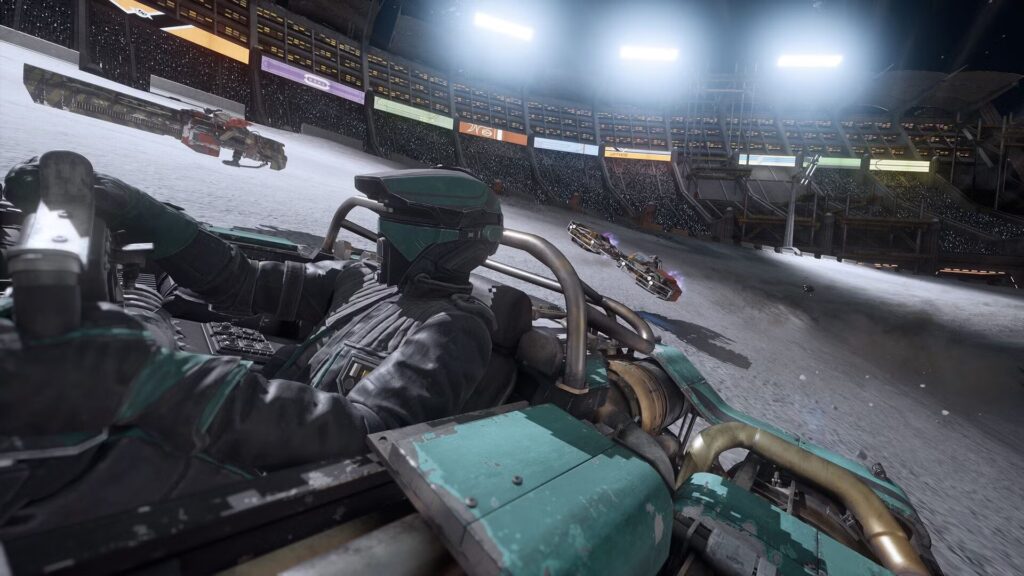
Official material currently highlights Jakku, Ando Prime, Lantaana, Sentinel I, Tatooine, and Derven Acos. These announcements establish a varied collection of racing environments but do not confirm the exact number of launch circuits, route variants, or online rotations. One planet may contain more than one track, while individual routes may be reused in different formats.
Jakku’s racing identity incorporates the wreckage of the Graveyard of Giants, giving competitors enormous remnants of the Galactic Civil War to race through and around. The setting connects the league’s dangerous competition to the wider history of the Star Wars galaxy rather than using an empty desert as a generic backdrop.
Sentinel I was once a Skakoan listening station before mining activity transformed the location. Its environment contains enormous communications structures and toxic yellow acid rivers, turning industrial scenery into an active part of the racing challenge.
Derven Acos is a purpose-built Galactic League arena and the concluding destination for the speeder Multiplayer Tour. Secret Mode describes it as combining planetary conditions encountered elsewhere into a final test of both the driver and the vehicle developed during the previous races. Its role is mechanical as well as narrative because it evaluates whether the temporary Tour build can handle several different types of pressure.
Tatooine serves as the concluding destination for Podracing Tour, linking the new competition to the discipline’s most recognisable Star Wars location. However, the game is not limiting podracing to one familiar circuit, and the machines can be used in other environments through the wider mode structure.
Previewed circuits include hazards that require more than memorising corners. PC Gamer encountered lethal acid and a cold status effect that could be countered by driving through narrow heat vents. Those vents created another problem because several vehicles attempting to use the same restricted space could collide and form a pile-up.
Environmental knowledge therefore includes recognising where danger compresses the field, where a defensive ability becomes valuable, and where an apparent recovery route can expose the vehicle to contact. A narrow heat vent may remove a harmful status effect while also becoming an obvious place for rivals to attack.
The multiplayer’s appeal appears to come from combining several layers:
- Distinct vehicle handling
- Aggressive contact and cinematic takedowns
- Character-specific starting traits
- Temporary Tour progression
- Credits, predictions, contracts, rivals, and bounties
- Environmental hazards
- Cross-platform racing
- Separate speeder and podracing disciplines
- Short Quick events and longer 30 to 40-minute Tours
The main unresolved issue is whether these systems reinforce one another under final competitive conditions. Temporary upgrades can make each Tour feel different and give struggling racers a route back into contention, but they must remain readable while 12 vehicles are colliding at high speed. Risk-based rewards can create exciting decisions, but they must not allow an early leader to become unreachable too quickly.
Preview impressions suggest that the format can be entertaining, strategic, and punishing. GamesRadar found the build toward the final race appealing, while PC Gamer highlighted the severity of some outcomes. Those responses help explain the multiplayer’s potential without settling questions about final balancing, matchmaking, collision consistency, or online stability.
The strongest conclusion before launch is that Star Wars: Galactic Racer is trying to offer more than isolated arcade races. Its multiplayer combines driving skill, temporary build development, character traits, environmental knowledge, and calculated aggression. Whether that structure remains fair and understandable across repeated public sessions can only be determined after the finished game launches on October 6, 2026.
Frequently Asked Questions (FAQs)
- When does Star Wars: Galactic Racer release?
Star Wars: Galactic Racer is scheduled to release worldwide on October 6, 2026. The date applies to the announced PlayStation 5, Xbox Series X|S, and PC versions, with the PC release available through Steam and the Epic Games Store. No separate or delayed launch window has been announced for any of those platforms. - Does Star Wars: Galactic Racer support crossplay?
Yes. Cross-platform multiplayer is an advertised feature, allowing players on supported consoles and PC storefronts to race together. Epic Online Services supports cross-platform friend management and invitations, although Steam users need to sign in to an Epic Games account to manage friends outside Steam. Crossplay does not automatically confirm cross-save, cross-buy, or shared progression between separately purchased versions. - How many players can join an online race?
Speeder events support up to 12 online racers, while dedicated podracing events support up to eight. The difference exists because podracers are faster and more technically demanding than the landspeeders, speeder bikes, and skim speeders used in the larger events. The advertised 12-player figure is therefore the game’s overall maximum rather than the capacity of every online mode. - What multiplayer modes have been announced?
The announced online options include Quick Race, Quick Podrace, Multiplayer Tour, and Podracing Tour. Quick modes provide shorter individual events, while Tours connect several races through temporary upgrades, credits, contracts, and other progression decisions. Multiplayer Tour contains six races, with the first five preparing the player and vehicle for a decisive final event. - Can Star Wars: Galactic Racer be played offline?
Yes. The campaign, Scenarios, and Arcade events can be played offline, allowing players to experience several parts of the game without joining multiplayer. Online races and connected Arcade leaderboards require an internet connection. The publisher describes those connected leaderboards as comparisons between friends rather than public worldwide rankings. - Is there split-screen multiplayer?
No. Fuse Games has confirmed that Star Wars: Galactic Racer does not include local split-screen multiplayer. Its offline modes are designed for a single player, while competition against friends or other racers takes place online. The developer said split-screen would have required presentation or performance compromises it did not want to make. - Can podracers be customized?
No. The publisher has confirmed that podracers do not use the same customization system available for landspeeders, speeder bikes, and skim speeders. Podracers operate as a separate high-speed class with recognizable competitors and their associated machines. Players should therefore not assume that speeder upgrades, cosmetic parts, or temporary vehicle-building options apply equally to podracing. - What do race bets do in multiplayer?
Race bets are in-game finishing predictions that allow players to take additional risks for stronger Tour rewards. Previewed choices included predicting a finish within the top nine, top six, or top three, with more difficult predictions offering better potential rewards. They work alongside rival selections, Backer Contracts, and bounties to influence the credits, upgrades, and parts earned during a multiplayer session, and they do not involve real-money gambling. - Is a console subscription required for multiplayer?
Yes. Online multiplayer on PS5 requires an active PlayStation Plus membership, while Xbox console multiplayer requires an eligible Xbox Game Pass Essential, Premium, or Ultimate subscription. These subscriptions provide access to online console play but do not automatically include a copy of Star Wars: Galactic Racer. Players still need to purchase the game unless it is separately added to a subscription catalogue. - What does the Deluxe Edition add?
The Deluxe Edition includes three Kor Sarun vehicles: the Darc X landspeeder, Ciza T speeder bike, and Rak S skim speeder. It also adds a Naboo N-1 starfighter-inspired livery, three Arcade events designed around those vehicles, a multiplayer banner, and a digital art book. A separate Deluxe Upgrade is scheduled for October 6, 2026, but it requires ownership of the base game.
Conclusion
Star Wars: Galactic Racer is approaching its October 6 launch with an identity broader than a straightforward podracing revival. Its official presentation combines different vehicle disciplines, hazardous environments, a story-driven campaign, and competitive multiplayer within the Galactic League.
The most interesting prospect is the way a Tour can give a race significance beyond its immediate finishing order. Building toward a final creates room for adaptation, calculated risk, and changing priorities. Whether that remains satisfying when collisions and environmental hazards intervene will be a defining test of the finished game.
The confirmed access details are equally important to expectations: cross-platform online competition does not imply shared purchases, offline single-player does not imply split-screen, and broad vehicle-customization language does not apply equally to podracers.
The preview evidence supports cautious enthusiasm for the design. A final assessment must still establish whether its handling, progression, and online competition remain enjoyable across repeated sessions: not merely whether the first few spectacular races make a strong impression.
Sources and Citations
- Star Wars: Galactic Racer Launches October 6 — Secret Mode Secret Mode’s April 30, 2026 announcement confirms the October 6 release, PC and console platforms, support for 1–12 players, and Standard, Deluxe, and Collector’s Edition preorders.
- Star Wars: Galactic Racer Official Website The official website provides the release date, supported platforms, story premise, Galactic League setting, campaign, strategic PvP races, vehicle classes, customization, and combat-racing features.
- Preorder Star Wars: Galactic Racer — Official Website The official preorder announcement confirms the platforms, October 6 launch, bonus repulsorcraft livery, and multiplayer Player Banner.
- Star Wars: Galactic Racer — Steam Steam confirms the October 6, 2026 PC release, developer and publisher, pricing, available editions, supported features, system requirements, and campaign and multiplayer descriptions.
- Star Wars: Galactic Racer FAQ — Secret Mode Secret Mode’s publisher FAQ confirms worldwide launch timing, PC storefronts, PS5 and Xbox Series X|S availability, single-player access, multiplayer requirements, cross-platform details, and other technical-access information.
- Star Wars: Galactic Racer — PlayStation Store PlayStation’s listing confirms the PS5 release date, $59.99 Standard Edition, optional online play, PS Plus requirement for multiplayer, support for up to 12 online players, Remote Play, DualSense vibration, accessibility features, and preorder bonuses.
- Star Wars: Galactic Racer Deluxe Edition — PlayStation Store The Deluxe Edition listing confirms its $79.99 price, three exclusive vehicles, Naboo N-1-inspired livery, three Arcade events, multiplayer banner, and digital art book.
- Star Wars: Galactic Racer Release Date and Interview — StarWars.com StarWars.com confirms the worldwide October 6 release, platforms, editions, preorder bonuses, story period, characters, locations, vehicle classes, and information supplied directly by Fuse Games and Lucasfilm Games.
- Summer Game Fest 2026 PS5 Highlights — PlayStation Blog PlayStation Blog identifies Galactic Racer’s October 6 PS5 release and provides an official overview of its story, characters, and post–Return of the Jedi setting.
- Star Wars: Galactic Racer Single-Player Hands-On — PC Gamer PC Gamer’s attributed hands-on report discusses the runs-based campaign, different repulsorcraft classes, vehicle handling, upgrades, crashes, and roguelike progression.
- Star Wars: Galactic Racer Multiplayer Tour Hands-On — PC Gamer PC Gamer’s multiplayer preview covers 12-player competition, six-event Tours, race-to-race upgrades, betting, credits, abilities, vehicle builds, and strategic progression.
- Star Wars: Galactic Racer Hands-On Preview — GamesRadar GamesRadar’s hands-on report examines the campaign’s branching event structure, three-crash limit, vehicle classes, boost systems, ramjet mechanic, upgrades, paddock, and dedicated podracing sequences.
- Star Wars: Galactic Racer Crash and Multiplayer Preview — GamesRadar GamesRadar provides additional hands-on observations about takedowns, damage, passive parts, active abilities, custom vehicle builds, and six-event multiplayer Tours.
- The Outer Rim Is Your Highway in Galactic Racer — GamesRadar GamesRadar’s developer interview with Matt Webster covers podracing, camera perspectives, vehicle handling, progression, customization, solo play, and multiplayer design.
- Star Wars: Galactic Racer Single-Player Preview — Gamereactor Gamereactor’s hands-on preview discusses campaign progression, vehicle buffs, abilities, handling improvements, race results, and accessibility for players who are not racing-game specialists.
- Galactic Racer’s Spectacle and Game Feel — Gamereactor Gamereactor’s developer interview addresses how Fuse Games balances recognizable Star Wars spectacle with handling depth and lasting mechanical appeal.
- Galactic Racer Post-Launch Content Interview — Gamereactor Gamereactor reports that the premium game will not use a season pass while still receiving planned post-launch content.
- Star Wars: Galactic Racer Multiplayer Hands-On — Traxion Traxion’s hands-on report covers Multiplayer Tour, its six-round format, vehicle-building phase, position betting, credit rewards, parts, progression, and character unlocks.
- Developer-Narrated Galactic Racer Multiplayer Overview Fuse Games founder and CEO Matt Webster narrates the official multiplayer overview, explaining Multiplayer Tour, progression, strategic builds, betting, abilities, and competitive racing.
Recommended
- How Do I Add a Camera to My Blender Scene?
- Cat Mail Co. Beginner Guide: 9 Essential Tips for Your First Shifts
- Autodesk Releases Mudbox 2027: Release Notes, Download Links, System Requirements, and What Is New
- EA Sports FC 27: Kylian Mbappé Cover and July 23 Reveal
- Assassin’s Creed Black Flag Resynced Reveals Its Release Times for PC, PS5, and Xbox
- Matt Berry Cast in A Minecraft Movie Squared as Fans Predict Herobrine Appearance
- Ucupaint for Beginners: How to Texture Paint With Layers in Blender (Step-by-Step)
- Every Release Date from Every Event at Summer Game Fest 2026
- Quick Resume Xbox’s Best Feature In Years Just Got A Huge Fix: How to Disable It Per Game (April 2026 Update)
- Psycho Killer Review (2026): Does the Satanic Slasher Thriller Live up to the Hype?
- Google Has Allowed Online Gambling Advertising in the UAE: What the March 2026 Google Ads Policy Update Means
- GTA 6 Official Cover Art and Vice City Details Breakdown
- New Horrified D&D board game goes to Ravenloft, and here’s your exclusive first look at it
- The 10 Best New Anime in Spring 2026: The Must-Watch Fresh Series This Season



































































































