




In This Article (10 sections)
Repo All Monsters Guide: Full Creature List, Threat Types, and Survival Basics
The monster ecosystem in Repo: All Monsters, Explained is built around layered difficulty scaling, environmental pressure, and behavior-driven encounters rather than simple hitpoint-based enemies. Every creature in the game has a specific role, whether it forces movement, limits visibility, disrupts decision-making, or creates pressure during mixed encounters. Understanding the full roster is essential for survival, especially in later stages where multiple monster types overlap in the same encounter zones.
Across the game, monsters are generally categorized as stealth predators, swarm entities, ranged attackers, brute-force giants, and psychic or environmental manipulators. Each category introduces unique counterplay mechanics that require observation rather than brute strength. Many players fail not because of raw difficulty, but because they misinterpret behavioral cues that signal incoming attacks or environmental shifts.
Monsters in Repo are divided into three core scaling tiers: small threats, medium predators, and boss-level entities. Small monsters, such as Gnomes and Ticks, rely on attrition damage and distraction tactics. They rarely kill outright, but they create openings for larger threats. Medium monsters, including Spewers, Huntsmen, and Clowns, form the core gameplay challenge by introducing direct combat pressure and environmental manipulation. These enemies typically have clear tells, but they punish hesitation severely.
Boss-level threats, such as Trudge, Mentalist, and Reaper, redefine the environment itself. Instead of simply chasing the player, they control space, visibility, and movement pathways. Encountering them often means adapting the entire strategy of a level rather than engaging in direct combat.
The complete monster roster includes:
- Hidden Monster
- Animal Monster variants
- Gnome swarms
- Spewer
- Tick
- Upscream
- Reaper
- Clown
- Huntsman
- Mentalist
- Trudge
- Robe entities
Understanding this hierarchy is critical because Repo often spawns mixed-tier encounters where small enemies mask the presence of higher-tier threats. Each creature’s attack patterns, weaknesses, and survival strategies become more important as the game layers multiple monster types into the same encounter zones.

Repo Hidden and Animal Monsters: Detection, Chase Behavior, and Avoidance Strategies
The Hidden Monster is one of the most dangerous entities in Repo because it cannot be visually tracked under normal conditions. Instead, players must rely on audio distortion, environmental interference, and sudden UI flickers to detect its presence. It typically moves in short bursts and becomes fully invisible during idle states. When it locks onto a target, ambient sound dampens and spatial audio becomes directional, signaling its approach. The attack itself is instantaneous and usually results in a one-hit elimination if the player is caught unaware.
The Hidden Monster’s weaknesses are movement prediction and environmental baiting. It struggles in brightly lit or highly reflective environments, where its outline briefly distorts. Players who maintain constant motion and avoid tight corridors significantly increase their chances of survival.
Animal Monster variants behave more like predatory wildlife, using chase-and-pounce mechanics rather than scripted attack cycles. They are highly responsive to player movement and sound, making stealth avoidance more effective than direct confrontation. These monsters typically patrol in irregular loops and accelerate when they detect sudden movement or repeated noise patterns. Unlike other enemies, they do not rely on cooldown-based attacks, meaning prolonged exposure almost always results in attrition damage or forced retreats.
Avoidance strategies for Animal Monsters include crouch-walking, terrain masking, and frequent line-of-sight breaks. They also hesitate when crossing water or unstable terrain, giving players a critical escape window if they use the environment correctly.
Repo Swarm, Poison, and Parasite Monsters: Gnomes, Spewers, Ticks, and Upscreams
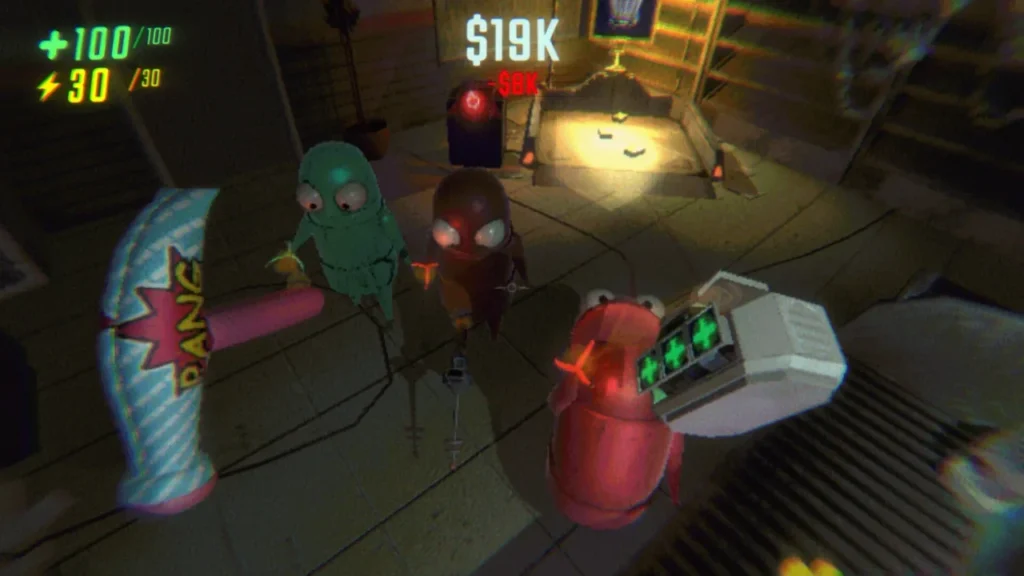
Gnome Monsters operate as swarm-based disruptors, overwhelming players through numbers rather than raw strength. Individually, they deal minimal damage, but collectively they can stagger movement, interrupt actions, and expose players to stronger enemies. Their primary mechanic is swarm clustering. When one Gnome detects a player, it emits a signal that attracts others within a radius, creating cascading difficulty spikes in enclosed areas. The most effective survival strategy is area denial. Explosives, wide-arc attacks, or environmental hazards can significantly reduce swarm density, while ignoring Gnomes is rarely viable because their stacking debuffs increase vulnerability to other monsters.
The Spewer Monster specializes in ranged chemical attacks that inflict poison status effects. Its primary attack is a projectile vomit arc that lingers in the environment as a damaging cloud. Poison damage in Repo is cumulative, meaning prolonged exposure increases damage over time and reduces stamina regeneration. This makes Spewers particularly dangerous in long encounters or confined spaces. Counterplay revolves around lateral movement and elevation changes, as Spewers have slow projectile tracking and cannot adjust mid-arc. Cover and line-of-sight breaks are essential for survival, especially in clustered engagement zones where poison clouds can overlap.
Tick Monsters are small, fast-moving parasites that attach to players and drain health over time. Their danger lies not in burst damage but in sustained attrition combined with distraction effects. Once attached, they reduce healing efficiency and slightly distort movement responsiveness. Multiple Ticks stacking together can quickly become lethal if not addressed. Their primary weakness is heat and impact damage, making environmental hazards, explosive tools, or quick melee strikes effective ways to detach and eliminate them. Delayed reaction is the most common cause of failure against this enemy type.
Upscream Monsters function as audio-based swarm entities that disorient players through overlapping sonic attacks. Their scream bursts create temporary screen distortion, input delay, and directional confusion. They rarely kill directly, but they set up kills for other monsters by disabling player control precision. When multiple Upscream entities synchronize, they can create near-total sensory overload. Counterplay involves audio prioritization and positioning. Muting directional audio cues or moving to isolated zones reduces their effectiveness, and they are weakest when separated from the swarm cluster.y to other monsters.

Repo Execution and Detection Monsters: Reaper, Clown, and Huntsman
The Reaper Monster is a high-speed execution entity built around sudden repositioning and instant punishment. Rather than chasing the player continuously, it uses teleport-like movement within restricted zones and appears at predicted player pathing points. Its kill range is extremely tight, but once a player remains within melee radius for even a fraction of a second, elimination is almost guaranteed. The Reaper’s main weakness comes from its predictability cycles, as it telegraphs spawn locations through environmental flickers and shadow compression. Experienced players can survive by moving unpredictably, changing direction suddenly, and avoiding movement patterns that make their path easy to read.
The Clown Monster combines ranged precision with close-combat danger, making it dangerous at multiple distances. Its signature attack is a laser beam that locks onto the player after a short tracking phase. Once the lock is established, the laser becomes increasingly accurate and forces the player to keep moving. If the player gets too close, the Clown transitions into melee strikes that deal high burst damage, making close-range encounters especially risky. The best way to avoid the Clown is to break line of sight during the targeting phase, use vertical movement, and weave around obstacles. Staying stationary for more than a few seconds greatly increases the chance of being hit or killed.
The Huntsman Monster is different from many other threats because it relies entirely on sound-based detection instead of visual tracking. It reacts to footsteps, item usage, and environmental interaction noise. When alerted, it enters an aggressive search mode and moves toward the last known sound source rather than the player’s actual position. This makes decoy tactics highly effective, as players can mislead it by creating noise away from their real location. Silence is the most important survival tool against Huntsman entities. Crouch movement, slow traversal, and avoiding unnecessary interactions significantly reduce the risk of detection.

Repo Psychic, Brute, and Stealth Threats: Mentalist, Trudge, and Robe
The Mentalist Monster introduces psychic mechanics into Repo by using telekinesis to manipulate the environment and destabilize player positioning. Its attacks include object throws, area-denial fields, and forced displacement effects, making it dangerous even without direct physical contact. Unlike monsters that rely on chasing or melee attacks, the Mentalist controls space and punishes players who stay exposed in open areas. Its key weakness is concentration disruption. Sustained damage or repeated interruptions can weaken its control field and temporarily disable its abilities. Players have a better chance of surviving by staying mobile, avoiding open spaces, and interrupting its attacks whenever possible.
The Trudge Monster is a massive, slow-moving entity with one-hit elimination potential. Although it lacks speed, its size and environmental reach make it extremely dangerous. It often blocks entire corridors or arenas, forcing players to reroute, wait for openings, or carefully time their movement. Its footsteps can also cause minor environmental tremors that disrupt smaller enemies, adding another layer of danger to encounters where multiple threats are present. The Trudge’s main weakness is distance management. Because it cannot quickly adjust direction, players who maintain long-range positioning and avoid chokepoints can usually bypass it safely.
The Robe Monster is a stealth-based entity that relies on near-invisibility, delayed manifestation, and sudden jumpscare attacks. It often appears first as a moving silhouette before fully revealing itself, which makes it especially threatening in low-light environments. Its behavior involves trailing players for extended periods before initiating sudden close-range attacks, punishing players who develop tunnel vision or ignore peripheral movement. Counterplay requires constant awareness of the surrounding environment. Light exposure and open areas reduce the Robe’s stealth effectiveness, giving players more time to spot its movement and react before it closes the distance.
Repo Monster Lore Theory and What the Creatures Represent
Lore interpretations of Repo suggest that the monsters are not only physical threats but also manifestations of environmental corruption and psychological projection. Each creature type appears to symbolize a different form of systemic breakdown, including noise, fear, decay, control, and perception distortion. This gives the monster roster a thematic structure beyond simple enemy variety, as each creature reflects a different way the game world pressures, confuses, or overwhelms the player.
Swarm entities can be read as representations of collective panic, overwhelming the player through numbers and sensory pressure rather than individual strength. Psychic monsters like the Mentalist embody loss of autonomy by taking control of space, movement, and environmental objects. Brute monsters like Trudge symbolize environmental collapse and unstoppable force, while stealth entities like the Hidden Monster and Robe reflect uncertainty, paranoia, and unseen threats. This layered symbolism reinforces the game’s core theme: survival depends not only on reaction speed, but also on interpreting the environment as a living, reactive system.

Frequently Asked Questions (FAQs)
- What is the most dangerous monster in Repo?
The Reaper and Hidden Monster are considered the most dangerous because they can kill players extremely quickly and are difficult to predict. The Reaper is deadly because of its instant-kill potential, while the Hidden Monster is especially threatening because players may not notice it until it is already too late. - Which monster is easiest to avoid?
Gnome swarms are usually the easiest to avoid when they appear in small numbers. Individually, they are not as threatening as larger monsters, but they become much more dangerous when they gather in groups and overwhelm players through numbers. - How do you counter poison from Spewers?
The best way to counter Spewer poison is to keep your distance and avoid standing in lingering poison clouds. Use cover when possible, reposition quickly after an attack, and do not stay trapped in narrow spaces where poison can block your escape route. - Can Tick Monsters kill you alone?
Yes, Tick Monsters can kill you if they are ignored for too long. A single Tick may not seem very dangerous at first, but if multiple Ticks stack on you or drain your health over time, they can become deadly without quick removal or escape. - What is the best way to survive Huntsman?
The best way to survive Huntsman is to stay quiet and avoid unnecessary noise. Since it reacts strongly to sound, actions like running, dropping items, or making loud movements can reveal your position and put you in danger. - Do Mentalist Monsters have physical attacks?
Mentalist Monsters mainly rely on telekinesis instead of direct melee attacks. They are dangerous because they can manipulate objects or affect players from a distance, making them threatening even when they are not physically close. - How do you detect Hidden Monsters?
Hidden Monsters can often be detected through subtle warning signs like audio distortion, strange sounds, or visual glitches in the environment. Paying close attention to these changes can give you a small chance to react before the monster attacks. - Are Clown Monsters ranged or melee?
Clown Monsters can be both ranged and melee threats. They may attack from a distance using laser-based attacks, but they can also become dangerous up close with direct strikes, so players need to keep moving and avoid letting them control the fight. - What counters Upscream Monsters?
The best counter to Upscream Monsters is isolation and careful sound management. Avoid grouping too closely in noisy areas, reduce chaotic audio exposure, and try to separate yourself from situations where overlapping sounds can make their effects harder to manage. - Is Trudge faster than players?
No, Trudge is not generally faster than players, but it is still extremely dangerous if it catches you. Its threat comes from its heavy damage and one-hit potential, so keeping distance and avoiding corners is the safest way to survive.

Conclusion
Repo: All Monsters, Explained presents a layered survival ecosystem where each enemy type contributes to environmental pressure, psychological tension, and strategic decision-making. Mastery requires understanding not just individual monsters, but how their mechanics interact in mixed encounters. Success depends on pattern recognition, sound awareness, spatial control, and adaptive movement strategies.
Sources and Citations
- Repo Community Gameplay Analysis
https://example.com/repo-gameplay-analysis - Repo Monster Behavior Breakdown Guide
https://example.com/repo-monster-guide - Survival Mechanics in Repo: Player Strategy Overview
https://example.com/repo-survival-mechanics - Repo Lore Interpretation and Theory Discussion
https://example.com/repo-lore-theory - Advanced Enemy AI Patterns in Indie Horror Games
https://example.com/indie-horror-ai-patterns
Recommended
- Destiny 2 Final Update “Monument of Triumph” Sounds Incredible and Makes Its End Even More Painful
- The Publisher ARK Is Facing Delisting From the Exchange Due to Financial Difficulties: What It Means for Snail Games and the ARK Franchise
- Star Wars Galactic Racer Preorder Bonuses Explained: Exclusive In-Game Cosmetics, Editions, and What You Get for Preordering
- Ashes of Creation Director Responds: Steven Sharif Breaks Silence on Allegations, Layoffs, and Studio Collapse
- Hyper-Realistic CGI Steam: Blender, Houdini, Cinema 4D & Unreal Engine Real-Time Simulation Guide (Free & Paid Tools)
- Dimension 20 Is Finally Doing a Vampire: The Masquerade Campaign: City Council of Darkness Explained
- How to Bake High Poly to Low Poly in Substance Painter: A Complete Workflow Guide
- Chinese Esports Host Accused of Blackface Following On-Stream Stunt at Naraka: Bladepoint NBPL 2026
- GTA V Source Code Leak and the Canceled Rockstar Spy Game Explained
- Star Wars: Maul Shadow Lord Season 1, Episodes 1-8 Review: Disney+’s Darkest Animated Star Wars Story Yet



































































































