











In This Article (8 sections)
Zach Cregger’s Resident Evil Movie Gameplay Inspiration and Adaptation Strategy
Zach Cregger’s Resident Evil movie takes an unusual approach to video game adaptation. Rather than simply retelling the established stories of Leon Kennedy, Claire Redfield, Jill Valentine or another familiar hero, Cregger has repeatedly described his goal as translating the experience of playing Resident Evil into cinematic language. Interviews and promotional material released ahead of the film’s September 18, 2026 theatrical opening show that this philosophy extends to resource management, ammunition tracking, weapon progression, healing items, camera perspective and the games’ escalating point-to-point structure.
Cregger’s central idea is that a Resident Evil movie should not merely resemble the games through recognizable monsters, locations and Umbrella references. It should reproduce the decisions and pressure that make playing them distinctive. In a PlayStation-focused discussion about the film, he recalled being strongly affected by Resident Evil 2’s resource-conservation systems. Players needed to know how much ammunition and healing material they possessed, decide what to carry and determine what could safely be left behind. That deliberate survival-horror rhythm became an important part of how he structured the movie.
The film converts those interactive systems into cinematic information. Viewers are meant to understand how many bullets protagonist Bryan has left, how badly injured he is and how his available equipment changes as the situation worsens. Instead of treating firearms as action-movie props with effectively limitless ammunition, the story asks the audience to recognize that every shot can create a future problem. The same principle applies to health, healing resources and the decisions Bryan makes as he moves through increasingly dangerous locations.
Cregger has said that directly retelling Leon Kennedy’s story would be redundant because the games already tell it effectively. His alternative is to create a new protagonist and storyline while preserving the systems, atmosphere, tension and progression that make the franchise recognizable. The result is an adaptation built around mechanical fidelity rather than strict plot fidelity. The protagonist, chronology and route through Raccoon City can change while ammunition anxiety, wounds, inventory-like decisions, weapon escalation and game-inspired framing continue to communicate the identity of Resident Evil.
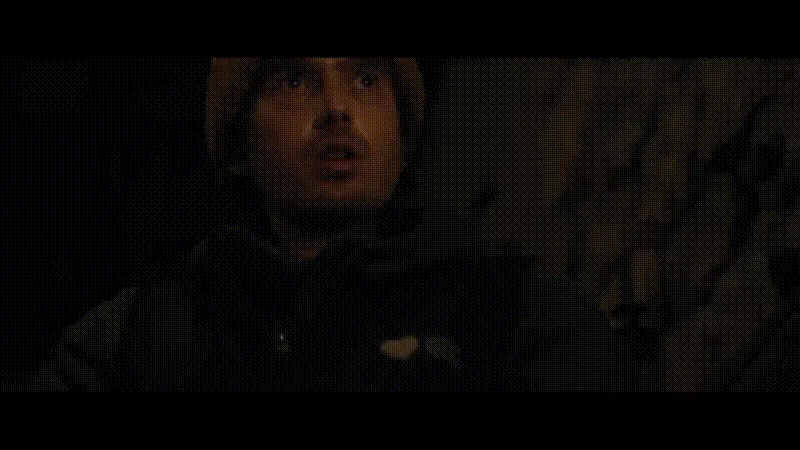
Austin Abrams plays Bryan, a medical courier who becomes trapped in a catastrophic Raccoon City outbreak. Cregger has characterized him as an ordinary, generally good-natured man without the exceptional combat training associated with many established franchise heroes. He is physically capable enough to keep moving, but he does not begin the story as an elite operator prepared to defeat bio-organic weapons. This allows his growing competence and equipment to follow a learning curve similar to that of a player beginning a survival-horror game.
Bryan’s position also helps the film move between vulnerability and action. He can become more capable as he survives, but the audience remains aware that he did not enter the night fully armed or trained. His progression feels earned because every new weapon, injury and encounter changes what he can reasonably accomplish. In that respect, he has something in common with Ethan Winters, whose ordinary-person framing made the first-person horror of Resident Evil 7: Biohazard especially immediate.
The story exists alongside the outbreak framework associated with Resident Evil 2, but Bryan is not replacing Leon or Claire within their campaigns. His mission unfolds on the sidelines of familiar events as Raccoon City collapses around him. More recent reporting confirms that Cregger has deliberately changed parts of the chronology and setting, including the use of a snowy 2026 backdrop. The film is therefore best described as RE2-parallel in concept rather than a strict recreation of the 1998 game.

How Resident Evil 4 and Resident Evil 7 Influence the Movie’s Camera and Horror
Resident Evil 4 and Resident Evil 7: Biohazard are especially useful for understanding the movie’s cinematic approach. The former established one of the series’ most influential third-person perspectives and combined increasing combat power with controlled resources. The latter moved the main series into an intensely immersive first-person format built around claustrophobic exploration, puzzles, limited supplies and close-range danger. Cregger’s movie uses both third-person framing and first-person sequences, allowing the filmmaking itself to echo different eras of Resident Evil gameplay.
Cregger has described Resident Evil 4 as probably the entry he played most. Its influence appears in the movie’s healing items, weapon progression and camera language. He revealed that several healing objects from the game were closely recreated for the film, turning recognizable inventory items into part of Bryan’s practical survival rather than placing them in the background solely as fan service.
The weapon curve also follows a game-like structure. Cregger’s example begins with Bryan using a basic pistol, progresses to a shotgun and eventually reaches an MP5-style automatic weapon. Bryan does not start the movie carrying everything he will need. His capabilities expand as the outbreak intensifies, allowing the film to introduce more aggressive or numerous threats without immediately removing the danger.
This reflects a familiar survival-horror progression. Limited early equipment makes even ordinary enemies threatening, while stronger later weapons let the story increase the scale of its confrontations. Cregger has connected this structure to his effort to “write a game as a movie,” rather than staging a series of unrelated action sequences. Resident Evil 4 remains a particularly appropriate comparison because its weapon management, upgrades, attaché case and expanding arsenal are central to its action-horror design.
The visual connection is equally important. Resident Evil 4 famously positioned the camera behind Leon and tightened the view over his shoulder when he aimed. That design became enormously influential in third-person action games. Cregger’s movie cannot give viewers literal control over Bryan, but it can place the camera behind or around him in ways that visually identify him as the equivalent of a playable character moving through an encounter.
The movie is not adapting Resident Evil 4’s plot. Bryan is not taking Leon’s place on a mission to rescue Ashley Graham in rural Europe. Instead, the film borrows the game’s mechanisms and cinematic vocabulary, including weapon escalation, recognizable survival items, visible resource pressure and a camera capable of following the protagonist like an on-screen avatar.
Resident Evil 7 contributes a different kind of visual and emotional language. Capcom’s 2017 game placed Ethan Winters in a first-person perspective and emphasized confined spaces, limited resources, healing, puzzles and situations in which avoiding or surviving an enemy could matter more than killing it. Its viewpoint removed much of the distance between the player and the threat, making every doorway, movement and close encounter feel more personal.
Cregger’s use of first-person sequences allows the film to access a similar feeling. Third-person framing preserves awareness of Bryan’s body and his relationship to the environment, while a transition into first-person removes that distance and places the audience inside his immediate experience. Alternating between the two perspectives can therefore change how much spatial and emotional separation viewers have from the danger.
Cregger’s broader preferences within the franchise also align with Resident Evil 7’s survival emphasis. He has spoken positively about slower, deliberate play, resource conservation and the fear created when the series does not become excessively arcade-like. He has also recalled being intensely frightened while experiencing the House Beneviento sequence from Resident Evil Village in virtual reality, demonstrating his interest in the immersive possibilities of the modern first-person games.
The movie’s influences extend beyond RE4 and RE7:
- Resident Evil 2 provides the formative resource-management experience and the outbreak framework surrounding Bryan’s story.
- Resident Evil 3 has also been identified in earlier reporting as relevant to Cregger’s conception of Raccoon City and the franchise.
- Resident Evil 4 influences the third-person camera, healing items, weapons and action progression.
- Resident Evil 7 informs the close, subjective survival-horror perspective.
- Resident Evil Village demonstrates the kind of immersive fear Cregger has praised, particularly through House Beneviento.
- Resident Evil 6 is among the games connected to elements of the film’s creature design through production commentary.
These references do not mean the film combines the plots of several games. They give Cregger a broad collection of visual ideas, gameplay rhythms, creatures and survival systems from which to construct an original movie.

Resource Management, Healing Items, Weapons and Resident Evil Easter Eggs
Resource management may be the film’s most important game-inspired idea. Cregger’s early experience with Resident Evil 2 taught him to think constantly about ammunition, healing supplies and inventory choices. Every item used in the present could become something unavailable during a more dangerous encounter later. The tension came not only from the enemy standing in front of the player, but also from the future cost of surviving it.
In the movie, this becomes information the audience can follow. Cregger has said viewers should understand Bryan’s health and remaining ammunition instead of assuming his weapons can fire indefinitely. Recent coverage of his comments similarly emphasized that the audience will be able to keep track of how many bullets Bryan possesses. This transforms ammunition into a suspense tool rather than a minor continuity detail.
A monster becomes more threatening when viewers know Bryan has only a few rounds remaining. The audience may not be able to choose whether he shoots, retreats or conserves ammunition, but it can mentally participate in the decision. Viewers can judge whether using several bullets against one enemy was necessary, whether an injury can be tolerated and whether the healing material consumed now might be needed more urgently later.
Cregger’s recreated healing items from Resident Evil 4 support that same survival logic. Their importance extends beyond giving longtime fans something familiar to recognize. Healing in the games is part of a finite resource economy. Damage matters because recovering from it consumes an item that may not be easily replaced, while inventory limitations force the player to decide what deserves space.
By keeping the audience aware of Bryan’s condition, the movie gives those recognizable objects a narrative function. A healing item is not merely an Easter egg sitting on a shelf. It represents the possibility of recovering from an injury and the cost of using that recovery too early. Some of the game references may be obvious to experienced players, while others are intended to work naturally within the scene without requiring newcomers to understand their origin.
The weapon progression follows the same design. Bryan begins with limited firepower and gradually obtains a pistol, shotgun and automatic weapon. Each addition changes what he can attempt while allowing the film to increase the danger around him. The structure provides a cinematic equivalent to reaching a new area, opening an equipment case or acquiring a stronger weapon during a game.
Cregger’s method combines several interactive systems and turns them into information a film audience can understand:
- Ammunition can be counted rather than ignored.
- Injuries persist and affect Bryan’s condition.
- Healing consumes recognizable, limited resources.
- Weapons become stronger as the story escalates.
- Camera positions resemble playable perspectives.
- Locations change as Bryan advances through the mission.
- Equipment and survival decisions have visible consequences.
A viewer cannot physically control Bryan or reorganize his inventory, but the consequences can remain clear enough to encourage mental participation. The audience understands the problem and can anticipate the risks even when Bryan ultimately makes the choice.
Cregger has also confirmed that the movie contains numerous Easter eggs from the games, but he defines those references more broadly than surprise appearances by Leon, Jill or Claire. Weapon progression, ammunition conservation, healing objects, camera framing and resource-based suspense can all function as game references. They demonstrate familiarity with how Resident Evil plays rather than merely repeating its most recognizable character names.
The film’s creature designs draw from several installments rather than reproducing one game’s enemy list without changes. Production reporting based on comments from production designer Tom Hammock has connected some of the creatures to Resident Evil 4 and Resident Evil 6. Cregger has also said the movie introduces new manifestations of the T-virus, meaning not every threat will correspond directly to an existing monster.
Fans should therefore watch for references in several forms:
- The weapons Bryan discovers and the order in which he acquires them
- The number of bullets remaining during an encounter
- The kinds of healing materials he carries or uses
- Camera positions resembling first-person or over-the-shoulder gameplay
- Environmental objects associated with inventory or puzzle systems
- Equipment becoming more powerful as the story progresses
- Creature traits drawn from several games
- New T-virus mutations created specifically for the film
This approach allows Cregger to express affection for the franchise without turning the movie into a sequence of disconnected cameos. The Easter eggs can remain part of Bryan’s survival and the surrounding world, serving the story even when a viewer does not recognize their game origins.
Bryan’s Raccoon City Story, Cast, Release Date and What Audiences Should Expect
Austin Abrams stars as Bryan, a medical courier whose ordinary assignment becomes a struggle to survive an escalating outbreak. The film follows him through a night that grows increasingly dangerous as Raccoon City falls apart around him. His role as a courier gives the story a natural point-to-point structure, allowing the movie to move through different locations and hazards like a campaign progressing from one objective to the next.
Cregger has described Bryan as something close to an avatar for himself or an average player unexpectedly placed inside Resident Evil. He is not designed to replace Leon Kennedy, Claire Redfield or another established hero. His lack of specialist training makes the resource pressure, injuries and weapon progression more credible because he must learn how to survive rather than immediately functioning like a veteran operative.
The story takes place around events and mythology associated with Resident Evil 2, including Raccoon City, Umbrella and the wider outbreak. Bryan’s route is separate from Leon and Claire’s campaigns, giving the film freedom to enter unfamiliar locations and introduce characters who were not present in the original game. This also allows familiar events to exist in the background without requiring the movie to repeat scenes players already know.
The connection should not be confused with strict continuity. Cregger has acknowledged taking liberties with chronology and setting, including placing the story against a snowy 2026 backdrop. His version uses the outbreak as a cinematic playground rather than attempting to reconstruct every event from 1998 in the same order. The movie can therefore preserve recognizable mythology while creating an original journey through it.
The supporting cast includes Paul Walter Hauser, Zach Cherry and Kali Reis. The movie has also been promoted for IMAX presentation, which could emphasize the scale of its action, locations and creature encounters. It is scheduled to open theatrically on September 18, 2026, one week after September 11.
Audiences should expect an original Resident Evil story rather than a direct adaptation of Leon or Claire’s campaign. The movie’s connection to Resident Evil 4 and Resident Evil 7 does not mean it combines those two plots. Instead, Cregger appears to be borrowing RE4’s third-person action language, healing objects and equipment progression while also using the close, subjective dread associated with RE7’s first-person perspective.
The film’s adaptation strategy is ultimately built from several connected choices. Bryan begins as an ordinary person, moves through a worsening series of locations, suffers persistent injuries, conserves ammunition and becomes more capable as he obtains stronger equipment. The camera sometimes follows him like a third-person avatar and can then shift into a first-person viewpoint that places the audience closer to the danger.
Together, these choices allow gameplay itself to become part of the adaptation. Cregger is changing the protagonist, chronology and details of Raccoon City, but he is attempting to preserve the mental process that defines playing the games. Viewers may not control Bryan, yet they can understand his resources, anticipate the consequences of his decisions and experience the tension created when every bullet, injury and healing item matters.

Frequently Asked Questions (FAQs)
- Is Zach Cregger’s Resident Evil movie based directly on Resident Evil 4?
No. The film tells an original story centered on Bryan, a medical courier played by Austin Abrams, rather than adapting Leon Kennedy’s mission from Resident Evil 4. However, Cregger has identified the game as a major influence, particularly its weapon progression, resource management, healing items and over-the-shoulder visual style. - How does Resident Evil 7 influence the movie?
The film draws from the immersive and claustrophobic survival horror associated with Resident Evil 7. Its use of first-person camera sequences can place viewers closer to Bryan’s perspective, making encounters feel more immediate and personal. This influence is combined with third-person framing inspired by other games in the series. - Does the Resident Evil movie use a third-person camera like the games?
Yes. Promotional discussions indicate that certain scenes deliberately position the camera in ways that resemble third-person gameplay, potentially making Bryan look and move like an on-screen player character. The movie also shifts into first-person sequences, allowing it to alternate between watching Bryan navigate the outbreak and experiencing events directly from his viewpoint. - Will Leon Kennedy appear in Zach Cregger’s Resident Evil?
Cregger has repeatedly explained that he did not want to retell Leon Kennedy’s established story because the games already present it effectively. The movie instead follows Bryan through a separate route within the wider Raccoon City outbreak. No confirmed pre-release information establishes that Leon will appear in the film. - Who is Bryan in the Resident Evil movie?
Bryan is a medical courier played by Austin Abrams who becomes trapped in an escalating outbreak. Unlike experienced franchise heroes, he is presented as an ordinary man without elite combat training. This allows his growing survival skills, injuries and improving equipment to resemble the progression of a player entering a dangerous game. - Does the movie include Resident Evil healing items?
Yes. Cregger has said that he closely recreated several healing-item ideas associated with Resident Evil 4. These objects are intended to function as more than background Easter eggs because Bryan’s injuries and limited resources remain important to the story. Using a healing item can therefore affect what remains available for later encounters. - Will ammunition be limited in the Resident Evil movie?
Yes, resource conservation is central to Cregger’s approach. He wants viewers to understand how many bullets Bryan has left and recognize that every shot carries a potential cost. This creates suspense by making the audience wonder whether Bryan should fight, retreat or save his remaining ammunition for a more dangerous threat. - Is the movie set during Resident Evil 2?
The story is designed to unfold alongside the outbreak framework associated with Resident Evil 2, but it does not recreate the 1998 game scene by scene. Bryan follows his own mission through Raccoon City rather than replacing Leon or Claire. Cregger has also taken deliberate liberties with the chronology and setting, making this an original interpretation of the outbreak. - What weapons does Bryan use?
Cregger has described a game-like equipment curve that begins with a basic pistol and gradually introduces stronger firearms, including a shotgun and an MP5-style weapon. Bryan does not enter the story fully equipped, so each new weapon represents an increase in his ability to confront more dangerous enemies. This progression mirrors how players become more capable as a Resident Evil campaign advances. - When does Zach Cregger’s Resident Evil movie come out?
The film is scheduled to open theatrically on September 18, 2026, with an IMAX presentation also promoted. It stars Austin Abrams as Bryan, with Paul Walter Hauser, Zach Cherry and Kali Reis among the supporting cast. Audiences should expect an original Raccoon City story that translates gameplay concepts into film rather than directly adapting one existing campaign.

Conclusion
Zach Cregger’s Resident Evil adaptation is attempting something more ambitious than simply placing familiar monsters and Umbrella logos inside a new horror film. His stated goal is to translate the mechanical feeling of Resident Evil gameplay into a medium where the audience has no controller. That means making ammunition countable, injuries meaningful, healing items recognisable and weapon progression visible. It also means using camera perspective itself as a reference to the franchise.
Resident Evil 4 supplies an obvious blueprint. Its over-the-shoulder viewpoint, escalating combat and equipment systems reshaped third-person action horror, and Cregger has openly called it one of his most-played Resident Evil games. Resident Evil 7 contributes another philosophy: vulnerability, immersive perspective and fear generated by putting the viewer unusually close to danger.
At the same time, Cregger is not promising strict narrative fidelity. Bryan is a new protagonist, the movie does not retell Leon’s campaign and the filmmaker has taken liberties with Raccoon City’s chronology and setting. The adaptation is therefore best understood as an effort to be faithful to how Resident Evil feels to play, even where it is deliberately unfaithful to the exact sequence of events in an individual game.
With its September 18, 2026 release approaching, the film’s central experiment is clear: combine RE4-style third-person visual language and equipment escalation with the intimate fear associated with first-person Resident Evil, then build those ideas around a protagonist whose ammunition, wounds and survival resources remain visible to the audience. Whether the finished film succeeds can only be judged after release, but Cregger’s stated design philosophy is unusually explicit about treating gameplay itself as source material.
Sources and Citations
- PlayStation Blog: Resident Evil Q&A: Director Zach Cregger shares inspirations and a new film teaser
- GamesRadar+: Zach Cregger says fans will know how many bullets Bryan has left
- GamesRadar+: Resident Evil movie review
- GamesRadar+: Why legacy characters were omitted
- ComingSoon: Why the movie isn’t entirely shot in third-person
- Entertainment Weekly: Everything we know about Zach Cregger’s Resident Evil
- Entertainment Weekly: Resident Evil CinemaCon 2026 footage
- PlayStation: Resident Evil 4
- PlayStation Blog: Resident Evil 7 first-person hands-on
- PlayStation: Resident Evil 7 biohazard
- Sony Pictures: Resident Evil official movie website
- IMAX: Resident Evil / IMAX movie listings
Recommended
- Everything You Need To Know About Houdini 22: Features, Tools, and Workflow Improvements
- Windrose: 17 Minutes of Early Access Pirate-Survival Gameplay Reveals Open-World Combat, Ships, and Co-Op Adventure
- WWE 2K26 Review: Is It Worth Buying for Gameplay, Modes, and New Match Types?
- Oblivion Remastered Switch 2 Video Shows FPS Drops
- Assassin’s Creed: Black Flag Resynced: All Animal Locations Guide
- Dave the Diver Drops Wild Live-Action Trailer to Celebrate New ‘In the Jungle’ DLC
- AMD Radeon RX 9060 XT: Everything We Know Features, Specs, Pricing, and How It Compares to RX 9070 XT and NVIDIA Rivals
- Is Jeff Kaplan’s The Legend of California Coming to PS5 or Xbox? Everything We Know About Console Release Plans
- BlazBlue Entropy Effect X Nintendo Switch 2 Edition: Release Date, 1440p, and Upgrades Explained
- Avatar: the Last Airbender Season 2 Trailer Reveals Toph Mentoring Aang in Epic Earth Kingdom Storyline
- Lou’s Lagoon Launches August 27, 2026 on PS5, Xbox, Switch and PC: Release Date, Gameplay and Features
- Substance Painter vs Mari: Which 3D Texturing Tool Is Best for You?



































































































