




In This Article (8 sections)
Resonance: a Plague Tale Legacy Release Date, Platforms, Game Pass, and PC Requirements
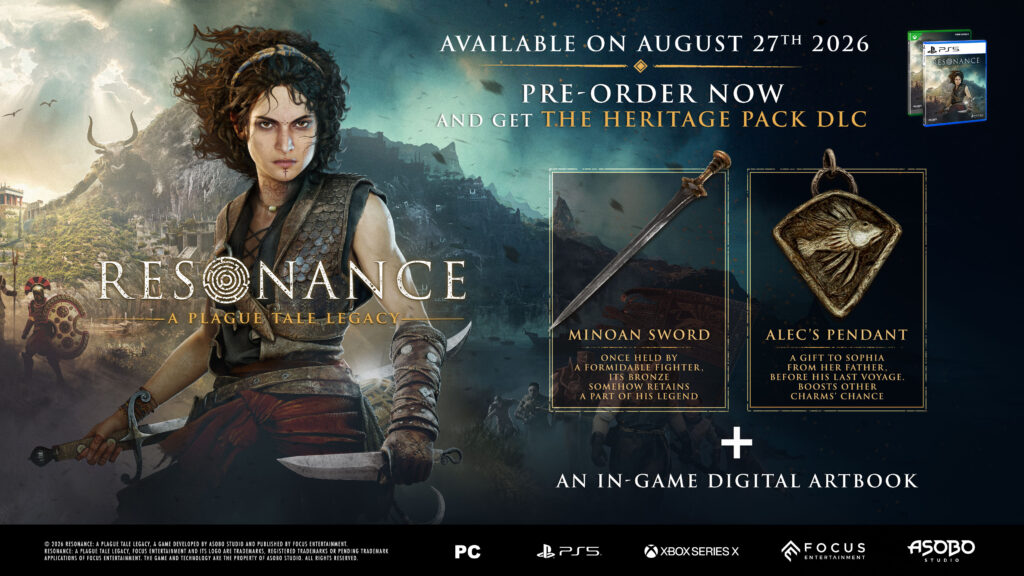
Resonance: A Plague Tale Legacy launched on August 27, 2026, bringing Asobo Studio’s dark historical action-adventure series back with a different protagonist, a more direct style of combat, and a story that reaches further into the mythology surrounding the Macula. Focus Entertainment confirmed the date during the Xbox Games Showcase 2026 and announced on August 27 that the game was officially available worldwide for PlayStation 5, Xbox Series X|S, and PC through Steam and the Epic Games Store.
The release was simultaneous across all announced platforms rather than staggered by system or storefront. It is limited to modern hardware, with no PlayStation 4 or Xbox One version officially listed. Asobo Studio, which developed A Plague Tale: Innocence and A Plague Tale: Requiem, returned as the developer, while Focus Entertainment continued as publisher. The game remains a single-player action-adventure experience despite its substantial mechanical changes.
The PlayStation version is specifically designed for PS5. On Xbox, the game is optimized for Xbox Series X|S and includes several ecosystem features:
- 4K Ultra HD support
- HDR10
- Xbox achievements
- Xbox cloud saves
- Xbox Play Anywhere
- Xbox Cloud Gaming support
- Handheld optimization within the Xbox ecosystem
Resonance: A Plague Tale Legacy joined Xbox Game Pass on its launch day. Microsoft included it in the August 2026 Game Pass Wave 2 announcement for cloud, Xbox Series X|S, handheld devices, and PC. The applicable launch subscriptions included Xbox Game Pass Ultimate and PC Game Pass, making it a day-one addition rather than a game that entered the service months after release.
Game Pass access should be distinguished from permanent ownership. Subscribers can play while the title remains in the relevant catalog and their subscription remains active. Buying the game separately provides a lasting digital license under the applicable store terms. Eligible Game Pass Ultimate users can also stream it through Xbox Cloud Gaming rather than installing the full game locally.
Xbox Play Anywhere allows a supported Microsoft Store purchase to be used on both Xbox console and Windows PC without buying a second copy. Xbox cloud saves keep progression connected to the same Microsoft account, making it possible to move between Xbox Series X|S and a compatible Windows device. This should not be confused with cross-platform multiplayer because Resonance is a single-player game. Play Anywhere concerns ownership and save progression across Microsoft platforms.
On PC, the game supports Windows 10 and Windows 11 in 64-bit configurations and requires approximately 75 GB of storage on an SSD. Full keyboard-and-mouse controls are supported, although the Microsoft Store recommends a controller for the intended experience. Steam lists the following general performance targets and hardware requirements:
Minimum target: 1080p at 30 FPS on the Low preset
- 64-bit Windows 10 or Windows 11
- 16 GB RAM
- AMD Radeon RX 5500 XT or Nvidia GeForce GTX 1060 with 6 GB VRAM
- DirectX 12
- SSD
- Approximately 75 GB of available space
Recommended target: 1080p at 60 FPS on the Ultra preset
- AMD Ryzen 5 5600X or Intel Core i5-12400F
- 16 GB RAM
- AMD Radeon RX 6700 XT or Nvidia GeForce RTX 3060 Ti-class graphics
- DirectX 12
- SSD
- Approximately 75 GB of available space
Focus Entertainment also offered the Heritage Pack as a preorder bonus. It contained the Minoan Sword, Alec’s Pendant, and an in-game digital art book exceeding 30 pages. The Xbox Store now lists the pack separately as an add-on, confirming that it contains optional bonus material rather than content required to complete the main campaign.
Sophia’s Prequel Story, Timeline, and Connection to a Plague Tale: Requiem
Rather than continuing directly from the ending of A Plague Tale: Requiem, Resonance turns the clock back approximately 15 years and places Sophia at the center of the story. Players who completed Requiem will recognize her as the resourceful sailor and smuggler who helped Amicia and Hugo, but the prequel presents a younger version who is still becoming the hardened and independent woman encountered later in the series.
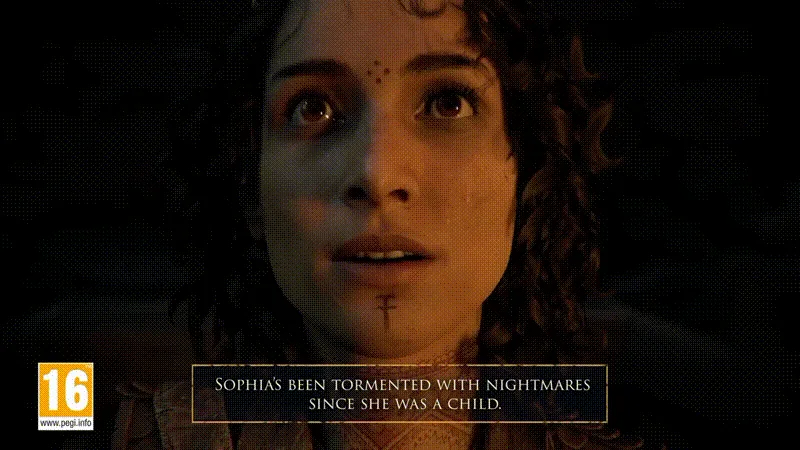
The main story follows Sophia at approximately 22 years old, while additional sequences explore her childhood, family history, and upbringing among plunderers. Asobo describes her as a child of the sea, a fierce fighter, and a free spirit haunted by unexplained memories and mysteries connected to her early life.
Sophia grew up in a violent environment and learned to fight at a young age. Official developer material explains that she was raised around one of Venice’s most feared gangs, participated in battles and plundering expeditions, and eventually became one of its strongest combatants. Her father, Alec, led the plunderer camp that shaped much of her early life.
Earlier A Plague Tale material offered only fragments of this background. Members of Sophia’s mother’s family reportedly placed her in a convent, but she later escaped and reunited with her father. Resonance builds a complete character history around those details, exploring how abandonment, grief, loyalty, violence, and family shaped her personality.
The younger Sophia is deliberately different from the calm and experienced woman seen in Requiem. She is determined and capable but emotionally guarded, reluctant to expose vulnerability, and still struggling to understand memories that have troubled her since childhood. Her development helps explain why the older Sophia understands loyalty, loss, and the need to protect vulnerable people so deeply.
Her companion Leni also has an important role in the journey. After events involving Sophia and her late father’s band of plunderers end disastrously, Sophia flees Venice and travels toward the Minotaur’s Island with Leni. The island appears connected to her family history, her childhood trauma, and the visions that have followed her for years.
Resonance is explicitly a prequel rather than a direct sequel to Requiem. Creative director David Dedeine explained that the game expands the franchise’s mythology without reopening or continuing Amicia and Hugo’s completed story. This allows Asobo to examine older manifestations of the Macula without reversing the emotional consequences of Requiem’s conclusion.
The 15-year gap provides space for a largely self-contained narrative while retaining a direct connection to the established series through Sophia. Returning players already know part of her future, while the new game fills in an important missing period and reveals experiences that contributed to the person she eventually became.
Playing A Plague Tale: Innocence and A Plague Tale: Requiem is not required before beginning Resonance. Asobo designed Sophia’s adventure so that new players can understand her relationship with Leni, the treasure hunt, the island, and the central mystery without prior knowledge of Amicia and Hugo.
The earlier games still provide stronger context. Players familiar with Requiem understand the significance of meeting Sophia as a much younger woman and already know why discoveries related to the Macula matter. Release order therefore provides a different emotional experience, while chronological players can begin with Resonance before moving into Innocence and Requiem.
Minotaur Island, Minoan History, the Macula, and the Game’s Enemies
The Minotaur’s Island is the central destination in Resonance. Sophia travels there because her fragmented memories and recurring visions appear connected to the island, her father’s past, and a force that has been calling to her since childhood.
Asobo designed the island around the idea of a labyrinth. It contains hidden routes, ancient secrets, deadly trials, extensive ruins, and environments shaped by research into mythology and history. Mediterranean landscapes contrast with increasingly oppressive underground spaces, allowing the game to move visually and thematically beyond the primarily French settings of the earlier titles.
The Minotaur theme is more than background decoration. Resonance uses the legend as a starting point while promising to reveal a darker truth beneath the myth. The island functions simultaneously as:
- A treasure-hunting destination
- A labyrinthine exploration space
- A repository of ancient history
- A source of Sophia’s childhood visions
- A place connected to the Macula
- A setting where legendary stories conceal a more disturbing reality
The story also extends thousands of years beyond Sophia’s medieval era. Asobo revealed that a mysterious golden-armored hero fought on the island approximately 4,500 years before her journey. The ancient figure and Sophia are connected through fate, the island, and the legacy of the Macula.
This gives Resonance two major historical layers. One follows Sophia in the medieval Mediterranean, while the other examines events from the ancient Minoan world. Their connection helps explain why the island matters and demonstrates that the Macula’s influence extends far beyond Hugo de Rune and the catastrophes shown in Innocence and Requiem.
The Macula remains the franchise’s central narrative connection. In the earlier games, the Prima Macula was tied to Hugo’s condition and the disasters surrounding him. Resonance looks further into history and explores evidence that the curse appeared in different forms across widely separated periods.
Asobo has said Sophia discovers an ancient evil connected to the Macula while investigating the island’s ruins. Her medieval storyline and the Minoan-era narrative follow two heroes whose destinies are linked through the same ancient legacy. The developer’s character material also establishes that Sophia’s experiences during Requiem were not her first encounter with the Macula.
The game expands the mythology without necessarily providing a simple scientific explanation for every aspect of the curse. A Plague Tale has traditionally presented the Macula through inherited destiny, history, symbolism, disease, and supernatural horror. Resonance continues that approach by uncovering older connections and manifestations rather than reducing the mystery to one straightforward answer.
Sophia faces both human opponents and a far more disturbing supernatural threat. The human enemies are connected to the island’s treasure, the violence surrounding her journey, and the competing groups searching the ruins. They include shielded fighters, stronger combatants, and groups that require different combinations of attacks, counters, movement, and environmental tactics.
The more mysterious danger exists beneath the island. Official descriptions refer to a restless presence that appears to anticipate Sophia’s movements and hunt her through the depths. Unlike human opponents, this threat cannot simply be defeated with a sword. Sophia must hide, outsmart it, and keep moving.
This contrast preserves the horror and vulnerability associated with the series. Sophia is a much stronger direct combatant than Amicia, but not every danger can be solved through force. Enemies she can fight create opportunities for the new combat system, while the hunting presence changes the rules and restores the feeling of being powerless against something incomprehensible.
The Minotaur mystery is closely connected to that presence. Rather than presenting Greek mythology literally, the game asks what historical or supernatural event within the A Plague Tale universe could have produced the legend. The answer is intertwined with the Macula, the island’s ancient structures, and the events experienced by the Minoan-era hero.

Combat, Parrying, Minoan Sphere Puzzles, and Major Gameplay Changes
The shift from Amicia to Sophia produces the largest gameplay change in Resonance. Sophia is not an inexperienced survivor reluctantly learning to defend herself. She is an accomplished fighter capable of deliberately confronting armed enemies with swords, daggers, kicks, dodges, parries, combinations, and environmental opportunities.
Parrying is central to the combat system. Sophia can intercept attacks with correct timing, then respond with counters or finishing moves. This makes reading enemy behavior important, especially during encounters involving several opponents with different weapons or attack patterns.
Dodging also has a tactical purpose beyond simple evasion. Properly timed movement can destabilize stronger enemies and create openings for retaliation. Kicks can disrupt shielded fighters or expose defenses that make direct sword attacks ineffective. Players must therefore select an appropriate response rather than repeatedly using the same attack.
Sophia’s principal combat tools include:
- Sword combinations
- Dagger strikes
- Timed parries
- Counterattacks
- Finishing moves
- Tactical dodges
- Kicks against guarded opponents
- Environmental interactions
She is powerful but not invulnerable. Asobo has emphasized that individual wounds can still be deadly, preserving the danger associated with the series. The combat is built around timing, positioning, enemy analysis, and careful responses rather than turning Sophia into an unstoppable action hero.
Combat areas are larger than many encounters in the previous games and can support more direct one-against-many fighting. A Plague Tale: Requiem expanded Amicia’s options, but she remained a character surviving situations for which she had not been trained. Fighting is part of Sophia’s identity, allowing the level and encounter design to become more aggressive.
The stronger action focus does not remove stealth, exploration, or survival. Sophia still faces situations in which avoidance is safer than confrontation, while supernatural threats can make her combat abilities irrelevant. This balance prevents the new system from eliminating the tension that defines A Plague Tale.
Puzzles also receive greater emphasis through the island’s ancient mechanisms and the Minoan Sphere. The Sphere is a stolen Minoan device capable of manipulating light and interacting with structures associated with Daedalus and the island’s ancient civilization.
Players use it to examine architecture, redirect or control illumination, and determine how ancient mechanisms affect the environment. Light becomes increasingly important as Sophia travels deeper underground, where visibility decreases and the hunting presence becomes more dangerous.
The Sphere’s puzzle functions include:
- Manipulating sources of light
- Activating ancient mechanisms
- Interpreting architectural clues
- Opening paths through the labyrinth
- Connecting environmental structures
- Creating safe opportunities in dangerous underground areas
Light has both practical and thematic importance. It helps solve puzzles but can also become necessary for survival. This adds pressure to exploration because some areas are not safe enough for unlimited experimentation. The player must understand the environment while remaining aware of the threat pursuing Sophia.
Daedalus is especially relevant because Greek mythology traditionally connects him with the labyrinth. Resonance adapts that association into the fictional history of its universe, combining recognizable legendary ideas with the Macula rather than retelling the Minotaur myth exactly as it appears in classical sources.
Sophia’s notebook supports the exploration loop by preserving information gathered by members of her crew. Those clues help her reconstruct what earlier explorers discovered and understand how ruins, mechanisms, and pathways connect. Progress therefore combines observation, recorded information, physical exploration, combat, and light manipulation.
Despite its changes, Resonance remains a linear, narrative-driven single-player adventure built around emotional storytelling, environmental detail, and escalating danger. It should not be approached simply as A Plague Tale 3. Asobo describes it as a new direction that retains the Macula, historical settings, supernatural tension, and character-focused storytelling while introducing another protagonist and a more combat-driven structure.
The game carries a Mature 17+ ESRB rating in the United States for blood, strong language, and violence. Steam also warns of frequent violence or gore and other mature material. Players should expect brutal close-range combat, disturbing supernatural imagery, and themes involving childhood trauma, death, abandonment, and grief.
The complete experience combines Sophia’s personal history with a broader mythology stretching across thousands of years. Direct combat, parrying, puzzles, light manipulation, hiding, exploration, and ancient history all serve the same central journey: uncovering why Sophia is connected to the Minotaur’s Island and what its buried relationship with the Macula means for the wider A Plague Tale saga.

Frequently Asked Questions (FAQs)
- When did Resonance: A Plague Tale Legacy release?
Resonance: A Plague Tale Legacy released worldwide on August 27, 2026. Focus Entertainment launched the game simultaneously across PlayStation 5, Xbox Series X|S, and PC, so no platform received the main release earlier than the others. - What platforms is Resonance: A Plague Tale Legacy available on?
The game is available on PlayStation 5, Xbox Series X|S, and PC. PC players can purchase it through Steam or the Epic Games Store. There are no officially announced PlayStation 4 or Xbox One versions, as the game was developed specifically for current-generation consoles and modern PC hardware. - Is Resonance: A Plague Tale Legacy on Xbox Game Pass?
Yes. Resonance launched as a day-one Xbox Game Pass title on August 27, 2026. Microsoft listed support for Xbox Series X|S, PC, cloud gaming, and compatible handheld devices through the applicable Game Pass subscriptions. Game Pass provides access while the game remains in the catalog and the player maintains an active subscription, while purchasing it provides a separate permanent licence. - Is Resonance a sequel to A Plague Tale: Requiem?
No. Resonance is a prequel whose main storyline occurs approximately 15 years before A Plague Tale: Innocence and A Plague Tale: Requiem. Instead of continuing Amicia and Hugo’s story, it explores Sophia’s early adulthood and expands the history of the Macula through events that occurred long before the previous games. - Who is the main character in Resonance: A Plague Tale Legacy?
Sophia is the playable protagonist. Players previously met an older version of her in A Plague Tale: Requiem, where she was already an experienced sailor, smuggler, and survivor. Resonance follows her at approximately 22 years old and also examines parts of her childhood, including her relationship with her father and her upbringing among plunderers. - Does Resonance have more combat than A Plague Tale: Requiem?
Yes. Direct combat is considerably more prominent because Sophia is already an experienced warrior when the story begins. She can use sword combinations, dagger attacks, kicks, dodges, timed parries, counters, finishers, and environmental opportunities. However, she is not invulnerable, and some supernatural threats cannot be defeated through ordinary combat, preserving the series’ sense of danger. - What is the Minoan Sphere in Resonance?
The Minoan Sphere is an ancient object that allows Sophia to manipulate light and interact with mechanisms hidden throughout the Minotaur’s Island. Players use it to solve environmental puzzles, reveal pathways, and understand structures connected to the island’s Minoan history. Light also becomes important for survival in darker underground areas where a mysterious presence hunts Sophia. - Is the Macula in Resonance: A Plague Tale Legacy?
Yes. The Macula is central to the game’s connection with the wider A Plague Tale saga. Resonance explores older manifestations of the curse and links Sophia’s medieval journey with events involving a hero from the ancient Minoan era. These discoveries reveal more about the Macula’s long history without simply repeating Hugo’s storyline from the earlier games. - Does Resonance support Xbox Play Anywhere and cloud gaming?
Yes. The Xbox version supports Xbox Play Anywhere, Xbox cloud saves, and Xbox Cloud Gaming. Players using a compatible Microsoft Store licence can move between supported Xbox and Windows PC devices without buying another copy, while synchronized saves allow progress to follow the same Microsoft account. Cloud gaming also lets eligible users stream the game without completing a full local installation. - Do I need to play Innocence and Requiem before Resonance?
No. Asobo designed Resonance as a story that newcomers can understand without completing the previous games. Sophia’s journey, the Minotaur’s Island, her relationship with Leni, and the ancient mystery are introduced within the prequel itself. Existing fans will gain additional emotional context because they already know Sophia’s future and understand why new information about the Macula is important.

Conclusion
Resonance: A Plague Tale Legacy launched August 27, 2026 on PS5, Xbox Series X|S and PC as one of the largest departures yet for Asobo Studio’s A Plague Tale universe. Instead of continuing Amicia and Hugo’s completed story, the developer turns to Sophia and explores the events that helped shape the smuggler players eventually meet in Requiem.
That decision allows Resonance to be both familiar and substantially different. The familiar elements include historical environments, emotional character writing, supernatural horror, puzzles, darkness and the Macula. The major difference is Sophia herself. Because she was trained to fight from childhood, Asobo can build encounters around swords, daggers, kicks, dodges and parries without contradicting her characterization.
The Minotaur’s Island creates another important break from the earlier games. Its Mediterranean scenery, Minoan ruins, labyrinth imagery and ancient mechanisms bring a new visual and mythological vocabulary to the franchise. The Minoan Sphere and its light-based puzzles reinforce that identity, while the creature hunting Sophia beneath the island ensures that direct combat never removes the sense of vulnerability associated with A Plague Tale.
The story also significantly expands the chronology of the Macula. Resonance does not treat Hugo’s tragedy as the beginning of the phenomenon. By connecting Sophia to an ancient Minoan storyline and a hero who existed thousands of years before her, the game demonstrates how deeply the curse reaches into history. Focus Entertainment has explicitly positioned those discoveries as information that sheds new light on the Macula’s origins.
For Xbox players, the package is strengthened by day-one Game Pass availability, Xbox Play Anywhere, cloud saves and cloud gaming support. PlayStation players receive a native PS5 release, while PC users can choose between Steam and Epic Games Store versions.
Most importantly, newcomers do not need prior knowledge of A Plague Tale: Innocence or Requiem. Resonance was built as a self-contained prequel even while rewarding players familiar with Sophia’s future and the franchise’s wider mythology. It therefore works both as another chapter for long-term A Plague Tale fans and as an alternative entry point for players interested in Asobo Studio’s combination of historical adventure, mythology, combat and supernatural mystery.
Sources and Citations
- Focus Entertainment — “Resonance: A Plague Tale Legacy Releases August 27” — Official June 7, 2026 release announcement confirming the August 27, 2026 launch on PS5, Xbox Series X|S and PC, with Steam and Epic Games Store availability, plus Xbox Game Pass and Play Anywhere.
Focus Entertainment — Resonance Releases August 27 - Focus Entertainment — “Resonance: A Plague Tale Legacy is now available” — Official August 27 launch announcement confirming the final release across PS5, Xbox Series X|S, Steam and Epic Games Store.
Focus Entertainment — Resonance Is Now Available - Focus Entertainment — Resonance: A Plague Tale Legacy Official Game Page — Official game page with the current release date, platforms, developer/publisher information, Sophia, Minotaur’s Island and the game’s story setup.
Focus Entertainment — Resonance Official Game Page - Xbox Wire / Asobo Studio — “Resonance: A Plague Tale Legacy Takes the Beloved Series in a New, Exhilarating Direction” — June 9, 2025 developer interview covering Sophia’s sword-and-dagger combat, parrying, counters, kicking, dodging, environmental combat and the game’s shift toward direct action.
Xbox Wire — Resonance Developer Interview - Xbox Wire — “Resonance: A Plague Tale Legacy Arrives August 27 – Learn More About This Compelling Prequel” — June 8, 2026 feature covering Sophia’s upbringing in a Venetian gang, her combat background, the Macula, Minotaur’s Island and Asobo’s new combat direction.
Xbox Wire — Resonance June 2026 Feature - Focus Entertainment Community — “FAQ – Learn more about Resonance” — Official developer FAQ covering Sophia, her voice/mocap actor, the game’s setting, release date, platforms and other background information.
Focus Entertainment — Resonance FAQ - Xbox Wire — “Coming to XBOX Game Pass: Resonance: A Plague Tale Legacy, Vapor World: Over the Mind, Blood Dungeon, and More” — August 18, 2026 Game Pass announcement confirming Resonance as an August 27 day-one release on Cloud, Xbox Series X|S, handheld and PC.
Xbox Wire — August 2026 Game Pass - Xbox Wire — “Next Week on XBOX: New Games for August 24 to 28” — Confirms August 27 availability, Game Pass, Xbox Series X|S optimization and Xbox Play Anywhere.
Xbox Wire — Next Week on Xbox - Steam — Resonance: A Plague Tale Legacy — Official PC store page confirming the PC release and system requirements: 16 GB RAM, 75 GB storage, SSD required, and the listed minimum/recommended CPUs and GPUs.
Steam — Resonance: A Plague Tale Legacy - Focus Entertainment — “Resonance: A Plague Tale Legacy celebrates it’s critical success in a new trailer” — September 2, 2026 post-launch statement confirming the parallel Minoan storyline and that its ancient secrets shed new light on the origins of the Macula. Focus Entertainment — September 2 Post-Launch Statement
- Xbox Wire — “Resonance: A Plague Tale Legacy – Why This Is Far More Than A Plague Tale 3” — August 20, 2026 developer/interview material with additional story, combat and development context ahead of launch.
Xbox Wire — Why This Is Far More Than A Plague Tale 3 - Xbox Wire — Official Xbox Podcast: “Resonance: A Plague Tale Legacy – A New Chapter with Action and… a Minotaur?” — August 24, 2026 developer interview and gameplay discussion immediately before launch.
Xbox Wire — Official Resonance Podcast
Recommendations
- Control Resonant Gameplay Trailer Shows New Enemies, Abilities and Everything We Know So Far
- There May Not Be Enough Consoles this Christmas to Meet Demand as GTA 6 Triggers PS5 and Xbox Shortages
- Arc Raiders Event Timers and Trackers Guide (2026): Best Tools, Reset Times, and Live Event Schedules
- Control Resonant 30-Hour Campaign: Melee Combat, Story, and Everything We Know
- Lanterns Trailer Theory: Is Hal Jordan the Show’s Real Villain?
- Macrobit Interactive Releases Factory 95: A Windows 95 PowerPoint Automation Game
- Lego’s Iconic Legend of Zelda Set Is Retiring and Quickly Selling Out
- The Whisper Man Netflix Serial Killer Thriller: Release Date, Plot, Cast, and Streaming Details Before Labor Day
- Moss: The Forgotten Relic Review: is Quill’s Non-VR Adventure Worth Playing?
- CloverPit Console Release: PS5, Xbox, Switch, Gameplay, and Everything You Need to Know



































































































