










In This Article (9 sections)
RobCo 2026: Explained
German robotics startup RobCo has reached a $1 billion unicorn valuation following a $40 million secondary share transaction, marking a significant milestone for Germany’s expanding artificial intelligence and industrial automation industry. The Munich based company announced the development on October 5, 2026, confirming that its valuation had more than doubled in approximately nine months. According to reporting from The Wall Street Journal and Reuters, the transaction involved approximately $40 million in shares, allowing existing employees to sell part of their ownership while attracting additional investment from major venture capital firms. The deal established RobCo as a unicorn, a term used to describe privately held startups valued at $1 billion or more.
Unlike a conventional fundraising round, the October 2026 transaction primarily involved the sale of existing shares rather than the issuance of entirely new equity. This structure provided liquidity for employees and other existing shareholders who wanted to sell part of their holdings while allowing new investors to acquire ownership in the growing robotics business. However, RobCo also confirmed that new capital entered the company as part of the transaction. This distinction is important because the full $40 million should not automatically be interpreted as money deposited directly into RobCo’s operating accounts. Instead, the deal combined shareholder liquidity with additional investment while establishing a new benchmark for the company’s private market valuation.
The milestone followed RobCo’s successful $100 million Series C funding round in January 2026, led by Lightspeed Venture Partners and Lingotto Innovation. That earlier investment valued the company at approximately $500 million, providing the foundation for its subsequent financial growth. By October, increased investor demand supported a valuation exceeding $1 billion, representing more than twice the company’s estimated value at the beginning of the year. This rapid increase reflects growing confidence in RobCo’s industrial automation technology, commercial expansion, and potential role in the emerging physical AI market.
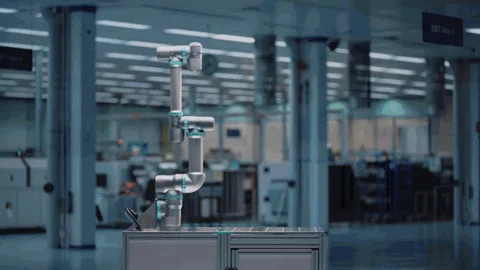
Founded in 2020 by researchers associated with the Technical University of Munich, RobCo develops industrial robotics systems intended to make manufacturing automation more accessible, adaptable, and intelligent. Its technology combines modular robotic hardware with artificial intelligence software, allowing manufacturers to automate repetitive production activities while adapting systems to different operational requirements. Rather than concentrating exclusively on large, fixed automation installations, RobCo emphasizes flexible solutions that can support changing manufacturing processes and industrial workloads.
The company’s robotic systems are designed for several manufacturing applications, including machine tending, palletizing, material handling, and other repetitive production tasks. These activities often require consistent movement, precision, and reliable operation, making them suitable candidates for industrial automation. By developing modular systems that can be adapted to different environments, RobCo aims to help manufacturers introduce robotic technology without depending entirely on highly specialized automation arrangements.
Several developments contributed to RobCo’s rapid valuation increase:
- January 2026 Series C funding: RobCo raised $100 million in a financing round led by Lightspeed Venture Partners and Lingotto Innovation, reaching an estimated valuation of $500 million.
- October 5, 2026 announcement: The company confirmed that its valuation had exceeded $1 billion following a new investment transaction.
- $40 million secondary share sale: The transaction allowed existing employees and shareholders to sell part of their holdings while bringing additional investors into the company.
- Commercial industrial applications: RobCo developed automation systems supporting machine tending, palletizing, material handling, and repetitive manufacturing activities.
- Major manufacturing customers: The company attracted established industrial customers, including BMW, demonstrating commercial interest in its technology.
- United States expansion: RobCo expanded its American operations to pursue opportunities within the country’s manufacturing and industrial automation markets.
- Physical AI development: The company invested in robotic systems capable of learning tasks, interpreting their surroundings, and adapting to changing conditions.
- Upcoming Alfie robot: RobCo plans to commercially launch its two armed autonomous industrial robot in March 2027.
One of the most important factors behind RobCo’s growth is its progress in moving industrial automation beyond experimental demonstrations and into commercial manufacturing environments. The company has attracted major customers, including BMW, while expanding its presence across Europe and the United States. These relationships demonstrate demand for robotic systems capable of addressing practical industrial requirements rather than functioning exclusively as research prototypes. For investors, commercial deployment provides an important indication that the company’s technology may support broader adoption across manufacturing businesses.
RobCo’s investment in physical artificial intelligence also represents an important part of its growth strategy. Physical AI refers to artificial intelligence systems capable of perceiving, understanding, and interacting with real world environments. In industrial robotics, these capabilities can allow machines to respond to changing conditions, learn new activities through demonstrations, and perform tasks that would otherwise require extensive manual programming. This approach differs from conventional robotic systems that depend heavily on predetermined instructions and fixed operating conditions.
RobCo’s upcoming two armed industrial robot, Alfie, reflects this direction. Designed to learn new tasks and adapt to changing manufacturing environments, Alfie represents the company’s effort to expand beyond traditional automation into more autonomous robotic operations. The robot is expected to become commercially available in March 2027, providing an important opportunity for RobCo to demonstrate how its physical AI technology performs in practical industrial settings.
The company’s expansion into the United States has also strengthened its appeal to investors. American manufacturers face challenges involving production expenses, the availability of skilled labor, and changes to supply chain arrangements. Adaptable automation systems could help businesses address some of these pressures by improving operational efficiency and reducing dependence on manual work for repetitive activities. RobCo’s growing American presence positions it to pursue these opportunities while maintaining its European industrial customer base.
The October 2026 valuation milestone also reflects a broader change in venture capital investment priorities. Artificial intelligence funding has increasingly expanded beyond software applications into technologies that operate in physical environments, including robotics, autonomous machines, and industrial systems. Investors are showing interest in businesses that can apply AI to tangible commercial problems, particularly where automation may improve productivity or support operations that are difficult to manage through traditional methods.
Nevertheless, RobCo’s $1 billion valuation should not be confused with its annual revenue, profitability, or publicly traded market capitalization. The figure represents the value investors assigned to the privately held company’s equity through the transaction. It indicates investor confidence and establishes a financial benchmark, but it does not independently demonstrate that RobCo has achieved comparable sales or earnings. Future valuations will depend on commercial adoption, financial performance, technological development, and broader investment conditions.
The transaction also provided a practical benefit for existing employees and shareholders. Secondary share sales can allow individuals holding equity in a private company to realize part of their investment without waiting for a public listing or acquisition. For a startup experiencing rapid growth, this can provide financial flexibility to shareholders while allowing the business to remain privately held. In RobCo’s case, the transaction also introduced additional investors and reinforced interest in its future development.
Ultimately, RobCo’s rise from an approximately $500 million valuation in January 2026 to more than $1 billion in October represents a significant achievement for the Munich robotics company. Its combination of modular industrial hardware, physical AI software, commercial manufacturing customers, and international expansion has attracted substantial investor attention. With the planned March 2027 launch of Alfie and continued growth in the United States, RobCo is positioning itself as an emerging European competitor in autonomous manufacturing technology. Its ability to sustain that momentum will depend on translating investor confidence into wider industrial adoption and successful deployment of its next generation robotic systems.

RobCo $40 Million Secondary Share Sale, $1 Billion Unicorn Valuation, and Founding History
RobCo’s $40 million secondary share sale in October 2026 marked a major milestone for the Munich robotics startup, pushing its valuation beyond $1 billion and establishing it as one of Germany’s emerging robotics unicorns. The transaction involved existing shareholders selling part of their ownership to investors, allowing eligible employees to convert some of their equity into cash. Unlike a conventional funding round, where a company issues new shares and receives the investment proceeds directly, a secondary transaction primarily transfers existing ownership between shareholders. RobCo confirmed that the deal included both employee liquidity and new investment, although it did not disclose exactly how much of the approximately $40 million went to selling shareholders and how much entered the company’s operating accounts.
The employee liquidity component was particularly important because shares in privately held startups can be difficult to sell before an acquisition or initial public offering. Employees who receive equity compensation may accumulate valuable ownership interests as their employer grows, but those holdings do not automatically provide spendable cash. By organizing the secondary transaction, RobCo created an opportunity for eligible employees to realize part of the financial value of their contributions without requiring the company to become publicly traded. Such arrangements can also support employee retention by demonstrating that equity compensation can eventually provide a financial return. For RobCo, the transaction combined shareholder liquidity, continued investor support, and a new valuation benchmark reflecting confidence in its future commercial prospects.
The October transaction attracted several returning investors, including Sequoia Capital, Lightspeed Venture Partners, Greenfield Partners, Kindred Capital, Lingotto, and Promus Ventures. New participants included Cherry Ventures and European Tech Collective, an investor group associated with founders of successful European technology companies. The participation of established shareholders alongside new investors suggests continued confidence in RobCo’s industrial automation strategy and growing interest in its artificial intelligence capabilities. However, investor participation should not be interpreted as a guarantee of future profitability or commercial success, since robotics businesses face substantial development, manufacturing, and operational challenges.
RobCo’s rise to unicorn status resulted from a combination of commercial expansion, technological development, and increasing demand for adaptable industrial automation. Traditional industrial robotics has long been associated with large factories operating highly standardized production lines, particularly in automotive manufacturing. Programmable robotic arms have been used for decades to perform activities such as welding, assembly, and material handling. However, conventional automation can become expensive or difficult to deploy when manufacturers frequently change products, operate smaller production batches, or need machines to handle unfamiliar objects. These limitations create opportunities for companies developing more flexible robotic systems.
RobCo identified these challenges as an opportunity to make industrial automation easier to configure and deploy. Its systems combine modular robotic hardware with software designed to reduce dependence on extensive custom engineering and specialized programming. This approach is particularly relevant to small and medium sized manufacturers that may lack the financial resources or technical teams available to larger industrial corporations. By simplifying automation deployment, RobCo aims to make robotic technology accessible to businesses that could benefit from greater production efficiency but might otherwise struggle with the complexity of conventional installations.
Another important factor behind the company’s growth is its integration of mechanical engineering, perception technology, motion planning, and artificial intelligence software. Rather than developing robotic hardware and AI systems independently, RobCo combines these capabilities into a coordinated industrial automation platform. This integration supports its efforts to create machines that can respond to changing manufacturing conditions and perform increasingly complex activities. The company’s robotics as a service model also offers an alternative to the substantial initial investment often associated with traditional industrial automation installations, potentially making adoption more manageable for manufacturers with limited capital budgets.
RobCo’s development of Alfie, its planned autonomous industrial robot, has further strengthened its position within discussions about physical AI and next generation manufacturing. Alfie is intended to handle tasks involving greater variability than conventional industrial systems, expanding the potential applications of robotic automation. Combined with the company’s growing presence in the United States, the development program has contributed to expectations that adaptable robotic systems could serve a substantially larger manufacturing market. Nevertheless, successfully commercializing more autonomous robots will depend on reliability, production costs, customer adoption, safety requirements, and competition from other automation providers.
The company’s rapid growth is closely connected to its origins within Germany’s university research environment. RobCo was founded in Munich in 2020 by Roman Hölzl, Paul Maroldt, and Constantin Dresel, three entrepreneurs associated with the Technical University of Munich (TUM). Their backgrounds in robotics, artificial intelligence, and engineering helped establish the technical foundation for a business focused on simplifying industrial automation. The university’s research environment, particularly its expertise in robotics and intelligent systems, provided an important starting point for the company’s development.
The founders identified a common challenge facing manufacturers: robotic automation could improve productivity, but existing systems often required expensive equipment, specialized programming, and substantial adjustments to production processes. Smaller manufacturers were particularly affected because they frequently lacked the resources needed to design and maintain complex automation installations. RobCo was established to address this gap through modular technology that could be configured for different industrial tasks without requiring extensive custom engineering for every deployment.
Roman Hölzl became RobCo’s cofounder and chief executive officer, leading the company’s commercial strategy and international expansion. The business initially concentrated on accessible industrial robotic systems before expanding its technological ambitions toward more autonomous manufacturing applications. Over time, RobCo developed from a university connected startup into an internationally supported robotics company with commercial operations across Europe and the United States.
On October 7, 2026, the Technical University of Munich identified RobCo as the 24th unicorn to emerge from its entrepreneurial ecosystem. This recognition illustrated both RobCo’s commercial progress and TUM’s broader contribution to Germany’s technology startup industry. The company’s development demonstrates how academic research and engineering expertise can be transformed into commercial products addressing practical industrial challenges.
RobCo’s valuation increased from approximately $500 million in January 2026 to more than $1 billion in October 2026, representing growth of at least 100% in roughly nine months. The earlier valuation was established during the company’s $100 million Series C financing round, which strengthened its resources for product development, physical AI research, and international expansion. The funding supported continued work on industrial robotic systems capable of handling less predictable manufacturing processes while allowing RobCo to pursue additional commercial opportunities.
By October, demand for the company’s shares had increased enough to support another transaction at a substantially higher valuation. Several factors contributed to this development, including expanding industrial deployments, continued development of autonomous robotics, growing American operations, and increased investor interest in physical AI. The company’s established manufacturing applications provided evidence that its technology could address practical industrial requirements, while its Alfie development program represented a potential opportunity to enter additional automation markets.
The major developments supporting RobCo’s growth include:
- 2020 founding: Roman Hölzl, Paul Maroldt, and Constantin Dresel established RobCo in Munich with connections to the Technical University of Munich.
- Modular industrial robotics: The company developed configurable automation systems intended to simplify deployment and reduce dependence on extensive custom engineering.
- Integrated hardware and software: RobCo combined mechanical systems, perception technology, motion planning, and artificial intelligence into a coordinated robotics platform.
- Robotics as a service: Its commercial model provided manufacturers with an alternative to substantial upfront spending on conventional automation installations.
- January 2026 Series C: RobCo raised $100 million at an estimated valuation of $500 million.
- United States expansion: Growing American operations created additional opportunities to serve manufacturers seeking adaptable automation systems.
- October 2026 secondary transaction: Approximately $40 million in shares changed hands through a deal involving employee liquidity and new investment.
- Unicorn valuation: RobCo’s valuation exceeded $1 billion, more than doubling within approximately nine months.
- October 7, 2026 recognition: TUM identified RobCo as the 24th unicorn associated with its entrepreneurial ecosystem.
- Alfie development: The company’s autonomous industrial robot represented a further step toward automating tasks involving greater variability.
However, RobCo’s valuation increase should not automatically be interpreted as evidence that its revenue or profit doubled during the same period. Private startup valuations reflect several considerations, including expected future revenue, market opportunities, investor demand, technological capabilities, competitive positioning, and the value of intellectual property. For robotics companies, investors may also consider proprietary hardware designs, software infrastructure, engineering expertise, commercial deployments, and customer relationships when determining the price they are willing to pay for shares.
RobCo’s new valuation therefore creates higher expectations for future business performance. Investors acquiring shares at a valuation exceeding $1 billion will generally expect continued commercial expansion and technological progress sufficient to justify that price. The company must demonstrate that its modular systems, recurring service agreements, and autonomous robotics products can support sustainable growth while managing the costs associated with engineering, manufacturing, installation, and customer support.
Ultimately, RobCo’s transition from a university connected startup in 2020 to a robotics unicorn in 2026 reflects growing interest in adaptable industrial automation and physical AI. The $40 million secondary transaction provided liquidity for existing shareholders, attracted additional investors, and established a new financial benchmark. However, the company’s longer term success will depend on translating technological innovation and investor confidence into reliable products, broader manufacturing adoption, and sustainable commercial performance.

RobCo Investors, Venture Capital Backers, Funding History, and Series C Growth
RobCo has attracted financial support from several prominent international venture capital firms, reflecting growing investor interest in industrial robotics, artificial intelligence, and technologies capable of improving manufacturing productivity. Its backers include Lightspeed Venture Partners, Sequoia Capital, Greenfield Partners, Kindred Capital, Lingotto, Promus Ventures, and other investment organizations with experience across technology and industrial markets. The company’s ability to secure support from established firms has provided financial resources for product development, commercial expansion, and its increasing focus on autonomous robotics.
Lightspeed Venture Partners and Sequoia Capital are among RobCo’s most recognizable investors, both having extensive experience financing technology businesses. Lightspeed participated in earlier RobCo funding rounds and co led the company’s January 2026 Series C investment alongside Lingotto Innovation. Lingotto is associated with Exor, the investment organization connected to Italy’s Agnelli family, providing another source of financial backing with connections to established industrial businesses. Other investors associated with RobCo’s financing history include Greenfield Partners, Kindred Capital, Promus Ventures, Leitmotif, and The Friedkin Group.
The October 2026 transaction introduced additional investors while allowing existing shareholders to participate in the secondary share sale. Cherry Ventures joined as an established European venture capital firm focused on technology businesses with international growth potential. European Tech Collective also participated, bringing involvement from entrepreneurs associated with successful European technology companies. The continued participation of previous investors alongside these new backers demonstrated sustained interest in RobCo’s industrial AI strategy.
The company’s major investors and financial backers include:
- Lightspeed Venture Partners: An established technology investor that participated in earlier rounds and co led RobCo’s January 2026 Series C financing.
- Sequoia Capital: A prominent international venture capital firm with experience supporting technology companies.
- Lingotto Innovation: An investment organization associated with Exor and Italy’s Agnelli family that co led the January 2026 Series C.
- Greenfield Partners: An investor involved in RobCo’s financing and subsequent shareholder transactions.
- Kindred Capital: A venture capital firm associated with earlier RobCo funding rounds and continued investment activity.
- Promus Ventures: An investor that participated in the company’s financing history and October 2026 transaction.
- Leitmotif: An investment organization associated with RobCo’s broader funding history.
- The Friedkin Group: Another financial backer connected to the company’s earlier investment activity.
- Cherry Ventures: A European venture capital firm that joined the investor base through the October 2026 transaction.
- European Tech Collective: An investor group associated with founders of successful European technology businesses.
The continued involvement of established investors is noteworthy because participation in additional financing or secondary transactions can indicate confidence in a company’s development. However, such investment decisions do not guarantee that RobCo will achieve its commercial objectives. Robotics businesses face challenges that differ significantly from those encountered by software companies because they must develop, manufacture, test, deploy, and maintain physical equipment.
Industrial robotics development requires substantial spending on engineering, mechanical components, electronics, software, product testing, and manufacturing infrastructure. Commercial installations may also involve safety assessments, integration with existing factory systems, maintenance requirements, and technical support. These responsibilities can make robotics companies more capital intensive than startups focused exclusively on digital products. Investors with experience in hardware, software, and industrial markets may therefore provide useful strategic guidance alongside financial support.
RobCo’s funding history includes several major investment rounds completed between its establishment in 2020 and its October 2026 unicorn valuation. One important milestone occurred in February 2024, when the company announced a $42.5 million Series B financing round involving Lightspeed Venture Partners, Sequoia Capital, Kindred Capital, and Promus Ventures. The funding was intended to support broader distribution, product development, and efforts to make robotic automation more accessible to industrial customers.
The Series B investment strengthened RobCo’s ability to expand its commercial operations and develop modular robotics solutions for manufacturing applications. Access to additional capital was important because the company’s business required continued investment in both technology and customer deployment. Unlike purely digital products, industrial robotic systems must function reliably in physical environments where equipment performance, safety, and maintenance directly affect customer operations.
On January 29, 2026, RobCo announced a further $100 million investment through its Series C financing round. Lightspeed Venture Partners and Lingotto Innovation co led the transaction, with additional participation from existing and new investors. The funding valued RobCo at approximately $500 million and provided resources for continued development of its physical AI technology, international expansion, and industrial automation products.
Together, the February 2024 Series B and January 2026 Series C rounds accounted for $142.5 million in disclosed financing. RobCo had also completed earlier investment transactions associated with its initial development and commercial expansion, meaning the combined value of these two rounds did not represent its entire funding history. Reuters reported in October 2026 that the company’s cumulative capital raised was approaching $200 million, reflecting the broader financing received since its founding.
The major disclosed funding milestones include:
- 2020: RobCo was established in Munich and began developing modular industrial automation technology.
- February 2024 Series B: The company raised $42.5 million from investors including Lightspeed Venture Partners, Sequoia Capital, Kindred Capital, and Promus Ventures.
- January 29, 2026 Series C: RobCo secured $100 million in a round co led by Lightspeed and Lingotto Innovation, reaching an estimated $500 million valuation.
- October 2026 secondary transaction: Approximately $40 million in shares changed hands through a transaction combining employee liquidity with new investment.
- October 2026 cumulative financing: Reuters reported that RobCo’s total capital raised was approaching $200 million.
- October 2026 valuation: The latest transaction established a private market valuation exceeding $1 billion.
An important distinction concerns the difference between money raised directly by RobCo and the value of shares exchanged between investors. In a primary funding round, a company typically issues new shares and receives proceeds that can finance engineering, employee recruitment, manufacturing capacity, and commercial operations. In a secondary transaction, existing shareholders sell their ownership interests to buyers, with the proceeds generally going to those shareholders rather than directly to the business.
RobCo’s October transaction involved both employee liquidity and new investment, but the company did not disclose a complete breakdown between these components. Consequently, the full $40 million transaction value should not automatically be added to the company’s cumulative funding total as fresh operating capital. Doing so could overstate the amount of new money received by the business.
This distinction is particularly important when interpreting the reported figure approaching $200 million in cumulative capital raised. The figure refers to RobCo’s broader financing history, while the October share transaction involved both the transfer of existing equity and an investment component. The available information does not establish the precise amount of additional operating capital generated by the latest deal.
RobCo’s financing success demonstrates that investors are willing to support its strategy of combining modular robotic equipment with artificial intelligence and expanding internationally. The company has directed investment toward industrial deployments, software development, physical AI research, and commercial growth across Europe and the United States. Its development of Alfie also represents a potential opportunity to expand into more autonomous manufacturing applications that require machines to handle changing tasks and less predictable environments.
However, fundraising success and a high private market valuation do not independently establish profitability. RobCo’s October 2026 valuation announcement did not provide complete public figures for annual revenue, operating losses, or available cash reserves. Investors therefore have evidence of substantial financial backing and commercial expansion, but not a complete picture of the company’s financial performance.
The company’s next stage of development will require balancing technological ambition with the practical costs of producing and supporting industrial robotic systems. Expanding deployments, improving hardware reliability, integrating AI capabilities, and maintaining customer relationships will remain important as RobCo attempts to justify its higher valuation. Recurring revenue from service arrangements and wider adoption by manufacturers could support its financial growth, but those outcomes depend on successful execution.
Ultimately, RobCo’s investor base and funding history illustrate the growing intersection of venture capital, manufacturing technology, and artificial intelligence. From its $42.5 million Series B in February 2024 to the $100 million Series C in January 2026 and the October secondary transaction, the company has continued attracting financial support for its industrial automation strategy. The participation of established investors and new European technology backers has helped RobCo reach unicorn status, but sustaining that position will depend on converting funding, engineering expertise, and market interest into long term commercial results.

RobCo Robotics as a Service Model, Physical AI Technology, Alfie Robot, and Industrial Customers
RobCo operates through a Robotics as a Service (RaaS) business model designed to make industrial automation more accessible to manufacturers without requiring substantial upfront equipment purchases. Instead of purchasing robotic arms, sensors, control systems, safety equipment, and specialized software outright, customers can access integrated automation solutions through recurring service agreements. This approach addresses one of the biggest obstacles to industrial robotics adoption, particularly among small and medium sized manufacturers that may lack the financial resources or specialized engineering teams needed to install conventional automation systems.
Traditional industrial robot installations often require significant capital expenditure before a machine can begin operating. Manufacturers must consider equipment costs, installation, programming, integration with existing production lines, safety systems, and ongoing maintenance. These expenses can make automation difficult to justify, especially for businesses operating smaller production batches or frequently changing their manufacturing processes. RobCo’s service model aims to reduce these barriers by allowing customers to introduce robotic technology through contractual arrangements that distribute spending over time. This can make it easier for manufacturers to evaluate automation performance, expand deployments gradually, and align costs with operational requirements.
RobCo also combines robotic hardware and software into an integrated platform, reducing the need for customers to coordinate equipment and services from several independent suppliers. This arrangement can simplify installation, maintenance, technical support, and future upgrades. For manufacturers facing labor shortages, rising production costs, or unpredictable demand, the ability to introduce automation without a major initial equipment purchase may provide greater financial flexibility. The model is particularly relevant to repetitive activities such as machine loading, material handling, palletizing, dispensing, and other production processes where consistent robotic performance can improve operational efficiency.
For RobCo, recurring service contracts may provide more predictable revenue than depending exclusively on individual equipment sales. However, the model also introduces financial responsibilities because the company must manufacture, deploy, maintain, and support physical robotic systems. Depending on contractual arrangements, RobCo may also retain responsibility for equipment financing, replacement, or ongoing technical services. The long term profitability of this approach depends on several factors, including robot utilization, customer retention, maintenance expenses, service pricing, and the operational life of each machine.
The main advantages and considerations associated with RobCo’s Robotics as a Service model include:
- Lower initial investment: Manufacturers can access robotic automation without purchasing every component outright.
- Recurring service payments: Customers can distribute automation expenses through contractual arrangements rather than committing substantial capital immediately.
- Integrated hardware and software: RobCo combines robotic equipment, control technology, and software within a coordinated platform.
- Simplified deployment: Modular systems are intended to reduce the engineering and programming requirements associated with traditional automation.
- Maintenance and support: Integrated service arrangements can make ongoing technical assistance and equipment management easier.
- Flexible expansion: Manufacturers may introduce automation gradually and increase deployments as productivity benefits become clearer.
- Recurring revenue opportunities: Service contracts may provide RobCo with more predictable income, although equipment and maintenance costs remain important.
Despite these advantages, Robotics as a Service does not automatically make every automation project economically attractive. Manufacturers must compare the total cost of contractual payments with expected productivity improvements, labor requirements, maintenance responsibilities, downtime, and operational risks. RobCo must also demonstrate that its systems can deliver reliable performance across different industrial environments while maintaining sustainable service economics. The model’s greatest potential lies in combining accessible financing with flexible automation technology, allowing more manufacturers to adopt robotics without the complexity traditionally associated with industrial installations.
Physical artificial intelligence is another central component of RobCo’s industrial automation strategy. Unlike AI systems designed primarily to process documents, generate text, or analyze digital information, physical AI enables machines to perceive, interpret, and interact with real world environments. In industrial robotics, these capabilities require the integration of sensors, mechanical components, motion planning, machine learning, and feedback systems. RobCo is developing technology that combines these elements to help robots perform manufacturing tasks under conditions that may change during normal operations.
Conventional industrial robots typically follow predetermined instructions within carefully controlled workspaces. They can perform repetitive activities with considerable accuracy and speed when objects, materials, and production conditions remain consistent. However, their usefulness may decline when products change, objects appear in unfamiliar positions, or manufacturing processes require frequent adjustments. Reprogramming traditional systems can be expensive and time consuming, particularly for facilities handling multiple product variations or smaller production batches.
RobCo aims to address these limitations by developing systems capable of interpreting their surroundings and adapting their movements within established operational boundaries. Its physical AI platform combines perception technology, motion planning, and learning systems with industrial robotic hardware. Perception allows a machine to interpret information collected through cameras and other sensors, while motion planning determines how robotic arms or manipulators should move to complete an operation. Learning systems can help robots adapt to unfamiliar objects or changing conditions through training, demonstrations, and feedback.
This approach could reduce the amount of manual programming required when manufacturing processes change. For example, a production facility handling different product shapes or changing material positions may benefit from a system capable of recognizing those variations and adjusting its actions. RobCo has also emphasized teaching robots through demonstrations, allowing workers to show machines how certain activities should be performed instead of programming every movement individually. However, demonstration based learning does not mean robots can automatically master every unfamiliar task or operate safely without appropriate validation and supervision.
Industrial environments require consistent accuracy, controlled movement, equipment compatibility, and compliance with applicable safety requirements. Physical AI systems must therefore demonstrate reliability under practical manufacturing conditions rather than exclusively within controlled research environments. The goal is to combine the predictable performance of established industrial equipment with the flexibility needed to handle more varied production activities.
RobCo’s most ambitious application of this technology is Alfie, its next generation autonomous industrial robot designed to learn and perform tasks that conventional automation systems struggle to handle. The company introduced its plans for Autonomous Alfie in April 2026, explaining that the robot would target manufacturing environments involving changing objects, complex manipulation, and less predictable workflows. Unlike traditional industrial systems using a single robotic arm, Alfie features two arms designed to work together during industrial operations.
This dual arm configuration supports bimanual manipulation, allowing the robot to coordinate both arms when handling objects or completing tasks. Such capabilities can be useful for operations requiring one object to remain stable while another action is performed. Potential applications include certain assembly processes, material handling activities, and tasks involving objects that are difficult to manipulate using a single arm. The design allows RobCo to explore more complex industrial activities without necessarily relying on a conventional full body humanoid robot.
Alfie combines its mechanical design with physical AI software intended to support perception, decision making, and execution. The robot is being developed to interpret conditions within its workspace, determine appropriate movements, and adapt to variations without requiring extensive manual reprogramming for every change. RobCo describes this direction as a step toward higher levels of robotic autonomy, particularly in manufacturing environments where traditional fixed automation is difficult to deploy.
The main technological features and objectives associated with Alfie include:
- Two robotic arms: A dual arm configuration designed to coordinate movements during complex object handling and manipulation.
- Physical AI integration: Software intended to interpret environmental information and support robotic decision making.
- Learning through demonstrations: Technology designed to reduce the need for manually programming every individual movement.
- Adaptable manipulation: The ability to respond to changes in object positions, shapes, and production arrangements within established operational limits.
- Industrial applications: Potential use in assembly, material handling, and manufacturing processes involving greater variability.
- Prototype deployments: Selected customers have reportedly begun using development versions of Alfie.
- Planned commercial launch: March 4, 2027, during RobCoN, the company’s first annual autonomous industrial robotics summit in Munich.
RobCo’s use of the term self learning refers to the robot’s intended ability to improve or adapt its behavior through learning based methods. It should not be interpreted as unrestricted independent intelligence. Industrial robots still require appropriate safety controls, human oversight, operational limits, and performance validation. Even highly adaptable systems must demonstrate that they can complete tasks consistently without creating unacceptable risks for workers, equipment, or production processes.
As of October 2026, Alfie remains a developing product with prototype deployments rather than an established mass market industrial robot. Its planned March 4, 2027, commercial introduction will provide an important opportunity for RobCo to demonstrate how its autonomous technology performs outside experimental settings. Future success will depend on whether Alfie can complete demanding tasks with sufficient reliability, speed, accuracy, and safety to justify adoption by manufacturers.
If the technology performs as intended, Alfie could expand RobCo’s addressable market beyond repetitive production processes already supported by conventional automation. Manufacturing activities involving changing objects, complex manipulation, or frequent workflow adjustments may become more practical to automate. However, commercial adoption will depend on measurable productivity improvements and the total cost of deploying and maintaining the robot.
RobCo’s existing industrial customer relationships provide evidence that its robotics technology has progressed beyond laboratory research and experimental demonstrations. The company has identified several organizations using its automation solutions, including BMW, DynaEnergetics, Fabricated Extrusion Company, T Systems, and Rosenberger. These customers operate across different manufacturing and technology related industries, demonstrating RobCo’s strategy of developing configurable robotic systems rather than concentrating exclusively on one production category.
BMW is among the most recognizable companies associated with RobCo’s technology. Its inclusion is significant because automotive manufacturing places demanding requirements on industrial equipment, including reliability, precision, production consistency, and safety. However, identifying BMW as a customer does not establish that RobCo robots are installed across every BMW factory or production line. The scale and configuration of specific deployments cannot be assumed without additional disclosures.
Other customers illustrate the range of industrial environments RobCo aims to serve. DynaEnergetics operates in technologies associated with industrial energy applications, while Fabricated Extrusion Company specializes in extrusion related manufacturing. Rosenberger develops connectivity technologies and components, and T Systems operates in information technology and digital services. These relationships indicate that RobCo’s automation platform can address different operational requirements across manufacturing and industrial technology businesses.
The company’s industrial applications include:
- Machine tending: Loading and unloading equipment during manufacturing processes.
- Palletizing: Handling and arranging products or materials for storage and transportation.
- Material handling: Moving components and supplies between production activities.
- Dispensing: Performing controlled application tasks within industrial workflows.
- Welding: Supporting manufacturing operations requiring consistent movement and precision.
- Flexible automation: Configuring robotic systems for different production requirements and changing workloads.
RobCo has reported sales of more than 1,000 robots, indicating a commercial presence larger than that of an early experimental robotics business. Nevertheless, robot sales should not automatically be treated as equivalent to the number of active installations, individual customers, or recurring service agreements. The figures demonstrate commercial activity but do not provide a complete breakdown of deployment scale or utilization.
For prospective industrial customers, RobCo’s established relationships offer evidence that its systems have been introduced into practical manufacturing environments. For investors, these deployments provide an indication of demand for configurable automation technology. The company’s next stage of growth will depend on expanding existing relationships, attracting manufacturers that have not previously adopted robotic systems, and successfully commercializing more autonomous products such as Alfie.
Ultimately, RobCo’s combination of Robotics as a Service, physical AI, modular industrial equipment, and autonomous robot development forms the foundation of its commercial strategy. Its existing customers demonstrate demand for practical automation, while Alfie represents an effort to address more complex tasks that traditional systems cannot easily perform. Sustaining growth will require RobCo to balance technological innovation with equipment reliability, competitive operating costs, customer support, and measurable industrial productivity.

Why RobCo Is Expanding Into the United States and How It Compares With European Robotics Competitors
RobCo CEO Roman Hölzl has relocated to the United States as the Munich robotics company accelerates its expansion into the American industrial automation market. The move was confirmed alongside RobCo’s October 2026 unicorn announcement, reflecting the importance management places on developing a stronger commercial presence in the world’s largest manufacturing markets. According to Reuters, Hölzl described the United States as a larger and faster growing market than Europe in absolute commercial terms. Although approximately 70% of RobCo’s business remained associated with Europe at the time, the American market had become its fastest growing region.
This distinction helps explain why RobCo is investing in a stronger United States presence while maintaining its established European operations. American manufacturers operate across automotive production, aerospace, industrial equipment, logistics, food processing, and numerous other sectors that could benefit from adaptable robotic systems. Many companies face pressure to improve productivity, manage operating expenses, and maintain production despite difficulties recruiting workers for repetitive or physically demanding activities. Robotic automation can potentially address some of these challenges, although the economic benefits depend on the specific operation, deployment costs, and reliability of the technology.
RobCo formally expanded its American presence in 2025, announcing a San Francisco headquarters and additional assembly activities in Austin, Texas. The expansion included the acquisition of assets from Rapid Robotics, an American automation company. Those assets included equipment, personnel, and customer relationships that could help RobCo establish stronger local operations and accelerate its entry into the market. By acquiring existing capabilities rather than building every aspect of its American organization independently, RobCo gained resources that could support sales, deployment, and customer service.
By September 2025, RobCo reported customer activities across 14 American states, demonstrating that its expansion had progressed beyond establishing offices. Its October 2026 announcement confirmed that operations continued to span more than a dozen states. These developments indicate growing commercial demand for the company’s industrial automation systems, although the available figures do not establish the total number of American customers, installed robots, or revenue generated in the region.
San Francisco and Austin serve different functions within RobCo’s American strategy. San Francisco provides access to engineering talent, artificial intelligence expertise, investors, and technology partnerships, while Austin supports manufacturing and assembly activities closer to American industrial customers. RobCo continues maintaining engineering and manufacturing operations in Munich, with selected products for the United States market assembled in Texas. This arrangement creates a transatlantic operating structure intended to support customers in both regions.
The company’s United States expansion includes several important developments:
- Roman Hölzl’s relocation: The CEO moved to the United States to support the company’s commercial expansion and execution of its American strategy.
- San Francisco headquarters: RobCo established an American base offering access to technology talent, investors, and potential partnerships.
- Austin assembly operations: The company developed local assembly capabilities in Texas to support products intended for the American market.
- Rapid Robotics asset acquisition: RobCo acquired equipment, personnel, and customer relationships from the American automation business.
- Commercial presence across multiple states: Customer activities extended across 14 states by September 2025 and remained active in more than a dozen states in October 2026.
- Continued Munich operations: Germany remains important to RobCo’s engineering, manufacturing, and technology development activities.
- Fast growing American market: Although Europe represented approximately 70% of the company’s business, the United States had become its fastest growing region.
The expansion reflects RobCo’s effort to develop an international industrial automation business rather than remain primarily dependent on European customers. Establishing local assembly and commercial operations may help reduce certain logistical challenges associated with importing equipment, managing installations, and providing ongoing technical support. Maintaining operations in Munich also allows the company to preserve its established engineering capabilities while serving manufacturers across different markets.
However, international expansion introduces additional challenges involving recruitment, manufacturing expenses, regulatory requirements, customer support, and coordination between offices. RobCo must demonstrate that its commercial success in Europe can be repeated within the larger and highly competitive American market. Its United States operations will therefore become an important measure of whether the company can sustain the growth expectations associated with its $1 billion valuation.
RobCo’s unicorn valuation also places it among a growing group of European robotics companies attracting significant investment in artificial intelligence and advanced manufacturing. Other prominent businesses include Germany’s NEURA Robotics and Agile Robots, alongside the British company Humanoid. Although these organizations operate within the broader robotics industry, their products, technical approaches, and commercial strategies differ considerably. Comparing them requires examining the types of robots they develop, the problems they aim to solve, and how their technologies are intended to reach industrial customers.
NEURA Robotics focuses on cognitive robotics and machines capable of interacting intelligently with physical environments. Its ambitions include humanoid systems and a broader physical AI ecosystem intended to allow robots to acquire new capabilities and share intelligence. In June 2026, NEURA announced a Series C financing initiative with a total potential round size of up to $1.4 billion, reflecting substantial investor interest in its technological direction. Its strategy extends beyond conventional industrial automation toward more general robotic intelligence and connected systems.
RobCo, by comparison, has concentrated on automation technology designed for integration into existing manufacturing operations. Its business model combines modular robotic equipment, recurring service arrangements, and learning based software intended to reduce deployment complexity. Rather than focusing primarily on general purpose humanoid machines, RobCo emphasizes practical factory automation and the development of systems that can perform useful industrial tasks under changing conditions.
Agile Robots represents another important German participant in advanced industrial automation. The company develops intelligent robotic systems for manufacturing and related applications, sharing RobCo’s interest in making robots more adaptable to different environments. However, their individual technologies, product portfolios, and commercial approaches are not identical. Both companies operate within a market where customers increasingly expect automation systems to deliver flexibility alongside established industrial requirements for accuracy, safety, and reliability.
The United Kingdom’s Humanoid focuses on intelligent robotic systems designed around humanlike movement and manipulation. Developers working on humanoid robots generally aim to create machines capable of performing activities within environments originally designed for people, potentially reducing the need for extensive modifications to workplaces. RobCo’s Alfie shares certain manipulation objectives through its two arm design, but it should not automatically be classified as a conventional full body humanoid robot. Alfie is intended specifically for industrial manipulation and factory automation rather than reproducing every aspect of human movement.
The main differences between these European robotics companies include:
- RobCo: Focuses on modular industrial robotics, Robotics as a Service, physical AI, and the development of Alfie for adaptable manufacturing automation.
- NEURA Robotics: Develops cognitive robotic systems and physical AI technologies, including ambitions involving humanoid machines and shared robotic intelligence.
- Agile Robots: Concentrates on intelligent robotic automation and advanced manufacturing systems designed for industrial applications.
- Humanoid: Develops humanlike robotic systems intended to perform activities involving movement and manipulation in environments designed around people.
These differences matter because industrial robots do not necessarily need humanlike bodies to deliver commercial value. A machine optimized for a particular production environment may offer advantages in installation costs, speed, reliability, or efficiency compared with a more general purpose humanoid system. Conversely, robots designed to perform a broader range of activities may eventually become attractive in workplaces where tasks change frequently and specialized automation is difficult to justify.
RobCo’s strategy reflects this distinction. By combining modular equipment with artificial intelligence and recurring service agreements, the company aims to address immediate manufacturing needs while developing more autonomous capabilities. Alfie represents a step toward greater flexibility through its dual arm design and learning based software, but its value will depend on how reliably it performs practical industrial tasks rather than how closely it resembles a human worker.
The European robotics industry also faces strong competition from companies in the United States and China. American businesses are investing heavily in robotic intelligence, autonomous systems, and humanoid development, while Chinese manufacturers are expanding robotics equipment production and associated supply chains. This international competition creates pressure for European companies to improve technology, control manufacturing expenses, and establish dependable commercial relationships.
For RobCo, competing successfully will require more than developing advanced artificial intelligence models or demonstrating impressive robotic movements. Industrial customers evaluate equipment according to reliability, installation complexity, operational safety, maintenance requirements, total ownership costs, service quality, and measurable improvements in productivity. A technically sophisticated robot may struggle commercially if it is too expensive, difficult to maintain, or unreliable under demanding factory conditions.
RobCo’s existing customer relationships and service based deployment model may help distinguish it from companies concentrating primarily on prototype development. The reported sale of more than 1,000 robots and the company’s presence across Europe and the United States provide evidence of commercial activity. However, its $1 billion valuation does not establish that it leads competitors in revenue, technological performance, or industrial market share.
The planned commercial introduction of Alfie on March 4, 2027, will be an important milestone in RobCo’s effort to expand into more autonomous manufacturing applications. The company’s ability to demonstrate reliable industrial manipulation, attract additional customers, and support deployments across international markets will influence its competitive position.
Ultimately, RobCo’s expansion into the United States and its competition with European robotics companies reflect the growing importance of physical AI in manufacturing. Its strategy combines accessible automation services, modular robotic hardware, international commercial operations, and increasingly autonomous technology. While its unicorn valuation demonstrates substantial investor confidence, long term success will depend on transforming technological development into dependable industrial installations that deliver measurable benefits to manufacturers.

Frequently Asked Questions (FAQs)
- What is RobCo’s valuation in 2026?
RobCo surpassed a $1 billion valuation in October 2026 following an investment transaction involving existing shareholders and new investors. This milestone established the Munich robotics company as a unicorn, a term used for privately held startups valued at $1 billion or more. Its valuation had more than doubled in approximately nine months, rising from around $500 million during its January 2026 Series C funding round. The increase reflects strong investor interest in RobCo’s industrial automation technology, physical AI development, and international expansion. However, the valuation represents the estimated value of the company’s equity rather than its annual revenue, profitability, or available cash. - How much was RobCo’s latest secondary share sale worth?
RobCo’s October 2026 secondary share transaction was worth approximately $40 million, according to reporting from The Wall Street Journal and Reuters. The deal allowed existing employees and shareholders to sell part of their ownership to interested investors, providing an opportunity to receive cash without waiting for a public listing or acquisition. RobCo also confirmed that the transaction included new investment entering the business. However, the company did not disclose exactly how much of the $40 million went to selling shareholders and how much became fresh operating capital. Therefore, the entire transaction value should not be classified as newly raised funding. - Who founded RobCo?
RobCo was founded in Munich, Germany, in 2020 by Roman Hölzl, Paul Maroldt, and Constantin Dresel. The three founders developed their expertise in robotics, artificial intelligence, and engineering through their association with the Technical University of Munich. They established the company to address the high costs and technical complexity that prevent many manufacturers from adopting industrial automation. Their initial focus was developing modular robotic systems that could be configured and deployed more easily than conventional solutions. Roman Hölzl serves as RobCo’s chief executive officer, overseeing its commercial strategy, technological development, and international expansion into markets such as the United States. - What does RobCo manufacture?
RobCo develops industrial robotics systems that combine modular robotic hardware, automation software, and artificial intelligence to help manufacturers automate physical production tasks. Its technology supports operations such as machine loading and unloading, palletizing, material handling, dispensing, and welding. The company emphasizes flexible robotic equipment that can be adapted to different manufacturing requirements without extensive custom engineering. RobCo also provides automation through a Robotics as a Service model, allowing customers to access equipment through recurring service agreements. Its next generation product, Alfie, is being developed to perform more complex industrial activities involving changing objects, variable production conditions, and autonomous manipulation. - What is RobCo Alfie?
Alfie is RobCo’s next generation autonomous industrial robot designed to handle manufacturing tasks that can be difficult to automate using traditional robotic systems. Unlike conventional single arm robots, Alfie features two coordinated robotic arms that allow it to manipulate objects and perform activities requiring both arms. The system combines physical artificial intelligence with perception technology, motion planning, and learning capabilities to adapt to changing conditions with less manual reprogramming. RobCo has reportedly deployed prototypes with selected customers and plans to commercially introduce Alfie on March 4, 2027, during its RobCoN robotics summit in Munich. Its commercial performance will depend on reliability, safety, and effectiveness in real manufacturing environments. - Does BMW use RobCo robots?
Yes. BMW is among the industrial customers publicly identified by RobCo, demonstrating that the company’s automation technology has attracted interest from established manufacturers. RobCo has also named DynaEnergetics, Fabricated Extrusion Company, T Systems, and Rosenberger among its customers. These relationships indicate that its robotic systems can support different industrial applications, including material handling, machine tending, and other repetitive production activities. However, RobCo’s general customer announcements do not establish how many robots BMW uses, which facilities contain its equipment, or whether the systems operate across multiple production lines. The confirmed relationship should therefore not be interpreted as evidence of companywide deployment. - Who invested in RobCo’s $1 billion valuation deal?
RobCo’s October 2026 investment transaction attracted participation from several established venture capital firms, including Sequoia Capital, Lightspeed Venture Partners, Greenfield Partners, Kindred Capital, Lingotto, and Promus Ventures. These organizations had existing relationships with the company and continued supporting its industrial automation strategy. New investors included Cherry Ventures and European Tech Collective, an investment group associated with founders of successful European technology businesses. Their participation helped establish RobCo’s valuation above $1 billion while providing liquidity to existing shareholders and bringing additional capital into the company. The deal reflects investor confidence in RobCo’s commercial expansion and physical AI technology, although it does not guarantee future financial performance. - How much funding has RobCo raised in total?
RobCo had raised close to $200 million in cumulative capital by October 2026, according to information reported by Reuters. Its major disclosed financing rounds include a $42.5 million Series B investment announced in February 2024 and a $100 million Series C round completed in January 2026. These two rounds alone account for $142.5 million, while earlier investments contributed to the company’s broader funding history. The approximately $40 million transaction announced in October 2026 should not automatically be added in full because it included secondary share sales involving existing shareholders. Only the portion invested directly into RobCo would represent additional operating capital, and that amount was not separately disclosed. - Why is RobCo expanding into the United States?
RobCo is expanding into the United States because it has become the company’s fastest growing market and offers substantial opportunities for industrial automation. American manufacturers face challenges involving labor availability, production expenses, and pressure to improve productivity, creating demand for adaptable robotic systems. RobCo established operations in San Francisco and assembly activities in Austin, Texas, while also acquiring assets from Rapid Robotics to strengthen its American presence. By September 2025, the company reported customer activities across 14 states. CEO Roman Hölzl has relocated to the United States to oversee this expansion, although RobCo continues maintaining important engineering and manufacturing operations in Munich. - Is RobCo a publicly traded company?
No. As of October 2026, RobCo remains a privately held German robotics company and does not have shares listed for public trading on a stock exchange. Its valuation exceeding $1 billion was established through private investment activity rather than the daily buying and selling of publicly listed shares. Ownership is held by founders, employees, venture capital investors, and other private shareholders. The October 2026 secondary transaction allowed eligible existing shareholders to sell portions of their holdings to participating investors, but it did not make RobCo stock available to ordinary retail investors. The company has not announced a confirmed initial public offering date or plans for a specific stock exchange listing.

Conclusion
Munich robotics startup RobCo hits $1B unicorn valuation in $40M secondary sale, completing one of the company’s most significant financial milestones since its establishment in 2020.
The October 5, 2026 announcement confirmed that RobCo had more than doubled its valuation in nine months, following its $100 million Series C financing earlier in the year.
The latest transaction attracted new investors, reinforced support from existing venture capital backers, and allowed long-serving employees to realize part of the value of their equity holdings.
RobCo’s achievement reflects growing investor confidence in physical artificial intelligence and industrial automation technology.
Unlike businesses concentrating exclusively on experimental robotics, RobCo has established commercial relationships with industrial customers, including BMW, and developed an international presence across Europe and the United States.
Its Robotics as a Service model seeks to reduce the financial and operational complexity associated with introducing automation into manufacturing facilities.
Meanwhile, its physical AI technology aims to improve the adaptability of robotic systems operating in changing industrial environments.
The company’s planned March 2027 launch of Alfie could become an important next milestone.
If Alfie successfully delivers reliable two-arm manipulation and learning-based adaptability in commercial factories, it could expand the range of industrial activities suitable for robotic automation.
RobCo’s expansion into the United States also provides an opportunity to serve a larger manufacturing market, although the company must manage the operational challenges associated with international growth.
Its $1 billion valuation represents substantial investor expectations rather than guaranteed commercial success.
Future performance will depend on customer adoption, production reliability, recurring revenue, manufacturing efficiency, and the practical value delivered by its autonomous technology.
For Germany’s robotics industry, RobCo’s achievement highlights the continued importance of engineering expertise, university research, and venture capital investment.
For the global manufacturing sector, it reinforces a wider movement toward industrial systems capable of learning, adapting, and completing increasingly sophisticated physical tasks.
The company’s next challenge is to convert its rising valuation and technological ambitions into durable commercial results.
Sources and Citations
- RobCo | The Next Frontier for AI Is Physical: RobCo Becomes a Unicorn and Offers Employees Liquidity
Published October 5, 2026. RobCo’s official announcement confirms that the company surpassed a $1 billion valuation, doubled its valuation in nine months, provided liquidity to long serving employees, brought in new investment, and included participation from Sequoia, Lightspeed, Greenfield, Kindred, Lingotto, Promus Ventures, Cherry Ventures, and European Tech Collective. It also confirms RobCo’s growing US operations and the planned March 4, 2027 commercial launch of Alfie. RobCo
RobCo Becomes a Unicorn and Offers Employees Liquidity - Reuters | German Robot Startup RobCo Hits $1 Billion Valuation, CEO Moves to US
Published October 5, 2026. Reuters reports that RobCo reached a $1 billion valuation following a share transaction worth about $40 million, after raising $100 million in January 2026 and nearly $200 million overall. It also reports that CEO Roman Hölzl relocated to the United States, which had become the company’s fastest growing market, while roughly 70% of the business remained in Europe. Reuters
Reuters: RobCo Hits $1 Billion Valuation - The Wall Street Journal | Robotics Startup RobCo Hits $1 Billion Valuation
Published October 5, 2026. The Wall Street Journal reports that RobCo surpassed a $1 billion valuation after approximately $40 million in shares changed hands. It also covers employee share sales, investor participation, more than 1,000 reported robot sales, BMW as a customer, US expansion, and the development of Alfie. The Wall Street Journal
WSJ: Robotics Startup RobCo Hits $1 Billion Valuation - RobCo | RobCo Raises $100 Million to Scale Its Autonomous Industrial Robotics Platform
Published January 29, 2026. RobCo confirms a $100 million Series C co led by Lightspeed Venture Partners and Lingotto Innovation, with participation from Sequoia Capital, Greenfield Partners, Kindred Capital, Leitmotif, and The Friedkin Group. The announcement also details RobCo’s physical AI strategy, US expansion, Robotics as a Service model, and customers including BMW, DynaEnergetics, Fabricated Extrusion Company, T Systems, and Rosenberger. RobCo
RobCo $100 Million Series C Announcement - Technical University of Munich | RobCo Is TUM’s 24th Unicorn
Published October 7, 2026. TUM confirms that RobCo became the 24th unicorn to emerge from its entrepreneurship ecosystem. The university identifies founders Paul Maroldt, Roman Hölzl, and Constantin Dresel as former TUM robotics students and says RobCo focuses on AI powered automation solutions for industrial manufacturing. TUM
TUM: RobCo Is TUM’s 24th Unicorn - RobCo | RobCo Enters the Next Phase of Industrial Robotics With Autonomous Alfie
Published April 20, 2026, covering an April 15 announcement. RobCo describes Alfie as an autonomous industrial robotics system intended for variable factory environments. The company says it combines bimanual manipulation, integrated perception and execution, physical AI, and learning capabilities, with initial customer deployments planned during 2026. RobCo
RobCo Autonomous Alfie Announcement - RobCo | RobCo Launches in the US With New San Francisco HQ
Published September 9, 2025. RobCo confirms its San Francisco headquarters, two assembly sites in Austin, operations across 14 US states, and its acquisition of Rapid Robotics assets, including hardware, customers, and personnel. The announcement also explains RobCo’s Robotics as a Service model and its focus on machine tending, palletizing, dispensing, and welding. RobCo
RobCo US Expansion and San Francisco HQ - RobCo | Lightspeed Invests in RobCo’s Growth Journey Towards SME Robotics Automation Leadership
Published February 26, 2024. RobCo confirms that it raised $42.5 million in Series B financing from Lightspeed Venture Partners and additional investors, including Sequoia Capital, Kindred Capital, and Promus Ventures. The capital was intended to expand distribution and advance product development. RobCo
RobCo $42.5 Million Series B Announcement - RobCo | RobCoN 2027: The Autonomous Industrial Robotics Summit
RobCo’s official event page confirms that RobCoN 2027 will take place in Munich on March 4, 2027. It identifies the event’s main attraction as the live unveiling of Alfie, RobCo’s autonomous industrial robot. RobCo
RobCoN 2027 Official Event Page - NEURA Robotics | NEURA Robotics Announces Record Series C of Up to $1.4 Billion
Published June 10, 2026. NEURA Robotics announced a Series C financing initiative with a total potential size of up to $1.4 billion to expand its physical AI platform, cognitive robotics ecosystem, and large scale robot production. This provides useful context for investor interest in European physical AI and advanced robotics companies during 2026. Neura Robotics
NEURA Robotics Record $1.4 Billion Series C
Recommendations
- Subnautica 2 Early Access Roadmap: Co-Op Updates, Sprinting, and More
- Virtua Fighter 6 Leak Explained
- Best Gaming Headsets for 2026: Top Wireless, Wired, PC, PS5, and Xbox Picks
- Take-Two CEO Comments on Roblox and GTA Explained
- All characters and color variations in Mario Tennis Fever: Full roster, unlocks, and alternate colors
- Assassin’s Creed Black Flag Remake
- How to Make a 3D VTuber Avatar: The Complete Guide for Beginners and Content Creators
- Farm to Table Grow Your Own Food & Make Fine Dishes in Cozy Restaurant Simulator: Complete Gameplay Guide
- Don’t Fret Hits All the Right Notes for a Frightening Survival-Horror Experience
- Assassin’s Creed Black Flag Resynced Post-Game Support Teased Ahead of GTA 6



































































































